

P0442 on 2014-2021 Mitsubishi Outlander: EVAP Small Leak Causes and Fixes
For a 2014-2021 Mitsubishi Outlander, code P0442 most often means you have a loose or faulty gas cap. Before buying any parts, tighten your gas cap until it clicks several times and clear the code. If it returns, a new OEM gas cap is the next most likely fix, costing around $20-$40. If the cap doesn't solve it, inspect the purge valve and look for rust on the fuel filler neck, especially in salt-belt regions.
- Always check your gas cap first for code P0442. Make sure it's tight and the seal is intact.
- Using an OEM (original) gas cap is highly recommended for replacement, as aftermarket caps can have sealing issues.
- This code does not affect how the car drives, but it will cause a failed emissions test.
- If the gas cap isn't the issue, the leak could be a cracked hose, a bad purge valve, or a rusted fuel filler neck.
- A smoke test is the most reliable way for a mechanic to find a hard-to-see leak in the EVAP system.
What's Unique About the 2014-2021 Mitsubishi Outlander
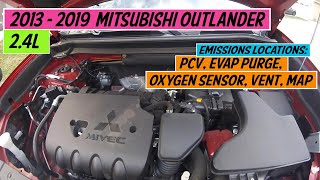
On this generation of Mitsubishi Outlander, the EVAP system is a fairly standard design. 🎬 Watch: Locate the EVAP and emissions components on your Outlander However, like many vehicles driven in regions that use road salt, they can be susceptible to rust-related issues. While not widely documented in forums for this specific model, a rusted fuel filler neck—the pipe you put the gas nozzle into—is a common cause for this code on other Mitsubishi vehicles and should be considered a strong possibility if the gas cap and hoses are in good condition. One owner of a Mitsubishi Eclipse with a P0442 code found their fuel filler neck was completely rusted out, and replacing it resolved the code. Similarly, NHTSA ODI #11246155 notes that a defective fuel filler neck on another Mitsubishi model was the direct cause of a P0442 code.
Symptoms You May Notice
- Check Engine Light is on.
- A faint smell of fuel, possibly near the gas cap area or after refueling.
- No noticeable difference in driving performance.
- Vehicle may fail an emissions test.
- Replacing the oxygen (O2) sensors. O2 sensors are part of the exhaust system and have no connection to the EVAP system.
- Replacing the catalytic converter. This is an expensive exhaust component that is unrelated to fuel vapor leaks.
Most Likely Causes
- Loose or Faulty Gas Cap 🔴 High Probability → Shop Fuel Tank Cap This is the most common cause for a P0442 code on virtually all vehicles. The rubber seal on the cap can wear out, crack, or the cap itself may not be tightened properly. Aftermarket caps are also known to cause sealing issues.
How to confirm: Ensure the gas cap is tightened until it clicks at least three times. Inspect the rubber O-ring on the cap for any cracks, stiffness, or damage. If the light returns after tightening and clearing the code, the cap is likely faulty. A forum user with an Outlander reported their P0442 code appeared once and then went away, likely due to the gas cap. Additionally, NHTSA ODI #10286733 describes a case where a technician performed a test, found code P0442, and resolved the small EVAP leak by replacing the gas cap.
Typical fix: Replace the gas cap with a new, OEM (Original Equipment Manufacturer) part to ensure a perfect seal.
Est. part cost: $20-$40 - Cracked or Disconnected EVAP Hose 🟡 Medium Probability Over time, the rubber and plastic hoses in the engine bay and underneath the vehicle can become brittle from heat and age, leading to small cracks.
How to confirm: Visually inspect all accessible EVAP system hoses, especially at connection points and bends. Look for any visible cracks, perishing, or loose connections. A professional smoke test is the definitive way to find a leak that isn't obvious.
Typical fix: Replace the damaged section of hose. Small cracks can sometimes be temporarily sealed, but replacement is the correct long-term repair.
Est. part cost: $10-$50 - Leaking Purge Valve / Solenoid 🟡 Medium Probability → Shop Vapor Canister The purge valve, typically located in the engine bay, can fail by getting stuck slightly open, creating a small, constant leak. This is a common failure point across many vehicles.
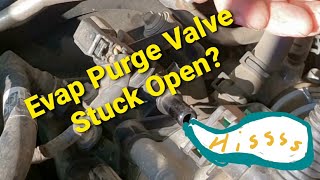
How to confirm: With the engine off, disconnect the hose from the purge valve that leads to the intake manifold. There should be no vacuum or ability to blow through the valve. If air passes through, the valve is stuck open and needs to be replaced. 🎬 See this quick test for a stuck open purge valve
Typical fix: Replace the purge valve solenoid. This is usually a straightforward part to access and replace.
Est. part cost: $70-$140 - Rusted Fuel Filler Neck ⚪ Low Probability → Shop Fuel Filler Neck In areas with road salt ('Salt Belt'), the metal fuel filler neck can rust near the top where it meets the gas cap. This creates an uneven surface that the cap cannot seal against, causing a leak. This has been a confirmed fix on other Mitsubishi models like the Eclipse.
How to confirm: Open the fuel door and thoroughly inspect the metal rim of the filler neck for any signs of rust, bubbling paint, or pitting. The surface should be smooth. A smoke test will show smoke escaping from the gas cap area even with a good cap.
Typical fix: The fuel filler neck must be replaced. This is a more involved repair that often requires removing the inner wheel well liner for access.
Est. part cost: $100-$250
Rare But Worth Checking
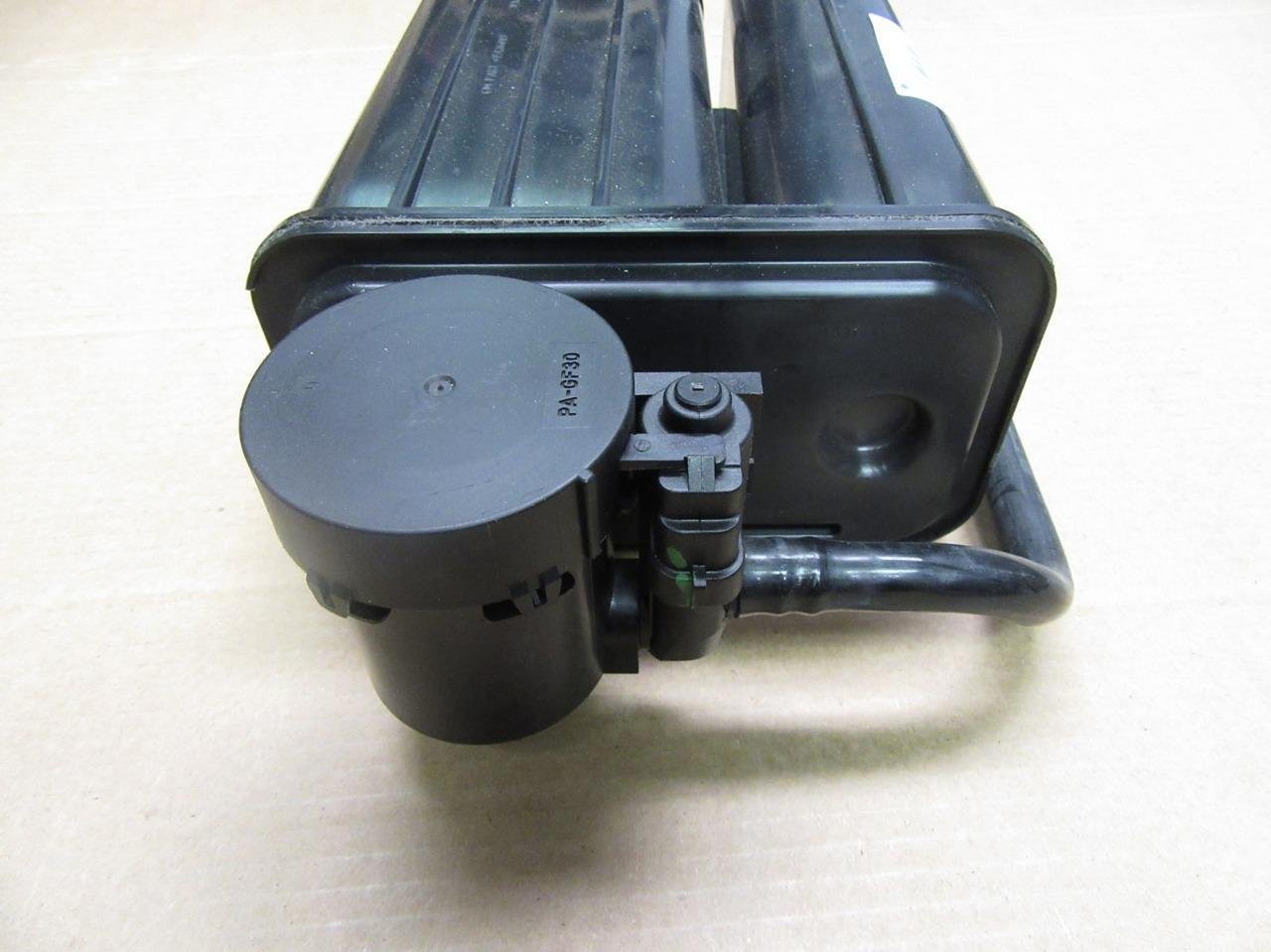
- Leaking EVAP Canister Vent Solenoid: → Shop Vapor Canister This valve is located near the charcoal canister under the car. It can get stuck open or fail to seal, but it's less common to fail than the purge valve.
- Cracked Charcoal Canister: → Shop Vapor Canister The plastic body of the charcoal canister itself can develop a hairline crack from road debris or age, but this is uncommon.
Diagnosis Steps
- Read the code with an OBD-II scanner to confirm P0442 is the primary code.
- Inspect the gas cap. Remove it, check the seal for damage, and reinstall it, ensuring it clicks multiple times.
- Clear the code with the scanner and drive for a few days to see if the Check Engine Light returns. If it does not, the issue was a loose cap.
- If the light returns, purchase a new OEM gas cap, install it, clear the code, and drive again. Avoid aftermarket caps which are known to cause issues.
- If the code persists, perform a thorough visual inspection of all EVAP hoses running from the engine bay to the fuel tank area. Pay close attention to rubber elbows and plastic lines.
- Inspect the fuel filler neck for any signs of rust or corrosion that could prevent a good seal. This is a known issue on Mitsubishi vehicles in rust-prone areas.
- If no visual faults are found, the next step is to test the purge solenoid in the engine bay to see if it's leaking.
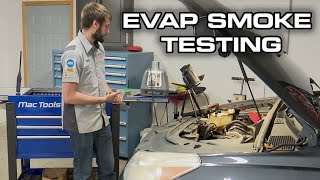
- If all of the above steps do not reveal the cause, the most effective method is to have a professional perform a smoke test. This involves filling the EVAP system with a harmless, visible smoke and watching for where it escapes. 🎬 Watch: How to perform a smoke test to find leaks
Parts You'll Likely Need
- Fuel Cap — This is the most frequent failure point. The seal degrades over time, causing a leak the system can easily detect. Using an OEM cap is highly recommended.
Trusted brands: Mitsubishi Genuine
OEM price range: $20-$40
Aftermarket price range: $15-$30 - Vapor Canister Purge Valve / Solenoid
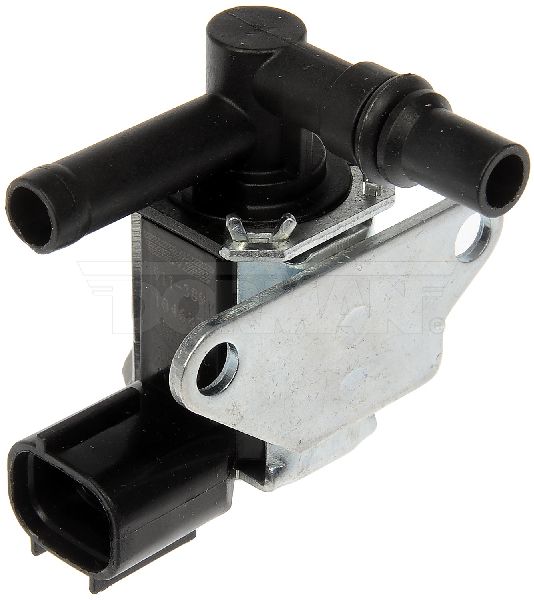
(OEM #MN187611 (Verify for specific engine/year))— This valve cycles frequently and can wear out, sticking in a slightly open position which creates a small leak.
Trusted brands: Mitsubishi Genuine, Dorman (911-851), Standard Motor Products (CP588), SKP
OEM price range: $130-$140
Aftermarket price range: $40-$100 - Fuel Filler Neck
(OEM #MR573836 (Example from related Mitsubishi model, verify for Outlander))— A common failure point in regions with road salt. Rust creates an imperfect seal with the gas cap.
Trusted brands: Mitsubishi Genuine
OEM price range: $100-$250
Aftermarket price range: $80-$150
Related Codes That Often Appear With This One
- P0455 — Indicates a large EVAP leak. If you see both, it might point to a component that has failed completely, like a hose that has become disconnected or a very rusty filler neck.
- P0456 — Indicates a very small EVAP leak. Seeing this with P0442 could suggest an intermittent leak or one that is on the borderline between the two thresholds.
Platform-Specific Known Issues
- Fuel Filler Neck Rust on Similar Models: → Shop Fuel Filler Neck A user on 2CarPros.com with a P0442 code on their Mitsubishi Eclipse traced the issue to a completely rusted-out fuel filler neck. Replacing the neck with an OEM part (MR573836) fixed the leak and cleared the code. This highlights the filler neck as a key inspection point for Outlanders in rust-prone climates.
Mechanic-Grade Diagnostic Values
- Fuel Tank Differential Pressure Sensor Voltage — expected: 1,500 to 3,500 millivolts (1.5V to 3.5V) with the fuel cap removed.. Failure: A voltage reading over 4.0 volts can trigger a sensor-related fault code (P0450).
- EVAP Canister Vent Valve/Solenoid Resistance — expected: Approximately 20 to 30 ohms.. Failure: A reading significantly outside this range indicates a damaged solenoid winding.
- EVAP Canister Purge Valve/Solenoid Resistance — expected: Approximately 30 to 36 ohms at room temperature (around 68°F).. Failure: An open circuit (infinite resistance) or a very high reading suggests the valve is bad.
Scan Tool Commands That Help
- Mitsubishi M.U.T.-III SE or equivalent advanced scanner: EVAP SYSTEM CLOSE — This function is used during manual leak testing. It commands the vent control valve closed, sealing the system to allow a technician to apply pressure with a hand pump and check if the system holds pressure.
- Mitsubishi M.U.T.-III SE or equivalent advanced scanner: Active Test - FUEL PUMP RELAY — This command is used to drain the fuel tank when service, such as replacing the tank or in-tank components like the pressure sensor, is required.
- Advanced OBD2 Scanner with bidirectional controls: Command EVAP Purge Valve OFF and EVAP Vent Valve ON (Closed) — With the engine running, this test can confirm a mechanically stuck-open purge valve. If the purge valve is commanded OFF and the vent valve is commanded ON (closed), the fuel tank pressure should not drop. If it drops (goes into vacuum), it proves the purge valve is leaking engine vacuum into the sealed EVAP system.
Wiring & Ground Locations
- Fuel Tank Differential Pressure Sensor Connector — On top of the fuel tank, part of the fuel pump module assembly.. The ECM sends a 5V reference to terminal 3 and receives the signal back on terminal 1. Terminal 2 is the ground. Verifying these voltages is a key step if a sensor fault is suspected alongside a leak code.
- EVAP Canister Vent Solenoid — Under the rear of the vehicle, near the driver's side, mounted on or near the charcoal canister.. This solenoid must close and seal perfectly for the EVAP leak test to run. Corrosion on the connector or a faulty ground can prevent it from closing, causing a leak test to fail and trigger P0442.
- EVAP Canister Purge Solenoid — In the engine bay, often mounted directly to the intake manifold.. This valve must remain perfectly sealed when commanded closed. A faulty valve that leaks vacuum is a very common cause for P0442. Checking for power and ground at its connector is a primary electrical diagnostic step.
Real Owner Repair Stories
- MitsubishiForum.com user (2018 Mitsubishi Outlander) — Check Engine Light with code P0442.
❌ Tried (didn't work) Replacing the gas cap, Replacing the purge valve
✅ What actually fixed it The user reported that the dealership replaced the charcoal canister, which resolved the P0442 code. - NHTSA ODI #10286733 — An owner reported taking their SUV to a dealer where a test confirmed code P0442 for a small EVAP leak. The issue was resolved by replacing the gas cap.
Model Year Variations Within This Range
- 2018-2021 Outlander PHEV: The Outlander PHEV (Plug-in Hybrid) model has a more complex EVAP system that includes an additional 'Fuel Tank Solenoid Valve' and a 'Bypass Valve' located near the canister. A Technical Service Bulletin (TSB-23-17-001) was issued to correct the service manual's description of this system's operation. While the P0442 code's meaning is the same, the number of potential solenoid failures is higher.
Diagnostic Flowchart
Other Known Issues on This Vehicle
Issues unrelated to this code that are worth knowing about as an owner of this generation:
- CVT Transmission Hesitation, Shudder, or Failure 🔴 High — Widespread complaint across this generation. Can occur at various mileages. A class-action lawsuit was filed regarding this issue. Regular CVT fluid changes (every 30,000 miles) are highly recommended. (Ref: A TSB exists for a 'shudder or surge condition'.)
- A/C Compressor or Clutch Failure 🟠 Medium — Commonly reported issue where the A/C stops blowing cold air. Often requires replacement of the entire compressor, not just the clutch.
- Corroding Rear Liftgate Gas Struts 🟠 Medium — Subject to a major recall. Saltwater intrusion can cause the gas struts to corrode and fail, causing the liftgate to fall unexpectedly. Affects 2014-2020 models. (Ref: NHTSA Recall (example: 20V741000, though multiple exist))
- Premature Brake Wear 🟡 Low — Numerous owner complaints, particularly on 2018 models, of brake pads and rotors wearing out much faster than expected.
- Chipping or Peeling Exterior Paint 🟡 Low — Complaints noted for paint chipping easily or peeling, particularly on the 2015 model year, which can lead to surface rust if not addressed.
- Faulty Engine Power Relays 🔴 High — A recall was issued for defective relays that could cause the engine to stall, run with reduced power, or overheat. Affected 2015-2017 models. (Ref: Recall)
Used vs. New Parts: Buying Guide for This Vehicle
When a used part is the smart pick: For this repair, a used Fuel Filler Neck from a donor vehicle in a dry, salt-free climate can be a cost-effective option, provided it is thoroughly inspected for any signs of rust or damage before purchase.
Donor-vehicle mileage cap: roughly under 100000 miles for the part to have meaningful remaining life.
What to inspect on the donor part:
- For a Fuel Filler Neck: Check the mounting flange and the sealing surface where the gas cap sits for any rust, pitting, or bubbling paint. The surface must be perfectly smooth.
- For Hoses: Squeeze the rubber hoses to check for brittleness or sponginess. They should be firm but flexible. Avoid any with visible cracking.
- For Electrical Connectors: Ensure connectors are not cracked and that the locking tabs are intact. Look for any signs of corrosion on the pins.
OEM-only on this vehicle (don't cheap out):
- Fuel Cap: As noted in Pass 2, aftermarket gas caps are a frequent cause of sealing issues. It is strongly recommended to use a genuine Mitsubishi OEM cap to avoid repeat failures.
Aftermarket brands forum-validated for this vehicle:
- Dorman: Often cited as a reliable aftermarket option for components like the Vapor Canister Purge Valve (e.g., Dorman 911-851).
Real Owner Stories
Aggregated from forums and TSBs cited above. Mileages and costs reflect what owners reported in those sources.
Mitsubishi Outlander
Symptoms: The Check Engine Light appeared once and then went away on its own.
What fixed it: The issue was likely a loose gas cap that was eventually tightened properly.
Source hint: Mitsubishi Forum - P0442 CEL code (mitsubishiforum.com/forum/mitsubishi-outlander-10/p0442-cel-code-50033/)
2003 Mitsubishi Eclipse
Symptoms: Fuel leak around the fuel filler neck while pumping gas and a P0442 code.
What fixed it: Replacement of the completely rusted-out fuel filler neck with OEM part MR573836.
Source hint: 2CarPros - Code P0442, fuel leak around fuel filler neck (www.2carpros.com/questions/mitsubishi-eclipse-2003-mitsubishi-eclipse-code-p0442-fuel-leak-around-fuel-filler-neck-while-pumping-gas)
Mitsubishi Endeavor
Symptoms: Vehicle triggered code P0442, indicating a small EVAP leak.
What fixed it: According to NHTSA ODI #11246155, the fuel filler neck was found to be defective and required replacement to resolve the code.
Related OBD-II Codes
Frequently Asked Questions
Is there a recall for the P0442 code on my 2014-2021 Mitsubishi Outlander?
I live in the 'Salt Belt'; is there a specific part I should check for an EVAP leak?
Can I use an aftermarket gas cap to fix the P0442 code on my Outlander?
Where is the purge valve located on the 2014-2021 Outlander?
Will a P0442 code affect how my Outlander drives?
How many times should I click the gas cap to ensure it is sealed?
Helpful Videos

Used OEM Parts in Stock
New Aftermarket Parts Available

The information in this article is provided for general reference and educational purposes only. Vehicle specifications, procedures, and part compatibility can vary by production date, trim level, and region. Always consult your vehicle's factory service manual and verify part numbers before purchasing or performing repairs. Safety-critical components such as airbags, seat belts, and braking systems should be installed by a qualified professional.
- Mitsubishi Outlander:
- 🧭 Diagnostic Flowchart
- 🎬 Helpful Videos
- 🛍️ Shop This Part
- What's Unique About the 2014-2021 Mitsubishi Outlander
- Symptoms You May Notice
- Most Likely Causes
- Rare But Worth Checking
- Diagnosis Steps
- Parts You'll Likely Need
- Related Codes That Often Appear With This One
- Platform-Specific Known Issues
- Mechanic-Grade Diagnostic Values
- Scan Tool Commands That Help
- Wiring & Ground Locations
- Real Owner Repair Stories
- Model Year Variations Within This Range
- Other Known Issues on This Vehicle
- Used vs. New Parts: Buying Guide for This Vehicle
- Real Owner Stories
- Mitsubishi Outlander
- 2003 Mitsubishi Eclipse
- Mitsubishi Endeavor
- Related OBD-II Codes
- Frequently Asked Questions
- 🎟️ Get 5% Off