

P0442 on 1999-2002 Saturn S-Series: EVAP Small Leak Causes and Fixes
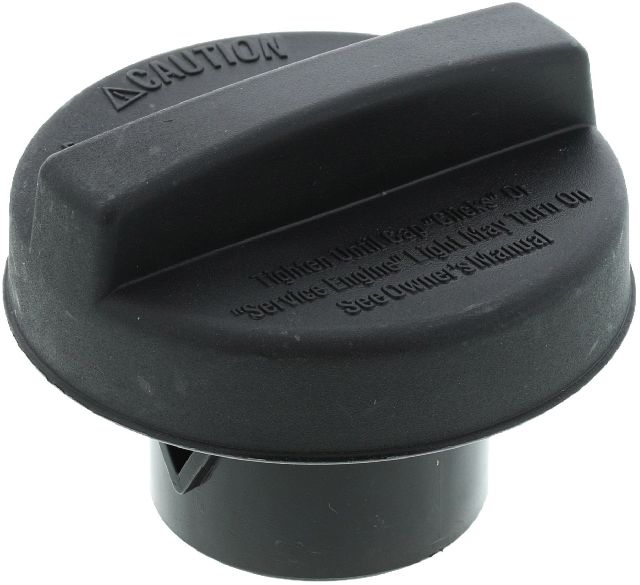
For a 1999-2002 Saturn S-Series, the P0442 code is most often caused by a loose or worn-out gas cap. Before buying parts, check that the cap is tight and clean the fuel filler neck. A new, quality ACDelco gas cap (GT265) is the most common fix and costs about $15-$30. If that fails, suspect the EVAP purge or vent valves.
- Always check the gas cap first for a P0442 code. Ensure it's tight and the seal isn't cracked.
- If the gas cap is okay, thoroughly clean the metal rim of the fuel filler neck before buying any parts.
- Using a cheap, aftermarket gas cap is a known cause of this code; stick with an OEM (ACDelco) or reputable aftermarket (Stant) brand.
- If a new cap doesn't fix the issue, the next most likely causes are the purge valve (under the intake) or the vent valve (in the rear wheel well).
- For leaks that are not obvious, a smoke test is the most reliable and cost-effective way to find the exact source and avoid replacing unnecessary parts.
What's Unique About the 1999-2002 Saturn S-Series
For the third-generation Saturn S-Series, the P0442 code is a very common issue, often stemming from simple and inexpensive-to-fix components. Forum discussions among owners consistently point to the gas cap seal and the cleanliness of the fuel filler neck as the primary culprits. One owner on SaturnForum.com noted that after cleaning a "dirty and bumpy feeling" filler neck until it was smooth, the code cleared on its own after three drive cycles. Due to the age of these vehicles, the original rubber and plastic components of the EVAP system are prone to drying out and cracking, making this code a frequent occurrence.
Symptoms You May Notice
- Check Engine Light is on
- A faint fuel smell (in some cases)
- Failing an emissions inspection
- Difficulty starting the engine immediately after refueling (points to a stuck-open purge valve)
- Replacing the fuel tank pressure sensor before confirming a leak with a smoke test. A parts store computer may suggest this, but it is rarely the cause.
- Replacing parts randomly without performing a smoke test. For leaks other than the gas cap, a smoke test is the most efficient way to pinpoint the exact source and avoid unnecessary expense.
Most Likely Causes
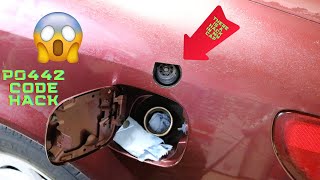
- Loose, Worn, or Incorrect Gas Cap 🔴 High Probability → Shop Fuel Tank Cap The rubber gasket on the original gas cap degrades, cracks, and flattens over time. Aftermarket caps are frequently cited by owners as not sealing properly, leading to a persistent code. A YouTube video on a 2002 SL2 specifically shows how the deteriorated gasket causes the leak.
How to confirm: Ensure the cap is tightened until it clicks. Remove the cap and inspect the rubber seal for cracks, stiffness, or damage. Check the rim of the fuel filler neck for dirt, rust, or a bumpy texture that could prevent a good seal.
Typical fix: Clean the filler neck surface and replace the gas cap with a new, high-quality OEM-equivalent part. Using an ACDelco (GT265) or Stant brand cap is highly recommended.
Est. part cost: $15-$30 - Dirty or Rusted Fuel Filler Neck 🟡 Medium Probability → Shop Fuel Filler Neck Over time, dirt, corrosion, and even small nicks can build up on the metal lip of the filler neck, creating an uneven surface that prevents even a new gas cap from sealing correctly.
How to confirm: Visually inspect and run a finger over the top edge of the filler neck. One owner noted it felt "dirty and bumpy." A smoke test will show smoke escaping from the cap area if this is the cause. In some cases, the filler neck itself can crack or rust through just below the sealing surface.
Typical fix: Carefully clean the filler neck rim with a cloth and a mild solvent. If rust or roughness is present, use a nylon brush, fine-grit sandpaper, or emery cloth to smooth the surface without letting debris fall into the tank.
Est. part cost: $0-$10 - Failed EVAP Canister Purge Valve/Solenoid 🟡 Medium Probability → Shop Vapor Canister This valve cycles frequently during vehicle operation and can get stuck partially open due to carbon buildup or wear, creating a small, constant leak. A stuck-open purge valve often causes difficulty starting right after refueling.
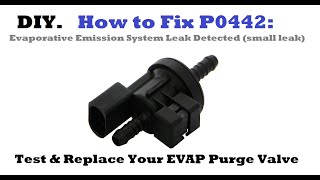
How to confirm: The valve is located under the intake manifold on the side of the cylinder block. It is normally closed. Remove the valve and try to blow through it. If air passes, it is faulty 🎬 See how to test and replace the purge valve. and needs to be replaced. A scan tool can also command it closed to check for leaks.
Typical fix: Replace the purge valve solenoid. The ACDelco part number is 214-641, and Dorman offers a replacement (911-077).
Est. part cost: $25-$60 - Failed EVAP Canister Vent Solenoid ⚪ Low Probability → Shop Vapor Canister Located in the rear driver's side wheel well, this component is exposed to road salt, water, and debris, which can cause it to fail to close properly or its seals to leak.
How to confirm: A scan tool can command the valve to close for testing. A smoke test is the most reliable way to confirm a leak at the vent solenoid. It is located on the upper end of the fuel filler pipe inside the left-rear wheel opening. A related code, P0446, often points directly to a fault with this valve.
Typical fix: Replace the EVAP canister vent solenoid. Access requires raising the vehicle and removing the left rear inner fender well. Dorman and other aftermarket brands offer replacements (e.g., Dorman 911-075).
Est. part cost: $30-$70 - Cracked or Deteriorated EVAP Hoses ⚪ Low Probability After 20+ years, the original rubber and plastic hoses in the EVAP system become brittle and can develop small cracks, especially at connection points, bends, and along the frame rail.
How to confirm: Visually inspect all accessible EVAP lines in the engine bay and under the car near the fuel tank. Gently bending a hose can reveal hidden cracks. A smoke test is the most effective method for finding small, hard-to-see cracks in hoses.
Typical fix: Replace the cracked section of hose. Small cracks can often be repaired with a new piece of appropriately sized vacuum hose and clamps.
Est. part cost: $5-$25
Rare But Worth Checking
- Cracked EVAP Charcoal Canister: → Shop Vapor Canister While not common, the plastic housing of the charcoal canister itself can develop a hairline crack from age or road debris impact. This is difficult to find without a smoke test. The canister is located on top of the fuel tank, requiring the tank to be dropped for replacement.
- Faulty Fuel Tank Pressure Sensor: → Shop Fuel Tank In rare cases, the sensor that detects the pressure can fail and give a false reading, tricking the computer into thinking there is a leak when there isn't one. However, this usually sets other codes (like P0452). Forum users strongly advise against replacing this part for a P0442 code unless all other possibilities are ruled out, as it's a common misdiagnosis suggested by auto parts stores.
Diagnosis Steps
- Verify the gas cap is tight. Unscrew it and retighten it until it clicks at least three times.
- Clear the code with a scan tool and drive for a few days. The EVAP monitor runs under specific conditions, so it may take several trips for the light to return.
- Remove the gas cap and carefully inspect the rubber seal for any cracks, tears, or signs of being brittle or flattened.
- Clean the rim of the fuel filler neck with a clean cloth and a mild solvent to remove any dirt or rust that could prevent a seal. A user on SaturnForum.com fixed their code this way.
- If the cap looks old or is an aftermarket brand, replace it with a new OEM-quality cap (ACDelco GT265). This is the most common fix.
- Visually inspect all accessible EVAP hoses in the engine bay and under the vehicle for obvious cracks, especially at elbows and connection points.
- Test the EVAP Purge Valve. Locate it under the intake manifold, remove it, and try to blow through it. If air passes, it's bad.
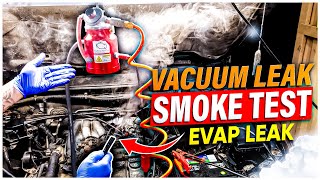
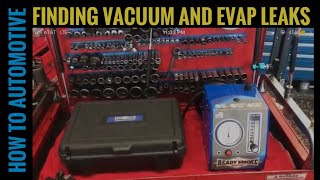
- If the simple fixes don't work, the most effective next step is to have a professional smoke test performed. This involves injecting a harmless, visible smoke into the EVAP system under low pressure. Smoke will escape from the location of the leak, making it easy to identify. 🎬 Watch: How to use a smoke machine to find leaks.
Parts You'll Likely Need
- Fuel Tank Cap
(OEM #10372865 (ACDelco GT265))— This is the most frequent cause of a P0442 code. The rubber seal wears out over time, and non-OEM caps are known to cause sealing issues.
Trusted brands: ACDelco, Stant
OEM price range: $20-$30
Aftermarket price range: $10-$20 - EVAP Canister Purge Valve
(OEM #21008078 (ACDelco 214-641))— This valve is a common failure point after the gas cap has been ruled out. It can get stuck open, creating a small, constant leak and often causing hard starts after refueling.
Trusted brands: ACDelco, Dorman (911-077)
OEM price range: $40-$60
Aftermarket price range: $25-$45 - EVAP Canister Vent Solenoid
(OEM #10293954)— Located in the rear wheel well, this solenoid is exposed to the elements and can fail to close, creating a leak condition during the EVAP self-test.
Trusted brands: ACDelco, Dorman (911-075)
OEM price range: $50-$80
Aftermarket price range: $30-$70
Related Codes That Often Appear With This One
- P0455 — This code indicates a large EVAP leak. Sometimes, after fixing a large leak (like a very loose gas cap), the system will then detect a pre-existing smaller leak, triggering P0442.
- P0446 — This code indicates a problem with the EVAP vent control circuit. A faulty vent solenoid can cause both a P0442 (leak) and a P0446 (control circuit) code simultaneously.
- P0496 — This code indicates 'EVAP Flow During a Non-Purge Condition' and almost always points to a faulty purge valve that is stuck open. A stuck-open purge valve is a type of leak that can also trigger a P0442.
Technical Service Bulletins (TSBs) & Recalls
- While no TSB is specific *only* to the S-Series for P0442, GM TSB #PIT4943D is a general bulletin for EVAP codes on this and other Saturn models, advising technicians to use a specialized EVAP smoke tester for proper diagnosis rather than guessing or replacing parts randomly.
Mechanic-Grade Diagnostic Values
- EVAP Canister Purge Valve Solenoid Resistance — expected: 14-30 Ohms. Failure: An infinite reading (open circuit) or a reading significantly outside the expected range indicates a faulty solenoid coil.
- EVAP Canister Vent Solenoid Resistance — expected: 20-30 Ohms. Failure: A reading significantly outside this range suggests the solenoid winding is damaged and the part needs replacement.
- Fuel Tank Pressure (FTP) Sensor Voltage at KOEO (Key On, Engine Off) — expected: ~1.3V to 1.7V at atmospheric pressure. Failure: A reading stuck near 0V or 5V indicates a faulty sensor or wiring issue. A reading outside the normal range at rest can also indicate a problem.
Scan Tool Commands That Help
- GM Tech 2: EVAP Service Bay Test — This function allows a technician to command the PCM to run the entire EVAP leak test sequence while the vehicle is stationary in the shop. It closes the vent solenoid, opens the purge solenoid to create a vacuum, and then monitors the system for pressure changes, verifying the integrity of the whole system without needing to perform a drive cycle.
- GM Tech 2: Vent Solenoid On/Off — This bidirectional control allows the technician to manually command the normally-open vent solenoid to close. This is essential before performing a smoke test to ensure the system is sealed. If the solenoid doesn't close when commanded, it is faulty.
- GM Tech 2: Purge Solenoid Duty Cycle Control — This allows for manual control of the normally-closed purge solenoid. A technician can command it to open while watching Fuel Tank Pressure (FTP) sensor data to confirm it is functioning and that the line to the engine is not blocked.
Wiring & Ground Locations
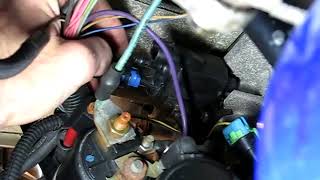
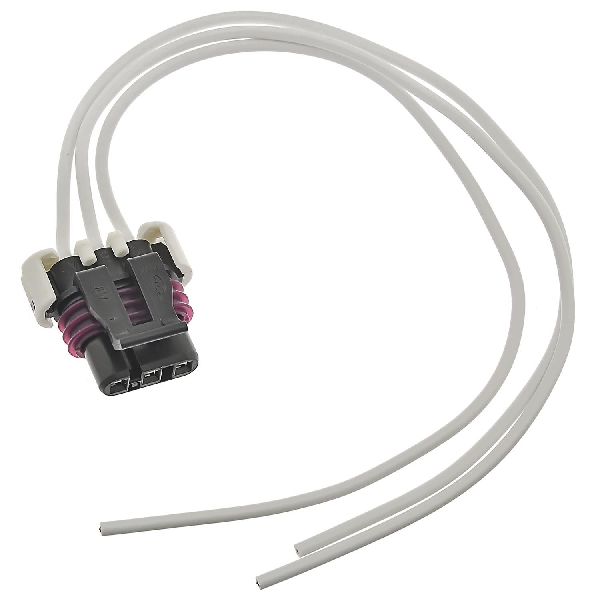
- EVAP Purge Solenoid Connector — In the engine bay, mounted below the intake manifold on the side of the cylinder block.. The connector has a Pink wire for ignition power and a Dark Green wire for the control signal from the PCM. Verifying 12V on the Pink wire (Key On) and checking the integrity of the Dark Green wire are key diagnostic steps if the solenoid itself tests good.
- EVAP Vent Solenoid Connector — Near the top of the fuel filler pipe, behind the rear driver's side wheelhouse liner.. This connector receives a Pink wire for ignition power and a White wire for the control signal from the PCM. Its exposed location makes it prone to corrosion, which can prevent the solenoid from closing and cause a leak code.
- EVAP System Service Port — Located in the canister purge line, under the driver's side floorpan behind the left front wheel. It has a green cap.. This is the dedicated access point for connecting a smoke machine to pressurize the system and find the physical location of a leak.
- G102 / G103 — G102 is near the base of the left (driver's side) shock tower; G103 is near the right shock tower in the engine compartment.. These are major engine and body ground points. While not directly for the EVAP system, a poor ground here can cause a variety of strange electrical issues with the PCM and its sensors, potentially leading to incorrect diagnostic codes.
Real Owner Repair Stories
- SaturnForum.com user (2000 Saturn SL2) — P0442 (Small Leak in Evaporative Emissions System) SES light came on.
❌ Tried (didn't work) Replacing the gas cap gasket with one from a different cap.
✅ What actually fixed it The user cleaned the top of the fuel filler neck, which felt "dirty and bumpy," with silicone on a paper towel until it was smooth and clean. After this cleaning, the SES light turned off on its own after three driving trips.
"I Checked Everything" — The Actual Cause
- In some cases, a vehicle can pass a static smoke test in the garage but still set a P0442 code. This often points to an intermittent failure of the EVAP vent solenoid. The solenoid may seal perfectly when cold and static, but fail to close completely due to heat, vibration, or age once the vehicle is driven. This allows a small leak to occur only under specific operating conditions, which the PCM eventually detects, but a smoke test in the bay will miss.
OEM Part Supersession History
21008078→ACDelco 214-641— Standard part lifecycle update by GM.
Heads up: ACDelco 214-641 is listed as discontinued by some vendors as of early 2024, but may still be available as new old stock. Dorman 911-077 is a common and available aftermarket alternative.
Model Year Variations Within This Range
- 2000-2002: The third generation, starting in model year 2000 for sedans/wagons and 2001 for coupes, received a significant exterior and interior redesign. This included new fascias, a new instrument cluster, and center console. However, the core powertrain and EVAP system components remained largely identical to the late second-generation (1996-1999) models. Therefore, the causes and fixes for P0442 are consistent across the 1999-2002 range.
- 1999: The 1999 model year was the last year for the second-generation body style on sedans and wagons. It was also the year rear disc brakes were eliminated on models with ABS, switching to rear drum brakes. These changes do not affect the diagnosis or repair of a P0442 code.
Diagnostic Flowchart
Used vs. New Parts: Buying Guide for This Vehicle
When a used part is the smart pick: For this repair, used parts are generally not recommended for solenoids or the gas cap due to the high failure rate of their internal seals and electronics over time. However, a used fuel filler neck from a junkyard can be a cost-effective solution if yours is severely rusted or cracked, provided the donor part is from a dry climate and its sealing surface is perfectly smooth.
Donor-vehicle mileage cap: roughly under 100000 miles for the part to have meaningful remaining life.
What to inspect on the donor part:
- For a fuel filler neck, inspect the top sealing lip for any rust, pitting, or damage. It must be perfectly smooth.
- Check the rest of the filler neck pipe for signs of heavy corrosion or physical damage.
- For any electronic part like a solenoid, check for corrosion on the electrical pins and cracks in the plastic housing.
OEM-only on this vehicle (don't cheap out):
- Fuel Cap: Owners consistently report that aftermarket gas caps fail to seal properly on this vehicle, leading to a persistent P0442. An OEM ACDelco or a reputable equivalent like Stant is strongly advised.
- Fuel Tank Pressure Sensor: While rarely the cause of P0442, if it must be replaced, using an OEM ACDelco part is recommended. One owner reported that a generic replacement sensor had an incorrect voltage output, causing the check engine light to return until an OEM part was installed.
Aftermarket brands forum-validated for this vehicle:
- Dorman: Offers direct-fit replacements for both the purge valve (911-077) and vent solenoid (911-075) that are widely used.
Brands owners have reported issues with on this vehicle:
- Generic/unbranded gas caps are a frequent source of problems for this code.
Real Owner Stories
Aggregated from forums and TSBs cited above. Mileages and costs reflect what owners reported in those sources.
2000 Saturn SL2
Symptoms: The Service Engine Soon light came on, throwing a P0442 code.
What fixed it: Cleaned the top of the fuel filler neck, which felt 'dirty and bumpy', until it was smooth and clean. The light turned off after three driving trips.
Source hint: Saturn Forum
2002 Saturn SL2
Symptoms: Check Engine Light with a P0442 code.
What fixed it: The video showed that cracks in the original gas cap's rubber gasket were the direct cause of the leak. Replacing the gas cap and cleaning the filler neck surface resolved the issue.
Source hint: YouTube video on a 2002 Saturn SL2
2000 Saturn SL1
Symptoms: A persistent P0442 code that would not go away.
What fixed it: The owner replaced multiple parts without success, demonstrating the difficulty of diagnosing the issue without a proper smoke test to pinpoint the leak's location.
Source hint: SaturnForum.com thread titled '2000 sl1 p0442 code'
Related OBD-II Codes
Frequently Asked Questions
What is the most common and cheapest fix for a P0442 code on my 1999-2002 Saturn S-Series?
I replaced the gas cap on my Saturn, but the P0442 code came back. What should I check next?
My Saturn is hard to start right after I get gas. Is this related to the P0442 code?
Where is the EVAP purge valve located on my Saturn S-Series?
Is there a specific Technical Service Bulletin (TSB) for the P0442 code on my Saturn?
Where is the EVAP canister vent solenoid located on a 2000 Saturn SL2?
Helpful Videos
We Have This Part in Stock


The information in this article is provided for general reference and educational purposes only. Vehicle specifications, procedures, and part compatibility can vary by production date, trim level, and region. Always consult your vehicle's factory service manual and verify part numbers before purchasing or performing repairs. Safety-critical components such as airbags, seat belts, and braking systems should be installed by a qualified professional.
- Saturn S-Series:
- 🧭 Diagnostic Flowchart
- 🎬 Helpful Videos
- 🛍️ Shop This Part
- What's Unique About the 1999-2002 Saturn S-Series
- Symptoms You May Notice
- Most Likely Causes
- Rare But Worth Checking
- Diagnosis Steps
- Parts You'll Likely Need
- Related Codes That Often Appear With This One
- Technical Service Bulletins (TSBs) & Recalls
- Mechanic-Grade Diagnostic Values
- Scan Tool Commands That Help
- Wiring & Ground Locations
- Real Owner Repair Stories
- "I Checked Everything" — The Actual Cause
- OEM Part Supersession History
- Model Year Variations Within This Range
- Used vs. New Parts: Buying Guide for This Vehicle
- Real Owner Stories
- 2000 Saturn SL2
- 2002 Saturn SL2
- 2000 Saturn SL1
- Related OBD-II Codes
- Frequently Asked Questions
- 🎟️ Get 5% Off