

P0443 on 2019-2020 Jeep Wrangler: EVAP Purge Valve Circuit Causes and Fixes
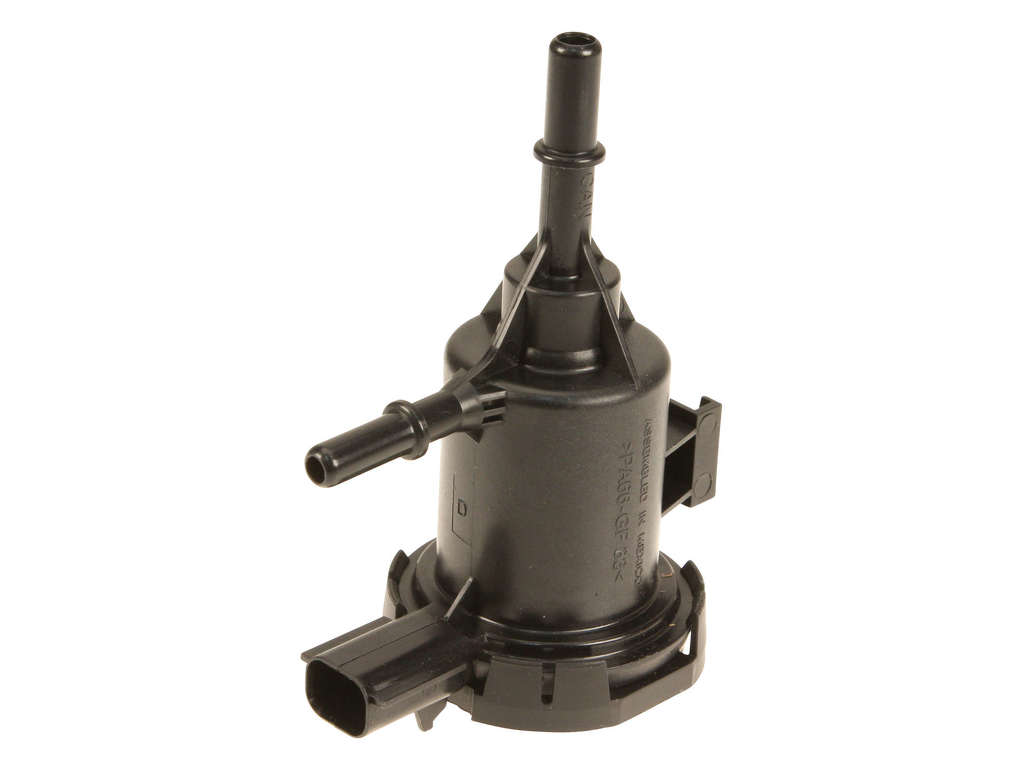
P0443 on a 2019-2020 Jeep Wrangler almost always indicates a faulty EVAP purge solenoid valve or a wiring issue in its circuit. Replacing the valve is the most common fix, costing around $45-$75 for an OEM part and is a straightforward DIY repair. The part number is typically 04627694AB for the 3.6L V6 and 68337662AC for the 2.0L Turbo.
- P0443 is an electrical circuit code, not an EVAP leak code. Do not replace the gas cap to fix it.
- The most likely cause is a failed EVAP purge solenoid valve, which is located on or near the engine intake.
- Before replacing the valve, always perform a quick visual inspection of the wiring and connector for damage and check fuse F34 in the engine bay.
- The repair is simple, requires basic tools, and can typically be done in under 30 minutes, making it a great DIY task.
- Ensure you purchase the correct part number: 04627694AB for the 3.6L V6 and 68337662AC for the 2.0L Turbo.
What's Unique About the 2019-2020 Jeep WRANGLER
For the 2019-2020 Jeep Wrangler (JL generation), this code is common enough that Jeep issued a Technical Service Bulletin (TSB) for it. The TSB S2025000002 groups P0443 with other EVAP codes (P0441 and P0449), indicating a known pattern of issues related to the EVAP system that can trigger a check engine light. The problem is not specific to one engine, but different part numbers are used for the 2.0L Turbo (68337662AC) and 3.6L V6 (04627694AB) engines. The Jeep Gladiator (JT), its truck platform-mate, also shares this potential issue.
Diagnostic Flowchart
Tap your situation to follow the diagnostic path that matches what you're seeing on this vehicle.
Symptoms You May Notice
- Check Engine Light is on
- Slightly reduced fuel efficiency
- Rough or unstable idle (if the valve is stuck open)
- Possible fuel odor near the vehicle
- Difficulty starting the engine, especially after refueling
- Replacing the gas cap. A loose or faulty gas cap typically causes EVAP leak codes (like P0456 or P0455), not a circuit code like P0443.
Most Likely Causes
- Faulty EVAP Purge Solenoid/Valve 🔴 High Probability → Shop Vapor Canister The purge valve is an electromechanical part that cycles frequently and can wear out over time, leading to an internal electrical failure (open or shorted coil). This is the most common point of failure for P0443. 🎬 Watch: How to diagnose and fix a P0443 circuit malfunction
How to confirm: With the engine running, use a scan tool to command the purge valve on and off; you should hear it click. Alternatively, disconnect the valve and test the resistance across its two terminals with a multimeter; an out-of-spec, infinite (open), or zero (shorted) reading indicates failure. A good valve typically has a resistance between 20-40 ohms.
Typical fix: Replace the EVAP purge solenoid valve.
Est. part cost: $45-$75 - Damaged Wiring or Connector 🟡 Medium Probability The wiring harness in the engine bay is exposed to heat and vibration, which can lead to chafing, breaks, or corrosion in the connector pins over time. Rodent damage to wiring is also a possibility.
How to confirm: Visually inspect the wiring going to the purge valve for any signs of damage, fraying, or melting. Unplug the connector and check for corrosion or bent pins. Use a multimeter to check for battery voltage on the power wire (typically a Red/Yellow wire on the JL) with the key on. Then, check the control wire (ground side) for a signal from the PCM when the valve is commanded on with a scan tool.
Typical fix: Repair the damaged section of wire or replace the connector pigtail.
Est. part cost: $10-$30 - Blown Fuse ⚪ Low Probability An electrical short in the purge valve or its wiring can cause the corresponding fuse to blow as a protective measure.
How to confirm: Locate the fuse for the EVAP system in the Power Distribution Center (the main fuse box in the engine bay). For the 2019-2020 Wrangler JL, this is often fuse F34 (10A Red). Visually inspect the fuse or check for continuity with a multimeter.
Typical fix: Replace the blown fuse. If the new fuse blows immediately, it indicates a persistent short circuit that must be diagnosed.
Est. part cost: $1-$5
Rare But Worth Checking
- Faulty Powertrain Control Module (PCM): → Shop Engine Control Module (ECM) This is very rare. The PCM's internal driver for the purge valve circuit can fail. This should only be considered after all other possibilities (valve, wiring, fuses) have been exhaustively ruled out.
Diagnosis Steps
- Read the codes with an OBD-II scanner to confirm P0443 is present and note any other codes.
- Visually inspect the EVAP purge valve, its connector, and the surrounding wiring for obvious signs of damage, corrosion, or loose connections.
- Locate and check fuse F34 (10A) in the engine bay fuse box. Replace if blown.
- With the ignition on (engine off), unplug the purge valve connector. Use a multimeter to verify that the power supply pin has battery voltage.
- If power is present, use a scan tool to actively command the purge solenoid on and off. Listen for an audible clicking sound from the valve, which indicates it is mechanically trying to operate.
- If the valve does not click, disconnect it and measure the resistance between its two electrical terminals using a multimeter. Compare the reading to the manufacturer's specification (typically 20-40 ohms). An infinite (open) or zero (shorted) reading confirms a bad valve.
- If the valve's resistance is good but it doesn't operate, the problem lies in the ground-side control wire running back to the PCM or the PCM itself. A test light connected between the two pins of the connector should flash as the scan tool commands the valve on and off, confirming the PCM and wiring are working.
Parts You'll Likely Need
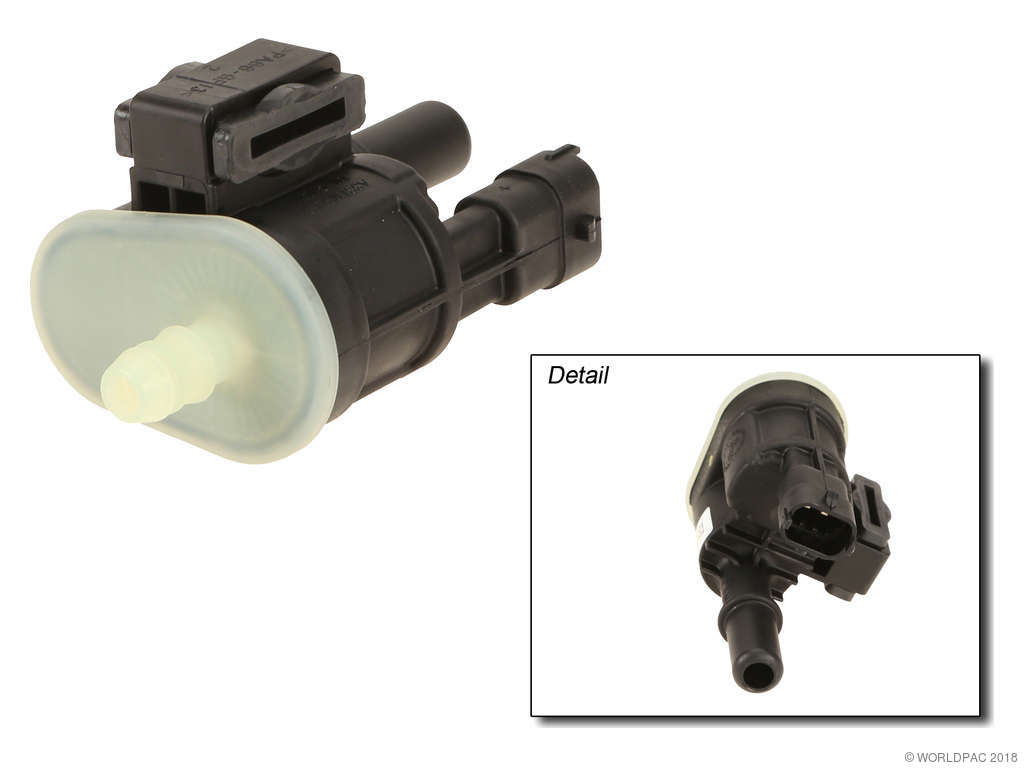
- EVAP Purge Solenoid Valve (for 3.6L V6)
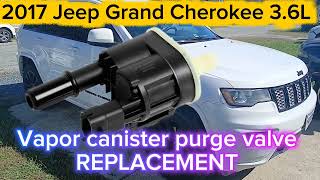
(OEM #04627694AB)— This is the most common failure point for the P0443 circuit code on the 3.6L engine. 🎬 See this 3.6L purge valve replacement walkthrough It supersedes part number 4627694AA.
Trusted brands: Mopar, Dorman (911-410), Standard Motor Products
OEM price range: $45-$60
Aftermarket price range: $30-$50 - EVAP Purge Solenoid Valve (for 2.0L Turbo)
(OEM #68337662AC)— This is the most common failure point for the P0443 circuit code on the 2.0L engine. This part supersedes older numbers like 5281451AA, 5281451AB, and 68337662AB.
Trusted brands: Mopar
OEM price range: $55-$75
Aftermarket price range: $40-$60
Related Codes That Often Appear With This One
- P0441 — Incorrect Purge Flow. This code often appears with P0443 because if the purge valve circuit fails, the PCM cannot control the flow of vapors, leading to an incorrect flow detection. TSB S2025000002 specifically links these codes.
- P0449 — EVAP Vent Valve/Solenoid Circuit. This code can appear alongside P0443, as noted in TSB S2025000002, suggesting a potential shared power or ground issue within the broader EVAP system wiring.
Technical Service Bulletins (TSBs) & Recalls
- S2025000002: Addresses customer complaints of a check engine light where inspection reveals P0443, P0441, or P0449 in the PCM. The TSB guides technicians through a standard diagnostic procedure for these EVAP codes.
Platform-Specific Known Issues
- Known Issue Confirmed by TSB: Jeep Technical Service Bulletin S2025000002 was issued for 2019-2020 Wranglers regarding a check engine light with P0443, P0441, or P0449 stored in the PCM. This confirms it is a recognized fault by the manufacturer.
- Owner Experience: Simple Swap Fix: On the 'jlwranglerforums.com' forum, a user with a 2019 Wrangler 3.6L reported a P0441 code, which is often related to P0443. After confirming the purge valve was not clogged, another user advised that the Fuel Tank Pressure (FTP) sensor could be the next logical part to replace if the valve itself is good, as the PCM uses FTP readings to verify purge performance. This highlights a potential next step if a simple valve replacement doesn't solve the issue.
Mechanic-Grade Diagnostic Values
- EVAP Purge Solenoid Connector Voltage (Power Pin) — expected: ~5 V with key on, engine off.. Failure: 0V or significantly lower voltage indicates a problem with the power supply from the PCM.
- EVAP Purge Solenoid Connector Ground Signal — expected: A fluctuating or pulsed ground signal when the valve is commanded ON by a scan tool.. Failure: No ground signal or a constant ground indicates a wiring or PCM driver issue.
Scan Tool Commands That Help
- Professional Scan Tool (e.g., Autel, JSCAN, wiTECH): EVAP Purge Solenoid Test / Active Test — This bidirectional command is used to manually cycle the purge solenoid on and off. It confirms if the PCM can send the signal, if the wiring is intact, and if the solenoid is mechanically responding (audible click).
Wiring & Ground Locations
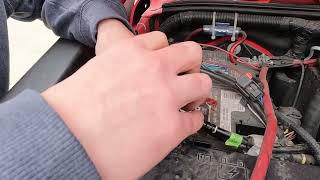
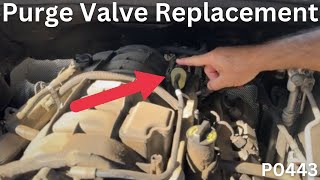
- Purge Solenoid Connector (3.6L) — On the passenger side of the engine, under a plastic cover.. 🎬 Watch: A quick guide to replacing the Jeep purge valve This is the primary point for testing voltage, ground signals, and solenoid resistance. A user on jlwranglerforums.com identified the control wire as Dark Blue/White and the ground as Black/Green.
- PCM Connector C1 (3.6L) — The Powertrain Control Module is located in the engine bay; C1 is one of its main connectors.. For deep diagnosis, continuity must be checked from the purge solenoid connector to the PCM. Pin 94 (Dark Blue/White) is the control wire, and Pin 72 (Black/Green) is the ground.
- Engine Bay Ground Points — There are multiple grounding studs on the body inside the engine compartment. Key locations include a set of three near the battery on the passenger side, one near the airbox, and another on the driver's side near the brake booster.. A poor ground connection on the shared ground circuit for the EVAP system can cause intermittent voltage issues and trigger a P0443. Checking continuity from the solenoid's ground wire to these points can rule out a bad ground.
Real Owner Repair Stories
- jlwranglerforums.com user (Jeep Wrangler JL (year/engine not specified, but 3.6L wiring colors cited)) — Persistent P0443 code that would not clear, even after replacing the purge solenoid.
❌ Tried (didn't work) Replacing the EVAP Purge Solenoid
✅ What actually fixed it The owner performed continuity checks from the purge solenoid connector to the PCM. They disconnected the battery and the PCM's C1 connector and verified continuity on both the control wire (Pin 94) and the ground wire (Pin 72). After reconnecting everything, the active code cleared, suggesting the issue was a poor connection at the PCM connector itself, which was resolved by reseating it.
OEM Part Supersession History
4627694AA→04627694AB— Standard part revision by manufacturer for the 3.6L V6 engine.5281451AA, 5281451AB, 68337662AB→68337662AC— Standard part revision by manufacturer for the 2.0L Turbo engine.
Model Year Variations Within This Range
- 2019-2020: There are no significant documented changes to the EVAP purge control system, its wiring, or common causes for P0443 between the 2019 and 2020 model years for the Jeep Wrangler JL. Both years use the same parts per engine and are covered by the same TSB.
Helpful Videos
Used OEM Parts in Stock
New Aftermarket Parts Available


The information in this article is provided for general reference and educational purposes only. Vehicle specifications, procedures, and part compatibility can vary by production date, trim level, and region. Always consult your vehicle's factory service manual and verify part numbers before purchasing or performing repairs. Safety-critical components such as airbags, seat belts, and braking systems should be installed by a qualified professional.
- Jeep WRANGLER:
- 🧭 Diagnostic Flowchart
- 🎬 Helpful Videos
- 🛍️ Shop This Part
- What's Unique About the 2019-2020 Jeep WRANGLER
- Symptoms You May Notice
- Most Likely Causes
- Rare But Worth Checking
- Diagnosis Steps
- Parts You'll Likely Need
- Related Codes That Often Appear With This One
- Technical Service Bulletins (TSBs) & Recalls
- Platform-Specific Known Issues
- Mechanic-Grade Diagnostic Values
- Scan Tool Commands That Help
- Wiring & Ground Locations
- Real Owner Repair Stories
- OEM Part Supersession History
- Model Year Variations Within This Range
- 🎟️ Get 5% Off