

P0443 on 2014-2019 Kia Soul: Purge Control Valve Circuit Causes and Fixes
For a 2014-2019 Kia Soul, code P0443 is almost always caused by a failed canister purge valve (solenoid). This is a very common, inexpensive, and easy DIY fix. The OEM part number is typically 28910-2E000, costing around $40-$60, while aftermarket versions are available for $20-$40. The repair takes less than 15 minutes with basic tools.
- P0443 on a 2014-2019 Kia Soul points to an electrical issue with the EVAP purge valve circuit.
- The most likely fix is replacing the purge valve itself (OEM Part #28910-2E000), which is a very common failure point on this vehicle.
- This is a beginner-friendly DIY repair that can be done in under 15 minutes with basic tools.
- Before buying a part, you can confirm the failure by checking for ~26 ohms of resistance across the valve's pins; a significantly different reading indicates a bad part.
- Driving with this code is safe, but it will cause an automatic emissions test failure and may lead to rough idling or difficulty starting after refueling.
What's Unique About the 2014-2019 Kia Soul
The canister purge valve is a known high-failure item on the second-generation Kia Soul. While the part is used across many Hyundai and Kia vehicles sharing similar engines, it seems particularly prone to failure on the Soul, making it one of the most common reasons for a check engine light on this specific model. Fortunately, its location on top of the engine, right near the intake manifold, makes it exceptionally easy to access and replace for most owners, often without any tools other than a pair of pliers for the hose clamps.
Symptoms You May Notice
- Check Engine Light is on.
- Difficulty starting the engine, especially right after refueling.
- Rough, fluctuating, or unstable idle.
- Slight decrease in fuel economy.
- Possible faint fuel odor.
- Automatic failure of an emissions/smog test.
- Replacing the gas cap. While a loose gas cap can cause other EVAP codes (like P0455 or P0457), it does not cause a P0443 electrical circuit code.
- Replacing the charcoal canister. The canister is a different part of the EVAP system, located near the fuel tank. It is expensive and unlikely to be the cause of a P0443 circuit code, though a deteriorating canister can send debris that clogs the purge valve.
Most Likely Causes
- Failed Canister Purge Valve (Solenoid) 🔴 High Probability → Shop Vapor Canister This specific part has a high rate of failure on this platform due to wear and tear. The internal electrical coil can short or go open, or the mechanical valve part can get stuck open or closed, sometimes due to debris from the charcoal canister.
How to confirm: A good valve should have a resistance of around 26 ohms. You can test the valve with a multimeter across its two pins. An infinite reading means an open circuit, and a very low reading means a short. You can also apply 12V directly to the pins and listen for a distinct 'click'; no click means it's failed. Given the high probability and low cost, many owners opt to replace it without testing.
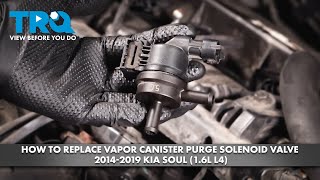
Typical fix: Replace the canister purge valve. 🎬 See this step-by-step replacement walkthrough for the 1.6L engine. It is located on top of the engine, attached to the intake manifold area, and held by a small bracket or single bolt, with two hoses and one electrical connector.
Est. part cost: $20-$80 - Damaged Wiring or Connector 🟡 Medium Probability The wiring harness in the engine bay is exposed to heat and vibration, which can lead to chafed wires or a loose or corroded connector at the purge valve itself. Rodent damage is also a possibility.
How to confirm: Visually inspect the wiring harness leading to the purge valve for any signs of cracking, melting, or rodent damage. Unplug the connector and check for corrosion, moisture, or bent/pushed-out pins. Use a multimeter to check for 12V power at one pin on the connector with the key on, engine off. The other wire is the ground side, which is controlled (pulsed) by the PCM.
Typical fix: Repair the damaged section of wire or clean/replace the electrical connector.
Est. part cost: $5-$25 - Blown Fuse ⚪ Low Probability
How to confirm: Check the fuse box in the engine compartment. On many Kia models, the fuse for the EVAP system may be labeled 'SENSORS 2'. Consult your owner's manual or the fuse box diagram for the exact fuse location and name for your specific year.
Typical fix: Replace the blown fuse with one of the same amperage.
Est. part cost: $1-$5
Rare But Worth Checking
- Faulty Powertrain Control Module (PCM): → Shop Engine Control Module (ECM) This is extremely rare and should be considered only after the valve, wiring, connector, and fuse have all been confirmed to be good. A faulty PCM driver can fail to send the correct signal to the valve.
Diagnosis Steps
- Read the Code: Confirm P0443 is the primary code. Note any other codes like P0444 or P0445.
- Check the Fuse: Locate the fuse box in the engine bay and inspect the fuse for the emissions system (often labeled 'SENSORS 2'). Replace if blown.
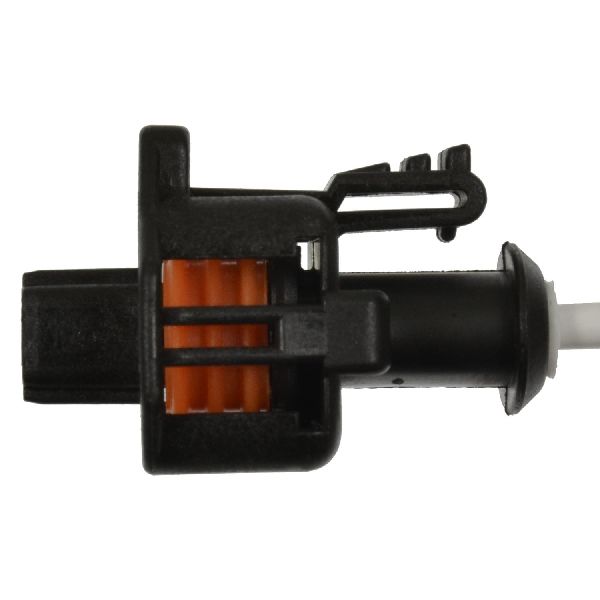
- Inspect Wiring and Connector: Visually inspect the two wires and the electrical connector going to the purge valve on top of the engine. Look for any obvious damage, corrosion, or loose connections.
- Test for Power: With the ignition on (engine off), unplug the connector and use a multimeter to confirm there is battery voltage (approx. 12V) at one of the pins.
- Test the Valve's Resistance: Disconnect the valve and use a multimeter set to Ohms (Ω) to measure the resistance between the two pins on the valve itself. A good valve for this platform should read approximately 26 Ohms. A reading of infinity (OL) indicates an open circuit, and near zero indicates a short. Both mean the valve is bad.
- (Optional) Test Valve Actuation: Use two jumper wires to carefully apply 12V from the car battery to the two pins on the valve. You should hear an audible 'click'. If it doesn't click, it's bad. If it clicks, it may still be mechanically stuck, but the solenoid is working.
- Replace the Purge Valve: If the valve fails any test, replace it. This is the most common resolution. It is held by one or two bolts and has two push-on hoses and one electrical clip.
- Clear Code and Test Drive: After replacement, clear the trouble code with a scanner and perform a test drive, including a mix of city and highway driving, to ensure the Check Engine Light does not return.
Parts You'll Likely Need
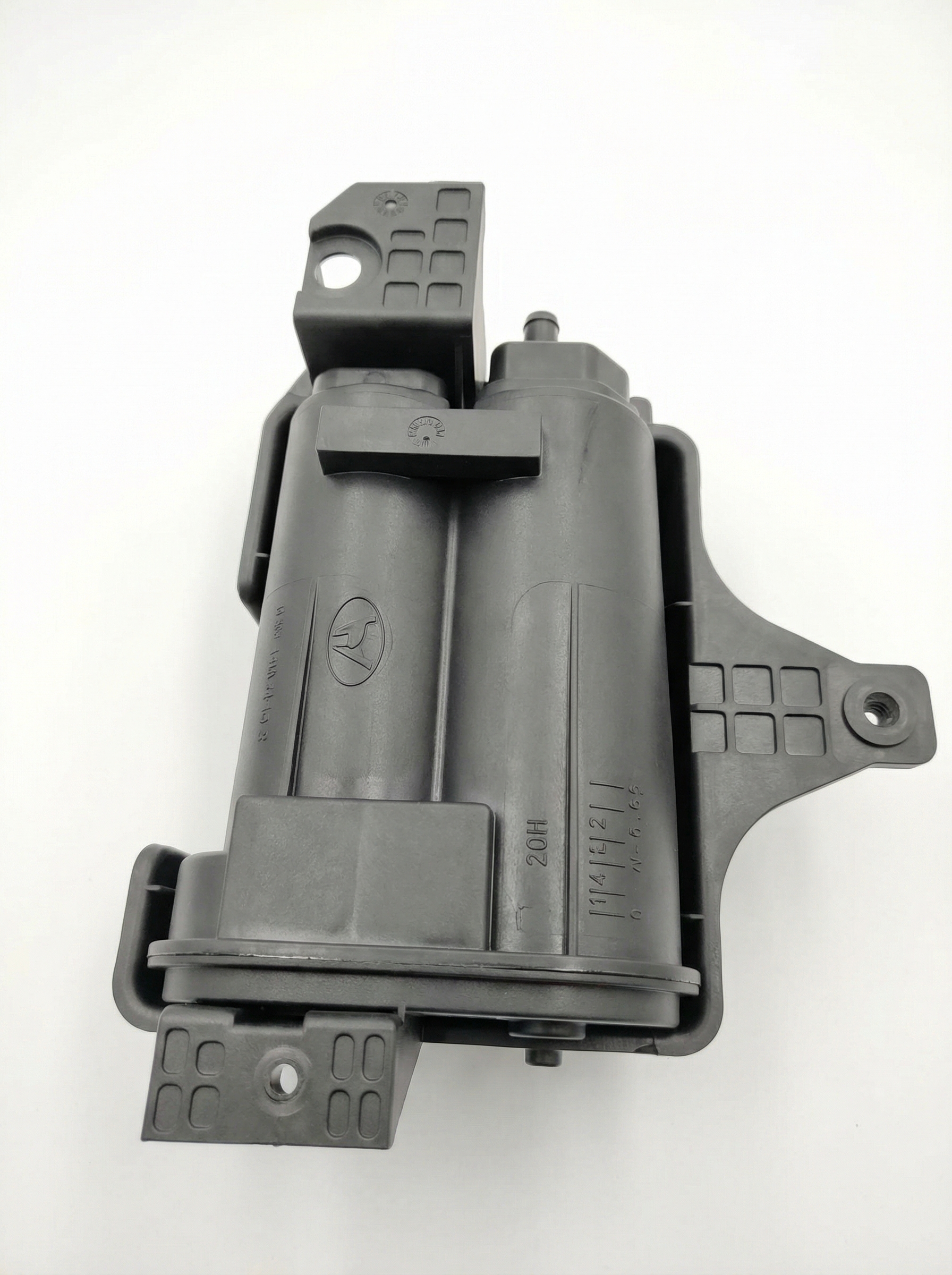
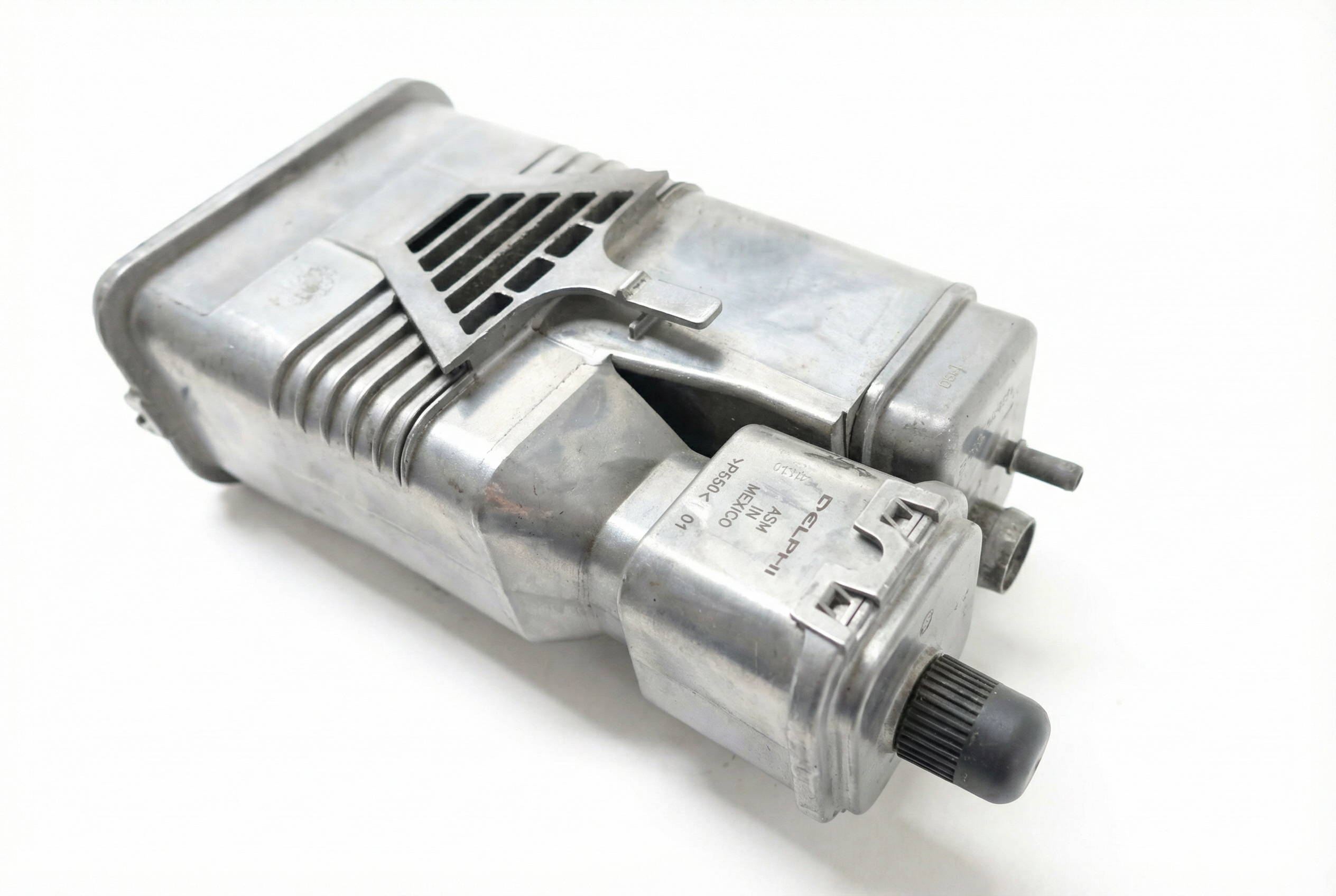
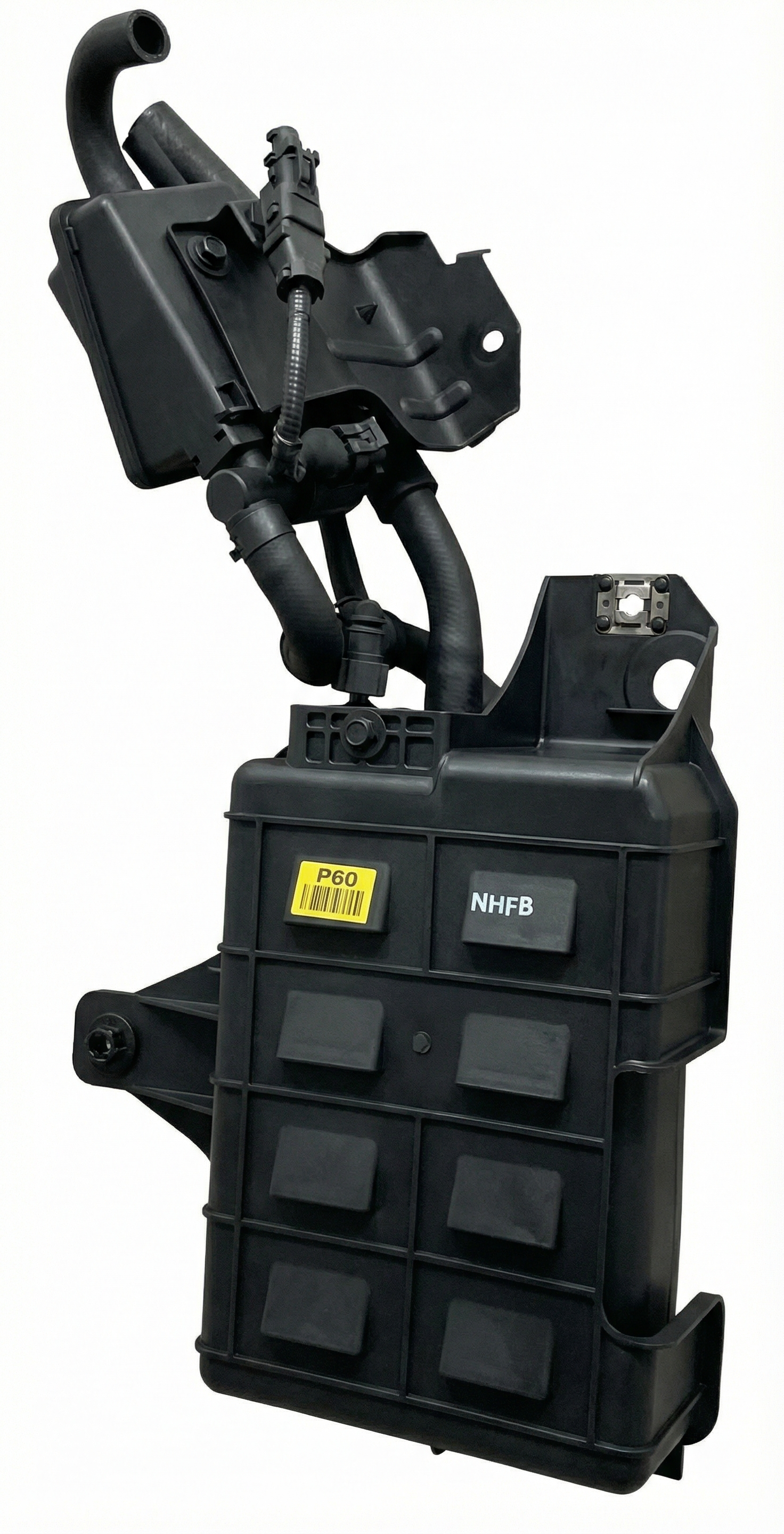
- Canister Purge Valve / Solenoid
(OEM #28910-2E000)— This is the most common component to fail, causing the P0443 code. It either fails electrically (open/shorted coil) or becomes stuck. The OEM part number 28910-2E000 fits a wide range of Hyundai/Kia vehicles, including the 2014-2018 Soul with both 1.6L and 2.0L engines. Always verify with your VIN, but this is the highly likely part.
Trusted brands: Kia (Genuine OEM), Standard Motor Products, Dorman, Bosch
OEM price range: $37-$55
Aftermarket price range: $20-$40
Related Codes That Often Appear With This One
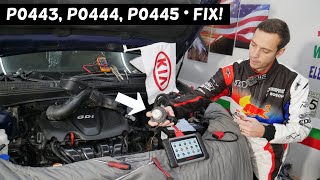
- P0444 — This code indicates 'Purge Control Valve Circuit Open,' which is a more specific version of the P0443 general circuit fault, often pointing directly to a broken wire or failed open coil in the solenoid.
- P0445 — This code indicates 'Purge Control Valve Circuit Shorted,' another specific fault that falls under the P0443 umbrella, often caused by a shorted coil winding in the valve.
Platform-Specific Known Issues
- High Failure Rate: Owners on forums frequently cite the purge valve as a common failure item that causes a check engine light, often being the first major issue the car experiences.
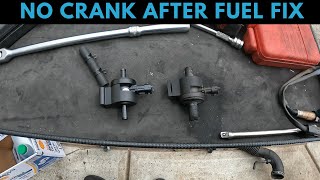
- Hard Starts After Refueling: A common owner complaint associated with this code is the engine struggling to start immediately after filling the gas tank. 🎬 See how a bad valve causes these starting issues after refueling. This happens when the valve is stuck open, allowing un-metered fuel vapors to flood the intake manifold.
Mechanic-Grade Diagnostic Values
- Purge Control Solenoid Valve (PCSV) internal resistance — expected: Approximately 26 Ω at 68°F (20°C). Failure: A reading of 0 Ω indicates a short, while an infinite (OL) reading indicates an open circuit.
- Voltage at PCSV connector (power side pin) — expected: Approximately 12V (Battery Voltage) with Ignition ON, Engine OFF. Failure: No voltage suggests a blown fuse (e.g., 'SENSORS 2') or an open wire from the main relay.
- ECM Pin for PCSV Control — expected: Pin 72 on the ECM connector is the control output for the Purge Control Solenoid Valve.. Failure: This pin can be checked for continuity back to the PCSV connector's control-side pin.
Scan Tool Commands That Help
- Kia GDS (Global Diagnostic System): Actuation Test for EVAP Purge Solenoid — This bidirectional command allows a technician to manually command the purge valve to open and close while the engine is running. This is used to verify if the solenoid clicks and functions as commanded by the PCM, helping to isolate a faulty valve from a wiring or PCM driver issue.
- Kia GDS (Global Diagnostic System): Reset Adaptive Values — After replacing a component like the purge valve, it can be beneficial to reset the engine control module's learned adaptive values to ensure it starts with a clean slate and correctly learns the operating parameters of the new part.
Wiring & Ground Locations
- ECM Pin 72 — On the main Engine Control Module (ECM) connector, for the 2019 1.6L GDI model.. This is the specific pin that the ECM uses to send the control (ground-side) signal to the Purge Control Solenoid Valve (PCSV). A continuity test from this pin to the PCSV connector can confirm if the control wire is intact.
- Engine Ground Strap — Typically runs from the engine block to the chassis, often near the intake manifold or strut tower.. While not a direct cause of a P0443 circuit code, a poor or corroded main engine ground can cause a variety of electrical issues and unpredictable behavior in sensors and solenoids. Verifying the main grounds are clean and tight is a good practice when diagnosing any electrical fault.
- Fuse 'SENSORS 2' — In the under-hood fuse and relay box.. This fuse often supplies the 12V power to the purge control valve. If this fuse is blown, the valve will have no power, directly causing a P0443 circuit fault.
Real Owner Repair Stories
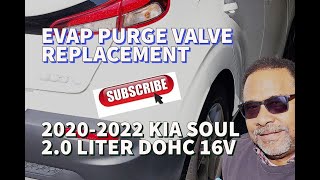
- YouTube - '2019-2025 KIA SOUL - BAD Evaporative (EVAP) Purge Valve' (2022 Kia Soul w/ 2.0L Nu MPi engine) — Check Engine Light with codes P0441, P0443, P0444, or P0445, rough idle, poor engine performance.
✅ What actually fixed it The video demonstrates the replacement of the EVAP purge valve as the direct fix for these symptoms and codes. The process involved disconnecting two hoses, one electrical connector, and a rubber retaining clip.
Diagnostic Flowchart
Used vs. New Parts: Buying Guide for This Vehicle
When a used part is the smart pick: Given the extremely low cost of new aftermarket purge valves (often under $30) and the high failure rate of this specific part, buying a used one from a junkyard is generally not recommended. The risk of the used part failing soon after installation outweighs the minimal cost savings.
Donor-vehicle mileage cap: roughly under 50000 miles for the part to have meaningful remaining life.
What to inspect on the donor part:
- Ensure the plastic housing is not cracked or brittle.
- Check that the electrical connector pins are clean, straight, and free of corrosion.
- If possible, test the resistance with a multimeter before purchase; it should be around 26 ohms.
OEM-only on this vehicle (don't cheap out):
- While not strictly required, using a Genuine Kia/Hyundai part is often preferred by owners for better longevity, as some aftermarket versions have reported failures.
Aftermarket brands forum-validated for this vehicle:
- Standard Motor Products (SMP)
- Bosch
Brands owners have reported issues with on this vehicle:
- Dorman: Some owner reviews for the Dorman 911-349 replacement part on platforms like AutoZone's website report that the check engine light returned after installation, suggesting potential quality or compatibility issues with this specific application.
Real Owner Stories
Aggregated from forums and TSBs cited above. Mileages and costs reflect what owners reported in those sources.
2014 Kia Soul
Symptoms: The check engine light came on.
What fixed it: Replacing the canister purge valve resolved the issue.
Source hint: r/KiaSoulClub on Reddit - 'Purge valve issues'
2016 Kia Soul
Symptoms: The engine was struggling to start immediately after filling the gas tank.
What fixed it: Replacing the canister purge valve, which was stuck open.
Source hint: Hard Starts After Refueling
2015 Kia Soul
Symptoms: Check engine light was on. The purge valve would click when 12V was applied, but a multimeter test showed its resistance was 10.5 ohms, which is out of the correct 26-ohm specification.
What fixed it: Replaced the purge valve because the incorrect resistance reading confirmed it was electrically faulty.
Source hint: r/MechanicAdvice on Reddit - 'Testing purge valve: clicks but bad ohms?'
Related OBD-II Codes
Frequently Asked Questions
Where is the canister purge valve located on my 2014-2019 Kia Soul?
Why is my Kia Soul hard to start right after I get gas?
How can I test the purge valve on my Kia Soul myself?
What fuse should I check first for a P0443 code?
Are there any aftermarket purge valve brands I should avoid for my Soul?
Can I use a purge valve from a Hyundai Elantra or Kia Forte in my Soul?
Is it a good idea to buy a used purge valve from a junkyard?
Helpful Videos
Used OEM Parts in Stock

New Aftermarket Parts Available


The information in this article is provided for general reference and educational purposes only. Vehicle specifications, procedures, and part compatibility can vary by production date, trim level, and region. Always consult your vehicle's factory service manual and verify part numbers before purchasing or performing repairs. Safety-critical components such as airbags, seat belts, and braking systems should be installed by a qualified professional.
- Kia Soul:
- 🧭 Diagnostic Flowchart
- 🎬 Helpful Videos
- 🛍️ Shop This Part
- What's Unique About the 2014-2019 Kia Soul
- Symptoms You May Notice
- Most Likely Causes
- Rare But Worth Checking
- Diagnosis Steps
- Parts You'll Likely Need
- Related Codes That Often Appear With This One
- Platform-Specific Known Issues
- Mechanic-Grade Diagnostic Values
- Scan Tool Commands That Help
- Wiring & Ground Locations
- Real Owner Repair Stories
- Used vs. New Parts: Buying Guide for This Vehicle
- Real Owner Stories
- 2014 Kia Soul
- 2016 Kia Soul
- 2015 Kia Soul
- Related OBD-II Codes
- Frequently Asked Questions
- 🎟️ Get 5% Off