

P0446 on 2007-2010 Hyundai Elantra: EVAP Vent Circuit Causes and Fixes
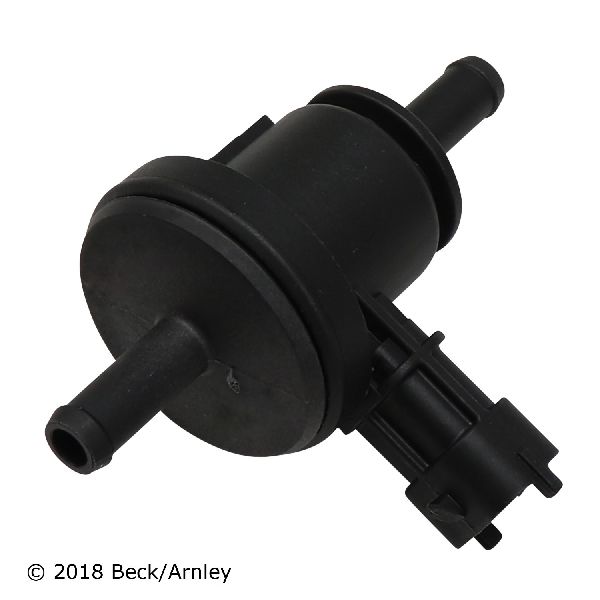
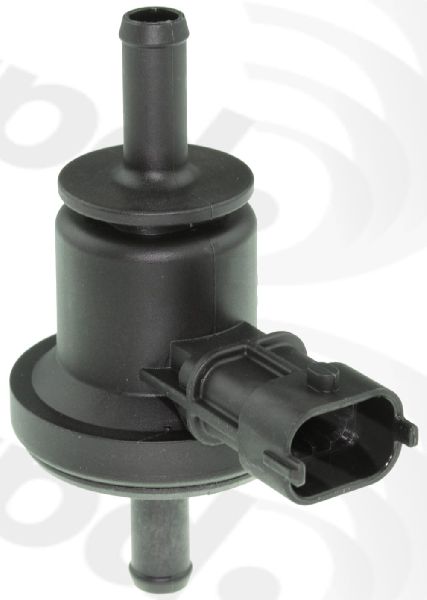
On a 2007-2010 Hyundai Elantra, code P0446 is most often caused by a faulty Canister Close Valve (CCV) located near the charcoal canister at the rear of the vehicle. Replacing the valve is the typical fix. However, it is crucial to inspect the charcoal canister for signs of disintegration (black pellets in the hoses), as a failed canister will quickly clog a new valve, causing the code to return.
- P0446 on your Elantra points to a problem with the Canister Close Valve (CCV) or its circuit, located at the rear of the car.
- The most likely fix is replacing the Canister Close Valve.
- Before replacing the valve, check its hoses for black charcoal pellets. If you find any, you must replace the charcoal canister as well to prevent a repeat failure.
- This is a DIY-friendly repair for most home mechanics with basic tools.
- The vehicle is safe to drive with this code, but it will fail an emissions test and you may have trouble filling the gas tank.
What's Unique About the 2007-2010 Hyundai Elantra
For this generation of Elantra (chassis code 'HD'), a common point of failure is not just the Canister Close Valve (CCV) itself, but the charcoal canister it's attached to. Over time, the charcoal inside the canister can break down, sending small carbon particles into the vent valve and hoses. This can clog a brand new replacement CCV if the canister is not inspected or replaced at the same time, leading to the code returning. Technicians on professional networks have specifically noted this recurring issue on Hyundai models.
Symptoms You May Notice
- Check Engine Light is on.
- A faint fuel odor may be noticeable near the rear of the vehicle.
- Difficulty refueling (the gas pump nozzle clicks off repeatedly before the tank is full). This happens because the blocked vent path prevents air from escaping the tank as fuel enters.
- In rare cases, a slight decrease in fuel economy.
- Replacing the gas cap. While a bad gas cap can cause other EVAP codes (like P0455 or P0456 for leaks), it is not a typical cause for a P0446 circuit/vent blockage code.
- Replacing the purge valve. The purge valve is located in the engine bay and has its own set of diagnostic codes (e.g., P0443). P0446 specifically points to the vent circuit at the rear of the vehicle near the fuel tank.
Most Likely Causes
- Faulty Canister Close Valve (CCV) / Vent Valve 🔴 High Probability → Shop Vapor Canister The valve is located under the car near the rear driver's side wheel, exposing it to road salt, moisture, and debris which can lead to internal corrosion, electrical failure, or the valve becoming mechanically stuck.
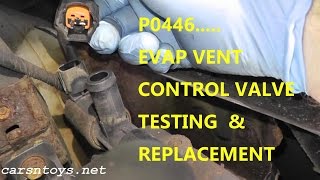
How to confirm: Locate the valve on or near the charcoal canister. Disconnect the electrical connector and test for 12V power with the key on. You can also use jumper wires to apply 12V and ground directly to the valve's pins to see if it clicks open and closed. A failure to click indicates a bad valve. A scan tool with bidirectional controls 🎬 Watch: How to test and replace the vent control valve can also command the valve to close, and you should hear a click.
Typical fix: Replace the Canister Close Valve.
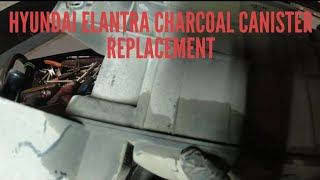
Est. part cost: $70-$150 - Clogged or Failed Charcoal Canister 🟡 Medium Probability → Shop Vapor Canister As documented by technicians, the charcoal inside the canister can disintegrate, sending black pellets into the EVAP lines and clogging the Canister Close Valve. This is a known issue on some Hyundai models and can be caused by age, contamination, or over-filling the fuel tank.
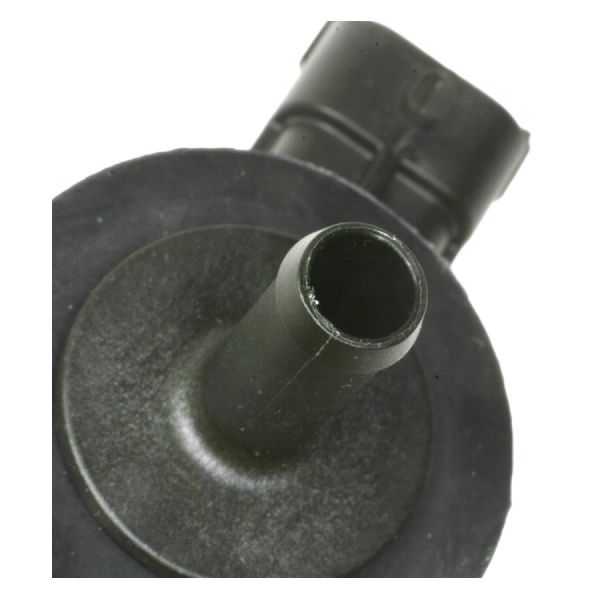
How to confirm: Disconnect the hoses from the charcoal canister. If black charcoal pellets fall out, the canister has failed and must be replaced. The failed canister may also feel heavier than a new one and can have a foul, non-gasoline smell.
Typical fix: Replace the charcoal canister and the Canister Close Valve. It is critical to also blow out all connected EVAP hoses with compressed air to clear any remaining debris before installing new parts.
Est. part cost: $150-$250 - Damaged Wiring or Corroded Connector ⚪ Low Probability The wiring for the CCV is routed under the vehicle, making it susceptible to damage from road debris or corrosion from moisture and road salt, especially in winter climates.
How to confirm: Visually inspect the wiring harness and connector leading to the CCV for any breaks, chafing, or green/white corrosion on the pins. Use a multimeter to check for continuity from the connector back to the PCM (Powertrain Control Module), if you have a wiring diagram.
Typical fix: Repair the broken wire or clean/replace the corroded connector.
Est. part cost: $5-$50
Rare But Worth Checking
- Blocked Vent Hose: Spiders or insects can build nests in the fresh air vent hose for the EVAP system, causing a blockage that can trigger this code. This is a well-documented, though uncommon, cause across many vehicle makes. Always check the hoses for obstructions.
- Faulty Fuel Tank Pressure Sensor: → Shop Fuel Tank A faulty fuel tank pressure sensor can incorrectly report pressure values to the ECU, leading it to misinterpret the vent valve's function and set a P0446 code. This is rare and would likely be accompanied by other codes.
Diagnosis Steps
- Visually inspect the area around the charcoal canister (located near the fuel tank, typically in the driver's side rear wheel well area). Look for any obviously disconnected hoses, cracked lines, or damaged wires.
- Disconnect the electrical connector from the Canister Close Valve (CCV). Check for corrosion on the pins.
- With the ignition key in the 'ON' position (engine off), use a multimeter to verify that battery voltage (approx. 12 volts) is present at the power pin on the connector. A wiring diagram can confirm pinout.
- If power is present, test the CCV itself. Use jumper wires to apply 12V and a ground directly to the two pins on the valve. You should hear an audible 'click'. If there is no click, the valve is faulty and needs to be replaced.
- If the valve clicks, the issue may be a blockage. Disconnect the hoses from the charcoal canister and CCV. Inspect for black charcoal pellets. If found, the canister has failed and must be replaced along with the CCV.
- Inspect the vent hose that runs from the CCV to its fresh air source. Ensure it is not clogged with dirt, debris, or insect nests.
- If you have a capable OBD-II scan tool, command the vent valve to close and monitor the fuel tank pressure sensor data. This can help confirm if the valve is responding to ECU commands.
- If the valve tests good, power is present, and there are no blockages, the problem may be in the ground control wire leading back to the Powertrain Control Module (PCM) or, in very rare cases, the PCM itself.
Parts You'll Likely Need
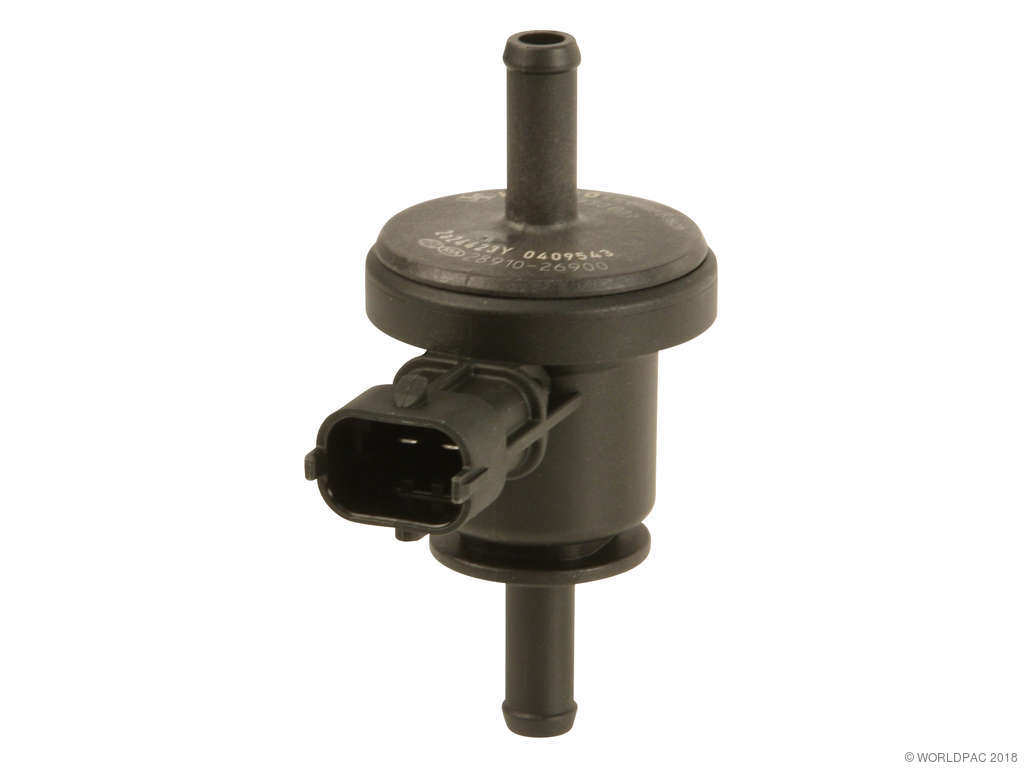
- Canister Close Valve (Vent Valve)
(OEM #31430-2H000)— This is the most common failure part for this code. It is an electromechanical valve that wears out over time or gets clogged by debris or charcoal pellets.
Trusted brands: Hyundai (OEM), Dorman, Standard Motor Products (SMP), APDTY
OEM price range: $120-$170
Aftermarket price range: $70-$110 - Charcoal Canister
(OEM #31420-2H000)— Required if the old canister is found to be disintegrating and shedding charcoal particles, which will clog the new vent valve. Failure to replace a bad canister will likely cause the P0446 code to return.
Trusted brands: Hyundai (OEM)
OEM price range: $150-$250
Aftermarket price range: $100-$180
Technical Service Bulletins (TSBs) & Recalls
- While no specific TSB for the 2007-2010 Elantra and P0446 was found, Hyundai and other manufacturers have issued TSBs for similar models (like GM trucks) regarding dust and debris intrusion into the vent valve, requiring the replacement of the valve and sometimes relocation of the vent hose filter.
Platform-Specific Known Issues
- Owner Experience: Recurring Code After Valve Replacement: A common story on forums involves an owner replacing only the Canister Close Valve to fix P0446. The code disappears for a short time but returns. The root cause is often a failing charcoal canister that sheds carbon pellets, clogging the brand new valve. The correct repair requires replacing both components and clearing the lines.
- Repair Story: Difficulty Refueling as Primary Symptom: An owner on a Car Talk forum described a P0446 issue where the main complaint was the inability to fill the gas tank without the pump constantly clicking off. This points directly to a blocked vent path, as air cannot escape the tank during fueling. This symptom strongly suggests a clogged CCV or canister, rather than a simple electrical fault.
Mechanic-Grade Diagnostic Values
- Canister Close Valve (CCV) Solenoid Coil Resistance — expected: 20-40 ohms. Failure: A reading of infinite ohms indicates an open circuit, while a reading near 0 ohms indicates a short. Either requires valve replacement.
- Voltage at CCV Connector Power Pin — expected: ~12V (Battery Voltage). Failure: No voltage indicates a problem upstream, such as a blown fuse or a break in the power wire.
Scan Tool Commands That Help
- Hyundai GDS (Global Diagnostic System) or equivalent professional scan tool: EVAP System Active Test / Vent Valve Command — This function allows a technician to command the Canister Close Valve to open and close without the engine running. It is used to verify if the valve is physically responding (an audible click should be heard) and to check if the PCM's control circuit is functioning correctly. This is a crucial step to differentiate between a faulty valve, a wiring issue, or a blockage.
Wiring & Ground Locations
- BCM (Body Control Module) — Located in the center of the dash, behind the A/C controls.. While the PCM/ECM controls the EVAP system, wiring diagrams show the BCM is a central hub for many vehicle functions and wiring harnesses in the dash area, making it a reference point for tracing circuits.
- I/P Junction Box — Under the left side of the dash, near the kick panel.. This junction box contains multiple fuses and connectors. The 15A fuse for the EVAP system is likely located here, and it's a primary check point if no power is found at the CCV connector.
- Ground Point Gf21 — Located at the right kick panel.. Poor grounds are a common cause of intermittent electrical faults. While not the specific ground for the CCV, knowing the location of major chassis grounds in the vehicle is essential for comprehensive circuit testing.
OEM Part Supersession History
31430-2H500→31430-2H000— Part number consolidation or minor revision by the manufacturer.
Heads up: Multiple parts sources confirm that 31430-2H000 replaces 31430-2H500, indicating they are interchangeable for the 2007-2010 Elantra.
Diagnostic Flowchart
Real Owner Stories
Aggregated from forums and TSBs cited above. Mileages and costs reflect what owners reported in those sources.
1999 Hyundai Elantra
Symptoms: The owner experienced a recurring P0446 code shortly after replacing the Canister Close Valve.
What fixed it: Replaced the charcoal canister, which was 'coming apart' and sending charcoal pellets into the newly installed valve.
Source hint: iATN (International Automotive Technicians Network)
Hyundai (Model Unspecified)
Symptoms: The previous owner's main complaint was being completely unable to fill the gas tank without the pump constantly clicking off.
What fixed it: Diagnosed as a blocked vent path in the EVAP venting system (clogged CCV or canister) preventing air from escaping during fueling.
Source hint: Car Talk Community
Chevy (Model Unspecified)
Symptoms: Triggered a P0446 code. The canister did not feel restricted when blowing through it by mouth, but it was noticeably heavier than a new part.
What fixed it: Replaced the restricted charcoal canister.
Source hint: ScannerDanner Forum
Related OBD-II Codes
Frequently Asked Questions
Why is my 2007-2010 Elantra so hard to put gas in with the P0446 code?
I replaced the Canister Close Valve on my Elantra, but the P0446 code came back. What did I miss?
Where is the Canister Close Valve located on the 2007-2010 Hyundai Elantra?
Are there any TSBs for the P0446 code on the 2007-2010 Elantra?
Can overfilling my gas tank cause a P0446 code on my Elantra?
Does the Kia Forte have the same P0446 issues as my Elantra?
Helpful Videos
We Have This Part in Stock


The information in this article is provided for general reference and educational purposes only. Vehicle specifications, procedures, and part compatibility can vary by production date, trim level, and region. Always consult your vehicle's factory service manual and verify part numbers before purchasing or performing repairs. Safety-critical components such as airbags, seat belts, and braking systems should be installed by a qualified professional.
- Hyundai Elantra:
- 🧭 Diagnostic Flowchart
- 🎬 Helpful Videos
- 🛍️ Shop This Part
- What's Unique About the 2007-2010 Hyundai Elantra
- Symptoms You May Notice
- Most Likely Causes
- Rare But Worth Checking
- Diagnosis Steps
- Parts You'll Likely Need
- Technical Service Bulletins (TSBs) & Recalls
- Platform-Specific Known Issues
- Mechanic-Grade Diagnostic Values
- Scan Tool Commands That Help
- Wiring & Ground Locations
- OEM Part Supersession History
- Real Owner Stories
- 1999 Hyundai Elantra
- Hyundai (Model Unspecified)
- Chevy (Model Unspecified)
- Related OBD-II Codes
- Frequently Asked Questions
- 🎟️ Get 5% Off