

P0446 on 1999-2004 Oldsmobile Alero: EVAP Vent Control Fixes & Causes
On a 1999-2004 Alero, code P0446 is almost always caused by a clogged or faulty EVAP canister vent valve, located at the rear of the car near the fuel tank. Replacing the charcoal canister assembly, which includes the valve, is the most common fix. Expect to pay $100-$250 for the part.
- P0446 on an Alero or its N-body siblings almost always points to a blockage in the EVAP vent system at the rear of the car.
- The most probable cause is a clogged or failed vent valve, which is often replaced along with the charcoal canister as a single assembly (e.g., ACDelco 214-2149).
- Do not immediately suspect the gas cap or the purge solenoid in the engine bay; these parts are common misdiagnoses for this specific code.
- Before buying parts, perform a visual inspection of the canister and hoses for clogs and test the vent valve for operation with a scan tool or by applying 12V power.
- Ensure your engine is OFF when refueling to avoid confusing a normal system self-test with a fault.
What's Unique About the 1999-2004 Oldsmobile Alero
The Oldsmobile Alero and its GM N-body siblings (like the Pontiac Grand Am and Chevrolet Malibu) have a well-documented history with this code. The issue is rarely a complex electrical failure and is most often a simple mechanical one: the vent valve or the attached charcoal canister gets clogged with road debris, dust, or internal charcoal media. A GM Technical Service Bulletin for similar trucks highlights that driving in dusty environments can clog the vent hose and trigger P0446. Another TSB notes that trying to refuel with the engine running can mimic a symptom of this code (premature fuel pump shut-off) because the system may be running a self-test, so it's important to rule out this normal behavior.
Symptoms You May Notice
- Check Engine Light is on.
- Difficulty filling the fuel tank; the gas pump nozzle clicks off repeatedly before the tank is full.
- A faint fuel odor around the rear of the vehicle.
- In some cases, no noticeable symptoms other than the Check Engine Light.
- Replacing the gas cap. A bad gas cap typically causes a leak code (like P0442, P0455, or P0457), not a vent restriction code like P0446. However, some owners have reported fixing the code with a new cap, suggesting it can be a rare contributing factor.
- Replacing the EVAP Purge Solenoid. This valve is located in the engine bay and controls vapor flow to the engine. While it's part of the EVAP system, its failure mode and associated codes (like P0443 or P0496) are different. Replacing it will not fix a P0446.
Most Likely Causes
- Clogged or Faulty EVAP Canister Vent Valve 🔴 High Probability → Shop Vapor Canister The vent valve is located under the car, mounted to the charcoal canister behind the driver's side rear wheel, making it highly susceptible to clogging from road dust, debris, and even spider webs. The valve's internal solenoid can also fail with age or get stuck.
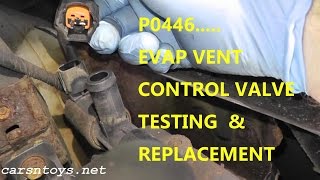
How to confirm: Locate the valve on the charcoal canister at the rear of the car. Check its air filter/inlet for blockage. With a capable scan tool, command the valve to open and close; you should hear a click. You can also remove the valve and apply 12V directly to its terminals to test for operation; if it doesn't click, it has failed. The solenoid coil should have a resistance between 20 and 50 ohms. 🎬 Watch: How to test and replace the vent control valve
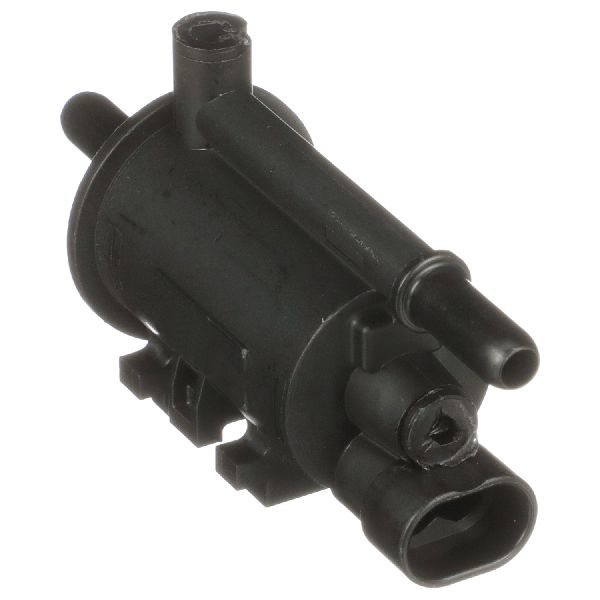
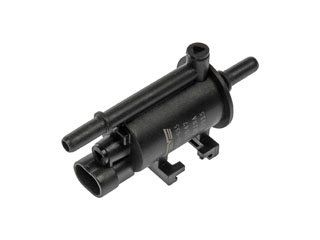
Typical fix: On many Aleros and platform mates, the vent valve is integrated with or attached directly to the charcoal canister. Often, the entire canister assembly is replaced. If the valve is separate, it can be replaced on its own. Popular replacements include ACDelco 214-2149.
Est. part cost: $90-$220 for a canister/valve assembly. A standalone valve is cheaper if available. - Clogged or Saturated Charcoal Canister 🟡 Medium Probability → Shop Vapor Canister Consistently overfilling the fuel tank (topping off after the pump clicks) can force liquid gasoline into the canister, saturating the charcoal pellets. This causes them to break down, creating a blockage that prevents the system from venting properly.
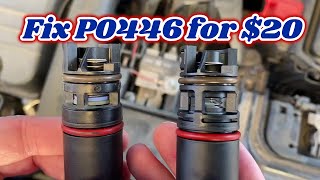
How to confirm: If the vent valve and its hoses are confirmed to be clear, but airflow is still restricted, the canister itself is the likely culprit. You may hear charcoal pellets rattling inside if it has failed. 🎬 See this walkthrough on how to fix P0446 on GM cars You can also remove the canister and try to blow through the vent port; if air doesn't pass, it's clogged internally.
Typical fix: Replace the charcoal canister. This part is often sold as an assembly with a new vent valve already attached. Dorman part 911-030 is a common aftermarket replacement for the assembly.
Est. part cost: $90-$220 - Blocked EVAP Vent Hose ⚪ Low Probability The rubber or plastic hoses leading to and from the vent valve can become clogged with mud or debris, or can become brittle and collapse internally. Some GM systems have a remote filter box at the end of the vent hose that can get packed with dirt.
How to confirm: Disconnect the hoses from the vent valve and canister and attempt to blow compressed air through them. If air cannot pass freely, the hose is blocked. Trace the hose to its end point to check for a clogged filter.
Typical fix: Remove the blockage or replace the clogged hose section.
Est. part cost: $10-$30 for new hose material.
Rare But Worth Checking
- Faulty Fuel Tank Pressure (FTP) Sensor: → Shop Fuel Tank This sensor reports the pressure inside the fuel tank to the computer. If it provides an incorrect reading (e.g., showing vacuum when there is none), the computer might mistakenly set a P0446 code. This is uncommon and usually triggers other codes (like P0451, P0452), but it has been reported by owners after replacing the vent valve without success. A Reddit user with a Grand Am specifically asked about this after multiple vent valve replacements failed to fix the code.
- Damaged Vent Valve Wiring or Connector: While P0446 on this car is usually mechanical, a corroded connector or broken wire leading to the vent valve can cause a circuit fault. A visual inspection and testing for 12V power at the connector with the key on is a necessary diagnostic step.
- Restricted Vent Hose Filter Box: Some GM vehicles don't just have an open vent hose; they have a small box with a filter element, often mounted up high in the chassis near the fuel filler neck to prevent water intrusion. These can become completely clogged with fine dust, perfectly replicating a stuck-closed vent valve. A GM TSB for trucks mentions this exact issue.
Diagnosis Steps
- Read the code with an OBD-II scanner to confirm P0446 is the only code present. Note that the EVAP monitor will only run its self-test when the fuel level is between 15% and 85%.
- Visually inspect the charcoal canister, vent valve, and all attached hoses located at the rear of the car, typically behind the driver's side rear wheel well liner. Look for obvious cracks, damage, or clogged lines from mud or debris.
- Inspect the vent valve's electrical connector for corrosion or damage. With the ignition key in the 'ON' position, use a multimeter to verify 12V power is present at the connector.
- If you have a bidirectional scan tool (like a Tech 2), command the vent valve solenoid ON and OFF. Listen for an audible click from the valve. No click suggests a bad valve or a wiring issue.
- If you cannot command it with a scanner, remove the valve. It is normally open. Try to blow through it. If you can't, it's stuck closed. Then, apply 12V and a ground directly to its pins to see if it clicks closed.
- If the valve works correctly, disconnect the main vent hose and check it and its remote filter (if equipped) for blockages using low-pressure compressed air.
- If the valve, wiring, and hoses are all good, the charcoal canister is likely internally blocked with broken-down charcoal and must be replaced.
- If all else fails and the code returns, investigate the Fuel Tank Pressure (FTP) sensor for incorrect readings. With the key on and engine off, the sensor's voltage should be between 1.3V and 1.7V.
Parts You'll Likely Need
- EVAP Charcoal Canister w/ Vent Valve
(OEM #17092109 (GM), ACDelco 214-2149)— This is the most common fix, as the canister often comes as an assembly with the problematic vent valve. It resolves issues of both a clogged valve and an internally blocked canister in one repair. The original valve is often difficult to separate from the canister.
Trusted brands: ACDelco, Dorman (911-030), Standard Motor Products
OEM price range: $150-$220
Aftermarket price range: $90-$150
Technical Service Bulletins (TSBs) & Recalls
- GM #00-06-04-011A: Explains the function of the enhanced EVAP system and notes that a fuel pump shutting off during refueling can be normal if the engine is running and the system is performing a self-test.
- GM TSB for Trucks (Informational): A TSB for 1999-2007 GM trucks describes how driving in dusty conditions can clog the canister vent hose assembly, causing a restriction that sets code P0446. This logic applies directly to the Alero, which has its vent components in a vulnerable location.
Platform-Specific Known Issues
- Gas Cap as an Unlikely Fix: → Shop Fuel Tank Cap While technically a misdiagnosis for P0446, a user on Pennock's Fiero Forum with an Alero reported that clearing the code and replacing a worn-out gas cap that would no longer click tightly resolved their issue. The new cap was much firmer. This is a cheap first step to try before moving to more complex parts.
Mechanic-Grade Diagnostic Values
- EVAP Canister Vent Solenoid Resistance — expected: 20 - 50 Ohms. Failure: An infinite (OL) reading indicates an open coil. A reading of 0 ohms indicates a short.
- Fuel Tank Pressure (FTP) Sensor Voltage (Key On, Engine Off) — expected: 1.3 - 1.7 Volts. Failure: A voltage stuck low (e.g., < 0.5V) or high (e.g., > 4.5V) points to a faulty sensor or a wiring issue.
Scan Tool Commands That Help
- GM Tech 2: EVAP System / Service Bay Test — This function forces the EVAP monitor to run its self-tests, allowing a technician to confirm a repair without needing to complete a full drive cycle.
- GM Tech 2 / Professional Bidirectional Scanner: EVAP Vent Solenoid ON/OFF Command — Used to directly test the vent solenoid's operation. While commanding it, the technician should listen for an audible click from the valve and monitor the FTP sensor data to see if the system responds as expected.
Wiring & Ground Locations
- EVAP Canister Vent Solenoid Connector — At the EVAP canister vent solenoid, under the rear of the vehicle near the fuel tank.. This 2-pin connector provides power and ground to the solenoid. One pin should have 12V with the key on. The other is the control ground from the PCM. Corrosion here is a common failure point.
- G102 / G103 — G102 is on the left side of the engine; G103 is on a transmission stud on the left side of the engine.. These are primary engine and chassis ground points. While not directly for the rear-mounted EVAP components, a poor connection here can cause erratic behavior in the PCM and other control modules, potentially leading to incorrect diagnostics or false codes.
Real Owner Repair Stories
- YouTube Commenter (Chevy/GMC truck with similar GM EVAP system) — P0446 code and inability to refuel without the pump constantly clicking off.
❌ Tried (didn't work) Replaced gas cap, Replaced charcoal canister, Replaced fuel tank pressure sensor, Replaced EVAP vent valve (twice)
✅ What actually fixed it The owner disconnected all the EVAP hoses going to the canister and vent valve and blew them out with compressed air. This cleared a hidden blockage (likely a spider web or debris), which resolved both the code and the refueling issue. - 2CarPros.com Forum User (2003 Pontiac Grand Am (Alero platform mate)) — P0446 code returned after warming up.
❌ Tried (didn't work) Replaced purge solenoid (OEM part), Replaced EVAP vent valve solenoid (OEM part)
✅ What actually fixed it The issue was not fully resolved in the thread, but the key diagnostic finding was an 'excessive vacuum' message on the user's scan tool. This confirmed the problem was a physical restriction, not a faulty solenoid, with the next logical step being to replace the clogged charcoal canister.
"I Checked Everything" — The Actual Cause
- P0446 is a restriction code, not a leak code. A smoke test is designed to find leaks (like P0442 or P0455) by pressurizing the system and seeing where smoke escapes. For P0446, the system is blocked, not leaking. Therefore, a smoke test will almost always pass and provide no useful diagnostic information. The correct diagnostic is to use a scan tool to monitor the Fuel Tank Pressure (FTP) sensor while commanding the vent valve open; if the vacuum doesn't release, there is a restriction.
When the Usual Fixes Don't Work
- While the vent valve and canister are the most common culprits, multiple owner stories confirm that replacing these parts—even with OEM components—does not always fix the issue. In one documented case on a similar GM vehicle, the ultimate solution was to blow out all EVAP lines with compressed air to clear a hidden debris blockage after over $1,000 was spent on parts. This indicates that a restriction in the hoses themselves can perfectly mimic a failed valve or canister and should be checked before replacing the most expensive components.
Diagnostic Flowchart
Used vs. New Parts: Buying Guide for This Vehicle
When a used part is the smart pick: A complete charcoal canister assembly from a junkyard can be a cost-effective repair, as it's primarily a passive component. It is a good option if you suspect the canister is saturated but the solenoid is okay, as you get both parts.
Donor-vehicle mileage cap: roughly under 80000 miles for the part to have meaningful remaining life.
What to inspect on the donor part:
- Source from a vehicle from a dry, non-salt-belt state to minimize corrosion on electrical connectors and hardware.
- Visually inspect the plastic housing for cracks or signs of physical damage.
- Check that all hose ports are clear and free of dirt or insect nests.
- If possible, shake the canister; if you hear loose pellets rattling inside, it has failed internally and should be avoided.
OEM-only on this vehicle (don't cheap out):
- While not strictly required, using an OEM (ACDelco) vent solenoid is highly recommended by forum veterans. Aftermarket solenoids, particularly from brands with mixed reviews, can have higher failure rates, leading to a repeat repair.
Aftermarket brands forum-validated for this vehicle:
- ACDelco (OEM supplier)
- Standard Motor Products (Often considered a reliable alternative)
Brands owners have reported issues with on this vehicle:
- Dorman: While widely available and often the cheapest option, owner reviews for Dorman's electronic components and solenoids are frequently mixed, with some reporting premature failure within days or months.
Real Owner Stories
Aggregated from forums and TSBs cited above. Mileages and costs reflect what owners reported in those sources.
Oldsmobile Alero
Symptoms: Check Engine Light with P0446. The owner confirmed power at the vent valve connector and noted that a smoke test only showed smoke exiting the vent valve when it was commanded open.
What fixed it: The user did not report a final fix in the thread, but discussion pointed towards checking the Fuel Tank Pressure (FTP) sensor or the canister itself for a blockage.
Source hint: Aleromod.com
2003 Pontiac Grand Am
Symptoms: The owner had a P0446 code and their scanner displayed a message about 'excessive vacuum' in the EVAP system.
What fixed it: Replacing both the purge and vent solenoids did not fix the issue. The symptoms strongly suggest the actual problem was a physical blockage in the charcoal canister or a vent line, preventing the system from breathing.
Source hint: 2CarPros.com - '2003 Pontiac Grand Am Code P0446, Evap System'
Oldsmobile Alero
Symptoms: Check Engine Light was on and the owner noticed their gas cap was worn out and would no longer click tightly when secured.
What fixed it: The owner cleared the code and replaced the worn-out gas cap, which resolved the issue.
Source hint: Pennock's Fiero Forum
Related OBD-II Codes
Frequently Asked Questions
Where is the EVAP canister vent valve located on my 1999-2004 Oldsmobile Alero?
I have a P0446 code and my gas pump keeps clicking off when I try to refuel my Alero. Are these related?
Can topping off my gas tank cause the P0446 code on this car?
What are the common replacement part numbers for the P0446 issue on an Alero?
I read a GM TSB about dusty conditions causing P0446 on trucks. Does that apply to my Alero?
How can I test the vent valve solenoid on my Alero without a professional scan tool?
Could a bad gas cap cause code P0446 on my Alero?
Helpful Videos
We Have This Part in Stock


The information in this article is provided for general reference and educational purposes only. Vehicle specifications, procedures, and part compatibility can vary by production date, trim level, and region. Always consult your vehicle's factory service manual and verify part numbers before purchasing or performing repairs. Safety-critical components such as airbags, seat belts, and braking systems should be installed by a qualified professional.
- Oldsmobile Alero:
- 🧭 Diagnostic Flowchart
- 🎬 Helpful Videos
- 🛍️ Shop This Part
- What's Unique About the 1999-2004 Oldsmobile Alero
- Symptoms You May Notice
- Most Likely Causes
- Rare But Worth Checking
- Diagnosis Steps
- Parts You'll Likely Need
- Technical Service Bulletins (TSBs) & Recalls
- Platform-Specific Known Issues
- Mechanic-Grade Diagnostic Values
- Scan Tool Commands That Help
- Wiring & Ground Locations
- Real Owner Repair Stories
- "I Checked Everything" — The Actual Cause
- When the Usual Fixes Don't Work
- Used vs. New Parts: Buying Guide for This Vehicle
- Real Owner Stories
- Oldsmobile Alero
- 2003 Pontiac Grand Am
- Oldsmobile Alero
- Related OBD-II Codes
- Frequently Asked Questions
- 🎟️ Get 5% Off