

P0448 on 2015-2019 Nissan Altima: EVAP Vent Control Circuit Shorted Causes and Fixes
On a 2015-2019 Nissan Altima, P0448 is most often caused by a faulty EVAP canister vent control valve or a clogged charcoal canister due to dust and debris. Replacing the vent valve is a common fix. In some cases, an ECM software update may be required as per Nissan Technical Service Bulletins to allow the permanent code to be cleared after the repair.
- P0448 on a 2015-2019 Altima points to a short or blockage in the EVAP vent control valve circuit.
- The most likely physical cause is a failed vent control valve or a charcoal canister clogged with road dust.
- A common symptom is the gas pump clicking off repeatedly when you try to refuel.
- Before replacing parts, check for Nissan TSBs, as your car may only need an ECM software update from a dealer.
- Diagnosis is straightforward for a DIYer: inspect wiring, test the valve with a 12V source, and check the canister for blockages.
What's Unique About the 2015-2019 Nissan ALTIMA
On this generation of Nissan Altima, the P0448 code is frequently linked to two specific issues. First, the design can allow road dust and debris to clog the EVAP canister and vent valve, leading to component failure. This is a widespread issue across many Nissan models. Second, Nissan has issued Technical Service Bulletins (TSBs) indicating that the Engine Control Module (ECM) can incorrectly store a permanent P0448 code due to calibration errors, requiring a software update to fix 🎬 Watch: A quick note on the P0448 software issue. after the physical fault is repaired. This means the problem isn't always just a physical part failure, but a combination of hardware and software.
Diagnostic Flowchart
Tap your situation to follow the diagnostic path that matches what you're seeing on this vehicle.
Generation note: The 2015-2019 year range covers the end of the fifth generation (L33, 2015-2018) and the first year of the sixth generation (L34, 2019). The underlying causes, particularly the vent valve and canister issues, are common to both generations within this range and are also seen on other Nissan models using these platforms.
Symptoms You May Notice
- Check Engine Light is on
- Difficulty filling the fuel tank (gas pump nozzle clicks off repeatedly).
- Slightly reduced fuel economy
- Vehicle may hesitate or run rough, especially after refueling.
- Faint fuel smell near the rear of the vehicle.
- Replacing the gas cap. While a loose or faulty gas cap can cause other EVAP codes (like P0455 or P0456), it is not a typical cause for the P0448 circuit short code.
- Replacing the vent valve without checking the canister. In some cases, a new valve will fail again quickly or won't solve the code because the canister itself is clogged with dust, which was the root cause.
Most Likely Causes
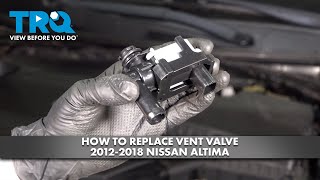
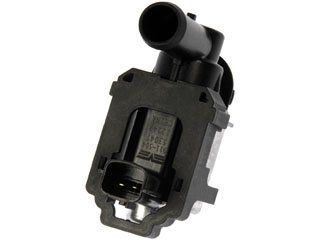
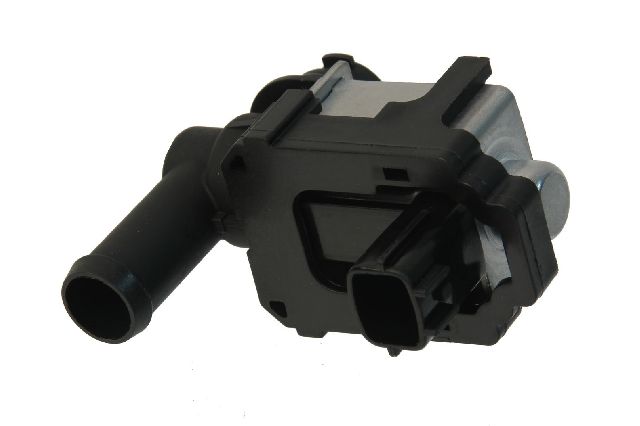
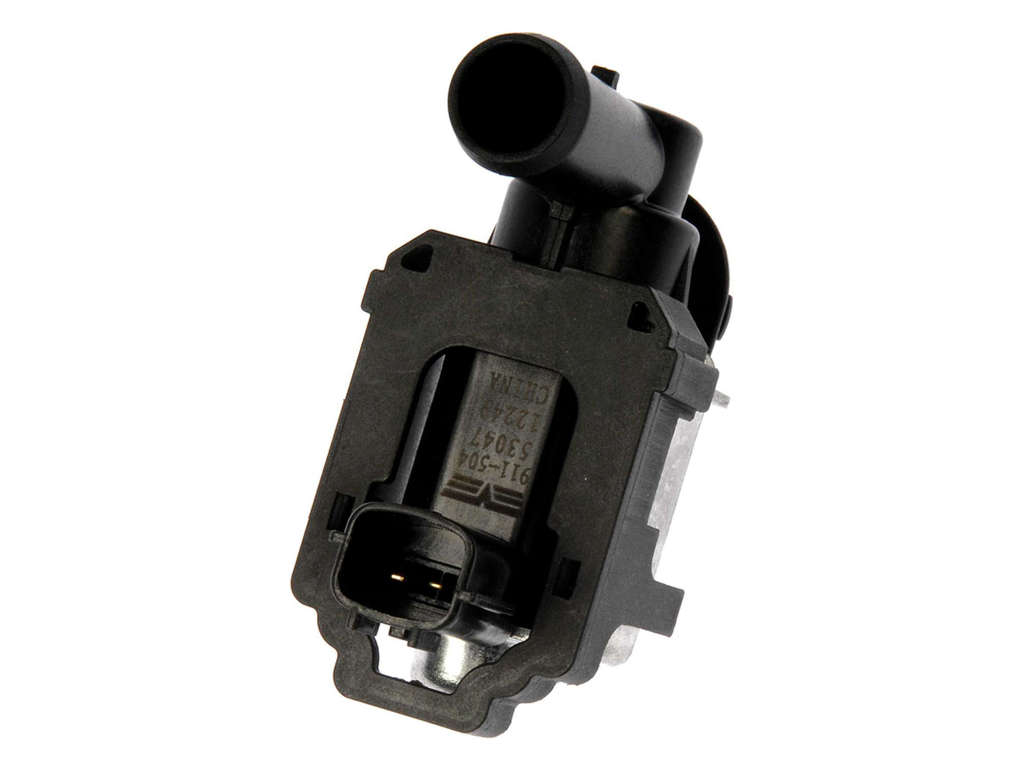
- Faulty EVAP Canister Vent Control Valve 🔴 High Probability → Shop Vapor Canister Vent Valve The valve is highly susceptible to internal failure from corrosion or becoming clogged with fine dust and debris kicked up from the road. This is the most common point of failure for this code on Nissans.
How to confirm: Locate the valve on the charcoal canister near the fuel tank, typically accessible by removing the driver's side rear wheel. Test it by applying 12V power; you should hear a distinct click as it opens and closes. If it's silent, stuck, or full of dirt, it has failed. A resistance check across the pins should read between 20 and 50 ohms.
Typical fix: Replace the vent control valve. It typically twists a quarter-turn and locks into the canister. 🎬 Watch: See a step-by-step vent valve replacement walkthrough. A new O-ring should be used.
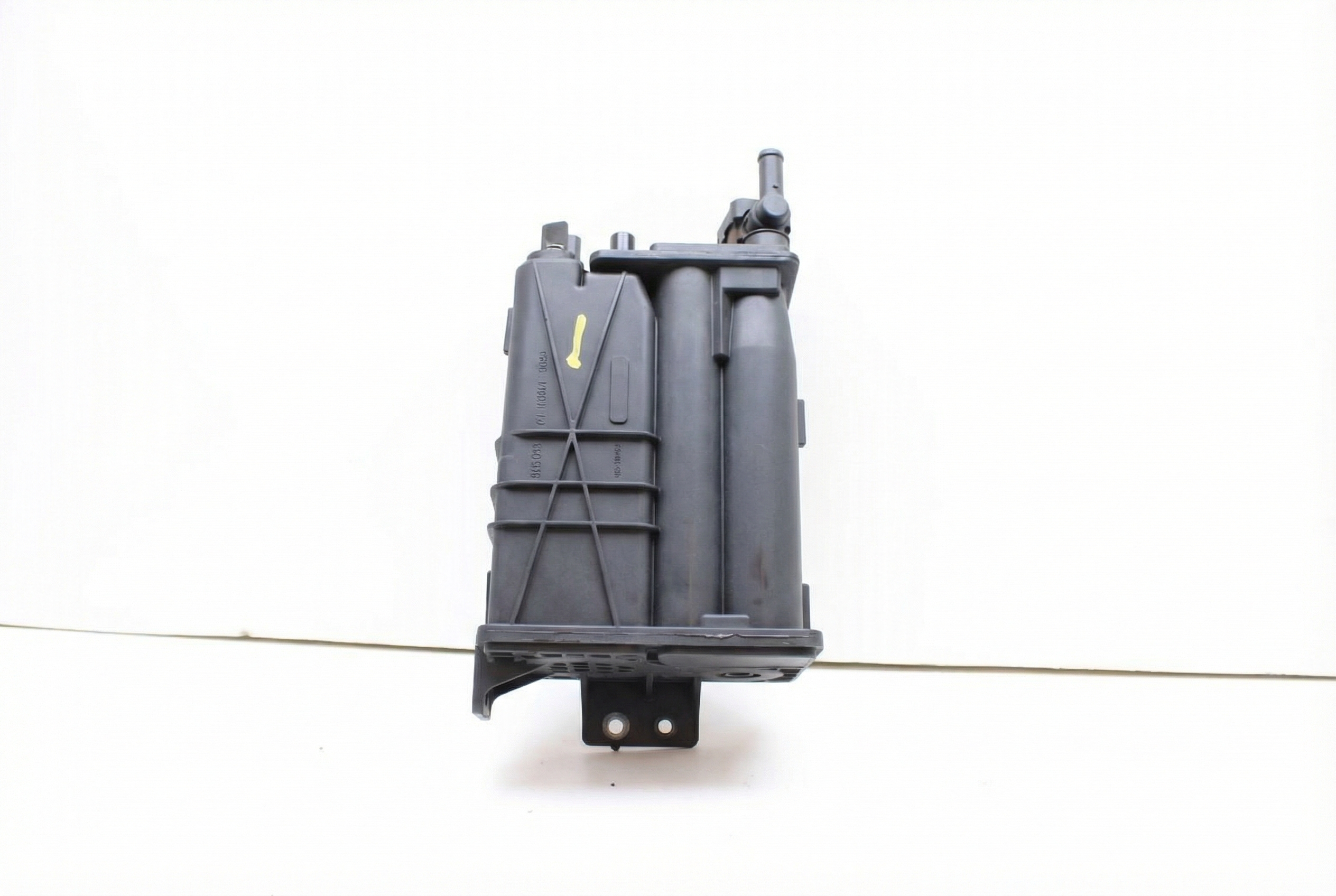
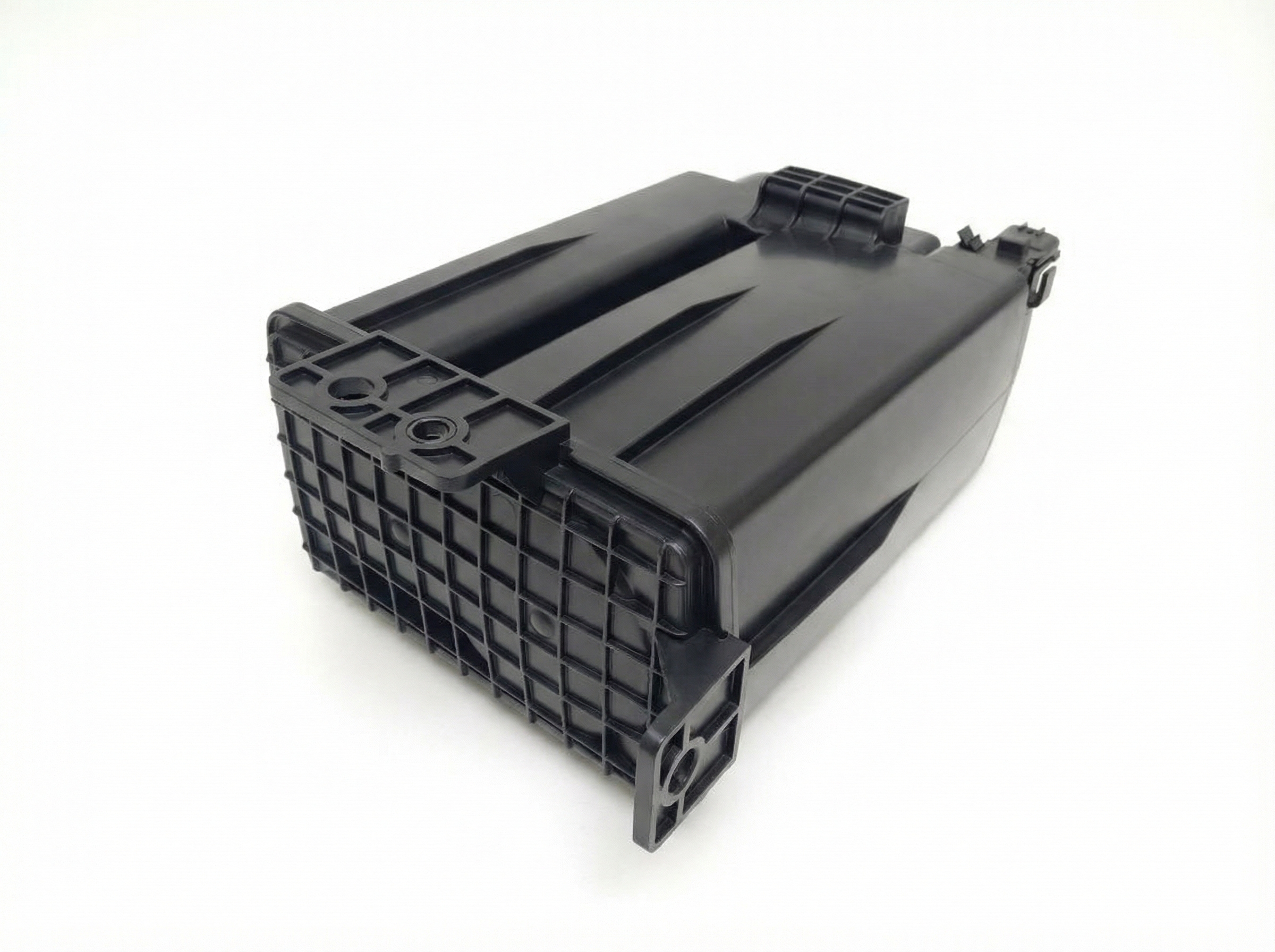
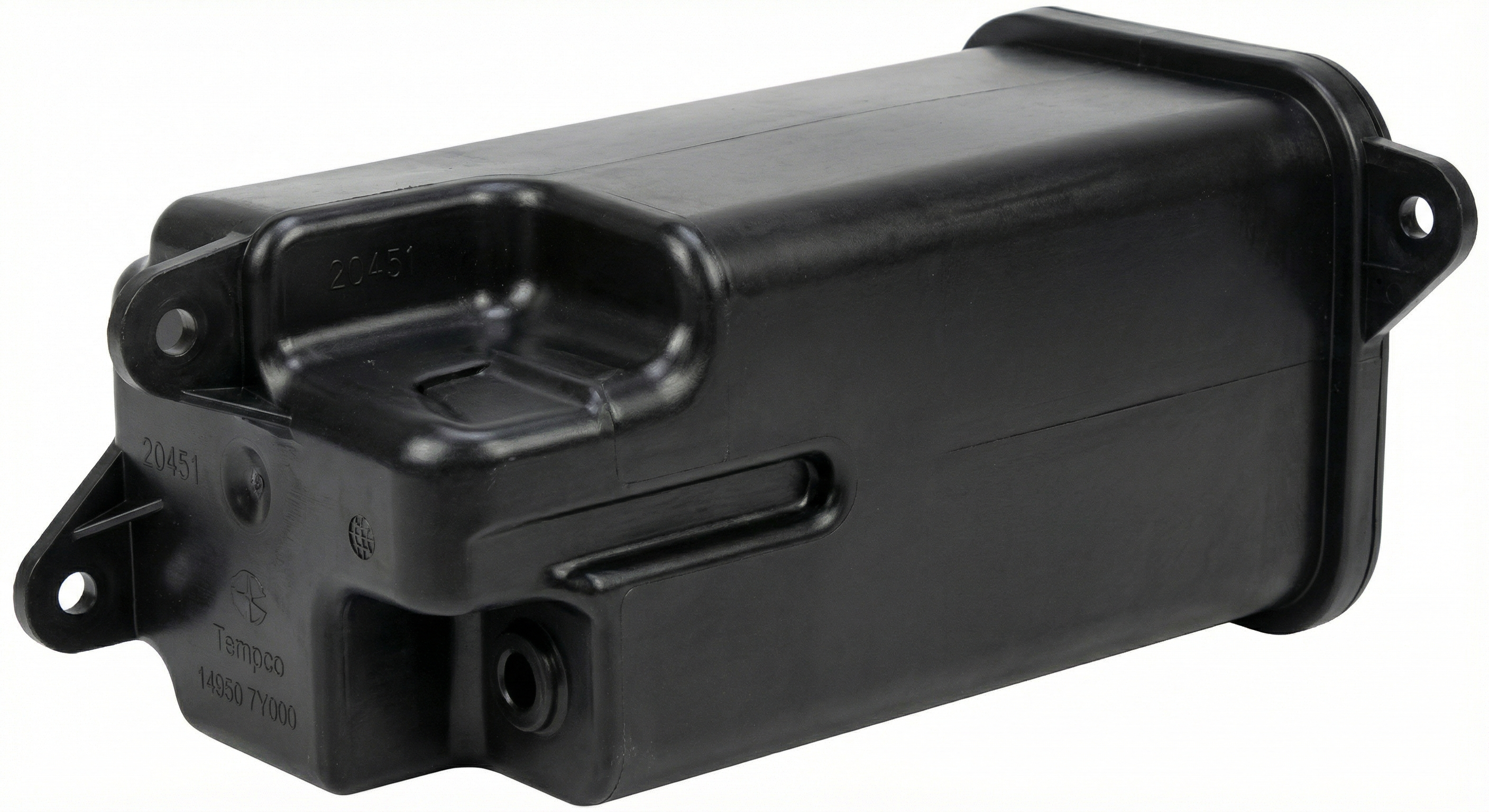
Est. part cost: $40-$90 - Clogged or Saturated EVAP Charcoal Canister 🟡 Medium Probability → Shop Vapor Canister The canister's filter can become saturated with dust and road debris, blocking airflow and causing the vent valve to malfunction or trigger a code even if the valve itself is functional. This is a known issue on many Nissan models, sometimes caused by driving on dusty roads.
How to confirm: Remove the canister (may require dropping the spare tire for access) and inspect the ports for heavy dirt accumulation. If you blow compressed air through the canister (with the valve removed) and a large cloud of dust comes out, it is clogged.
Typical fix: In many cases, the canister can be cleaned by removing it and using compressed air to blow the dust out of the vent valve port. If it's saturated with fuel from overfilling the gas tank or internally damaged, it must be replaced.
Est. part cost: $150-$250 - ECM Software Calibration Error 🟡 Medium Probability Nissan issued TSBs (e.g., NTB19-045b) stating that due to calibration errors, the ECM can improperly store a permanent P0448 code even after the physical issue is resolved.
How to confirm: This can only be confirmed by a Nissan dealership or a qualified shop with access to Nissan's CONSULT diagnostic tool. They will check the current ECM software part number against the TSB.
Typical fix: First, the underlying physical fault (like a bad valve) must be repaired. Then, the Engine Control Module (ECM) is reprogrammed with updated software to allow the permanent DTC to be erased. 🎬 Watch: How the ECM update resolves the permanent code.
Est. part cost: $0-$200 (depending on dealer labor rates) - Damaged Wiring or Connector ⚪ Low Probability The wiring to the vent control valve is located under the vehicle and is exposed to road debris and moisture, which can cause corrosion or physical damage to the harness or connector.
How to confirm: Visually inspect the wiring harness leading to the vent control valve for any breaks, chafing, or corrosion on the connector pins. Use a multimeter to check for 12V power and continuity at the connector.
Typical fix: Repair the damaged section of wiring or replace the connector pigtail.
Est. part cost: $10-$30
Rare But Worth Checking
- Spider Webs in Vent Hose: Across many Nissan models, there are documented cases where spiders build webs inside the EVAP vent hose, creating a blockage that can trigger P0448 and other EVAP codes. This is often discovered after replacing parts does not solve the issue.
- Faulty Fuel Tank Pressure Sensor: While less common for P0448 specifically, a faulty pressure sensor can sometimes cause erratic EVAP system behavior and trigger related codes.
Diagnosis Steps
- Read the code with an OBD-II scanner to confirm P0448 is present.
- Inspect the gas cap to ensure it is tight, although it's an unlikely cause.
- Locate the EVAP canister and vent control valve near the rear of the vehicle, by the driver's side rear wheel.
- Visually inspect the wiring and connector going to the vent control valve for any signs of damage, corrosion, or looseness.
- If wiring looks good, test the vent control valve. You can command it to close using an advanced scan tool or remove the valve and apply 12V power and a ground to its terminals. A healthy valve will make an audible click.
- If the valve does not click, it is faulty and needs to be replaced. Be sure to use a new O-ring.
- If the valve clicks, inspect the canister and associated hoses for blockages. A common real-world fix involves removing the canister (this may require dropping the spare tire), removing the vent valve, and using compressed air to blow dust out of the valve port.
- If the valve and canister appear to be in good working order, the issue may be the ECM software. Check for any applicable TSBs (like NTB19-045b) with a dealer or specialized repair shop.
- If a TSB applies, the underlying physical problem must be fixed first, then the ECM can be reprogrammed by a professional.
- After any repair, clear the codes and perform a drive cycle to ensure the fix was successful. Note that for Nissans, the computer may need to complete a specific drive cycle before the code fully clears from its permanent memory, which may require a dealer tool.
Parts You'll Likely Need
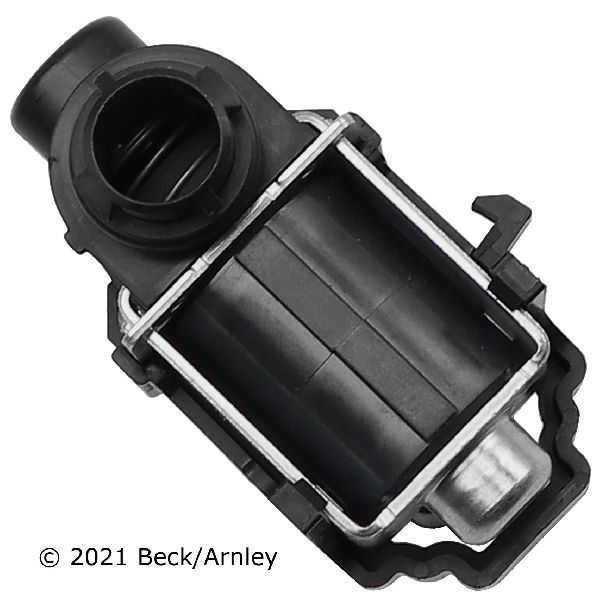
- EVAP Canister Vent Control Valve / Solenoid
(OEM #14935-JF02C (This part has been superseded multiple times. Previous numbers include 14935-JF00A, 14935-JF00B, 14935-JF00C, 14935-JF00D, 14935-JF00E).)— This is the most common failure point. It gets stuck or the internal solenoid shorts out due to debris and moisture.
Trusted brands: Nissan Genuine, Hitachi, Dorman
OEM price range: $70-$110
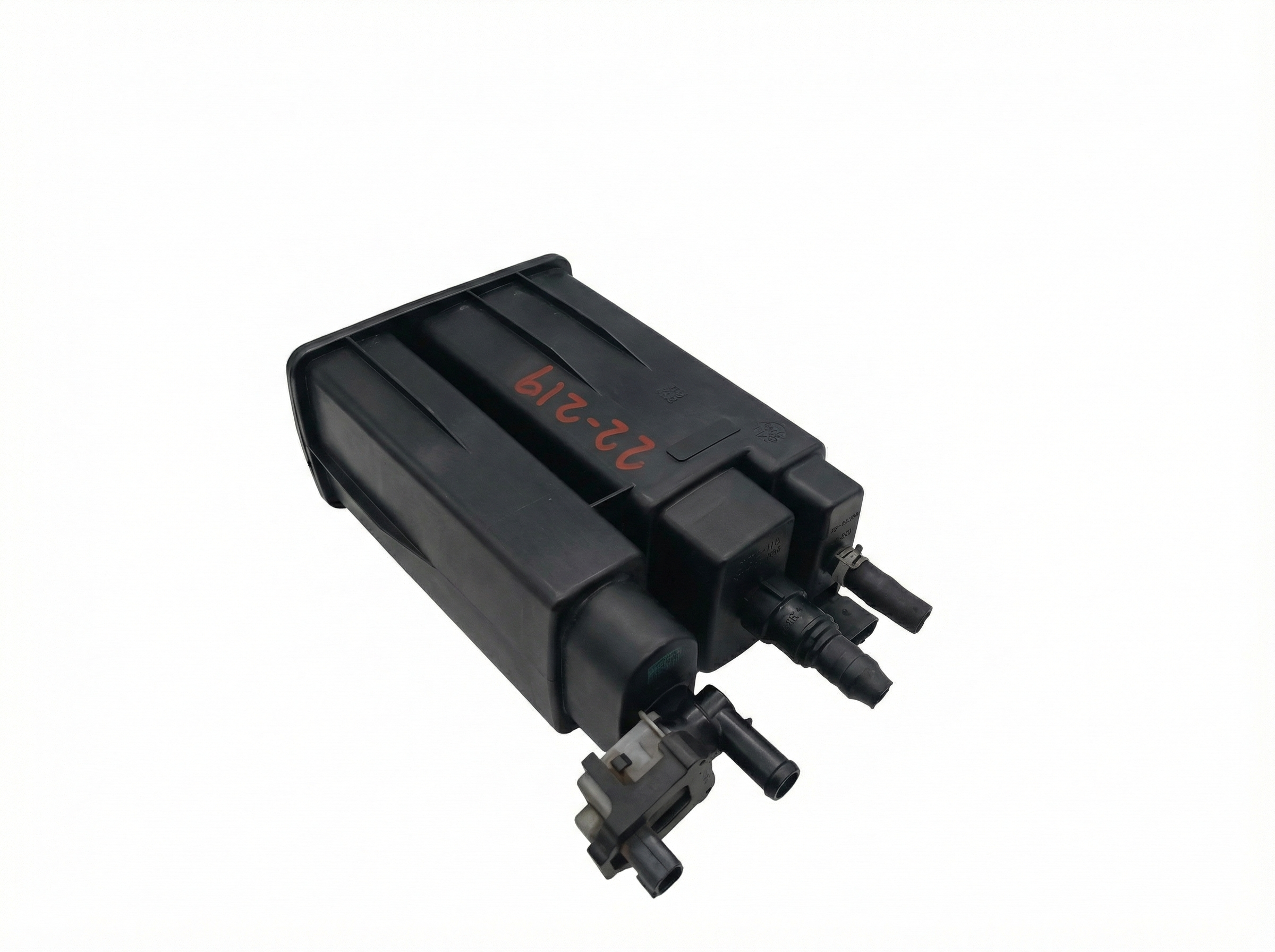
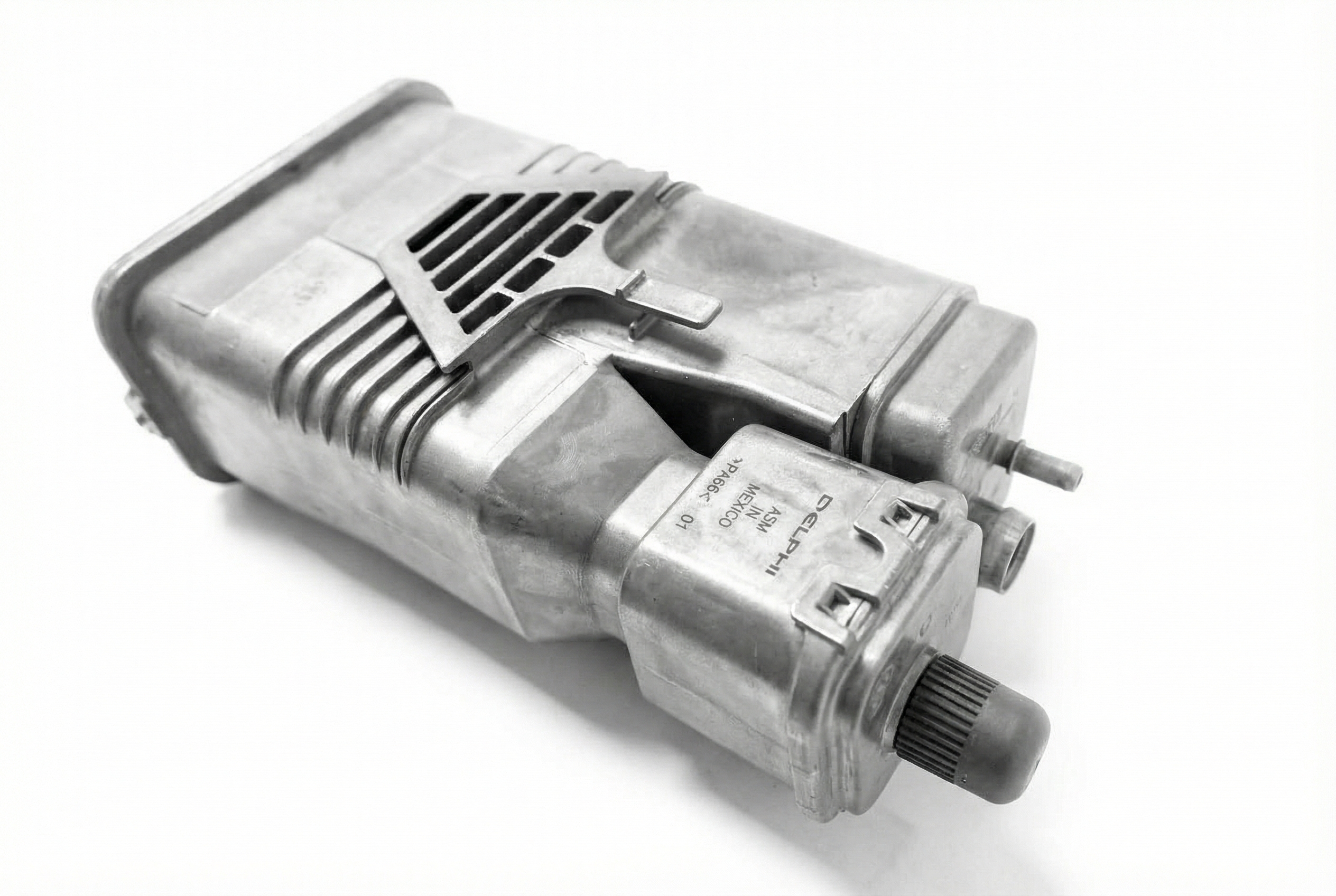
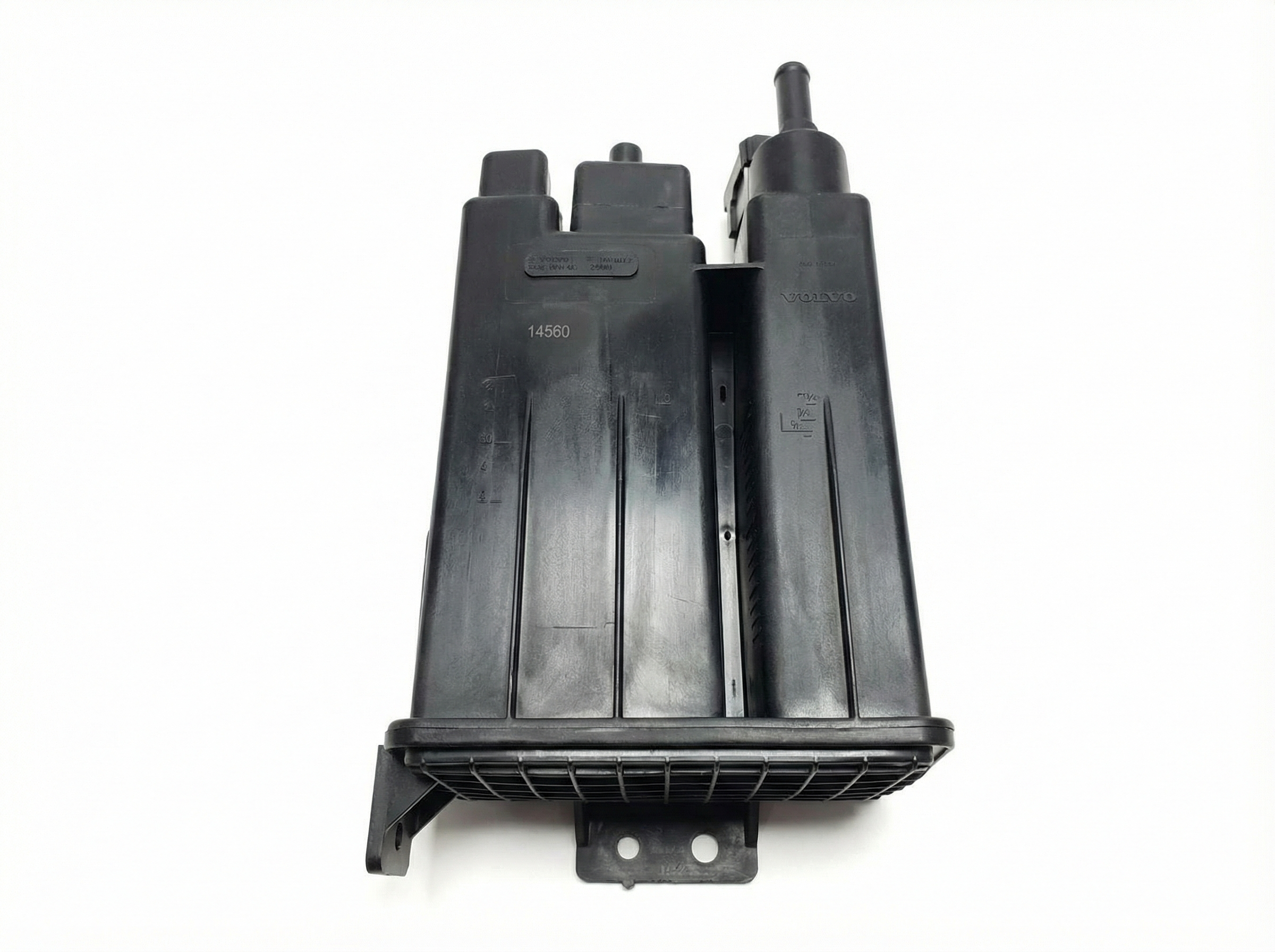
Aftermarket price range: $40-$90 - EVAP Vapor Canister — Often replaced if it has become saturated with fuel or clogged with dirt, or if the vent valve is not sold separately. Some owners successfully clean it with compressed air as a no-cost fix.
Trusted brands: Nissan Genuine, Spectra Premium
OEM price range: $200-$300
Aftermarket price range: $150-$250
Related Codes That Often Appear With This One
- P0455 — A large leak detected, which can occur if the vent valve is stuck open or the canister is cracked.
- P0456 — A very small leak detected, which can be caused by a bad O-ring on the vent valve or tiny cracks in the canister.
- P0101 — Mass Air Flow (MAF) sensor issue. Nissan TSBs NTB19-045b and P9328_P9343_P934 group P0448 with P0101, suggesting a related ECM software issue can trigger both.
Technical Service Bulletins (TSBs) & Recalls
- NTB19-045b: MIL ON WITH DTC P0087, P0101, P0448, OR P2008, VEHICLES REGISTERED OUTSIDE OF CALIFORNIA
- P9328_P9343_P934: VOLUNTARY EMISSIONS SERVICE CAMPAIGN; P-DTC REPROGRAM
- NTB19-045 / NTB19-045a: MIL ON WITH DTC P0087, P0101, P0448, OR P2008
- NTB15-079d: 2005-2019 FRONTIER; MIL ON WITH DTC P0448
- NTB15-075a: 2006-2015 TITAN; MIL ON WITH DTC P0448
Platform-Specific Known Issues
- ECM Reprogram for Permanent DTC: Nissan issued TSB #P9328_P9343_P934 for some models registered in California, and NTB19-045b for vehicles outside California, acknowledging that ECM calibration errors could improperly store a permanent P0448 DTC. The fix requires a dealer to first repair the physical cause (e.g., the valve) and then reprogram the ECM.
- Real-World Fix: Cleaning the Canister: A well-documented fix on owner forums involves removing the EVAP canister, taking off the vent valve, and using compressed air to blow the accumulated dust and debris out of the canister. One owner on TheNissanPath.com reported this completely solved their P0448 code after a replacement valve failed to fix the issue.
Mechanic-Grade Diagnostic Values
- EVAP Canister Vent Control Valve Solenoid Resistance — expected: 20 - 50 Ohms. Failure: A reading significantly outside this range (especially an open circuit/infinite resistance or a dead short/zero resistance) indicates a failed solenoid coil.
- Voltage at Vent Control Valve Connector (Key On, Engine Off) — expected: ~12V (Battery Voltage) on the power supply pin.. Failure: No voltage suggests a problem with the power supply from the IPDM or a blown fuse.
- Voltage on both pins of Vent Control Valve connector (Back-probed, plugged in, Key On, Engine Off) — expected: ~12V on both the power pin and the ground/control pin.. Failure: Reading 0V on the control pin indicates a short to ground in the wiring or a faulty ECM driver. Reading 0V on both pins points to a power supply issue.
Hidden / Shadow Codes Worth Checking
- Permanent DTC (P-DTC): This is not a different code number, but a status of the P0448 code. Due to an ECM software calibration issue, the P0448 code can be stored in a 'permanent' memory that cannot be erased with a standard OBD-II scanner, even after the physical fault is repaired. The Check Engine Light will remain on. (see via A standard scanner will show the P0448 code but will fail to clear it. A dealer-level tool like the Nissan CONSULT can identify the code as a P-DTC and is required for the final clearing procedure after an ECM reprogram.)
Scan Tool Commands That Help
- Nissan CONSULT or advanced bi-directional scanner (e.g., Autel): EVAP System Test / Vent Valve Activation — This command manually cycles the vent control valve solenoid on and off. It is used to listen for an audible 'click' from the valve, which confirms the solenoid is receiving the command and is mechanically attempting to move.
- Nissan CONSULT: ECM Reprogramming — This service function is required when a TSB (like NTB19-045b) applies. After the physical part (e.g., vent valve) has been replaced, the ECM must be updated with new software. This new calibration allows the stored Permanent DTC (P-DTC) to be successfully cleared.
Wiring & Ground Locations
- Intelligent Power Distribution Module (IPDM) — In the engine compartment, typically in a black box on the passenger side, near the battery and firewall.. The IPDM contains the fuse and relay that supply power to the EVAP vent control valve circuit. A failure inside this module due to water intrusion or age can cut power or cause intermittent electrical issues, triggering P0448.
- EVAP Canister Vent Control Valve Connector — Attached directly to the vent control valve on the EVAP canister, located under the vehicle near the driver's side rear wheel.. This 2-pin connector and its associated wiring are the primary points for checking for a short circuit. It is exposed to road debris and moisture, making it susceptible to corrosion and damage.
Real Owner Repair Stories
- TheNissanPath.com forum user (Nissan Pathfinder (similar EVAP system design)) — Persistent P0448 code that would return within a day or two of being reset.
❌ Tried (didn't work) Replacing the EVAP canister vent control valve ($40+ part).
✅ What actually fixed it The owner removed the charcoal canister from the vehicle, removed the vent valve, and blew a large amount of fine dust out of the canister using their mouth and compressed air. After cleaning and reinstalling, the P0448 code was resolved for free. - YouTube video by 'BarneBurger Media' (2015 Nissan Altima) — P0448 code and engine hesitation.
✅ What actually fixed it The mechanic observed a large amount of dust and dirt inside the EVAP hoses. The final repair was to replace the EVAP canister, the vent control valve, and the associated pre-filter as a complete assembly to ensure the new valve wouldn't be contaminated by the old, dusty canister.
"I Checked Everything" — The Actual Cause
- Because P0448 specifically indicates a 'Circuit Shorted' fault, it is common for a smoke test to pass with no leaks found. A smoke test is designed to find physical leaks (cracks, bad seals) in the EVAP system. However, P0448 is triggered by an electrical problem, such as an internal short in the vent valve's solenoid coil or a wire in the harness that is shorted to ground. In these cases, the system can still be perfectly sealed, causing the smoke test to show no faults, while the electrical issue persists and keeps the Check Engine Light on. The correct diagnosis requires electrical testing with a multimeter, not a smoke machine.
When the Usual Fixes Don't Work
- While replacing the EVAP vent control valve is the most common fix, multiple owner-documented repairs show this is not always sufficient. In cases where the vehicle has been operated in dusty environments, the charcoal canister itself becomes saturated with fine dirt. A user on TheNissanPath.com reported that replacing the valve did not fix their P0448 code. The final solution was to remove the canister and use compressed air to blow out a significant amount of dust, which resolved the code without replacing any additional parts. This indicates that a clogged canister can cause a functional valve to report a fault, making canister inspection or cleaning a critical diagnostic step that is often overlooked.
OEM Part Supersession History
14935-JF00A, 14935-JF00B, 14935-JF00C, 14935-JF00D, 14935-JF00E→14935-JF02C— Parts are commonly superseded to improve reliability, change materials, or enhance design. For this valve, improvements likely relate to better sealing or resistance to dust and moisture intrusion, which is the common failure mode.
Heads up: All listed previous part numbers are replaced by the latest version, 14935-JF02C. No incompatibilities are noted, but it is always best to use the latest available part number for the repair.
Helpful Videos



Used OEM Parts in Stock
New Aftermarket Parts Available


The information in this article is provided for general reference and educational purposes only. Vehicle specifications, procedures, and part compatibility can vary by production date, trim level, and region. Always consult your vehicle's factory service manual and verify part numbers before purchasing or performing repairs. Safety-critical components such as airbags, seat belts, and braking systems should be installed by a qualified professional.
- Nissan ALTIMA:
- 🧭 Diagnostic Flowchart
- 🎬 Helpful Videos
- 🛍️ Shop This Part
- What's Unique About the 2015-2019 Nissan ALTIMA
- Symptoms You May Notice
- Most Likely Causes
- Rare But Worth Checking
- Diagnosis Steps
- Parts You'll Likely Need
- Related Codes That Often Appear With This One
- Technical Service Bulletins (TSBs) & Recalls
- Platform-Specific Known Issues
- Mechanic-Grade Diagnostic Values
- Hidden / Shadow Codes Worth Checking
- Scan Tool Commands That Help
- Wiring & Ground Locations
- Real Owner Repair Stories
- "I Checked Everything" — The Actual Cause
- When the Usual Fixes Don't Work
- OEM Part Supersession History
- 🎟️ Get 5% Off