

P0449 on 2005-2009 Hyundai Tucson: EVAP Vent Valve Circuit Malfunction Causes and Fixes
On a 2005-2009 Tucson, P0449 almost always means the EVAP Canister Close Valve (also called the vent solenoid) has failed due to an an internal electrical fault. It's an affordable and easy DIY replacement located near the charcoal canister at the rear of the vehicle, typically behind the driver's side rear wheel.
- P0449 on a 2005-2009 Tucson is an electrical circuit code, not a leak code.
- The most likely cause is a failed Canister Close Valve (CCV), which is an inexpensive and easy part to replace.
- CRITICAL: The part number 28910-26900, often cited online, is for the PURGE valve in the engine bay, NOT the Canister Close Valve at the rear. Verify the correct part number with your VIN to avoid misdiagnosis.
- Before replacing the valve, always check the fuse and inspect the wiring for corrosion or damage, as the part is in an exposed location.
- A good valve should have a resistance of around 19-23 ohms. Testing this with a multimeter is the definitive way to confirm failure.
- If you have trouble refueling, the cause may be a clogged inline air filter near the CCV, even if replacing the valve clears the P0449 code.
What's Unique About the 2005-2009 Hyundai Tucson
For the first-generation Hyundai Tucson and its platform-mate, the Kia Sportage, the P0449 code is a very common and straightforward issue. The Canister Close Valve (CCV) is a known failure point, with its internal solenoid coil often breaking down over time. Unlike some vehicles where the valve is integrated into a costly canister assembly, on the Tucson it is a separate, easily accessible, and inexpensive part to replace, making it a popular DIY repair.
Symptoms You May Notice
- Check Engine Light is on
- Difficulty refueling (gas pump nozzle shuts off repeatedly)
- Possible faint fuel odor
- Rough idling or stalling (less common)
- Replacing the gas cap. A loose or faulty gas cap typically causes a small leak code (like P0456 or P0455), not a circuit malfunction code like P0449.
- Replacing the EVAP Purge Valve/Solenoid. This valve is located in the engine bay and has its own specific trouble codes (e.g., P0441). It is a different part from the vent valve/canister close valve located at the rear of the vehicle.
- Confusing Part Numbers. Many parts catalogs incorrectly list the engine bay's Purge Control Valve (e.g., 28910-26900) for a P0449 code. P0449 refers to the Canister Close Valve at the rear of the vehicle, which has a different part number that must be verified by VIN.
Most Likely Causes
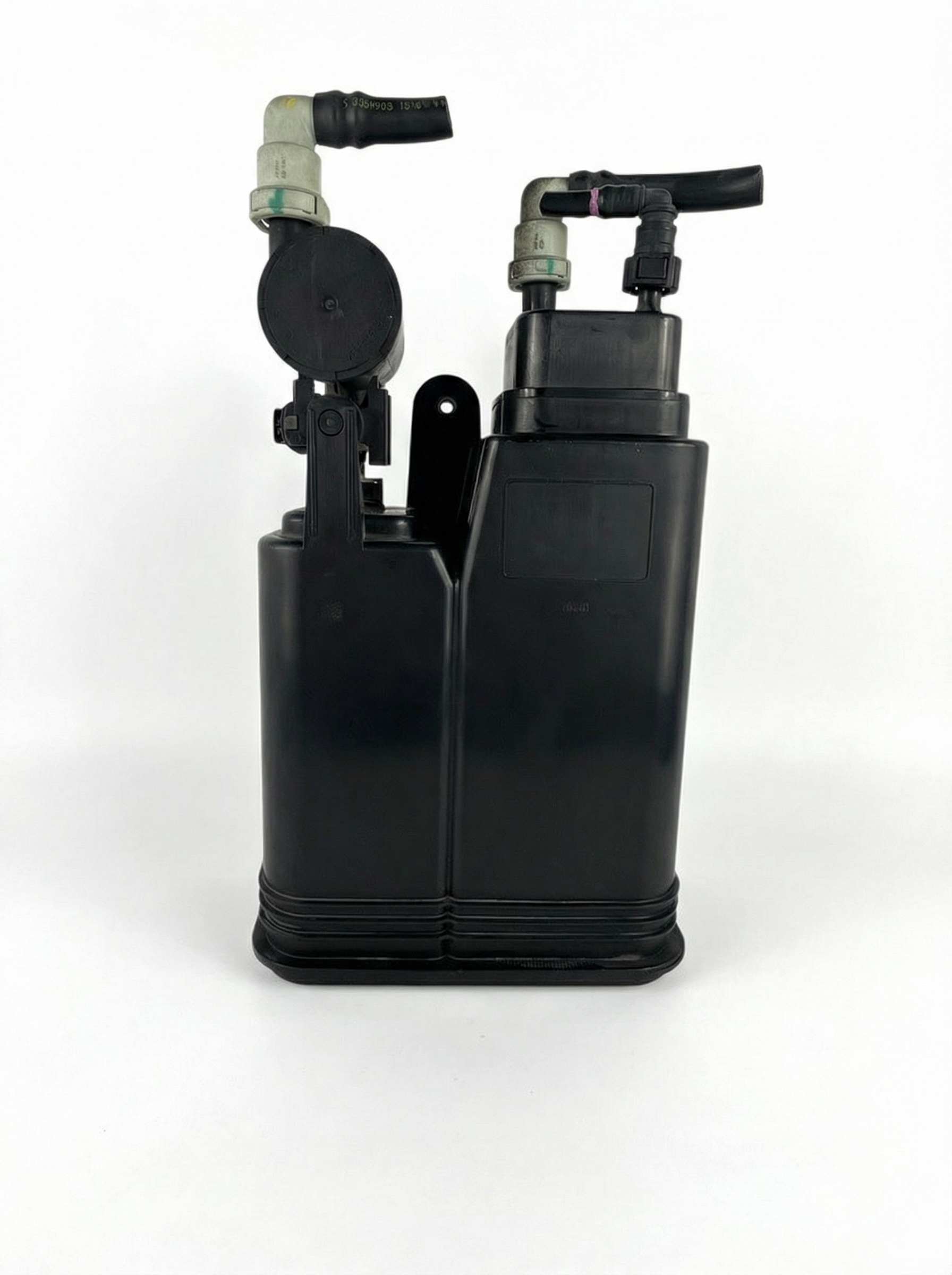
- Failed EVAP Canister Close Valve (CCV) / Vent Solenoid 🔴 High Probability → Shop Vapor Canister The internal coil of the solenoid is a common failure point due to age, heat cycles, and exposure to the elements under the car, leading to an open or shorted circuit.
How to confirm: Disconnect the valve and test the resistance across its two pins with a multimeter. A good valve should have a resistance of approximately 19-23 ohms; an infinite reading (OL) indicates an open coil and a bad valve. 🎬 Watch: How to test the EVAP vent valve Alternatively, apply 12V power and ground to the pins; a good valve will make an audible 'click', while a failed one will not.
Typical fix: Replace the canister close valve.
Est. part cost: $30-$80 - Damaged Wiring or Connector 🟡 Medium Probability The valve and its connector are located under the vehicle near the rear wheel, exposing them to moisture, road salt, and debris which can cause corrosion on the pins or physical damage to the wires over time.
How to confirm: Visually inspect the wiring harness and connector for breaks, corrosion, or loose pins. Use a multimeter or test light on the connector (with the valve disconnected and ignition on) to check for battery voltage on one wire (often Green) and a proper ground signal from the PCM on the other (often Brown or with an orange stripe).
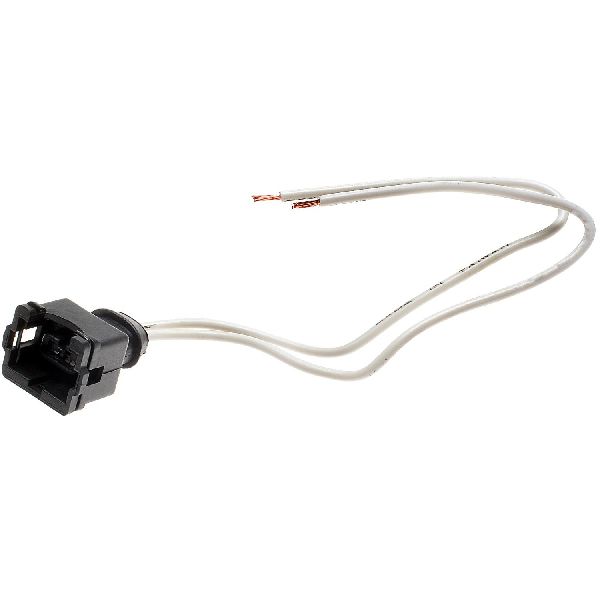
Typical fix: Repair the damaged section of the wiring harness or replace the connector pigtail. 🎬 Watch: How to repair damaged vent solenoid wiring
Est. part cost: $10-$30 - Blown Fuse ⚪ Low Probability
How to confirm: Check the vehicle's fuse box diagrams in the owner's manual for a fuse related to the emissions or EVAP system (e.g., 'ECU 1' or 'SENSOR 1') and verify it has continuity.
Typical fix: Replace the blown fuse. If it blows again, a short circuit exists in the system that must be traced.
Est. part cost: $1-$5
Rare But Worth Checking
- Clogged EVAP Canister or Filter: → Shop Vapor Canister While P0449 is an electrical code, sometimes a completely clogged charcoal canister or an associated inline filter can cause related symptoms like refueling difficulty. In some cases, charcoal pellets can break loose and jam the vent valve, causing it to fail. If replacing the valve doesn't solve refueling issues, the canister itself may be saturated or clogged.
- Faulty Powertrain Control Module (PCM): → Shop Engine Control Module (ECM) This is extremely rare. The PCM's internal driver for the vent solenoid circuit can fail. This should only be considered after the valve, wiring, and fuses have been proven to be good.
Diagnosis Steps
- Read the code with an OBD-II scanner to confirm P0449 is the primary or only code present.
- Locate and check the fuse for the EVAP system in the vehicle's fuse panel. Replace if blown.
- Safely raise the rear of the vehicle and locate the Canister Close Valve (CCV) assembly. It is typically mounted to the charcoal canister, which is located behind the driver's side rear wheel, often requiring removal of a plastic splash shield for access.
- Inspect the electrical connector and wiring going to the CCV for any signs of corrosion, cracking, or physical damage.
- Disconnect the connector. With the ignition on, use a multimeter to confirm that one pin on the connector (often a Green wire) has battery voltage. The other pin is the ground, controlled by the PCM.
- Test the valve itself. Measure the resistance between the two pins on the valve. A normal reading for this part is typically between 19 and 23 ohms. A reading of infinite ohms (OL) means the internal coil is broken and the valve is bad.
- As an alternative test, use jumper wires to apply 12V directly to the valve's pins. A good valve will produce an audible 'click'. No click means the valve has failed.
- A professional scan tool can run a bidirectional 'CANISTER CLOSE VALVE' actuation test to command the valve on and off, confirming circuit integrity and valve operation audibly. 🎬 Watch: Diagnostic variables when troubleshooting Hyundai P0449
- If the valve tests good but power or ground is missing at the connector, the wiring harness must be traced back toward the PCM to find the break or short circuit.
- If the valve was replaced and the code returns, or if refueling issues persist, inspect the hoses around the canister and the canister itself for blockages from dirt or charcoal pellets. A separate, inline air filter between the canister and valve is a known clog point that can cause refueling issues even if the P0449 code is resolved.
Parts You'll Likely Need
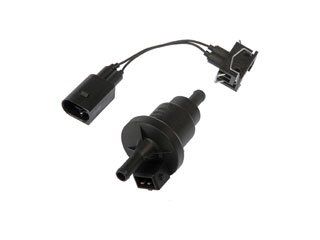
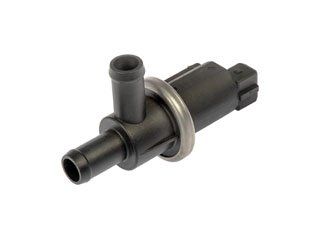
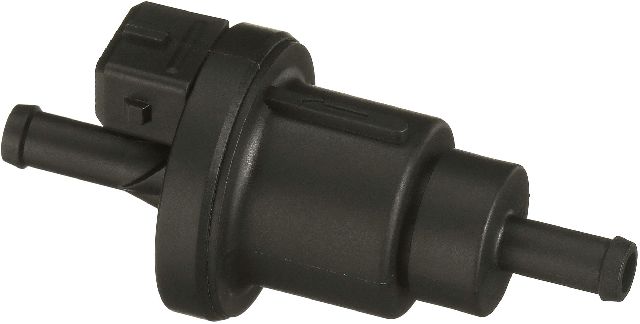
- Vapor Canister Vent Valve / Canister Close Valve
(OEM #28910-26900 (Verify with VIN - see Pass 3 Correction))— This is the most common failure point for code P0449, as the internal solenoid coil fails over time, causing an open circuit.
Trusted brands: Dorman, Standard Motor Products (SMP), Wells, SKP
OEM price range: $60-$100
Aftermarket price range: $30-$80
Platform-Specific Known Issues
- On some Hyundai models, a clogged inline EVAP filter between the canister and the vent valve can cause refueling issues, which may occur alongside the P0449 code. If you replace the valve and still have trouble filling the tank, inspect this separate filter.
- Corrosion is a significant factor for this part's failure due to its exposed location under the car, especially in regions that use road salt in the winter.
- A manufacturer service bulletin for related Hyundai models, TSB Bulletin #5NP-Q7J2C-07, explicitly identifies DTC P0449 as a "Canister Closed Valve (CCV) - Restricted Vent Circuit" issue.
Mechanic-Grade Diagnostic Values
- Canister Close Valve (CCV) Solenoid Resistance — expected: 19.8 to 22.5 ohms. Failure: Infinite resistance (OL) indicates an open coil; a reading far outside the expected range indicates a fault.
- CCV Connector Voltage (Key On, Engine Off) — expected: One pin should have ~12V (battery voltage), the other should have no voltage (it is a PCM-controlled ground).. Failure: No voltage on the power pin indicates a blown fuse or wiring break. Voltage on the ground pin indicates a short to power.
Scan Tool Commands That Help
- Hyundai GDS or equivalent professional scan tool: CANISTER CLOSE VALVE Actuation Test — This bidirectional test is used to command the CCV solenoid on and off. A technician can listen for an audible 'click' from the valve to confirm the PCM driver, wiring, and solenoid are all functioning electrically. This can confirm the valve is the problem if no click is heard, or rule it out if it clicks reliably.
Wiring & Ground Locations
- Canister Close Valve (CCV) Connector — Attached to the CCV, which is near the charcoal canister, behind the driver's side rear wheel.. This 2-pin connector is the final point of the circuit. It is highly exposed to road salt and moisture, making it a common failure point due to corrosion. One pin is 12V power (often Green), and the other is the ground signal wire from the ECM (often Brown or with an orange stripe).
Real Owner Repair Stories
- ScannerDanner YouTube Channel (2010 Hyundai Sonata (similar EVAP system and common issue)) — P0449 Check Engine Light and impossible to fill the gas tank.
❌ Tried (didn't work) Initially, just replacing the Canister Close Valve would only solve the P0449 code, but not the refueling problem.
✅ What actually fixed it There were two faults. The P0449 code was caused by a failed Canister Close Valve with an open internal coil. The inability to refuel was caused by a separate, completely clogged inline air filter located in the vent hose between the charcoal canister and the new valve. Both the valve and the filter had to be replaced to fix all symptoms. - Hyundai-Forums user 'lar3ry' (Hyundai Elantra (year not specified, post from 2006)) — Persistent P0449 code after a rear-end collision.
❌ Tried (didn't work) Clearing the code., Replacing the Canister Close Valve alone.
✅ What actually fixed it The root cause was a split fuel tube hose from the collision damage, which allowed water to enter and contaminate the purge canister and filter. The hose had to be replaced and the canister drained/dried before the new valve would function correctly and resolve the code. - NHTSA ODI #11629374 — An owner reported a P0449 code for the EVAP vent control valve which prevented them from pumping gas into the car.
- NHTSA ODI #11467031 — A report indicates that a check engine light was resolved after the defective part was replaced based on diagnostic code P0449.
"I Checked Everything" — The Actual Cause
- Because P0449 is an electrical circuit malfunction code, it is common for the EVAP system to pass a smoke test. A smoke test is designed to find physical leaks (which set codes like P0455 or P0456), not electrical faults. A technician may perform a smoke test and find no leaks, but the actual fault lies with the Canister Close Valve's internal coil, its connector, the wiring circuit, or the PCM driver, none of which are tested by smoke.
Diagnostic Flowchart
Other Known Issues on This Vehicle
Issues unrelated to this code that are worth knowing about as an owner of this generation:
- ABS/ESC Hydraulic Module Failure 🔴 High — Common after 60,000 miles, often caused by contaminated brake fluid or internal corrosion. Leads to ABS and ESC warning lights and can cause unpredictable braking behavior. (Ref: A recall (R/2021/035) was issued for later models (2015-2020) for a similar issue, but not for this generation. However, the failure is well-documented for 2004-2010 models.)
- Crankshaft Position Sensor Failure 🟠 Medium — A relatively common failure item that can cause intermittent stalling, difficulty starting, or a no-start condition. It's a frequent point of failure on many Hyundai models of this era.
- Brake Light Switch Failure 🟡 Low — A widespread issue across many Hyundai/Kia models of this period. A faulty switch can prevent brake lights from working, cause the ESC light to illuminate, and may prevent the vehicle from shifting out of Park. (Ref: Recall R/2013/056 was issued for 2007-2009 models to replace the faulty brake light switch.)
- Subframe and Suspension Component Corrosion 🔴 High — These vehicles are prone to significant rust and corrosion on the subframes and suspension components, especially in regions with road salt. This can lead to MOT/safety inspection failures.
Used vs. New Parts: Buying Guide for This Vehicle
When a used part is the smart pick: For this specific repair, a used part is not recommended. The Canister Close Valve is an electro-mechanical part with a high failure rate due to its exposed location and internal coil burnout. The cost savings are minimal compared to the high risk of receiving a part that has already failed or is near the end of its service life.
What to inspect on the donor part:
- Not applicable as used parts are not recommended for this component.
OEM-only on this vehicle (don't cheap out):
- No specific parts in this system require OEM-only, as reputable aftermarket brands are widely available and perform well.
Aftermarket brands forum-validated for this vehicle:
- Dorman
- Standard Motor Products (SMP)
- Wells
Brands owners have reported issues with on this vehicle:
- No-name, unbranded parts from online marketplaces may have poor quality control and are best avoided.
Real Owner Stories
Aggregated from forums and TSBs cited above. Mileages and costs reflect what owners reported in those sources.
2005 Hyundai Tucson — 90000 miles
Symptoms: Check engine light is on (P0449), and for the last 15,000 miles, the owner cannot fill the gas tank except for 'just a tiny bit at a time'.
What fixed it: The owner confirmed the P0449 code and identified the charcoal canister location on a lift, though the final repair was pending emissions testing.
Source hint: hyundai-forums.com owner report
2015 Hyundai Tucson
Symptoms: Owner discussing the replacement process for the Canister Close Valve; warning provided about debris in the EVAP system from a saturated canister.
What fixed it: Replacement of the Canister Close Valve.
Source hint: Hyundai Forums - "Replacing Canister Close Valve"
2006 Hyundai Elantra
Symptoms: Persistent P0449 code; technician suggested checking for water intrusion or physical damage to the canister from a previous collision.
What fixed it: Inspection of the charcoal canister for physical damage or water intrusion.
Source hint: Hyundai Forums - "Code P0449 question"
NHTSA ODI #11629373
Symptoms: While driving, the check engine light came on. A diagnostic test at a local parts store returned a P0449 code for the evaporative emissions (EVAP) vent control valve.
What fixed it: Diagnostic confirmation of the vent control valve failure.
Source hint: NHTSA ODI Report
Related OBD-II Codes
Frequently Asked Questions
Where is the Canister Close Valve (CCV) located on my 2005-2009 Tucson?
Why does the gas pump nozzle keep shutting off when I try to fill my Tucson?
Is there a recall for the EVAP system or P0449 on the first-generation Tucson?
What should the resistance be for a healthy vent solenoid on this vehicle?
I replaced the valve but the code P0449 returned. What else should I check?
Can overfilling my gas tank cause the P0449 code?
Helpful Videos


Used OEM Parts in Stock
New Aftermarket Parts Available


The information in this article is provided for general reference and educational purposes only. Vehicle specifications, procedures, and part compatibility can vary by production date, trim level, and region. Always consult your vehicle's factory service manual and verify part numbers before purchasing or performing repairs. Safety-critical components such as airbags, seat belts, and braking systems should be installed by a qualified professional.
- Hyundai Tucson:
- 🧭 Diagnostic Flowchart
- 🎬 Helpful Videos
- 🛍️ Shop This Part
- What's Unique About the 2005-2009 Hyundai Tucson
- Symptoms You May Notice
- Most Likely Causes
- Rare But Worth Checking
- Diagnosis Steps
- Parts You'll Likely Need
- Platform-Specific Known Issues
- Mechanic-Grade Diagnostic Values
- Scan Tool Commands That Help
- Wiring & Ground Locations
- Real Owner Repair Stories
- "I Checked Everything" — The Actual Cause
- Other Known Issues on This Vehicle
- Used vs. New Parts: Buying Guide for This Vehicle
- Real Owner Stories
- 2005 Hyundai Tucson — 90000 miles
- 2015 Hyundai Tucson
- 2006 Hyundai Elantra
- NHTSA ODI #11629373
- Related OBD-II Codes
- Frequently Asked Questions
- 🎟️ Get 5% Off