

P0449 on 2005-2010 Pontiac G6: EVAP Vent Solenoid Circuit Causes and Fixes
For a 2005-2010 Pontiac G6, code P0449 is almost always caused by a failed EVAP Vent Solenoid located near the gas tank. This is an electrical circuit fault, not a system leak. Replacing the solenoid, which costs between $25 and $60 for the part, is the most common fix. Before replacing, verify power and ground at the connector.
- P0449 is an electrical circuit code, not a leak code. Don't waste money on a new gas cap.
- The most likely culprit is the EVAP vent solenoid itself, located near the gas tank at the rear of the car.
- Before replacing the part, perform a basic electrical test to confirm the solenoid is receiving power (Red/White wire) and a ground signal (White wire) from the computer.
- Check the fuse in the trunk fuse box before tracing wires or replacing parts.
- The repair can be done by a DIYer with moderate skills, but be prepared for a tight workspace to access the solenoid.
- Be sure you are replacing the 'vent solenoid' by the tank, not the 'purge solenoid' in the engine bay.
What's Unique About the 2005-2010 Pontiac G6
On this generation of GM vehicles, including the Pontiac G6, the engine computer is adept at self-diagnosing its own circuits. Instead of setting a generic EVAP system code, it can pinpoint the electrical fault specifically to the vent solenoid circuit. The most common point of failure is the solenoid itself, which is mounted in a vulnerable location under the car by the fuel tank, exposing it to road grime and moisture that can lead to internal failure or corrosion in the connector.
Symptoms You May Notice
- Check Engine Light is on
- A 'Check Gas Cap' message may appear on the driver information center, although this is less common for a circuit fault
- Difficulty refueling (gas pump nozzle clicks off repeatedly), though this is more typical of a mechanically stuck-closed valve rather than a pure circuit fault.
- Replacing the gas cap. A gas cap issue typically causes a leak-related code (like P0442 or P0455), not a circuit-specific code like P0449.
- Replacing the EVAP Purge Solenoid/Valve. The purge solenoid is a different part located in the engine bay, while the P0449 code refers to the vent solenoid located at the rear of the vehicle by the fuel tank. Many DIY videos incorrectly show the purge valve when discussing P0449.
Most Likely Causes
- Failed EVAP Vent Solenoid 🔴 High Probability → Shop Vapor Canister The solenoid is located under the vehicle near the fuel tank, where it is exposed to water, salt, and debris, leading to internal corrosion and electrical failure over time. This is the most common cause by a wide margin.
How to confirm: Use a bidirectional scan tool to command the vent solenoid ON and OFF; a lack of an audible click from the rear of the car indicates failure. Alternatively, apply 12V and ground directly to the solenoid's pins; if it doesn't click, it has failed.
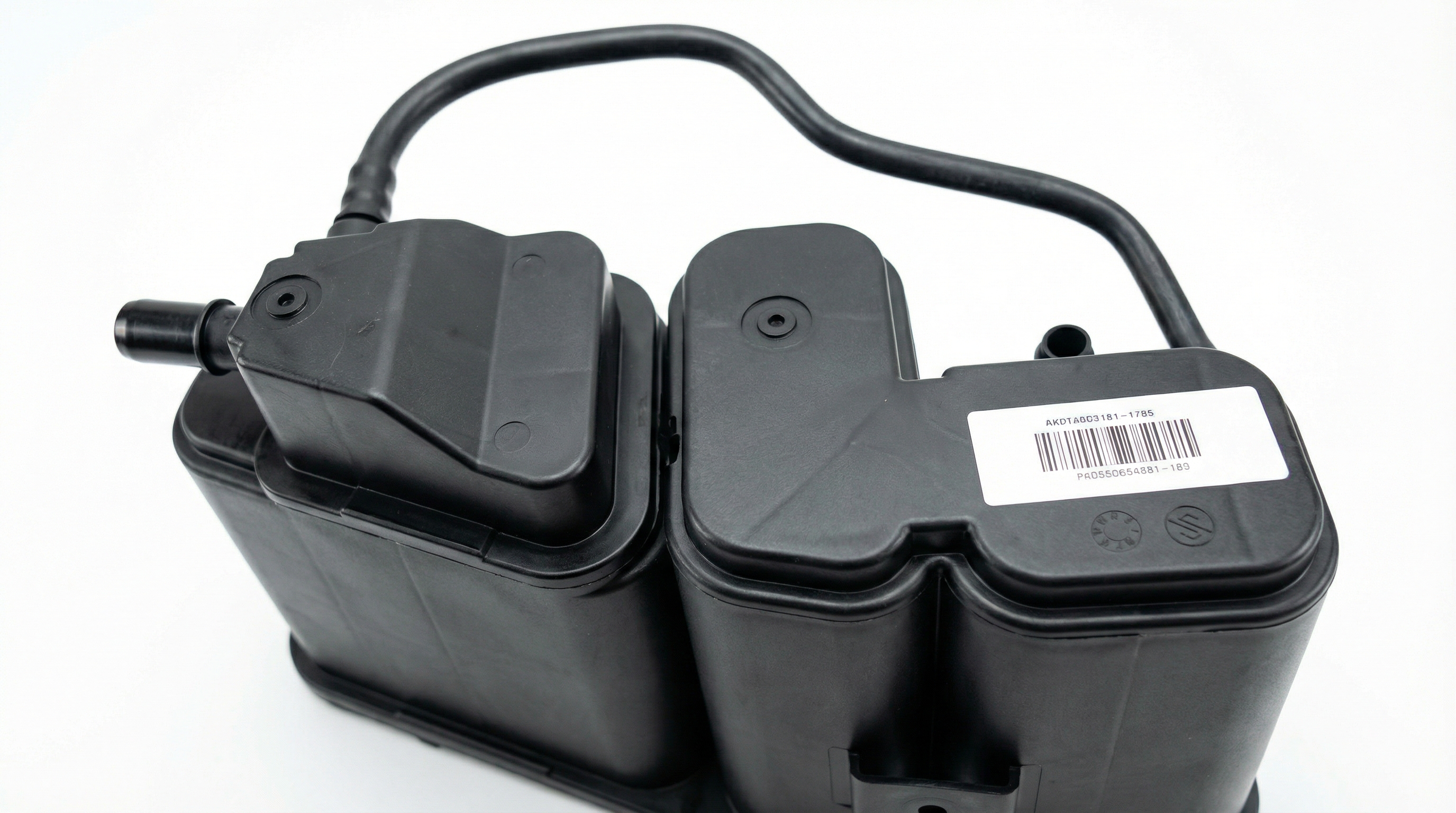
Typical fix: Replace the EVAP vent solenoid. 🎬 Watch: This step-by-step guide shows you how to fix code P0449. The solenoid is located on or next to the charcoal canister by the fuel tank.
Est. part cost: $25-$60 - Damaged Wiring or Connector 🟡 Medium Probability The wiring harness to the solenoid is also exposed under the car and can become frayed, corroed, or damaged from road debris. The connector pins can also corrode, causing high resistance.
How to confirm: Visually inspect the wiring leading to the vent solenoid for breaks, corrosion, or loose pins. Use a multimeter to check for 12V at the power wire (typically Red/White) and for continuity on the ground/control wire (typically White) back to the ECM.
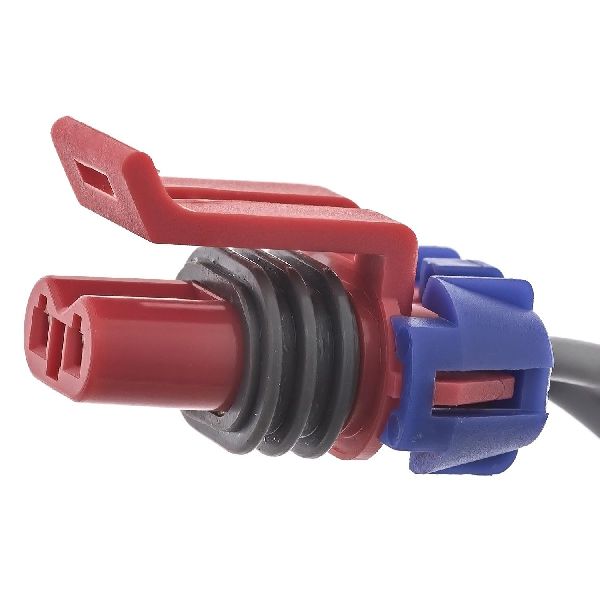
Typical fix: Repair the damaged section of the wire or replace the connector pigtail. Some replacement solenoids come with a new pigtail adapter.
Est. part cost: $10-$25 - Blown or Misplaced Fuse ⚪ Low Probability
How to confirm: Check the fuse boxes for a blown fuse. The G6 has multiple fuse boxes; the fuse for the EVAP system is typically in the rear compartment/trunk fuse block. In one documented case, a previous owner had placed a fuse in an empty slot next to the correct EVAP canister fuse slot, causing an open circuit.
Typical fix: Replace the blown fuse or move a misplaced fuse to its correct location as per the fuse box diagram. If the fuse blows again immediately, it indicates a short circuit in the wiring or the solenoid that must be diagnosed.
Est. part cost: $1-$5
Rare But Worth Checking
- Faulty Engine Control Module (ECM): → Shop Engine Control Module (ECM) This is extremely rare. The ECM should only be considered after all other possibilities, including the solenoid and its entire circuit, have been thoroughly tested and proven to be good.
Diagnosis Steps
- Read the code with an OBD-II scanner to confirm P0449 is the only code present.
- If possible, use a bidirectional scanner to command the EVAP vent solenoid ON and OFF. Listen for an audible click from the rear of the vehicle, near the passenger-side fuel tank area. No click suggests a problem with the solenoid or its circuit. The scanner may also show a circuit status of 'Open' or 'Shorted'.
- Visually inspect the vent solenoid and its electrical connector for obvious damage, corrosion, or loose wires. The solenoid is mounted on or near the charcoal canister, which is attached to the fuel tank.
- Disconnect the electrical connector at the vent solenoid. Verify that the power wire (usually Red/White) has 12 volts with the ignition on, using a test light or multimeter connected to a good ground.
- Use a test light connected to battery positive and probe the control wire terminal (usually White). Command the solenoid ON with a scan tool. The test light should illuminate as the ECM provides the ground path.
- If power and ground signals are present at the connector but the solenoid does not operate, the vent solenoid is faulty and needs to be replaced.
- If power is missing, check the 'EMISSIONS' or 'CANISTER' fuse (typically a 10A fuse) in the trunk fuse box. Ensure it is not blown and is in the correct slot.
- If ground is missing, trace the control wire (White) back towards the ECM to find the open or short in the circuit.
- If you do not have a scan tool, you can test the solenoid directly. Remove it from the vehicle and apply 12V power and a ground to its terminals. A healthy solenoid will make a distinct clicking sound.
Parts You'll Likely Need
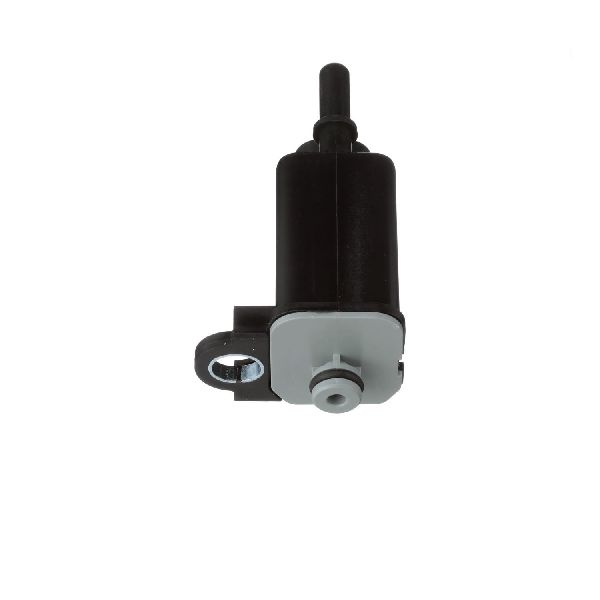
- EVAP Vapor Canister Vent Solenoid
(OEM #25932571 (This part number is superseded from 10382105, 15750484, 22728634))— This is the most common failure point for a P0449 code due to an internal electrical fault.
Trusted brands: ACDelco (OEM P/N: 214-2149 or 214-2311), Dorman (P/N: 911-058), Standard Motor Products (P/N: CVS116)
OEM price range: $40-$75
Aftermarket price range: $25-$50
Technical Service Bulletins (TSBs) & Recalls
- GM TSB 06-02-35-009G: While not for P0449, this TSB is highly relevant for G6 owners as it addresses a common 'clunk' noise from the steering system, caused by the intermediate steering shaft.
Platform-Specific Known Issues
- Access to the vent solenoid can be challenging. It is mounted on the side of the fuel tank, and mechanics may need to lower the tank partially or work through the passenger-side rear wheel well to gain access.
- The solenoid slides onto a plastic track on the fuel tank/charcoal canister assembly. A lock tab must be depressed (often with a pick) to slide the old unit off toward the rear of the vehicle.
Mechanic-Grade Diagnostic Values
- EVAP Vent Solenoid Coil Resistance — expected: 20 - 40 Ω. Failure: A reading of infinite resistance (open circuit) or a value significantly outside the expected range indicates a failed solenoid coil.
- Voltage at Vent Solenoid Connector (Power Wire) — expected: Approximately 12V (Battery Voltage) with Key On, Engine Off.. Failure: A reading below 10V suggests a problem with the power supply circuit, such as a blown fuse or a wiring issue.
- Voltage at Vent Solenoid Connector (Control Wire) — expected: Approximately 12V when the solenoid is commanded OFF (circuit open). Drops to near 0V when the ECM commands the solenoid ON (provides ground).. Failure: Voltage that does not change when commanded with a scan tool indicates a wiring fault or a failed ECM driver.
Scan Tool Commands That Help
- GM Tech2 / GDS2: EVAP Vent Solenoid ON/OFF Command — This is the primary bidirectional control used to diagnose P0449. It allows the technician to command the solenoid on and off to listen for an audible click and to test the circuit's electrical integrity with a test light or multimeter.
- GM Tech2 / GDS2: EVAP Service Bay Test — This is a more comprehensive automated test that cycles the entire EVAP system, including the vent and purge solenoids, to verify system integrity after a repair. It can be used to confirm the P0449 fix and ensure all readiness monitors will set for an emissions test.
Wiring & Ground Locations
- EVAP Vent Solenoid Connector — Directly on the EVAP vent solenoid, which is mounted on or near the charcoal canister by the fuel tank, typically accessible from the passenger rear wheel well area.. This is the primary point for electrical testing. Pin A (Red/White wire) is the 12V power feed from the rear fuse block. Pin B (White wire) is the control circuit that is grounded by the ECM.
- Rear Fuse Block — Located in the trunk, on the left side behind a panel.. This fuse block contains the 'EMISSIONS' or 'CANISTER' fuse (typically a 10A or 15A fuse, e.g., Emission 2 fuse 5) that supplies power to the vent solenoid. A blown or misplaced fuse here will cause a P0449.
- G301 / G302 — G301 is on the right rear of the passenger compartment, under the rear seat back. G302 is in the corresponding position on the left side.. These are the main body ground points in the rear of the vehicle. While not the direct ground for the solenoid (which is ECM-controlled), a poor body ground in this area can cause various electrical issues and should be inspected if chasing intermittent faults.
- ECM (Engine Control Module) — Located on the left side of the engine compartment.. The ECM provides the switched ground for the vent solenoid control circuit on the White wire. A break in this wire between the solenoid and the ECM, or a failed driver inside the ECM, will set P0449.
Real Owner Repair Stories
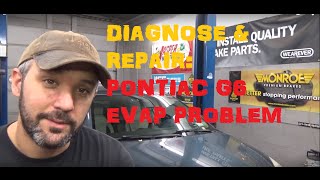
- YouTube - 'Chevy/Pontiac/GMC p0449 evap vent valve fix' (2007 Pontiac Grand Prix (similar GM platform)) — Immediate Check Engine Light with code P0449 upon starting the vehicle.
❌ Tried (didn't work) The owner had already replaced the EVAP vent solenoid, but the code returned immediately.
✅ What actually fixed it The technician found a fuse placed in an empty, non-functional slot in the trunk fuse box, right next to the correct slot for the EVAP system. Moving the fuse to the correct position restored power to the circuit and fixed the code. - YouTube - 'Repair: Pontiac G6 Engine Light P0449' (2006 Pontiac G6) — Check Engine Light with code P0449.
✅ What actually fixed it A bidirectional scan tool confirmed the circuit was 'Open' or 'Shorted'. Testing at the connector showed power and ground signals were being correctly sent by the ECM. This isolated the fault to the vent solenoid itself. Replacing the EVAP vent solenoid resolved the issue.
OEM Part Supersession History
10382105, 15750484, 22728634→25932571— Standard part evolution and consolidation by GM.25932571→ACDelco 214-2149 or GM Genuine 214-2311— Transition from OEM part numbers to brand-specific service part numbers.
Heads up: ACDelco 214-2149 and 214-2311 are both listed as compatible replacements for the Pontiac G6 for this code. They are functionally equivalent for this repair.
Diagnostic Flowchart
Other Known Issues on This Vehicle
Issues unrelated to this code that are worth knowing about as an owner of this generation:
- Sudden Loss of Electric Power Steering (EPS) 🔴 High — Very common, particularly on 2005-2009 models. Can occur at any mileage, but frequently reported around 70,000-100,000 miles. (Ref: NHTSA Recalls: 14V153, 14772, 15V165. GM extended warranty coverage was also offered.)
- Clunking or Rubbing Noise from Steering 🟠 Medium — Widespread issue caused by a sticking or slipping intermediate steering shaft. (Ref: GM TSB 06-02-35-009G recommends replacing the intermediate shaft with an updated part (P/N 25810450).)
- Faulty Transmission Shift Solenoids (4T45-E) 🟠 Medium — Common on vehicles equipped with the 4-speed 4T45-E automatic transmission. Symptoms include failure to shift, getting stuck in gear, or harsh shifting. (Ref: NHTSA Recall 12V460000 for fractured transmission shift cable tabs on 2008-2010 models.)
- Corroded Body Control Module (BCM) Connector 🟡 Low — Can cause various strange electrical issues, most notably inoperative brake or tail lights. (Ref: NHTSA Recall 14V252000 addresses voltage fluctuations in the Brake Apply Sensor (BAS) circuit due to BCM resistance.)
- Prematurely Worn Front Wheel Hub Bearings 🟠 Medium — A common source of a 'helicopter' or 'airplane' type noise that changes pitch when turning.
Used vs. New Parts: Buying Guide for This Vehicle
When a used part is the smart pick: For the EVAP vent solenoid, a used part is generally not recommended. It is a relatively inexpensive new part, and the failure mode is often internal electrical failure or clogging from debris, which would be impossible to assess on a used part. The labor to replace it is significant enough that risking a second failure with a used part is not cost-effective.
Donor-vehicle mileage cap: roughly under 50000 miles for the part to have meaningful remaining life.
What to inspect on the donor part:
- If you must buy used, source from a vehicle in a dry, non-salt-belt climate to minimize corrosion risk.
- Visually inspect the electrical connector pins for any signs of green or white corrosion.
- Check the ports for excessive dirt or debris.
- If possible, test the part on the bench with a 12V source to ensure it clicks before purchasing.
Aftermarket brands forum-validated for this vehicle:
- ACDelco (OEM supplier)
- Dorman (e.g., 911-058) - Widely available and a common choice for this repair.
- Standard Motor Products (e.g., CVS116)
Brands owners have reported issues with on this vehicle:
- No specific brands are consistently reported as problematic, but ultra-low-cost, unbranded parts from online marketplaces carry a higher risk of premature failure.
Real Owner Stories
Aggregated from forums and TSBs cited above. Mileages and costs reflect what owners reported in those sources.
2005-2010 Pontiac G6
Symptoms: Check Engine Light was on with code P0449.
What fixed it: Replacing the vent solenoid with part number 25932571 or a Dorman equivalent resolved the code.
Source hint: g6ownersclub.com - Thread 'P0449 Code'
2005-2010 Pontiac G6
Symptoms: The P0449 code kept returning even after the vent solenoid was replaced.
What fixed it: The problem was not the part but the circuit. A full electrical diagnosis was required, including checking the fuses and wiring for faults.
Source hint: Reddit (r/MechanicAdvice)
2005-2010 Pontiac G6
Symptoms: Persistent P0449 code indicating an open circuit, even though the solenoid and wiring seemed okay.
What fixed it: Discovered that a previous owner had placed the EVAP canister fuse in an empty slot next to the correct one in the trunk fuse box. Moving the fuse to its proper location fixed the issue.
Source hint: Documented case from diagnostic information
Related OBD-II Codes
Frequently Asked Questions
Where is the EVAP vent solenoid located on my 2005-2010 Pontiac G6?
What part number do I need to fix the P0449 code on my G6?
I replaced the vent solenoid, but the P0449 code came back. What else should I check?
Which fuse controls the EVAP system on a Pontiac G6?
How can I test the EVAP vent solenoid on my G6 without a professional scan tool?
What color are the wires for the EVAP vent solenoid on a G6?
Is it difficult to replace the vent solenoid myself?
Helpful Videos
Used OEM Parts in Stock
New Aftermarket Parts Available


The information in this article is provided for general reference and educational purposes only. Vehicle specifications, procedures, and part compatibility can vary by production date, trim level, and region. Always consult your vehicle's factory service manual and verify part numbers before purchasing or performing repairs. Safety-critical components such as airbags, seat belts, and braking systems should be installed by a qualified professional.
- Pontiac G6:
- 🧭 Diagnostic Flowchart
- 🎬 Helpful Videos
- 🛍️ Shop This Part
- What's Unique About the 2005-2010 Pontiac G6
- Symptoms You May Notice
- Most Likely Causes
- Rare But Worth Checking
- Diagnosis Steps
- Parts You'll Likely Need
- Technical Service Bulletins (TSBs) & Recalls
- Platform-Specific Known Issues
- Mechanic-Grade Diagnostic Values
- Scan Tool Commands That Help
- Wiring & Ground Locations
- Real Owner Repair Stories
- OEM Part Supersession History
- Other Known Issues on This Vehicle
- Used vs. New Parts: Buying Guide for This Vehicle
- Real Owner Stories
- 2005-2010 Pontiac G6
- 2005-2010 Pontiac G6
- 2005-2010 Pontiac G6
- Related OBD-II Codes
- Frequently Asked Questions
- 🎟️ Get 5% Off