

P0455 on 2015-2020 Ford F-150: Causes and Fixes for a Large EVAP Leak
For a 2015-2020 F-150, code P0455 is most often caused by a dirty capless fuel filler neck or a bad canister purge valve. Cleaning the filler neck is free, and a new purge valve costs around $30-$80 for the part and is an easy DIY fix. Always check these two components first before suspecting more complex issues.
- Before buying any parts, use the truck's emergency fuel funnel to clean the capless filler neck; this is a free and very common fix.
- The second most likely culprit is the canister purge valve on top of the engine. Test it for vacuum at idle before replacing it.
- Driving with P0455 is generally safe but will cause an automatic failure on an emissions test.
- If the two common fixes don't work, a smoke test is the most reliable way to find the leak and avoid replacing unnecessary parts.
What's Unique About the 2015-2020 Ford F-150
The 2015-2020 F-150 uses a capless fuel filler system, which is a very common source for this 'large leak' code. Debris, dirt, or even spider webs can easily get into the filler neck's sealing flap, preventing it from closing properly. Additionally, the canister purge valve, located on top of the engine, is a frequent failure point on these trucks, often getting stuck open and causing this code, sometimes accompanied by a rough idle or difficulty starting after refueling. Manufacturer service bulletins, such as SSM 50306, note that while the purge valve is a common suspect, technicians should perform thorough testing as some returned valves have been found to be fully functional upon professional inspection.
Symptoms You May Notice
- Check Engine Light is on
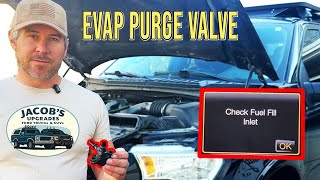
- A 'Check Fuel Fill Inlet' message may appear on the dashboard
- Slightly rough idle, especially if the purge valve is stuck open
- Difficulty starting the engine or stalling immediately after refueling
- A faint smell of fuel, though this is not always present
- Audible vacuum noise near the engine or fuel tank area
- Replacing the charcoal canister or vent solenoid before checking the much more common and easier-to-access fuel filler neck and engine-mounted purge valve.
- Assuming a smoke test is needed before performing the simple, free checks of the capless filler neck and the purge valve vacuum test.
Most Likely Causes
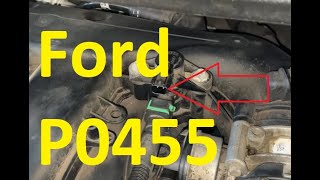
- Dirty or Faulty Capless Fuel Filler Neck 🔴 High Probability → Shop Fuel Filler Neck The capless design is susceptible to getting dirt, dust, and debris on its spring-loaded seal, preventing it from closing completely and creating a large leak. This is the most common cause and the first thing to check. 🎬 See this video for common causes and fixes for P0455.
How to confirm: Visually inspect the inner flap of the fuel filler neck for debris. Use the white plastic funnel that came with the truck to insert and remove it 10-15 times to clear any debris from the sealing surfaces. Some owners recommend spraying a small amount of silicone lubricant or WD-40 on a rag and wiping the seal to clean and lubricate it.
Typical fix: Thoroughly clean the filler neck opening. If cleaning does not resolve the issue, or if the spring mechanism is damaged, the entire fuel filler neck assembly may need to be replaced. Manufacturer bulletin SSM 51719 notes that outside contamination on the fuel cap area can be a primary driver for P0455 and P0457 codes.
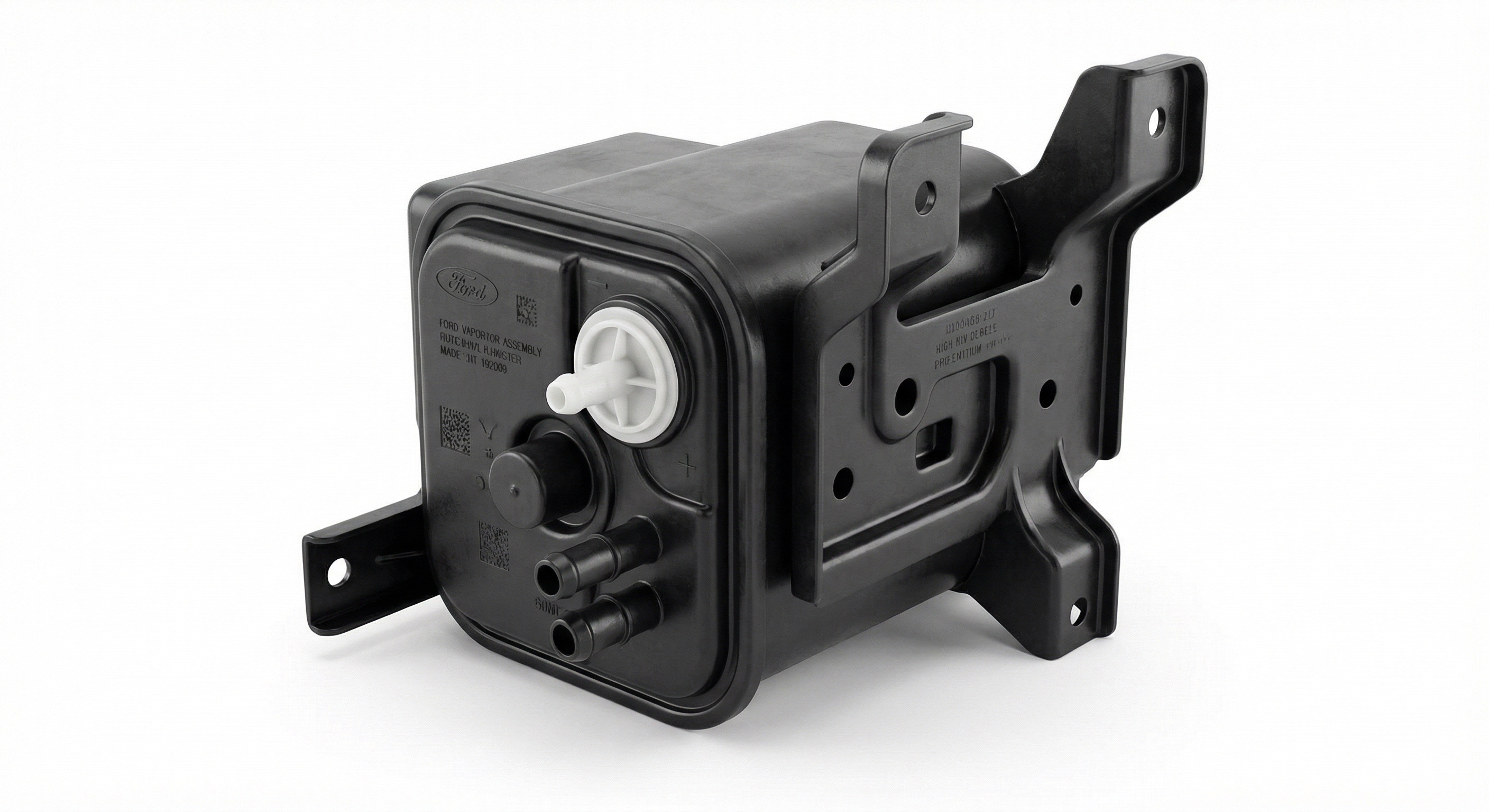
Est. part cost: $0 for cleaning, $100-$200 for a replacement assembly. - Faulty Canister Purge Valve 🔴 High Probability → Shop Vapor Canister This valve is a known common failure item on many Ford vehicles of this era, including the F-150. It tends to fail by sticking open, creating a constant vacuum leak from the EVAP system into the engine intake manifold.
How to confirm: With the engine idling, disconnect the EVAP line from the purge valve on the intake manifold. There should be NO vacuum felt at the valve's port. If you feel suction with your finger or a vacuum gauge shows any vacuum, the valve is stuck open and must be replaced. This is a definitive test.
Typical fix: Replacement of the canister purge valve assembly. It is held on by two 8mm bolts and is easily accessible on top of the engine for all engine variants (2.7L, 3.5L, 5.0L). 🎬 Watch: A quick walkthrough on replacing the canister purge valve.
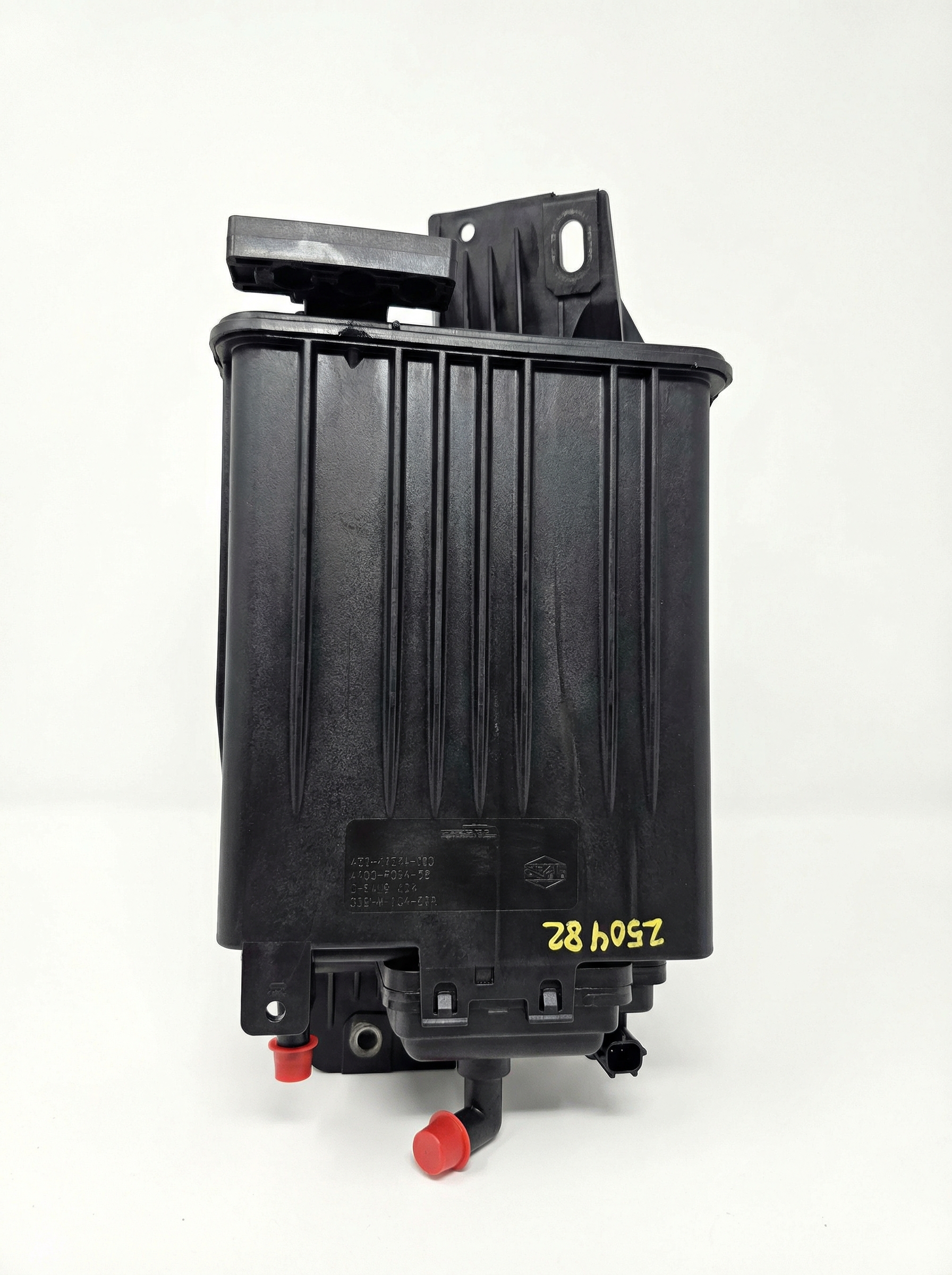
Est. part cost: $30-$80 - Faulty EVAP Canister Vent Solenoid 🟡 Medium Probability → Shop Vapor Canister Located near the spare tire, this solenoid is exposed to road debris, water, and moisture. It can get stuck open, especially on trucks frequently driven on dusty or gravel roads, preventing the system from sealing for its pressure test.
How to confirm: A scan tool that can command the solenoid closed is the best test. Alternatively, it can be removed and tested with a 12V power source to see if it actuates (clicks). A smoke test will definitively show a leak from a stuck-open vent solenoid.
Typical fix: Replacement of the vent solenoid, which is typically mounted on or near the charcoal canister under the truck.
Est. part cost: $40-$90 - Cracked or Disconnected EVAP Hoses ⚪ Low Probability Plastic and rubber lines can become brittle over time and crack, or they can be damaged by road debris or during other maintenance. TSB 25-2431 indicates that a disconnected fuel vapor line inside the fuel tank can also lead to P0455 and stalling upon restart after refueling.
How to confirm: A thorough visual inspection of all accessible EVAP lines between the engine, canister, and fuel tank. A smoke test is the most effective way to find a cracked hose that isn't obvious.
Typical fix: Replacing the specific section of damaged hose or reconnecting a loose line.
Est. part cost: $10-$50
Rare But Worth Checking
- Cracked Charcoal Canister: → Shop Vapor Canister The canister itself can be cracked by a significant impact from road debris, causing a large leak. This is usually found during a smoke test after all other common causes are ruled out.
- Faulty Fuel Tank Pressure (FTP) Sensor: → Shop Fuel Tank While uncommon for P0455 alone, the sensor that reports pressure to the computer can fail, causing the computer to incorrectly believe there is a leak. This is usually diagnosed after a smoke test reveals no physical leaks.
Diagnosis Steps
- Read the code with an OBD-II scanner to confirm P0455 is present. Note any other codes, especially P1450, P0456, or P0457.
- Inspect the capless fuel filler neck for any debris. Use the vehicle's emergency fuel funnel, inserting and removing it 10-15 times to clean the internal seal. Wipe the seal with a clean cloth. Clear the code and drive to see if it returns.
- If the code returns, locate the canister purge valve on top of the engine intake manifold. The location varies slightly between EcoBoost and 5.0L engines but is always accessible.
- Start the engine and let it idle. Disconnect the vapor line from the purge valve and check for suction at the valve's port with your finger. If any vacuum is present, the valve is faulty and needs replacement. This is a very reliable test.
- If the purge valve is good, perform a thorough visual inspection of all visible EVAP hoses and lines running from the engine bay to the rear of the truck, looking for obvious cracks or disconnections.
- If no obvious issues are found, the most definitive next step is to have a smoke test performed. This involves injecting low-pressure smoke into the EVAP system's service port and watching for where it escapes, pinpointing the exact location of the leak. 🎬 Watch: How to diagnose a gross EVAP leak on an F-150. This will identify leaks in hoses, the canister, the vent solenoid, or the fuel tank itself.
Parts You'll Likely Need
- Canister Purge Valve / Solenoid
(OEM #FL3Z-9C915-A (2015-2017), JL3Z-9C915-A (2018-2020 3.5L/5.0L), JL3Z-9B325-C (2018+ 2.7L) - Always Verify with VIN)— This is one of the most common failure points for P0455 on this truck. It gets stuck open, is easy to test, and simple to replace with basic hand tools.
Trusted brands: Motorcraft, Dorman, Standard Motor Products
OEM price range: $50-$90
Aftermarket price range: $30-$60 - Fuel Filler Neck Assembly
(OEM #FL3Z-9927936-C (Varies by bed length/model, verify with VIN))— If the capless system's internal seal is damaged and cannot be fixed by cleaning, the entire assembly must be replaced to fix the leak.
Trusted brands: Motorcraft
OEM price range: $100-$200
Aftermarket price range: $70-$150
Related Codes That Often Appear With This One
- P1450 — This Ford-specific code for 'Unable to Bleed Up Fuel Tank Vacuum' is very often caused by a stuck-open canister purge valve, the same component that frequently causes P0455. Seeing both codes together strongly points to a faulty purge valve.
- P0456 — This code for a 'Small EVAP Leak' can sometimes appear before or after a P0455, indicating an intermittent or worsening seal issue in the system, such as a slowly failing purge valve or a deteriorating hose.
- P0457 — This code indicates a leak detected right after refueling, often interpreted as 'Fuel Cap Off'. On a capless system, it points strongly to an issue with the fuel filler neck seal not closing properly after fueling, the same primary cause of P0455.
Technical Service Bulletins (TSBs) & Recalls
- SSM 47557: Advises technicians to clean the capless fuel fill inlet by inserting the fuel funnel multiple times before attempting any component replacement for EVAP leak codes or 'Check Fuel Fill Inlet' messages.
- SSM 50306: Notes that Ford has tested returned EVAP canister purge valves and found them to be fully functional; technicians should verify failure before replacement.
- SSM 51719: Highlights that P0455 and P0457 may be due to improper fuel filler cap installation or outside contamination on the fuel cap area.
- TSB 25-2431: Mentions that P0455 can be stored in the PCM due to a disconnected fuel vapor line inside the fuel tank, which may also cause stalling upon restart after refueling.
Platform-Specific Known Issues
- The 'Check Fuel Fill Inlet' warning message is directly related to the EVAP system's inability to seal, often pointing to the same root causes as P0455.
- Owners who frequently drive on unpaved or dusty roads report a higher failure rate of the canister vent solenoid located near the spare tire, as it is susceptible to contamination.
- A rough idle and/or stalling immediately after filling the fuel tank is a classic symptom of a stuck-open canister purge valve on this platform.
Mechanic-Grade Diagnostic Values
- Fuel Tank Pressure (FTP) Sensor Voltage, KOEO — expected: ~2.6 - 2.7 Volts at atmospheric pressure. Failure: A significantly different voltage with the system open to atmosphere can indicate a faulty sensor.
- Canister Purge Valve Solenoid Resistance — expected: 22 to 30 ohms. Failure: A reading near zero (shorted) or infinite/OL (open) indicates a faulty valve coil.
- Canister Vent Solenoid Resistance — expected: 48 to 65 ohms. Failure: Readings outside this range indicate the solenoid coil is bad.
- Canister Vent Solenoid Power Supply Voltage — expected: Battery Voltage (~12V) on the Yellow/Red wire. Failure: Significantly low or no voltage points to a wiring issue between the fuse box and the solenoid, not a faulty solenoid itself.
Hidden / Shadow Codes Worth Checking
- Mode 6, Test ID $81: This specific monitor test checks for EVAP system gross leaks (0.090" or greater). A failing value in this test is the direct trigger for the P0455 DTC. (see via A scan tool capable of reading Mode $06 data, such as FORScan or higher-end professional scanners.)
Scan Tool Commands That Help
- Ford IDS or FORScan: EVAP System Test (On-Demand Self-Test) — This is a comprehensive, automated test that commands the purge and vent valves to seal the system, pulls a vacuum, and monitors the FTP sensor to verify the integrity of the entire system. It can confirm a leak exists before performing a smoke test and can verify a repair is successful without waiting for a full drive cycle.
- Ford IDS or FORScan: Purge Valve Solenoid (VMV) Duty Cycle Control — Allows a technician to command the purge valve open to a specific percentage to test its function and to check if it's sealing properly when commanded to 0% (closed). This is more precise than the simple idle vacuum test.
- Ford IDS or FORScan: Canister Vent (CV) Solenoid On/Off — Used to command the vent solenoid closed during a smoke test to ensure the system is sealed. If smoke escapes from the vent with the solenoid commanded closed, the solenoid is faulty.
Wiring & Ground Locations
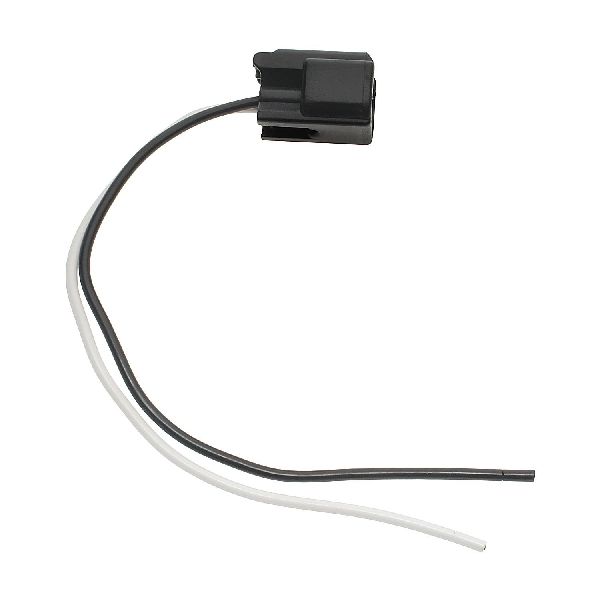
- Canister Vent Solenoid Connector — Under the truck, near the charcoal canister which is typically located near the spare tire.. The power supply wire (typically Yellow with a Red stripe) should have battery voltage with the key on. The other wire is the control wire from the PCM. A lack of voltage on the power wire indicates a wiring or fuse issue, not a bad solenoid. This area is prone to corrosion and wire damage.
- Canister Purge Valve Connector — On top of the engine's intake manifold.. This connector provides power and control to the purge valve. A visual inspection for corrosion or damage is warranted if the valve tests good electrically but is not functioning when commanded by the scan tool.
Real Owner Repair Stories
- Ford Truck Enthusiasts Forums (2015 F-150 5.0L) — P0455 code
❌ Tried (didn't work) Extensive smoke testing (no leaks found), Replacing the fuel filler neck per a TSB
✅ What actually fixed it The canister purge valve was replaced because it failed a vacuum test, even though the smoke test passed. The system consistently passed the IDS leak test (.00823 leak detected vs .040 allowed), but the faulty purge valve was the root cause. - F150online Forums (Ford F-150 (year not specified, but behavior is relevant)) — P0455 code, smell of gas, visible fuel leak from top of tank when parked on a steep incline after fill-up.
❌ Tried (didn't work) Checking for disconnected hoses.
✅ What actually fixed it The user identified a leak coming from the top of the fuel tank, likely from the fuel pump module seal or a crack in the tank itself. This is a rare but important cause when a fuel smell is present and the leak is visible under specific conditions. - NHTSA ODI #11246459 — An owner reported a persistent check engine light and a "Check Fuel Fill Inlet" message when pumping gas, with the computer recognizing a large leak in the EVAP system.
- NHTSA ODI #11320104 — A driver questioned if it was common for their vehicle to exhibit a large EVAP leak code P0455.
"I Checked Everything" — The Actual Cause
- In one documented case on a 2015 F-150, the truck repeatedly passed a smoke test and even the Ford IDS-commanded leak test, showing a minuscule leak far below the threshold for P0455. After replacing the filler neck didn't work, the technician tested the purge valve and found it was faulty and not sealing correctly under vacuum, even though it wasn't leaking during the smoke test. Replacing the purge valve fixed the code.
OEM Part Supersession History
FL3Z-9C915-A→JL3Z-9C915-A— Standard part revision and update by Ford.
Heads up: The parts are for different model year ranges (FL3Z for 2015-2017, JL3Z for 2018-2020 3.5L/5.0L). While they may appear similar, using the incorrect part can lead to fitment or performance issues. Always verify the correct part number with the vehicle's VIN.
Model Year Variations Within This Range
- 2018-2020: The canister purge valve part number and design changed for the 2018 model year refresh. 2015-2017 models use part number FL3Z-9C915-A, while 2018-2020 models with the 3.5L and 5.0L engines use JL3Z-9C915-A. The 2.7L from 2018+ uses a different part again (JL3Z-9B325-C). The function is identical, but the physical parts are not interchangeable.
Diagnostic Flowchart
Other Known Issues on This Vehicle
Issues unrelated to this code that are worth knowing about as an owner of this generation:
- 10R80 10-Speed Transmission Hard Shifting 🟠 Medium — Common across many 2017+ models, can occur at any mileage. Often addressed with software updates, but sometimes requires valve body or component replacement. (Ref: Multiple TSBs exist for software reflashes (e.g., TSB 18-2274).)
- Frozen Door Latches 🔴 High — Very common in 2015-2018 models, especially in cold/wet climates. Doors may not open from the outside or may not latch closed. (Ref: Multiple recalls and customer satisfaction programs were issued (e.g., 18N03).)
- 3.5L EcoBoost Cam Phaser Rattle on Cold Start 🔴 High — Common issue, particularly on 2017-2020 models. A brief rattle upon cold start that can progress to longer rattles and timing codes. Repair is expensive. (Ref: TSB 20-2315 and others address this issue with updated parts.)
- 5.0L V8 Excessive Oil Consumption 🟠 Medium — Affects some 2018-2020 models. Engines may consume a quart of oil in as little as 1,000-3,000 miles. (Ref: TSB 19-2365 outlines a diagnostic and repair procedure, including a new dipstick and PCM programming.)
- Warped Dashboard 🟡 Low — Common cosmetic issue where the dashboard cover lifts and warps near the defrost vents, especially in hot climates. Typically appears after several years.
- Panoramic Sunroof Leaks and Rattles 🟠 Medium — Common on equipped models. Clogged drain tubes can cause water to leak into the headliner and A-pillars. The frame can also develop rattles over time.
Used vs. New Parts: Buying Guide for This Vehicle
When a used part is the smart pick: For this repair, a used fuel filler neck assembly from a low-mileage, non-corroded donor vehicle can be a cost-effective option if the internal seals are confirmed to be clean and pliable. Used EVAP hoses are also viable if they are inspected for cracks and brittleness.
Donor-vehicle mileage cap: roughly under 80000 miles for the part to have meaningful remaining life.
What to inspect on the donor part:
- For a filler neck, check that the internal flap moves freely and seals tightly.
- For solenoids (purge/vent), look for clean connectors with no signs of corrosion or water intrusion.
- Avoid parts from vehicles in the salt belt, as corrosion is a major issue for under-vehicle components like the vent solenoid and its wiring.
OEM-only on this vehicle (don't cheap out):
- While not strictly required, many owners and technicians prefer to use Motorcraft-branded electronic components like the purge valve and vent solenoid for proven long-term reliability.
Aftermarket brands forum-validated for this vehicle:
- Dorman (often provides redesigned parts that address OEM weaknesses)
- Standard Motor Products (SMP)
- Wells
Brands owners have reported issues with on this vehicle:
- Unbranded, no-name parts from online marketplaces should be avoided, as their quality control and material specifications are often unknown and can lead to repeat failures.
Real Owner Stories
Aggregated from forums and TSBs cited above. Mileages and costs reflect what owners reported in those sources.
2015-2020 Ford F-150
Symptoms: P0455 code, large EVAP leak detected.
What fixed it: Cleaning the capless filler neck or replacing the canister purge valve, which are the primary causes for this generation.
Source hint: f150forum.com thread titled 'P0455 code, large EV'
2015-2020 Ford F-150
Symptoms: Difficulty starting the engine or stalling immediately after refueling.
What fixed it: Replacement of the canister purge valve assembly located on top of the engine.
Source hint: vehicle_specific_issues
2015-2020 Ford F-150
Symptoms: A 'Check Fuel Fill Inlet' message appeared on the dashboard along with the P0455 code.
What fixed it: Using the white plastic funnel to insert and remove it 10-15 times to clear debris from the sealing surfaces of the capless filler.
Source hint: common_causes: Dirty or Faulty Capless Fuel Filler Neck
Related OBD-II Codes
Frequently Asked Questions
What does Ford SSM 47557 recommend for my F-150 if I see the 'Check Fuel Fill Inlet' message?
Why does my F-150 stall or have a rough idle specifically after I fill up the gas tank?
I drive my F-150 on gravel roads frequently; does this affect my EVAP system?
How can I test the purge valve on my 2.7L or 3.5L EcoBoost at home?
Is there a specific tool I should use to clean the capless fuel filler neck?
Are there any other common issues with the 2017-2020 F-150 I should be aware of while fixing this code?
Helpful Videos
Used OEM Parts in Stock

New Aftermarket Parts Available


The information in this article is provided for general reference and educational purposes only. Vehicle specifications, procedures, and part compatibility can vary by production date, trim level, and region. Always consult your vehicle's factory service manual and verify part numbers before purchasing or performing repairs. Safety-critical components such as airbags, seat belts, and braking systems should be installed by a qualified professional.
- Ford F-150:
- 🧭 Diagnostic Flowchart
- 🎬 Helpful Videos
- 🛍️ Shop This Part
- What's Unique About the 2015-2020 Ford F-150
- Symptoms You May Notice
- Most Likely Causes
- Rare But Worth Checking
- Diagnosis Steps
- Parts You'll Likely Need
- Related Codes That Often Appear With This One
- Technical Service Bulletins (TSBs) & Recalls
- Platform-Specific Known Issues
- Mechanic-Grade Diagnostic Values
- Hidden / Shadow Codes Worth Checking
- Scan Tool Commands That Help
- Wiring & Ground Locations
- Real Owner Repair Stories
- "I Checked Everything" — The Actual Cause
- OEM Part Supersession History
- Model Year Variations Within This Range
- Other Known Issues on This Vehicle
- Used vs. New Parts: Buying Guide for This Vehicle
- Real Owner Stories
- 2015-2020 Ford F-150
- 2015-2020 Ford F-150
- 2015-2020 Ford F-150
- Related OBD-II Codes
- Frequently Asked Questions
- 🎟️ Get 5% Off