

P0455 on 2022-2024 Genesis GV70: EVAP Large Leak Causes and Fixes
The P0455 code on a 2022-2024 Genesis GV70 indicates a large leak in the evaporative emission (EVAP) system. The most common and easiest fix is to check for a loose or faulty gas cap. If that doesn't solve it, the issue is likely a faulty purge valve, a cracked EVAP hose, or a faulty vent valve. Given the vehicle's age, component failure is less likely than a simple issue like a loose cap.
- P0455 on your GV70 means the emissions system has a large leak.
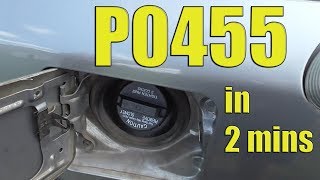
- Always check your gas cap first. Make sure it's tight and the seal isn't cracked. This fixes the problem in many cases.
- The code will not affect how the car drives, but it will cause it to fail an emissions test.
- If the gas cap isn't the issue, the most likely culprits are the purge valve or a cracked EVAP hose.
- A smoke test is the most reliable way for a mechanic to find a leak that isn't obvious.
What's Unique About the 2022-2024 Genesis GV70
For the 2022-2024 Genesis GV70, which is a relatively new model, widespread component failures are not yet common. The causes for P0455 are consistent with those on most modern Hyundai/Kia/Genesis vehicles. It's important to note that some 2022-2023 GV70 models were subject to a recall (NHTSA ID: 24V-282, Genesis recall 016G) for a faulty low-pressure fuel pump which could cause a loss of power, and in some cases, be related to fuel system odors. While this recall doesn't directly cause the P0455 code, it highlights the importance of addressing any fuel-system-related issues promptly.
Symptoms You May Notice
- Check Engine Light illuminated on the dashboard.
- A noticeable smell of gasoline, especially around the rear of the vehicle or in an enclosed garage.
- In rare cases, difficulty refueling where the pump clicks off repeatedly.
- A rough idle or difficulty starting, particularly after refueling, can occur if the purge valve is stuck open.
- Replacing the charcoal canister before performing a proper diagnosis. The canister is expensive and usually fails due to other issues (like overfilling the tank) or is misdiagnosed when a simpler component like a valve or hose is the real problem.
- Immediately assuming a major component has failed without first checking the gas cap. Always start with the simplest and most common cause.
Most Likely Causes
- Loose, Damaged, or Incorrect Gas Cap 🔴 High Probability → Shop Fuel Tank Cap This is the most common cause for P0455 on any vehicle, accounting for 30-40% of cases. The cap is frequently handled, and its seal can wear out, get dirty, or it may not be tightened properly. Using a non-OEM cap can also cause sealing issues.
How to confirm: Inspect the gas cap for any visible cracks on the seal or cap itself. Ensure it is tightened until it clicks several times. A worn, cracked, or hardened seal is a clear sign of failure. If the light returns after tightening, a new OEM cap is the next logical step.
Typical fix: Tighten or replace the gas cap.
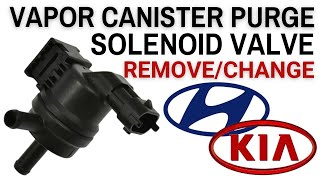
Est. part cost: $25-$45 - Faulty Canister Purge Valve (PCSV) 🟡 Medium Probability → Shop Vapor Canister The purge valve (or purge solenoid) controls the flow of fuel vapors to the engine. It can become stuck open, creating a constant leak path that the system detects. This is a common failure point on many modern cars.
How to confirm: With the engine off, remove the purge valve (typically found in the engine bay, connected to the intake manifold) and try to blow through it. If air passes through, it is stuck open and faulty. A scan tool can also command the valve to cycle for testing.
Typical fix: Replace the canister purge valve.
Est. part cost: $50-$100 - Cracked or Disconnected EVAP Hose 🟡 Medium Probability Rubber hoses can become brittle and crack over time due to heat and exposure. A large leak is often a hose that has been completely disconnected or has a significant split. This is less likely on a new vehicle but possible if a connection was loose from the factory or disturbed during other service.
How to confirm: Visually inspect all accessible EVAP lines between the engine bay, the fuel tank, and the charcoal canister for cracks, breaks, or loose connections. A smoke test is the most effective way to find the source of a leak that isn't obvious.
Typical fix: Replace the damaged hose section and any broken clamps.
Est. part cost: $10-$50 - Faulty Canister Vent Valve (CVV) ⚪ Low Probability → Shop Vapor Canister The vent valve is responsible for sealing the EVAP system for pressure testing. If it fails to close (it is normally open), the system cannot build pressure and will register a large leak. It's often located near the charcoal canister under the vehicle and can be susceptible to road debris and moisture.
How to confirm: The vent valve is normally open. A scan tool can command it closed for testing. Alternatively, applying 12V power should cause it to click and close, blocking airflow. If it doesn't close or is stuck, it needs replacement.
Typical fix: Replace the vent valve, which is often located on or near the charcoal canister.
Est. part cost: $40-$90
Rare But Worth Checking
- Cracked Charcoal Canister: → Shop Vapor Canister The charcoal canister itself can develop cracks from road debris or age, creating a large leak. This is less common but should be considered if other components are functional. Overfilling the gas tank repeatedly can also saturate and damage the canister, leading to other EVAP codes.
- Leaking Fuel Tank or Filler Neck: → Shop Fuel Tank Corrosion or physical damage to the fuel tank or the filler neck can cause a large EVAP leak. This is very rare on a newer vehicle like the GV70 but possible if the vehicle has sustained underbody damage.
Diagnosis Steps
- Check the Gas Cap: This is the simplest and most common fix. Remove the cap, inspect the rubber O-ring for cracks or wear, and reinstall it, ensuring you tighten it until it clicks at least once. Clear the code and drive for a few days to see if it returns. If the seal looks worn, replace it with an OEM part.
- Visual Inspection: Carefully inspect all visible EVAP hoses in the engine bay and underneath the vehicle near the fuel tank. Look for any obvious cracks, disconnections, or signs of damage. Pay close attention to connections at the purge valve and canister.
- Test the Purge Valve: Locate the purge valve in the engine bay. Disconnect it and try to blow through it. If air passes, the valve is stuck open and must be replaced.
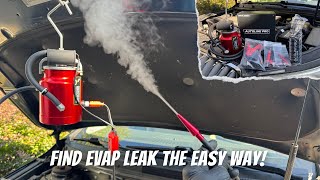
- Perform a Smoke Test: If the leak source is not obvious, the most effective diagnostic method is a smoke test. A machine injects low-pressure, UV-dyed smoke into the EVAP system. The smoke will exit from the point of the leak, making it easy to identify. This is the definitive 🎬 Watch: How to find leaks using a smoke machine way to find leaks in hoses, the canister, or the fuel tank and is often the next step for a professional technician.
Parts You'll Likely Need
- Gas Cap
(OEM #31010-T1000)— The gas cap seal is a frequent failure point and is the most common cause of a P0455 code.
Trusted brands: Genesis OE
OEM price range: $30-$45
Aftermarket price range: $15-$30 - Canister Purge Valve
(OEM #28910-2T100 (for 2.5T, requires verification))— This valve is a common failure item that gets stuck open, creating a large, permanent leak in the system.
Trusted brands: Bosch, Delphi, Genesis OE
OEM price range: $70-$120
Aftermarket price range: $40-$80
Related Codes That Often Appear With This One
- P0456 — Indicates a small EVAP leak. If both codes are present, it could point to multiple leak sources or a component that is failing intermittently.
- P0441 — Indicates incorrect purge flow. This often appears with P0455 if the purge valve is stuck open or there's a major blockage.
- P0442 — Indicates a medium-sized EVAP leak. Seeing this with P0455 could suggest an intermittent or worsening leak.
Technical Service Bulletins (TSBs) & Recalls
- 24-01-043G / NHTSA 24V-282: Recall for low-pressure fuel pump replacement on certain 2022-23MY GV70 models.
Platform-Specific Known Issues
- A recall (NHTSA campaign 24V-282, Genesis recall 016G) was issued for some 2022-2023 GV70 models for a faulty low-pressure fuel pump. While not a direct cause of P0455, it indicates a sensitivity in the fuel system that owners should be aware of.
- No widespread, chronic P0455 issues have been reported by owners on forums like genesisowners.com or Reddit for the GV70 specifically, which is expected for a newer vehicle. The issue does appear on platform-mates like the Kia Stinger, where the gas cap is also the primary culprit.
Mechanic-Grade Diagnostic Values
- EVAP System Leak Test Enabling Conditions — expected: Fuel level between 15-85%; Engine Coolant Temp (ECT) at start between 4°C-50°C (39°F-122°F); Intake Air Temp (IAT) between 0°C-42°C (32°F-108°F); Barometric pressure > 74.5 kPa.. Failure: The onboard diagnostic test will not run if these conditions are not met, preventing diagnosis.
- Fuel Tank Pressure (FTP) Sensor Voltage (General Reference) — expected: Approximately 1.5V with the system at atmospheric pressure (engine off, gas cap removed). Voltage should decrease as vacuum is applied.. Failure: A voltage that is stuck high or low regardless of system pressure, or does not change during testing, indicates a faulty sensor.
Hidden / Shadow Codes Worth Checking
- Mode 6, Test ID Manufacturer-Specific: Advanced scan tools can access Mode 6 data, which shows the results of the ECU's most recent self-tests. For the EVAP system, this includes test values for pressure decay. While specific Test IDs ($80, $81, etc.) are manufacturer-defined, a failed result here can confirm a leak and provide data on its severity before a code is set. (see via Professional scan tool with Mode 6 capabilities (e.g., Genesis GDS, high-end Autel/Launch scanners).)
Scan Tool Commands That Help
- Genesis GDS (Global Diagnostic System): EVAP Leakage Test (Forced System Test) — This is a bidirectional control used after a repair to verify the fix without waiting for a full drive cycle. The tool commands the Canister Close Valve (CCV) to shut and the Purge Control Solenoid Valve (PCSV) to open, creating a vacuum. It then monitors the Fuel Tank Pressure (FTP) sensor to confirm the system holds vacuum.
- Professional Scan Tool (e.g., GDS, Autel): Actuate Canister Vent Valve (CVV) and Purge Valve (PCSV) — Used to individually test valve function. For a smoke test, the CVV (normally open) must be commanded closed to seal the system. To test for a stuck-open PCSV, command it closed and see if vacuum from the intake is still present at the valve.
Wiring & Ground Locations
- Battery Location — In the cargo area, under the floor panel.. When performing electrical tests on EVAP components or resetting the ECU by disconnecting the battery, knowing its location is essential. Jump start posts are located in the engine bay for convenience.
- Fuse Box Locations — The GV70 has multiple fuse panels: 1) Instrument Panel Fuse Box on the driver's side, 2) Engine Compartment Fuse/Relay Box, and 3) Cargo Area Fuse Panel/Junction Block.. If a component like the purge valve or vent valve is unresponsive to scan tool commands, checking its respective fuse is a primary electrical diagnostic step before condemning the part or wiring.
OEM Part Supersession History
28910-2T100 (example for 2.5T)→Varies— Component revisions and supplier changes are common.
Heads up: Hyundai/Genesis uses several purge valve part numbers (e.g., 28910-25100, 28910-3C100, 28910-3L270) across its lineup. While they may look physically similar, connector pinouts or internal calibration can differ. Always verify the correct part number for your specific GV70's VIN to avoid performance issues or electrical faults.
Model Year Variations Within This Range
- 2022-2024: While there were minor changes to interior trim, steering wheel controls, and infotainment software (e.g., standard wireless CarPlay in later years) between 2022, 2023, and 2024, no significant changes to the EVAP system hardware or diagnostic logic for the P0455 code have been documented.
Diagnostic Flowchart
Other Known Issues on This Vehicle
Issues unrelated to this code that are worth knowing about as an owner of this generation:
- Rear Differential Whining Noise 🟠 Medium — A widely reported issue for 2021-2024 models, often noticeable between 40-60 mph under light throttle. Can occur at low mileage. (Ref: TSB 23-DS-004G describes a procedure to retorque a pinion nut or, if that fails, replace the entire rear differential assembly.)
- Instrument Cluster/Infotainment Blackouts 🟠 Medium — Some owners report the main digital displays going blank intermittently, sometimes requiring a vehicle restart to resolve. (Ref: A recall was issued for instrument cluster software that could cause the display to go blank.)
- Loss of Power / Fuel Pump Failure 🔴 High → Shop Fuel Pump — Complaints filed with the NHTSA describe sudden loss of power while driving, linked to fuel pump issues. (Ref: Recall 24V-282 (Genesis 016G) was issued for the low-pressure fuel pump on 2022-2023 models.)
- Minor Build Quality Issues (Rattles/Creaks) 🟡 Low — Some long-term owner reviews mention minor but annoying interior creaks from the dashboard or center console area.
Used vs. New Parts: Buying Guide for This Vehicle
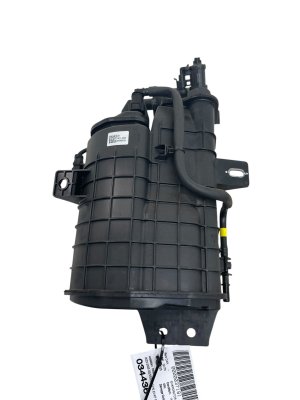
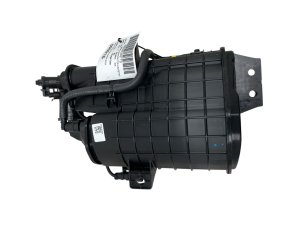
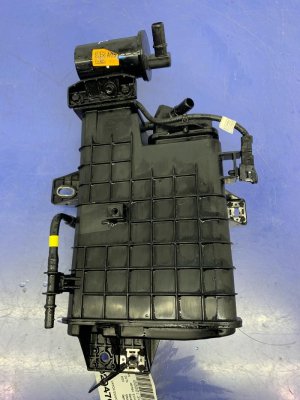
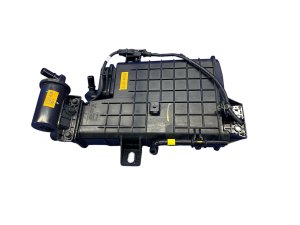
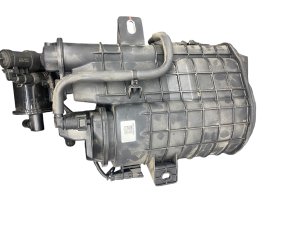
When a used part is the smart pick: For a large, non-electronic component like the charcoal canister, a used OEM part from a low-mileage, accident-free donor vehicle can be a cost-effective alternative to a new OEM part, especially since quality aftermarket options are scarce for this model.
Donor-vehicle mileage cap: roughly under 40000 miles for the part to have meaningful remaining life.
What to inspect on the donor part:
- Verify the part number on the used canister (31420-AR500) matches the requirement for your vehicle.
- Inspect the canister body for any cracks, stress marks, or damage, particularly around the hose ports.
- Gently shake the canister; there should be no sound of loose charcoal rattling inside, which would indicate internal failure.
- Ensure all hose connection points are intact and not broken or brittle.
OEM-only on this vehicle (don't cheap out):
- Gas Cap: Aftermarket gas caps are a known source of EVAP leaks; always use a genuine Genesis OEM cap to ensure a perfect seal.
- Canister Purge Valve (PCSV) / Canister Vent Valve (CVV): Given their electronic nature and critical role in system testing, OEM valves are strongly recommended to ensure compatibility with the ECU's diagnostic parameters.
- Fuel Tank Pressure (FTP) Sensor: This is a sensitive electronic component. An OEM sensor is required for accurate pressure readings.
Aftermarket brands forum-validated for this vehicle:
- For this relatively new vehicle, there are no widely validated aftermarket brands that consistently meet OEM performance for EVAP components. Sticking to Genesis OE is the safest option.
Brands owners have reported issues with on this vehicle:
- Avoid generic, unbranded gas caps and electronic sensors from online marketplaces, as they are frequent causes of persistent EVAP codes.
Real Owner Stories
Aggregated from forums and TSBs cited above. Mileages and costs reflect what owners reported in those sources.
2022 Kia Stinger (Platform Mate)
Symptoms: Check engine light with code P045507.
What fixed it: Cleaning and tightening the gas cap.
Source hint: Reddit - r/kiastinger - Thread 'Check Engine with Code P045507'
Related OBD-II Codes
Frequently Asked Questions
Is there a recall for the fuel system on my 2022-2023 Genesis GV70 that might be related to EVAP issues?
I'm seeing P0455 on my GV70; could it just be the gas cap like on the Kia Stinger?
My GV70 is struggling to start specifically after I fill up the tank. Is this linked to P0455?
Where is the purge valve located on the GV70 for testing?
Could the P0455 code be related to the blank instrument cluster screens I've been seeing?
Should I use an aftermarket gas cap if I need a replacement for my GV70?
Helpful Videos

We Have This Part in Stock


The information in this article is provided for general reference and educational purposes only. Vehicle specifications, procedures, and part compatibility can vary by production date, trim level, and region. Always consult your vehicle's factory service manual and verify part numbers before purchasing or performing repairs. Safety-critical components such as airbags, seat belts, and braking systems should be installed by a qualified professional.
- Genesis GV70:
- 🧭 Diagnostic Flowchart
- 🎬 Helpful Videos
- 🛍️ Shop This Part
- What's Unique About the 2022-2024 Genesis GV70
- Symptoms You May Notice
- Most Likely Causes
- Rare But Worth Checking
- Diagnosis Steps
- Parts You'll Likely Need
- Related Codes That Often Appear With This One
- Technical Service Bulletins (TSBs) & Recalls
- Platform-Specific Known Issues
- Mechanic-Grade Diagnostic Values
- Hidden / Shadow Codes Worth Checking
- Scan Tool Commands That Help
- Wiring & Ground Locations
- OEM Part Supersession History
- Model Year Variations Within This Range
- Other Known Issues on This Vehicle
- Used vs. New Parts: Buying Guide for This Vehicle
- Real Owner Stories
- 2022 Kia Stinger (Platform Mate)
- Related OBD-II Codes
- Frequently Asked Questions
- 🎟️ Get 5% Off