

P0455 on 2016-2022 Honda HR-V: EVAP Large Leak Causes and Fixes
For a 2016-2022 Honda HR-V, code P0455 most often means you have a loose or faulty gas cap. Before buying any parts, tighten the cap until it clicks and clear the code. Many owners find that only a genuine OEM Honda gas cap will solve the issue, as aftermarket caps may not seal properly. If the code returns, the next most likely cause is a failed EVAP canister purge valve located in the engine bay.
- Always check your gas cap first for code P0455. Ensure it's tight and the seal is intact.
- If the gas cap isn't the issue, the next most likely culprit on your HR-V is the EVAP canister purge valve in the engine bay.
- A professional smoke test is the fastest and most accurate way to find the leak if it's not obvious.
- This code will not leave you stranded, but it will cause an automatic failure on an emissions test.
What's Unique About the 2016-2022 Honda HR-V
On the 2016-2022 HR-V, the P0455 code is a straightforward emissions issue that rarely affects how the car drives. While the gas cap is the number one cause, this platform also sees common failures of the canister purge valve located in the engine bay. Additionally, 2018-2020 HR-V models were part of a major fuel pump recall; a leak from the fuel pump sealing ring on top of the tank, potentially disturbed during service or from a rodent-damaged hose nearby, has been documented as a cause for this code on a 2019 HR-V. Similar patterns of EVAP system leaks and "stuck open" conditions leading to P0455 and P0456 have been noted across the Honda lineup, as seen in NHTSA ODI #11442825.
Symptoms You May Notice
- Check Engine Light is on.
- A noticeable fuel smell, especially around the rear of the vehicle or near the gas cap (though this is not always present).
- Slightly reduced fuel efficiency in some cases.
- Difficulty starting immediately after refueling (a rare symptom that points strongly to a stuck-open purge valve).
- Replacing the charcoal canister when the leak is actually a simple cracked hose or a faulty vent valve attached to it.
- Replacing the fuel tank pressure sensor. A faulty sensor will typically trigger its own specific code (e.g., P0451, P0452, P0453).
- Repeatedly replacing the gas cap with aftermarket versions. Many owners report the issue is only resolved with a genuine Honda OEM cap.
Most Likely Causes
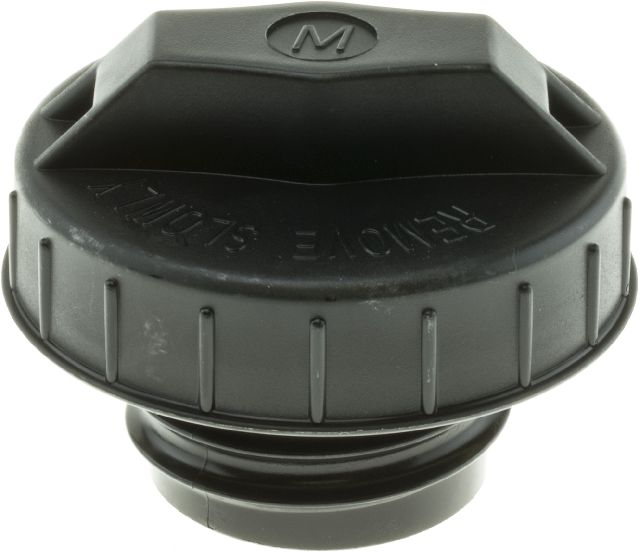
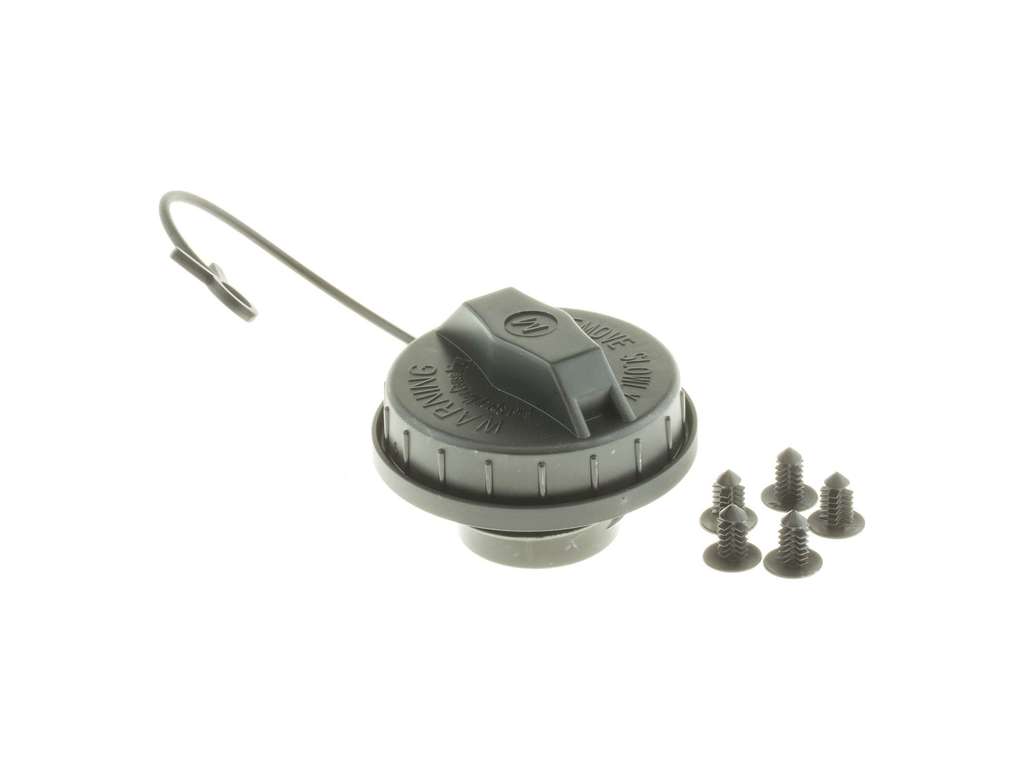
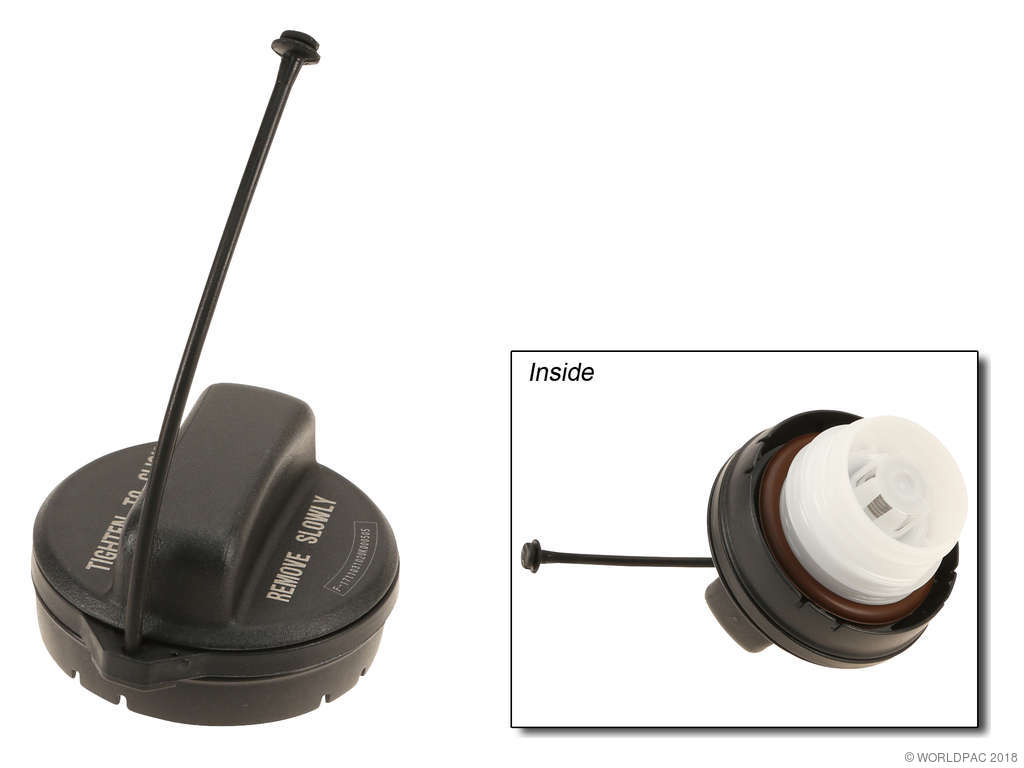
- Loose, Incorrect, or Faulty Gas Cap 🔴 High Probability → Shop Fuel Tank Cap This is the most common cause for any vehicle with P0455. The rubber O-ring on the cap can crack and dry out over time, or the tether can get caught under the cap, preventing a proper seal. Many Honda owners and mechanics report that only OEM gas caps provide a reliable, long-term seal, with aftermarket caps often failing to resolve the code.
How to confirm: Remove the gas cap and inspect the seal for cracks or damage. Ensure you are using a genuine Honda cap. Reinstall it, making sure it clicks at least once. Clear the code and drive for a few days to see if it returns.
Typical fix: Replace the gas cap with a genuine Honda OEM part.
Est. part cost: $25-$40 - Faulty EVAP Canister Purge Valve 🟡 Medium Probability → Shop Vapor Canister The purge valve (or purge solenoid) can get stuck open, creating a constant leak. This is a common failure point on many Honda models, including the HR-V.
How to confirm: The purge valve is located in the engine bay, easily accessible. Disconnect the valve and try to blow through it; if air passes through, it is stuck open and has failed. A mechanic can also use a scan tool to command the valve on and off to test its function or use a vacuum gauge to see if it holds vacuum when commanded closed.
Typical fix: Replace the EVAP canister purge valve.
Est. part cost: $40-$90 - Cracked or Disconnected EVAP Hoses 🟡 Medium Probability Rubber hoses become brittle with age and exposure to the elements, leading to cracks. A large hose may have become disconnected from the charcoal canister or purge valve. Rodent damage to hoses on top of the fuel tank has also been observed.
How to confirm: Visually inspect all accessible EVAP hoses running from the engine bay to the charcoal canister near the fuel tank. The best way to find a specific leak is with a smoke test, which forces smoke into the EVAP system to reveal where it escapes.
Typical fix: Replace the cracked hose section or re-secure the connection.
Est. part cost: $10-$50 - Faulty EVAP Canister Vent Valve/Solenoid ⚪ Low Probability → Shop Vapor Canister The vent valve, located near the charcoal canister under the car, is normally open and closes to seal the system for a leak test. If it fails to close, it will cause a P0455 code. It is less common to fail than the purge valve.
How to confirm: This valve is typically tested using a bi-directional scan tool to command it closed while performing a smoke test or monitoring system pressure. A technician can also apply power to the solenoid to see if it clicks and closes.
Typical fix: Replace the EVAP canister vent valve.
Est. part cost: $50-$120
Rare But Worth Checking
- Leaking Fuel Tank or Fuel Pump Seal: → Shop Fuel Pump A 2019 HR-V with P0455 and P0456 was found via smoke test to have a significant leak from the top of the fuel tank area. This could be due to a faulty fuel pump seal, which is relevant given the fuel pump recall for 2018-2020 models (NHTSA Recall No. 23V-858). A smoke test is required to confirm this, as the leak may be hidden above the tank.
- Cracked Charcoal Canister: → Shop Vapor Canister The canister itself, located under the car near the fuel tank, can be damaged by road debris or age, causing a large leak. This would be visible during a visual inspection or easily found with a smoke test.
- Damaged Fuel Filler Neck: → Shop Fuel Filler Neck Rust or damage on the metal lip where the gas cap seals can prevent a proper seal, even with a new cap. Inspect the filler neck for any signs of corrosion or deformity. Honda has also issued TSBs for other models like the Pilot and Ridgeline for leaks at the filler neck's main flap unit, though not specifically for the HR-V. Manufacturer Bulletin #ATS170206 notes that if an EVAP leak is found at the filler neck, technicians should replace the mis-installed component rather than the entire fuel fill pipe.
- Rodent Damage: In at least one documented case on a 2019 HR-V, a P0455 code was ultimately traced to a rodent nest on top of the fuel tank where the plastic EVAP lines had been chewed through, requiring the fuel tank to be dropped for repair.
Diagnosis Steps
- Check the Gas Cap: Remove, inspect the seal for cracks, and retighten the cap until it clicks multiple times. Clear the code. If it returns, consider replacing it with a genuine Honda cap (Part No. 17670-T3W-A01) as this is a very common fix. A manufacturer service bulletin notes that the MIL may come on for P0455 if the fuel fill cap is loose or has a sticking seal.
- Visual Inspection: Look under the hood and around the fuel tank area for any obviously cracked, disconnected, or damaged EVAP hoses. Pay attention to the lines connected to the purge valve in the engine bay and the charcoal canister underneath the car.
- Inspect the Purge Valve: Locate the purge valve in the engine bay. It will have electrical and vacuum connections. Disconnect the valve and attempt to blow through it. If air passes, it's stuck open and needs replacement.
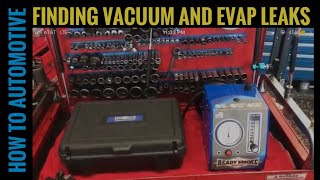
- Perform a Smoke Test: If the above steps don't reveal the issue, the most effective diagnostic step is a smoke test. This involves injecting pressurized smoke into the EVAP system's service port. Smoke will exit from the location of the leak, making it easy to pinpoint 🎬 Watch: How to use a smoke machine to find leaks. whether it's a hose, the canister, the vent valve, or the fuel tank seal.
- Test Component Function: With a capable scan tool, a technician can command the vent valve and purge valve to open and close to confirm their operation electronically while observing system pressure.
Parts You'll Likely Need
- Fuel Cap
(OEM #17670-T3W-A01)— This is the most frequent cause of a P0455 code due to a worn-out seal or improper tightening. Using a genuine OEM cap is highly recommended.
Trusted brands: Honda (OEM)
OEM price range: $25-$40
Aftermarket price range: $15-$30 - EVAP Canister Purge Valve
(OEM #36162-R1A-A01)— A common failure point on Hondas where the valve gets stuck open, creating a large leak. It is located in the engine bay.
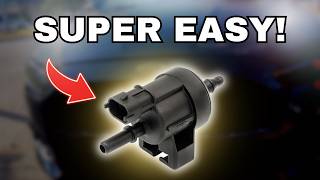
Trusted brands: Honda (OEM), Bosch, Denso, Standard Motor Products (CP641T) 🎬 See this walkthrough on how to replace your purge valve., Dorman
OEM price range: $40-$60
Aftermarket price range: $25-$50 - EVAP Vapor Canister
(OEM #17011-T7W-A01)— Only needed if the canister body is physically cracked and leaking, which would be found during a smoke test.
Trusted brands: Honda (OEM)
OEM price range: $200-$300
Aftermarket price range: $150-$250
Related Codes That Often Appear With This One
- P0456 — P0456 indicates a "very small leak." Sometimes a single large problem can trigger both a large and small leak code as the system tries to diagnose the fault. A 2019 HR-V case showed both codes present due to a single leak source.
- P0441 — This code means "Incorrect Purge Flow." If seen with P0455, it strongly suggests the purge valve is the source of the problem, as it may be stuck open.
- P0497 — This code indicates "Low Purge Flow" and, like P0441, points directly to a potential issue with the purge valve or a blockage in the purge line.
Technical Service Bulletins (TSBs) & Recalls
- NHTSA ID: 10248380 / Honda Service Bulletin 20-046: Safety Recall for 2018-19 HR-V Fuel Pump Motor, initially issued May 29, 2020. Mentions potential for fuel pump to seize but does not directly reference EVAP codes.
- NHTSA ID: 10226629 / Honda Service Bulletin 20-052: Updated safety recall for 2018-19 HR-V AWD Fuel Pump Motor, revised Sept 30, 2022. Details the replacement procedure.
- NHTSA ID: 10250625 / Honda Service Bulletin: Confirms the major fuel pump recall expansion in Dec 2023 affecting 2018-2020 HR-V models. The primary issue is stalling, but related service can disturb EVAP components.
- Bulletin #Service Bulletin (dated 2014-02-18): Notes that the MIL comes on and DTC P0455 and/or P0456 is set, often due to a fuel fill cap that is loose or has a sticking seal.
- Bulletin #ATS170206: Advises that if an EVAP system leak (P0455 or P0456) is detected from the filler neck, technicians should replace the mis-installed component rather than the entire fuel fill pipe.
Platform-Specific Known Issues
- Fuel Pump Recall Connection: → Shop Fuel Pump A recall for the fuel pump module was issued for 2018-2020 Honda HR-V models (NHTSA Recall No. 23V-858, expanding on earlier recalls). While the recall is for fuel pump failure causing stalling, a leak from the fuel pump's top seal can cause a P0455 code. A documented case on a 2019 HR-V showed a large EVAP leak from the top of the tank, confirmed with a smoke test, which could be related to a disturbed seal during recall service or a pre-existing fault.
Mechanic-Grade Diagnostic Values
- EVAP Canister Vent Valve Solenoid Resistance — expected: 20 - 30 Ohms. Failure: A reading outside this range indicates a damaged solenoid winding.
- EVAP Canister Purge Valve Solenoid Resistance — expected: Approximately 26 Ohms. Failure: An open circuit (infinite resistance) or a reading significantly outside the expected range suggests the coil has failed.
- EVAP System Test Vacuum (via HDS) — expected: System should hold 2 kPa (0.6 inHg) of vacuum for one minute.. Failure: If the system cannot maintain this vacuum, it confirms a leak is present.
Scan Tool Commands That Help
- Honda Diagnostic System (HDS): EVAP System Function Test — This is a comprehensive automated test that commands valves to seal the system and monitors the Fuel Tank Pressure (FTP) sensor to confirm if a leak is present. It's the primary diagnostic step after a visual inspection.
- Honda Diagnostic System (HDS) or capable bidirectional scanner: EVAP Canister Vent Shut Valve (CVS) ON/OFF — This command is used to manually close the normally-open vent valve. This is essential for sealing the system to perform a smoke test or to isolate the vent valve as the source of a leak.
- Honda Diagnostic System (HDS) or capable bidirectional scanner: EVAP Purge Valve ON/OFF — Used to command the normally-closed purge valve to open and close. A technician can use this to check for a clicking sound (activation) or to see if it's stuck open by checking for vacuum on the engine side when it's commanded closed.
Wiring & Ground Locations
- G101 — On the engine cylinder head or timing chain cover area.. This is a critical engine harness ground point. A loose or corroded G101 ground can cause intermittent issues with multiple components, including the ignition coils, crank/cam sensors, and solenoids related to the EVAP system, potentially leading to incorrect diagnostic codes or erratic component behavior.
- EVAP Purge Valve Connector — In the engine bay, on the purge valve solenoid.. This 2-pin connector provides power and ground to the purge valve. One pin should have 12V with the key on, and the other is the ground controlled by the ECM. Checking for voltage here is a primary step in diagnosing a non-responsive purge valve.
- EVAP Vent Valve Connector — Under the vehicle, near the charcoal canister, on the vent valve solenoid.. This connector provides power and ground to the vent valve. A wiring fault or corrosion here can prevent the valve from closing during the EVAP test, directly causing a P0455 code.
Real Owner Repair Stories
- YouTube channel 'DiagnoseDan' (2019 Honda HR-V (AWD)) — Check Engine Light with codes P0455 and P0456 stored as temporary codes.
❌ Tried (didn't work) The vehicle had previously been to a dealership, which was unable to find the leak.
✅ What actually fixed it A smoke test revealed a massive leak from the top of the fuel tank. After dropping the driveshaft and fuel tank, a rodent's nest was found on top of the tank where a plastic EVAP line had been chewed through. The damaged line was the source of both the large and small leak codes. - NHTSA ODI #11488601 — An owner reported that after a P0455 EVAP trouble code was diagnosed, they attempted to tighten the fuel tank cap as recommended, but the check engine light remained illuminated, requiring further professional inspection.
OEM Part Supersession History
Unknown→36162-R1A-A01— Standard part revision and update.
Heads up: This part number (36162-R1A-A01) is listed for 2016-2022 HR-V models and also fits some 2012-2015 Civics, indicating it is a widely used component. An older part number, 136200-7300, is listed as a superseded number for 36162-R1A-A01.
Model Year Variations Within This Range
- 2016-2022: The EVAP Vapor Canister has a different part number for All-Wheel Drive (AWD) models versus Front-Wheel Drive (2WD) models. The AWD version is Part No. 17011-T7W-A01. Ensure the correct canister is ordered based on the vehicle's drivetrain.
- 2021-2022: While not directly related to the P0455 code's common causes, 2021-2022 models received updated software for the CVT and had the fuel pump issue (a potential source of P0455 via the tank seal) resolved from the factory.
Diagnostic Flowchart
Real Owner Stories
Aggregated from forums and TSBs cited above. Mileages and costs reflect what owners reported in those sources.
2019 HR-V
Symptoms: Strong fuel odor in garage and slight odor in/around car after filling the tank; 'check fuel cap' message on display; codes P0455 and P0456.
What fixed it: Replaced a broken evap canister and associated fuel line parts. The service was done at zero charge at the dealer.
Cost: $0
Source hint: reddit.com - Gas Smell after Fuel Pump Recall : r/HRV
2019 Honda HR-V
Symptoms: MIL On, codes P0455 and P0456, with a leak located on top of the fuel tank.
What fixed it: Traced to rodent damage to a plastic line on top of the fuel tank, discovered via a smoke test.
Source hint: YouTube - '2019 Honda HR-V MIL On, P0455, P0456, Not What You Think' by Phillip Bailey
Related OBD-II Codes
Frequently Asked Questions
I replaced the gas cap on my 2016-2022 HR-V with one from an auto parts store, but the P0455 code came back. What should I do?
I recently had the fuel pump recall done on my HR-V and now I have a P0455 code and smell gas. Could they be related?
My HR-V is having trouble starting immediately after I fill up the gas tank, and the Check Engine Light is on for P0455. What causes this?
My mechanic says I have a P0455 code due to a leak on top of the fuel tank on my 2019 HR-V. Is this a known issue?
Does the Honda Fit have the same P0455 issues as my HR-V?
Helpful Videos
Used OEM Parts in Stock

New Aftermarket Parts Available


The information in this article is provided for general reference and educational purposes only. Vehicle specifications, procedures, and part compatibility can vary by production date, trim level, and region. Always consult your vehicle's factory service manual and verify part numbers before purchasing or performing repairs. Safety-critical components such as airbags, seat belts, and braking systems should be installed by a qualified professional.
- Honda HR-V:
- 🧭 Diagnostic Flowchart
- 🎬 Helpful Videos
- 🛍️ Shop This Part
- What's Unique About the 2016-2022 Honda HR-V
- Symptoms You May Notice
- Most Likely Causes
- Rare But Worth Checking
- Diagnosis Steps
- Parts You'll Likely Need
- Related Codes That Often Appear With This One
- Technical Service Bulletins (TSBs) & Recalls
- Platform-Specific Known Issues
- Mechanic-Grade Diagnostic Values
- Scan Tool Commands That Help
- Wiring & Ground Locations
- Real Owner Repair Stories
- OEM Part Supersession History
- Model Year Variations Within This Range
- Real Owner Stories
- 2019 HR-V
- 2019 Honda HR-V
- Related OBD-II Codes
- Frequently Asked Questions
- 🎟️ Get 5% Off