

P0455 on 2007-2010 Infiniti M45: EVAP Gross Leak Causes and Fixes
For a 2007-2010 Infiniti M45, a P0455 code almost always means you have a loose gas cap or a failed EVAP canister vent control valve. Always check that the gas cap is tight and the tether isn't caught under the seal first. If that doesn't solve it, the vent control valve, located on the charcoal canister at the rear of the car, is the next most common failure and a well-documented weak point on this platform.
- P0455 on your M45 indicates a large leak in the fuel vapor system.
- Always check your gas cap first. Make sure it's tight and the seal isn't cracked. This is the most common and cheapest fix.
- If the gas cap isn't the issue, the EVAP canister vent control valve, located at the rear of the car, is the next most likely part to have failed.
- You can safely drive the car with this code, but it will not pass an emissions test until the leak is repaired.
- A smoke test is the most accurate professional method to find the leak if it's not the gas cap or vent valve.
What's Unique About the 2007-2010 Infiniti M45
On this generation of Infiniti M45 (known as the Y50), the EVAP system components, particularly the vent control valve, are a known common failure point. This valve is located at the rear of the vehicle on the charcoal canister, just forward of the passenger-side rear tire, where it is exposed to road grime and moisture. This exposure can cause the internal plunger to corrode and stick open, creating the large leak that triggers the P0455 code. While the gas cap is always the first check, this specific valve is a well-documented weak point across many Nissan and Infiniti platforms of this era that use the same part.
Diagnostic Flowchart
Tap your situation to follow the diagnostic path that matches what you're seeing on this vehicle.
Symptoms You May Notice
- Check Engine Light is on
- A noticeable smell of fuel, especially around the rear of the car or after being parked.
- In some cases, difficulty refueling where the gas pump clicks off repeatedly before the tank is full.
- A 'Loose Fuel Cap' message on the instrument display, if equipped.
- A slight rough idle or hesitation in rare cases, if the purge valve fails and introduces unmetered fuel vapors.
- Replacing the charcoal canister when only the vent control valve attached to it has failed. The valve is a separate, much cheaper part that can be replaced independently.
- Replacing the purge valve in the engine bay before thoroughly checking the gas cap and the rear vent control valve, which are far more common failure points for a large leak code.
Most Likely Causes
- Loose or Faulty Fuel Filler Cap 🔴 High Probability → Shop Fuel Tank Cap This is the most common cause for a P0455 code on any vehicle. The rubber seal on the cap can degrade, or the cap may not have been tightened correctly. A common mistake is pinching the cap's plastic tether under the seal, preventing a tight closure. Infiniti TSB ITB09012F specifically calls this out as a primary cause.
How to confirm: Inspect the gas cap for any cracks or damage to the seal. Ensure it is tightened until it clicks at least once and that the tether is not caught. If the cap is old or looks worn, replacing it is an inexpensive diagnostic step. An OEM cap is strongly recommended for a proper seal.
Typical fix: Tighten or replace the fuel filler cap. After replacing, you may need to drive for a few days for the system to re-test and turn off the light.
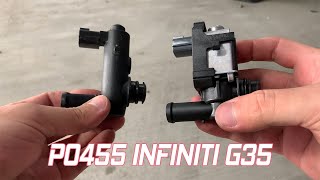
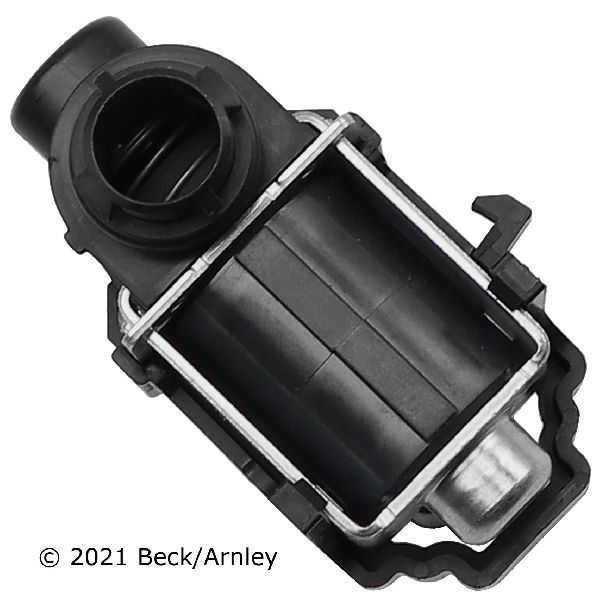
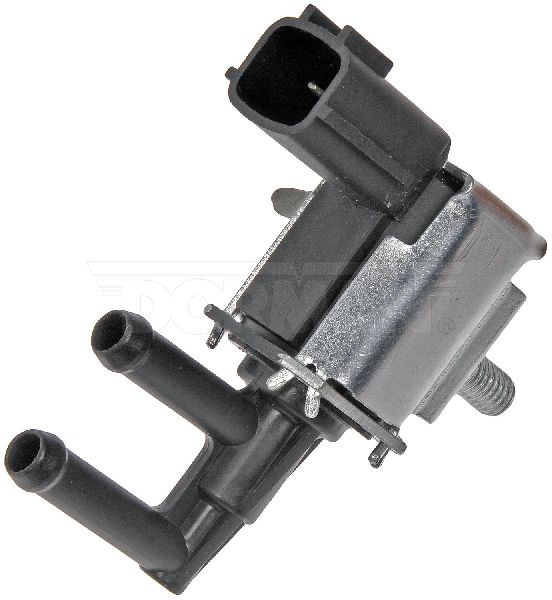
Est. part cost: $25-$50 - Failed EVAP Canister Vent Control Valve 🔴 High Probability → Shop Vapor Canister Vent Valve This valve is a very common failure point on Nissan/Infiniti vehicles of this era. Its location near the rear wheel exposes it to road debris and moisture, causing the internal plunger to corrode and stick open, creating a large leak. Forum users frequently confirm this is the fix after a new gas cap fails to resolve the code.
How to confirm: The valve can be tested by applying 12V power to its terminals; a functioning valve should click closed. When unpowered, it should be open. A stuck valve will not change state. A smoke test will also definitively show a large leak from a stuck-open valve. Access requires removing the passenger-side rear wheel and a plastic splash shield.
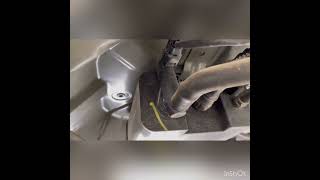
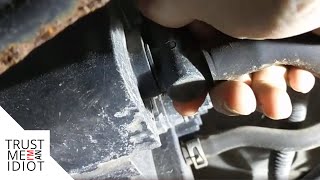
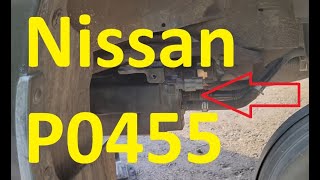
Typical fix: Replace the EVAP canister vent control valve. It is located on the charcoal canister at the rear of the vehicle, typically behind the passenger-side rear wheel. The valve twists to unseat from the canister. 🎬 See this walkthrough on replacing the vent control valve.
Est. part cost: $60-$120 - Cracked or Disconnected EVAP Hoses 🟡 Medium Probability Over time, the rubber and plastic hoses in the EVAP system can become brittle from heat and age, leading to cracks or complete disconnection, especially at connection points.
How to confirm: Visually inspect all accessible EVAP lines running from the fuel tank to the charcoal canister and up to the engine bay. A smoke test is the most effective method to find a leak in a hose that is not easily visible.
Typical fix: Replace the cracked or broken section of hose.
Est. part cost: $10-$40 - Failed EVAP Purge Volume Control Solenoid Valve ⚪ Low Probability → Shop Vapor Canister This valve, located in the engine bay, can fail, but it is less common for it to cause a large leak code like P0455 compared to the rear vent control valve. It's more likely to be stuck closed or cause a smaller leak.
How to confirm: Test the valve to see if it holds a vacuum when closed (unpowered). A ticking noise during operation is normal, but if it's stuck open, it will cause a constant vacuum leak. A scan tool can also command the valve to open and close to check its function.
Typical fix: Replace the purge solenoid valve.
Est. part cost: $50-$100
Rare But Worth Checking
- Cracked EVAP (Charcoal) Canister: → Shop Vapor Canister Physical damage from road debris or bottoming out the vehicle can crack the plastic body of the canister itself, creating a large leak. This is uncommon but should be checked if other components are fine. OEM part numbers for the canister include 14950-EH100, 14950-EH101, and 14950-EH10A.
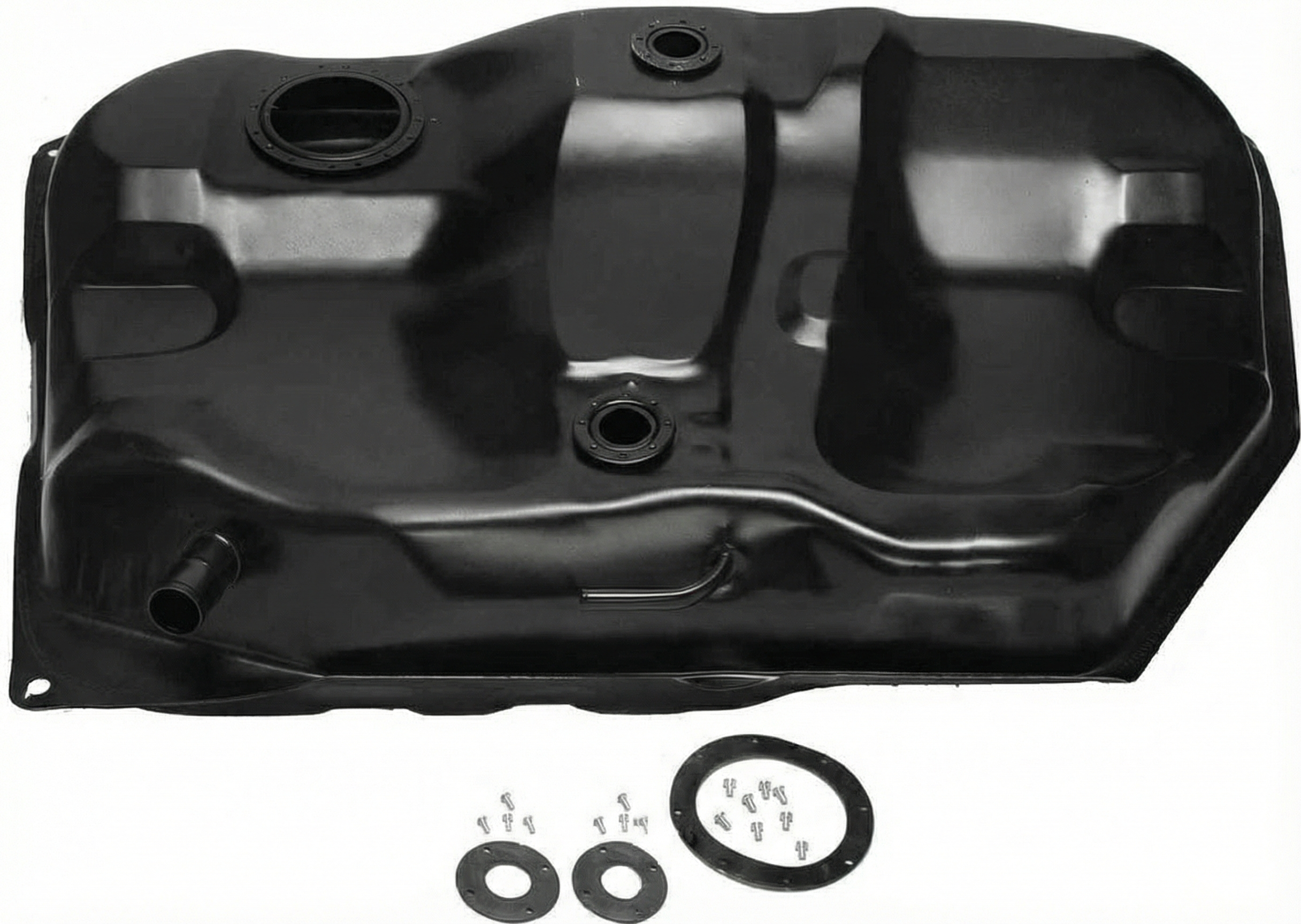
- Cracked Fuel Filler Neck: → Shop Fuel Filler Neck In regions with heavy road salt use, the metal filler neck can rust and corrode. This creates a rough, pitted surface that prevents the gas cap from sealing properly, leading to a persistent P0455 code even with a new cap. A smoke test is the best way to confirm a leak at the filler neck.
Diagnosis Steps
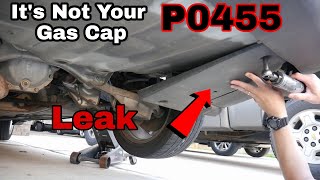
- Read the code with an OBD-II scanner to confirm P0455 is present. 🎬 Watch: A quick overview of diagnosing the P0455 code. Note any other codes.
- Inspect the fuel filler cap. Ensure it is tight (clicks at least once) and the rubber seal is not cracked, worn, or obstructed by the tether.
- Clear the code. If it returns, proceed to the next step. If in doubt about the cap's condition, replace it with an OEM part as an inexpensive first step.
- Visually inspect all visible EVAP hoses for obvious cracks, breaks, or disconnections, particularly around the charcoal canister and in the engine bay.
- Locate the EVAP canister vent control valve at the rear of the car (passenger side, behind the wheel). Test its operation by applying 12V power and listening for a click. The valve should be open with no power and closed when 12V is applied.
- If the gas cap and vent valve appear to be good, the definitive next step is to perform a smoke test. This involves injecting low-pressure smoke into the EVAP system's service port and looking for where the smoke escapes. This is the most reliable way to find leaks in hoses, the canister, the filler neck, or the fuel tank.
- Based on the smoke test results, replace the leaking component.
Parts You'll Likely Need
- Fuel Filler Cap
(OEM #17251-79961)— This is the most frequent cause of a P0455 code due to being removed and reinstalled frequently or from natural wear of the seal. The TSB ITB09012F confirms this is a primary check. An incorrect or pinched cap is a very common user error.
Trusted brands: Infiniti (OEM), Stant, Gates
OEM price range: $30-$45
Aftermarket price range: $15-$30 - EVAP Canister Vent Control Valve
(OEM #14935-AM60B)— This valve is a well-documented high-failure item on Nissan and Infiniti platforms of this era, often sticking open and causing a large leak. It is exposed to the elements, leading to corrosion and failure. This part has been superseded by updated versions.
Trusted brands: Infiniti (OEM), Hitachi, Bosch, Dorman (911-503)
OEM price range: $90-$140
Aftermarket price range: $40-$80
Related Codes That Often Appear With This One
- P0442 — P0442 indicates a small EVAP leak. Sometimes a failing component, like a deteriorating gas cap seal, can cause intermittent leaks of different sizes, triggering both codes at different times.
- P0456 — P0456 indicates a very small EVAP leak. It's less common to see with P0455, but a component on the verge of complete failure might initially present as a smaller leak.
Technical Service Bulletins (TSBs) & Recalls
- ITB09012F: States that a loose fuel fill cap is a potential cause for EVAP leak codes P0442, P0455, and P0456 on 2007-2011 Infiniti vehicles and provides a diagnostic flowchart.
Platform-Specific Known Issues
- Infiniti Technical Service Bulletin ITB09012F explicitly states that for a P0455 code on 2007-2011 Infiniti vehicles, a loose fuel fill cap may be the cause and should be the first diagnostic consideration.
- The placement of the EVAP canister vent control valve on the Y50 chassis, behind the rear passenger wheel, makes it highly susceptible to water and road salt intrusion, leading to premature failure.
Mechanic-Grade Diagnostic Values
- EVAP Canister Vent Control Valve Solenoid Resistance — expected: 15 - 30 Ohms. Failure: A reading outside of this range (e.g., open circuit or short) indicates a failed solenoid winding.
- EVAP Purge Volume Control Solenoid Valve Resistance — expected: Approximately 36 Ohms at ~60°F (will vary with temperature). Failure: An open or shorted reading on the multimeter indicates a bad valve.
- Fuel Tank Pressure (FTP) Sensor Voltage (Key On, Engine Off) — expected: ~1.5 - 2.5 Volts (varies by atmospheric pressure and fuel level). Failure: Voltage stuck at 0V, 5V, or a non-responsive value when vacuum/pressure is applied indicates a faulty sensor or wiring issue.
Scan Tool Commands That Help
- Infiniti CONSULT-III: DTC WORK SUPPORT for EVAP System — This is the dealer-level scan tool function used to command the vehicle's ECM to perform the EVAP system self-test on demand, which is necessary to confirm a repair without waiting for a full drive cycle.
Wiring & Ground Locations
- EVAP Canister Vent Control Valve — Under the rear of the vehicle, mounted on the charcoal canister, which is located forward of the passenger-side rear tire.. This is the location of the most common electrical component to fail for P0455. Technicians need to access its connector to test for power, ground, and solenoid resistance.
- EVAP Canister Purge Volume Control Solenoid Valve — In the engine bay, on the right (passenger) side of the engine compartment.. This is the location of the secondary solenoid valve. Access is required to test its operation and check its hoses for leaks.
- EVAP Control System Pressure Sensor — Under the right rear side of the vehicle, near the EVAP canister.. This sensor provides the reading that the ECM uses to detect the leak. Its wiring and connection must be intact for an accurate diagnosis.
- Ground Point M70 — Located at the right end of the dash.. This is a potential grounding point for various engine control systems. A poor ground here could cause erratic sensor readings.
Real Owner Repair Stories
- G35Driver Forum User (2008 Infiniti G35 Journey Sedan (platform mate with similar EVAP system)) — Persistent P0455 code, sometimes intermittent between fill-ups. Another user in the same thread reported difficulty filling the gas tank completely.
❌ Tried (didn't work) Replaced gas cap with a new, non-OEM part., Replaced gas cap again with a new, OEM part.
✅ What actually fixed it Replacing the EVAP canister vent control valve (solenoid located under the rear of the car by the tank) resolved the P0455 code.
"I Checked Everything" — The Actual Cause
- In a documented case on a similar platform, a vehicle passed a professional smoke test twice at a Nissan specialty shop, yet the P0455 code would intermittently return. The suspected cause was an EVAP canister vent control valve that was sticking open intermittently during vehicle operation, but would function correctly (seal) during the static, key-off smoke test. This scenario highlights how a smoke test can sometimes fail to identify an intermittently faulty electronic component.
OEM Part Supersession History
14935-AM600, 14935-AM60A→14935-AM60B— The 14935-AM60B is an updated design with improved internal sealing and better thermal resistance, making it more durable than the previous versions.
Heads up: While older versions may fit, the latest revision (14935-AM60B) is recommended for reliability and to prevent repeat failures.
Helpful Videos
Used OEM Parts in Stock
New Aftermarket Parts Available


The information in this article is provided for general reference and educational purposes only. Vehicle specifications, procedures, and part compatibility can vary by production date, trim level, and region. Always consult your vehicle's factory service manual and verify part numbers before purchasing or performing repairs. Safety-critical components such as airbags, seat belts, and braking systems should be installed by a qualified professional.
- Infiniti M45:
- 🧭 Diagnostic Flowchart
- 🎬 Helpful Videos
- 🛍️ Shop This Part
- What's Unique About the 2007-2010 Infiniti M45
- Symptoms You May Notice
- Most Likely Causes
- Rare But Worth Checking
- Diagnosis Steps
- Parts You'll Likely Need
- Related Codes That Often Appear With This One
- Technical Service Bulletins (TSBs) & Recalls
- Platform-Specific Known Issues
- Mechanic-Grade Diagnostic Values
- Scan Tool Commands That Help
- Wiring & Ground Locations
- Real Owner Repair Stories
- "I Checked Everything" — The Actual Cause
- OEM Part Supersession History
- 🎟️ Get 5% Off