

P0455 on 2010-2013 Kia Forte 2.4L: EVAP Large Leak Causes and Fixes
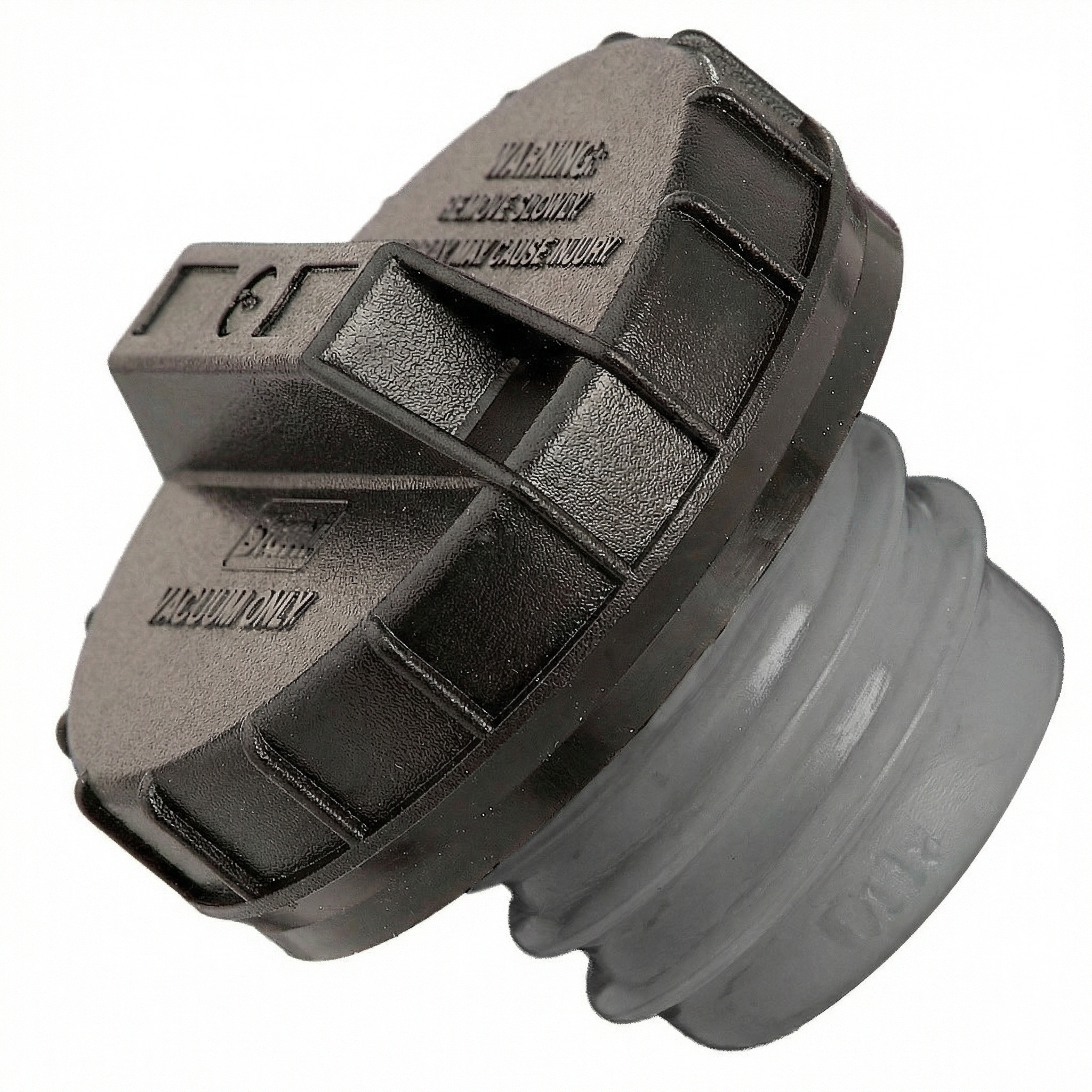
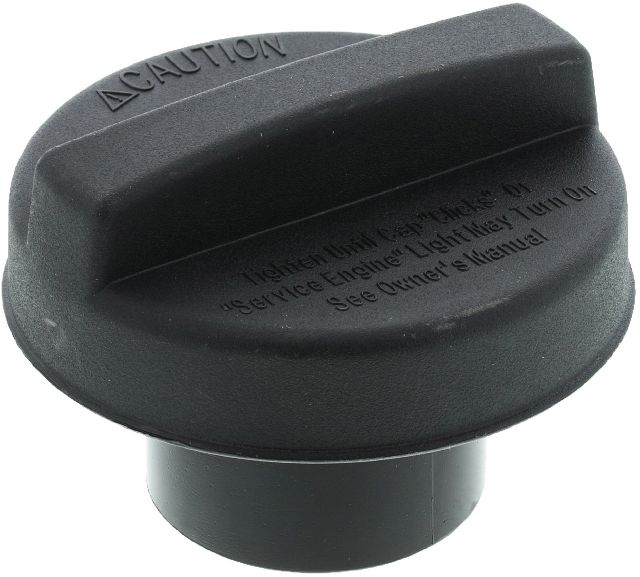
For a 2010-2013 Kia Forte, code P0455 is most often caused by a loose or faulty gas cap. Always use a genuine OEM replacement cap if needed, as aftermarket caps are known to cause issues. If the cap isn't the problem, the next most likely culprit is a failed Canister Close Valve (CCV) located under the car near the rear wheel, which often cracks or sticks due to rust and exposure. A new gas cap costs about $25, while a CCV replacement can range from $50-$100 for the part.
- Always check your gas cap first. Make sure it's tight and the seal isn't cracked. This is the simplest and most common fix.
- If the gas cap is not the problem, the Canister Close Valve (CCV) is the next most likely part to fail on a 2010-2013 Forte due to its vulnerability to corrosion.
- If you have trouble starting your car after getting gas, suspect the Canister Purge Valve (CPV) in the engine bay is stuck open.
- While you can drive with this code, you will not pass an emissions test, so it's best to address it to avoid releasing excess fuel vapors and to get the check engine light off.
What's Unique About the 2010-2013 Kia Forte
The 2010-2013 Kia Forte belongs to the first generation (TD). While the causes for P0455 are common to many cars, this platform, like many Kias and Hyundais of its era, is particularly known for failures of the Canister Close Valve (CCV). This valve is mounted under the vehicle, where it is exposed to road salt and moisture, often leading to corrosion, cracking of the plastic housing, or the valve sticking open. The metal bracket holding the valve assembly is also prone to heavy rust, which can put stress on the plastic valve body and complicate removal. Kia even issued a service campaign (SC122) for older models to apply additional anti-corrosion material to the underbody, highlighting the known issue with rust in salt-belt states.
Symptoms You May Notice
- Check Engine Light is on
- A noticeable smell of fuel, especially around the gas cap or rear of the car after refueling.
- Difficulty starting the engine immediately after refueling (points towards a stuck-open purge valve).
- Slight decrease in fuel economy.
- Replacing the fuel tank pressure sensor. This sensor rarely fails and typically sets its own specific trouble codes if there is an issue.
- Replacing oxygen (O2) sensors. O2 sensors are part of the exhaust system and have no connection to the EVAP system.
Most Likely Causes
- Loose, Missing, or Faulty Gas Cap 🔴 High Probability → Shop Fuel Tank Cap This is the most common cause on any vehicle. Owners and mechanics strongly recommend using a genuine Kia OEM replacement cap, as aftermarket caps frequently fail to create a proper seal and resolve the code.
How to confirm: Ensure the cap is tightened until it clicks. Inspect the rubber seal on the cap for cracks, stiffness, or damage. A visual check is often sufficient.
Typical fix: Tighten the cap. If the seal is bad, replace the gas cap with a genuine OEM part (Part No. 31010-3L600U) to ensure a perfect seal.
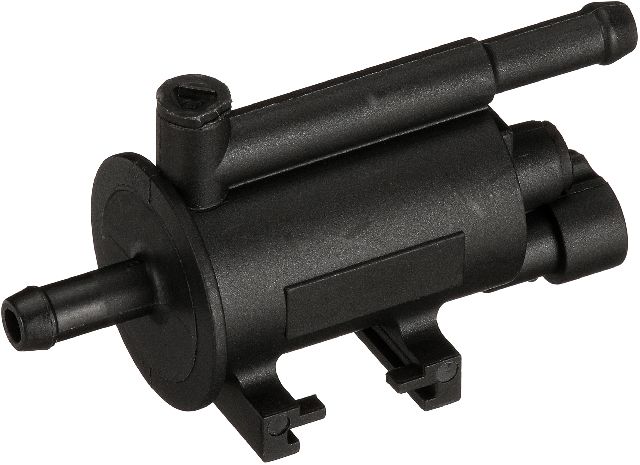
Est. part cost: $15-$35 - Failed Canister Close Valve (CCV) / Vent Valve 🔴 High Probability → Shop Vapor Canister The CCV is mounted under the car near the charcoal canister, making it highly susceptible to corrosion and damage from road salt, water, and debris, causing it to stick open or crack. A diagnostic video on a 2011 Forte 2.4L identified a cracked CCV as a primary cause. The mounting bracket bolts are notorious for rusting and breaking during removal.
How to confirm: A mechanic can command the valve to close with a bidirectional scan tool and see if it holds a vacuum. Visually inspect the valve and its connector for cracks or heavy corrosion. During a smoke test, smoke will exit from the valve if it is stuck open or cracked.
Typical fix: Replace the canister close valve. The part is often attached to the charcoal canister or a filter assembly, and its mounting bracket may be very rusty, requiring penetrating oil and patience.
Est. part cost: $50-$100 - Failed Canister Purge Valve (CPV) / Purge Solenoid 🟡 Medium Probability → Shop Vapor Canister This valve is located in the engine bay and cycles constantly when the engine is running, leading to eventual wear. It can fail by sticking open, creating a constant vacuum leak.
How to confirm: If you experience hard starting after filling the gas tank, the purge valve is a strong suspect. With the engine off, disconnect the hose and try to blow through the valve; if air passes, it's stuck open and faulty. A mechanic can also test it with a vacuum pump or scan tool.
Typical fix: Replace the purge valve. It is typically an easy-to-access part in the engine bay, connected by two hoses and an electrical connector.
Est. part cost: $40-$70 - Cracked or Disconnected EVAP Hose ⚪ Low Probability Rubber hoses can become brittle and crack over time due to age and heat cycles, especially at connection points.
How to confirm: The most effective method is a smoke test, which involves injecting vaporized mineral oil into the EVAP system. The smoke will escape from any leaks, making them visible.
Typical fix: Replace the damaged section of hose.
Est. part cost: $5-$20
Rare But Worth Checking
- Cracked Charcoal Canister: → Shop Vapor Canister The canister itself can be damaged by road debris or develop cracks, creating a large leak. This is less common than valve failure but should be inspected during a smoke test.
- Damaged Fuel Filler Neck: → Shop Fuel Filler Neck Rust or corrosion on the fuel filler neck can prevent even a new gas cap from sealing properly. This is more common in areas that use road salt and can be the frustrating last item to check after replacing all other components.
Diagnosis Steps
- Read the code with an OBD-II scanner to confirm P0455 is the primary code.
- Inspect the gas cap. Remove it, check the seal for damage, and reinstall it, ensuring it clicks at least once. Clear the code and drive for a few days to see if it returns. If replacing, use an OEM cap.
- If the cap is fine, perform a visual inspection of accessible EVAP hoses in the engine bay (around the purge valve) and under the vehicle for obvious cracks, disconnections, or damage.
- Specifically inspect the Canister Close Valve (CCV) under the car near the rear driver's side wheel. Look for cracks in the plastic housing and severe rust on its mounting bracket, as this is a very common failure point.
- If no obvious issues are found, the most effective next step is to perform a smoke test. This will definitively identify the location of any leaks in hoses, the canister, valves, or the fuel tank itself.
- Based on the smoke test results, inspect the leaking component. If smoke comes from the CCV area, it is faulty. If it comes from the purge valve line, that valve may be stuck open.
- If a smoke machine is not available, you can proceed to test the valves. The purge valve (in the engine bay) can be removed and tested to see if it's stuck open. The close valve (under the car) can be visually inspected for cracks and corrosion.
Parts You'll Likely Need
- Fuel Tank Cap
(OEM #31010-3L600U)— This is the most frequent cause of a P0455 code. The seal wears out over time. Aftermarket caps are widely reported to not seal correctly; an OEM cap is strongly recommended.
Trusted brands: Kia (Genuine OEM)
OEM price range: $25-$35
Aftermarket price range: $15-$25 - Canister Close Valve (Vent Valve)
(OEM #29010-2B000)— A very common failure point on this vehicle due to its exposed location under the car, leading to corrosion and cracking. The OEM part number may refer to an assembly.
Trusted brands: Kia (Genuine OEM), Dorman (911-800 is a common cross-reference for the valve itself), Standard Motor Products
OEM price range: $70-$100
Aftermarket price range: $50-$80 - Canister Purge Valve (Purge Solenoid)
(OEM #28910-26900)— Can get stuck open, causing a constant leak path. This is the primary suspect if you have trouble starting the car after refueling.
Trusted brands: Kia (Genuine OEM), Dorman, Bosch
OEM price range: $70-$90
Aftermarket price range: $40-$70
Related Codes That Often Appear With This One
- P0442 — EVAP System Leak Detected (Small Leak). Sometimes a large leak can initially be detected as a small leak, or there may be multiple leaks of different sizes.
- P0456 — EVAP System Leak Detected (Very Small Leak). Similar to P0442, this indicates a leak in the same system, just of a different size.
Technical Service Bulletins (TSBs) & Recalls
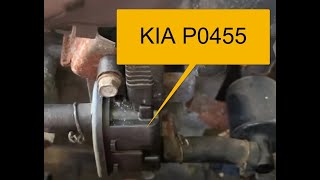
- Kia Service Campaign SC122: While not directly for P0455, this campaign was initiated to apply additional anti-corrosion material to the underbody of various Kia models, including some in this generation. This acknowledges the high potential for corrosion on underbody components like the CCV and its hardware, which is a primary cause of P0455 on these vehicles. 🎬 Watch: A step-by-step guide to fixing the P0455 gross leak code.
- TSB Bulletin #PS469: This manufacturer bulletin addresses cases where the MIL is illuminated with DTC P0455. It notes that if an automated evaporative leak self-test results in a "No Trouble Found" (NTF) result, a manual EVAP test is recommended to locate hard-to-find leaks.
Platform-Specific Known Issues
- Rusted Canister Close Valve Bolts: → Shop Vapor Canister Owners frequently report that the bolts securing the Canister Close Valve (CCV) or its bracket are extremely corroded, especially in salt-belt regions. These bolts often snap during removal, requiring drilling, tapping, or replacement of the entire bracket. Applying penetrating oil generously and using heat are common strategies to attempt removal without breakage.
- Real World Repair: Multi-Part Failure: A detailed diagnostic video by 'Moose Mobile Auto Repair' on a 2011 Forte 2.4L with P0455 found a dual failure. The code was caused by a combination of a slightly leaking Purge Valve in the engine bay and a cracked housing on the Canister Close Valve assembly under the car. This highlights that sometimes there isn't a single cause, but multiple small leaks that add up to a 'large leak'.
Mechanic-Grade Diagnostic Values
- Canister Purge Solenoid Valve (PCSV) Coil Resistance — expected: Approximately 26.2 to 36 Ohms. Failure: A reading of infinity (open circuit), zero (short circuit), or significantly outside the expected range indicates a faulty coil.
- Canister Close Valve (CCV) Coil Resistance — expected: Approximately 48 to 65 Ohms. Failure: A reading significantly outside this range suggests a failed internal coil in the valve.
- Fuel Tank Pressure Sensor (FTPS) Signal Voltage (KOEO, Gas Cap Off) — expected: Approximately 1.5V (Normal range 1.3V - 1.7V). Failure: A voltage that is stuck high (near 5V) or low (near 0V) can indicate a faulty sensor or a wiring issue.
- Canister Close Valve (CCV) Power Supply — expected: Battery voltage (~12V) at one pin of the connector with key on, engine off.. Failure: No voltage at either pin (when checking against a good ground) points to a wiring issue or a blown fuse, preventing the valve from activating.
Scan Tool Commands That Help
- G-Scan (or equivalent OEM-level tool): EVAP Leak Test (Automated) — This is a guided function that automatically commands the CCV and PCSV to seal the system and then monitors the Fuel Tank Pressure Sensor to verify system integrity. It's an efficient way to confirm a leak exists or to verify a repair has been successful without needing a smoke machine immediately.
- Bidirectional Scan Tool: Manual control of Canister Close Valve (CCV) and Purge Control Solenoid Valve (PCSV) — Used during a smoke test to manually seal the system. By commanding the CCV closed, a technician can fill the system with smoke to find leaks. Commanding the PCSV closed isolates the engine intake side of the system.
Real Owner Repair Stories
- YouTube channel 'Moose Mobile Auto Repair' (2011 Kia Forte 2.4L SX) — Intermittent Check Engine Light with code P0455.
❌ Tried (didn't work) The diagnosis was comprehensive, so no parts were replaced unnecessarily before diagnosis was complete.
✅ What actually fixed it A smoke test revealed a dual failure: 1) The Canister Close Valve assembly (attached to a vapor filter, not the main canister) had a cracked plastic housing. 2) The Purge Valve in the engine bay was found to be leaking slightly when tested for suction. Both components were recommended for replacement to fully resolve the code. - Reddit user on r/KiaSoulClub (similar platform) (2011 Kia Soul with 286,000km) — Persistent P0455 code for months.
❌ Tried (didn't work) Replaced gas cap, Replaced purge valve, Replaced fuel tank pressure sensor, Multiple inconclusive smoke tests
✅ What actually fixed it The final fix was found by pressurizing the fuel tank and spraying soapy water on it, which revealed numerous pinhole rust leaks on the fuel tank itself and the fuel filler neck. This is a classic rust-belt issue that a standard smoke test can miss if the leaks are very small or only open under specific pressure.
"I Checked Everything" — The Actual Cause
- In a case on a similar Kia platform (2011 Soul), multiple smoke tests came back clean, failing to identify the source of a P0455. The owner eventually found the root cause by pressurizing the tank and using a soapy water solution, which revealed multiple pinhole rust leaks on the top of the fuel tank and the fuel filler neck that were not visible and did not show up on a standard low-pressure smoke test.
OEM Part Supersession History
31010-2D600, 31010-2F500, 31010-2C800, 31010-3L600→31010-3L600U— Standard part consolidation and design updates over many model years.
Heads up: The latest part number, 31010-3L600U, is the correct service replacement for a wide range of Kia vehicles, including the 2010-2013 Forte, ensuring proper seal and function.
Diagnostic Flowchart
Real Owner Stories
Aggregated from forums and TSBs cited above. Mileages and costs reflect what owners reported in those sources.
2011 Kia Forte 5 2.4L
Symptoms: Check engine light is on with a P0455 code. The light comes and goes.
What fixed it: Diagnosed as needing a new purge valve (slightly leaking) and a new canister close valve (also called a vent valve) which was attached to the vapor filter and was cracked and leaking. The metal bracket was also rusted.
Source hint: YouTube - Moose Mobile Auto Repair
Related OBD-II Codes
Frequently Asked Questions
Why is my 2010-2013 Kia Forte 2.4L hard to start right after I put gas in it?
Is there a specific gas cap recommended for the Kia Forte to fix P0455?
Does Kia Service Campaign SC122 apply to my P0455 code?
I'm trying to replace the Canister Close Valve (CCV) on my Forte, but the bolts are stuck. Is this normal?
Can a P0455 code on my 2.4L Forte be caused by more than one part failing at the same time?
Helpful Videos
Used OEM Parts in Stock
New Aftermarket Parts Available


The information in this article is provided for general reference and educational purposes only. Vehicle specifications, procedures, and part compatibility can vary by production date, trim level, and region. Always consult your vehicle's factory service manual and verify part numbers before purchasing or performing repairs. Safety-critical components such as airbags, seat belts, and braking systems should be installed by a qualified professional.
- Kia Forte:
- 🧭 Diagnostic Flowchart
- 🎬 Helpful Videos
- 🛍️ Shop This Part
- What's Unique About the 2010-2013 Kia Forte
- Symptoms You May Notice
- Most Likely Causes
- Rare But Worth Checking
- Diagnosis Steps
- Parts You'll Likely Need
- Related Codes That Often Appear With This One
- Technical Service Bulletins (TSBs) & Recalls
- Platform-Specific Known Issues
- Mechanic-Grade Diagnostic Values
- Scan Tool Commands That Help
- Real Owner Repair Stories
- "I Checked Everything" — The Actual Cause
- OEM Part Supersession History
- Real Owner Stories
- 2011 Kia Forte 5 2.4L
- Related OBD-II Codes
- Frequently Asked Questions
- 🎟️ Get 5% Off