

P0455 on 2017-2022 Kia Niro: EVAP Large Leak Causes and Fixes
On a 2017-2022 Kia Niro, code P0455 is most often caused by a loose or faulty gas cap. Before buying any parts, tighten the cap, clear the code, and drive for a few days. If it returns, the next most likely causes are the canister purge valve or vent valve. In some cases, electrical issues like parasitic draw on the 12V battery have been suspected of falsely triggering this code.
- P0455 indicates a large leak in the EVAP (emissions) system.
- Always check the gas cap first. Make sure it's tight and the seal isn't cracked. This is the most common and cheapest fix.
- If the gas cap isn't the issue, the canister purge valve or vent valve are the next most likely culprits.
- Do not replace expensive parts like the charcoal canister without confirming the leak source, preferably with a smoke test.
- Be aware that Hybrid (HEV) and Plug-in Hybrid (PHEV) Niro models may use different EVAP parts.
What's Unique About the 2017-2022 Kia Niro
The Kia Niro is a hybrid vehicle, and its EVAP system components, particularly the vapor canister, can differ between the standard Hybrid (HEV) and Plug-In Hybrid (PHEV) models. It is crucial to use the correct parts for your specific version. While the causes for P0455 are typical for most vehicles (gas cap, valves, hoses), one owner on a Reddit forum reported a strange case where parasitic draw on the 12V battery from a wireless CarPlay adapter was suspected of causing a faulty P0455 code, suggesting the system can be sensitive to electrical issues. This highlights the importance of checking for seemingly unrelated electrical problems when diagnosing stubborn EVAP codes on this platform.
Generation note: The 2017-2022 Kia Niro covers the first generation of the vehicle (codename DE). Within this range, there are standard Hybrid (HEV) and Plug-In Hybrid (PHEV) models which may use different EVAP system parts, like the vapor canister and filler neck. Always verify the part compatibility with your specific model and VIN before purchasing.
Symptoms You May Notice
- Check Engine Light is on.
- A noticeable fuel or gasoline smell, often near the rear of the vehicle or in the engine bay.
- Difficulty refueling (gas pump clicks off before the tank is full).
- Slightly decreased fuel economy in some cases.
- Replacing the charcoal canister before performing a smoke test. The canister is expensive and often not the root cause unless physically damaged.
- Repeatedly replacing parts like the purge valve and gas cap without confirming the failure, leading to unnecessary expense when the issue is a cracked hose or a less common component like the NVLD.
Most Likely Causes
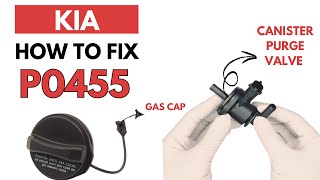
- Loose or Faulty Gas Cap 🔴 High Probability → Shop Fuel Tank Cap This is the most common cause for P0455 on almost all vehicles, as the cap seal can degrade over time or be left loose after refueling.
How to confirm: Ensure the gas cap is tightened until it clicks at least once. Inspect the cap's rubber O-ring for cracks, stiffness, or debris. Clean the seal and the filler neck rim. If the light goes off after a few days of driving, this was the issue.
Typical fix: Tighten or replace the gas cap. It is highly recommended to use an OEM (Original Equipment Manufacturer) gas cap for a proper seal, as some aftermarket caps are known to cause EVAP codes.
Est. part cost: $15-$40 - Faulty Canister Purge Valve (Purge Solenoid) 🟡 Medium Probability → Shop Vapor Canister The purge valve controls the flow of fuel vapors to the engine. It can get stuck open, creating a constant leak path that the system detects during its self-test.
How to confirm: The purge valve is typically located in the engine bay, mounted on or near the intake manifold. With the engine off, you can remove the valve and try to blow through it. If air passes through, it is stuck open and faulty (it's a normally closed valve). With the engine running, you can disconnect the hose leading from the canister and feel for vacuum; if it's sucking air at idle when not commanded open, it's bad.
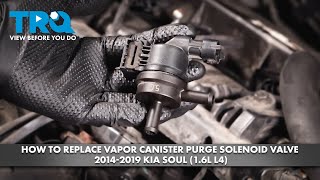
Typical fix: Replace the canister purge valve. The OEM part number for many 2017-2022 Niro models is 28910-2M420. 🎬 Watch: This video shows how to replace the purge solenoid valve.
Est. part cost: $50-$120 - Faulty Canister Vent Valve / Canister Close Valve (CCV) 🟡 Medium Probability → Shop Vapor Canister
How to confirm: The vent valve is normally open and closes to seal the system for testing. It is located near the charcoal canister by the fuel tank. If it fails to close during the EVAP test, it will cause a P0455 code. Testing often requires a scan tool to command the valve closed and check if it holds a vacuum or pressure during a smoke test. A manufacturer service bulletin for other Kia models, TSB Bulletin #TSBFUE040, notes that the Canister Close Valve (CCV) can become stuck open, triggering DTC P0455.
Typical fix: Replace the vent valve. On many Kia models, it is part of the charcoal canister assembly, but can sometimes be purchased separately. An example part number is 31430-1Y000. 🎬 Watch: A step-by-step guide to replacing the canister close valve.
Est. part cost: $70-$150 - Cracked or Disconnected EVAP Hose ⚪ Low Probability
How to confirm: Visually inspect all EVAP hoses running from the fuel tank to the engine for cracks, brittleness, or loose connections. A professional will use a smoke machine, which fills the system with a harmless smoke, to quickly and accurately find the source of the leak. Smoke will be seen escaping from any crack or loose connection.
Typical fix: Replace the damaged section of hose and secure the connections.
Est. part cost: $10-$50
Rare But Worth Checking
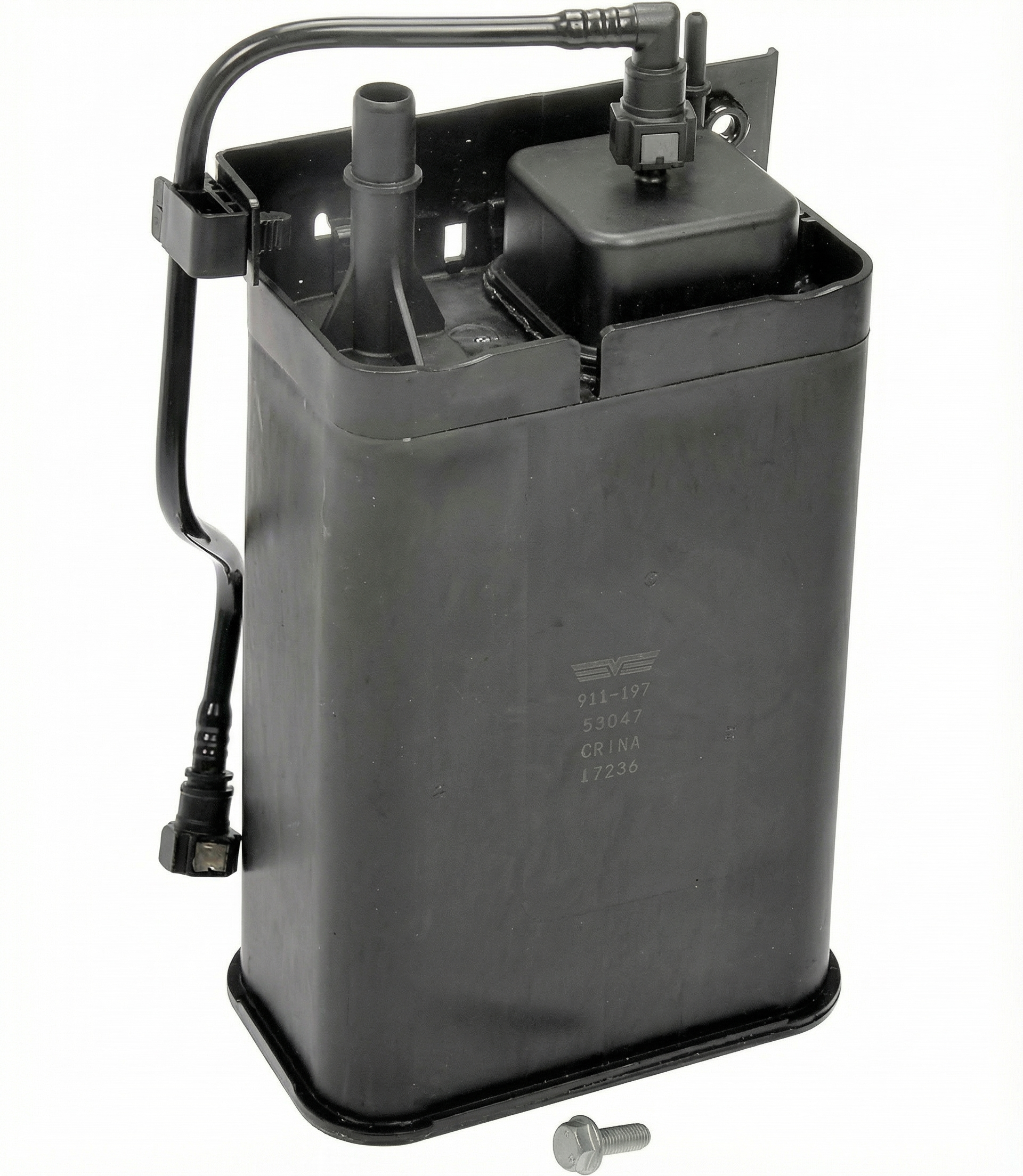
- Cracked Charcoal Canister: → Shop Vapor Canister The charcoal canister holds the fuel vapors. It can be damaged by road debris or develop cracks over time, creating a large leak. A Kia Niro owner was quoted $1,000 for this repair at a dealership. NHTSA ODI #10150202 describes a case where a dealer found a canister not sealing and replaced it alongside the gas cap to resolve P0455.
- Faulty Natural Vacuum Leak Detector (NVLD): → Shop Evaporative Emissions System Leak Detection Pump A Kia TSB (TSBFUE041 / SA395) for the related P0456 code on the Niro points to the NVLD system. One owner on a forum fixed a persistent P0455/P0456 code by replacing the NVLD after a mechanic noted it was outside the standard EVAP smoke test loop and was a known issue.
- Damaged Fuel Filler Neck: → Shop Fuel Filler Neck The pipe you put the gas nozzle into can rust or become damaged, preventing the gas cap from sealing correctly. A dealership replaced this part on a Niro in an attempt to fix a P0455 code, though in that specific case it was not the final solution.
- Faulty Fuel Tank Pressure Sensor: → Shop Fuel Tank This sensor monitors the pressure within the EVAP system. If it provides an incorrect reading, the computer might mistakenly believe there is a leak. This will often be accompanied by other pressure-sensor-specific codes.
Diagnosis Steps
- Check the gas cap. Remove it, inspect the seal for damage, and reinstall it, making sure it clicks several times.
- Clear the code with an OBD-II scanner and drive for a few days to see if the code returns. The EVAP monitor runs under specific conditions, so it may take time.
- If the code returns, visually inspect the EVAP system hoses in the engine bay and under the car near the fuel tank for any obvious cracks or disconnections.
- Locate the canister purge valve in the engine bay. Test for function by removing it and checking if you can blow through it (you shouldn't be able to).
- If the purge valve is working, the next step is to test the canister vent valve (also called canister close valve), which is usually near the fuel tank. This often requires a scan tool to command it closed.
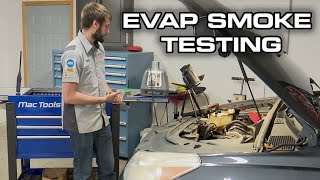
- If no faulty components are found, the most effective way to find the leak is with a smoke test. This involves connecting a smoke machine to the EVAP service port and looking for where the smoke escapes. 🎬 See how to perform a professional EVAP smoke test for leaks. Manufacturer Bulletin #PS469 recommends a manual EVAP test for hard-to-find leaks when the self-test results in "No Trouble Found" (NTF) despite a MIL for P0455.
- If a smoke test reveals no leaks, investigate less common causes like the Natural Vacuum Leak Detector (NVLD) or the Fuel Tank Pressure Sensor, as noted in TSBs and forum posts.
Parts You'll Likely Need
- Gas Cap
(OEM #31010-3L600 (Verify with VIN))— This is the most frequent and simplest cause of a P0455 code due to a worn seal or not being tightened properly.
Trusted brands: Kia (OEM)
OEM price range: $20-$40
Aftermarket price range: $15-$30 - Vapor Canister Purge Valve / Solenoid
(OEM #28910-2M420)— This valve is a common failure point that can get stuck open, causing a large leak code.
Trusted brands: Kia (OEM), Bosch
OEM price range: $53-$80
Aftermarket price range: $40-$80 - Vapor Canister Vent Valve / Solenoid (Canister Close Valve)
(OEM #31430-1Y000 (Valve only, verify with VIN))— This valve can fail to close when the system runs its self-test, which the computer interprets as a large leak.
Trusted brands: Kia (OEM), Dorman
OEM price range: $80-$150
Aftermarket price range: $50-$110
Technical Service Bulletins (TSBs) & Recalls
- TSBFUE041 / SA395: Addresses DTC P0456 (small leak) on 2017-2019 Niro HEVs by replacing the fuel tank air filter and, if the code is active, the Natural Vacuum Leak Detector (NVLD). This is relevant as the components can also cause a large leak (P0455).
- TSB Bulletin #TSBFUE040: Notes that the Canister Close Valve (CCV) may exhibit DTC P0455 due to the valve being stuck open.
- Bulletin #PS469: Provides a "Pitstop" guide for manual evaporative emissions testing for hard-to-find leaks when DTC P0455 is present but self-tests are inconclusive.
Platform-Specific Known Issues
- There is a critical difference between EVAP parts for the standard Hybrid (HEV) and the Plug-In Hybrid (PHEV) models. For example, the vapor canisters and filler necks are not interchangeable. You must verify your vehicle's specific sub-model before ordering parts.
- A Reddit user chronicled a lengthy and expensive battle with P0455 on a 2019 Niro. After replacing the cap, purge valve, vent valve, and filler neck to no avail, they discovered the code was likely being falsely triggered by parasitic battery drain from a wireless CarPlay adapter plugged into the USB port. Unplugging the adapter resolved the issue.
- TSB FUE041 / SA395 for the related P0456 code suggests that the Natural Vacuum Leak Detector (NVLD) and its associated air filter can be a source of leaks that are hard to find with a standard smoke test.
Mechanic-Grade Diagnostic Values
- Fuel Tank Pressure Sensor (FTPS) Signal Voltage — expected: With Key On, Engine Off (KOEO) and the gas cap removed, the voltage should be at a baseline specified by the manufacturer (typically around 2.5V).. Failure: If the 5V reference or ground is missing, or the baseline voltage is out of spec, the sensor or its wiring is faulty. During a forced purge test, if the voltage drops below 1.5V, it indicates a restriction in the EVAP system, not a leak.
- Purge Control Solenoid Valve (PCSV) Coil Resistance — expected: A specific resistance value between terminals 1 and 2, as defined in the official service manual (KGIS).. Failure: An open circuit (infinite resistance) or a short (zero resistance) indicates a failed solenoid coil. A reading outside the specified range also indicates a fault.
Scan Tool Commands That Help
- Kia GDS (Global Diagnostic System): Actuation Test — To manually command the Canister Purge Valve (PCSV) and Canister Close Valve (CCV) to open or close. This allows a technician to verify solenoid function and seal the system for a smoke or vacuum test.
- Kia GDS (Global Diagnostic System): Resetting Adaptive Values — After replacing a major engine or emissions component, this special function in the 'Vehicle S/W Management' menu can be used to clear learned values from the ECM, forcing it to relearn parameters with the new part.
Wiring & Ground Locations
- EVAP System Wiring Diagrams — Available within the official Kia service manuals (KGIS/FixMyCarInfo) for the specific model year, such as the 2018 Kia Niro HEV/PHEV.. These diagrams are essential for tracing the circuits for the purge valve, vent valve, and fuel tank pressure sensor to check for opens, shorts, or bad grounds between the component and the ECM. They include connector pinouts and wire colors.
- Fuse & Relay Information — Found in the 'Power & Ground' section of the official service manual and on diagrams for the engine compartment and instrument panel fuse boxes.. Allows a technician to check for blown fuses or faulty relays that supply power to the EVAP system components, which would cause them to be inoperative and could trigger a code.
Real Owner Repair Stories
- Reddit user on r/KiaNiro (2019 Kia Niro EX HEV) — Persistent Check Engine Light with codes starting as P0456 (small leak) and escalating to P0455 (large leak).
❌ Tried (didn't work) Replaced gas cap ($65), Replaced entire fuel filler neck assembly ($450), Replaced vent valve ($250), Replaced purge valve ($150)
✅ What actually fixed it A second mechanic followed Kia TSB TSBFUE041 and replaced the Natural Vacuum Leak Detector (NVLD) and its associated air filter. The mechanic noted the NVLD system is often outside the standard EVAP smoke test loop, which is why previous tests showed no leaks. The code did not return after this repair. - NHTSA ODI #11519719 — An owner reported that after a check engine light appeared, a dealer suggested the P0455 code was caused by a gas cap that was not installed properly. The dealer cleared the code, though the light returned later.
- NHTSA ODI #11594618 — A report mentions P0455 appearing alongside other codes, noting that possible causes for such electrical or emission symptoms might include a failing battery, alternator, or damaged wiring.
"I Checked Everything" — The Actual Cause
- A faulty Natural Vacuum Leak Detector (NVLD). In one documented case, multiple smoke tests passed with no leaks found. The actual cause was a faulty NVLD, which a mechanic noted is located outside of the standard EVAP testing loop and would not be caught by a typical smoke test.
- Parasitic draw on the 12V battery. In another case, after numerous expensive parts failed to fix the P0455 code and smoke tests were clean, the owner suspected a wireless CarPlay adapter was causing a constant drain on the 12V battery, leading to a false trouble code. Unplugging the device resolved the check engine light.
When the Usual Fixes Don't Work
- In multiple owner-documented cases, the most common fixes for P0455 (gas cap, purge valve, vent valve) did not resolve the issue on the Kia Niro. One lengthy repair saga only concluded after a mechanic followed a TSB related to the P0456 code and replaced the Natural Vacuum Leak Detector (NVLD), a part that is not checked during a standard smoke test. In another instance, the root cause was suspected to be a parasitic electrical drain from a USB accessory, which may have caused the sensitive electronics to report a false code. These cases show that for persistent P0455 codes on this platform, diagnosis must go beyond basic smoke tests and parts swapping.
OEM Part Supersession History
31430-3X000→31430-1Y000— Part revision or update by the manufacturer.
Heads up: The new part number (31430-1Y000) is the correct replacement for the Canister Close Valve on specified Niro models.
Model Year Variations Within This Range
- 2017-2022: The most significant variation is not by year, but by hybrid type. Standard Hybrid (HEV) and Plug-In Hybrid (PHEV) models use different vapor canisters and potentially other EVAP components. Using a part from the wrong sub-model will lead to fitment issues or persistent codes.
Diagnostic Flowchart
Other Known Issues on This Vehicle
Issues unrelated to this code that are worth knowing about as an owner of this generation:
- Hydraulic Clutch Actuator (HCA) Failure 🔴 High — Common enough to trigger a recall (NHTSA Campaign Number: 23V532000) for 2017-2022 Niro HEV and 2018-2022 Niro PHEV models. (Ref: Recall 23V532000: Fluid can leak onto the HCA's circuit board, causing a short and increasing the risk of an engine compartment fire.)
- Engine Failure / Internal Damage 🔴 High — Multiple owner complaints filed with the NHTSA mention premature engine failure, sometimes related to faulty EGR or heat recovery systems leading to coolant loss or oil contamination. (Ref: TSB ENG212 (June 2020) addresses a known manufacturing defect in the EGR system on 2017-2019 models that can lead to misfires and cylinder head damage.)
- Dual-Clutch Transmission (DCT) Jerkiness and Rough Shifting 🟠 Medium — A common complaint is stuttering, hesitation, or rough/delayed shifts, particularly at low speeds. (Ref: TSB TRA092 addresses abnormal grinding noises when downshifting from 4th to 3rd gear on 2018-2019 models. Other TSBs exist for software updates to improve shift logic.)
- Check Active Air Flap System Warning 🟡 Low — This error message appears on 2020 and newer models, indicating a problem with the flaps in the front bumper that adjust for aerodynamics and cooling.
Used vs. New Parts: Buying Guide for This Vehicle
When a used part is the smart pick: Used parts can be a cost-effective option for structural components that are not prone to electronic failure or internal wear. This includes the fuel filler neck (if rust-free and undamaged) and the charcoal canister (if inspected carefully for cracks and not saturated with fuel).
Donor-vehicle mileage cap: roughly under 60000 miles for the part to have meaningful remaining life.
What to inspect on the donor part:
- For a charcoal canister, shake it to ensure the internal charcoal bed is not broken apart and rattling.
- Visually inspect all plastic components for hairline cracks, especially around hose fittings and mounting tabs.
- For any valve or sensor, ensure the electrical connector pins are clean, straight, and free of corrosion.
- Verify the donor vehicle is the same sub-model (HEV or PHEV) as yours.
OEM-only on this vehicle (don't cheap out):
- Gas Cap: Aftermarket gas caps are a frequent cause of EVAP codes due to improper sealing. Sticking with an OEM cap is a strong recommendation from mechanics.
Brands owners have reported issues with on this vehicle:
- Generic or unbranded gas caps and electronic sensors (purge/vent valves) sold on marketplace sites are a gamble and may not meet the precise tolerances required by the EVAP system.
Real Owner Stories
Aggregated from forums and TSBs cited above. Mileages and costs reflect what owners reported in those sources.
2019 Kia Niro
Symptoms: Check engine light P0455; dealership replaced the gas cap, purge valve, vent valve, and filler neck but the code remained.
What fixed it: Unplugging a wireless CarPlay adapter from the USB port that was causing a parasitic battery drain.
Source hint: reddit.com/r/KiaNiro/comments/1b1419b/p0455_engine_warning_light_possible_solution/
2019 Kia Niro EX HEV
Symptoms: An 18-month ordeal with P0456 and P0455 codes; replaced gas cap, filler neck, vent valve, and purge valve without success.
What fixed it: Replacing the Natural Vacuum Leak Detector (NVLD) and its filter.
Source hint: reddit.com/r/KiaNiro/comments/18s05h2/2019_ex_hev_check_engine_light_code_p0456_turned/
Related OBD-II Codes
Frequently Asked Questions
Does TSB FUE041 / SA395 apply to my 2017-2019 Kia Niro HEV if I have an EVAP leak code?
Can I use an aftermarket gas cap to fix the P0455 code on my Niro?
Is there a specific part number for the purge valve on a 2017-2022 Kia Niro?
Are the EVAP parts the same for the Niro Hybrid and the Plug-In Hybrid (PHEV)?
Could an electronic accessory cause a false P0455 code on my 2019 Niro?
Where is the canister vent valve located on the Kia Niro?
Helpful Videos
![How to Fix KIA P0455 Engine Code in 3 Minutes [2 DIY Methods / Only $4.61]](https://img.youtube.com/vi/v3j7s1R1NhY/mqdefault.jpg)
Used OEM Parts in Stock
New Aftermarket Parts Available


The information in this article is provided for general reference and educational purposes only. Vehicle specifications, procedures, and part compatibility can vary by production date, trim level, and region. Always consult your vehicle's factory service manual and verify part numbers before purchasing or performing repairs. Safety-critical components such as airbags, seat belts, and braking systems should be installed by a qualified professional.
- Kia Niro:
- 🧭 Diagnostic Flowchart
- 🎬 Helpful Videos
- 🛍️ Shop This Part
- What's Unique About the 2017-2022 Kia Niro
- Symptoms You May Notice
- Most Likely Causes
- Rare But Worth Checking
- Diagnosis Steps
- Parts You'll Likely Need
- Technical Service Bulletins (TSBs) & Recalls
- Platform-Specific Known Issues
- Mechanic-Grade Diagnostic Values
- Scan Tool Commands That Help
- Wiring & Ground Locations
- Real Owner Repair Stories
- "I Checked Everything" — The Actual Cause
- When the Usual Fixes Don't Work
- OEM Part Supersession History
- Model Year Variations Within This Range
- Other Known Issues on This Vehicle
- Used vs. New Parts: Buying Guide for This Vehicle
- Real Owner Stories
- 2019 Kia Niro
- 2019 Kia Niro EX HEV
- Related OBD-II Codes
- Frequently Asked Questions
- 🎟️ Get 5% Off