

P0455 on 2009-2010 Kia Rondo: EVAP Large Leak Causes and Fixes
For a 2009-2010 Kia Rondo, P0455 is most often caused by a loose or faulty gas cap. If that's not it, the canister close valve (also called a vent valve) is the next likely culprit, especially on vehicles from 'salt belt' states due to corrosion, as noted in Kia TSB SC135R1. A new OEM gas cap is under $40, while a valve can cost $50-$115. A smoke test is the best way to find the exact leak source if it's not obvious.
- P0455 on a 2009-2010 Kia Rondo means there is a large leak in the EVAP (emissions) system.
- Always check the gas cap first. Make sure it's tight and the seal isn't cracked. This is the most common and cheapest fix.
- If you live in a state with snow and road salt, the canister close valve (near the gas tank) is a likely culprit due to corrosion, as noted in a Kia TSB.
- Other common causes include a failed purge valve (in the engine bay) or cracked hoses.
- The vehicle is safe to drive with this code, but it will not pass an emissions test until it is fixed.
What's Unique About the 2009-2010 Kia RONDO
For the 2009-2010 Kia Rondo, a key factor for the P0455 code is environmental exposure, specifically corrosion. A manufacturer Technical Service Bulletin (TSB-SC135R1) directly links this code to EVAP system leaks on vehicles operated in 'salt belt' states. This TSB specifies that the evaporative canister itself can crack around its mounting points due to corrosion from road salt. This makes underbody components like the canister and the canister close valve (CCV) more prone to failure from rust and corrosion than on vehicles in drier climates.
Diagnostic Flowchart
Tap your situation to follow the diagnostic path that matches what you're seeing on this vehicle.
Symptoms You May Notice
- Check Engine Light is on
- A faint smell of gasoline, particularly around the rear of the vehicle or near the engine bay.
- Potentially poor engine performance or sputtering immediately after refueling, which often points to a stuck-open purge valve.
- A gas cap that does not click when tightened or feels loose.
- Replacing the O2 sensor (this is an emissions system, but not related to the EVAP system)
- Replacing the fuel injectors
- Assuming a smoke test isn't needed and replacing parts randomly. One owner on Reddit spent $800+ replacing multiple EVAP parts before the issue was traced elsewhere.
Most Likely Causes
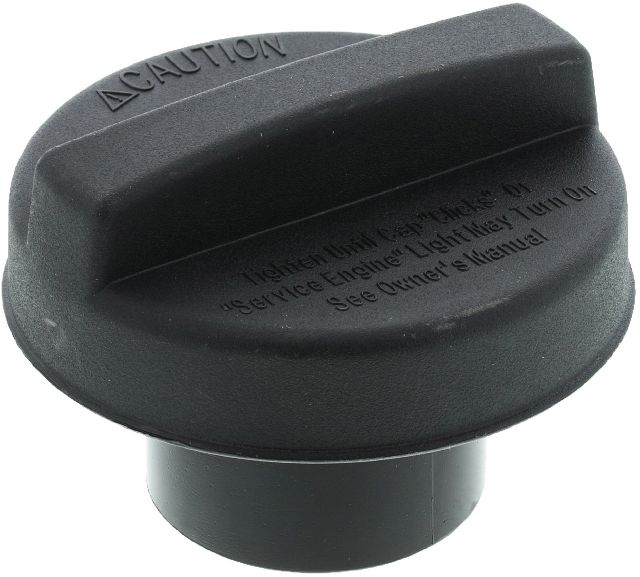
- Loose or Faulty Gas Cap 🔴 High Probability → Shop Fuel Tank Cap This is the most common cause for any vehicle, as the cap is frequently used and its seal can degrade or it can be left loose after refueling. It is highly recommended to use an OEM cap, as some aftermarket caps are known to cause EVAP codes.
How to confirm: Ensure the gas cap clicks several times when tightened. Inspect the rubber seal on the cap for cracks, stiffness, or damage. If it looks worn, it's suspect. A cap that fails to click is a definite sign of failure.
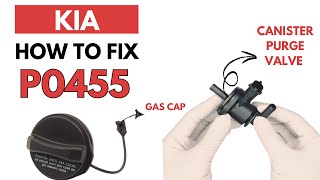
Typical fix: Tighten or replace the gas cap. After replacing, the code may take a few drive cycles to clear on its own. 🎬 Watch: Two quick DIY methods to fix the P0455 code.
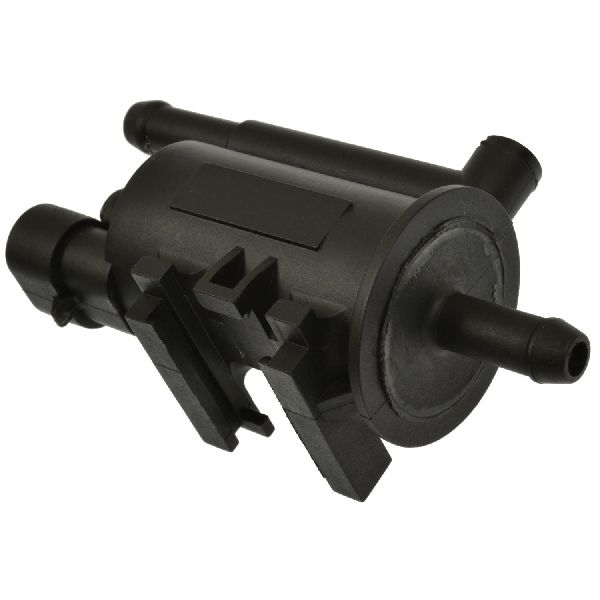
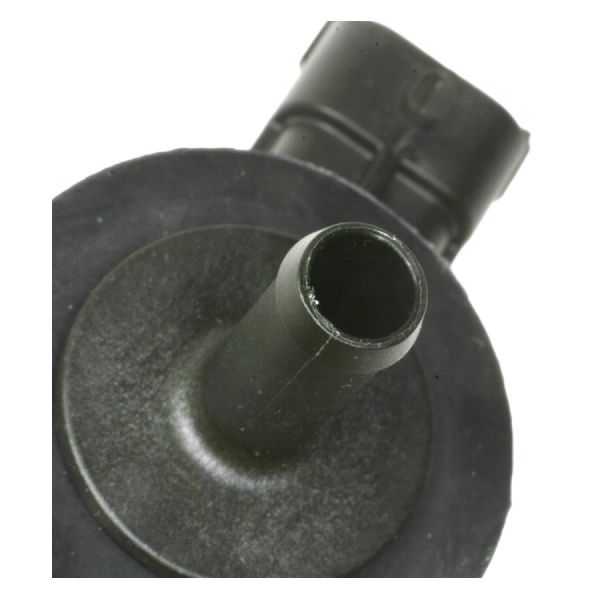
Est. part cost: $15-$40 - Failed Canister Close Valve (CCV) / Vent Valve 🟡 Medium Probability → Shop Vapor Canister TSB-SC135R1 specifically identifies EVAP system leaks on vehicles in salt belt states. The CCV is located near the charcoal canister under the car, making it highly susceptible to corrosion and damage from road salt and debris, causing it to stick open or fail to seal.
How to confirm: The valve is normally open and should close when voltage is applied. A mechanic can command it closed with a scan tool and see if it holds a vacuum. A visual inspection for heavy rust or damage is also a good indicator. A smoke test will definitively show a leak from this valve if it's stuck open. You can also test it by applying 12V power to its terminals; it should click closed and become airtight.
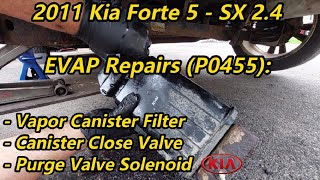
Typical fix: Replace the canister close valve. This part is typically located near the charcoal canister by the fuel tank. 🎬 See this walkthrough on replacing the canister close valve.
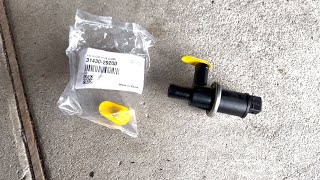
Est. part cost: $50-$115 - Failed Canister Purge Valve / Solenoid (PCSV) 🟡 Medium Probability → Shop Vapor Canister This is a common failure point on many Kia vehicles of this era. The valve can get stuck open, creating a constant vacuum leak into the intake manifold.
How to confirm: The purge valve is normally closed. With the engine off, remove the valve and try to blow through it. If air passes through, it is stuck open and has failed. Another test is to check for vacuum at the valve's port while the engine is idling; if you feel suction, the valve is stuck open.
Typical fix: Replace the canister purge solenoid valve.
Est. part cost: $55-$85 - Cracked or Disconnected EVAP Hoses ⚪ Low Probability Over time, rubber hoses can become brittle and crack, especially those exposed to the elements under the vehicle or heat in the engine bay.
How to confirm: Visually inspect all accessible EVAP lines from the engine bay to the fuel tank. A smoke test is the most effective way to find a leak in a hose that isn't easily visible.
Typical fix: Replace the damaged section of hose.
Est. part cost: $10-$50
Rare But Worth Checking
- Cracked Charcoal Canister: → Shop Vapor Canister The canister itself can be damaged by road debris or, as noted in TSB-SC135R1, develop cracks near the mounting brackets due to corrosion stress in salt-belt states. A smoke test is the best way to confirm a crack.
- Damaged Fuel Filler Neck: → Shop Fuel Filler Neck Rust or damage to the filler neck where the gas cap seals can prevent a proper seal, even with a new cap.
- Low 12V Battery Voltage: In some modern vehicles, particularly hybrids, low voltage from the 12V battery can cause various electronic modules to report erroneous fault codes. One Kia Niro owner traced a persistent P0455 code to parasitic draw from a USB device that was draining the 12V battery. While less common on a non-hybrid Rondo, it's a possibility if other causes are ruled out.
Diagnosis Steps
- Read the code with an OBD-II scanner to confirm P0455 is present.
- Inspect the gas cap. Remove it, check the seal for cracks or hardness, and reinstall it, ensuring it clicks at least once. If in doubt, replace it with an OEM part. Clear the code and drive for a few days to see if it returns.
- If the code returns, perform a thorough visual inspection of all visible EVAP hoses in the engine bay and under the vehicle, looking for obvious cracks, disconnections, or damage.
- Locate the canister purge valve (PCSV) in the engine bay. With the engine off, disconnect the hose leading to the intake manifold and attempt to blow through it. If air passes, the valve is stuck open and needs to be replaced. Alternatively, start the engine and feel for vacuum at the port; there should be none at idle until the ECU commands it open.
- Locate the canister close valve (CCV) and charcoal canister near the fuel tank. Inspect them for heavy rust, corrosion, or physical damage, which is common in salt-belt states per TSB-SC135R1.
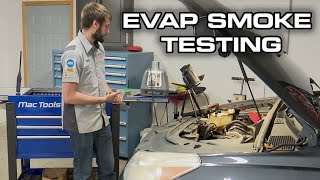
- If the leak source is not obvious, the most effective next step is to have a smoke test performed. This involves injecting a harmless, visible smoke into the EVAP system via a service port. The smoke will escape from the location of the leak, making it easy to pinpoint 🎬 Watch: How to perform a smoke test to find leaks. whether it's a cracked hose, a faulty valve, or a cracked canister.
Parts You'll Likely Need
- Gas Cap
(OEM #310103L600U)— This is the most frequent and cheapest fix for P0455 due to a worn seal or not being tightened properly. Always start here.
Trusted brands: Kia (OEM), Stant
OEM price range: $25-$40
Aftermarket price range: $15-$25 - Canister Close Valve / Vent Solenoid
(OEM #314301D500)— A common failure point, especially on vehicles exposed to road salt, as noted in Kia TSB SC135R1. It gets stuck open due to corrosion, causing a large leak. This part fits the 2009-2010 Rondo.
Trusted brands: Kia (OEM), Dorman, Standard Motor Products (CVS70)
OEM price range: $75-$115
Aftermarket price range: $45-$80 - Canister Purge Solenoid Valve
(OEM #2891025100)— This valve in the engine bay can fail and stick open, creating a large vacuum leak that triggers the code. This part is confirmed to fit the Kia Rondo with the 2.4L engine.
Trusted brands: Kia (OEM), Standard Motor Products, Dorman
OEM price range: $60-$85
Aftermarket price range: $40-$60
Related Codes That Often Appear With This One
- P0442 — P0442 indicates a small EVAP leak. You might see this code before or after a P0455, as a small leak can worsen over time, or a large leak fix might leave a smaller one behind. TSB-SC135R1 explicitly mentions both P0442 and P0455.
- P0456 — P0456 indicates a very small EVAP leak. Similar to P0442, it points to a leak in the same system, just of a different size.
Technical Service Bulletins (TSBs) & Recalls
- TSB-SC135R1: Notes that vehicles in salt belt states may experience EVAP leaks causing DTC P0455 or P0442 due to canister cracking from corrosion.
Platform-Specific Known Issues
- TSB-SC135R1: Kia issued this Technical Service Bulletin for 2009-2010 Rondo models (among others) sold or registered in one of 28 'salt belt' states (including AK, CT, DC, DE, IL, IN, MA, MD, ME, MI, MN, NH, NJ, NY, OH, PA, RI, VT, WI, WV). It acknowledges that these vehicles may experience a P0455 or P0442 code due to cracks forming in the evaporative canister. The service campaign involves inspecting the canister and, if cracked, replacing it. If not cracked, an improved mounting bracket is installed to prevent future issues. For vehicles outside these states, Kia extended the canister warranty to 10 years/120,000 miles.
Mechanic-Grade Diagnostic Values
- Purge Control Solenoid Valve (PCSV) Coil Resistance — expected: Approximately 14 to 36 ohms, can vary with temperature.. Failure: A reading of infinite resistance (open circuit) or near-zero resistance (short circuit).
- Fuel Tank Pressure Sensor (FTPS) Voltage (KOEO, Gas Cap Off) — expected: Approximately 2.5V - 2.6V, representing atmospheric pressure.. Failure: Voltage is significantly different (e.g., near 0V or 5V), indicating a sensor or wiring fault. If reference voltage and ground are not present, check wiring and PCM.
- Manual Purge Test FTPS Voltage (Engine Running) — expected: Voltage should remain above 1.5V while the PCSV control wire is manually grounded for ~25 seconds.. Failure: Voltage drops below 1.5V, indicating a restriction in the EVAP system (e.g., charcoal canister, rollover valve, CCV).
Scan Tool Commands That Help
- Kia GDS (or equivalent professional scanner): EVAP System Active Test / Actuation Test — To manually command the Canister Close Valve (CCV) and Purge Control Solenoid Valve (PCSV) to open or close. This directly tests the mechanical function of the valves without removing them, confirming if one is stuck.
- Kia GDS (or equivalent professional scanner): EVAP System Leak Test — To force the vehicle to run its onboard EVAP leak test on demand. This can help confirm if a fix was successful without waiting for a full drive cycle.
Wiring & Ground Locations
- Fuel Tank Pressure Sensor (FTPS) — Located on top of the fuel pump module, which is accessed through a service cover under the rear passenger seat.. This sensor provides the pressure readings the ECU uses to detect leaks. A bad connection or faulty sensor here can mimic a P0455 leak code.
- Body Control Module (BCM) — Located under the driver's side of the dashboard, above the brake pedal.. The BCM is a central electronic module. While not a direct part of the EVAP system, wiring diagrams show it is involved in vehicle functions, and knowing its location is useful for advanced electrical diagnosis.
Real Owner Repair Stories
- YouTube channel 'ADVANCED LEVEL AUTO' (2014 Kia Rondo) — Check Engine Light with codes P0456 (small leak) and P0442 (small leak).
❌ Tried (didn't work) Initial scan and visual inspection did not reveal the cause.
✅ What actually fixed it A smoke test was performed, which revealed that the charcoal canister itself was leaking smoke from its body. The canister required replacement. This aligns with the issue described in TSB-SC135R1. - YouTube channel 'DIY With Chris' (General vehicle, not Rondo-specific) — Check Engine Light with code P0455.
❌ Tried (didn't work) The original gas cap appeared okay but was suspect.
✅ What actually fixed it Replacing the gas cap with a new one resolved the code. The video confirms after one month that the code did not return.
When the Usual Fixes Don't Work
- While the most common advice for P0455 is to check or replace the gas cap, the existence of Kia's own Technical Service Bulletin (TSB-SC135R1) serves as strong counter-evidence that a more serious issue is often the cause on these specific vehicles. The TSB points to the charcoal canister cracking due to corrosion stress in salt-belt states. A diagnostic video of a 2014 Rondo confirmed this failure mode, where a smoke test showed the canister body itself was leaking, requiring a full replacement to fix the code. This indicates that owners, especially in relevant states, should not stop their diagnosis at the gas cap if the code persists.
Model Year Variations Within This Range
- 2009-2010: For the 2009 model year, Kia increased the horsepower of both the 2.4L I4 (to 175 hp) and the 2.7L V6 (to 192 hp). However, parts catalogs confirm that the key EVAP components, such as the Purge Control Valve (28910-25100) and Canister Close Valve (31430-1D500), are the same for both 2009 and 2010 models and for both engine options, so this engine update does not affect the diagnosis of P0455.
Helpful Videos
![How to Fix KIA P0455 Engine Code in 3 Minutes [2 DIY Methods / Only $4.61]](https://img.youtube.com/vi/v3j7s1R1NhY/mqdefault.jpg)
We Have This Part in Stock


The information in this article is provided for general reference and educational purposes only. Vehicle specifications, procedures, and part compatibility can vary by production date, trim level, and region. Always consult your vehicle's factory service manual and verify part numbers before purchasing or performing repairs. Safety-critical components such as airbags, seat belts, and braking systems should be installed by a qualified professional.
- Kia RONDO:
- 🧭 Diagnostic Flowchart
- 🎬 Helpful Videos
- 🛍️ Shop This Part
- What's Unique About the 2009-2010 Kia RONDO
- Symptoms You May Notice
- Most Likely Causes
- Rare But Worth Checking
- Diagnosis Steps
- Parts You'll Likely Need
- Related Codes That Often Appear With This One
- Technical Service Bulletins (TSBs) & Recalls
- Platform-Specific Known Issues
- Mechanic-Grade Diagnostic Values
- Scan Tool Commands That Help
- Wiring & Ground Locations
- Real Owner Repair Stories
- When the Usual Fixes Don't Work
- Model Year Variations Within This Range
- 🎟️ Get 5% Off