

P0455 on 2011-2017 Kia Sportage: EVAP Large Leak Causes and Fixes
On a 2011-2017 Kia Sportage, the P0455 code almost always points to a large leak in the evaporative emissions system, most commonly caused by a loose or faulty gas cap. If the gas cap is secure, the next most likely culprits are a failed purge control valve or canister close valve, the latter being especially prone to failure from corrosion in 'salt belt' states.
- The P0455 code on your 2011-2017 Kia Sportage indicates a large leak in the EVAP system.
- Always start your diagnosis by checking the gas cap; it's the most common and cheapest fix. Use an OEM cap for replacement.
- If the gas cap isn't the issue, the purge control valve (in the engine bay) or the canister close valve (at the rear) are the next most likely culprits.
- For vehicles in snowy climates, pay special attention to the charcoal canister and its bracket for rust-induced cracks, as highlighted in a Kia TSB.
- A smoke test is the most reliable and time-saving way to find the exact location of a hard-to-find leak.
- Driving with this code is generally safe but will cause an automatic failure on an emissions test.
What's Unique About the 2011-2017 Kia SPORTAGE
The 2011-2017 Kia Sportage (SL generation) shares its EVAP system components with its platform-mate, the Hyundai Tucson (LM generation), making parts relatively easy to find. While the causes for P0455 are common across many vehicles, this generation of Sportage is particularly susceptible to issues with the canister close valve and the charcoal canister itself, especially in regions where road salt is used. Kia issued TSB #SC135 which identifies that corrosion at the canister's mounting bracket can cause the canister body to crack, creating a large leak. TSB #PS469 also provides a specific manual diagnostic procedure for hard-to-find EVAP leaks on these vehicles.
Diagnostic Flowchart
Tap your situation to follow the diagnostic path that matches what you're seeing on this vehicle.
Generation note: The 2011-2017 year range primarily covers the third generation (SL) of the Kia Sportage. However, the 2017 model year also saw the introduction of the fourth generation (QL). While the EVAP system components are similar, there may be slight differences in part numbers and locations between the late third-generation and early fourth-generation models. Always verify parts by VIN.
Symptoms You May Notice
- Check Engine Light is on
- A noticeable smell of fuel, especially around the gas tank area or after parking.
- A slight decrease in fuel economy.
- A whooshing sound from the gas tank when removing the cap (if the system is not properly venting).
- Replacing the oxygen sensor, as a fuel smell might be misinterpreted as a rich running condition.
- Replacing the fuel pump, when the issue is with the EVAP system components.
- Replacing parts randomly without performing a smoke test for a persistent code. One forum user replaced the gas cap, purge valve, CCV, and filler neck before finding the leak.
Most Likely Causes
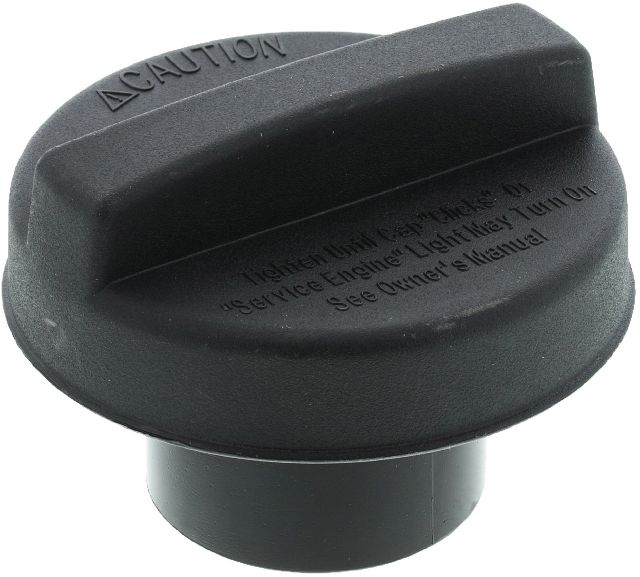
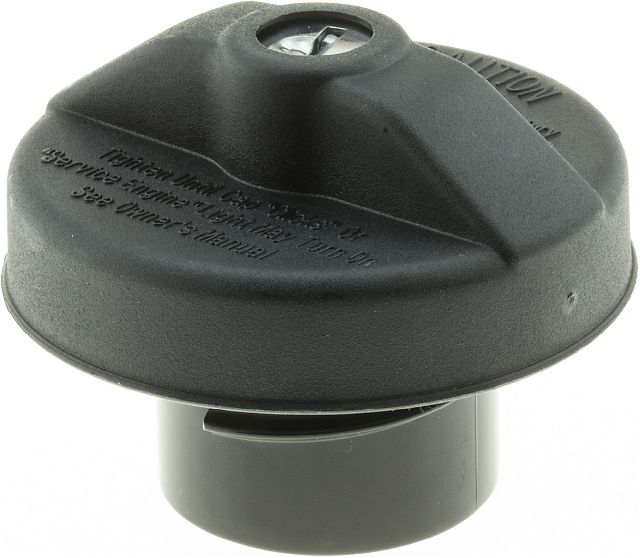
- Loose or Faulty Gas Cap 🔴 High Probability → Shop Fuel Tank Cap This is the most common cause for any vehicle, as the cap is frequently removed and its seal can wear out or it can be left loose by mistake. Aftermarket gas caps are a frequent source of problems and an OEM cap is strongly recommended.
How to confirm: Inspect the gas cap for cracks or a worn-out, hardened rubber seal. Ensure it is tightened until it clicks multiple times.
Typical fix: Tighten or replace the gas cap. It is recommended to use an OEM part (Kia P/N 31010-3L600U) for a proper seal.
Est. part cost: $15-$40 - Failed Purge Control Solenoid Valve (PCSV) 🟡 Medium Probability → Shop Vapor Canister Purge Solenoid The purge valve is a common failure point on many modern vehicles, including the Sportage. It can get stuck open, creating a constant vacuum leak path to the engine intake.
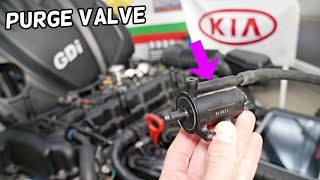
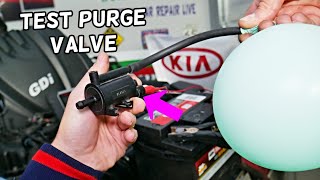
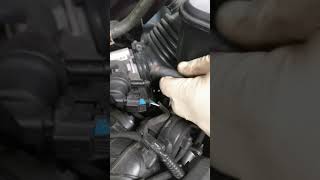
How to confirm: The PCSV is located in the engine bay, typically on or near the intake manifold. With the engine running, you can disconnect the hose leading to the charcoal canister 🎬 Watch: How to test the purge control valve yourself. and feel the valve's port for suction. If there is a vacuum at idle, the valve is stuck open and needs to be replaced.
Typical fix: Replace the purge control solenoid valve. It is an accessible part in the engine bay held by a small bracket and connected by two hoses and an electrical connector. 🎬 See this walkthrough for replacing the purge control solenoid.
Est. part cost: $25-$70 - Failed Canister Close Valve (CCV) / Vent Valve 🟡 Medium Probability → Shop Vapor Canister The canister close valve is located at the rear of the vehicle near the charcoal canister, exposing it to road salt and moisture, which can lead to corrosion and failure. It can fail by sticking open, preventing the EVAP system from sealing itself for a pressure test. Kia has issued TSBs for other models like the Rio for this exact failure mode.
How to confirm: The valve can be tested by applying 12 volts to its terminals to see if it actuates (clicks) and seals. A smoke test is the most reliable way to confirm a leak from this component, as smoke will exit the valve's vent port if it's stuck open.
Typical fix: Replace the canister close valve. It is usually located on or near the charcoal canister at the rear of the vehicle.
Est. part cost: $80-$125
Rare But Worth Checking
- Cracked or Damaged Charcoal Canister: → Shop Vapor Canister As noted in Kia TSB #SC135, vehicles in salt-belt states can experience corrosion on the canister's mounting bracket, which puts stress on the plastic canister body and causes it to crack. Overfilling the fuel tank can also saturate the canister with raw fuel, causing it to fail.
- Cracked or Disconnected EVAP Hoses: Over time, the rubber hoses in the EVAP system can become brittle and crack, or a connection may come loose. A visual inspection is a good first step, but a smoke test is the definitive way to find a small crack in a hose.
- Damaged or Rusted Fuel Filler Neck: → Shop Fuel Filler Neck Corrosion or damage to the fuel filler neck can prevent the gas cap from sealing properly, leading to a leak. In a related story, a Kia Soul owner chasing a persistent P0455 eventually found rust holes on the top of the fuel tank itself, requiring a tank replacement.
Diagnosis Steps
- Check for a loose gas cap. Tighten it until it clicks several times, clear the code, and drive for a few days to see if it returns.
- Inspect the gas cap's seal for any cracks or signs of wear. Replace if necessary with an OEM cap (P/N 31010-3L600U).
- Visually inspect all accessible EVAP hoses and lines in the engine bay and under the vehicle near the tank for any obvious cracks, disconnections, or damage.
- Locate and inspect the purge control solenoid valve (PCSV) in the engine bay, on or near the intake manifold. Check for vacuum at the inlet port while the engine is idling; there should be none.
- Inspect the canister close valve (CCV) and the charcoal canister at the rear of the vehicle for any signs of physical damage or heavy corrosion. Pay close attention to the canister mounting bracket area for cracks, per TSB SC135.
- If the leak is not visually apparent, a smoke test is the most effective method to pinpoint the source of the leak. This involves injecting smoke into the EVAP system (usually via the purge valve line) and looking for where it escapes. 🎬 Watch: How to perform a professional EVAP smoke test. This will quickly reveal leaks from cracked hoses, the CCV, the canister, or the filler neck.
Parts You'll Likely Need
- Gas Cap
(OEM #31010-3L600U)— This is the most frequent and easiest fix for a P0455 code. The seal wears out over time, and aftermarket caps often don't seal correctly.
Trusted brands: Kia Genuine
OEM price range: $20-$40
Aftermarket price range: $15-$25 - Canister Close Valve
(OEM #31431-2S550)— This valve is a common failure point that leads to a large EVAP leak, especially in salt-belt states. Part number fits 2011-2016 Sportage with 2.4L engine and California emissions.
Trusted brands: Kia Genuine, Hyundai Genuine
OEM price range: $80-$125
Aftermarket price range: $60-$90 - Purge Control Solenoid Valve
(OEM #28910-25100)— This valve can get stuck open, causing a P0455 code. It is a relatively inexpensive and accessible part to replace. This part is shared with many Hyundai/Kia models.
Trusted brands: Kia Genuine, Bosch, Delphi
OEM price range: $40-$70
Aftermarket price range: $25-$50
Related Codes That Often Appear With This One
- P0442 — This code indicates a small EVAP leak. It can appear alongside P0455 if the system has multiple leaks of varying sizes, or if the leak size is borderline between small and large. TSB SC135 groups P0442 and P0455 together for the same canister issue.
- P0456 — This code indicates a very small EVAP leak. TSB PS469 groups this code with P0455, suggesting they are diagnosed using similar procedures. A failing CCV can sometimes trigger a P0456 before it fails completely and causes a P0455.
Technical Service Bulletins (TSBs) & Recalls
- PS469: Recommends a manual evaporative emissions test for hard-to-find or small leaks when codes like P0455 are present.
- SC135: A voluntary service campaign to inspect and/or replace the evaporative canister on vehicles in salt belt states due to cracks caused by bracket corrosion, which specifically causes P0455 or P0442.
Platform-Specific Known Issues
- Cracked Charcoal Canister due to Corrosion (TSB SC135): → Shop Vapor Canister Per TSB #SC135, vehicles in 'salt belt' states may experience EVAP leaks (P0455/P0442) due to corrosion of the evaporative canister's mounting bracket. The rust expands ('rust jacking') and puts pressure on the plastic canister, causing it to crack. The fix involves inspecting and, if cracked, replacing the canister with an improved part.
Mechanic-Grade Diagnostic Values
- Purge Control Solenoid Valve (PCSV) Coil Resistance — expected: Approximately 14 to 36 ohms. Failure: A reading of infinite resistance (open circuit) or near-zero resistance (short circuit) indicates a failed coil.
- Fuel Tank Pressure Sensor (FTPS) Signal Voltage (KOEO) — expected: Approximately 2.5V with Key On, Engine Off and the gas cap removed (atmospheric pressure).. Failure: Voltage significantly different from 2.5V, or 0V, suggests a faulty sensor, assuming the 5V reference and ground are good.
Scan Tool Commands That Help
- Kia GDS (or equivalent professional scanner): EVAP Leakage Test — This function forces the vehicle to perform its onboard EVAP leak test on demand, sealing the system and monitoring for pressure loss. It's used to confirm a leak exists after a repair or to verify the system is sealed before a smoke test.
- Kia GDS (or equivalent professional scanner): Actuation Test (for PCSV and CCV) — This bidirectional control allows a technician to manually command the Purge Control Solenoid Valve and Canister Close Valve to open or close. It is essential for confirming if a valve is mechanically stuck or responding correctly to electrical commands without having to remove it from the vehicle.
Wiring & Ground Locations
- SENSOR 2 Fuse — In the engine compartment fuse box.. For a 2016 Kia Optima (which shares a similar electrical architecture), a 10-amp fuse labeled 'SENSORS 2' protects the Purge Control Solenoid Valve circuit. If this fuse is blown, the PCSV will not operate, which can contribute to or cause EVAP codes. This should be checked if the PCSV is not receiving power.
Real Owner Repair Stories
- Reddit user in /r/MechanicAdvice (Unknown make/model, but representative of the P0455 diagnostic struggle.) — Persistent P0455 'Large Leak' code returning after multiple repairs.
❌ Tried (didn't work) Replacing the gas cap (multiple times)., Replacing the vent valve., Replacing the purge valve.
✅ What actually fixed it The user's mechanic performed a smoke test and found a leak, which was fixed, but the code returned. The final part replaced that resolved the issue was the evaporative (charcoal) canister itself. The user had been driving with the light on for two years before this final, successful repair.
OEM Part Supersession History
31453-3K600→31453-3K600FFF— Unknown, likely a minor revision or updated manufacturing process.
Heads up: This part number for the Canister Close Valve is listed for a wide range of Kia models, including the 2010-2015 Sportage, but also many others. Always verify by VIN, as the Pass 2 part number (31431-2S550) is more specific to the 2011-2016 Sportage 2.4L.
Model Year Variations Within This Range
- 2017: The 2017 model year was a transition between the 3rd generation (SL) and 4th generation (QL) Sportage. While many EVAP principles are the same, part numbers and locations for components like the purge valve and canister can differ. For example, the purge valve for a 2016-2022 Sportage may be a different part number than one for a 2011-2015 model.
Helpful Videos
We Have This Part in Stock


The information in this article is provided for general reference and educational purposes only. Vehicle specifications, procedures, and part compatibility can vary by production date, trim level, and region. Always consult your vehicle's factory service manual and verify part numbers before purchasing or performing repairs. Safety-critical components such as airbags, seat belts, and braking systems should be installed by a qualified professional.
- Kia SPORTAGE:
- 🧭 Diagnostic Flowchart
- 🎬 Helpful Videos
- 🛍️ Shop This Part
- What's Unique About the 2011-2017 Kia SPORTAGE
- Symptoms You May Notice
- Most Likely Causes
- Rare But Worth Checking
- Diagnosis Steps
- Parts You'll Likely Need
- Related Codes That Often Appear With This One
- Technical Service Bulletins (TSBs) & Recalls
- Platform-Specific Known Issues
- Mechanic-Grade Diagnostic Values
- Scan Tool Commands That Help
- Wiring & Ground Locations
- Real Owner Repair Stories
- OEM Part Supersession History
- Model Year Variations Within This Range
- 🎟️ Get 5% Off