

P0455 on 2008-2014 Mercedes-Benz C-Class: EVAP Large Leak Causes and Fixes
On a 2008-2014 (W204) Mercedes C-Class, P0455 is most often caused by a loose or faulty gas cap. If tightening or replacing the cap (~$20 aftermarket, ~$50 OEM) doesn't fix it, the next most likely culprit is a failed purge valve in the engine bay. A smoke test is the best way to confirm the leak source before replacing more expensive parts.
- Start with the simplest fix: check that your gas cap is tight. If it's old, spend the $20-$50 to replace it before attempting any other repairs.
- A P0455 code will not affect how your car drives, but it will cause you to fail an emissions test.
- If a new gas cap doesn't solve the problem, the next logical step is to inspect the purge valve in the engine bay.
- If the code appeared after recent suspension work, carefully inspect the EVAP lines around the rear of the car for damage.
- Do not replace expensive components like the charcoal canister without first performing a smoke test to confirm it is the source of the leak.
What's Unique About the 2008-2014 Mercedes-Benz C-Class
For the W204 generation C-Class, the P0455 code follows a predictable pattern common to many modern vehicles, with the gas cap and purge valve being primary suspects. However, owners should be aware of two platform-specific issues: a cracked fuel pump sending unit cover under the rear seat can cause a significant leak and strong fuel smell, and EVAP system hoses can be damaged during unrelated rear suspension work, leading to a hard-to-diagnose leak near the tank. A user on MBWorld forums reported a P0455 code appearing immediately after having rear shocks replaced on their GLK350 (a platform mate).
Symptoms You May Notice
- Check Engine Light illuminated
- A noticeable smell of gasoline, particularly after filling the tank or around the rear of the vehicle
- A 'Check Fuel Cap' message may appear on the instrument cluster display.
- Replacing the charcoal canister when the actual problem is a less expensive component like the purge valve or a cracked hose. A smoke test is crucial to avoid this.
- Immediately assuming a complex leak exists before properly checking and replacing the gas cap, which is the most common and cheapest fix.
Most Likely Causes
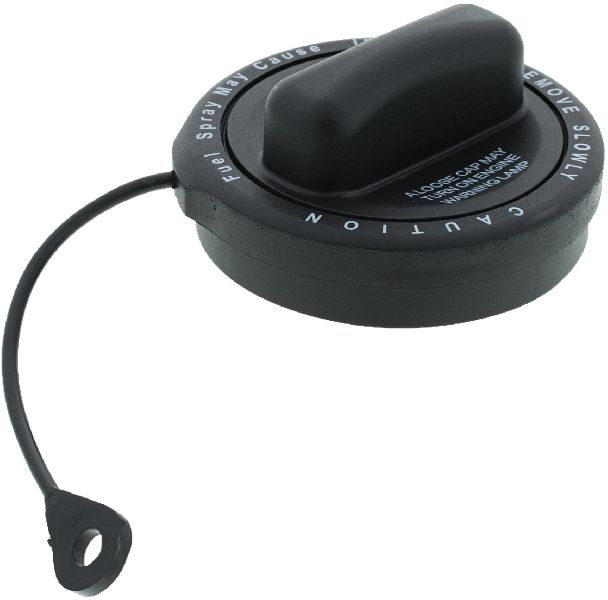
- Loose, Incorrect, or Faulty Gas Cap 🔴 High Probability → Shop Fuel Tank Cap The rubber O-ring seal on the gas cap degrades over time from exposure to fuel vapors, losing its ability to create a perfect seal. This is a common wear item on all vehicles and the most frequent cause of P0455.
How to confirm: Inspect the gas cap for cracks or a flattened, brittle rubber seal. Ensure it is tightened until it clicks at least once. If the seal looks worn or the cap is old, replacement is the most cost-effective first step. The light may take a few drive cycles to turn off after replacement.
Typical fix: Replace the gas cap.
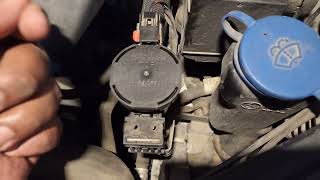
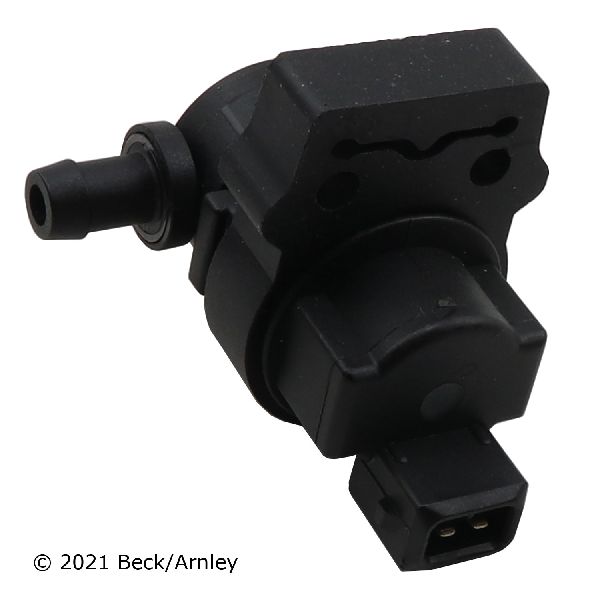
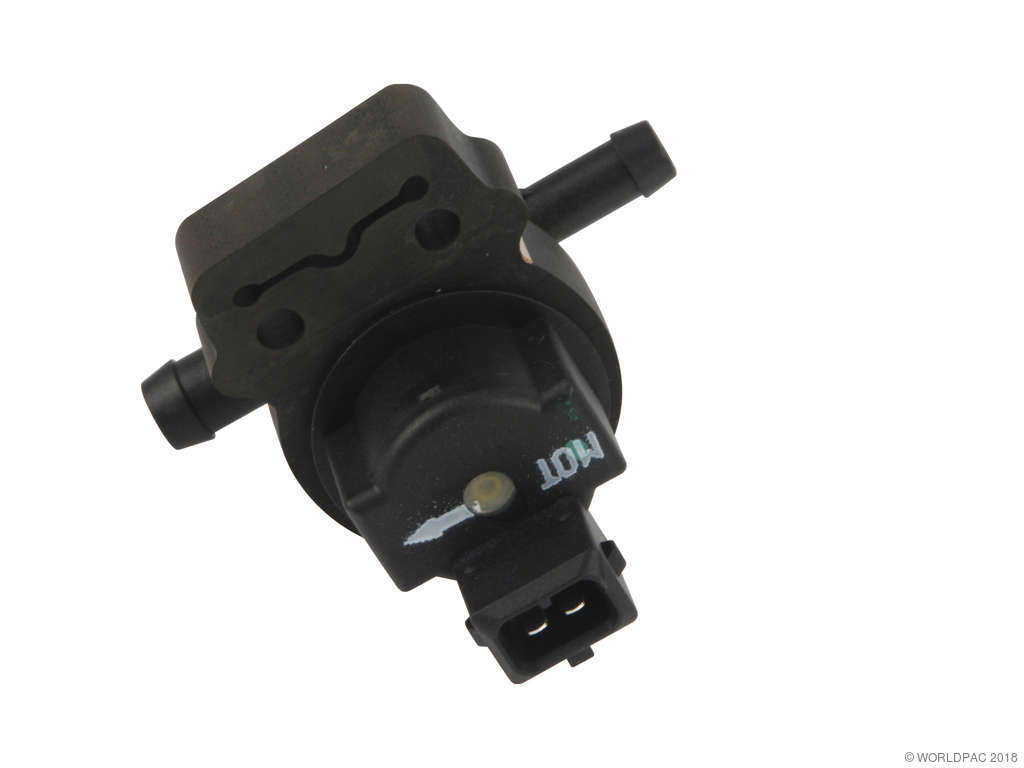
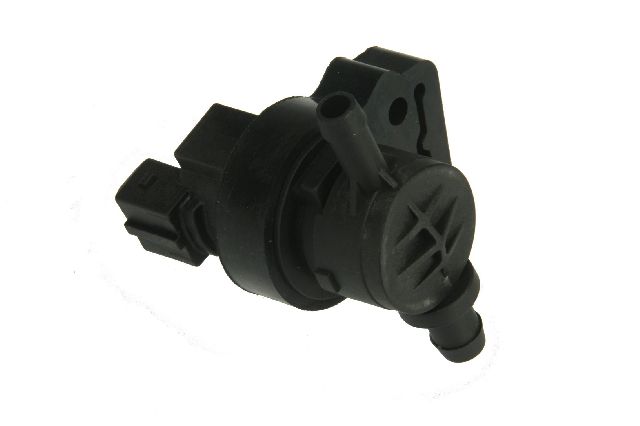
Est. part cost: $15-$55 - Faulty EVAP Purge Valve (Regeneration Valve) 🟡 Medium Probability → Shop Vapor Canister This solenoid valve is constantly working and can fail by sticking open, creating a permanent leak path from the charcoal canister to the engine intake. It is a well-documented failure item on the W204 platform.
How to confirm: The valve is located in the engine bay, under the driver's side air intake duct. With the engine off, you can try to blow through it; if air passes, it is stuck open and faulty. A professional smoke test is the definitive way to confirm.
Typical fix: Replace the purge valve. The factory hose clamps are single-use and will likely need to be destroyed for removal, so have new clamps ready. 🎬 Watch: Step-by-step guide to replacing the purge valve solenoid.
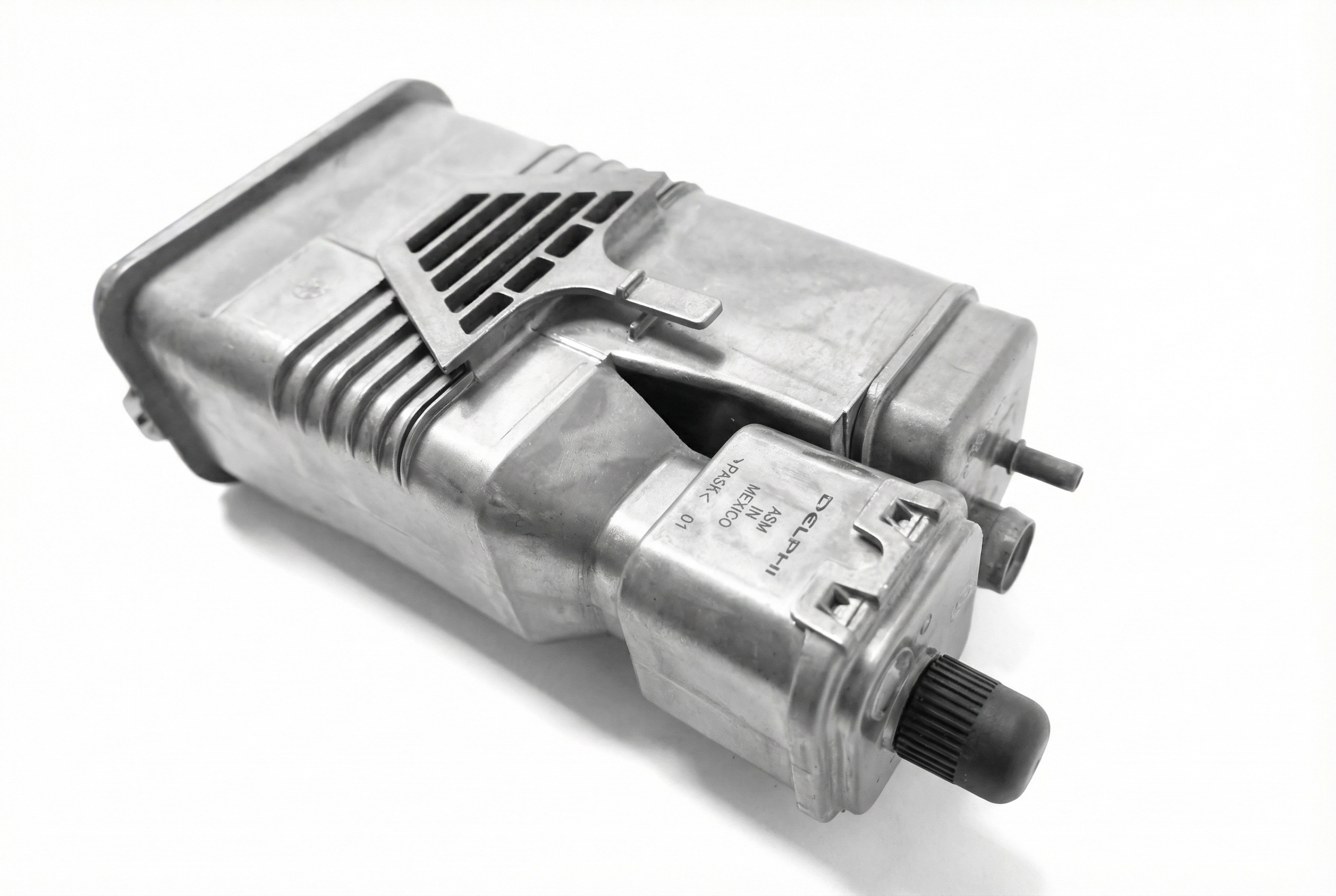
Est. part cost: $80-$180 - Cracked or Damaged Charcoal Canister ⚪ Low Probability → Shop Vapor Canister The canister is located in the right-rear wheel well area, making it susceptible to damage from road debris or corrosion over time, which can cause cracks in the plastic housing. Over-filling the fuel tank can also saturate the canister with liquid fuel, causing it to fail.
How to confirm: Visually inspect the canister for cracks or physical damage. A smoke test will definitively show a leak from the canister body or its connections.
Typical fix: Replace the charcoal canister assembly.
Est. part cost: $250-$450 - Leaking EVAP System Hoses or Lines ⚪ Low Probability Rubber hoses become brittle with age and can crack. A specific issue noted on forums is damage to EVAP lines near the rear suspension during unrelated repairs, such as shock or coilover installation.
How to confirm: A thorough visual inspection may reveal a cracked or disconnected hose. A smoke test is the most effective method to pinpoint the exact location of a small crack or loose connection.
Typical fix: Replace the specific section of damaged hose and any associated clamps.
Est. part cost: $10-$50
Rare But Worth Checking
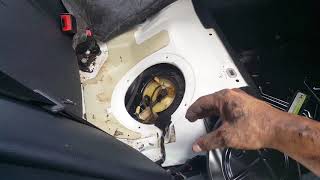
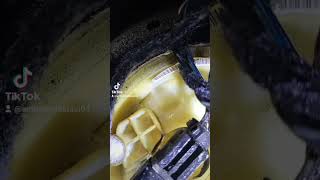
- Cracked Fuel Pump/Sending Unit Cover: → Shop Fuel Pump A crack in the plastic cover of the fuel pump/sending unit, located under the rear seat, can cause a P0455 code and a very strong fuel smell inside the cabin. This may require removing the rear seat cushion to inspect the top of the fuel tank. One owner on YouTube suggested this as a possible cause if other common fixes fail.
Diagnosis Steps
- Read the code with an OBD-II scanner to confirm P0455 is present.
- Inspect the gas cap. Ensure it is tight and clicks. Check the rubber seal for cracks or damage. If it's old or looks worn, replacing it is a cheap and easy first step. Many forum users report this solves the issue.
- Clear the code and drive the vehicle for a few days to see if the code returns. The EVAP monitor self-test needs to run to confirm the fix, which can take several drive cycles.
- If the code returns, perform a visual inspection of the engine bay. Locate the purge valve under the driver's side air intake duct and check its connecting hoses for cracks.
- Lift the vehicle and remove the right-rear wheel and wheel well liner. Inspect the charcoal canister and all connected hoses for visible cracks or damage.
- If no obvious faults are found, perform a smoke test. This is the most reliable method. Connect a smoke machine to the EVAP system's service port. Command the vent valve closed with a capable scan tool and introduce smoke. 🎬 Watch: How to perform a professional smoke test for leaks. Look for smoke escaping from any component in the system, from the engine bay to the fuel tank.
- The source of the smoke is the source of the leak. Repair or replace the faulty component.
Parts You'll Likely Need
- Fuel Tank Cap
(OEM #A2214701900)— This is the most frequent cause. The seal wears out, causing a large leak that is easily and cheaply fixed.
Trusted brands: Genuine Mercedes-Benz, Gates, Vaico
OEM price range: $45-$55
Aftermarket price range: $15-$25 - EVAP System Purge Valve
(OEM #0004708893)— A common failure point that gets stuck open. It's located in the engine bay and is relatively easy to replace.
Trusted brands: Bosch (OEM Supplier), Genuine Mercedes-Benz, Bremmen Parts
OEM price range: $150-$180
Aftermarket price range: $80-$120 - Charcoal Canister
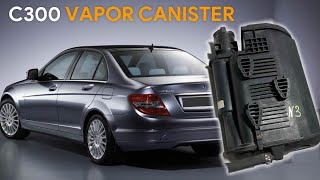
(OEM #2044700659)— Though less common, the canister can crack from road debris or age, requiring replacement. It is a more involved and expensive repair. Note: Part number 2034700659 from the W203 may also fit some early models, but 2044700659 is specific to the W204. 🎬 See this walkthrough for replacing the charcoal canister assembly.
Trusted brands: Genuine Mercedes-Benz
OEM price range: $350-$450
Aftermarket price range: $250-$350
Related Codes That Often Appear With This One
- P0442 — P0442 indicates a small EVAP leak. If a large leak (P0455) is intermittent, the system might first detect it as a small leak, or vice-versa, depending on test conditions.
- P0456 — P0456 indicates a very small EVAP leak. It can appear alongside P0455 if there are multiple leak paths or if the primary leak's size varies.
- P0496 — P0496 indicates an incorrect purge flow, often caused by a purge valve that is stuck open, which is also a primary cause for P0455.
Mechanic-Grade Diagnostic Values
- EVAP Canister Purge Valve (Y58/1) Resistance — expected: 30 - 38 ohms. Failure: A reading outside this range indicates a faulty valve coil.
- Fuel Tank Pressure Sensor (B4/3) Supply Voltage — expected: 4.7 - 5.3 V. Failure: Voltage outside this range points to a wiring issue or a problem with the ME-SFI control module.
Scan Tool Commands That Help
- Mercedes STAR/XENTRY: Actuate component Y58/4 (Activated charcoal canister shut-off valve) — This command is used during a manual leak test to seal the EVAP system. By closing the vent valve, a technician can then apply vacuum or smoke to check for leaks without the vent being open.
- Mercedes STAR/XENTRY: Check Actual Value B4/3 (Fuel Tank Pressure Sensor) — This function allows a technician to view the live data from the fuel tank pressure sensor to see if it is responding correctly to pressure and vacuum changes during a test, helping to diagnose a faulty sensor.
Wiring & Ground Locations
- Fuse 4 (Engine Bay) — In the front SAM (Signal Acquisition Module) fuse box, located in the engine compartment on the driver's side, near the brake fluid reservoir.. Fuse 4 is frequently cited as the primary fuse for the engine management and EVAP systems. A blown fuse here will cut power to the purge valve and other sensors, potentially triggering fault codes.
- Fuse 42 (Trunk) — In the rear SAM fuse box, located in the trunk on the passenger side, behind a trim cover.. This fuse can also be related to the EVAP system components, particularly those located near the rear of the vehicle like the charcoal canister shut-off valve.
- Engine Ground Wires — Multiple ground points exist. Key locations are on the chassis near the battery, under the overflow tank, and on the engine block itself.. A corroded or loose ground connection for the ECU or EVAP components can cause erratic sensor readings and intermittent fault codes, even if the components themselves are good.
Real Owner Repair Stories
- YouTube user Leo Lee (2013 Mercedes-Benz C204 (C-Class Coupe)) — Recurring Check Engine Light with codes P0456, P0457, and possibly P0455. Also, a smell of gas fumes near the rear wheel well.
❌ Tried (didn't work) Replacing the gas cap twice with aftermarket parts., Considering taking it to the dealership.
✅ What actually fixed it After removing the fender liner to inspect the charcoal canister area, the owner discovered a disconnected EVAP hose that appeared to have been previously repaired with some kind of glue. Reconnecting this hidden, loose hose was the final fix.
"I Checked Everything" — The Actual Cause
- A user on MBWorld with a 2013 C300 reported having P0455, P0456, and P0496 codes. They had already replaced the gas cap, purge valve, and vent valve. A smoke test revealed no leaks. The suspected final culprit, though not yet replaced by the user, was the fuel tank pressure sensor, which can fail electronically without causing a physical leak. On the W204, this sensor is notoriously difficult to access as it's on top of the fuel tank without an access panel from under the seat, requiring the tank to be dropped.
OEM Part Supersession History
0004701593, 0004702093, 0004703393, 0004703593, 0004705593→0004708893— Standard part consolidation and design updates by Mercedes-Benz.
Heads up: The newest part number, 0004708893, is the correct and most updated replacement for the W204 and many other models. Using older, discontinued part numbers is not recommended.
Diagnostic Flowchart
Other Known Issues on This Vehicle
Issues unrelated to this code that are worth knowing about as an owner of this generation:
- Rear Subframe Corrosion 🔴 High — Widespread, especially in regions with road salt. Can fail and cause loss of vehicle control. Onset can be as early as 8-10 years. (Ref: Mercedes-Benz issued a 20-year/unlimited-mile extended warranty for rear subframe replacement due to corrosion with perforation.)
- Electronic Steering Lock (ESL/ELV) Failure 🔴 High — Very common failure on 2008-2009 models, but affects all years. Typically starts as an intermittent no-start condition and becomes permanent, stranding the vehicle.
- M272 V6 Balance Shaft Gear Wear 🔴 High — Affects early M272 engines (approx. 2008-2009 C300/C350). A soft sprocket wears prematurely, causing timing issues, rattling, and a check engine light (P0016/P0017). Repair is engine-out and very expensive. (Ref: A class-action lawsuit addressed this for some early models, but coverage has likely expired.)
- M271 CGI/Kompressor Timing Chain Stretch 🟠 Medium — Common on 4-cylinder models (C180/C200/C250) after 120,000-150,000 km. Causes a rattling noise on cold starts and can lead to engine damage if not addressed.
- Interior Soft-Touch Material & Seat Wear 🟡 Low — Widespread reports of peeling on door handles and buttons. The MB-Tex seat material is also known to rip or tear at the seams on the driver's seat bottom.
Used vs. New Parts: Buying Guide for This Vehicle
When a used part is the smart pick: For purely mechanical and non-wear items like specific plastic EVAP lines or the fuel filler neck, a used part from a reputable salvage yard can be a cost-effective option, provided it is inspected for cracks.
Donor-vehicle mileage cap: roughly under 80000 miles for the part to have meaningful remaining life.
What to inspect on the donor part:
- For charcoal canisters, check for any signs of physical damage, cracks, or broken hose ports.
- Ensure the donor vehicle was not in a major rear-end collision that could have damaged the EVAP components.
- Avoid canisters that appear saturated with fuel or have a very strong, raw gas smell, as this indicates it has been flooded and is likely ruined.
OEM-only on this vehicle (don't cheap out):
- Fuel Tank Pressure Sensor: Due to the high labor cost of replacement (requiring dropping the fuel tank), using a new, OEM sensor is critical to avoid repeat repairs.
- Gas Cap: While cheap, some aftermarket gas caps do not seal to the exact tolerances required by the Mercedes EVAP system test, leading to persistent codes. An OEM cap is a safer bet.
Aftermarket brands forum-validated for this vehicle:
- Bosch (for Purge Valve - often the OEM supplier)
Brands owners have reported issues with on this vehicle:
- Unbranded or 'white-box' electronic sensors and valves from online marketplaces have a high failure rate and are best avoided for critical emissions components.
Real Owner Stories
Aggregated from forums and TSBs cited above. Mileages and costs reflect what owners reported in those sources.
2008 Mercedes-Benz C300 Luxury Sedan
Symptoms: The Check Engine Light (CEL) came on the day after installing coilovers. The owner noted the gas cap only clicked once when locking.
What fixed it: The context suggests the issue was likely a damaged EVAP line near the rear suspension caused during the coilover installation.
Source hint: MBWorld.org - A user reported getting a P0455 code immediately after installing coilovers
2009 Mercedes-Benz C63 AMG
Symptoms: Recurring P0455 code and a 'Check Fuel Cap' message on the instrument cluster display.
What fixed it: The issue persisted after replacing the purge valve and gas cap, indicating more complex faults in the EVAP lines or charcoal canister.
Source hint: MBWorld.org - A user with a 2009 C63 AMG experienced a recurring P0455 after replacing the purge valve and gas cap
2010-2015 Mercedes-Benz GLK350
Symptoms: Check engine light with error code P0455 appeared immediately after having rear shocks replaced.
What fixed it: Repair of EVAP lines damaged during the rear shock replacement.
Source hint: MBWorld.org - A GLK350 (X204 platform mate) owner reported a P0455 code appearing right after having rear shocks replaced
Related OBD-II Codes
Frequently Asked Questions
I just replaced my gas cap on my W204 C-Class; why is the P0455 code still on?
Where is the EVAP purge valve located on the 2008-2014 C-Class?
Can overfilling my gas tank cause the P0455 code on my C300?
I'm installing coilovers on my W204; is there anything I should watch out for regarding the EVAP system?
Is the charcoal canister in the same place on the GLK350 as the C-Class?
Are there special tools needed to replace the purge valve on a Mercedes C-Class?
Helpful Videos
Used OEM Parts in Stock
New Aftermarket Parts Available


The information in this article is provided for general reference and educational purposes only. Vehicle specifications, procedures, and part compatibility can vary by production date, trim level, and region. Always consult your vehicle's factory service manual and verify part numbers before purchasing or performing repairs. Safety-critical components such as airbags, seat belts, and braking systems should be installed by a qualified professional.
- Mercedes-Benz C-Class:
- 🧭 Diagnostic Flowchart
- 🎬 Helpful Videos
- 🛍️ Shop This Part
- What's Unique About the 2008-2014 Mercedes-Benz C-Class
- Symptoms You May Notice
- Most Likely Causes
- Rare But Worth Checking
- Diagnosis Steps
- Parts You'll Likely Need
- Related Codes That Often Appear With This One
- Mechanic-Grade Diagnostic Values
- Scan Tool Commands That Help
- Wiring & Ground Locations
- Real Owner Repair Stories
- "I Checked Everything" — The Actual Cause
- OEM Part Supersession History
- Other Known Issues on This Vehicle
- Used vs. New Parts: Buying Guide for This Vehicle
- Real Owner Stories
- 2008 Mercedes-Benz C300 Luxury Sedan
- 2009 Mercedes-Benz C63 AMG
- 2010-2015 Mercedes-Benz GLK350
- Related OBD-II Codes
- Frequently Asked Questions
- 🎟️ Get 5% Off