

P0455 on 2005-2010 Pontiac G6: EVAP Large Leak Causes and Fixes
For a 2005-2010 Pontiac G6, code P0455 is most often caused by a loose or faulty gas cap. If that's not the issue, the next most likely culprit is a failed EVAP purge solenoid in the engine bay, which is an easy and affordable DIY replacement. A stuck-open purge solenoid will often be accompanied by code P0496 and may cause a rough idle or difficulty starting after refueling.
- Always start with the simplest fix: check that your gas cap is tight and the seal is intact. An old gas cap is a cheap and easy part to replace.
- The EVAP purge solenoid, located on the engine, is the second most likely cause and is a simple DIY replacement you can test by trying to blow through it.
- If the gas cap and purge solenoid are good, the problem is likely a bad vent solenoid near the tank or a cracked hose, which usually requires a professional smoke test to locate.
- You can continue to drive with a P0455 code, but you will fail an emissions test and may notice a slight fuel smell or minor performance issues like a rough idle.
What's Unique About the 2005-2010 Pontiac G6
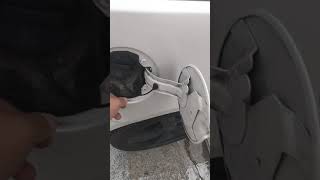
While P0455 is a generic code, the Pontiac G6 and its GM Epsilon platform-mates (like the Chevrolet Malibu and Saturn Aura) have very common failure points. The EVAP purge solenoid, located on the engine, is a frequent cause of this code and can also lead to a rough idle or hard starting after refueling. A YouTube video specifically shows a G6 owner 🎬 Watch this owner fix their P0455 code by replacing the part. fixing their P0455 code by replacing this part. Additionally, the EVAP vent solenoid, located near the fuel tank, is susceptible to failure from dirt and dust, especially for vehicles driven in rust-belt regions. Finally, though less common, leaks in the fuel filler neck due to rust have also been documented by owners on forums and are a known issue on similar GM vehicles.
Symptoms You May Notice
- Check Engine Light is on
- Possible faint fuel smell near the gas tank area
- Rough idle (if the purge solenoid is stuck open)
- Difficulty starting the engine immediately after refueling (if the purge solenoid is stuck open)
- Gas pump nozzle clicks off repeatedly before the tank is full (can be a symptom of a bad vent solenoid)
- Replacing the fuel tank pressure sensor. While part of the EVAP system, this sensor typically sets its own specific codes (like P0452 or P0453) when it fails and is not a common cause of a P0455 leak code.
Most Likely Causes
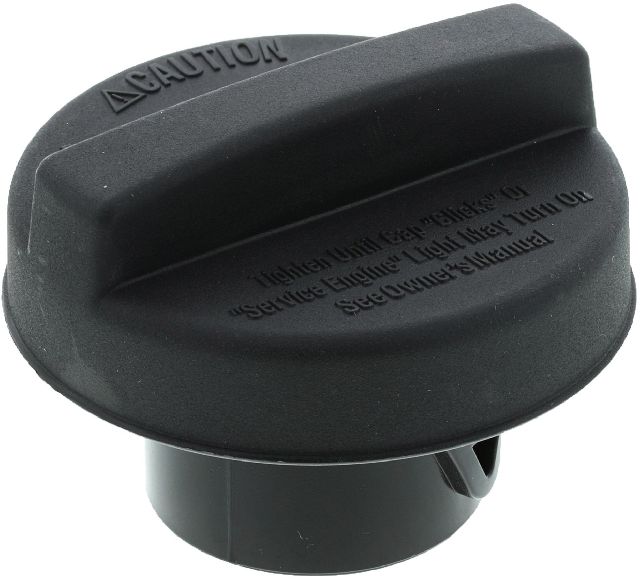
- Loose, Damaged, or Incorrect Gas Cap 🔴 High Probability → Shop Fuel Tank Cap This is the most common cause for a P0455 code on any vehicle, including the G6, accounting for over 50% of cases. The seal on the cap can wear out, crack, or stiffen over time, or it may simply not have been tightened correctly after refueling. The G6 uses a cap that requires a push-and-turn motion, which can be confusing and lead to improper sealing if not done correctly.
How to confirm: Ensure the gas cap is tight (push and turn until it clicks). Inspect the rubber seal on the cap for any cracks, tearing, or signs of wear. If the cap is original, it's a good candidate for replacement due to age. A new, correct-spec cap is a cheap and easy first step.
Typical fix: Tighten the existing cap. If the seal is damaged or the cap is old, replace it with a new one.
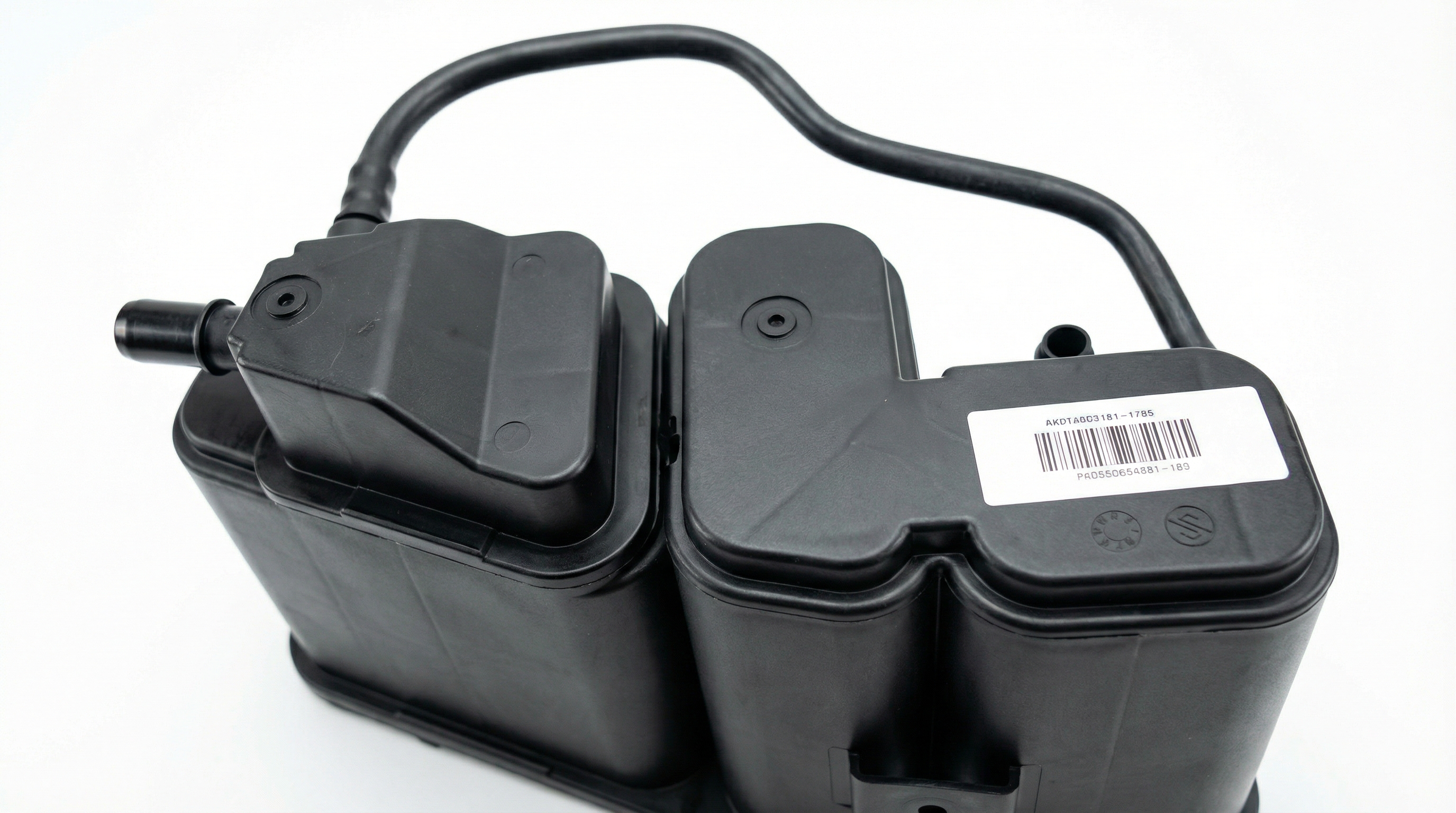
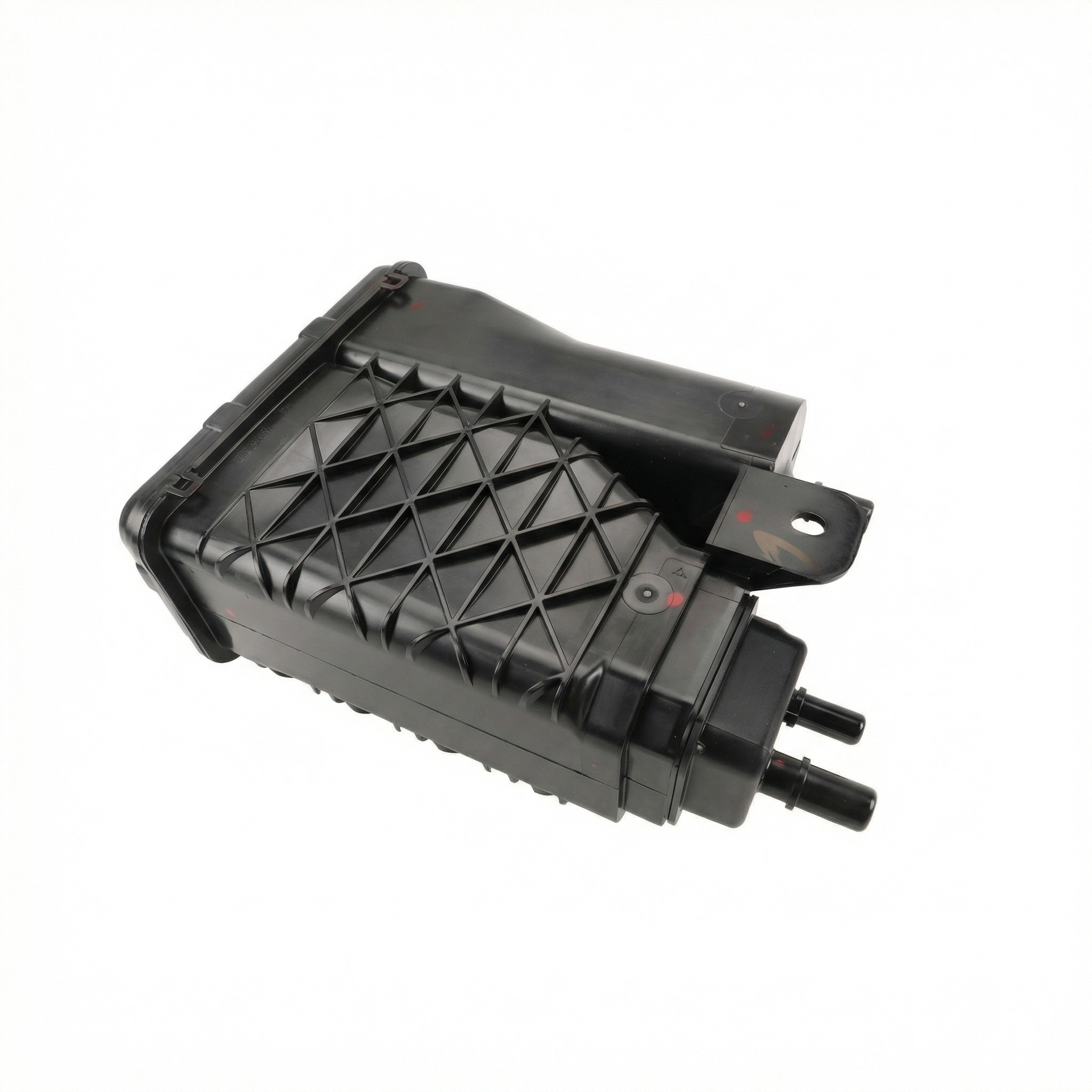
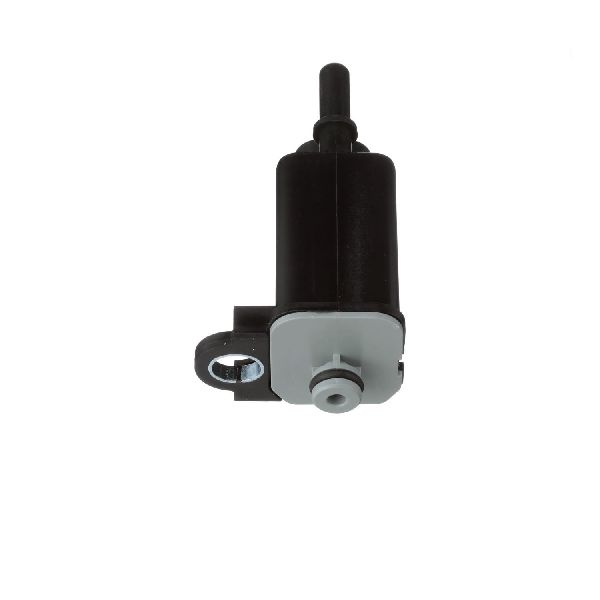
Est. part cost: $10-$25 - Failed EVAP Purge Solenoid/Valve 🔴 High Probability → Shop Vapor Canister This is a very common failure item on the Pontiac G6 and similar GM platforms like the Chevy Malibu and Saturn Aura. The valve can get stuck open, creating a constant vacuum leak that the system interprets as a large EVAP leak. It can also get stuck closed or become weak, which can also counter-intuitively set a P0455 because the system can't pull a sufficient vacuum during its test cycle and assumes a large leak is present.
How to confirm: The purge solenoid is located in the engine bay, mounted to the side of the engine. Disconnect the valve and attempt to blow through it. A properly functioning purge valve is normally closed, so if you can blow air through it, it has failed and needs to be replaced. If it's stuck closed, a scan tool that can command it open is needed for testing.
Typical fix: Replace the EVAP purge solenoid. This is a simple repair requiring basic hand tools (often just an 8mm or 10mm socket) and typically takes less than 20 minutes.
Est. part cost: $25-$60 - Failed EVAP Vent Solenoid/Valve 🟡 Medium Probability → Shop Vapor Canister This valve is located near the charcoal canister by the fuel tank and is exposed to road debris, moisture, and salt. Dirt and dust can cause the valve to get stuck open, preventing the system from sealing for its self-test.
How to confirm: Diagnosis is more difficult due to its location. The valve is normally open. A scan tool that can command the valve to close is needed for proper testing. A visual inspection may reveal damage or clogging from dirt. On some GM models, an updated part was released with a filter relocation kit to prevent repeat failures from contamination.
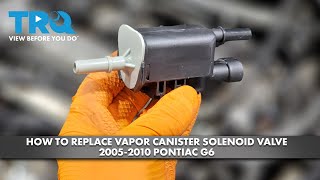
Typical fix: Replace the EVAP vent solenoid. 🎬 See this walkthrough for replacing the vapor canister vent solenoid. Access can be difficult and may require lowering the exhaust or fuel tank slightly.
Est. part cost: $30-$70 - Cracked or Disconnected EVAP Hose ⚪ Low Probability Over time, the plastic and rubber hoses that make up the EVAP system can become brittle and crack, especially at connection points or where they are exposed to the elements under the car.
How to confirm: A visual inspection of all accessible EVAP lines between the engine and the fuel tank may reveal obvious cracks or disconnections. For a definitive diagnosis, a smoke test is required. This involves injecting pressurized smoke into the EVAP system and looking for where it escapes.
Typical fix: Replace the damaged section of hose or reconnect it securely.
Est. part cost: $5-$30
Rare But Worth Checking
- Rusted or Cracked Fuel Filler Neck: → Shop Fuel Filler Neck While not common, there are documented cases on the G6 and other rust-belt vehicles where the metal fuel filler neck (the tube where you insert the gas nozzle) rusts through, creating a large leak. This is often only found with a smoke test. A visual inspection behind the rear wheel well liner may reveal the damage.
- Cracked EVAP Charcoal Canister: → Shop Vapor Canister The charcoal canister itself, located near the fuel tank, can be damaged by road debris or become bloated and cracked over time, leading to a large leak. This would be visible upon inspection of the underside of the vehicle, often requiring removal of the driver's rear wheel well liner for a clear view.
Diagnosis Steps
- Check the Gas Cap: Remove, inspect the seal for cracks, and reinstall it, ensuring it clicks multiple times. Clear the code and drive for a few days to see if it returns. If the cap is old or visibly worn, replace it. This is the cheapest and most common fix.
- Inspect the Purge Solenoid: Locate the purge solenoid on the engine. Disconnect the electrical connector and the two hoses. Try to blow through it. If air passes through, it's faulty and needs replacement. This is the second most common and easiest part to replace.
- Visual Inspection: Visually inspect all accessible EVAP hoses in the engine bay and under the car for obvious cracks, breaks, or disconnections. Pay close attention to the fuel filler neck area for signs of rust or damage.
- Inspect the Vent Solenoid: Locate the vent solenoid near the fuel tank. Check its electrical connector and look for signs of physical damage or clogging from dirt. Testing requires a scan tool to command it closed, as it is normally open.
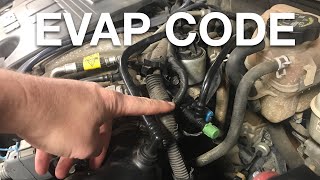
- Perform a Smoke Test: If the leak is not obvious, the most effective diagnostic method 🎬 Watch a mechanic diagnose and repair common GM EVAP codes. is a smoke test. A mechanic will connect a smoke machine to the EVAP service port and fill the system with a dense, visible vapor. The leak will be found where the smoke escapes.
Parts You'll Likely Need
- Gas Cap
(OEM #GT281 (ACDelco))— This is the most frequent and simplest fix for a P0455 code. The seal fails over time.
Trusted brands: ACDelco, Gates, Stant
OEM price range: $20-$35
Aftermarket price range: $10-$25 - Vapor Canister Purge Solenoid
(OEM #12597567)— A very common failure point on the Pontiac G6 that causes a large leak when it sticks open or closed. The ACDelco service part is 214-1680.
Trusted brands: ACDelco, Standard Motor Products (CP471), Dorman (911-032), TRQ (EVA47762)
OEM price range: $40-$70
Aftermarket price range: $25-$60 - Vapor Canister Vent Solenoid
(OEM #13575701 (ACDelco part number may be 214-2311, verify by VIN))— This valve near the tank can fail due to exposure to road debris and dirt, causing it to stick and not seal for the system test. A common aftermarket part is Dorman 911-058.
Trusted brands: ACDelco, Dorman, Standard Motor Products (CVS116)
OEM price range: $50-$80
Aftermarket price range: $30-$70
Related Codes That Often Appear With This One
- P0442 — Evaporative Emission System Leak Detected (Small Leak). You might see this code alongside P0455 if the system is detecting leaks of various sizes, or if a small leak eventually becomes a large one.
- P0496 — Evaporative Emission System Incorrect Purge Flow. This code specifically points to a problem with the purge solenoid and is very commonly seen when the purge solenoid fails and gets stuck open. If you have P0496 with P0455, the purge solenoid is the prime suspect.
- P0449 — Evaporative Emission System Vent Valve/Solenoid Control Circuit. This code points to an electrical fault with the vent solenoid circuit. If seen with P0455, it strongly suggests the vent solenoid or its wiring is the root cause of the large leak.
Technical Service Bulletins (TSBs) & Recalls
- While no specific TSB for the G6 and P0455 was found, GM TSB #21-NA-124 exists for other models like the Chevy Traverse and Silverado. It provides general diagnostic tips for P0442 and P0455 codes, confirming the diagnostic path (cap, purge, vent, smoke test) is standard across many GM vehicles.
Platform-Specific Known Issues
- Owner Experience: Purge Solenoid Fix: → Shop Vapor Canister A YouTube video by a G6 owner demonstrates successfully fixing the P0455 code by replacing the purge valve solenoid. After replacing the gas cap didn't work, he replaced the purge valve, drove for about 20 miles for the computer to run its checks, and the code was resolved.
- Forum Discussion: Rust on Fuel Filler Neck: → Shop Fuel Filler Neck On a 2CarPros forum thread, a mechanic advises a G6 owner with P0455 (after replacing the cap and purge valve) to inspect the fuel filler neck for rust holes, stating it's a known issue he's seen cause the code. Another forum for Pontiacs notes that on rust-belt cars, the smaller vent tube alongside the main filler neck can rust out and cause a P0455.
Mechanic-Grade Diagnostic Values
- Fuel Tank Pressure (FTP) Sensor Voltage — expected: Approximately 1.5V with the system at atmospheric pressure (engine off, gas cap removed). Voltage will vary between 0.1V (high pressure) and 4.9V (high vacuum).. Failure: A voltage that is stuck high or low and does not change when vacuum or pressure is applied indicates a failed sensor.
- EVAP Purge Solenoid Coil Resistance — expected: Approximately 30-36 Ohms at room temperature (around 60-70°F). The resistance will vary with temperature.. Failure: A reading of infinite resistance (open circuit) or very low resistance (short circuit) indicates a failed solenoid coil.
- EVAP Vent/Purge Solenoid Voltage Supply — expected: Battery voltage should be present at the power supply pin (Pink wire for Vent, Orange wire for Purge on some GM models) with the key on.. Failure: No voltage indicates a blown fuse (e.g., EMISS 1 fuse) or an open in the supply wire.
Scan Tool Commands That Help
- Tech2 / GDS2 or equivalent professional scan tool: EVAP System Test (Purge/Seal) — This is the primary diagnostic function. It commands the vent solenoid closed and opens the purge solenoid to draw a vacuum on the tank, then seals the system to monitor for vacuum decay. Failure to pull a vacuum can indicate a faulty purge solenoid or a large leak.
- Tech2 / GDS2 or equivalent professional scan tool: EVAP Vent Solenoid Control — Used to command the normally-open vent solenoid to close. This is necessary to seal the system for a smoke test or the EVAP System Test. You should hear a click from the rear of the vehicle when it activates.
- Tech2 / GDS2 or equivalent professional scan tool: EVAP Purge Solenoid Control — Allows the technician to command the purge solenoid open by a specific percentage (PWM). This is used to verify the solenoid is not stuck and can be used to check for vacuum flow with a gauge.
Wiring & Ground Locations
- G105 / G106 — G105 is located on the left rear of the engine or engine compartment. G106 is on the left rear of the engine (except 3.6L). Both are often found on a transmission housing stud, underneath the throttle body area.. This is a shared ground point for the Engine Control Module (ECM) and Transmission Control Module (TCM). Wires at this ground point, particularly the black/white wires, are known to break inside the insulation right at the ring terminal, causing intermittent issues including EVAP codes and no-start conditions. A visual inspection may not be enough; a voltage drop test or wiggling the wires while monitoring system voltage is required.
- EVAP Service Port — A green-capped port located on the EVAP purge line in the engine bay, near the purge solenoid.. This is the connection point for a smoke machine to diagnose leaks in the entire EVAP system.
- Underhood Fuse Block — Located in the left side of the engine compartment.. Contains the fuse for the EVAP system components (often labeled 'EMISS' or similar). A blown fuse will cause circuit codes (like P0443/P0449) and prevent the solenoids from operating, which can lead to a P0455 test failure.
Real Owner Repair Stories
- YouTube user 'pontiac g6' (Pontiac G6 GT Convertible) — P0455 Check Engine Light
❌ Tried (didn't work) Replaced the gas cap.
✅ What actually fixed it The EVAP purge valve solenoid was faulty. The owner tested the old part by trying to blow through it and confirmed it was leaking (stuck open). Replacing the purge solenoid and driving for about 20 miles allowed the computer to re-run its checks and the code went away. - 2CarPros Forum User 'ALEXXTT' (2005 Pontiac G6 3.5L with 105,000 miles) — P0455 code, no visible leaks or fuel smell.
❌ Tried (didn't work) Replaced canister purge valve., Replaced gas cap.
✅ What actually fixed it The thread did not have a final resolution from the owner, but a mechanic advised the next steps were to inspect the fuel filler neck for rust holes and then perform a smoke test to find the leak, as the common parts had already been replaced.
OEM Part Supersession History
10382104, 25932570→13575701— Part consolidation and design update by GM.
Heads up: The new part number 13575701 (ACDelco 214-2311) is the correct service replacement for the original EVAP Vent Solenoid.12597567→ACDelco 214-1680, Dorman 911-032— This is the primary OEM part number. Aftermarket companies use their own numbering systems for the same part.
Model Year Variations Within This Range
- 2009.5-2010: The Pontiac G6 received a mid-cycle refresh for the 2009.5 model year, which included minor interior and exterior styling updates. While the core EVAP system components and their common failure modes remained largely the same across the 2005-2010 range, it is always best practice to verify part numbers with a VIN, especially for vehicles around the 2009 model year.
Diagnostic Flowchart
Real Owner Stories
Aggregated from forums and TSBs cited above. Mileages and costs reflect what owners reported in those sources.
2008 Pontiac G6 3.5L V6
Symptoms: Check engine light with code P0455.
What fixed it: The user replaced the gas cap but the code persisted. They suspected the vent valve by the gas tank next, but did not report a final confirmed fix.
Source hint: Reddit r/MechanicAdvice
Pontiac G6
Symptoms: P0455 code present after replacing the gas cap to no avail.
What fixed it: Replaced the purge valve solenoid. After driving for about 20 miles to allow the computer to run its checks, the code was successfully resolved.
Source hint: YouTube video by a G6 owner
Pontiac G6 (Rust-belt vehicle)
Symptoms: P0455 code persisting even after replacing the gas cap and the purge valve.
What fixed it: Diagnosed as rust holes on the fuel filler neck and the smaller vent tube alongside the main filler neck, which is a known issue on rust-belt vehicles.
Source hint: 2CarPros forum and Pontiac forums
Related OBD-II Codes
Frequently Asked Questions
Is there a specific Technical Service Bulletin (TSB) for the P0455 code on my 2005-2010 Pontiac G6?
Why does my G6 have a rough idle and trouble starting after getting gas with this code?
I replaced the gas cap on my G6 but the P0455 code is still there. What should I check next?
Why does the gas pump keep clicking off repeatedly when I try to fill up my Pontiac G6?
My G6 has lived in the rust belt its whole life. Could rust cause a P0455 code?
Are the EVAP issues on my G6 shared with other GM cars from the same era?
Helpful Videos
Used OEM Parts in Stock
New Aftermarket Parts Available


The information in this article is provided for general reference and educational purposes only. Vehicle specifications, procedures, and part compatibility can vary by production date, trim level, and region. Always consult your vehicle's factory service manual and verify part numbers before purchasing or performing repairs. Safety-critical components such as airbags, seat belts, and braking systems should be installed by a qualified professional.
- Pontiac G6:
- 🧭 Diagnostic Flowchart
- 🎬 Helpful Videos
- 🛍️ Shop This Part
- What's Unique About the 2005-2010 Pontiac G6
- Symptoms You May Notice
- Most Likely Causes
- Rare But Worth Checking
- Diagnosis Steps
- Parts You'll Likely Need
- Related Codes That Often Appear With This One
- Technical Service Bulletins (TSBs) & Recalls
- Platform-Specific Known Issues
- Mechanic-Grade Diagnostic Values
- Scan Tool Commands That Help
- Wiring & Ground Locations
- Real Owner Repair Stories
- OEM Part Supersession History
- Model Year Variations Within This Range
- Real Owner Stories
- 2008 Pontiac G6 3.5L V6
- Pontiac G6
- Pontiac G6 (Rust-belt vehicle)
- Related OBD-II Codes
- Frequently Asked Questions
- 🎟️ Get 5% Off