

P0455 on 2022-2024 Subaru WRX: EVAP Large Leak Causes and Fixes
For a 2022-2024 Subaru WRX, a P0455 code is most often caused by a loose gas cap. Before doing anything else, ensure the cap is tightened until it clicks, then clear the code. A new OEM gas cap is the next most likely fix, costing around $30-$50. In a few cases on very new vehicles (<1,500 miles), owners have reported the code appearing and then resolving itself after ensuring the cap was tight and clearing the code.
- Always check the gas cap first for a P0455 code. Tighten it until it clicks and clear the code before attempting any other repairs.
- This code is not a major mechanical issue and the car is safe to drive, but it will cause an automatic failure on an emissions test.
- On this specific WRX, driver aids like EyeSight will be disabled when the Check Engine Light is on for this code.
- Do not use a smoke machine for initial diagnosis; use a scan tool to run the EVAP self-test to avoid damaging the sensitive ELCM.
What's Unique About the 2022-2024 Subaru WRX
The 2022-2024 (VB generation) WRX, like other modern Subarus, uses a sensitive Electronic Leak Check Module (ELCM) as part of its EVAP system. A key difference in diagnostics is that Subaru explicitly warns against using a traditional smoke machine as the first step, as the oil in the smoke can contaminate and damage the ELCM. Instead, the proper initial diagnostic step after checking the gas cap is to use a compatible scan tool to initiate the system's built-in self-test. Also, be aware that this emissions code will typically disable driver aids like EyeSight and cruise control to get the driver's attention, a common trait across modern Subarus.
Symptoms You May Notice
- Check Engine Light is on
- Subaru EyeSight, cruise control, and other driver aids are disabled
- A faint smell of gasoline, particularly around the rear of the vehicle
- Difficulty starting the car after refueling (if the purge valve is stuck open)
- Replacing the charcoal canister when only a valve or hose has failed. The canister itself is often durable unless physically damaged.
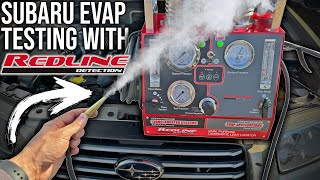
- Immediately using a smoke machine before running the ELCM self-test, which can damage the ELCM on modern Subarus. 🎬 See why you must be careful when smoke testing Subarus
- Assuming a more complex issue before verifying the gas cap is tight and clearing the code.
Most Likely Causes
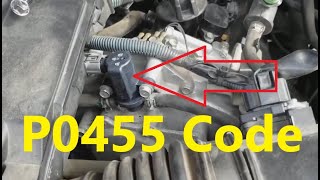
- Loose or Faulty Gas Cap 🔴 High Probability → Shop Fuel Tank Cap This is the most common cause for this code across all vehicles, including the new WRX platform, as confirmed by owner experiences. 🎬 Watch: Overview of common causes and fixes for P0455 codes The seal can wear out, or the cap may simply not have been tightened enough after refueling. One owner on the r/wrx_vb subreddit with a '23 model under 1,500 miles confirmed the code was triggered by a loose cap, which they resolved by tightening it and clearing the code.
How to confirm: Remove the gas cap and inspect the seal for cracks or damage. Reinstall it and turn it until it clicks multiple times. Clear the code and drive for a few days to see if it returns.
Typical fix: Replace the gas cap with a new OEM part.
Est. part cost: $30-$50 - Faulty Canister Purge Valve (Solenoid) 🟡 Medium Probability → Shop Vapor Canister This valve is located in the engine bay and cycles frequently, leading to eventual failure. If it sticks open, it creates a large leak path from the EVAP system to the intake manifold.
How to confirm: Locate the valve in the engine bay. It's a normally-closed valve. With the vehicle off, disconnect the hoses and try to blow through it. If air passes through, the valve is stuck open and has failed. A stuck-open valve can also cause hard starting after filling the gas tank.
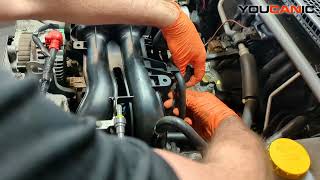
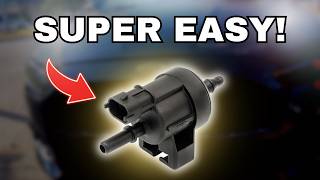
Typical fix: Replace the purge valve solenoid. 🎬 Watch: How to replace your purge valve like a pro
Est. part cost: $70-$120 - Cracked or Disconnected EVAP Hose ⚪ Low Probability Hoses, especially those near the engine or exposed under the car, can become brittle over time and crack. A large leak code often points to a hose that has completely disconnected from a fitting. On older WRX models, a common failure point was a corroded EVAP pipe under the intake manifold, which could be a future issue for the VB platform as it ages.
How to confirm: Visually inspect all accessible EVAP lines, from the engine bay to the charcoal canister area at the rear. A low-pressure smoke test is the definitive way to find a cracked hose if a visual inspection is inconclusive.
Typical fix: Replace the damaged section of hose or reconnect it with a new clamp.
Est. part cost: $10-$40
Rare But Worth Checking
- Faulty Vent Valve / Electronic Leak Check Module (ELCM): This component is located near the charcoal canister at the rear of the car. It's responsible for sealing the system for the self-test. While less common to fail than the purge valve, a malfunction can cause a P0455. Diagnosis is best performed using a scan tool to command the valve and monitor system pressure.
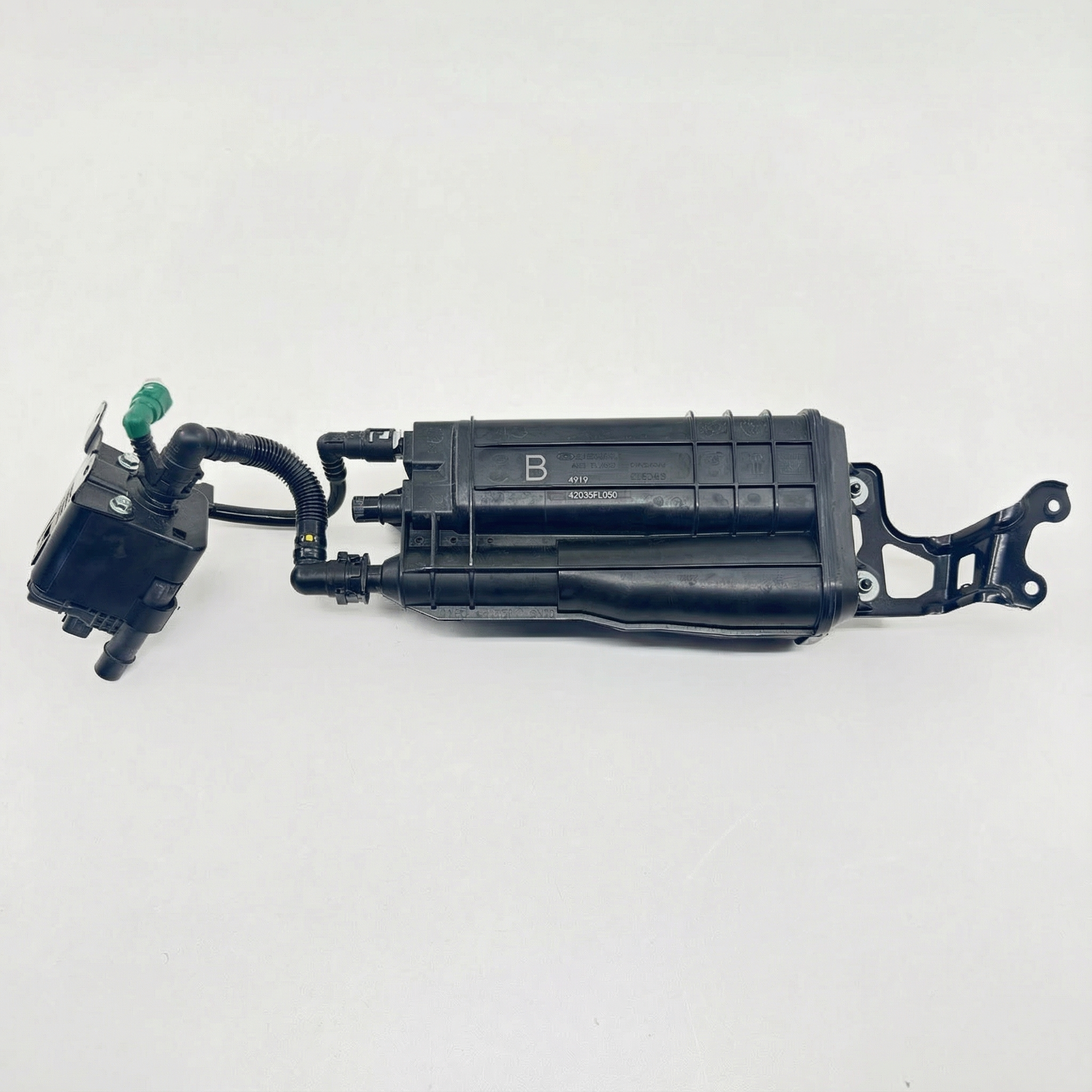
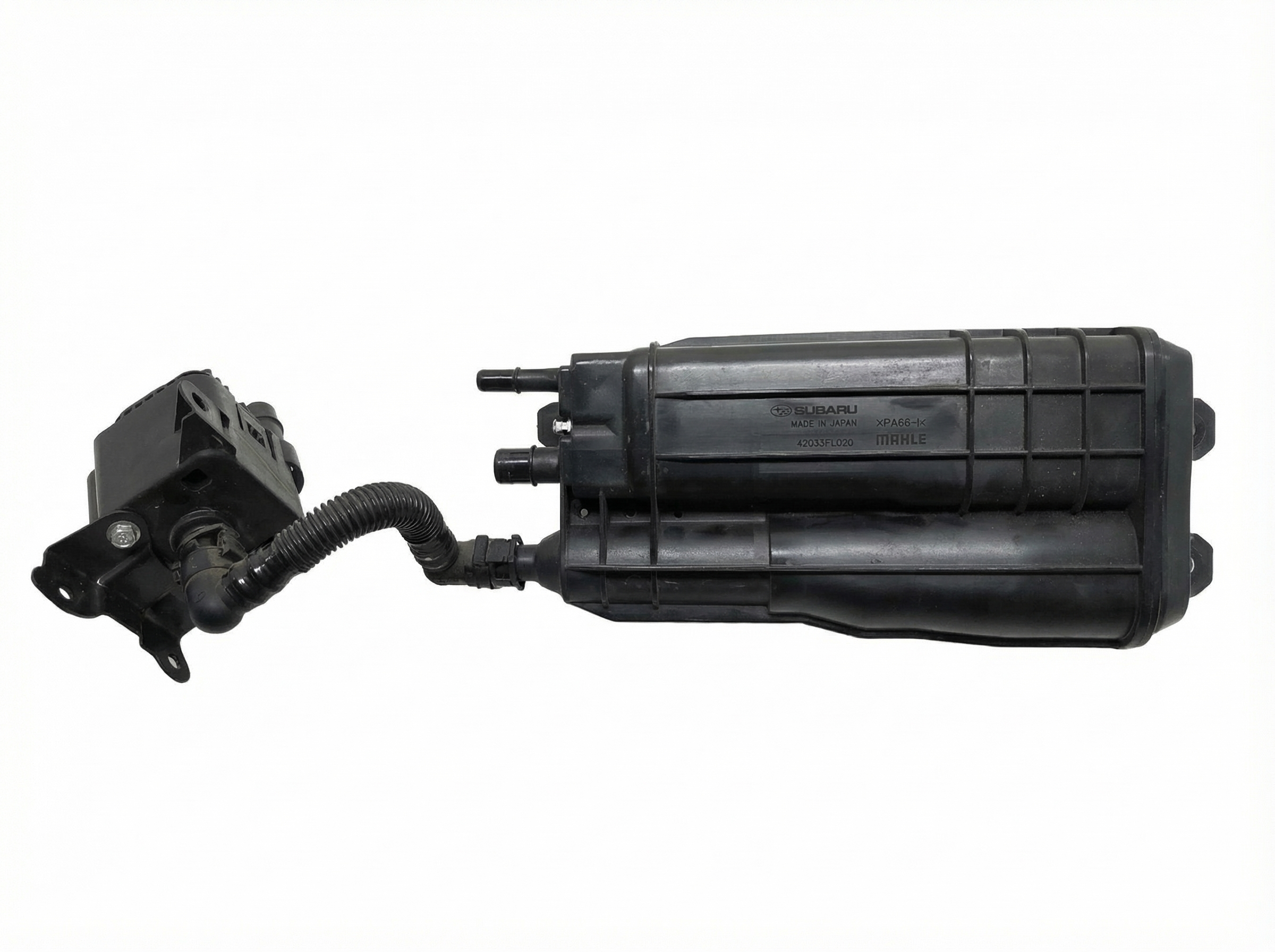
- Cracked Charcoal Canister: → Shop Vapor Canister Physical damage from road debris can crack the plastic housing of the charcoal canister, creating a large leak. This would be visible upon inspection of the components at the rear of the vehicle. A used OEM canister assembly for the 2022-2024 WRX has been seen with part number 42035FL020.
Diagnosis Steps
- Check the gas cap. Remove it, inspect the seal, and reinstall it, ensuring it clicks several times. Clear the code using an OBD-II scanner. Many owners report this is the only step needed.
- If the code returns, perform a thorough visual inspection of the EVAP hoses in the engine bay near the purge solenoid and under the rear of the car near the charcoal canister. Look for obvious cracks or disconnected lines.
- (Recommended) Use a high-quality, Subaru-compatible scan tool to command the EVAP system's forced self-test. This is the manufacturer-recommended procedure to avoid damaging the ELCM.
- Based on the self-test results, investigate the specific component indicated (e.g., purge valve, vent valve/ELCM).
- Test the purge valve in the engine bay. It should be closed and hold a vacuum when the engine is off. If you can blow through it, it's stuck open and needs replacement.
- If all else fails, a professional may need to perform a low-pressure smoke test to pinpoint the source of the leak.
Parts You'll Likely Need
- Fuel Filler Cap
(OEM #42031FJ000)— This is the most frequent cause of a P0455 code. The seal wears out or it's improperly tightened. The part number 42031FJ000 is listed as compatible with the 2015-2024 WRX.
Trusted brands: Subaru (OEM)
OEM price range: $30-$50
Aftermarket price range: $15-$30 - Canister Purge Valve / Solenoid
(OEM #42084FL230)— This is the second most likely component to fail, typically by sticking open and creating a constant leak. A used part from a 2022 WRX shows this part number. Note: The part number from the previous generation (VA WRX) was different (e.g., 42072VA000), so ensure you get the correct part for the VB chassis.
Trusted brands: Subaru (OEM), Denso
OEM price range: $70-$120
Aftermarket price range: $40-$80
Related Codes That Often Appear With This One
- P0457 — This code specifically means 'EVAP System Leak Detected (Fuel Cap Loose/Off)'. If you see this alongside P0455, the gas cap is almost certainly the culprit.
- P0441 — This code for 'Incorrect Purge Flow' can appear with P0455 if the purge valve is stuck open or not functioning correctly.
- P0456 — This code indicates a 'small' EVAP leak. While P0455 is for a 'large' leak, sometimes a borderline leak or failing component can trigger either code.
Technical Service Bulletins (TSBs) & Recalls
- Subaru TechTIPS Newsletter (Not a formal TSB): Warns technicians to use the scan tool self-test function before using a smoke machine on vehicles with an Electronic Leak Check Module (ELCM) to prevent contamination and damage.
- TSB 09-94-22: While not for P0455, this TSB for the 2022 WRX provides new ECM reprogramming files to address a range of other DTCs, showing that Subaru actively issues software updates to resolve engine code issues.
Platform-Specific Known Issues
- Fueling Issue: Some VB WRX owners report an issue where the gas pump nozzle clicks off prematurely and repeatedly, making it difficult to fill the tank completely. While not directly causing a P0455 code, this issue relates to the fuel tank and vapor pressure system and could potentially lead to an improperly sealed cap if the owner becomes frustrated and doesn't tighten it correctly after a difficult fill-up.
Mechanic-Grade Diagnostic Values
- EVAP Canister Purge Valve Resistance — expected: 30 to 38 ohms (when engine is cool). Failure: A reading outside of this range indicates a faulty valve coil.
Scan Tool Commands That Help
- Subaru Select Monitor (SSM4) or equivalent: Evaporative System Leak Test — This is the manufacturer-mandated first step for diagnosing any EVAP DTC (P0441-P0459) on modern Subarus with an ELCM. It runs a 15-30 minute vacuum-based self-test to identify the nature of the leak without using a smoke machine, which could damage the ELCM. The test must be run with the ignition ON and engine OFF.
Real Owner Repair Stories
- Reddit user on r/SubaruForester (Subaru Forester (similar EVAP system)) — Check Engine Light on, EyeSight disabled, S mode blinking, code P0455.
❌ Tried (didn't work) Multiple attempts at removing and re-tightening the gas cap.
✅ What actually fixed it The user took the vehicle to the dealership. After a 4-hour wait, the dealer reported that all diagnostic checks, including a vacuum leak check and purge valve test, passed with no issues found. They cleared the code, attributing it to a possible previous loose gas cap event. The code did not immediately return. - NHTSA ODI #11637451 (Subaru Forester reference) — An owner reported taking their vehicle to a dealership for a P0455 code. The technician found the gas cap was already secured, reset the code, and found no further issues during a test drive.
OEM Part Supersession History
42084FL230→42084FL231— Standard part revision.
Heads up: The new part number (42084FL231) replaces the old one and is the correct part to order. This part is often referred to as the 'Valve Check', 'Vent Control Solenoid', or 'Valve Assembly ELCM'.
Diagnostic Flowchart
Other Known Issues on This Vehicle
Issues unrelated to this code that are worth knowing about as an owner of this generation:
- Excessive RTV Sealant in Oil Pan 🔴 High — Well-documented on early production 2022+ FA24 engines (WRX and BRZ). Pieces of sealant can break off and clog the oil pickup tube, potentially leading to oil starvation and engine failure.
- Infotainment System Glitches / Black Screen 🟡 Low — Common complaint on models with the larger 11.6-inch touchscreen. Issues include random freezing, black screens, and Apple CarPlay/Android Auto connectivity problems that may require a vehicle restart to resolve. (Ref: Software updates have been issued, but some owners report persistent issues.)
- Pulsating or Gritty Clutch Pedal Feel 🟡 Low — Some owners of manual transmission models report a pulsating, gritty, or inconsistent feeling in the clutch pedal during engagement. The cause is not definitively identified, with some speculation around the throw-out bearing or pedal assembly. A TSB for the pedal assembly (06-90-22R) and release bearing grease (03-81-20R) exists for related models, but not specifically for this symptom on the VB.
- Carbon Buildup on Intake Valves 🟠 Medium — A long-term consequence of all direct-injection engines, including the FA24F. Over many miles (typically 30k-60k+), carbon can accumulate on the back of the intake valves, potentially affecting performance and efficiency. Not a defect, but a maintenance consideration.
- Fuel Filling Issues 🟡 Low — A notable number of owners report that fuel pump nozzles frequently and prematurely shut off during refueling, making it difficult to fill the tank.
Used vs. New Parts: Buying Guide for This Vehicle
When a used part is the smart pick: For this repair, a used OEM charcoal canister assembly (which includes the ELCM and other valves) from a low-mileage donor vehicle can be a cost-effective choice if the entire assembly needs replacement due to physical damage. Individual hoses and clamps are also good candidates for used parts.
Donor-vehicle mileage cap: roughly under 40000 miles for the part to have meaningful remaining life.
What to inspect on the donor part:
- Check for physical damage, especially cracks or broken plastic fittings on the charcoal canister housing.
- Ensure all hose connection points are intact and not brittle.
- Verify the part number on the donor component matches the required part for your vehicle, paying attention to supersession history.
- If possible, inspect the donor vehicle's history for flood or severe accident damage.
OEM-only on this vehicle (don't cheap out):
- Fuel Filler Cap: Aftermarket caps are a frequent source of persistent EVAP codes due to poor seal quality. It is strongly recommended to use a genuine Subaru OEM cap (PN 42031FJ000) to ensure a proper seal.
- Electronic Leak Check Module (ELCM) / Vent Valve: Given its sensitivity and critical function in the diagnostic system, an OEM part is highly recommended to avoid compatibility and performance issues.
Aftermarket brands forum-validated for this vehicle:
- Denso (for Canister Purge Valve)
Brands owners have reported issues with on this vehicle:
- Unbranded or 'white-box' fuel filler caps from online marketplaces are frequently reported to cause leaks.
Real Owner Stories
Aggregated from forums and TSBs cited above. Mileages and costs reflect what owners reported in those sources.
2023 Subaru WRX — 1500 miles
Symptoms: Check engine light came on after starting the car to leave work; the owner noted the car was unmodified and well-maintained.
What fixed it: The owner double-checked the gas cap and found it was loose; tightening it and clearing the code resolved the issue.
Source hint: r/wrx_vb on Reddit: 'P0455 EVAP system leak'
Subaru Owner — NHTSA ODI #11637451
Symptoms: The vehicle was taken to a dealership for diagnosis and repair after a P0455 error code was detected.
What fixed it: A technician found that the gas cap was already secured. The technician reset the code and test drove the car, and the error code did not immediately return.
Related OBD-II Codes
Frequently Asked Questions
I have a 2023 WRX with very low mileage and just got a P0455 code. Is it possible for the gas cap to fail this early?
Why are my Subaru EyeSight and cruise control disabled when the P0455 code appears?
Does TSB 09-94-22 specifically fix the P0455 large leak issue on my 2022 WRX?
Can I use a standard smoke machine to find the leak on my VB WRX?
I'm having trouble filling my gas tank; could this be related to my P0455 code?
Is the P0455 code common on other Subarus with the FA24 engine?
Helpful Videos
Used OEM Parts in Stock
New Aftermarket Parts Available


The information in this article is provided for general reference and educational purposes only. Vehicle specifications, procedures, and part compatibility can vary by production date, trim level, and region. Always consult your vehicle's factory service manual and verify part numbers before purchasing or performing repairs. Safety-critical components such as airbags, seat belts, and braking systems should be installed by a qualified professional.
- Subaru WRX:
- 🧭 Diagnostic Flowchart
- 🎬 Helpful Videos
- 🛍️ Shop This Part
- What's Unique About the 2022-2024 Subaru WRX
- Symptoms You May Notice
- Most Likely Causes
- Rare But Worth Checking
- Diagnosis Steps
- Parts You'll Likely Need
- Related Codes That Often Appear With This One
- Technical Service Bulletins (TSBs) & Recalls
- Platform-Specific Known Issues
- Mechanic-Grade Diagnostic Values
- Scan Tool Commands That Help
- Real Owner Repair Stories
- OEM Part Supersession History
- Other Known Issues on This Vehicle
- Used vs. New Parts: Buying Guide for This Vehicle
- Real Owner Stories
- 2023 Subaru WRX — 1500 miles
- Subaru Owner — NHTSA ODI #11637451
- Related OBD-II Codes
- Frequently Asked Questions
- 🎟️ Get 5% Off