

P0455 on 2010-2014 Volkswagen Golf: EVAP Large Leak Causes and Fixes
For a 2010-2014 (Mk6) VW Golf, the P0455 code almost always points to a loose gas cap or a failed EVAP purge valve (N80). Check the gas cap first for free; sometimes just the O-ring (P/N: 1K0201557A) needs replacing. If that doesn't fix it, the N80 valve (OEM P/N: 06E906517A) is the next most likely culprit, costing around $20-$60 for a quality Bosch replacement and is a straightforward DIY job.
- Always check your gas cap first. Make sure it's tight and the seal is intact. Replacing just the O-ring (1K0201557A) can be a very cheap and effective fix.
- The N80 EVAP purge valve (06E906517A) is the second most likely culprit and is a known weak point on Mk6 Golfs. Test it by trying to blow through it; if air passes, it's bad.
- Symptoms like difficulty starting after fueling strongly point to a bad N80 valve that is stuck open.
- If the gas cap and N80 valve are confirmed good, a professional smoke test is the most reliable way to find the source of the leak, saving you from replacing unnecessary parts.
What's Unique About the 2010-2014 Volkswagen Golf
The 2010-2014 Volkswagen Golf (Mk6 generation) and its platform mates use a specific set of components, including the well-known N80 purge valve, which is a very common failure point leading to this code. Unlike in some other vehicles, the N80 valve on both the 2.5L and 2.0T engines is typically located right on top of the engine and is easy to access for testing and replacement. Owners frequently report that this valve fails by getting stuck open or having a torn internal diaphragm, creating the large leak the system detects.
Symptoms You May Notice
- Check Engine Light is on.
- A 'Gas Cap' warning light may appear on the dashboard before the Check Engine Light.
- A faint smell of fuel, particularly around the rear of the car or in a closed garage.
- Difficulty starting the engine immediately after refueling (this is a classic sign of a stuck-open purge valve flooding the intake with vapor).
- Slightly rough or unstable idle if the purge valve is stuck open.
- Audible 'whoosh' of air when opening the gas cap may be absent, indicating the system is not holding pressure.
- Replacing expensive parts like the Leak Detection Pump (LDP) or charcoal canister before thoroughly testing the gas cap and N80 purge valve. A Reddit user described replacing the gas cap three times, the purge valve, and the LDP before the issue was traced elsewhere, highlighting the need for systematic diagnosis.
Most Likely Causes
- Loose or Faulty Gas Cap 🔴 High Probability → Shop Fuel Tank Cap The gas cap is the most frequently handled part of the emissions system. Its rubber O-ring can crack, harden, or degrade with age and temperature changes, preventing a proper seal. Sometimes the cap is simply not tightened until it clicks.
How to confirm: Remove the gas cap and inspect the rubber seal for any cracks, stiffness, or damage. Ensure the fuel filler neck where the cap seals is clean. Reinstall the cap, making sure it clicks at least once. Clear the code and drive for a few days to see if it returns. A user on Golfmk6.com fixed their P0455 code by simply replacing the O-ring seal (P/N: 1K0201557A).
Typical fix: Tighten the cap. If the seal is bad, you can replace just the O-ring for a few dollars or the entire cap with an OEM part for the best fit.
Est. part cost: $5-$40 - Faulty EVAP Purge Valve (N80 Valve) 🔴 High Probability → Shop Vapor Canister The diaphragm inside the N80 valve on VWs is a known weak point. It can tear or get stuck open, sometimes due to carbon debris from the charcoal canister, creating a constant leak path from the EVAP system to the engine intake manifold.
How to confirm: Locate the N80 valve on top of the engine. 🎬 See this walkthrough for testing and replacing the 2.5L N80 valve. With the engine off, disconnect the electrical connector and the hose coming from the charcoal canister. Try to blow through the valve (the 'blow test'). If any air passes through, the valve is stuck open and is faulty. A hand vacuum pump can also be used; it should hold pressure/vacuum when applied to the valve.
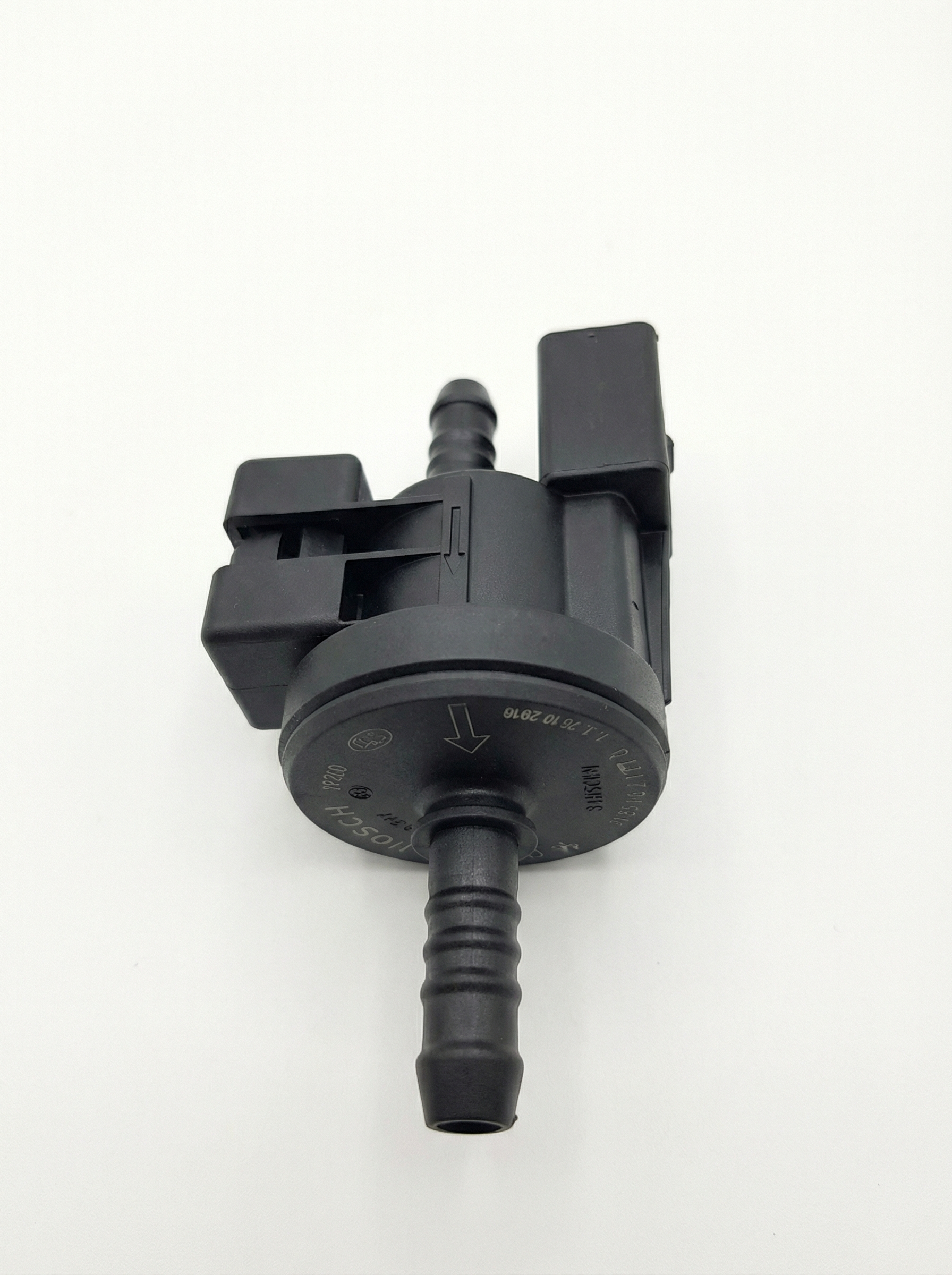
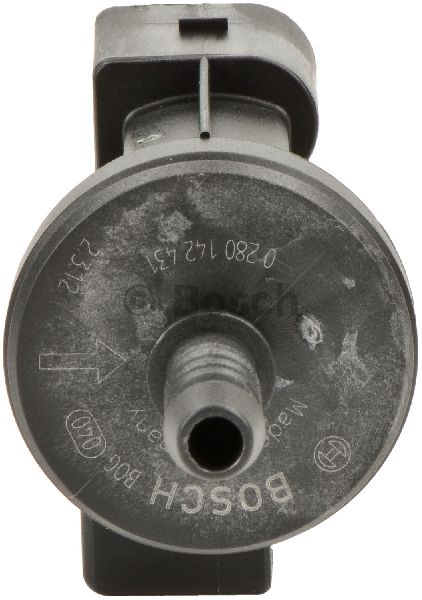
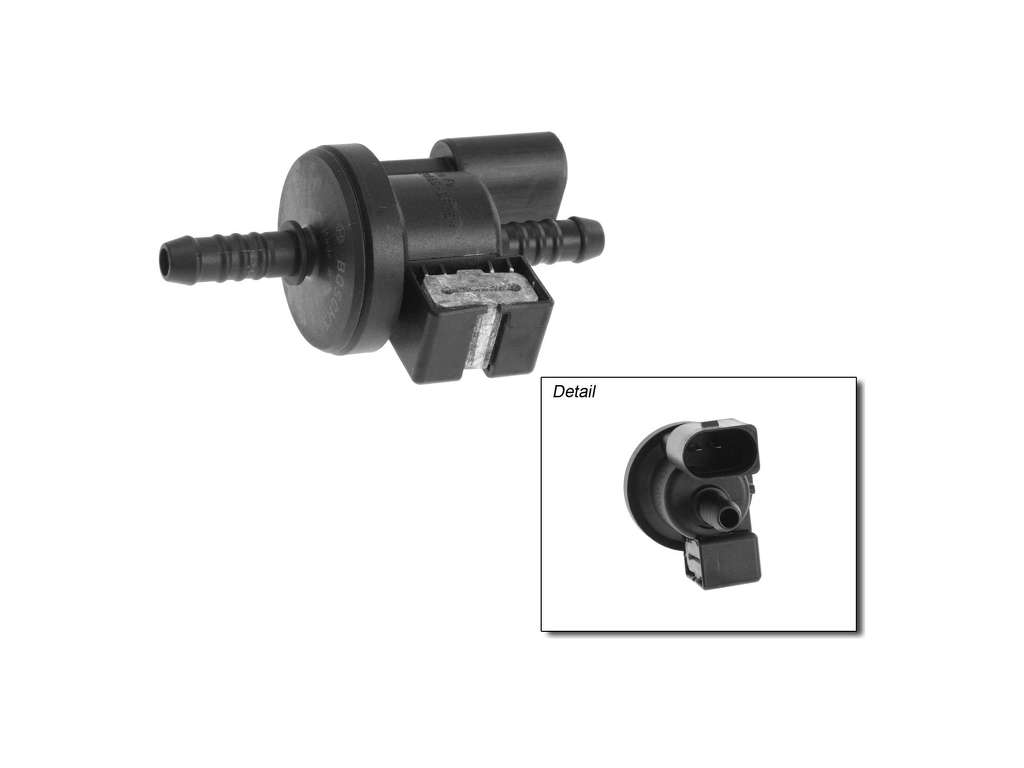
Typical fix: Replace the N80 purge valve. This is a common DIY job that takes less than 30 minutes. The OEM part is made by Bosch.
Est. part cost: $20-$65 - Cracked or Disconnected EVAP Hoses 🟡 Medium Probability The plastic and rubber hoses in the engine bay and running to the back of the car can become brittle over time due to heat cycles and age, leading to cracks, especially at connection points.
How to confirm: Visually inspect all accessible EVAP hoses for obvious cracks, breaks, or loose connections, especially around the N80 valve and the charcoal canister (located near the rear axle). A smoke test is the most effective way to find a leak that isn't obvious.
Typical fix: Replace the damaged section of hose or secure a loose connection with a new clamp.
Est. part cost: $10-$50
Rare But Worth Checking
- Faulty Leak Detection Pump (LDP): → Shop Evaporative Emissions System Leak Detection Pump The LDP pressurizes the system for the self-test. While it can fail, it's less common than the N80 valve or gas cap. A user on a Golf Mk6 forum reported a shop found their LDP was leaking 'through the pins', which is a specific but rare failure mode. Failure here might also set other LDP-specific codes.
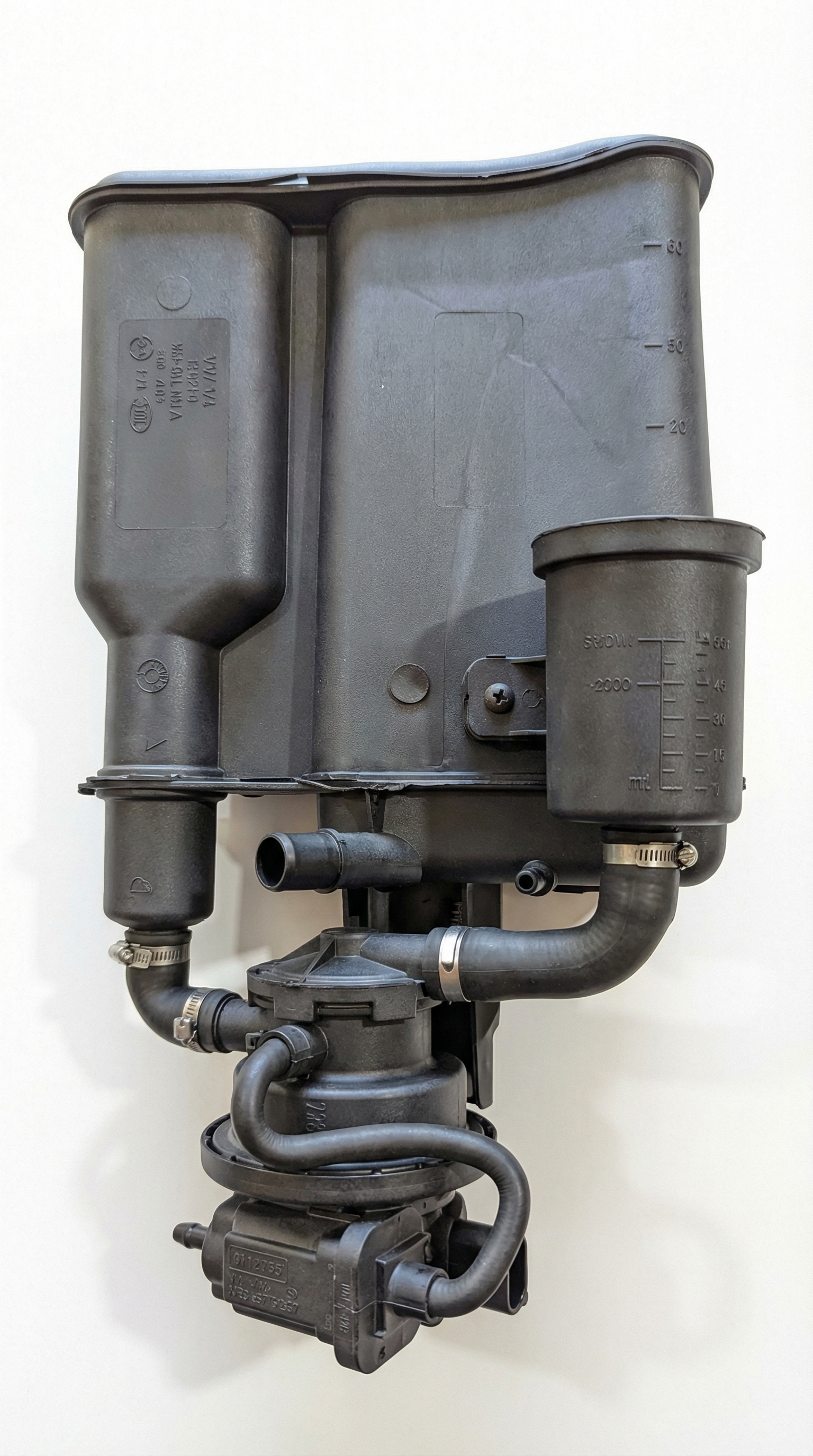
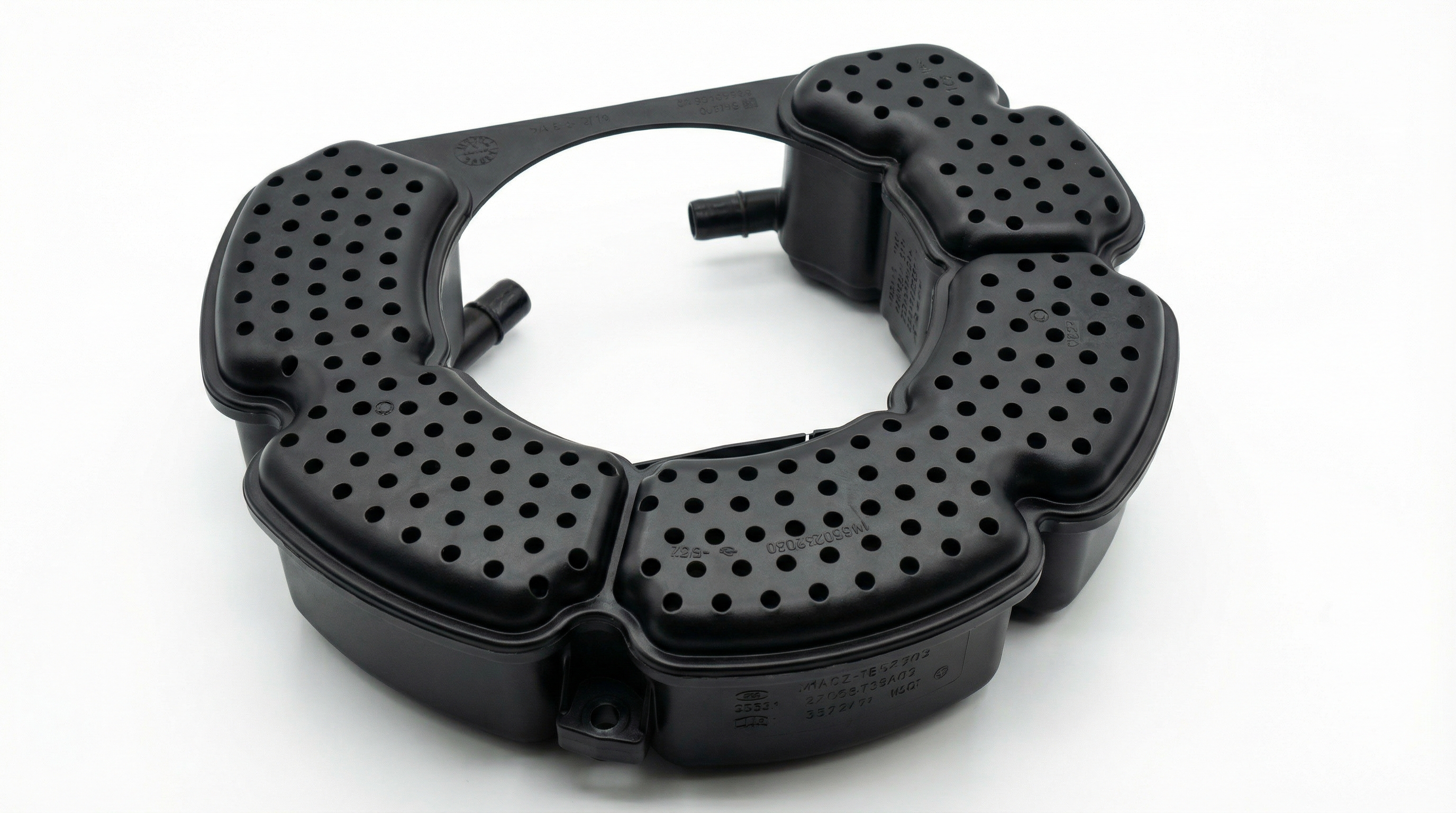
- Cracked Charcoal Canister: → Shop Vapor Canister The plastic housing of the charcoal canister, located near the fuel tank, can develop cracks from road debris impact or age, creating a large leak. This is usually found during a smoke test as it's not easily visible.
- Cracked Fuel Filler Neck: → Shop Fuel Filler Neck On vehicles in rust-prone areas, the metal pipe leading to the gas tank can corrode and develop holes, causing a leak that prevents the system from sealing.
Diagnosis Steps
- Read the Code: Confirm P0455 is the active code with an OBD-II scanner and check for any other related codes like P0441 or P0456.
- Check the Gas Cap: This is the most common cause. Remove, inspect the rubber O-ring seal for cracks or hardness, and clean the sealing surface. Reinstall it, ensuring it clicks shut. Some owners have fixed the issue by only replacing the seal (P/N: 1K0201557A). Clear the code and drive for a few days.
- Test the N80 Purge Valve: Locate the valve on the engine. With the car off, disconnect the inlet hose and try to blow through it. If air passes, the valve is stuck open and must be replaced. This is a definitive and simple test.
- Visual Inspection: Carefully check all visible EVAP hoses in the engine bay and around the charcoal canister (located near the fuel tank) for obvious cracks or loose connections.
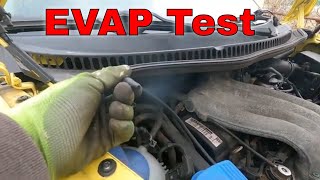
- Perform a Smoke Test: If the leak is not yet found, a smoke test is the definitive next step. This involves injecting pressurized, UV-dyed smoke into the EVAP system's service port and looking for where it escapes. 🎬 Watch: How to perform a smoke test to find hidden leaks. This will reveal hard-to-see cracks in hoses, the charcoal canister, or the fuel filler neck. A shop may charge $100-$150 for this service.
Parts You'll Likely Need
- EVAP Purge Valve (N80 Valve)
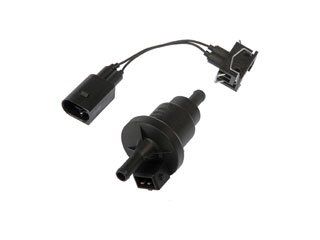
(OEM #06E906517A)— This is the most common mechanical failure for code P0455 on this vehicle. The internal diaphragm fails, causing a large, permanent leak path to the intake manifold.
Trusted brands: Bosch (OEM supplier, P/N: 0280142431), Genuine VW/Audi
OEM price range: $50-$70
Aftermarket price range: $20-$45 - Fuel Cap / Seal
(OEM #1K0201550F (Cap), 1K0201557A (Seal only))— A worn-out seal on the gas cap is a very simple and common cause for a large EVAP leak. It's always the first part to check and often the cheapest fix.
Trusted brands: Genuine VW/Audi, Blau, Stant
OEM price range: $30-$40 (Cap), ~$8 (Seal)
Aftermarket price range: $15-$25
Related Codes That Often Appear With This One
- P0441 — P0441 indicates 'Incorrect Purge Flow'. This code points very strongly to a malfunctioning N80 purge valve, as it directly relates to the valve's function (flow) rather than just a system leak. Seeing P0455 and P0441 together makes the N80 valve the prime suspect.
- P0456 — P0456 indicates a 'very small leak'. You might see both if there are multiple leak points or if a failing component is intermittently causing different-sized leaks during the ECU's tests.
Platform-Specific Known Issues
- The N80 Purge Valve (06E906517A) has a high failure rate across the Mk6 platform for both the 2.5L 5-cylinder and 2.0T 4-cylinder engines. Fortunately, on both engines, it is located in an easily accessible position on top of the engine, making it a popular and simple DIY replacement that often resolves P0455 and P0441 codes.
Mechanic-Grade Diagnostic Values
- N80 Purge Valve Coil Resistance — expected: 15 to 35 Ohms (VW spec is often cited as 22-30 Ohms, but values between 15-35 are generally considered acceptable).. Failure: A reading of 0 Ohms (short circuit) or infinite/OL (open circuit). A reading outside the 15-35 Ohm range suggests an impending failure.
- N80 Purge Valve Connector Voltage (Key On, Engine Off) — expected: Pin 1 should have battery voltage (~12V). Pin 2 is the ground, controlled by the ECM.. Failure: Significantly low voltage (e.g., 1.25V as reported by one user) on Pin 1 indicates a wiring or power supply issue, not a faulty valve.
- Fuel Tank Pressure (FTP) Sensor Voltage Target — expected: During a system self-test, the ECU attempts to pull the fuel tank pressure down to a target of 0.8V.. Failure: If the system cannot reach this target voltage, it indicates it cannot build sufficient vacuum, triggering a P0455 'gross leak' code.
Scan Tool Commands That Help
- VCDS (VAG-COM): Engine -> Basic Settings -> Group 070 (Evaporative Emission Control Test) — This function initiates the complete EVAP system leak test on demand. It allows a technician to run the test in the service bay to confirm if a leak is present after a repair, without needing to perform a full drive cycle. It will show 'System OK' or 'Leak Detected'.
- VCDS (VAG-COM): Engine -> Output Tests — This allows for sequential testing of individual components. You can cycle through tests to specifically command the N80 Purge Valve and Leak Detection Pump (LDP) to activate. This is used to confirm the component clicks or operates when commanded, verifying the wiring and the component's basic electrical function.
Wiring & Ground Locations
- Ground Connection on Engine Block (18) — On the engine block, exact position varies by engine (2.5L vs 2.0T).. The N80 purge valve is grounded through the Engine Control Module (ECM), which relies on a solid engine ground. A poor engine block ground can cause erratic behavior or low voltage at various sensors and solenoids, including the N80 valve.
- Ground connection in plenum chamber, left (607) — Located in the plenum chamber (the area below the windshield wipers).. This is a major ground distribution point for many engine management components. Corrosion or looseness here can cause a wide range of difficult-to-diagnose electrical issues.
- N80 Valve Connector — On top of the engine, connected directly to the N80 valve.. Pin 1 is the 12V power supply (Key On), and Pin 2 is the ground signal from the ECM. Testing voltage here is a critical step to differentiate between a bad valve and a wiring/ECM problem.
Real Owner Repair Stories
- golfmk6.com forum user (MK6 GTI) — P0444 (EVAP Purge Control Valve Circuit Open) and low voltage at N80 connector.
❌ Tried (didn't work) Checking resistance of the N80 valve (it was in spec at ~34 Ohms).
✅ What actually fixed it The user found only 1.25V at the N80 harness plug, whereas a known-good car showed 9-10V. The final fix was not posted, but the diagnosis correctly identified a wiring/power supply issue rather than a faulty N80 valve, saving the user from replacing a good part.
"I Checked Everything" — The Actual Cause
- In some cases, a smoke test may not reveal a leak if the fault is intermittent or related to a component that only fails under specific conditions (e.g., a vent valve that doesn't seal properly when commanded closed by the ECU). One technician noted that if a smoke test is clean, the next step is to test the Fuel Tank Pressure (FTP) sensor itself, as a faulty sensor could incorrectly report a leak.
OEM Part Supersession History
6E906517→06E906517A— Standard part revision and improvement by Volkswagen/Audi.
Heads up: The new part number is a direct replacement for the old one.
Model Year Variations Within This Range
- 2010-2014 (undetermined split): There appears to be a variation in the electrical connector size for the N80 purge valve within the Mk6 generation. Some owners report buying a replacement valve (often the most commonly listed part) only to find its connector is larger than their car's stock harness plug. It is critical to visually inspect the connector on the vehicle before purchasing a replacement part.
Diagnostic Flowchart
Real Owner Stories
Aggregated from forums and TSBs cited above. Mileages and costs reflect what owners reported in those sources.
2012 VW Golf — 152000 miles
Symptoms: Check Engine Light with code P0455.
What fixed it: The owner removed the N80 (EVAP purge) valve, found it was stuck with a piece of dirt or carbon, cleaned it with WD-40 until it operated correctly, and reinstalled it. They also replaced a permanent hose clamp with a standard one.
Cost: $0
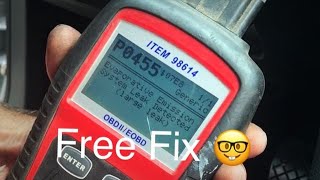
Source hint: YouTube comment by 'Jonathan's Artsy Silver' on video 'P0455 EVAP Large Leak Detected: Free Fix, VW Golf Check Engine Light On'
Volkswagen Golf Mk6
Symptoms: A P0455 code appeared after a 'Gas Cap' warning light illuminated on the dashboard.
What fixed it: The issue was resolved by replacing only the gas cap O-ring seal (P/N 1K0201557A).
Source hint: golfmk6.com thread titled 'P0455 Fixed'
Volkswagen Golf Mk6
Symptoms: A 2-year struggle with a persistent P0455 code that eventually escalated to a no-start condition.
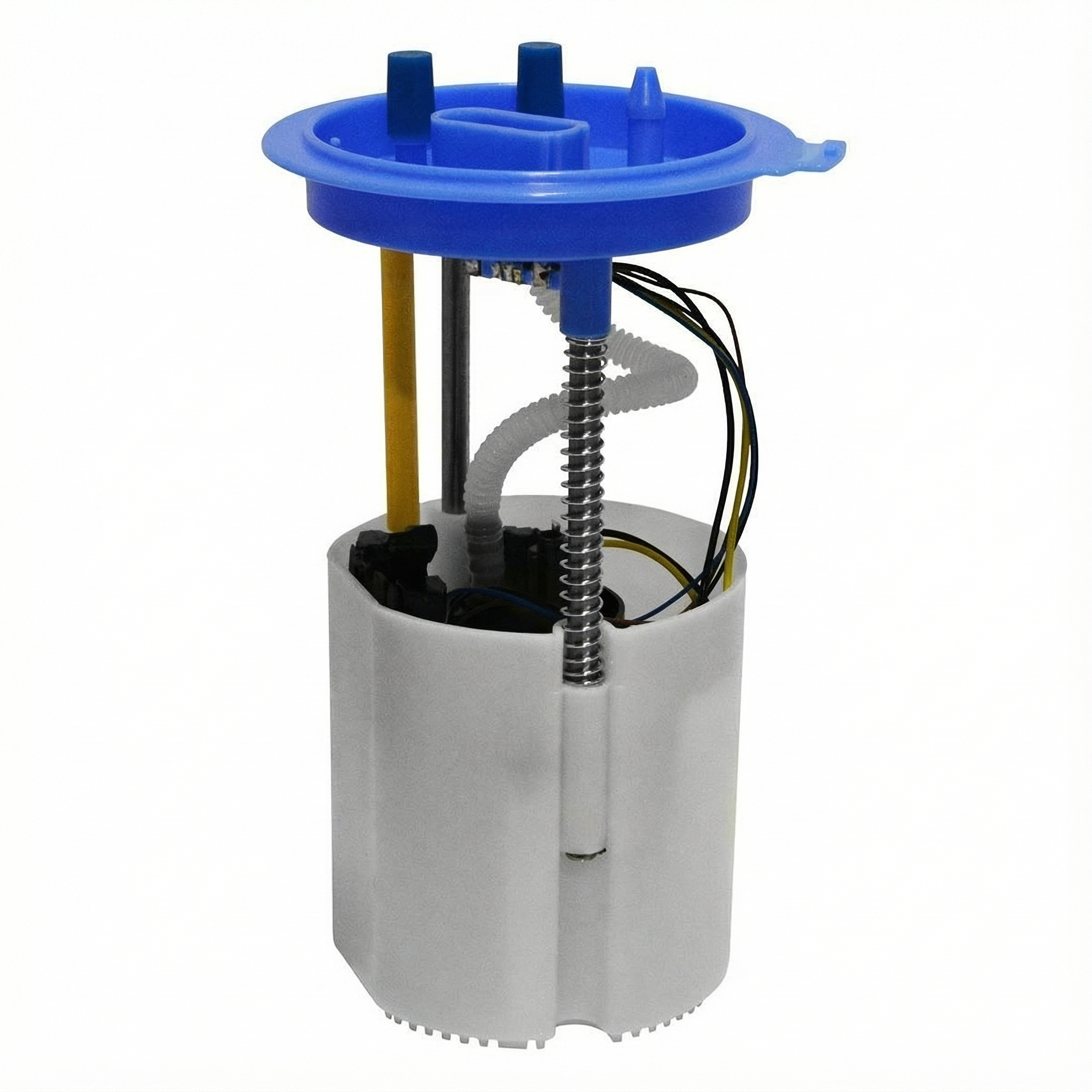
What fixed it: After the owner replaced the N80 valve, gas cap, fuel filter, and fuel pump, a shop eventually diagnosed the Leak Detection Pump (LDP) as 'leaking through the pins' and replaced it.
Source hint: golfmk6.com thread titled 'Endless P0455 Hunt'
Related OBD-II Codes
Frequently Asked Questions
Is the N80 purge valve hard to replace on my 2010-2014 Golf?
My Golf is hard to start right after getting gas and has a P0455 code. What does this mean?
Do I need to buy a whole new gas cap to fix this code?
How can I test if the N80 valve on my Mk6 Golf is bad?
I've replaced the gas cap and N80 valve on my Golf but still have a P0455. What's next?
Are there other VW or Audi models that share this exact P0455 issue?
Helpful Videos


Used OEM Parts in Stock
New Aftermarket Parts Available


The information in this article is provided for general reference and educational purposes only. Vehicle specifications, procedures, and part compatibility can vary by production date, trim level, and region. Always consult your vehicle's factory service manual and verify part numbers before purchasing or performing repairs. Safety-critical components such as airbags, seat belts, and braking systems should be installed by a qualified professional.
- Volkswagen Golf:
- 🧭 Diagnostic Flowchart
- 🎬 Helpful Videos
- 🛍️ Shop This Part
- What's Unique About the 2010-2014 Volkswagen Golf
- Symptoms You May Notice
- Most Likely Causes
- Rare But Worth Checking
- Diagnosis Steps
- Parts You'll Likely Need
- Related Codes That Often Appear With This One
- Platform-Specific Known Issues
- Mechanic-Grade Diagnostic Values
- Scan Tool Commands That Help
- Wiring & Ground Locations
- Real Owner Repair Stories
- "I Checked Everything" — The Actual Cause
- OEM Part Supersession History
- Model Year Variations Within This Range
- Real Owner Stories
- 2012 VW Golf — 152000 miles
- Volkswagen Golf Mk6
- Volkswagen Golf Mk6
- Related OBD-II Codes
- Frequently Asked Questions
- 🎟️ Get 5% Off