

P0456 on 2014-2019 Ford Fiesta: EVAP Small Leak Causes and Fixes
For a 2014-2019 Ford Fiesta, code P0456 is almost always caused by a faulty canister purge valve that is stuck slightly open. A dirty capless fuel filler neck is the second most likely cause. Replacing the purge valve assembly is a common DIY fix costing around $50-$100 for an OEM part. In some cases, a PCM software update is also required to fully resolve the issue.
- P0456 on your Fiesta is an emissions-related code for a very small leak and is not an immediate safety concern.
- Before buying any parts, inspect and clean the capless fuel filler neck using the funnel provided with your car.
- The most likely part you'll need to replace is the canister purge valve assembly (Motorcraft Part #D2BZ-9C047-F).
- You can test the purge valve yourself in minutes by removing it and trying to blow through it; if air passes, it has failed.
- If you also have a P0496 or P1450 code, the purge valve is almost certainly the problem.
What's Unique About the 2014-2019 Ford Fiesta
The Ford Fiesta of this era shares a common EVAP system design with other Ford models, making it prone to specific failures. The canister purge valve is a known weak point that frequently fails by sticking partially open, creating a constant small leak. Additionally, the 'Easy Fuel' capless system, while convenient, can cause this code if the sealing flap becomes contaminated with dirt, dust, or corrosion, preventing a proper seal after refueling.
Symptoms You May Notice
- Check Engine Light is on.
- Difficulty starting, long crank times, engine shuttering, or stalling immediately after refueling.
- Slight fuel smell near the rear of the car.
- Possible decrease in fuel economy.
- Rough or surging idle.
- Loss of vehicle performance at high speeds, as noted in NHTSA ODI #11197278.
- Replacing the fuel tank pressure (FTP) sensor. While an FTP sensor can fail, it is not a common cause for a P0456 leak code unless it is physically cracked or its seal is leaking.
- Immediately assuming a complex hose leak. Due to the high failure rate of the purge valve and the common issue with the capless filler neck, these two items should always be checked first before resorting to a smoke test.
Most Likely Causes
- Faulty Canister Purge Valve 🔴 High Probability → Shop Vapor Canister The purge valve on this platform is known to fail by sticking slightly open, creating a constant small vacuum leak that the PCM detects during its self-test. This is the most common cause for P0456, often accompanied by P0496 or P1450.
How to confirm: Remove the purge valve from the engine bay. With the electrical connector unplugged, try to blow through either port. The valve should be normally closed, so if any air passes through, it is faulty and must be replaced. A professional can also use a scan tool to command the valve and check its function.
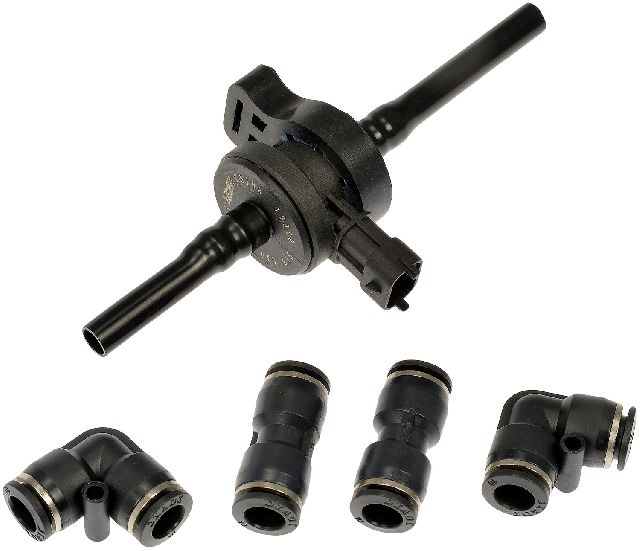
Typical fix: Replace the canister purge valve. It is sold as an assembly with the attached hard plastic hoses. While some owners cut the old valve out and splice in a new one with rubber fuel hose and clamps, replacing the entire assembly with the OEM part is recommended for reliability. 🎬 Watch: How to solve high purge flow and replace the valve.
Est. part cost: $50-$100 - Dirty or Debris in Capless Fuel Filler Neck 🟡 Medium Probability → Shop Fuel Filler Neck The 'Easy Fuel' system has a spring-loaded flap that seals the tank. Dirt, dust, or corrosion can prevent this flap from closing completely, creating a small leak.
How to confirm: Visually inspect the fuel filler opening for any debris. Use the white plastic funnel that came with the vehicle (usually stored with the spare tire) to cycle the flap open and closed 10-20 times to dislodge any debris.
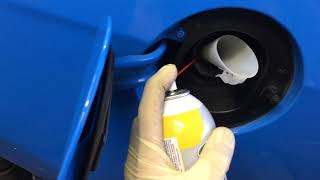
Typical fix: Clean the sealing surface of the fuel filler neck with a clean, lint-free cloth and a small amount of isopropyl alcohol or a silicone-based lubricant. Do not use harsh chemicals like brake cleaner. Blowing the area out with compressed air before cleaning can help prevent debris from falling into the tank. 🎬 See this guide on cleaning the Easy Fuel filler neck.
Est. part cost: $0 - Cracked or Disconnected EVAP Hoses ⚪ Low Probability The plastic and rubber hoses in the EVAP system can become brittle over time and develop small cracks, especially at connection points or where they are exposed to the elements under the car.
How to confirm: Visually inspect all accessible EVAP lines between the engine bay, charcoal canister (near the fuel tank), and the fuel tank itself. A professional smoke test is the most effective way to find a very small leak in a hose.
Typical fix: Replace the cracked section of hose. Small cracks can sometimes be temporarily sealed, but replacement is the correct long-term repair.
Est. part cost: $10-$50
Rare But Worth Checking
- Faulty EVAP Vent Solenoid/Valve: → Shop Vapor Canister Located near the charcoal canister by the fuel tank, this valve can also stick open or closed, causing a leak. One owner on a forum reported fixing their P0456 code by re-seating a loose vent solenoid that had likely been dislodged by road debris.
- Leaking Charcoal Canister: → Shop Vapor Canister The plastic housing of the charcoal canister itself can develop hairline cracks over time, leading to a small leak. This is usually found with a smoke test after all other common causes have been ruled out.
- Faulty Fuel Tank Pressure (FTP) Sensor: → Shop Fuel Tank While an FTP sensor can fail, it is not a common cause for a P0456 leak code unless it is physically cracked or its seal is leaking. It's more likely to cause other codes if it fails electronically.
Diagnosis Steps
- Read the code with an OBD-II scanner to confirm P0456 and check for any other related codes like P0496 or P1450.
- Inspect the capless fuel filler neck. Use compressed air to blow out any loose debris. Use the vehicle's emergency fuel funnel to cycle the flap 10-20 times. Clean the sealing surface with a cloth and isopropyl alcohol.
- Clear the codes and drive for a few days to see if the light returns. The EVAP monitor runs under specific conditions, so it may take time.
- If the code returns, locate the canister purge valve in the engine bay. It's connected via two hard plastic lines and a two-wire electrical connector.
- Disconnect the electrical plug and hoses from the purge valve. Attempt to blow through the valve. If any air passes through, the valve has failed internally and must be replaced. This is the most common failure.
- If the purge valve is good, visually inspect all visible EVAP hoses for obvious cracks, especially at fittings and bends. Pay attention to the lines near the charcoal canister under the rear of the car.
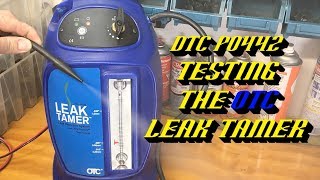
- If no visible fault is found, the next step is to have a professional mechanic perform a smoke test on the EVAP system. This will force smoke through the lines and reveal the location of any tiny, hard-to-see leaks. 🎬 Watch: How to perform a professional EVAP smoke test.
- Check for any available Powertrain Control Module (PCM) software updates. On some 2014 models in particular, a PCM update is required in conjunction with a new purge valve to fully resolve the issue.
Parts You'll Likely Need
- Canister Purge Valve / Vapor Canister Purge Solenoid (Assembly)
(OEM #D2BZ-9C047-F)— This is the most frequent cause of P0456 on the Fiesta. The internal seal fails, causing a permanent small leak. The OEM part comes as an assembly with the required hoses. This part number is for the 1.6L non-turbo engine and supersedes part number D2BZ-9C047-B.
Trusted brands: Motorcraft (OEM), Dorman, Standard Motor Products
OEM price range: $50-$100
Aftermarket price range: $30-$70
Related Codes That Often Appear With This One
- P0496 — This code means 'EVAP Flow During a Non-Purge Condition' and is a strong indicator that the canister purge valve is stuck open, which is the root cause of the P0456 leak.
- P1450 — This code for 'Unable to Bleed Up Fuel Tank Vacuum' is also very commonly caused by a stuck-open purge valve on Ford vehicles. NHTSA ODI #11405975 notes that these codes together can cause the car to stall while driving or fail to start after refueling.
Technical Service Bulletins (TSBs) & Recalls
- SSM 50306: Although for slightly newer models, this service message highlights that EVAP codes like P0456 can be triggered without a true component failure, advising a full diagnostic test before replacing parts.
- TSB 10-1-3: An older TSB for Ford Hybrids, but relevant as it addresses P0456 and P1450 codes, showing the long history of these issues in Ford EVAP systems.
Platform-Specific Known Issues
- On some models, particularly the 2014 Fiesta, replacing a faulty purge valve may also require a Powertrain Control Module (PCM) software update to fully resolve the issue and prevent the code from returning. A Ford dealership or a well-equipped independent shop can perform this update.
- While a recall (18S32) was issued for a similar purge valve issue on the Ford Focus that could cause fuel tank deformation, no such recall has been specifically issued for the Fiesta for this code.
- A Special Service Message (SSM 50306) was issued for various newer Ford models (2018+) noting that P0456 and other EVAP codes may be set without an actual hardware fault. Ford advises technicians to run specific scan tool tests before replacing the purge valve, as many returned valves were found to be fully functional.
Mechanic-Grade Diagnostic Values
- Fuel Tank Pressure (FTP) Sensor Voltage — expected: 2.4V - 2.8V with the system open to atmosphere (Key On, Engine Off, after a cold soak).. Failure: A voltage that drops below 2.4V immediately upon starting the engine can indicate a purge valve stuck open, drawing the tank into a vacuum.
- Canister Purge Valve Solenoid Resistance — expected: 14 - 30 Ohms. Failure: A reading outside this range, or an open circuit (infinite resistance), indicates a failed solenoid coil.
- Mode $06, Test ID $82, Component ID $0C — expected: This is the PCM's internal test for the 0.020" (small) leak. The returned value is a measure of pressure decay or flow. The value should be below a specific maximum threshold set by the manufacturer.. Failure: If the test value exceeds the maximum limit stored in the PCM, it indicates a leak was detected and the P0456 code is set.
Scan Tool Commands That Help
- Ford IDS / Forscan: EVAP System Leak Test — This is a comprehensive, automated test the scan tool runs. It commands the vent valve closed, then cycles the purge valve to create a vacuum, and monitors the FTP sensor for decay to check for leaks. It's the primary diagnostic function to verify system integrity after a repair or when diagnosing an unknown leak.
- Ford IDS / Forscan: Vapor Management Valve (VMV) / Canister Purge Valve (CPV) Command — This allows for manual, bidirectional control of the purge valve. A technician can command the valve off (closed) while the engine is running and monitor the FTP sensor. If vacuum still builds in the tank, it confirms the valve is mechanically stuck open, even if it's electrically commanded closed.
- Ford IDS / Forscan: EVAP Canister Vent Valve Command — This allows for manual control of the vent valve. To perform a smoke test or a manual vacuum test, the technician must command the vent valve closed to seal the system. If the system won't seal, it could indicate a faulty vent valve.
Wiring & Ground Locations
- Canister Purge Valve Connector — In the engine bay, attached to the purge valve assembly.. The connector has two pins. One is VPWR (Voltage Power), which is hot when the key is in Run/Start. The other is the control wire that the PCM pulses to ground to open the valve. Checking for power on the VPWR pin and for a signal on the control wire can diagnose electrical faults vs. a failed valve.
- G104 — A primary engine compartment ground point, typically located on the left-hand side near the strut tower or below the airbox.. A corroded or loose G104 ground can cause erratic behavior in multiple engine sensors and actuators controlled by the PCM, including the EVAP solenoids. While not a direct cause of a leak, it can cause control issues that may lead to incorrect codes or failed EVAP monitor tests.
Real Owner Repair Stories
- fiestast.org forum user (Ford Fiesta ST) — P0456 and P1450 codes.
❌ Tried (didn't work) Replacing the canister purge valve (this fixed P1450, but P0456 returned).
✅ What actually fixed it A smoke test revealed a hairline crack in the seam of the plastic charcoal canister itself. Replacing the charcoal canister resolved the P0456 code. - Reddit user, r/MechanicAdvice (2016 Ford Fiesta ST) — P0456 code.
❌ Tried (didn't work) Cleaning the capless fuel filler flap., Replacing the canister purge valve., Replacing the vent solenoid near the charcoal canister.
✅ What actually fixed it The internal spring-loaded door mechanism of the capless fuel filler neck assembly had failed and was not sealing, despite the outer flap appearing clean and functional. Replacing the entire fuel filler neck assembly was the final fix. - YouTube video by 'Bearded Ford Tech' (2014 Ford Fiesta) — P0456 code.
✅ What actually fixed it The issue required a two-part fix: replacing the faulty canister purge valve AND performing a PCM software update (reprogram). The TSB for this issue indicated that on some 2014 models, simply replacing the valve was not enough to resolve the code permanently. - NHTSA ODI #11661557 — An owner reported that P0456 has been a recurring issue, with the EVAP system requiring repair three separate times since 2019, including a purge valve replacement at approximately 47,000 miles.
"I Checked Everything" — The Actual Cause
- An intermittent electrical failure in the purge valve itself. The valve passed a physical leak test (blowing through it) and the system passed a smoke test when cold. However, under heat and electrical load, the valve's internal coil would intermittently fail, causing the PCM to log a fault during the EVAP monitor self-test. This was diagnosed by rapidly commanding the valve on and off with a scan tool while monitoring its electrical current draw, which showed an erratic pattern not visible during a simple resistance test.
OEM Part Supersession History
D2BZ-9C047-A / D2BZ-9C047-B→D2BZ-9C047-F— Likely an internal design change to the valve's seal to improve reliability and prevent sticking, which was the primary failure mode of the earlier parts.
Heads up: No known incompatibilities. The latest revision (-F) is the correct and recommended replacement for all previous versions.
Model Year Variations Within This Range
- 2014: A PCM software update is often required in conjunction with replacing the purge valve to fully resolve code P0456. Later model years had revised software from the factory that was less sensitive or better calibrated to the EVAP system's behavior.
- 2017-2019: Ford issued TSB 19-2323 for these model years, advising technicians to perform a specific 'EVAP Contamination and Leak Test' using the IDS scan tool before replacing the purge valve, as many were being replaced unnecessarily due to software sensitivity rather than a hard part failure.
Diagnostic Flowchart
Other Known Issues on This Vehicle
Issues unrelated to this code that are worth knowing about as an owner of this generation:
- DPS6 'PowerShift' Automatic Transmission Failure 🔴 High — Extremely common on 2011-2016 models. Symptoms include shuddering, hesitation, jerking, and eventual loss of drive. Often occurs under 50,000 miles. (Ref: Multiple lawsuits, settlements, and extended warranties (e.g., 14M01, 14M02). TSB 15-0043 addresses clutch shudder.)
- HVAC Blend Door Actuator Failure 🟡 Low — Very common across all model years. Owners report a repetitive clicking or ticking sound from the dashboard upon startup. The part is inexpensive, but dealer repair can be costly.
- Engine Overheating / Coolant Leaks 🟠 Medium — Common on 1.6L GTDI and some EcoBoost engines. Failures can stem from cracked cylinder heads (Recall 17S09), failing water pumps, or brittle plastic coolant reservoir lines and connectors. (Ref: Recall 17S09 for 1.6L GTDI engines for potential cylinder head cracks.)
- Engine Stalling 🟠 Medium — Reported on 2014-2019 models, often linked to a malfunctioning electronic throttle body (ETB) or outdated ECU software, causing the engine to cut out unexpectedly.
- Faulty Door Latches 🟡 Low — A recall was issued for some models due to door latches that may not secure properly, potentially allowing a door to open while driving. (Ref: Recall)
Used vs. New Parts: Buying Guide for This Vehicle
When a used part is the smart pick: Used parts are generally not recommended for the common failure items on this system. However, for larger, more durable components like the charcoal canister or fuel filler neck assembly, a used part from a low-mileage, non-crashed donor vehicle can be a cost-effective option if the new OEM part is prohibitively expensive.
Donor-vehicle mileage cap: roughly under 50000 miles for the part to have meaningful remaining life.
What to inspect on the donor part:
- For a charcoal canister, inspect the plastic body for any signs of physical damage, cracks, or stress marks, especially around seams and hose ports.
- For a fuel filler neck, operate the internal flap mechanism with the emergency funnel to ensure it moves smoothly and springs back shut with a positive seal.
- For any hoses, bend them to check for brittleness or surface cracking. They should still be pliable.
OEM-only on this vehicle (don't cheap out):
- Canister Purge Valve Assembly: Due to the high failure rate of the original design and subsequent revisions, only an OEM Motorcraft part with the latest part number should be used to ensure reliability. Some aftermarket versions have been reported to have poor-fitting connectors or use inferior internal components that fail quickly.
Aftermarket brands forum-validated for this vehicle:
- Standard Motor Products (SMP): Often considered a high-quality alternative to OEM for sensors and solenoids.
- Dorman (with caution): Dorman offers a 'cut-and-splice' version of the purge valve (e.g., 913-430) that avoids replacing the entire hose assembly. Reviews are mixed; some find it a convenient and effective repair, while others report fitment issues with the connectors.
Brands owners have reported issues with on this vehicle:
- Generic/unbranded parts: Forum users frequently report issues with the cheapest available online parts, citing premature failure, incorrect electrical specifications, and poor physical fitment.
Real Owner Stories
Aggregated from forums and TSBs cited above. Mileages and costs reflect what owners reported in those sources.
2017 Ford Fiesta
Symptoms: Trouble starting the vehicle specifically after refueling.
What fixed it: Replacing the canister purge valve.
Source hint: fiestastforum.com
2019 Ford Fiesta
Symptoms: Check engine light with codes P0456 and P0496 appearing together.
What fixed it: Replacing the purge valve that was stuck slightly open.
Source hint: reddit.com/r/MechanicAdvice
Ford Fiesta ST
Symptoms: P0456 code triggered by the EVAP system.
What fixed it: Cleaning the capless fuel filler neck.
Source hint: reddit.com/r/FiestaST
Ford Fiesta ST
Symptoms: Small EVAP leak detected (P0456).
What fixed it: Re-seating the vent solenoid located near the charcoal canister.
Source hint: reddit.com/r/FiestaST
2017 Ford Fiesta SE
Symptoms: Diagnostic process for P0456; cleaning the capless filler did not resolve the issue.
What fixed it: Replacing the purge valve.
Source hint: FixMyNix.com
2016 Ford Fiesta
Symptoms: Check engine light for P1450 and P0456 at 48,000 miles. The vehicle stalls after filling up with gas and loses performance at high speeds.
What fixed it: Diagnostic and repair of the EVAP system.
Source hint: NHTSA ODI #11197278
Documented NHTSA Reports
- NHTSA ODI #11405975 describes a common problem where the emission device controlling fuel tank fumes fails, leading to codes P1450 and P0456. This issue can cause the car to fail to start after refueling or even stall while driving.
- NHTSA ODI #11661557 reports a recurring P0456 fault in the EVAP system, noting that the system required repair three times over several years, including a component replacement at 47,084 miles.
Related OBD-II Codes
Frequently Asked Questions
Is there a recall for the P0456 purge valve issue on my Ford Fiesta?
My 2014 Fiesta has P0456; will just replacing the purge valve fix it?
Can I use the emergency fuel funnel to fix a P0456 code?
What does SSM 50306 say about my 2018+ Fiesta and this code?
Can I just replace the valve itself instead of the whole hose assembly?
Is the P0456 code related to the clicking sound in my dashboard?
Helpful Videos
Used OEM Parts in Stock
New Aftermarket Parts Available


The information in this article is provided for general reference and educational purposes only. Vehicle specifications, procedures, and part compatibility can vary by production date, trim level, and region. Always consult your vehicle's factory service manual and verify part numbers before purchasing or performing repairs. Safety-critical components such as airbags, seat belts, and braking systems should be installed by a qualified professional.
- Ford Fiesta:
- 🧭 Diagnostic Flowchart
- 🎬 Helpful Videos
- 🛍️ Shop This Part
- What's Unique About the 2014-2019 Ford Fiesta
- Symptoms You May Notice
- Most Likely Causes
- Rare But Worth Checking
- Diagnosis Steps
- Parts You'll Likely Need
- Related Codes That Often Appear With This One
- Technical Service Bulletins (TSBs) & Recalls
- Platform-Specific Known Issues
- Mechanic-Grade Diagnostic Values
- Scan Tool Commands That Help
- Wiring & Ground Locations
- Real Owner Repair Stories
- "I Checked Everything" — The Actual Cause
- OEM Part Supersession History
- Model Year Variations Within This Range
- Other Known Issues on This Vehicle
- Used vs. New Parts: Buying Guide for This Vehicle
- Real Owner Stories
- 2017 Ford Fiesta
- 2019 Ford Fiesta
- Ford Fiesta ST
- Ford Fiesta ST
- 2017 Ford Fiesta SE
- 2016 Ford Fiesta
- Documented NHTSA Reports
- Related OBD-II Codes
- Frequently Asked Questions
- 🎟️ Get 5% Off