

P0456 on 2022-2025 Genesis GV70: Causes and Fixes for a Small EVAP Leak
For a 2022-2025 Genesis GV70, the P0456 code is most often caused by a loose or faulty gas cap. Before buying any parts, tighten the cap until it clicks and drive for a few days. If the light returns, a new OEM gas cap is the next most likely fix, costing around $30-$50. If that doesn't resolve it, the canister purge valve is the next most common culprit.
- P0456 is a minor issue; your GV70 is safe to drive, but you need to fix it to pass emissions.
- Always start with the simplest fix: check that your gas cap is tight and the seal is intact.
- If the gas cap isn't the issue, the canister purge valve or canister close valve are the next most likely culprits.
- For hard-to-find leaks, a professional smoke test is the quickest and most accurate diagnostic method.
- When replacing parts like the gas cap or valves, using OEM components is recommended to ensure a proper seal and function.
What's Unique About the 2022-2025 Genesis GV70
The Genesis GV70 (chassis code JK1) is a modern vehicle built on Hyundai's rear-wheel-drive M3 platform, and widespread, systemic issues causing this specific code are not yet heavily documented in owner forums. However, as with most Hyundai and Genesis vehicles, the primary suspects for P0456 are common across many platforms: the gas cap and EVAP system valves. It's worth noting that many 2022-2023 GV70s were subject to a fuel pump recall (NHTSA Campaign Number: 23V-630, expanded under 022G); if the P0456 code appeared after this service was performed, an improperly reseated fuel tank pressure sensor or seal could be a possible, though less common, cause.
Symptoms You May Notice
- Check Engine Light is on (the most common and often only symptom).
- A faint fuel smell, particularly around the rear of the vehicle (more common with larger leaks, but possible).
- Difficulty starting or a rough idle immediately after refueling (can indicate a stuck-open purge valve).
- A whooshing sound when opening the fuel cap may be less pronounced or absent, indicating the system is not holding vacuum.
- Replacing the charcoal canister before ruling out simpler causes like the gas cap or valves. The canister is more expensive and less likely to be the root cause unless there are other symptoms like difficulty refueling.
Most Likely Causes
- Loose or Faulty Gas Cap 🔴 High Probability → Shop Fuel Tank Cap This is the most common cause for a P0456 code on virtually all modern vehicles, including the GV70. The rubber seal on the cap can wear out, get dirty, or the cap may simply not have been tightened enough after refueling.
How to confirm: Ensure the gas cap is tightened until it clicks at least once. Inspect the rubber O-ring on the cap for cracks, dirt, or signs of wear. Clear the code and see if it returns after a few days of driving. A dirty filler neck can also 🎬 See this video for two simple, low-cost DIY repair methods. prevent a good seal.
Typical fix: Tighten or replace the gas cap. It is highly recommended to use an OEM (Original Equipment Manufacturer) part, as some aftermarket caps are known to have sealing issues.
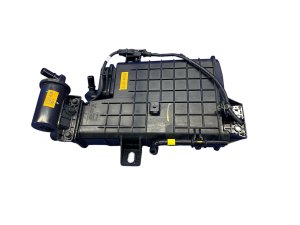
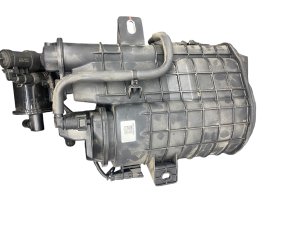
Est. part cost: $30-$50 - Faulty Canister Purge Valve (Purge Control Solenoid Valve) 🟡 Medium Probability → Shop Vapor Canister This valve controls the flow of fuel vapors from the charcoal canister to the engine. It's a common failure point on many Hyundai/Kia/Genesis products that can get stuck open or closed, causing a leak in the system.
How to confirm: The valve is normally closed. With the valve removed from the vehicle, you should not be able to blow air through it. A mechanic can also command it open and closed with a scan tool to test its function and monitor the fuel tank pressure sensor for a response.
Typical fix: Replace the canister purge valve.
Est. part cost: $55-$80 - Faulty Canister Close Valve (Vent Valve) 🟡 Medium Probability → Shop Vapor Canister This valve is located near the charcoal canister under the car, by the fuel tank. It's normally open and closes to allow the system to be pressure-tested. If it fails to seal properly during the test, it will cause a leak code.
How to confirm: This valve can be tested with a scan tool or by applying 12V power to see if it actuates correctly. A smoke test is the most definitive way to confirm if it's leaking when it should be closed.
Typical fix: Replace the canister close valve.
Est. part cost: $65-$100 - Cracked or Disconnected EVAP Hose ⚪ Low Probability The rubber and plastic hoses in the EVAP system can become brittle over time and develop small cracks, though this is less likely on a newer vehicle like the 2022-2025 GV70. Hoses near the engine are most susceptible to heat and vibration.
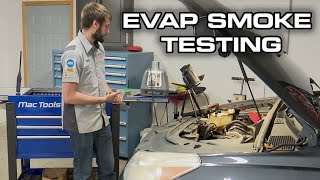
How to confirm: A visual inspection may reveal obvious cracks or disconnected lines. However, very small leaks are best found using a smoke test, which forces visible smoke through the EVAP system to reveal the exact location 🎬 Watch: How to perform a smoke test to find leaks. of the leak.
Typical fix: Replace the cracked section of hose or reconnect it securely.
Est. part cost: $10-$40
Rare But Worth Checking
- Cracked Charcoal Canister: → Shop Vapor Canister The charcoal canister itself can develop a hairline crack, causing a leak. This is often a result of physical damage or from consistently over-filling the fuel tank ('topping off'), which can saturate the canister with liquid fuel, damaging the charcoal media and the canister housing.
- Leaking Fuel Tank Pressure Sensor Seal: → Shop Fuel Tank The Fuel Tank Pressure sensor measures the vacuum/pressure in the system. If its seal is compromised, it can create a small leak. This is a possibility if the code appeared shortly after a fuel pump replacement or recall service (NHTSA 23V-630).
- Hairline crack in the fuel filler neck: → Shop Fuel Filler Neck Repeatedly forcing a fuel nozzle into the filler neck can, over many years, cause tiny cracks that create a small EVAP leak. This is less common on a new vehicle but has been noted on other platforms.
Diagnosis Steps
- Check the Gas Cap: This is the simplest and most common fix. Remove the gas cap, inspect the seal for damage, and reinstall it, making sure it clicks securely. Clear the code with a scanner and wait a few drive cycles to see if the light returns.
- Visual Inspection: Examine the accessible EVAP hoses in the engine bay and around the fuel tank area for any obvious cracks, disconnections, or damage. Pay close attention to connections at the purge valve and charcoal canister.
- Test the Purge Valve: Locate the purge valve in the engine bay. With the engine off, disconnect the electrical connector and hoses. Try to blow through it; if air passes, the valve is stuck open and needs to be replaced.
- Perform a Smoke Test: If the previous steps do not reveal the issue, the most effective next step is a smoke test. This involves injecting pressurized, UV-dyed smoke into the EVAP system's service port. Smoke will escape from the location of the leak, making it easy to identify, even if it's a tiny crack in a hose, canister, or valve seal.
- Professional Diagnosis: If you don't have access to a smoke machine, a qualified mechanic can perform the test and pinpoint the leak for you. A dealership can also use a GDS (Global Diagnostic System) tool to actuate valves and monitor system pressure directly.
Parts You'll Likely Need
- Gas Cap
(OEM #31010-L1000)— This is the most frequent cause of a P0456 code due to a worn seal or improper tightening.
Trusted brands: Hyundai/Genesis Genuine
OEM price range: $30-$50
Aftermarket price range: $15-$30 - Canister Purge Valve / Purge Control Solenoid
(OEM #28910-2S000)— A common failure point that gets stuck, causing a leak in the EVAP system. This part is shared across many Hyundai/Kia/Genesis models.
Trusted brands: Hyundai/Genesis Genuine
OEM price range: $55-$80
Aftermarket price range: $30-$60 - Canister Close Valve / Vent Valve
(OEM #31453-T6A00)— This valve, located near the fuel tank, can fail to seal properly during the system's self-test, triggering a leak code. The original Pass 1 part number was incorrect.
Trusted brands: Hyundai/Genesis Genuine
OEM price range: $65-$100
Aftermarket price range: $40-$70
Related Codes That Often Appear With This One
- P0455 — Indicates a large EVAP leak. If both codes are present, it may point to a component that has failed completely, like a very loose gas cap or a disconnected hose.
- P0441 — Indicates incorrect purge flow, often caused by a faulty canister purge valve that is stuck open or closed, which is also a primary cause for P0456.
- P0457 — This code specifically indicates a leak caused by a loose or missing fuel cap. It's a more specific version of the general leak codes.
Technical Service Bulletins (TSBs) & Recalls
- 23-DS-004G — Addresses a rear differential whining noise on GV70, G80, and GV80 models. Not related to P0456 but a major known issue for the platform.
Platform-Specific Known Issues
- Recall 23V-630 (expanded by 022G): Affects 2022-2023 GV70s for a faulty low-pressure fuel pump that could fail and cause a loss of drive power. While not an EVAP issue, any service on the fuel tank for this recall could potentially disturb EVAP components.
- Forum discussion on Reddit's r/kiastinger shows a user with a 2021 Stinger GT1 (a platform mate) battling a persistent P0456 code after a purge valve replacement, highlighting that the issue can sometimes be more complex than a single part. URL: https://www.reddit.com/r/kiastinger/comments/18l4l9s/check_engine_light_on_for_4th_time/
Mechanic-Grade Diagnostic Values
- Canister Close Valve (CCV) Coil Resistance — expected: 23.0 ~ 26.0 Ω at 20°C (68°F). Failure: A reading outside this range suggests a faulty coil in the valve.
- Canister Purge Control Solenoid Valve (PCSV) Coil Resistance — expected: 15 to 30 Ω. Failure: A reading significantly outside this range, or an open/short circuit, indicates a failed solenoid coil.
- Fuel Tank Pressure (FTP) Sensor Live Data — expected: Stable pressure/vacuum reading when system is sealed.. Failure: During a scan tool-commanded test with both purge and vent valves closed, if the pressure/vacuum reading decays rapidly, it confirms a leak. If the sensor reading is erratic or does not change when it should, the sensor itself may be faulty.
Hidden / Shadow Codes Worth Checking
- N/A - Logic/Software Update: On some Hyundai models, a P0456 code with no identifiable physical leak can be caused by overly sensitive ECM logic. A dealership can check for and apply a software update to correct this. A TSB for the Sonata (20-01-005H) specifically addresses a P0456 DTC improvement via software update. (see via A Hyundai/Genesis dealership using the GDS (Global Diagnostic System) can check for applicable service campaigns or TSBs related to ECM software for your vehicle's VIN.)
Scan Tool Commands That Help
- Hyundai GDS (Global Diagnostic System) or advanced bidirectional scanner: EVAP Leakage Test / EVAP System Test — This is a technician-level function used to verify a fix or to pinpoint a leak without a smoke machine. The tool commands the vent valve closed and the purge valve open to create a vacuum, then seals the system and monitors the FTP sensor for decay. It's the most efficient way to confirm if a valve is sealing correctly or if a leak exists.
- Advanced bidirectional scanner: Purge Valve Control (On/Off or Duty Cycle %) — Used to manually activate the purge valve while the engine is running. A technician can command the valve open and listen for a change in engine idle or watch short-term fuel trims. If commanding it on causes no change, the valve may be stuck closed or clogged.
- Advanced bidirectional scanner: Vent Valve / Canister Close Valve (CCV) Control (On/Off) — Used to manually close the normally-open vent valve. This is a critical step before performing a smoke test to ensure the system is sealed. It can also be used to confirm the valve is not stuck.
Model Year Variations Within This Range
- 2022-2023: These model years were included in NHTSA recall 23V-630 for a low-pressure fuel pump impeller that could deform and cause a loss of power. While not an EVAP part, service for this recall involves accessing the fuel tank unit, which includes the Fuel Tank Pressure sensor. An improperly installed seal during this repair could be a direct cause of a P0456 code.
Diagnostic Flowchart
Other Known Issues on This Vehicle
Issues unrelated to this code that are worth knowing about as an owner of this generation:
- Rear Differential Whine/Failure 🔴 High — Widespread issue on 2022-2024 models with both 2.5T and 3.5T engines, sometimes occurring at low mileage (<20,000 miles). (Ref: TSB 23-DS-004G outlines a procedure to retorque the pinion nut or, if that fails, replace the entire differential assembly.)
- Faulty Low-Pressure Fuel Pump 🔴 High → Shop Fuel Pump — Common enough to trigger a large-scale recall for 2022-2023 models, can lead to engine stalling and loss of power. (Ref: NHTSA Campaign: 23V-630 (later expanded by recall 022G))
- Exploding/Cracking Panoramic Sunroof 🟠 Medium — Numerous owner reports on forums like Reddit and in NHTSA complaints of the panoramic sunroof shattering spontaneously, often while stationary. Not officially recalled, but a known issue across many Hyundai/Genesis models.
- Exploding Seatbelt Pretensioners 🔴 High — A smaller recall, but a significant safety issue where pretensioners can deploy abnormally in a crash, launching metal fragments. (Ref: NHTSA Campaign: 21V-796000)
- Electrical and Infotainment Glitches 🟡 Low — Reports of infotainment screens going blank or rebooting, dead 12V batteries, and other software-related bugs are common across the Genesis lineup. (Ref: Multiple software updates and minor recalls (e.g., NHTSA 26V-031 for instrument panel failure) have been issued.)
- Phantom Emergency Braking 🟠 Medium — Some owners report intermittent and unexpected activation of the forward collision avoidance system, causing sudden braking with no obstacle present.
Used vs. New Parts: Buying Guide for This Vehicle
When a used part is the smart pick: For this vehicle, used parts like the charcoal canister, purge valve, or vent valve can be a cost-effective option, provided they come from a low-mileage, accident-free donor vehicle. These components are generally durable unless physically damaged or saturated with fuel.
Donor-vehicle mileage cap: roughly under 50000 miles for the part to have meaningful remaining life.
What to inspect on the donor part:
- For a charcoal canister, inspect for any cracks, broken hose nipples, or signs of being saturated with liquid fuel (unusually heavy).
- For valves (purge or vent), check that the electrical connector pins are clean and not corroded. Ensure there are no visible cracks in the plastic housing.
- Verify the part number from the donor vehicle matches the required part for your GV70, as there can be variations between engine types.
OEM-only on this vehicle (don't cheap out):
- Gas Cap: Owner forums for Hyundai/Genesis vehicles consistently report that aftermarket gas caps fail to seal properly and do not resolve P0456 codes. Always buy a genuine OEM gas cap.
Brands owners have reported issues with on this vehicle:
- Generic/unbranded gas caps from online marketplaces are frequently cited as problematic.
Real Owner Stories
Aggregated from forums and TSBs cited above. Mileages and costs reflect what owners reported in those sources.
2021 Kia Stinger GT1 3.3T
Symptoms: Check engine light on for the 4th time; persistent P0456 code despite previous repair attempts.
What fixed it: The issue remained persistent even after a purge valve replacement, illustrating that the leak can be more complex than a single component failure.
Source hint: r/kiastinger - Check engine light on for 4th time. URL: https://www.reddit.com/r/kiastinger/comments/18l4l9s/check_engine_light_on_for_4th_time/
Related OBD-II Codes
Frequently Asked Questions
Could the recent fuel pump recall on my 2022-2023 GV70 be related to the P0456 code?
Is there a specific TSB for the GV70 that I should check if I have a check engine light?
Should I use an aftermarket gas cap to fix the P0456 leak on my GV70?
How can I tell if the purge valve is the cause of the P0456 on my Genesis?
Does the GV70 share EVAP components with other vehicles that have this issue?
Helpful Videos
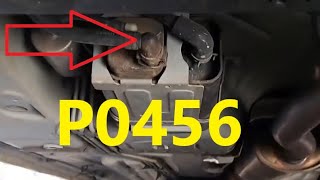
![How to Fix HYUNDAI P0456 Engine Code in 3 Minutes [2 DIY Methods / Only $4.44]](https://img.youtube.com/vi/C3a7D0_xwUs/mqdefault.jpg)
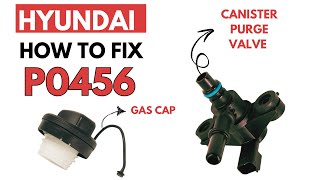
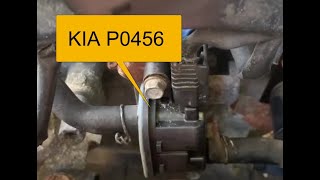
We Have This Part in Stock
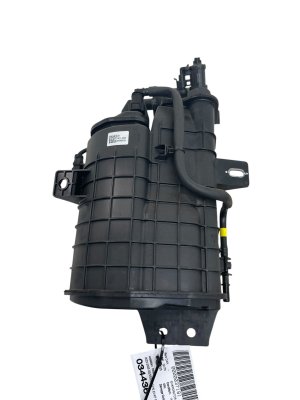
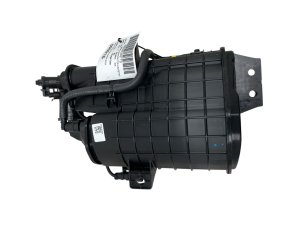
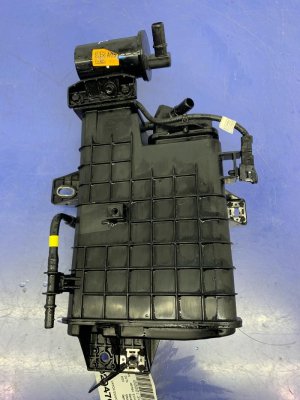

The information in this article is provided for general reference and educational purposes only. Vehicle specifications, procedures, and part compatibility can vary by production date, trim level, and region. Always consult your vehicle's factory service manual and verify part numbers before purchasing or performing repairs. Safety-critical components such as airbags, seat belts, and braking systems should be installed by a qualified professional.
- Genesis GV70:
- 🧭 Diagnostic Flowchart
- 🎬 Helpful Videos
- 🛍️ Shop This Part
- What's Unique About the 2022-2025 Genesis GV70
- Symptoms You May Notice
- Most Likely Causes
- Rare But Worth Checking
- Diagnosis Steps
- Parts You'll Likely Need
- Related Codes That Often Appear With This One
- Technical Service Bulletins (TSBs) & Recalls
- Platform-Specific Known Issues
- Mechanic-Grade Diagnostic Values
- Hidden / Shadow Codes Worth Checking
- Scan Tool Commands That Help
- Model Year Variations Within This Range
- Other Known Issues on This Vehicle
- Used vs. New Parts: Buying Guide for This Vehicle
- Real Owner Stories
- 2021 Kia Stinger GT1 3.3T
- Related OBD-II Codes
- Frequently Asked Questions
- 🎟️ Get 5% Off