

P0456 on 2017-2022 Honda CR-V: EVAP Small Leak Causes and Fixes
On a 2017-2022 Honda CR-V, the P0456 code most often points to a problem with the capless fuel filler neck not sealing correctly. Before buying parts, ensure the flap in the filler neck is clean and closes properly. If that's not the issue, the next most likely culprit is a faulty canister purge valve. A smoke test is the most definitive way to find the leak.
- First, check and clean the capless fuel filler neck. This is the most common and cheapest fix for a P0456 on this CR-V.
- The code indicates a very small, non-critical leak. The vehicle is safe to drive.
- If cleaning the fuel filler doesn't work, the canister purge valve is the next most likely part to fail.
- For leaks that are difficult to find, a professional smoke test is the most effective diagnostic method.
What's Unique About the 2017-2022 Honda CR-V

The 2017-2022 Honda CR-V uses a capless fuel filler system. Unlike traditional cars where a loose or faulty gas cap is the number one cause for a P0456 code, on this CR-V the issue often lies with the spring-loaded flap in the fuel filler neck. Debris, corrosion, or wear can prevent it from sealing properly, creating the small leak that the system detects. Owners should always check this first before moving on to more complex components like valves and canisters.
Symptoms You May Notice
- Check Engine Light is on
- A faint smell of fuel, particularly when parked in an enclosed space like a garage
- Slightly rough idle on startup (less common)
- Difficulty starting after refueling (rare)
- Replacing the charcoal canister when the leak is actually a small, inexpensive hose.
- Replacing the purge valve without first checking the capless fuel filler neck for debris.
- Assuming the car has a traditional gas cap and looking for one to tighten.
Most Likely Causes

- Capless Fuel Filler Flap Not Sealing 🔴 High Probability The capless system's spring-loaded door can accumulate dirt, fuel residue, or corrosion on the sealing surface, preventing a perfect seal required by the EVAP system. The internal seal can also wear out over time.
How to confirm: Visually inspect the fuel filler neck for any debris, dirt, or damage to the seal around the flap. Ensure it moves freely and springs back to a closed position. A common owner trick is to apply a very thin layer of petroleum jelly to the seal to see if it temporarily resolves the code, confirming a seal issue. 🎬 Watch: How to diagnose P0456 on this specific CR-V model.
Typical fix: Clean the flap and its sealing surface with a clean cloth and a small amount of solvent. If the seal is damaged or the flap mechanism is broken, the entire fuel filler neck assembly needs to be replaced.
Est. part cost: $150-$250 for a new filler neck assembly - Faulty Canister Purge Valve 🟡 Medium Probability → Shop Vapor Canister This solenoid valve is constantly working while the engine runs and can get stuck partially open over time, creating a small leak path. It's a common failure item across many Honda models.
How to confirm: With the engine off, remove the purge valve (located in the engine bay). It should be normally closed. Try to blow through it; if air passes, it's faulty. A mechanic can also command it open and closed with a scan tool to test its function.
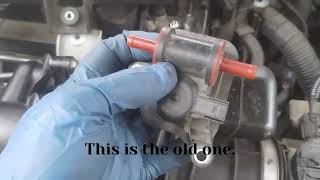
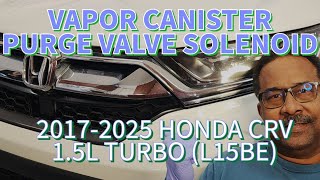
Typical fix: Replace the canister purge valve. It is typically mounted on or near the engine's intake manifold and is relatively easy to access. 🎬 See this walkthrough for replacing the 1.5L purge valve solenoid.
Est. part cost: $40-$90 - Cracked or Disconnected EVAP Hose 🟡 Medium Probability
How to confirm: Visually inspect all accessible EVAP system hoses between the engine bay, the fuel tank, and the charcoal canister for cracks, brittleness, or loose connections. The best way to find a very small leak is with a professional smoke test, which forces vaporized smoke into the EVAP system to see where it escapes.
Typical fix: Replace the damaged section of hose and secure it with clamps.
Est. part cost: $10-$30 for hoses and clamps - Faulty EVAP Charcoal Canister ⚪ Low Probability → Shop Vapor Canister The plastic housing of the canister can develop hairline cracks over time due to age and exposure to the elements under the vehicle. The integrated vent valve can also fail.
How to confirm: This is most effectively found with a smoke test. Smoke will be seen seeping from a crack in the canister body or from the vent valve area.
Typical fix: Replace the entire charcoal canister assembly, which is located near the fuel tank.
Est. part cost: $250-$400
Rare But Worth Checking
- Faulty Canister Vent Valve/Solenoid: → Shop Vapor Canister This valve is normally open and closes to allow the system to be tested. If it fails to close completely, it can cause a leak. On many modern Hondas, this valve is integrated with the charcoal canister and not sold separately.
- Leaking Fuel Tank Gasket: → Shop Fuel Tank The gasket that seals the fuel pump assembly to the top of the fuel tank can degrade and cause a small leak, though this is uncommon. This would typically be found with a smoke test and often presents with a strong fuel smell inside the cabin after filling up.
- Faulty Fuel Tank Pressure (FTP) Sensor: → Shop Fuel Tank A faulty FTP sensor can send incorrect readings to the ECU, causing it to believe there is a leak when there isn't one. This is rare and would usually be accompanied by other codes.
Diagnosis Steps

- Read the code with an OBD-II scanner to confirm P0456 is the only code present.
- Inspect the capless fuel filler neck. Open the fuel door and check the inner flap for dirt, debris, or corrosion. Clean it thoroughly with a rag and solvent. Ensure the flap moves freely and seals tightly.
- Clear the code with the scanner. Drive for a few days to see if the light returns. The EVAP monitor runs under specific conditions (e.g., fuel level between 15-85%, stable ambient temperature), so it may take several trips.
- If the light returns, visually inspect the EVAP hoses in the engine bay, especially around the purge valve, for any obvious cracks or loose connections.
- Locate the canister purge valve in the engine bay. Test it by removing it and attempting to blow through it (it should be closed and not allow air to pass).
- If the previous steps do not reveal the issue, the most reliable next step is to have a professional smoke test performed. This will pressurize the system with visible smoke, pinpointing the exact location of the small leak, whether it's a hose, the canister, the filler neck seal, or another component. 🎬 Watch: How to use a smoke machine to find leaks.
Parts You'll Likely Need

- Canister Purge Valve
(OEM #36162-R1A-A01)— This is a common failure point that can get stuck partially open, causing a small leak. It's a relatively inexpensive and accessible part to replace. Part number 36162-R1A-A01 is listed for many Honda models in this era, but always verify with VIN.
Trusted brands: Genuine Honda, Dorman, Standard Motor Products
OEM price range: $60-$100
Aftermarket price range: $40-$90 - Fuel Filler Neck
(OEM #17660-TLA-A01)— The seal on the capless filler neck is the most common cause of P0456 on this vehicle. If cleaning doesn't work, replacement is necessary. Part number 17660-TLA-A01 is cited for earlier models in this generation; always verify by VIN.
Trusted brands: Genuine Honda
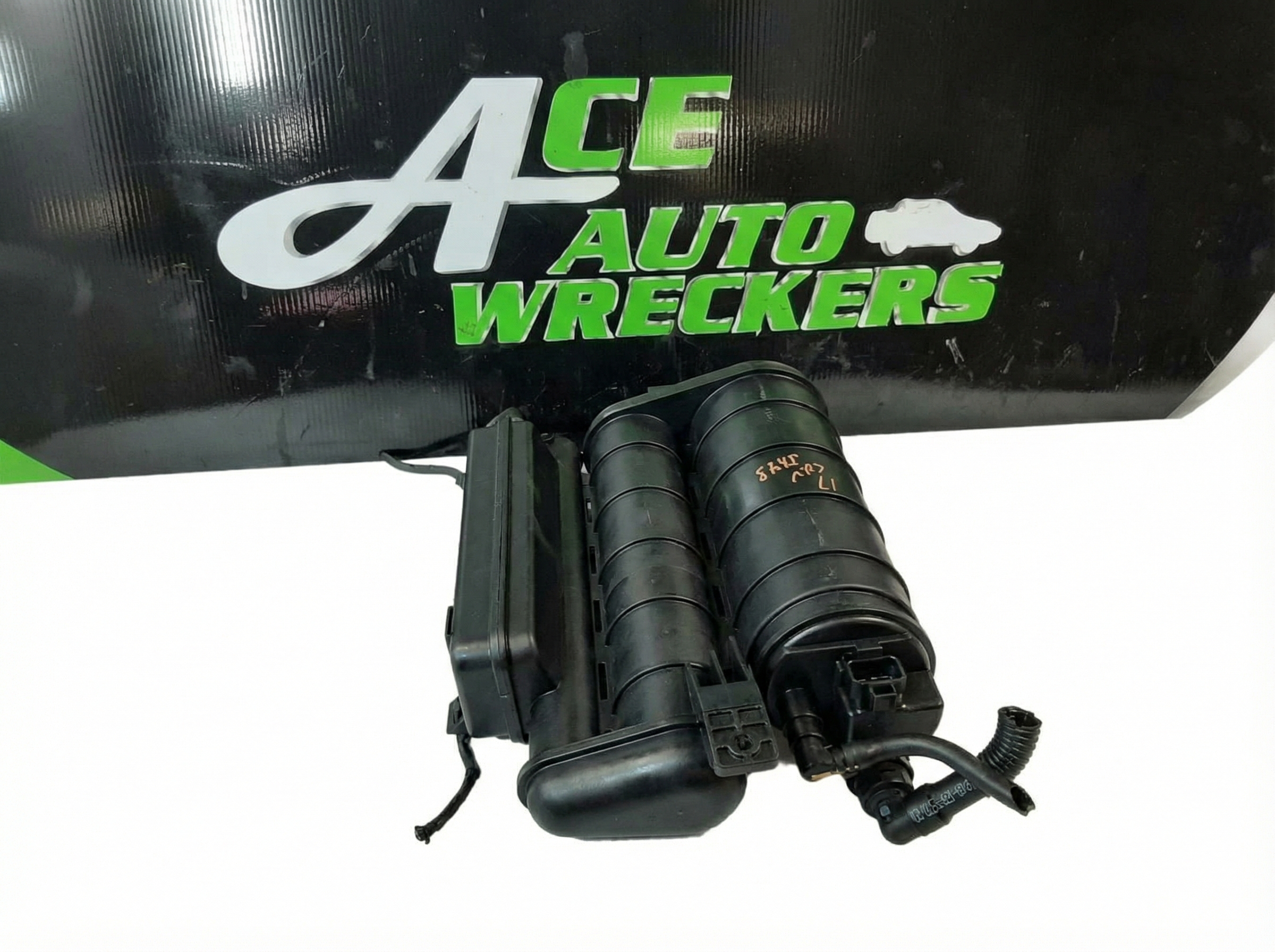
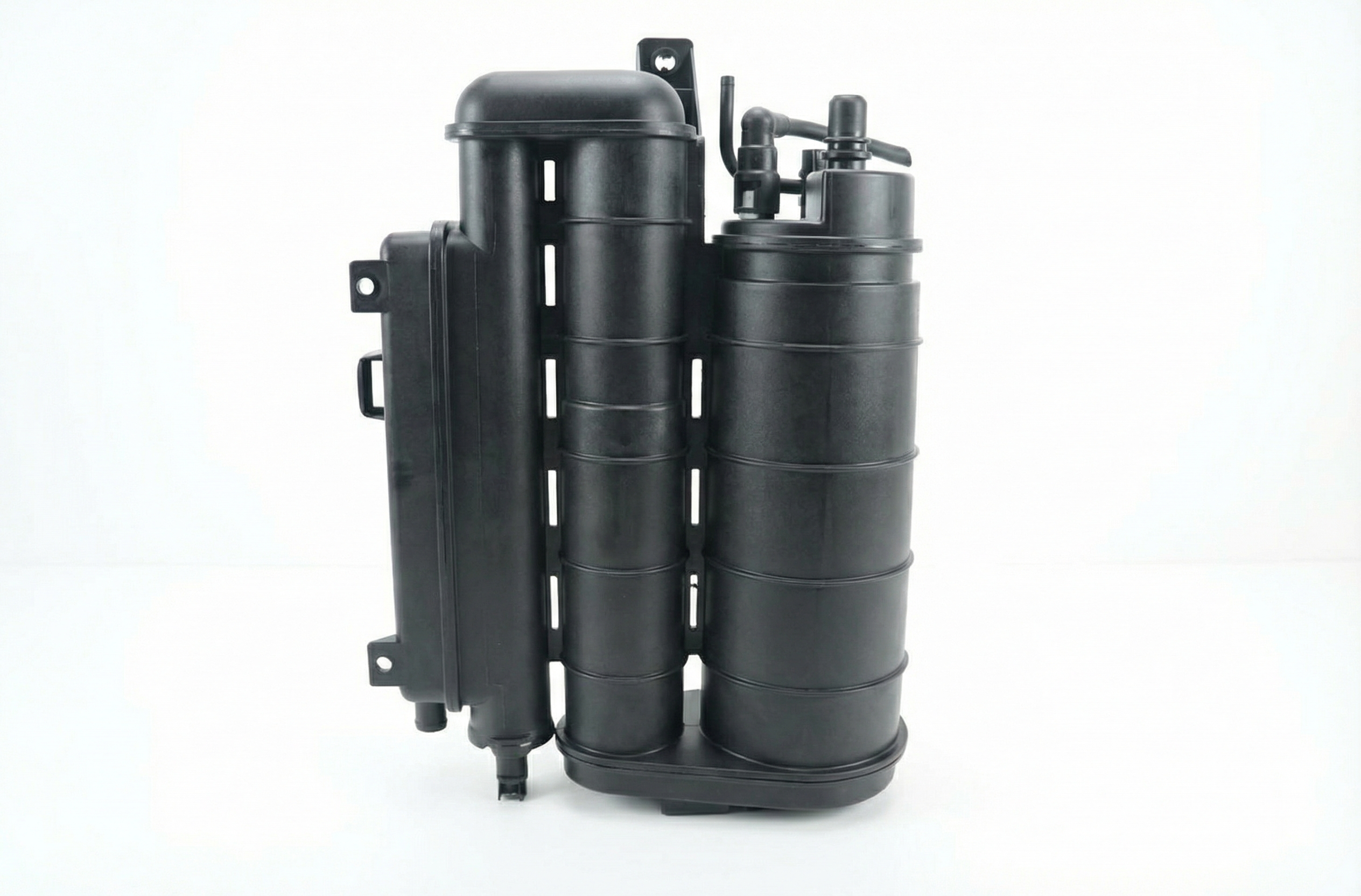
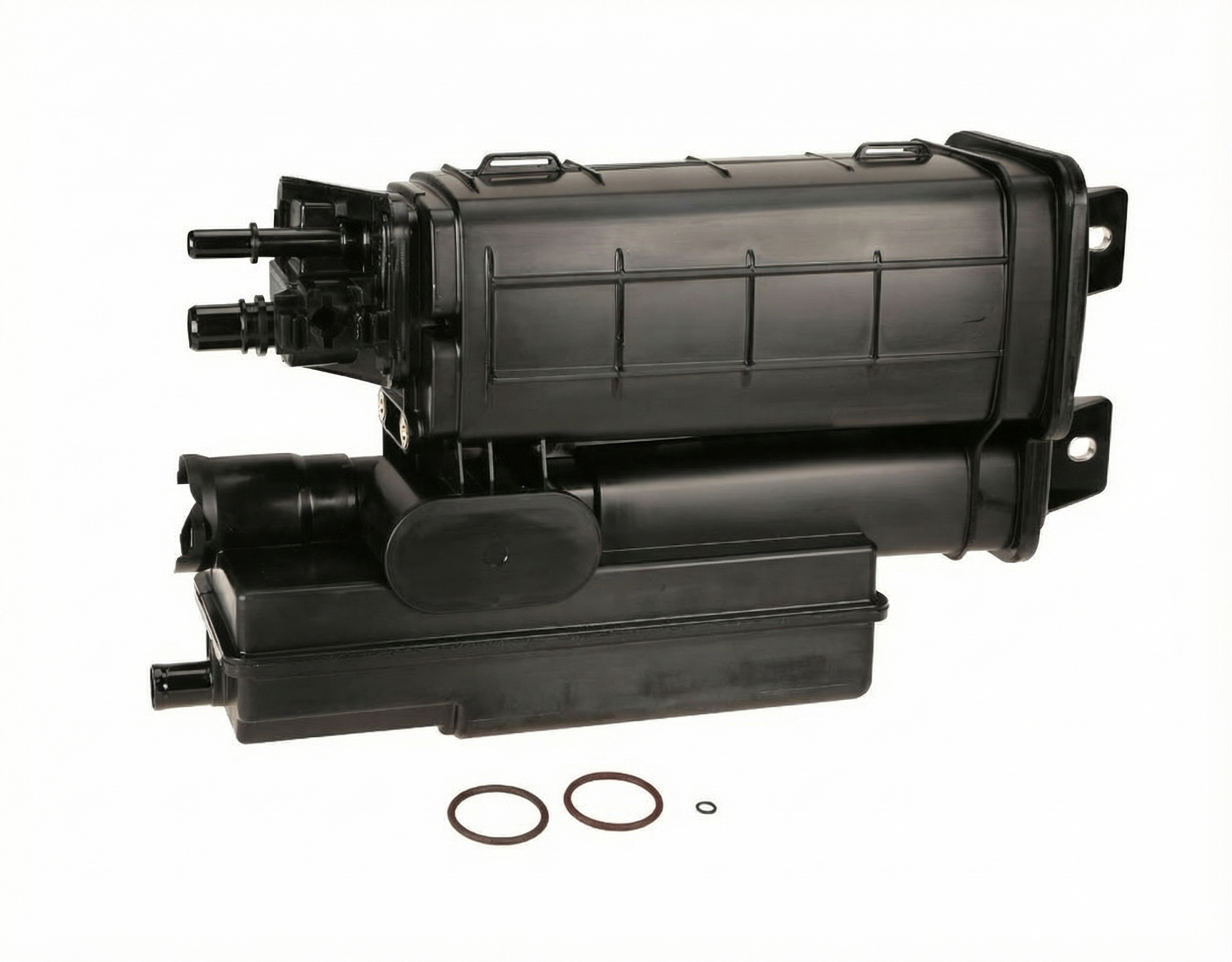
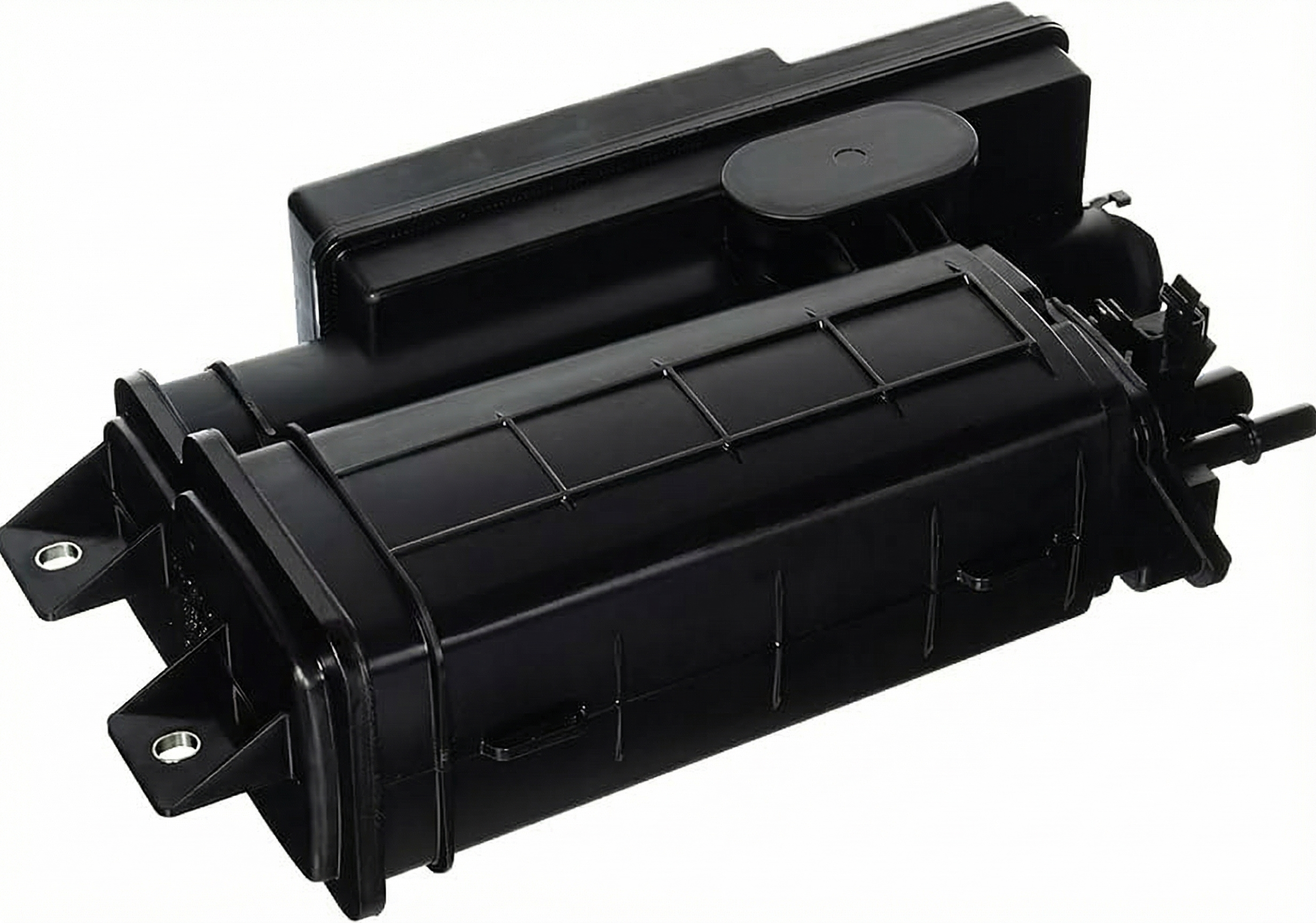
OEM price range: $170-$250 - EVAP Charcoal Canister
(OEM #17011-TLA-A01)— Less common, but the canister can develop hairline cracks causing a persistent small leak that is hard to find without a smoke test. The part number 17011-TLA-A01 is cited for 2017-2019 models. Another possible part number is 17011-TLC-A01 for LX trims with the 2.4L engine.
Trusted brands: Genuine Honda
OEM price range: $250-$400
Related Codes That Often Appear With This One
- P0455 — Indicates a large EVAP leak. If a component fails catastrophically, you might see this instead of, or along with, P0456.
- P0441 — Indicates incorrect purge flow, which can be caused by a faulty purge valve, pointing to the same component as a potential cause for P0456.
Technical Service Bulletins (TSBs) & Recalls
- While no specific TSB for P0456 on the 2017-2022 CR-V was found during the search, a Nissan TSB (NTB17-082E) for P0456 is notable. It points to a failed O-ring on the vent control valve, which is a common failure point on many vehicles and a useful diagnostic path to consider if a smoke test points to the canister area.
- Manufacturer service bulletins ATS170206 (for Pilot and Ridgeline models) advise that if an EVAP leak (P0455 or P0456) is detected from the filler neck, technicians should replace the mis-fuel inhibit device and the main flap unit rather than the entire fuel fill pipe.
- American Honda Motor Co. has issued bulletins ATI&09102021908 and ATI&11032021902 regarding customer complaints of fuel smell and MIL illumination with DTC P0456 stored, specifically seeking to inspect and collect data to better understand the cause of this condition.
Platform-Specific Known Issues
- Capless Fuel Filler Neck Debris: → Shop Fuel Filler Neck A recurring theme in owner forums is finding small amounts of dirt, debris, or corrosion right on the seal of the capless fuel filler flap. A Reddit user on r/crv specifically noted cleaning 'crud' from a drain hole near the filler neck area before their code cleared, highlighting the sensitivity of this area. Thoroughly cleaning this area with a cloth and ensuring the flap seats perfectly is the number one diagnostic step for any owner.
Mechanic-Grade Diagnostic Values
- EVAP Canister Purge Valve Solenoid Resistance — expected: 22 to 27 ohms at room temperature. Failure: A reading outside this range indicates an internal failure of the valve.
- EVAP Canister Vent Valve Solenoid Resistance — expected: 20 to 30 ohms. Failure: A reading outside this range suggests the solenoid winding is damaged.
- EVAP System Vacuum Test (Purge Valve) — expected: System should hold a vacuum of ~6 in. Hg (15 mmHg) for at least one minute.. Failure: If the vacuum does not hold, it suggests the purge valve is faulty and leaking.
Hidden / Shadow Codes Worth Checking
- Mode 6, Test ID: $B4: This specific test ID within OBD-II Mode 6 data corresponds to the 'very small leak detected' portion of the EVAP monitor. Technicians can use this to see the raw test results from the PCM. (see via A generic OBD-II scanner with Mode 6 capability. A value of zero for this test ID may indicate the test has not successfully run, even if the overall monitor shows 'complete'.)
Scan Tool Commands That Help
- Honda Diagnostic System (HDS): EVAP Test > EVAP Leak Check Module Test — This is the factory-level function to initiate a self-test of the EVAP system after a repair or to check for intermittent issues.
- Honda Diagnostic System (HDS): INSPECTION MENU > EVAP CVS OFF — This command forces the canister vent shut (CVS) valve closed, which is necessary to seal the system before performing a vacuum or smoke test from the engine bay.
- Bidirectional Scan Tool (e.g., Autel): Purge Solenoid On/Off Command — Used to test the function of the purge valve. With the valve removed, it should be closed (no flow) by default. Commanding it 'on' should open it, allowing air/smoke to pass through, confirming electrical and mechanical function.
Wiring & Ground Locations
- EVAP Canister Connector — On the EVAP canister, located near the fuel tank, under the vehicle.. This is an 8-pin connector on some models that powers the canister vent valve and potentially an integrated pressure sensor. Corrosion or damage to this connector (part number reference 6189-1240) can cause various EVAP codes.
- Canister Purge Valve Connector — On the canister purge valve, located in the engine bay, typically on or near the intake manifold.. This 2-wire connector provides power to the purge valve solenoid. A poor connection can prevent the valve from operating correctly, leading to flow or leak codes. Aftermarket pigtail connectors are available (e.g., Standard Motor Products S2850) for repairs.
Real Owner Repair Stories
- YouTube user comment on 'How to Fix a P0455/P0456 EVAP Leak' video (Vehicle not specified, but relevant to general P0456 diagnosis) — Persistent P0456 code
❌ Tried (didn't work) Smoke test (results pointed to charcoal canister), Replaced gas cap, Replaced vent valve, Replaced purge valve
✅ What actually fixed it The actual cause was not found by the shop; the owner suspected the fuel tank pressure sensor was the only remaining part that hadn't been replaced. - YouTube video 'Honda P0456 Minor Evap Leak Code Diagnostic and Fix' (2005 Honda Odyssey (similar EVAP principles)) — P0456 code
❌ Tried (didn't work) Smoke test showed no leaks from purge valve, canister, vent valve, or gas cap.
✅ What actually fixed it The fuel pump lock ring on top of the gas tank was loose. Tightening the lock ring and replacing the gasket resolved the issue. The leak was so small and in a location that the smoke test did not reveal it under normal test conditions. - NHTSA ODI #11442825 — An owner reported a power train system EVAP leak where the EVAP was stuck open, resulting in codes P0455 and P0456.
"I Checked Everything" — The Actual Cause
- In one documented case on a similar Honda platform, a P0456 code persisted even after a smoke test showed no leaks from any common EVAP components. The root cause was discovered to be a loose fuel pump lock ring on top of the gas tank, which was not sealing properly. This type of leak can be missed if the smoke test isn't performed while also observing the top of the fuel tank area, which often requires interior disassembly.
OEM Part Supersession History
17310-TA0-A01, 17310-SNA-A01→17310-TBA-A01— Part consolidation and design updates over time.
Heads up: These part numbers are related to the vent valve assembly, not the purge valve. While listed under 'canister purge valve' by some vendors, it's crucial to distinguish between the purge valve in the engine bay and the vent valve on the canister.
Model Year Variations Within This Range
- 2017-2019 (LX Trim): The LX trim used a 2.4L naturally aspirated engine, while all other trims (EX, EX-L, Touring) used a 1.5L turbocharged engine. EVAP components like the purge valve and their locations may differ slightly between these two powertrains.
- 2020-2022: For the 2020 model year facelift, Honda dropped the 2.4L engine, making the 1.5L Turbo standard on all gasoline models. A CR-V Hybrid model was also introduced, which has a different 2.0L engine and its own unique EVAP system components and layout.
Diagnostic Flowchart
Real Owner Stories
Aggregated from forums and TSBs cited above. Mileages and costs reflect what owners reported in those sources.
2017 Honda CR-V Tour 1.5L Turbo — 659 miles
Symptoms: Check engine light came on for a P0456 small EVAP leak shortly after purchasing the vehicle brand new.
What fixed it: A smoke check detected the fuel door inhibitor was leaking; the dealership replaced it under warranty.
Source hint: CarComplaints.com
2017 Honda CR-V
Symptoms: Car started doing a rough idle and the check engine light came on with code P0456.
What fixed it: A shop performed a smoke test and found no EVAP leaks, but discovered a hole in the intake hose and a rip on the engine, which they repaired.
Source hint: Reddit r/MechanicAdvice
2018 Honda CR-V
Symptoms: Triggered a P0456 code and suspected debris in the fuel filler area.
What fixed it: Cleaned 'crud' from a drain hole near the capless fuel filler neck area, which allowed the code to clear.
Source hint: Reddit r/crv
2017 Honda CR-V
Symptoms: Check engine light illuminated with a P0456 code.
What fixed it: Performed a step-by-step DIY smoke test to identify exactly which hoses were leaking and where the smoke exited the EVAP system.
Source hint: honda-tech.com
Related OBD-II Codes
Frequently Asked Questions
Is there a specific TSB for the P0456 code on my 2017-2022 Honda CR-V?
Why is the capless fuel filler a common cause for P0456 on my CR-V?
How can I test if the capless fuel filler is causing the P0456 code?
Can a P0456 code cause my 1.5T CR-V to idle roughly?
Are other Honda models prone to this same P0456 issue?
How do I test the canister purge valve on my CR-V?
Helpful Videos

Used OEM Parts in Stock
New Aftermarket Parts Available


The information in this article is provided for general reference and educational purposes only. Vehicle specifications, procedures, and part compatibility can vary by production date, trim level, and region. Always consult your vehicle's factory service manual and verify part numbers before purchasing or performing repairs. Safety-critical components such as airbags, seat belts, and braking systems should be installed by a qualified professional.
- Honda CR-V:
- 🧭 Diagnostic Flowchart
- 🎬 Helpful Videos
- 🛍️ Shop This Part
- What's Unique About the 2017-2022 Honda CR-V
- Symptoms You May Notice
- Most Likely Causes
- Rare But Worth Checking
- Diagnosis Steps
- Parts You'll Likely Need
- Related Codes That Often Appear With This One
- Technical Service Bulletins (TSBs) & Recalls
- Platform-Specific Known Issues
- Mechanic-Grade Diagnostic Values
- Hidden / Shadow Codes Worth Checking
- Scan Tool Commands That Help
- Wiring & Ground Locations
- Real Owner Repair Stories
- "I Checked Everything" — The Actual Cause
- OEM Part Supersession History
- Model Year Variations Within This Range
- Real Owner Stories
- 2017 Honda CR-V Tour 1.5L Turbo — 659 miles
- 2017 Honda CR-V
- 2018 Honda CR-V
- 2017 Honda CR-V
- Related OBD-II Codes
- Frequently Asked Questions
- 🎟️ Get 5% Off