

P0456 on 2007-2013 Honda Fit: Causes and Fixes for a Small EVAP Leak
For a 2007-2013 Honda Fit, a P0456 code is most often caused by a loose or faulty gas cap. Before buying any parts, ensure the cap is tightened until it clicks 4-5 times and the seal is clean and intact. If the light returns, a new OEM gas cap is a low-cost, high-probability first step. If that doesn't solve it, the next most likely culprits are the canister purge valve in the engine bay or the canister vent valve near the fuel tank.
- P0456 on a 2007-2013 Honda Fit indicates a very small leak in the emissions system.
- The most likely cause by far is a loose, worn, or incorrect gas cap. Always check this first.
- The vehicle is safe to drive, but the issue should be addressed to pass emissions testing and reduce pollution.
- If a new gas cap doesn't solve the issue, the next most likely culprits are the canister purge valve or a cracked EVAP hose.
- For hard-to-find leaks, a professional smoke test is the most reliable diagnostic method.
What's Unique About the 2007-2013 Honda Fit
On the 2007-2013 Honda Fit, the EVAP system is relatively straightforward compared to some newer vehicles. The most common cause for a P0456 is overwhelmingly a simple gas cap issue. Unlike later models with capless systems, the traditional gas cap on the Fit is the primary seal for the system and the first place to look. Owners on forums like FitFreak.net frequently report that simply re-tightening the cap (4-5 clicks) or replacing a worn one resolves the code. Some owners note that a specific "Check Fuel Cap" message may appear for a large leak, but the P0456 CEL is more common for the small leak itself.
Generation note: This range covers the first generation (GD, 2007-2008) and second generation (GE, 2009-2013) Honda Fit. The fundamental causes for a P0456 code are the same across both generations, as they use similar EVAP system designs with a traditional gas cap. Part numbers for components like the gas cap and purge valve may differ between the GD and GE generations.
Symptoms You May Notice
- Check Engine Light is on
- A faint fuel smell, especially when parked in a garage (less common)
- Some models may display a "Check Fuel Cap" message on the dash, though this is often associated with a larger leak (P0455).
- In some instances, an owner reported the MIL coming on with P0456 alongside transmission-related issues like lurching at low speeds (NHTSA ODI #11132314).
- Replacing the charcoal canister when the issue is just a loose gas cap.
- Replacing the purge valve without first checking for cracked hoses or a bad gas cap seal.
- Using a cheap aftermarket gas cap which fails to seal properly, leading the owner to suspect other, more expensive components.
Most Likely Causes
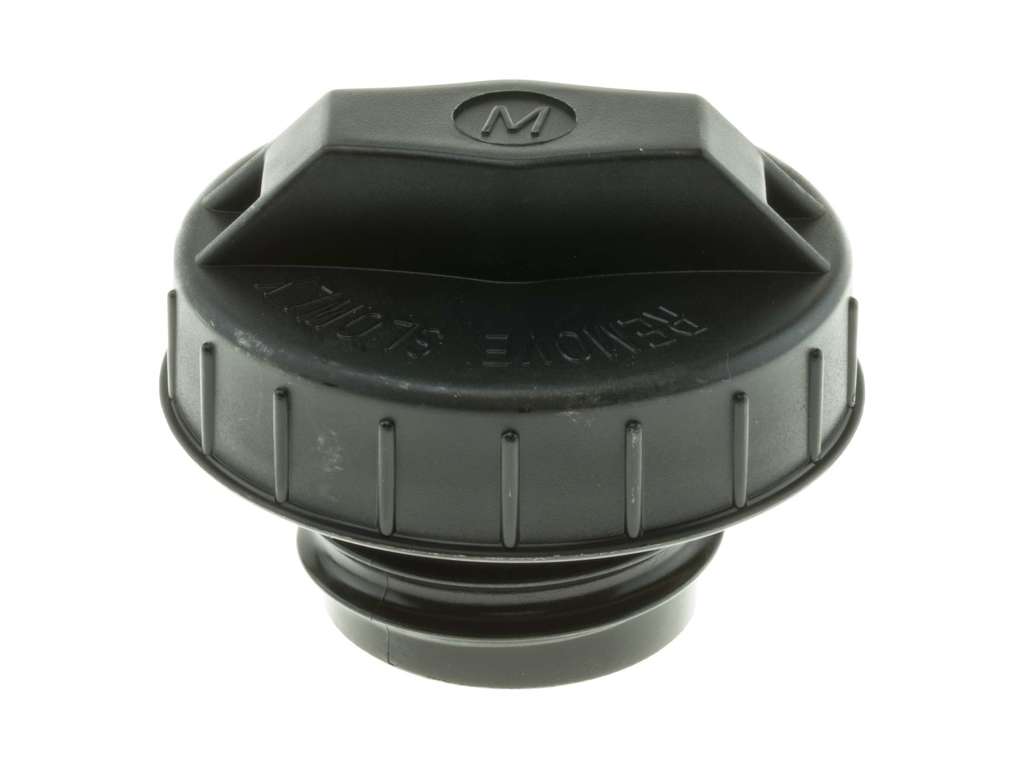
- Loose or Faulty Gas Cap 🔴 High Probability → Shop Fuel Tank Cap The gas cap is the most frequently handled part of the EVAP system and its seal can wear out, get dirty, or simply not be tightened correctly after refueling. The tether can also get caught under the seal, preventing it from seating properly.
How to confirm: Ensure the gas cap is tightened until it clicks multiple times (4-5 clicks is recommended). Inspect the rubber seal on the cap for cracks, stiffness, or debris. Check that the tether is not caught under the cap. An OEM replacement is recommended as some aftermarket caps are known to cause issues.
Typical fix: Tighten the cap, clear the code, and drive for a few days to see if it returns. If it does, replace the gas cap with a new OEM part. 🎬 Watch: A step-by-step guide to fixing the P0456 code.
Est. part cost: $25-$45 - Faulty EVAP Canister Purge Valve 🟡 Medium Probability → Shop Vapor Canister This solenoid valve is located in the engine bay and is exposed to heat and constant use, which can cause it to fail over time, either by sticking open or closed. It's a common failure point on many Honda models.
How to confirm: With the engine off, the valve should be closed. You can remove the valve and try to blow through it; if air passes, it's stuck open and needs replacement. A scan tool can also be used to command the valve open and closed to check its function. Visually inspect the connected hoses for cracks.
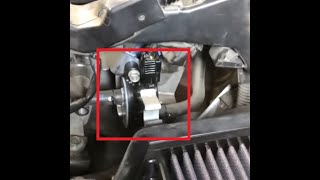
Typical fix: Replace the canister purge valve assembly. It is typically located in the engine bay and is relatively easy to access. 🎬 See this video to locate the EVAP and emissions components.
Est. part cost: $50-$100 - Faulty EVAP Canister Vent Shut Valve 🟡 Medium Probability → Shop Vapor Canister This valve is located near the charcoal canister under the car, typically near the driver's side rear wheel. It can get stuck open or closed due to dirt, debris, or electronic failure, causing a leak or preventing the system from testing itself properly.
How to confirm: The valve can be removed and tested by applying 12V power to see if the solenoid actuates. If it's stuck closed, it may trigger a P2422 code, but if it's stuck partially open or fails to seal, it can cause a P0456. A visual inspection for cracks or damage is also recommended.
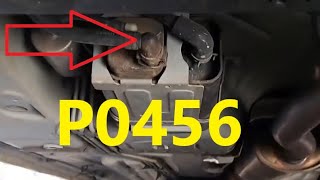
Typical fix: Replace the canister vent shut valve. This requires safely raising the vehicle 🎬 Watch: How to diagnose and fix the vent solenoid. to access the component underneath.
Est. part cost: $60-$120 - Cracked or Disconnected EVAP Hoses ⚪ Low Probability Rubber and plastic hoses become brittle over time due to heat and age, leading to small cracks. This can be exacerbated by rodents chewing on lines.
How to confirm: Perform a thorough visual inspection of all EVAP hoses running from the engine bay to the charcoal canister near the fuel tank. Look for visible cracks, loose connections, or signs of rodent damage. A professional smoke test is the most effective way to find a hard-to-see leak.
Typical fix: Replace the damaged section of hose or the entire hose assembly.
Est. part cost: $10-$50
Rare But Worth Checking
- Cracked Charcoal Canister: → Shop Vapor Canister The plastic housing of the canister itself can develop small cracks from age or impact from road debris, causing a leak. The canister is located underneath the car, near the driver's side rear wheel area.
- Leaking Fuel Filler Neck: → Shop Fuel Filler Neck Rust or corrosion on the fuel filler neck where the gas cap seals can cause a small leak. This is more common in areas with heavy road salt usage. A visual inspection and cleaning of the filler neck sealing surface with a mild abrasive pad is a key diagnostic step.
- Rodent Damage: A Fit owner on a forum discovered a mouse had chewed a tiny hole in a vapor tube on top of the gas tank, causing P0455 and P0456 codes. This required a smoke test to locate.
- Leaking Fuel Tank or Fuel Pump Gasket: → Shop Fuel Pump While rare, the seal for the fuel pump assembly on top of the gas tank can fail, creating an EVAP leak. This would likely require a smoke test to diagnose and involves dropping the fuel tank or removing the rear seats for access.
Technical Service Bulletins (TSBs) & Recalls
- Bulletin #Service Bulletin (dated 2014-02-18): This bulletin addresses instances where the MIL comes on and DTC P0455 and/or DTC P0456 is set. It notes that the fuel fill cap may be loose or exhibit a "stick-slip" feeling when being tightened, preventing a proper seal.
Diagnosis Steps
- Read the code with an OBD-II scanner to confirm P0456 is present.
- Inspect the gas cap. Remove it, check the seal for damage, and ensure the tether isn't in the way. Reinstall it and tighten until it clicks at least 4-5 times.
- Clear the code with the scanner. Drive the vehicle for a few days. The EVAP monitor runs under specific conditions (e.g., fuel level between 15-85%, specific ambient temperatures), so it may take time for the light to come back if the problem isn't fixed.
- If the code returns, replace the gas cap with a new OEM part as a low-cost, high-probability fix. Avoid aftermarket caps.
- If the problem persists, perform a visual inspection of the EVAP system. Start in the engine bay and locate the purge valve. Check its connecting hoses for cracks or loose fittings.
- Trace the EVAP lines back towards the rear of the vehicle. Inspect the charcoal canister (usually located near the fuel tank, under the driver's side) and its associated hoses and the vent valve for any visible damage or cracks.
- Test the purge valve in the engine bay. With the engine off, remove the valve and try to blow through it. Air should not pass. If it does, the valve is stuck open and must be replaced.
- If no visual faults are found, the most effective next step is a professional smoke test. A machine injects low-pressure, UV-dyed smoke into the EVAP system, and any leaks will be revealed by escaping smoke, which can be seen with a UV light.
Parts You'll Likely Need
- Fuel Filler Cap
(OEM #17670-SLN-A01 (for 2007-2008), 17670-SNA-A02 (for 2009-2011, superseded by 17670-T3W-A01))— This is the most common failure point for a P0456 code on this vehicle due to wear, damage, or improper tightening.
Trusted brands: Honda (OEM)
OEM price range: $25-$45
Aftermarket price range: $15-$25 - Canister Purge Valve
(OEM #36162-RB0-005 (for 2009-2013))— A common failure item that can stick open, creating a small leak that the system detects.
Trusted brands: Honda (OEM), Denso, Standard Motor Products (CVS89)
OEM price range: $70-$185
Aftermarket price range: $40-$80 - Canister Vent Shut Valve / Solenoid
(OEM #17312-SLN-A01)— Located under the car near the charcoal canister, this valve can fail to seal properly, causing a small leak.
Trusted brands: Honda (OEM), Dorman
OEM price range: $80-$120
Aftermarket price range: $50-$90
Related Codes That Often Appear With This One
- P0455 — P0455 indicates a large EVAP leak. If a component like a purge valve fails significantly or a hose becomes completely disconnected, the system may log both a small and large leak code as it tries to diagnose the fault.
- P0442 — P0442 indicates a medium-sized leak. Similar to P0455, it can appear with P0456 if the leak size is on the borderline between the two thresholds.
- P2422 — This code indicates the EVAP Canister Vent Valve is stuck closed. A malfunction in this valve can sometimes lead to other EVAP codes like P0456 as the system fails its pressure tests.
Platform-Specific Known Issues
- Real-world rodent damage: A user on FitFreak.net with the username 'greg' posted on 04-15-2017 about chasing P0455 and P0456 codes. After replacing the gas cap and testing the purge and vent valves, a smoke test revealed a tiny hole chewed by a mouse in a vapor tube on top of the gas tank, which was the ultimate cause of the leak.
- Forum consensus on gas cap: → Shop Fuel Tank Cap A thread on FitFreak.net from June 2016 regarding a P0456 code has multiple users confirming that the first step is always to check, clean, and properly tighten the gas cap (4-5 clicks). One user points out that the specific "Check Gas Cap" dash message is often for a large leak, while the CEL with P0456 is for a small, often more subtle, cap sealing issue.
- Vent Valve Replacement DIY: A detailed DIY guide on FitFreak.net for replacing the EVAP canister (which includes the vent valve) for a P2422 code (Vent Valve Stuck Closed) shows the location of the components under the driver's side of the car. This is highly relevant as a failing vent valve can also cause P0456. The author notes the job took about an hour.
Mechanic-Grade Diagnostic Values
- EVAP Purge or Vent Valve Solenoid Resistance — expected: Typically 15 to 40 Ohms. A reading of 34-35 Ohms was reported for a similar Honda model.. Failure: An open circuit (infinite resistance) or a short (near zero resistance). A value far outside the expected range indicates a faulty coil.
- EVAP Vent Valve Solenoid Voltage Test — expected: With the key in the ON position, one of the two wires at the connector should have 12V. The other wire is a ground controlled by the ECU.. Failure: No voltage indicates a wiring or fuse issue upstream. The solenoid should click when 12V and ground are applied directly to its pins.
- Mode $06, Test ID $B4 — expected: A passing value after the EVAP monitor runs.. Failure: A value of zero can indicate this portion of the EVAP monitor has not run yet. A failing value points to a confirmed very small leak.
Hidden / Shadow Codes Worth Checking
- P0456 (Permanent DTC): A Permanent Diagnostic Trouble Code (PDTC) is stored in non-volatile memory and will not clear with a standard scanner or by disconnecting the battery. The vehicle must successfully run and pass its own internal EVAP monitor test to clear the code automatically. (see via This code is often visible with a generic OBD-II scanner but may not appear on the Honda HDS factory scan tool. It can cause a smog check failure even if the Check Engine Light is off.)
Scan Tool Commands That Help
- Honda HDS (Honda Diagnostic System): EVAP Test Function — Use this utility to force the EVAP monitor to run and verify a repair. This is significantly faster than performing the specific, multi-hour drive cycle required to run the monitor naturally and clear a Permanent DTC.
- Advanced Bidirectional Scan Tool (e.g., Autel): EVAP Vent Valve On/Off Command — Use this command during a smoke test to seal the EVAP system. Command the vent valve closed (off) to check for leaks from the gas cap back. If smoke exits the vent valve area with the valve commanded closed, the valve itself is faulty.
Wiring & Ground Locations
- G101 — On the engine wiring harness.. Provides a ground path for various engine sensors; a poor connection could potentially affect sensor readings related to the EVAP system.
- G301 — Behind the left side of the front bumper (for 2009 Fit).. A key chassis ground point. While not directly tied to a specific EVAP component, poor grounding can cause a wide range of electrical issues.
- G401 — Under the left side of the dashboard.. A primary interior ground point. A fault here could affect the PCM or other interior modules that control or monitor the EVAP system.
- Engine to Body Ground Strap — Located under the battery tray, connecting a motor mount to the chassis on the 2008 Fit.. This is the main ground for the entire engine assembly. Corrosion or a loose connection here can cause numerous, hard-to-diagnose electrical problems.
Real Owner Repair Stories
- FitFreak.net forum user (Honda Fit (year not specified, but within range)) — P0455 and P0456 codes present.
❌ Tried (didn't work) Initial visual inspection did not reveal the cause.
✅ What actually fixed it A smoke test revealed the leak source. A mouse had chewed a very small (1/16") hole in the fuel tank vapor recirculation tube located on top of the gas tank. The user patched the hole to fix the leak. - NHTSA ODI #11132314: An owner reported that their vehicle was found to have two codes: P0456 for an EVAP system small leak and P0847 for a transmission fluid pressure switch issue.
"I Checked Everything" — The Actual Cause
- In one documented case on a Honda, a P0456 code was present but a smoke test revealed no leaks in the hoses, canister, or valves. The technician then removed the rear seats to access the fuel pump assembly and found the leak was from a faulty fuel pump lock ring seal on top of the tank.
- For some vehicles, a persistent P0456 with no physical leak found during a smoke test can be caused by a software glitch in the Powertrain Control Module (PCM). The fix in this scenario is a flash update performed by a dealership to correct the sensitive leak detection logic.
OEM Part Supersession History
17670-SNA-A02→17670-T3W-A01— Updated part design for better sealing or material durability.
Heads up: Using cheap aftermarket gas caps is a very common cause for a P0456 code to appear or persist after a repair attempt. The seal material and thread molding are often incorrect, preventing a proper seal. Always use an OEM part.
Model Year Variations Within This Range
- 2007-2008 (GD) vs 2009-2013 (GE): Specific OEM part numbers for the gas cap and EVAP purge valve are different between the first and second generations. While the system's function is identical, the physical parts are not always interchangeable. Always verify the part number with the vehicle's VIN.
Diagnostic Flowchart
Other Known Issues on This Vehicle
Issues unrelated to this code that are worth knowing about as an owner of this generation:
- Water Leaks (Cowl/Hatch/Doors) 🟠 Medium — Common across both generations, especially after windshield replacement or as seam sealer ages. Water often enters through cracked seam sealer in the roof channels or a poorly sealed cowl, leading to wet front floorboards.
- Lost Motion Spring Failure (GE) 🔴 High — Affects 2009-2010 models primarily. A broken spring can cause engine noise, damage, or stalling. (Ref: Honda Safety Recall 11-010)
- Master Power Window Switch Failure (GD) 🔴 High — Affects 2007-2008 models. Water can enter the driver's door switch, causing it to overheat, melt, and create a fire risk. (Ref: NHTSA Campaign 12V-073 (Expanded Recall))
- Ignition Coil Failure 🟡 Low — Commonly reported on models from 2007-2016, sometimes as early as 50,000 miles. Leads to misfires, stuttering, and loss of power.
- Electric Power Steering (EPS) Failure (GD) 🔴 High — A notable number of complaints for the 2007 model year led Honda to issue a warranty extension. Failure results in a loss of power steering assist. (Ref: Warranty Extension (10 years / 150,000 miles))
Used vs. New Parts: Buying Guide for This Vehicle
When a used part is the smart pick: Structural components like the charcoal canister body (if visually inspected for cracks) or the fuel filler neck from a low-mileage, rust-free donor vehicle can be a cost-effective choice. These parts have no electronic or moving components that wear out.
Donor-vehicle mileage cap: roughly under 80000 miles for the part to have meaningful remaining life.
What to inspect on the donor part:
- For a fuel filler neck, ensure the sealing surface where the gas cap sits is perfectly smooth and free of rust or pitting.
- For a charcoal canister, inspect the plastic body thoroughly for any hairline cracks or signs of impact from road debris.
- Check that all hose nipples are intact and not brittle or broken.
OEM-only on this vehicle (don't cheap out):
- Fuel Filler Cap: This is the most critical part to buy OEM. Aftermarket caps are notoriously problematic and a leading cause of persistent P0456 codes due to improper seals.
- Canister Purge Valve / Vent Valve: These solenoids are wear items. While a used one might work temporarily, its remaining lifespan is unknown. An OEM or a reputable OEM-supplier (like Denso) part is recommended for reliability.
Aftermarket brands forum-validated for this vehicle:
- Denso (often the OEM supplier for Honda)
- Standard Motor Products (SMP)
Brands owners have reported issues with on this vehicle:
- Generic, unbranded, or 'white-box' fuel caps from online marketplaces.
- Any aftermarket fuel cap that uses a simple flat O-ring instead of a molded, contoured seal.
Real Owner Stories
Aggregated from forums and TSBs cited above. Mileages and costs reflect what owners reported in those sources.
2007-2008 Honda Fit
Symptoms: Chasing P0455 and P0456 codes; replaced the gas cap and tested the purge and vent valves but the light remained.
What fixed it: A smoke test revealed a tiny hole chewed by a mouse in a vapor tube on top of the gas tank.
Source hint: fitfreak.net/forums/1st-gen-gd-2007-2008/98027-honda-fit-p0455-p0456-mice.html
2009-2013 Honda Fit
Symptoms: Check engine light with code P0456.
What fixed it: Cleaning and properly tightening the gas cap (ensuring 4-5 clicks).
Source hint: fitfreak.net/forums/2nd-gen-ge-2009-2013/96613-check-engine-light-code-p0456.html
2009-2013 Honda Fit
Symptoms: Check engine light and a 'check gas cap' message on the dash.
What fixed it: The user was advised to check the gas cap seal and tether for P0455/P0456 codes.
Source hint: reddit.com/r/hondafit/comments/wz1v12/engine_code_p0456p0455/
2012 Honda Fit
Symptoms: An owner reported the MIL coming on with P0456 (EVAP system small leak) and P0847 (transmission fluid pressure switch).
What fixed it: Honda found the codes during a dealer visit after the owner noticed lurching at low speeds (NHTSA ODI #11132314).
Related OBD-II Codes
Frequently Asked Questions
My 2010 Honda Fit is showing a 'Check Fuel Cap' message on the dash. Is this the same as a P0456 code?
How many times should I click the gas cap on my 2nd Gen Fit to ensure it is sealed?
Can I use an aftermarket gas cap to fix the P0456 code on my Honda Fit?
Where is the EVAP canister vent shut valve located on the 2007-2013 Honda Fit?
I have a P2422 code along with P0456; are these related?
Is there a specific condition required for the P0456 code to clear after a repair?
Helpful Videos

![2008 Honda Fit Vent Solenoid Diagnosis & Fix [P2422 STUCK CLOSED]](https://img.youtube.com/vi/KJNj0lgAbPk/mqdefault.jpg)
We Have This Part in Stock


The information in this article is provided for general reference and educational purposes only. Vehicle specifications, procedures, and part compatibility can vary by production date, trim level, and region. Always consult your vehicle's factory service manual and verify part numbers before purchasing or performing repairs. Safety-critical components such as airbags, seat belts, and braking systems should be installed by a qualified professional.
- Honda Fit:
- 🧭 Diagnostic Flowchart
- 🎬 Helpful Videos
- 🛍️ Shop This Part
- What's Unique About the 2007-2013 Honda Fit
- Symptoms You May Notice
- Most Likely Causes
- Rare But Worth Checking
- Technical Service Bulletins (TSBs) & Recalls
- Diagnosis Steps
- Parts You'll Likely Need
- Related Codes That Often Appear With This One
- Platform-Specific Known Issues
- Mechanic-Grade Diagnostic Values
- Hidden / Shadow Codes Worth Checking
- Scan Tool Commands That Help
- Wiring & Ground Locations
- Real Owner Repair Stories
- "I Checked Everything" — The Actual Cause
- OEM Part Supersession History
- Model Year Variations Within This Range
- Other Known Issues on This Vehicle
- Used vs. New Parts: Buying Guide for This Vehicle
- Real Owner Stories
- 2007-2008 Honda Fit
- 2009-2013 Honda Fit
- 2009-2013 Honda Fit
- 2012 Honda Fit
- Related OBD-II Codes
- Frequently Asked Questions
- 🎟️ Get 5% Off