

P0456 on 2007-2012 Hyundai Santa Fe: Causes and Fixes for Small EVAP Leak
For a 2007-2012 Hyundai Santa Fe, code P0456 is most often caused by a loose or faulty gas cap. A new OEM gas cap is an inexpensive first step and frequently solves the problem. If the light returns, the next most likely causes are the canister purge valve or canister close valve, both common failure points on this platform.
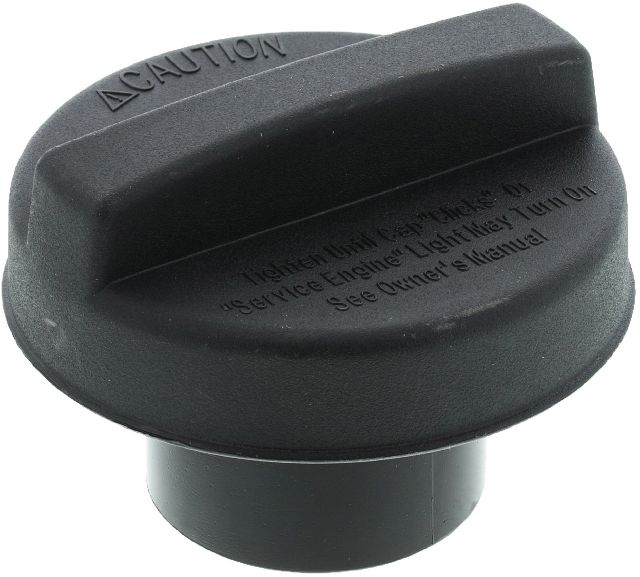
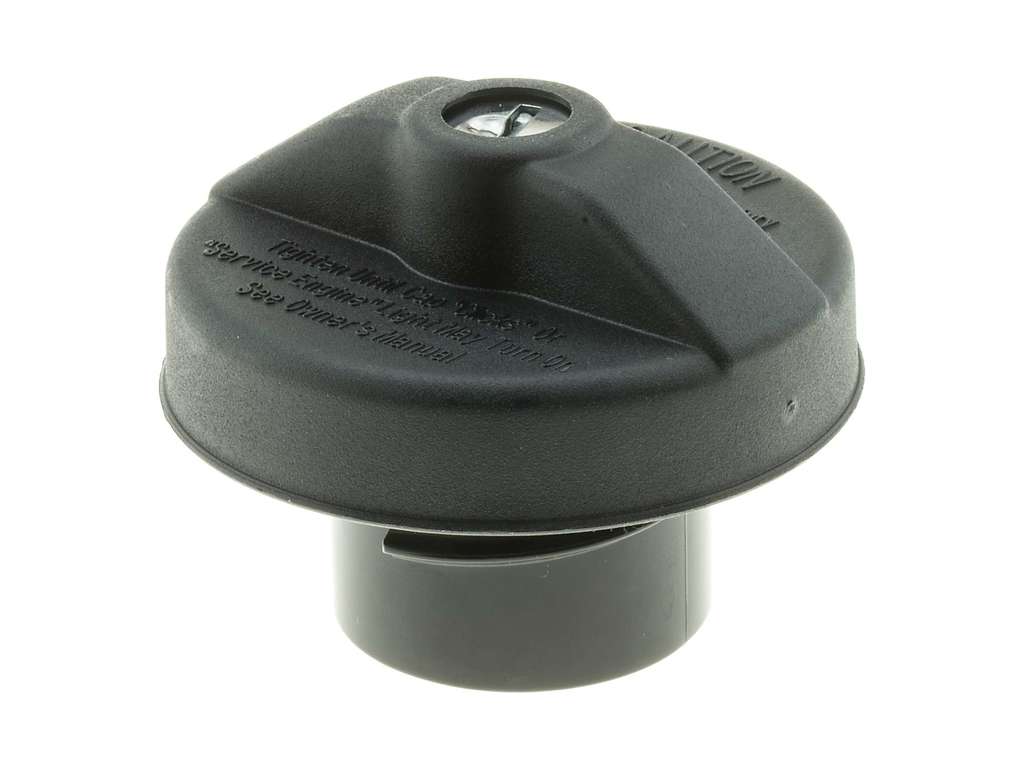
- Start with the simplest fix: ensure your gas cap is tight. If the light comes back, a new OEM gas cap (part # 31010-3L600) is the most likely and cheapest solution.
- The Check Engine Light will not turn off immediately after a fix. You must either clear the code with a scanner or complete several drive cycles (which can take a few days) for the car's computer to re-run the EVAP test.
- If a new gas cap doesn't work, the canister purge valve (in the engine bay) or canister close valve (at the rear of the car) are the next most likely culprits.
- Do not 'top off' your fuel tank. Overfilling can saturate the charcoal canister, leading to an expensive repair.
- For hard-to-find leaks, a professional smoke test is the most effective diagnostic method.
What's Unique About the 2007-2012 Hyundai Santa Fe
On the second-generation (CM) Santa Fe, the P0456 code is a very common issue that owners encounter. While the causes are typical for most vehicles (gas cap, valves), the location of the canister purge valve, especially on V6 models, can be challenging as it is often tucked away at the back of the intake manifold, making access difficult. Additionally, Hyundai has issued service campaigns for other models like the 2017 Santa Fe Sport for faulty gas caps causing this exact code, highlighting the sensitivity of the cap's seal. Manufacturer documentation, such as TSB Bulletin #22-FL-006H, also notes that this code may be stored alongside O2 sensor delayed response codes, requiring specific ECU update procedures in some instances.
Symptoms You May Notice
- Check Engine Light is on
- A faint fuel odor near the gas cap or rear of the vehicle, particularly around the passenger side rear wheel well after filling up.
- Slight decrease in fuel economy (rarely noticeable).
- In some hybrid variants of the brand, owners have reported a sudden loss of power while driving at highway speeds associated with this code (NHTSA ODI #11531219).
- Replacing the oxygen sensor. O2 sensors are not part of the EVAP system and will not cause a P0456 code.
- Replacing the catalytic converter. This is an expensive exhaust component and is unrelated to the EVAP system.
Most Likely Causes
- Loose or Faulty Gas Cap 🔴 High Probability → Shop Fuel Tank Cap The gas cap seal can degrade over time, and not tightening it until it clicks is a common user error. Hyundai has a history of gas cap seal issues, as shown by service campaigns on later models.
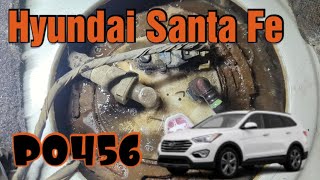
How to confirm: First, ensure the cap is tightened until it clicks at least once. Inspect the rubber O-ring on the cap for cracks, stiffness, or damage. Clean the cap and the fuel filler neck sealing surface. As a test, some owners have had success applying a thin layer of petroleum jelly to the cap's O-ring to improve the seal. If the light returns after a few drive cycles, replacing the cap is the easiest next step. 🎬 Watch: A mechanic diagnoses a P0456 leak on a Santa Fe. A professional can also test the cap with a pressure test tool.
Typical fix: Replace the fuel filler cap with a new OEM part to ensure a proper seal. Aftermarket caps can sometimes cause sealing issues.
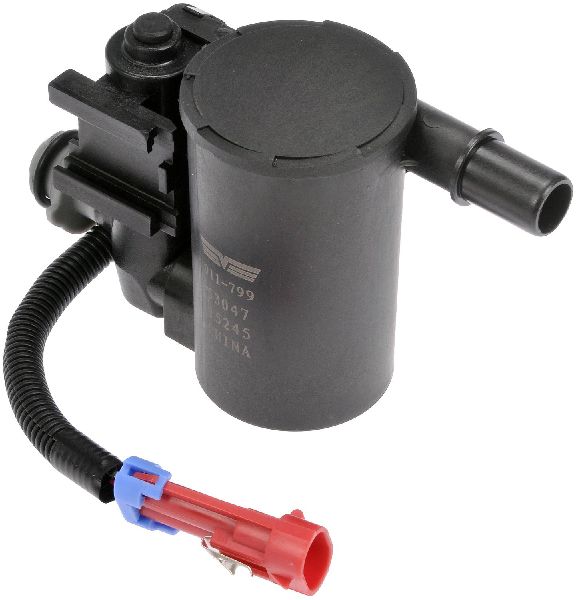
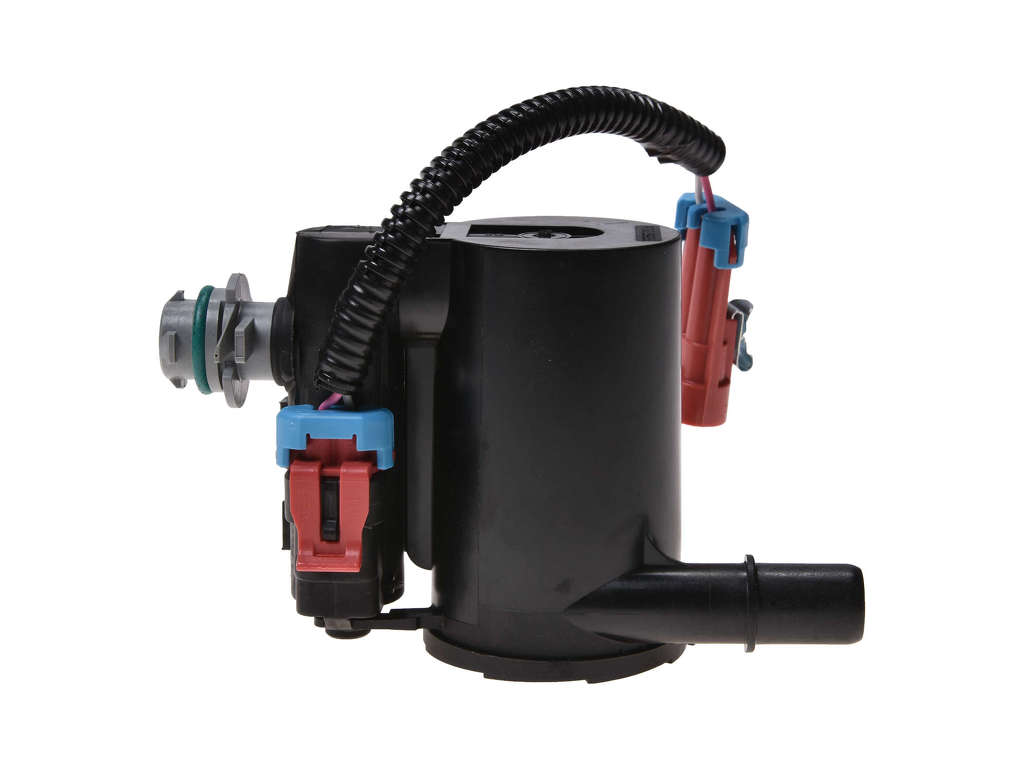
Est. part cost: $15-$30 - Faulty Canister Purge Valve (Purge Solenoid) 🟡 Medium Probability → Shop Vapor Canister This solenoid valve is frequently activated and can fail by sticking open, creating a constant small leak path from the EVAP system to the engine intake.
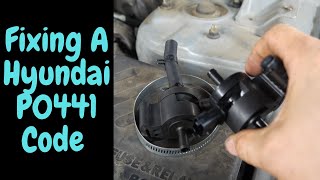
How to confirm: The purge valve is located in the engine bay. On V6 models, it is notoriously difficult to access, being on the rear of the intake manifold. When the engine is off, the valve should be closed. You can test it by removing it and trying to blow through it; if air passes, it's faulty. A mechanic can also command it open and closed with a scan tool to check for function.
Typical fix: Replace the canister purge valve. On V6 models, this is a more involved job due to its location 🎬 See this walkthrough for replacing the purge valve. on the back of the intake manifold.
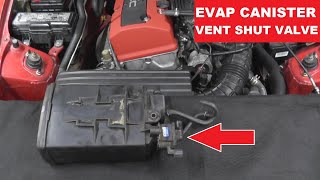
Est. part cost: $40-$85 - Faulty Canister Close Valve (Vent Valve) 🟡 Medium Probability → Shop Vapor Canister Located near the charcoal canister at the rear of the vehicle, this valve can get stuck open due to dirt, debris, or internal failure, preventing the system from sealing for its pressure test. It is exposed to road grime, which contributes to its failure.
How to confirm: The valve is normally open and is commanded closed by the ECM to run the EVAP test. It can be tested with a scan tool to verify operation. Visual inspection for cracks or damage is also necessary. Access typically requires removing the driver's side rear wheel and wheel well liner. A forum post for similar Hyundai models suggests this is a very common fix for P0456.
Typical fix: Replace the canister close valve assembly.
Est. part cost: $50-$100 - Cracked or Disconnected EVAP Hoses ⚪ Low Probability Over time, rubber and plastic hoses can become brittle and develop small cracks, especially at connection points or bends. Hoses on top of the fuel tank are a potential leak point that is difficult to see without dropping the tank or removing the rear seat.
How to confirm: A visual inspection may reveal obvious cracks, but a definitive diagnosis requires a smoke test. A mechanic introduces low-pressure smoke into the EVAP system and looks for where it escapes. A YouTube video demonstrates finding a leak from a line on top of the gas tank using this method.
Typical fix: Replace the specific section of cracked hose or secure a loose connection.
Est. part cost: $10-$50
Rare But Worth Checking
- Cracked Charcoal Canister: → Shop Vapor Canister This is an expensive part to replace. It can be damaged by impact or become saturated and fail if you habitually top off your fuel tank after the pump clicks off. A strong fuel smell near the rear of the car is a symptom.
- Leaking Fuel Tank or Filler Neck: → Shop Fuel Tank Rust or physical damage can cause a small leak in the fuel tank or the metal filler neck that the gas cap seals against. This is more common in regions with heavy road salt use and is best diagnosed with a smoke test.
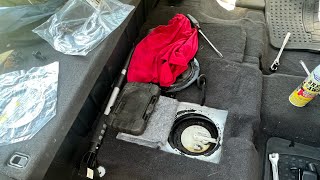
- Leaking Fuel Sending Unit / Fuel Pump Module Seal: → Shop Fuel Pump The seal for the fuel sending unit or fuel pump module, located on top of the fuel tank and accessible from under the rear seat, can fail and cause a small leak. This can be found with a smoke test and may be accompanied by a fuel smell inside the cabin. 🎬 Watch: Finding a leak at the fuel sending unit seal.
Diagnosis Steps
- Check the Gas Cap: Remove, inspect the seal for cracks, and retighten it until it clicks multiple times. Clear the code and see if it returns after a few days of driving.
- Replace Gas Cap: If the seal looks worn or the cap doesn't click, replace it with an OEM part. This is the most common fix and is cheap insurance.
- Visual Inspection: Inspect all accessible EVAP hoses in the engine bay and around the fuel tank for obvious cracks, disconnections, or damage. Pay close attention to connections at the purge valve and charcoal canister.
- Test the Purge Valve: Locate the purge valve in the engine bay. With the vehicle off, disconnect it and try to blow through it. If air passes, it has failed and needs replacement.
- Test the Canister Close Valve: Locate the vent valve near the charcoal canister at the rear. Check for damage and test its operation with a capable scan tool. This valve should be open at rest and close when commanded by the scan tool.
- Perform a Smoke Test: If the leak is not found, the most effective next step is to have a smoke test performed. This will introduce smoke into the EVAP system and make even the smallest leak visible, such as from a cracked hose on top of the fuel tank or a faulty fuel pump seal.
Parts You'll Likely Need
- Fuel Filler Cap
(OEM #31010-3L600)— This is the most frequent cause of P0456. The seal wears out over time, and an OEM cap ensures a perfect fit.
Trusted brands: Hyundai (OEM)
OEM price range: $20-$30
Aftermarket price range: $15-$25 - Canister Purge Valve / Solenoid
(OEM #28910-3C200 (for 3.3L/3.5L V6), 28910-25100 (for 2.4L I4))— A common failure point that sticks open, causing a persistent small leak. Part number is engine-dependent.
Trusted brands: Hyundai (OEM), Bosch, Dorman
OEM price range: $60-$90
Aftermarket price range: $40-$70 - Canister Close Valve / Vent Solenoid
(OEM #31435-2B500 (Valve only, may be hard to source), or part of canister assembly 31420-2B500 / 31420-0W800)— This valve at the rear of the car is exposed to the elements and can fail, preventing the EVAP system from sealing properly. Often replaced with an aftermarket assembly.
Trusted brands: Hyundai (OEM), Dorman (911-808 is listed for some Hyundai models, but cross-reference is inconsistent for Santa Fe; verify fitment)
OEM price range: $70-$120
Aftermarket price range: $50-$100
Related Codes That Often Appear With This One
- P0442 — This code is for a 'Small EVAP Leak,' while P0456 is for a 'Very Small EVAP Leak.' They share the same causes, and a leak can sometimes be interpreted differently by the ECM on subsequent tests.
- P0455 — This code indicates a 'Gross EVAP Leak.' If you see this with P0456, it could mean an intermittent major leak (like the gas cap being left off entirely) or a component that is failing catastrophically.
- P030X — Misfire codes may sometimes appear alongside P0456, as noted in manufacturer Service Campaign T5A, which addresses software logic for both conditions.
Technical Service Bulletins (TSBs) & Recalls
- Service Campaign T1Q (for 2017 Santa Fe Sport, but relevant): Notes that a faulty fuel filler cap (P/N 31010-3L600) can cause P0456 and requires replacement.
- TSB Bulletin #22-FL-006H: Outlines a procedure to update the ECU and TCU for vehicles experiencing P0456 and O2 sensor delayed response codes.
- TSB Bulletin #Campaign T5A Dea: Provides information regarding an ECM software update to revise logic for DTC P0456 and misfire codes (P030X).
- TSB Bulletin #20-FL-002H: Describes instructions to install an air filter kit and a natural vacuum leak detection system for P0456 issues on related hybrid platforms.
- TSB Bulletin #19-01-030H: Notes that P0456 conditions can occur primarily in coastal areas subject to marine layer clouds, requiring specific hardware updates.
Platform-Specific Known Issues
- A user on hyundai-forums.com with a 2009 Santa Fe reported getting a P0456 code three weeks after replacing their fuel senders. They noted a strong gas smell near the passenger side rear wheel after filling the tank, pointing towards a leak in the canister/vent valve area rather than the purge valve they had initially suspected.
Mechanic-Grade Diagnostic Values
- Fuel Tank Pressure Sensor (FTPS) Voltage — expected: Approximately 1.3V to 1.7V with the gas cap off (atmospheric pressure), with an ideal value around 1.5V.. Failure: A reading stuck near 0V or 5V suggests a wiring or sensor fault. During a scan tool-actuated EVAP test, this value is monitored for decay to detect leaks.
Scan Tool Commands That Help
- Hyundai GDS or equivalent professional scan tool: EVAP System Leak Test / Active Test — This function is used to manually seal the EVAP system to test for leaks without waiting for the vehicle's automatic monitor to run. The technician commands the Canister Purge Valve OFF (closed) and the Canister Close Valve ON (closed), then monitors the Fuel Tank Pressure sensor data. A drop in vacuum indicates a leak; a steady reading indicates a sealed system. This is crucial for confirming the function of the valves and pinpointing if a leak is present before a smoke test.
Wiring & Ground Locations
- Canister Close Valve (CCV) — On 3.3L models, it is located beneath the center of the vehicle, above the drive shaft, near the charcoal canister.. This is a primary component for sealing the EVAP system. Knowing its location is key for visual inspection, testing, and replacement.
- Fuel Tank Pressure Sensor (FTPS) — Located on top of the fuel tank, accessible by removing the rear seat and fuel pump service cover.. This sensor provides the pressure/vacuum reading that the ECM uses to detect the P0456 leak. Its wiring and connection are critical.
- G01 / G02 — G01 is at the base of the left kick panel; G02 is at the base of the right kick panel.. These are main body grounds. A poor ground connection here can cause erratic behavior in various electronic modules, potentially affecting sensor readings.
- G52 / G56 — G52 is at the left rear of the engine compartment; G56 is on the left top of the engine (on 3.3L models).. These are primary engine grounds. A corroded or loose ground here can affect the operation of engine-bay-mounted solenoids like the Canister Purge Valve.
Real Owner Repair Stories
- YouTube channel 'Just a Dude' (2011 Hyundai Santa Fe) — Check Engine Light with P0456 and other EVAP codes.
❌ Tried (didn't work) Initial diagnosis pointed towards a general small leak.
✅ What actually fixed it A smoke test revealed the leak was coming from the seal of the fuel sending unit on top of the gas tank, which is separate from the main fuel pump on this vehicle. The plastic on the sending unit itself was also damaged, requiring replacement of the unit and its seal. - YouTube channel 'George's Tech' (2013 Hyundai Santa Fe (next gen, but same principle)) — Check Engine Light with P0456 (very small EVAP leak).
❌ Tried (didn't work) Visual inspection of common areas did not reveal the leak.
✅ What actually fixed it After removing the rear seat, a smoke test showed a leak from the seal on top of the gas tank. The leak was confirmed by spraying soapy water on the area and seeing bubbles form. The repair required replacing the seal.
When the Usual Fixes Don't Work
- While the canister close valve (CCV) is a common cause, forum and video evidence for the Santa Fe specifically points to leaks on top of the fuel tank (fuel pump or sending unit seals) as a frequent 'final fix' after other parts have been checked. In one documented case, a smoke test quickly identified a leak at the fuel sending unit seal, bypassing the need to replace any valves. This suggests that for a P0456 on a Santa Fe, if the gas cap doesn't fix it, a smoke test focusing on the top of the tank is a very high-yield next step.
OEM Part Supersession History
31010-3L500, 31010-2F500, 31010-2D600, 31010-2C800, 31010-2C700→31010-3L600— Part consolidation and potential design improvements to the seal.
Heads up: The current part 31010-3L600 is the correct replacement for the listed older numbers and is widely compatible across many Hyundai models from 2006-2022.
Model Year Variations Within This Range
- 2007-2012: The primary variation is engine-specific part numbers for the Canister Purge Valve. The 2.4L I4 uses P/N 28910-25100, while the V6 engines (3.3L/3.5L) use P/N 28910-3C200. The physical location and difficulty of replacement for the V6 purge valve (behind the intake manifold) is significantly different from the I4 version.
Diagnostic Flowchart
Other Known Issues on This Vehicle
Issues unrelated to this code that are worth knowing about as an owner of this generation:
- Faulty Fuel Level Sending Units 🟠 Medium — Very common, typically occurs between 60,000 and 100,000 miles. Causes erratic fuel gauge readings or a gauge stuck on empty. (Ref: Hyundai TSB 09-FL-003-2 addresses this issue for 2007-2009 models.)
- Leaking Valve Cover Gaskets (V6 models) 🔴 High — Common on 3.3L V6 engines. The front valve cover gasket leaks oil directly onto the alternator, causing alternator failure and potential vehicle stalling. (Ref: Hyundai Service Campaign 936 (TSB 15-01-031) and a later Campaign 976 were issued to inspect and replace the gasket and/or alternator.)
- Leaking Oil Pressure Switch/Sensor 🟠 Medium — The sensor, located in the engine valley on V6 models, is prone to leaking oil, which can be misdiagnosed as a rear main seal leak.
- Prematurely Worn Suspension Components 🟡 Low — Ball joints, tie rods, and control arm bushings can wear out faster than expected, leading to suspension noise and alignment problems.
- Stop Lamp Switch Failure 🔴 High — A faulty switch can prevent brake lights from illuminating or cause issues with push-button start and cruise control. (Ref: NHTSA Recall 13V113000)
Used vs. New Parts: Buying Guide for This Vehicle
When a used part is the smart pick: For this specific P0456 repair, using used parts is generally not recommended. The primary failure components (valves, seals, hoses) are wear-and-tear items that degrade with age and exposure to fuel vapors. A used part from a junkyard is likely to have similar wear and could fail soon after installation.
Donor-vehicle mileage cap: roughly under 50000 miles for the part to have meaningful remaining life.
What to inspect on the donor part:
- For a charcoal canister, ensure there are no physical cracks or signs of impact.
- For hoses, check for any hardening, cracking, or swelling.
- For valves, inspect connectors for corrosion or damage, but internal function cannot be verified visually.
OEM-only on this vehicle (don't cheap out):
- Fuel Filler Cap: This is the most critical part to buy from the OEM (Hyundai). Aftermarket caps are notoriously unreliable and a common cause of persistent or new EVAP codes after a repair attempt.
Brands owners have reported issues with on this vehicle:
- Dorman (for Canister Close Valve): While Dorman is a major aftermarket supplier, its popular CCV part 911-808 does not consistently list the 2007-2012 Santa Fe in its fitment data, instead showing compatibility with Elantra, Accent, etc. Extreme caution and VIN verification are required before purchasing this part for a Santa Fe, as it may not be the correct fit.
Real Owner Stories
Aggregated from forums and TSBs cited above. Mileages and costs reflect what owners reported in those sources.
2009 Hyundai Santa Fe
Symptoms: A strong gas smell near the passenger side rear wheel after filling the tank; Check Engine Light on with code P0456 appearing three weeks after a fuel sender replacement.
What fixed it: Diagnosis pointed towards a leak in the canister/vent valve area rather than the purge valve.
Source hint: hyundai-forums.com thread titled 'CEL P0456 Ideas? 2009 Santa Fe'
2007 Hyundai Santa Fe
Symptoms: Check Engine Light (P0456) on a platform similar to the Sonata and Elantra.
What fixed it: Replacing the canister close valve (vent valve).
Source hint: hyundai-forums.com thread titled 'P0456 Check engine light'
Documented NHTSA Reports
NHTSA ODI #11531219
Symptoms: An owner reported that after having codes P0455 and P0456 reset by a dealership, the vehicle later experienced a loss of power while driving at 65mph, slowing down to 20mph with multiple error codes.
Related OBD-II Codes
Frequently Asked Questions
I have a 2009 Santa Fe and smell gas near the passenger side rear wheel after filling up. Is this related to P0456?
Where is the purge valve located on the V6 Santa Fe models?
Is there a specific gas cap part number I should look for to fix this code?
How do I access the canister close valve (vent valve) on my Santa Fe?
Can I use petroleum jelly to fix the P0456 code on my Hyundai?
Could my recent fuel sender repair have caused this P0456 code?
Helpful Videos
We Have This Part in Stock


The information in this article is provided for general reference and educational purposes only. Vehicle specifications, procedures, and part compatibility can vary by production date, trim level, and region. Always consult your vehicle's factory service manual and verify part numbers before purchasing or performing repairs. Safety-critical components such as airbags, seat belts, and braking systems should be installed by a qualified professional.
- Hyundai Santa Fe:
- 🧭 Diagnostic Flowchart
- 🎬 Helpful Videos
- 🛍️ Shop This Part
- What's Unique About the 2007-2012 Hyundai Santa Fe
- Symptoms You May Notice
- Most Likely Causes
- Rare But Worth Checking
- Diagnosis Steps
- Parts You'll Likely Need
- Related Codes That Often Appear With This One
- Technical Service Bulletins (TSBs) & Recalls
- Platform-Specific Known Issues
- Mechanic-Grade Diagnostic Values
- Scan Tool Commands That Help
- Wiring & Ground Locations
- Real Owner Repair Stories
- When the Usual Fixes Don't Work
- OEM Part Supersession History
- Model Year Variations Within This Range
- Other Known Issues on This Vehicle
- Used vs. New Parts: Buying Guide for This Vehicle
- Real Owner Stories
- 2009 Hyundai Santa Fe
- 2007 Hyundai Santa Fe
- Documented NHTSA Reports
- NHTSA ODI #11531219
- Related OBD-II Codes
- Frequently Asked Questions
- 🎟️ Get 5% Off