

P0457 on 2019-2020 Jeep Wrangler: EVAP Leak (Gas Cap Loose/Off) Causes and Fixes
On a 2019-2020 Jeep Wrangler, code P0457 is most often caused by a loose or faulty gas cap. If a new gas cap doesn't fix it, the next most likely culprit is a failed EVAP System Integrity Module (ESIM), an inexpensive part that's a common failure point on Jeeps. Always check that the ESIM electrical connector hasn't simply come unplugged before replacing parts.
- P0457 on your Wrangler means the computer thinks the gas cap is loose. Start by checking, tightening, and if necessary, replacing the gas cap with an OEM part.
- If a new gas cap doesn't fix the problem, the next most likely cause is a faulty EVAP System Integrity Module (ESIM), a cheap and easy part to replace.
- You can safely drive with this code, but your Jeep will fail an emissions test and you are releasing excess fuel vapors into the atmosphere.
- Do not immediately assume a major, expensive leak. The fix for P0457 is usually simple and inexpensive.
What's Unique About the 2019-2020 Jeep WRANGLER
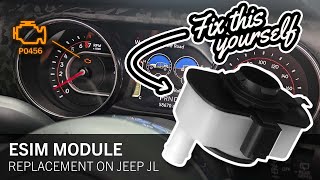
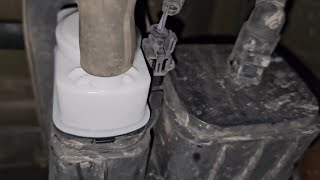
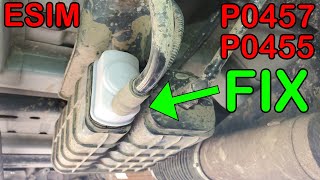
While P0457 is a generic code, on modern Chrysler products like the JL Wrangler, it's frequently caused by more than just a loose gas cap. A common point of failure is the EVAP System Integrity Module (ESIM), also called the leak detection pump, which is attached to the charcoal canister. This component is known to fail frequently across many Jeep, Dodge, and Chrysler models. Many owners report that replacing this relatively inexpensive part resolves the code when a new gas cap fails to do so. On the JL, the ESIM is located behind the passenger-side rear wheel well liner.
🎬 Watch: Step-by-step guide to replacing the ESIM on a JL Wrangler.Diagnostic Flowchart
Tap your situation to follow the diagnostic path that matches what you're seeing on this vehicle.
Symptoms You May Notice
- Check Engine Light is on
- A "GASCAP" message may appear on the instrument cluster display
- Possible faint smell of fuel, especially when stationary
- Replacing the fuel tank pressure sensor. This sensor is what reports the leak; it is rarely the cause of the leak itself.
- Immediately performing an expensive smoke test before checking 🎬 See a mechanic's perspective on diagnosing these specific EVAP codes. the gas cap and considering the high failure rate of the ESIM. A smoke test will not find an internally failed ESIM.
Most Likely Causes
- Loose, Damaged, or Incorrect Gas Cap 🔴 High Probability → Shop Fuel Tank Cap This is the intended trigger for the P0457 code logic. Aftermarket or worn-out gas caps may not seal correctly. Owners report cleaning the cap's O-ring and the filler neck threads can sometimes solve the issue.
How to confirm: Ensure the cap is tightened until it clicks several times. Inspect the cap's seal for cracks or damage. Clean the cap and the filler neck sealing surface. If in doubt, an OEM replacement is the best test.
Typical fix: Tighten or replace the gas cap.
Est. part cost: $15-$40 - Faulty EVAP System Integrity Module (ESIM) / Leak Detection Pump 🟡 Medium Probability → Shop Vapor Canister This component is a known common failure item on many Chrysler, Dodge, and Jeep vehicles, including the Wrangler. It can get stuck internally or fail electronically, tricking the system into thinking there is a large leak. Its failure is so common that some owners on Reddit recommend buying them in multiples.
How to confirm: After confirming the gas cap is good, this is the next most likely part to check. On the JL Wrangler, it is located on the EVAP canister, behind the passenger-side rear wheel well liner. A smoke test would show no leaks if this part has failed internally, which is a key diagnostic clue. Before replacing, check if the electrical connector is secure, as one owner found it had simply disconnected.
Typical fix: Replace the ESIM and its O-ring seal. It is removed with a simple quarter-turn motion.
Est. part cost: $20-$50 - Cracked or Disconnected EVAP Hoses ⚪ Low Probability Hoses can become brittle over time or get damaged from off-roading. A common spot for issues is the hose connection on top of the fuel tank or the connections at the charcoal canister.
How to confirm: Visually inspect all accessible EVAP lines, especially around the canister, engine bay, and fuel tank. A smoke test is the most effective way to find a hard-to-see leak.
Typical fix: Replace the damaged section of hose or reconnect it if it has come loose.
Est. part cost: $10-$50 - Faulty EVAP Purge Valve/Solenoid ⚪ Low Probability → Shop Vapor Canister The purge valve can get stuck open, creating a constant vacuum leak within the EVAP system. This is a less common cause for P0457 specifically but is a known EVAP system failure point.
How to confirm: The purge valve is located in the engine bay. It can be tested with a hand-held vacuum pump to see if it holds vacuum when closed, or commanded open/closed with a bidirectional scan tool.
Typical fix: Replace the purge valve. Mopar part number 04627694AB is listed for the 3.6L V6.
Est. part cost: $25-$60
Rare But Worth Checking
- Damaged Fuel Filler Neck: → Shop Fuel Filler Neck If the metal or plastic neck where the gas cap screws in is bent, rusted, or cracked, it can prevent a proper seal, even with a new cap. One owner on a forum mentioned cleaning the threads resolved their issue.
- Leaking EVAP (Charcoal) Canister: → Shop Vapor Canister The plastic body of the canister itself can develop cracks from age or impact, creating a large leak.
- Disconnected ESIM Electrical Connector: A user on jlwranglerforums.com reported that after extensive troubleshooting, the root cause was simply that the electrical connector on the ESIM had become disconnected. Always check this simple connection before buying parts.
Diagnosis Steps
- Read the code with an OBD-II scanner to confirm P0457.
- Inspect the gas cap. Ensure it is tight and clicks when closed. Check the rubber seal for any cracks, stiffness, or damage. Clean the cap and the filler neck sealing surface.
- If the cap looks suspect or is not an OEM part, replace it with a genuine Mopar gas cap for the JL Wrangler. Clear the code and drive for a few days to see if it returns. Note that it may take several drive cycles for the light to clear on its own.
- If the code comes back, locate the EVAP canister behind the rear passenger wheel well liner. Before replacing anything, firmly check the electrical connector on the EVAP System Integrity Module (ESIM). A loose connection has been reported as a fix.
- If the connector is secure, the next most likely step is to replace the ESIM. It is an inexpensive and common fix, removed with a simple quarter-turn.
- If the issue persists, perform a thorough visual inspection of all EVAP hoses and connections between the engine bay, the canister, and the fuel tank.
- If no visible damage is found, the most definitive diagnostic method is to have the system smoke tested. This involves injecting pressurized smoke into the EVAP system to visually pinpoint the source of the leak. Remember, a smoke test will not identify an internally failed ESIM.
Parts You'll Likely Need
- Fuel Cap
(OEM #68339342AB)— This is the most common cause of a P0457 code. The original cap's seal can wear out, or it may not have been tightened properly. The part number for the gas engine JL is 68339342AB, which supersedes 68339342AA.
Trusted brands: Mopar
OEM price range: $25-$40
Aftermarket price range: $15-$25 - EVAP System Integrity Module (ESIM)
(OEM #04861962AD)— This is a very common failure point on Jeep Wranglers that mimics a gas cap leak. It's often the solution when a new gas cap doesn't resolve the code. This part is used across a wide range of Chrysler/Jeep/Dodge vehicles.
Trusted brands: Mopar, Dorman
OEM price range: $30-$50
Aftermarket price range: $20-$35
Related Codes That Often Appear With This One
- P0455 — P0455 indicates a generic "Gross EVAP Leak". P0457 is a more specific version of P0455 that points towards the fuel cap as the likely cause because the leak was detected after a refueling event. They often appear together.
- P0456 — P0456 indicates a "Small EVAP Leak". Sometimes a failing component can cause different leak size codes to be triggered at different times. The provided TSB S2008000112 lists them together, indicating a related cluster of faults.
Technical Service Bulletins (TSBs) & Recalls
- S2008000112: MIL Lamp On Setting DTC’s P0441, P0456, P0457, P0440
Platform-Specific Known Issues
- The NHTSA has issued Technical Service Bulletin S2008000112 for 2019-2020 Jeep Wranglers, which notes that the Malfunction Indicator Lamp (Check Engine Light) may illuminate and set DTCs P0457, P0441, P0456, or P0440, indicating a pattern of EVAP system faults on this platform.
- On the JL Wrangler, accessing the ESIM requires removing the passenger rear wheel well liner to get to the EVAP canister where it is mounted. This is different from the previous generation JK where it was more exposed underneath the vehicle.
Mechanic-Grade Diagnostic Values
- ESIM (Evaporative System Integrity Module) Function Test — expected: With the ESIM removed from the vehicle, blowing gently into the port that connects to the charcoal canister should result in continuity (a beep on a multimeter) across the electrical pins. Sucking gently on the same port should also result in continuity.. Failure: If either blowing or sucking on the port does not cause the internal switch to close and create continuity across the pins, the ESIM has failed mechanically.
Scan Tool Commands That Help
- Launch X431 (or similar bidirectional scanner): EVAP System Test / Purge System Test — This function allows a technician to command the EVAP purge valve closed and monitor system pressure or vacuum. It helps verify if the purge valve is sealing correctly, which is a crucial step before suspecting other components.
Wiring & Ground Locations
- G915A / G915B — Located in the rear of the vehicle, part of the main body harness. These are primary ground points for components in the rear, including the EVAP system.. A poor ground at these locations could cause erratic behavior or failure of the ESIM, leading to false leak codes. The ESIM relies on a solid ground to send a correct signal to the PCM.
- EVAP System Wiring Diagram — Available in forum-posted PDF collections for the JL Wrangler.. In cases where parts replacement and smoke tests fail, tracing the wiring for the ESIM and purge solenoid for continuity, shorts to ground, or shorts to power becomes necessary. A wiring diagram is essential for this advanced diagnosis.
Real Owner Repair Stories
- Reddit user Royal-Screen128 and commenter ZeroCoolJK (2017 Jeep Wrangler 3.6L (JK model, but with identical EVAP components and codes)) — Immediate 'GASCAP' message and codes P0456/P0457 on startup. Codes returned instantly after clearing.
❌ Tried (didn't work) Replaced gas cap twice with OEM parts, Replaced EVAP canister, Replaced ESIM / Leak Detection Pump, Replaced Purge Valve, Two professional smoke tests that found no leaks, Checked all related fuses (M7, M19, M25), Visually inspected all related wiring and fuel filler neck
✅ What actually fixed it After all part swaps failed, the vehicle was taken to a Jeep dealer who traced the fault to a short in the wiring harness.
"I Checked Everything" — The Actual Cause
- An internally failed ESIM will not present as a leak during a smoke test, as the failure is electrical or mechanical within the sealed component itself. A Reddit user confirmed their smoke test was clean, leading them to correctly identify the ESIM as the culprit.
- In a case where all common parts (gas cap, ESIM, purge valve, canister) were replaced and multiple smoke tests were clean, the final cause was a short circuit within the vehicle's wiring harness, which required dealer-level diagnostics to trace.
OEM Part Supersession History
68339342AA→68339342AB— Standard part revision by manufacturer.
Heads up: This part is for gas engines only. The diesel Wrangler JL uses a different part number (e.g., 52013994AB).4861962aa, 4861962ab, 4861962ac→04861962AD— Standard part revision by manufacturer, consolidating previous versions.
Model Year Variations Within This Range
- 2019-2020: A software glitch in some earlier JL models could falsely trigger a P0456 code (related to P0457), which could be resolved with a PCM update from a dealer, suggesting software revisions may have occurred during this period.
Helpful Videos
We Have This Part in Stock


The information in this article is provided for general reference and educational purposes only. Vehicle specifications, procedures, and part compatibility can vary by production date, trim level, and region. Always consult your vehicle's factory service manual and verify part numbers before purchasing or performing repairs. Safety-critical components such as airbags, seat belts, and braking systems should be installed by a qualified professional.
- Jeep WRANGLER:
- 🧭 Diagnostic Flowchart
- 🎬 Helpful Videos
- 🛍️ Shop This Part
- What's Unique About the 2019-2020 Jeep WRANGLER
- Symptoms You May Notice
- Most Likely Causes
- Rare But Worth Checking
- Diagnosis Steps
- Parts You'll Likely Need
- Related Codes That Often Appear With This One
- Technical Service Bulletins (TSBs) & Recalls
- Platform-Specific Known Issues
- Mechanic-Grade Diagnostic Values
- Scan Tool Commands That Help
- Wiring & Ground Locations
- Real Owner Repair Stories
- "I Checked Everything" — The Actual Cause
- OEM Part Supersession History
- Model Year Variations Within This Range
- 🎟️ Get 5% Off