

P0460 on 1998-2011 Ford Crown Victoria: Fuel Gauge Fixes and Sending Unit Replacement
This code means your fuel gauge is unreliable. The most common fix is replacing the entire fuel pump and sending unit assembly inside the gas tank. Expect to pay $300-$500 for an OEM Motorcraft part and several hours of labor, as the fuel tank must be lowered to access it.
- P0460 on a Crown Victoria almost always means the fuel sending unit in the tank has failed.
- You cannot trust your fuel gauge and risk running out of gas, which can damage the fuel pump.
- The repair requires dropping the fuel tank, as there is no access panel.
- Always replace the entire fuel pump and sender assembly, not just the sender.
- If a new pump assembly doesn't fix the issue, the problem is likely in the wiring harness connector or, rarely, the instrument cluster.
What's Unique About the 1998-2011 Ford Crown Victoria
The Ford Crown Victoria, especially in its later years, is a robust and straightforward vehicle. However, unlike many modern cars, it does not have an access panel under the back seat or in the trunk to easily reach the fuel pump. This means that to fix the P0460 code, which almost always requires replacing the in-tank sending unit, the entire fuel tank must be partially or fully dropped. This significantly increases the labor time and difficulty compared to a vehicle with an access hatch.
Generation note: The 1998-2011 model years all fall within the second generation of the Crown Victoria. However, a significant redesign of the frame and suspension occurred in 2003. While the general repair process of lowering the tank is similar, 🎬 Watch: Time-saving trick for lowering the fuel tank fuel pump and sending unit part numbers often change across these years. Always verify the correct part number for your specific model year before purchasing.
Symptoms You May Notice
- Check Engine Light is on
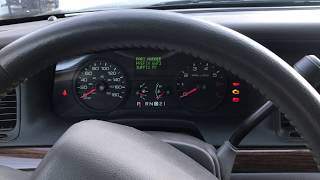
- Fuel gauge behaving erratically (swinging from full to empty)
- Fuel gauge stuck at one position (e.g., full, empty, or half)
- Inaccurate fuel level reading
- Unexpectedly running out of fuel
- Low fuel warning light illuminates intermittently or stays on with a full tank.
- Inaccurate distance to empty (DTE) readings.
- Replacing the catalytic converters. A mechanic on a Reddit forum incorrectly suggested this as a fix for P0460, which is completely unrelated to the fuel level sensing circuit.
- Replacing only the fuel pump when the sending unit is the actual point of failure. On this vehicle, they are part of the same module, and replacing the whole unit is best practice.
Most Likely Causes
- Failed Fuel Level Sending Unit 🔴 High Probability → Shop Fuel Tank Sending Unit The sending unit has a resistor strip that the float arm's contact sweeps across. Over many miles and years, this strip can wear out or become contaminated by fuel additives and sulfur deposits, creating dead spots or open circuits. Manufacturer service bulletin TSB Bulletin #SSM 50904 notes that an open circuit in the fuel level sender (FLS) is a documented cause for a fuel gauge reading empty alongside DTC P0460.
How to confirm: After accessing the unit, you can test the resistance (ohms) of the sender with a multimeter while manually moving the float arm. The reading should change smoothly from approximately 15 Ohms (empty) to 160 Ohms (full). If it jumps, has dead spots, or reads open (infinite resistance), it's bad.
Typical fix: Replace the entire fuel pump and sending unit module. Since the tank must be dropped, it is highly recommended to replace the whole assembly rather than just the sender.
Est. part cost: $250-$550 - Damaged Wiring or Connectors 🟡 Medium Probability The wiring harness runs along the vehicle's undercarriage and can be exposed to road debris, moisture, and corrosion, especially in regions that use road salt. The main electrical connector on top of the fuel pump assembly is a very common failure point, often showing green corrosion on the pins.
How to confirm: Visually inspect the wiring harness from the fuel tank to the PCM for any obvious breaks, chafing, or corrosion. Unplug the connector at the fuel pump module and check for corroded, bent, or water-damaged pins.
Typical fix: Repair or replace the damaged section of the wiring harness or replace the connector pigtail.
Est. part cost: $20-$100 - Stuck or Damaged Sender Float Arm ⚪ Low Probability Less common, but the plastic float can crack, fill with fuel, and sink, or the metal arm can get bent or stuck due to debris in the tank. NHTSA ODI #11419926 describes a situation where a fuel tank appeared "sunk in," which can physically interfere with the float arm's movement.
How to confirm: This can only be confirmed by visually inspecting the unit after removing it from the fuel tank.
Typical fix: Replace the fuel pump and sending unit assembly.
Est. part cost: $250-$550
Rare But Worth Checking
- Faulty Instrument Cluster: → Shop Instrument Cluster In some cases, the problem isn't the sender but the gauge cluster itself. The solder joints on the cluster's circuit board can fail over time, leading to incorrect gauge readings. A user on Reddit reported this as a possible cause after replacing the fuel pump did not fix the issue. This is a known issue on many 20-year-old Ford PCBs. 🎬 Watch: How to access hidden cluster test mode
- Faulty Powertrain Control Module (PCM): → Shop Engine Control Module (ECM) This is extremely rare. Internal component degradation in the PCM can prevent it from reading the sensor's voltage correctly. Before condemning the PCM, all other possibilities (sender, wiring, cluster) must be exhaustively ruled out.
Diagnosis Steps
- Confirm the code with an OBD-II scanner. Note if other codes like P0463 are present. Manufacturer service bulletin TSB Bulletin #16-0062 indicates that P0460 may also appear with other emissions-related codes like P0420, P1450, and P0443.
- Check for any Technical Service Bulletins (TSBs) from Ford. While none are specific to the Crown Victoria for P0460, Ford has issued them for other models like the F-Series (TSB 06-13-11) for false codes, indicating a PCM reflash is a rare possibility.
- Use a scan tool with live data to observe the fuel level sensor voltage/percentage. See if it is erratic, stuck, or shows an implausible value (e.g., reading 100% when the tank is half full).
- Visually inspect the wiring harness leading to the fuel tank. Pay close attention to the connector on top of the tank for green corrosion, backed-out pins, or damage.
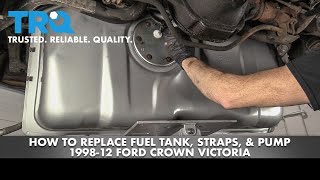
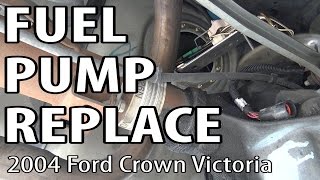
- If wiring appears okay, the next step is to access the fuel pump module. This requires safely lifting the vehicle and 🎬 See this step-by-step fuel pump replacement DIY lowering the fuel tank. WARNING: This can be dangerous. Disconnect the battery and ensure the tank is as empty as possible.
- Once the module is accessible, test the sending unit's resistance with a multimeter. The resistance should sweep smoothly from approximately 15 Ohms (empty) to 160 Ohms (full). Any dropouts, open circuits (infinite ohms), or stuck readings indicate a bad sender.
- If the sender tests good, the problem is likely in the wiring harness between the tank and the PCM, or, more rarely, the instrument cluster or the PCM itself.
Parts You'll Likely Need
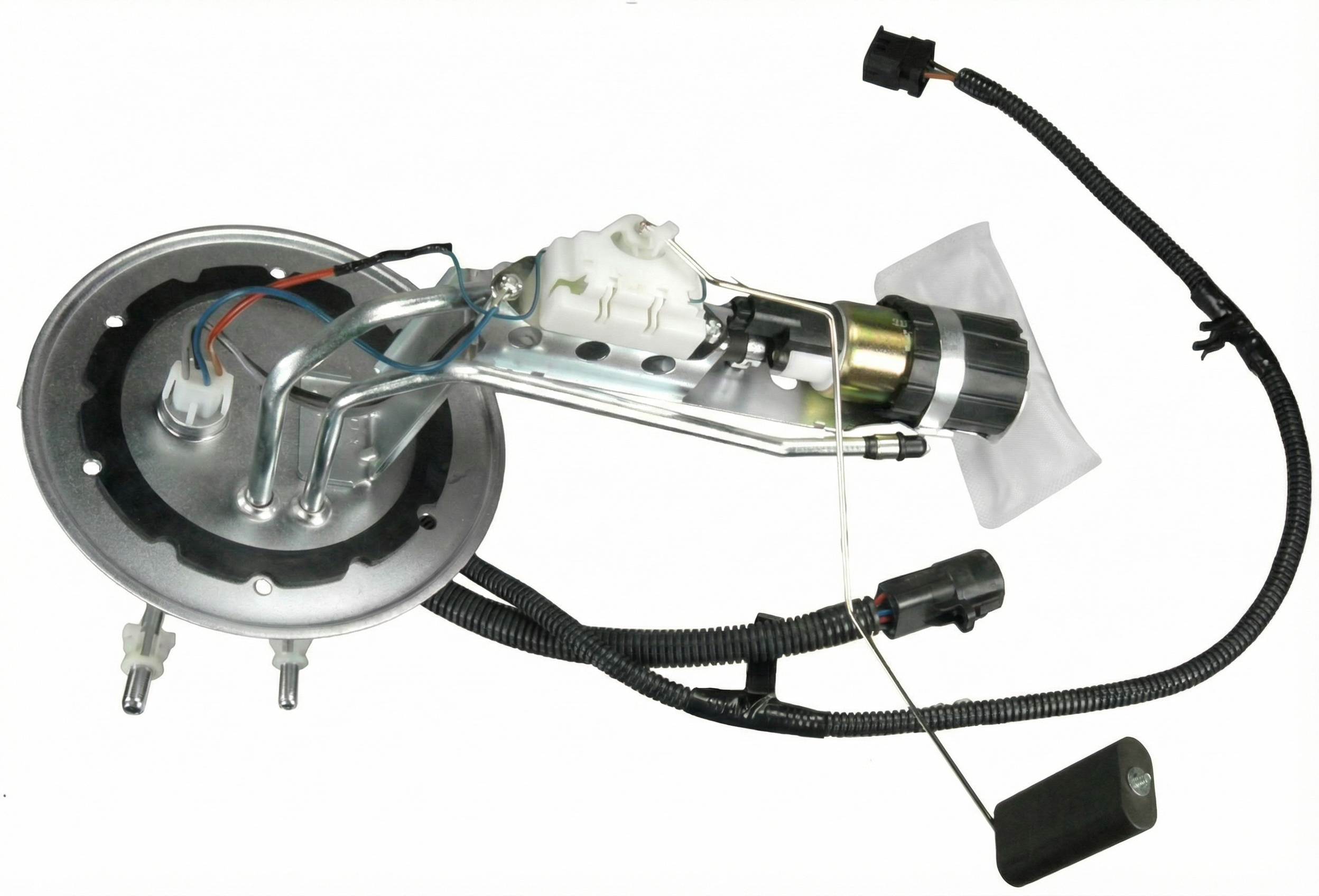
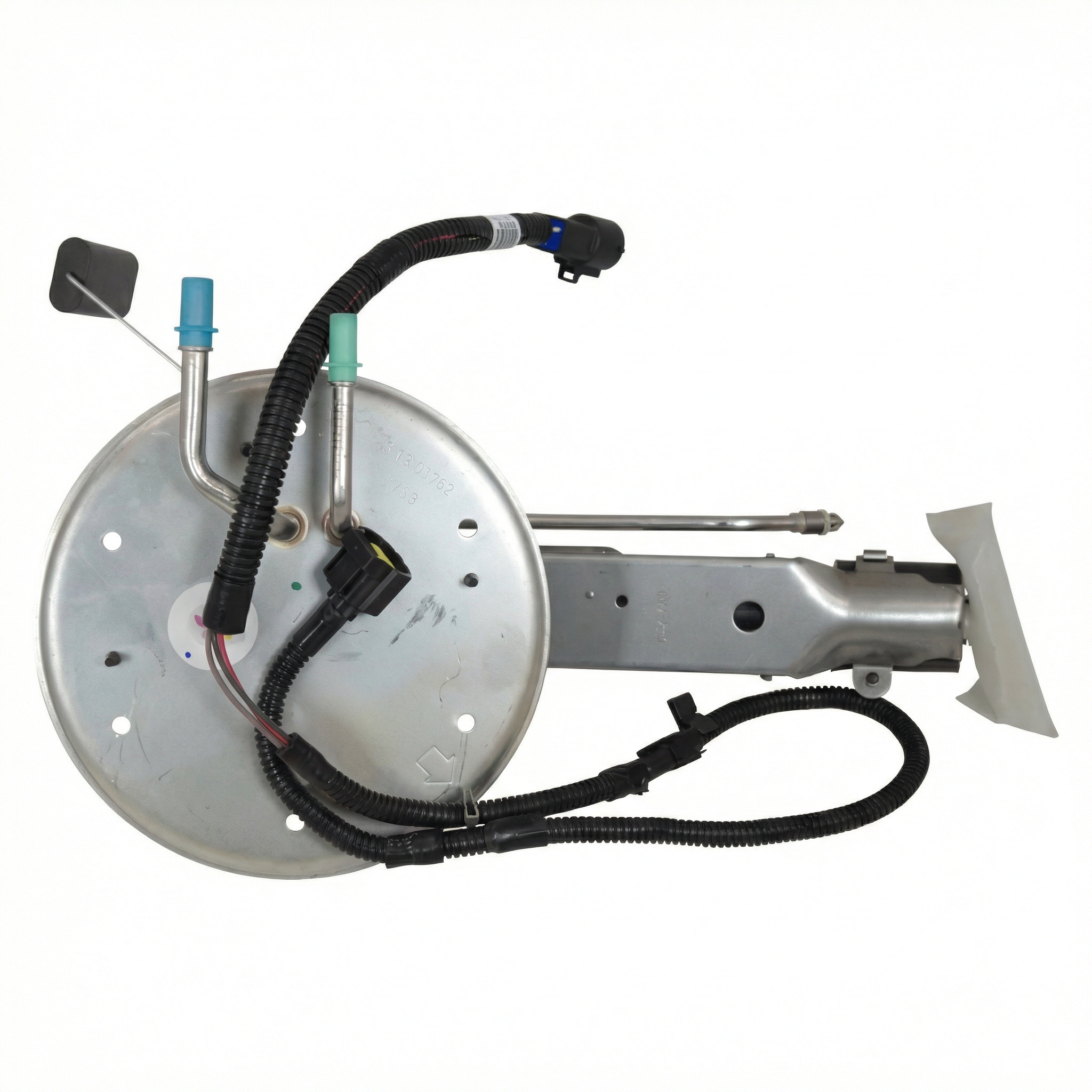
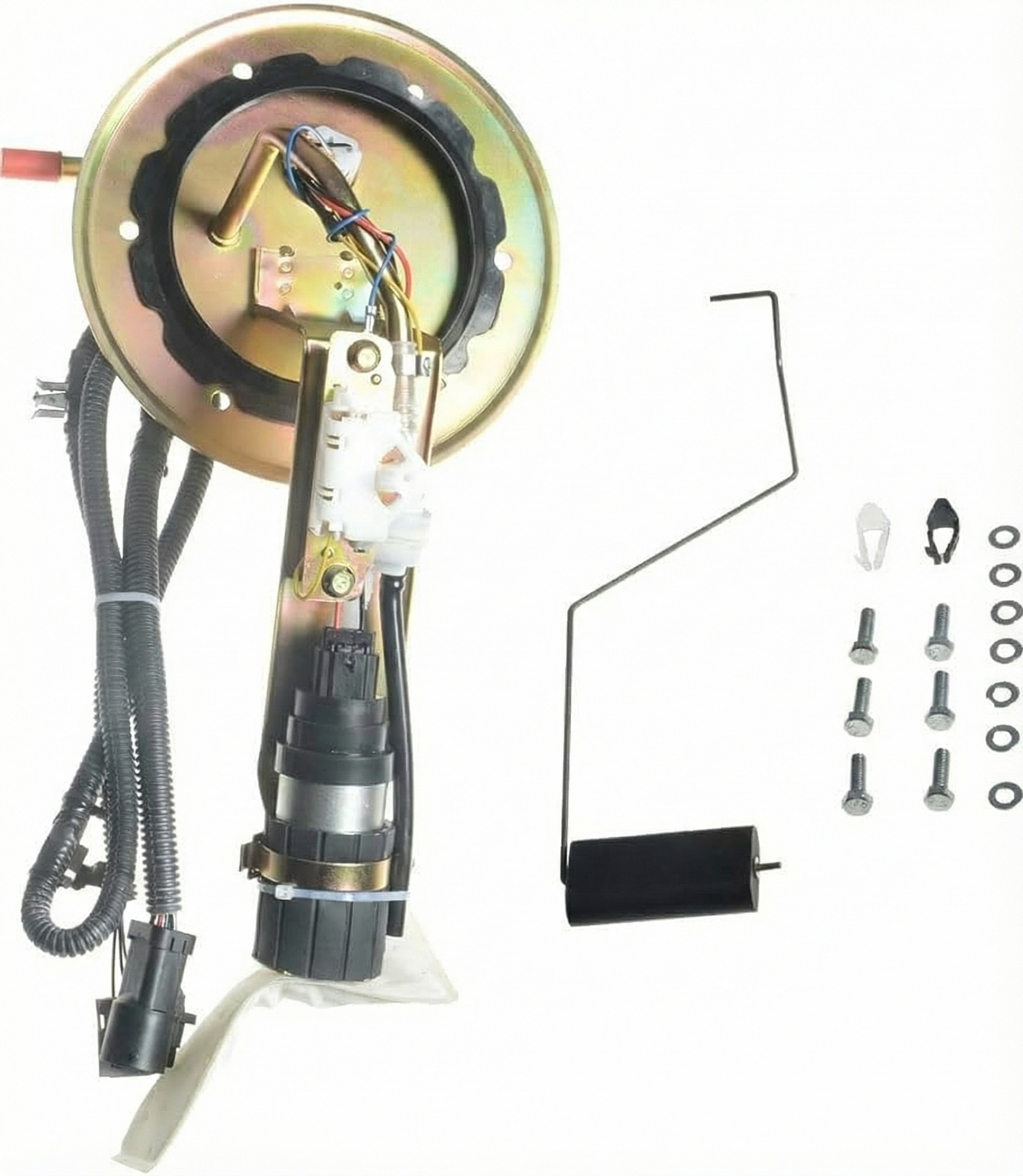
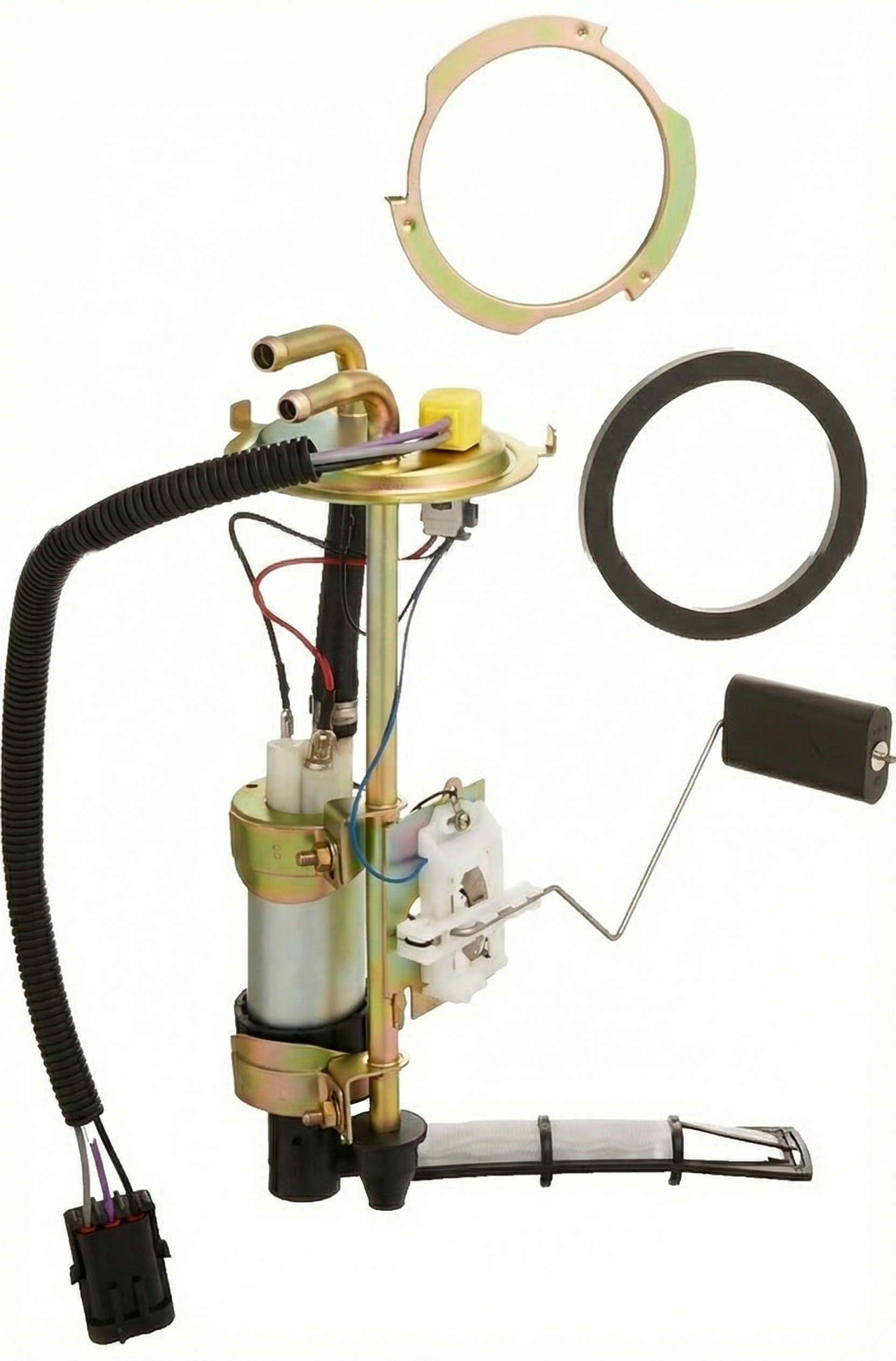
- Fuel Pump and Sending Unit Assembly
(OEM #Varies by year. Examples: Motorcraft PFS-331 (2003-2004), Motorcraft PFS-456 (2009-2011). Always verify by VIN.)— This is the most common cause of failure. The sending unit is integrated into the module, and replacing the entire assembly is the most reliable repair and good preventative maintenance for the fuel pump itself.
Trusted brands: Motorcraft, Delphi, Spectra Premium
OEM price range: $300-$550
Aftermarket price range: $150-$350
Related Codes That Often Appear With This One
- P0463 - Fuel Level Sensor 'A' Circuit High Input: This code often appears with P0460 and indicates the PCM is seeing a voltage/resistance signal that is higher than the normal range for a full tank, often caused by an open circuit in the wiring or a failed sender. A user on r/CrownVictoria reported getting both codes after a pump replacement, pointing to a wiring or cluster issue.
Technical Service Bulletins (TSBs) & Recalls
- While no specific TSB for the Crown Victoria and P0460 was found in this research, Ford has issued TSBs for other vehicles (like TSB 11-10-8 for Mustang and TSB 06-13-11 for F-Series) for false P0460 codes caused by software logic or external factors like auxiliary fuel tanks. This indicates that in some cases, a PCM reflash could be a consideration if the hardware checks out.
- TSB Bulletin #16-0062 notes that an illuminated MIL with P0460 may occur alongside other codes such as P0420, P1450, and P0456.
- TSB Bulletin #SSM 50904 highlights that P0460 can be triggered by an open circuit in the fuel level sender, resulting in a fuel gauge that reads empty.
Platform-Specific Known Issues
- The lack of a factory fuel pump access panel is the most significant issue for this repair on a Crown Victoria. The fuel tank must be lowered.
- Police Interceptor models may have different wiring or fuel system components compared to civilian models. Always verify parts with the vehicle's VIN.
- On Flex Fuel models, ensure the replacement pump assembly is compatible with E85 fuel.
Mechanic-Grade Diagnostic Values
- Fuel Level Sending Unit Resistance — expected: Approximately 15 Ohms (± 2 Ohms) at Full, and 160 Ohms (± 4 Ohms) at Empty. Some Ford documentation suggests a slightly different range of ~10-15 Ohms full to ~180 Ohms empty.. Failure: Readings that are open (infinite resistance), shorted (zero ohms), or that jump erratically when moving the float arm. The sweep should be smooth.
- Fuel Level Signal Wire Voltage at PCM — expected: Varies with fuel level. The PCM sends a reference voltage to the sender and reads the return voltage, which changes based on the resistance. A typical range is ~0.7V at Full to ~2.7V at Empty.. Failure: Voltage that is stuck at 0V (short to ground), 5V/12V (short to power), or a fixed value that doesn't change when fuel is added/removed or the vehicle is rocked.
Scan Tool Commands That Help
- Ford IDS or compatible high-end scanner: Instrument Cluster Self-Diagnostic Test (HEC Test Mode) — To rule out a faulty fuel gauge in the instrument cluster. This test performs a gauge sweep, lighting all warning lamps and displaying DTCs stored in the cluster itself. To enter, hold the trip/reset button, turn the key to the 'ON' or 'RUN' position, and continue holding the button until 'tESt' appears on the odometer. You can then cycle through various checks, including a gauge sweep ('GAUGE'). If the gauge sweeps correctly during this test but reads incorrectly during normal operation, the cluster is likely receiving a bad signal, pointing back to the sender or wiring.
Wiring & Ground Locations
- PCM Pin 12 (on 104-pin connector) — The PCM is located behind the driver's side kick panel, near the instrument panel. The fuel level sending unit signal wire is typically Yellow/White.. This is the terminal where the PCM receives the signal from the fuel level sender. A technician can back-probe this pin to test the voltage signal directly at the computer, which helps differentiate between a wiring problem and a PCM problem.
- G400 / G401 — Center rear of the trunk, on a support structure, often near the license plate area.. This is a primary ground point for rear-body components, including the fuel pump module. A corroded or loose ground at this location can cause erratic voltage and resistance in the fuel sender circuit, leading to P0460.
- Fuel Pump Module Connector — On top of the fuel tank, accessible after the tank is lowered.. This connector is a very common failure point. It is exposed to the elements and road salt, leading to corrosion on the pins for the sender signal, ground, and pump power. Always inspect this connector thoroughly for green crust, backed-out pins, or melted plastic.
- Inertia Fuel Shut-Off (IFS) Switch — In the luggage compartment, typically on the driver's side support.. While not directly related to the sender signal, the wiring for the entire fuel pump module passes through or near this area. Damage to the harness in this location during cargo loading or from a previous collision can affect the sender circuit.
Real Owner Repair Stories
- Reddit user on r/CrownVictoria (2004 Crown Victoria) — Fuel gauge stuck on full, Check Engine Light with codes P0460 and P0463.
❌ Tried (didn't work) Replacing the entire fuel pump and sending unit assembly with a new, quality Delphi unit.
✅ What actually fixed it The user was advised that the next logical steps were to diagnose the wiring harness between the tank and the instrument cluster, or to suspect a failed instrument cluster itself. The thread highlights that replacing the most common part (the sender) is not always the final fix.
Documented NHTSA Reports
- An owner reported an illuminated malfunction indicator lamp (MIL) with diagnostic trouble code P0460 alongside several other codes including P0420, P1450, and P0456 (NHTSA ODI #11427851).
- NHTSA ODI #11443669 describes a vehicle experiencing an inaccurate or erratic fuel gauge indication and inaccurate distance to empty (DTE) while throwing code P0460.
When the Usual Fixes Don't Work
- While the fuel sending unit is the cause of P0460 in the vast majority of cases, there are well-documented instances where the fault lies elsewhere. A common counter-narrative found in forums involves a vehicle owner replacing the fuel pump assembly (a difficult job on the Crown Victoria), only for the code and symptoms to persist. In these cases, the actual culprit is often found to be either a corroded wiring harness/connector between the tank and the chassis, or a failure within the instrument cluster's internal circuitry. This outcome is frustrating for DIYers and professionals alike, as it means the most labor-intensive repair did not solve the problem.
Model Year Variations Within This Range
- 2003-2011: In 2003, the Panther platform received a major redesign of its frame, suspension, and steering. For the fuel system, this also marked a change in the fuel pump design and the introduction of a returnless fuel system controlled by a Fuel Pump Driver Module (FPDM). While the P0460 code's meaning is the same, the diagnostic approach for pre-2003 vs. post-2003 models can differ slightly in terms of wiring and related components like the FPDM.
- 1998-2002: These earlier models used a traditional return-style fuel system. The fuel pump assembly and part numbers are different from the 2003+ models. The fundamental cause of P0460 (failed sender) remains the most common issue across all years.
Diagnostic Flowchart
Other Known Issues on This Vehicle
Issues unrelated to this code that are worth knowing about as an owner of this generation:
- Cracked Plastic Intake Manifold 🔴 High — Very common on 1996-2001 models. The all-composite manifold cracks at the front coolant crossover, causing a sudden and massive coolant leak, leading to overheating. (Ref: A class-action lawsuit was settled, leading to an extended warranty (7 years/unlimited miles) which has since expired. The replacement part features an aluminum front coolant crossover to solve the issue.)
- Lighting Control Module (LCM) Failure 🔴 High — Extremely common across all years. Caused by cracked solder joints on the internal relay. (Ref: Ford issued recall 15S39. Symptoms include intermittent or total loss of headlights, which can be temporarily restored by hitting the dash near the module. The recall fix often involved adding a bypass relay harness.)
- Blend Door Actuator Failure 🟠 Medium — Common across all years. The plastic gears inside the actuator fail, causing a loud clicking/ticking sound from behind the dashboard and an inability to control cabin temperature (stuck on hot or cold).
- Premature Rear Axle Bearing Wear 🟠 Medium — More common on early 2000s models, especially former police interceptors, due to heat treatment issues during manufacturing. Results in a roaring or grinding noise from the rear of the vehicle that changes with speed.
Used vs. New Parts: Buying Guide for This Vehicle
When a used part is the smart pick: A used fuel pump assembly is generally NOT recommended. The fuel pump motor is a wear item with a finite lifespan, and the labor involved in dropping the tank is too significant to risk installing a part with unknown history. A used part only makes sense as a last resort for a vehicle that is otherwise not worth repairing, or if you are only harvesting the plastic housing itself.
Donor-vehicle mileage cap: roughly under 80000 miles for the part to have meaningful remaining life.
What to inspect on the donor part:
- Verify the donor vehicle's mileage is as low as possible.
- Inspect the electrical connector pins for any signs of green corrosion or heat damage.
- Ensure the plastic top hat is not cracked or brittle.
- Check that the float arm moves freely and is not bent or binding.
OEM-only on this vehicle (don't cheap out):
- While not strictly 'OEM-only', the consensus among Panther platform owners is that using a high-quality Motorcraft or a top-tier OEM-supplier brand for the fuel pump assembly is critical. The job is too labor-intensive to risk using a cheap, unbranded part that might fail prematurely.
Aftermarket brands forum-validated for this vehicle:
- Motorcraft (OEM)
- Delphi (Often the OEM manufacturer for Motorcraft)
- Carter
- Denso
Brands owners have reported issues with on this vehicle:
- Generic, unbranded 'white-box' parts from online marketplaces. While forum discussions mention Spectra with mixed results, the most reliable choices are consistently cited as Motorcraft and Delphi.
Real Owner Stories
Aggregated from forums and TSBs cited above. Mileages and costs reflect what owners reported in those sources.
2004 Crown Victoria
Symptoms: The fuel gauge was stuck on full and the vehicle threw codes P0460 and P0463.
What fixed it: The owner replaced the fuel pump assembly with a Delphi unit, but the problem persisted, indicating the failure was actually in the wiring harness or the instrument cluster.
Source hint: Reddit - r/CrownVictoria: Thread titled 'Fuel gauge still inaccurate after new fuel pump – P0460 / P0463 (2004 Crown Vic)'
2003 Ford Crown Victoria
Symptoms: P0460 code present; owner was incorrectly told by a mechanic that the car needed new catalytic converters.
What fixed it: The owner attempted using Techron fuel system cleaner to address potential sulfur deposits on the sender.
Source hint: Reddit - r/MechanicAdvice: Thread titled 'P0460 2003 Ford Crown Vic'
Related OBD-II Codes
Frequently Asked Questions
Is there a specific TSB for the P0460 code on my Ford Crown Victoria?
Can I access the fuel level sending unit through a panel in the trunk of my Crown Vic?
What should the resistance readings be for a healthy fuel sender on this vehicle?
Will using a fuel system cleaner like Techron fix my P0460 code?
Are there any differences I should be aware of for my Police Interceptor model?
I have a Flex Fuel Crown Victoria; does that change the repair for P0460?
Helpful Videos
Used OEM Parts in Stock
New Aftermarket Parts Available




The information in this article is provided for general reference and educational purposes only. Vehicle specifications, procedures, and part compatibility can vary by production date, trim level, and region. Always consult your vehicle's factory service manual and verify part numbers before purchasing or performing repairs. Safety-critical components such as airbags, seat belts, and braking systems should be installed by a qualified professional.
- Ford Crown Victoria:
- 🧭 Diagnostic Flowchart
- 🎬 Helpful Videos
- 🛍️ Shop This Part
- What's Unique About the 1998-2011 Ford Crown Victoria
- Symptoms You May Notice
- Most Likely Causes
- Rare But Worth Checking
- Diagnosis Steps
- Parts You'll Likely Need
- Related Codes That Often Appear With This One
- Technical Service Bulletins (TSBs) & Recalls
- Platform-Specific Known Issues
- Mechanic-Grade Diagnostic Values
- Scan Tool Commands That Help
- Wiring & Ground Locations
- Real Owner Repair Stories
- Documented NHTSA Reports
- When the Usual Fixes Don't Work
- Model Year Variations Within This Range
- Other Known Issues on This Vehicle
- Used vs. New Parts: Buying Guide for This Vehicle
- Real Owner Stories
- 2004 Crown Victoria
- 2003 Ford Crown Victoria
- Related OBD-II Codes
- Frequently Asked Questions
- 🎟️ Get 5% Off