

P0460 on 2010-2015 Hyundai Tucson: Fuel Level Sensor Circuit Malfunction Causes and Fixes
For a 2010-2015 Hyundai Tucson, code P0460 almost always points to a faulty fuel level sending unit located in the fuel tank. Replacing the sender, which is often part of the fuel pump assembly, is the most common fix. Expect to pay around $150-$300 for the part and 1.5-2.5 hours of labor.
- P0460 on a 2010-2015 Tucson is most often caused by a failed fuel level sending unit inside the gas tank.
- Symptoms are straightforward: a Check Engine Light and an unreliable fuel gauge.
- The vehicle is safe to drive, but you must track mileage to avoid running out of fuel.
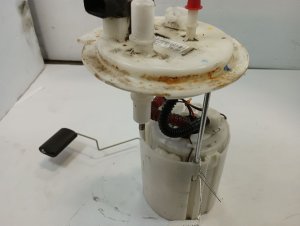
- The repair involves replacing the fuel pump module, which is accessed from under the rear seat. This is a moderately difficult DIY job that requires handling fuel system components safely.
What's Unique About the 2010-2015 Hyundai Tucson
On this generation of Hyundai Tucson, like many other Hyundai models, the fuel sending unit is a known failure point. The sensor's resistive strip can wear out over time, leading to erratic readings. The fuel level sensor is integrated into the fuel pump module, which is accessible through a panel under the rear seat, so the entire fuel tank does not necessarily need to be dropped for service. The issue is also common on its platform-mate, the 2011-2016 Kia Sportage.
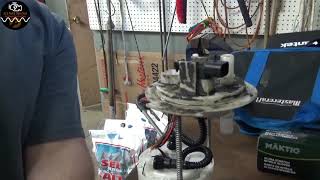
🎬 Watch: 2010 Tucson fuel level sensor replacement walkthroughSymptoms You May Notice
- Check Engine Light is on
- Fuel gauge behaves erratically (fluctuates, drops to empty, or sticks on full).
- Fuel gauge reading is inaccurate and does not reflect the actual fuel level.
- Low fuel warning light may come on at random times or not at all.
- The distance-to-empty calculation on the trip computer is unreliable.
- Replacing the fuel pump when only the sending unit is bad. While they are often in the same assembly, sometimes the sender can be purchased separately. However, replacing the entire module is often the most practical solution as it also renews the fuel pump.
- Assuming the instrument cluster is bad before thoroughly testing the sending unit and its wiring circuit. The sending unit is a much more common failure point.
Most Likely Causes
- Faulty Fuel Level Sending Unit 🔴 High Probability → Shop Fuel Tank Sending Unit The variable resistor on the sending unit is a common wear item. Over time, the wiper arm that moves across the resistor can wear out the contact surface, creating dead spots and causing incorrect readings. This is the most frequent cause for P0460 on this platform. 🎬 Watch: Causes and fixes for the P0460 code
How to confirm: Access the fuel pump module and test the resistance of the sending unit with a multimeter as you manually move the float arm. The resistance should change smoothly without any sudden jumps or open (infinite) readings. An open circuit or erratic readings confirm a faulty sender.
Typical fix: Replace the fuel level sending unit. On the Tucson, this is typically part of the fuel pump assembly and is replaced as a single module.
Est. part cost: $150 - $300 for a fuel pump module with integrated sender. - Damaged Wiring or Corroded Connector 🟡 Medium Probability The main connector on top of the fuel pump assembly is located under the rear seat, where it can be susceptible to moisture if there are spills or damage to the access cover seal. Corrosion can build up on the pins, creating high resistance and a faulty signal.
How to confirm: Visually inspect the wiring harness and connector going to the fuel pump module for any signs of corrosion, pinched wires, or loose pins. Perform a wiggle test on the connector 🎬 See: Step-by-step auto electrical fault finding for fuel gauges while observing live data on a scan tool to see if the reading changes.
Typical fix: Clean the connector terminals with an electrical contact cleaner or replace the connector pigtail if it is severely damaged. Repair any broken or frayed wires.
Est. part cost: $10 - $50 for a new connector pigtail or cleaning supplies. - Faulty Instrument Cluster ⚪ Low Probability → Shop Instrument Cluster While less common, the small motor that drives the fuel gauge needle or the internal circuitry of the cluster can fail. This can be due to failed capacitors or other board-level components.
How to confirm: Use a high-end scan tool to perform an instrument cluster self-test. This will command the gauges to sweep through their full range of motion. If the fuel gauge fails to move or acts erratically during the test while the sensor signal is known to be good, the cluster is likely the problem.
Typical fix: The instrument cluster must be sent to a specialist for repair or replaced entirely. Some automotive electronics shops can repair specific components like gauge motors or capacitors on the circuit board.
Est. part cost: $200 - $600 for repair or a replacement unit.
Rare But Worth Checking
- Powertrain Control Module (PCM) Failure: → Shop Engine Control Module (ECM) This is extremely rare and should only be considered after all other possibilities, including wiring and the sensor itself, have been thoroughly ruled out. A PCM software glitch could also be a cause, and in some cases, a software update may be available.
Diagnosis Steps
- Read the trouble codes with an OBD-II scanner to confirm P0460 is the primary code.
- Check the fuel gauge. Note if it is stuck, erratic, or completely dead.
- Gain access to the fuel pump module's electrical connector, which is located under an access panel beneath the rear seat cushion.
- Visually inspect the connector for any signs of corrosion, moisture, or damage. Clean and secure it as needed.
- With the key on, use a multimeter to check for the correct reference voltage being sent to the fuel level sensor and for a good ground connection.
- Measure the resistance of the fuel level sensor circuit. Compare this reading to the manufacturer's specifications (check a service manual for exact ohms, but a typical Hyundai range is approximately 10 ohms at full and up to 305 ohms at empty).
- If possible, manually move the float arm while monitoring the resistance with a multimeter. The reading should change smoothly without any dropouts or spikes. If it does, the sending unit is faulty.
- If the sensor and wiring test good, investigate the instrument cluster. Use a scan tool to command a gauge sweep test.
- If all other components test good, consider the rare possibility of a PCM fault.
Parts You'll Likely Need
- Fuel Pump and Sender Assembly
(OEM #31110-2S000 (check VIN, as variations like 31110-2S500, 31110-2S510, 31110-2S600 exist based on model year, drive type (FWD/AWD), and emissions standards).)— This is the most common cause of failure. The sending unit wears out, and on the Tucson, it is typically integrated with the fuel pump into a single module.
Trusted brands: Hyundai Genuine, Delphi, Spectra Premium, Bosch
OEM price range: $250-$400
Aftermarket price range: $150-$250
Technical Service Bulletins (TSBs) & Recalls
- While no TSB specifically for P0460 on the 2010-2015 Tucson was found, Hyundai has issued TSBs for other models where a PCM software update was needed to correct misinterpretation of fuel level sensor inputs, which could cause a P0460 code. It is worth checking with a dealer for any available software updates.
Mechanic-Grade Diagnostic Values
- Fuel Level Sensor Resistance — expected: A smooth, linear change from approximately 10 ohms (Full) to around 305 ohms (Empty). Some sources cite a range of 70-90 ohms for empty on similar models.. Failure: Sudden jumps, dropouts to zero, or an open circuit (infinite resistance) reading when moving the float arm.
- Fuel Level Sensor Signal Voltage at PCM — expected: A variable voltage signal that corresponds to the resistance of the sender unit (e.g., low voltage near full, higher voltage near empty).. Failure: A constant zero voltage or a voltage that doesn't change when the fuel level changes (and the sensor is known to be good) may indicate a wiring issue or PCM fault.
Scan Tool Commands That Help
- Hyundai GDS (Global Diagnostic System) or equivalent high-end scanner: Actuation Test for 'Combination Meter' or 'Instrument Cluster' — Use this function to command the fuel gauge to sweep through its range (Empty, 1/4, 1/2, 3/4, Full). If the gauge moves correctly during the test, the instrument cluster itself is likely good, and the fault is in the wiring or the sending unit. If it fails to move or acts erratically, the cluster is suspect.
- Hyundai GDS: Reset Adaptive Values (in Engine Control Module) — After replacing a fuel system component, it can be beneficial to reset the PCM's learned values to ensure it correctly interprets signals from the new part. This is especially relevant if a software update was also performed.
Wiring & Ground Locations
- Fuel Pump Relay — Located in the main engine bay fuse box, near the battery.. While not a primary cause for P0460 (which is a circuit signal fault, not a power fault), confirming power to the fuel pump assembly is a good preliminary step. The sending unit shares a ground with the pump.
- ECM Pin for Fuel Pump Relay Control — On some diesel models, Pin 71 of connector CRD-A on the ECM is the control output for the fuel pump relay.. This provides a specific pin to test for the control signal from the ECM, which can help diagnose rare ECM-related faults. Gasoline engine pinouts may differ but will be similar.
- Fuel Pump Assembly Connector — On top of the fuel pump assembly, accessible under a panel beneath the rear seat. It is typically a 6-pin connector.. This is the primary connection point for testing the sending unit's resistance and checking for power/ground without dropping the tank. Corrosion here is a common cause of the P0460 code.
- Chassis Ground — A wiring diagram for a 2012 Tucson shows a primary ground point at the base of the left 'B' pillar. Other major grounds are located in the engine bay near the strut towers.. A poor ground connection for the fuel pump assembly can cause erratic voltage and resistance readings, leading to a P0460 code. The sending unit relies on a solid ground reference.
OEM Part Supersession History
31110-2S000→31110-2S100, 31110-2S130— Part revisions for different model years or to address reliability issues.
Heads up: While the core function is the same, it is critical to verify the correct part number for your vehicle's specific year and VIN, as there are multiple revisions. Using the wrong revision could lead to fitment or electrical incompatibility.94460-2S000 (Sender only)→94460-2S510— Part revision or update.
Heads up: This is the sending unit itself, which can sometimes be purchased separately from the pump assembly. An eBay listing shows these numbers as interchangeable.
Diagnostic Flowchart
Other Known Issues on This Vehicle
Issues unrelated to this code that are worth knowing about as an owner of this generation:
- Theta II Engine Failure/Oil Consumption 🔴 High — Widespread issue affecting 2.0L and 2.4L Theta II engines, particularly in 2011-2015 models. Can manifest as connecting rod bearing failure, leading to knocking, stalling, or complete seizure. Excessive oil consumption is also common on higher-mileage units. (Ref: Multiple recalls (e.g., 15V-568, 17V-226) and a US class-action lawsuit were issued related to engine failures.)
- Automatic Transmission Shift Issues 🟠 Medium — Owners report issues with the 6-speed automatic transmission (A6MF1), including harsh shifts, slipping between gears (especially 2-3 and 3-4), and delayed engagement. Problems can be caused by faulty solenoids, the valve body, or contaminated fluid. (Ref: TSB 21-FL-003H was issued for some Hyundai models for replacing solenoids to fix shift flares.)
- AC Compressor Failure 🟠 Medium — The AC compressor is a common failure point, leading to the A/C blowing warm air. The failure can be due to a worn/rusty clutch, internal contamination, or a faulty control valve on clutchless designs. When the compressor fails, it often contaminates the condenser, requiring both to be replaced.
Used vs. New Parts: Buying Guide for This Vehicle
When a used part is the smart pick: A used fuel pump assembly from a junkyard is generally NOT recommended. The fuel sending unit is a known wear item, and a used part may have limited remaining life or could be faulty already. The labor to replace it is significant enough that using a new, warrantied part is the smarter financial choice to avoid doing the job twice.
Donor-vehicle mileage cap: roughly under 40000 miles for the part to have meaningful remaining life.
What to inspect on the donor part:
- Verify the part number on the donor unit matches your original exactly.
- Inspect the electrical connector for any signs of melting, corrosion, or burnt pins.
- If possible, test the resistance of the sending unit on the donor part before purchasing.
- Avoid parts from vehicles that show signs of sitting for a very long time, as the float may be stuck.
OEM-only on this vehicle (don't cheap out):
- While not strictly 'OEM-only', using a genuine Hyundai/Mobis part or a high-quality OEM supplier like Bosch or Delphi is strongly recommended over generic, unbranded parts to ensure longevity and proper function.
Aftermarket brands forum-validated for this vehicle:
- Bosch
- Delphi (though some forum users report mixed experiences, it is generally considered a reliable OEM supplier)
Brands owners have reported issues with on this vehicle:
- Unbranded, 'white-box' parts from online marketplaces.
- Airtex and Carter have received negative reviews in some forums for premature failure.
Real Owner Stories
Aggregated from forums and TSBs cited above. Mileages and costs reflect what owners reported in those sources.
2014 Hyundai Tucson
Symptoms: The gas gauge works fine until it gets down to the last bar. The last bar will never blink and the gas light will not go on. My car will just stall suddenly showing 25-35 miles left on it.
What fixed it: A commenter suggested the most common cause is either the gauge itself or the fuel sending unit in the tank, which may require replacing the whole fuel pump assembly.
Source hint: reddit r/AskAMechanic
Documented NHTSA Reports
Cross-Manufacturer Reference: Hyundai Fuel System Issues
Symptoms: An owner reported that after the empty light and check engine light came on, the vehicle was diagnosed with code P0460. The owner noted this appears to be a frequent problem for the manufacturer's fuel systems.
Source: NHTSA ODI #10761978
Related OBD-II Codes
Frequently Asked Questions
Where is the fuel level sensor located on my 2010-2015 Tucson, and do I need to drop the fuel tank to reach it?
Is there a TSB for the P0460 code on the 2010-2015 Hyundai Tucson?
Can I replace just the fuel level sending unit, or do I need the whole pump assembly?
My fuel gauge is stuck on full even though I've been driving for days. Is this a common Tucson issue?
Could a problem with my instrument cluster cause the P0460 code?
Are there any recalls related to the engine or fuel system I should know about while fixing this?
Helpful Videos

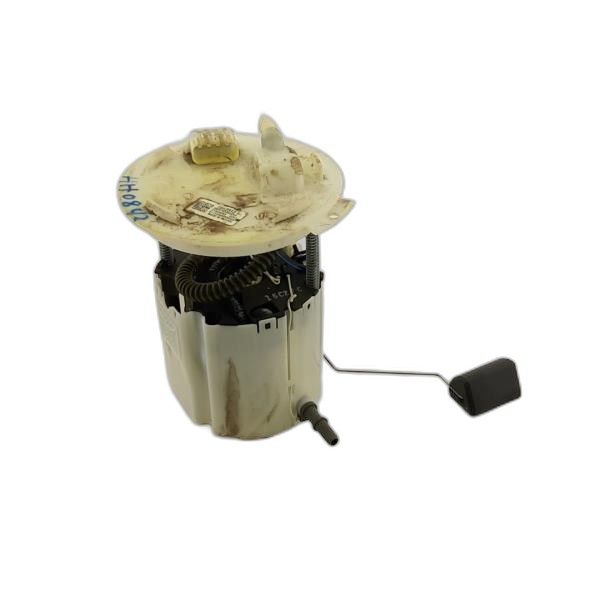
Used OEM Parts in Stock
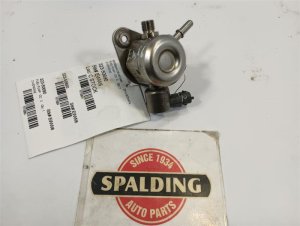
New Aftermarket Parts Available



The information in this article is provided for general reference and educational purposes only. Vehicle specifications, procedures, and part compatibility can vary by production date, trim level, and region. Always consult your vehicle's factory service manual and verify part numbers before purchasing or performing repairs. Safety-critical components such as airbags, seat belts, and braking systems should be installed by a qualified professional.
- Hyundai Tucson:
- 🧭 Diagnostic Flowchart
- 🎬 Helpful Videos
- 🛍️ Shop This Part
- What's Unique About the 2010-2015 Hyundai Tucson
- Symptoms You May Notice
- Most Likely Causes
- Rare But Worth Checking
- Diagnosis Steps
- Parts You'll Likely Need
- Technical Service Bulletins (TSBs) & Recalls
- Mechanic-Grade Diagnostic Values
- Scan Tool Commands That Help
- Wiring & Ground Locations
- OEM Part Supersession History
- Other Known Issues on This Vehicle
- Used vs. New Parts: Buying Guide for This Vehicle
- Real Owner Stories
- 2014 Hyundai Tucson
- Documented NHTSA Reports
- Cross-Manufacturer Reference: Hyundai Fuel System Issues
- Related OBD-II Codes
- Frequently Asked Questions
- 🎟️ Get 5% Off