

P0461 on 2015-2020 Ford F-150: Fuel Level Sensor Fault Causes and Fixes
This code means your fuel gauge is unreliable. The most common cause is a failed fuel level sending unit, which is part of the fuel pump assembly inside the gas tank. Expect a costly repair ($1000+) if done at a shop due to the labor involved in dropping the fuel tank.
- P0461 means your F-150's fuel gauge is not working correctly.
- The most likely culprit is the fuel level sending unit, which requires replacing the entire fuel pump assembly.
- This is an expensive repair at a shop ($1200+) due to the labor needed to drop the fuel tank.
- Before committing to the repair, check the wiring harness and especially the fuel system ground on the frame for damage or corrosion, and try clearing the code first.
- Since the gauge is unreliable, use your trip odometer to track fuel usage and avoid getting stranded.
What's Unique About the 2015-2020 Ford F-150
On this generation of F-150, the fuel level sensor (or sending unit) is integrated into the main fuel pump module. This design means you typically cannot replace just the small sensor; the entire fuel pump assembly must be replaced. This significantly increases the part cost and the complexity of the repair, which requires dropping the fuel tank for access.
Symptoms You May Notice
- Check Engine Light is on
- Fuel gauge behaves erratically (e.g., jumps from full to empty, or moves randomly)
- Fuel gauge is stuck on empty or full
- Low fuel warning light may stay on or flash, even with a full tank
- The 'Distance to Empty' display is inaccurate or shows dashes
- In some cases, the fuel gauge may appear to work correctly, but the code still triggers because the PCM detects a lack of change over a long distance.
- Replacing the instrument cluster. The gauge itself is rarely the problem; it simply displays the faulty information it receives from the PCM.
Most Likely Causes
- Faulty Fuel Level Sending Unit 🔴 High Probability → Shop Fuel Tank Sending Unit The sending unit is a moving part (a float arm connected to a variable resistor) that wears out over time. The resistor contacts can become worn or contaminated from fuel additives and deposits, creating 'dead spots' in the reading. It is located inside the fuel tank, exposed to gasoline and potential contaminants.
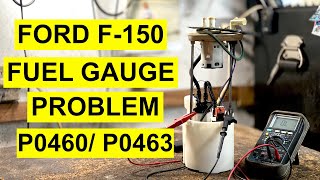
How to confirm: After checking wiring, the most definitive test is to access the fuel pump module connector and measure the resistance (ohms) of the sending unit circuit while moving the float arm (if the tank is dropped) or by adding/removing fuel and watching for a smooth change in resistance. An open circuit or a jumpy/unchanging resistance reading indicates a bad sensor.
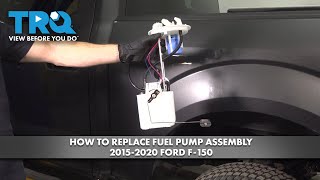
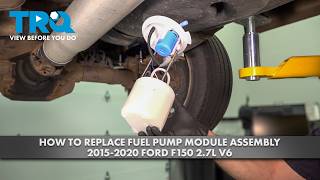
Typical fix: Replace the entire fuel pump and sender assembly. 🎬 See this step-by-step fuel pump replacement walkthrough The fuel tank must be lowered to access and replace the unit.
Est. part cost: $900-$1200 - Wiring or Connector Issue 🟡 Medium Probability The wiring harness running to the fuel tank is exposed under the truck and can be damaged by road debris, corrosion, or rodents. The main connector on top of the fuel pump module can become corroded or loose. Additionally, the ground wire for the fuel system, typically attached to the frame rail, can corrode, leading to erratic readings.
How to confirm: Visually inspect the wiring harness from the PCM to the fuel tank for any signs of damage, chafing, or corrosion. Disconnect the connector at the fuel pump module and check for bent or corroded pins. Use a multimeter to check for continuity and proper voltage/ground at the connector. Specifically check the fuel tank grounding strap for corrosion where it bolts to the frame.
Typical fix: Repair the damaged section of the wire, clean the ground connection point down to bare metal, or clean/replace the faulty connector.
Est. part cost: $10-$50
Rare But Worth Checking
- Stuck or Damaged Float Arm: Less common than electrical failure, but debris in the fuel tank or damage to the tank itself can cause the float arm to get stuck, preventing it from reading the fuel level correctly. The float itself can also sometimes become saturated with fuel and fail to float properly.
- Faulty Powertrain Control Module (PCM): → Shop Engine Control Module (ECM) This is very rare. The PCM should only be considered after all other possibilities, including the sensor and wiring, have been thoroughly tested and ruled out. A faulty PCM might misinterpret a normal sensor voltage as being out of range.
- Refueling with Ignition On: Some sources indicate that refueling the truck while the ignition is on can sometimes cause the system to set a P0461 code. Always try clearing the code first after such an event.
Diagnosis Steps
- Read the Code: Use an OBD-II scanner to confirm P0461 is the only code present. Note any other codes.
- Clear the Code and Test: Clear the code, fill the fuel tank, and drive the vehicle for at least 50-100 miles to see if the code returns. The PCM often needs to see a lack of change over a significant distance to re-trigger the code.
- Inspect Wiring and Grounds: Perform a thorough visual inspection of the wiring harness leading to the fuel tank. Pay close attention to the connector on top of the fuel pump module for corrosion. Locate and inspect the fuel system ground strap on the frame rail; unbolt it, clean the contact surfaces to bare metal, and re-secure it.
- Check Fuses: Check any fuses related to the fuel pump and instrument cluster circuits.
- Test the Circuit: If the wiring appears okay, use a multimeter to test the circuit. You'll need a wiring diagram for your specific F-150. Check for the correct reference voltage and ground at the fuel pump connector. You can also test the resistance of the sending unit from this connector. The resistance should change smoothly as the fuel level changes.
- Access and Inspect the Sending Unit: If the circuit tests point to a faulty sending unit, the fuel tank must be lowered. Once accessed, inspect the float arm for any physical damage or obstruction.
- Replace the Fuel Pump Assembly: If the sending unit is confirmed to be faulty, replace the entire fuel pump and sender assembly.
- Consider the PCM: If the new sensor and all wiring test perfectly, but the code persists, the PCM may be the issue, though this is highly unlikely.
Parts You'll Likely Need
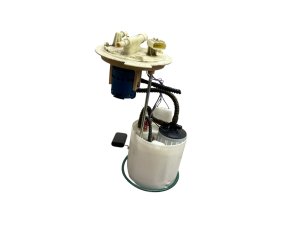
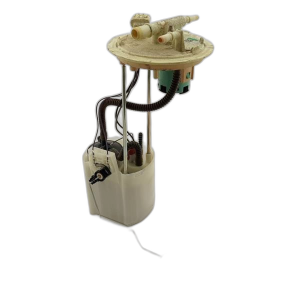
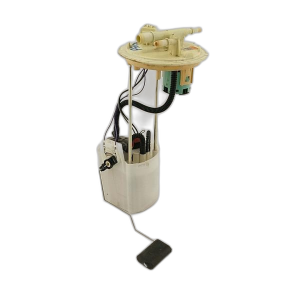
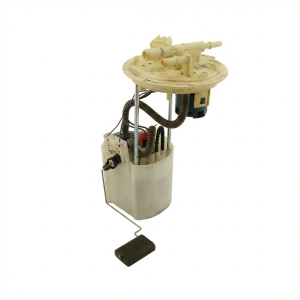
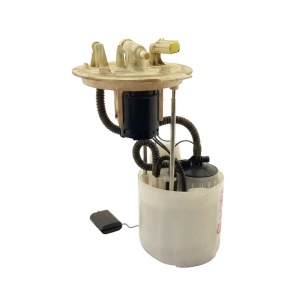
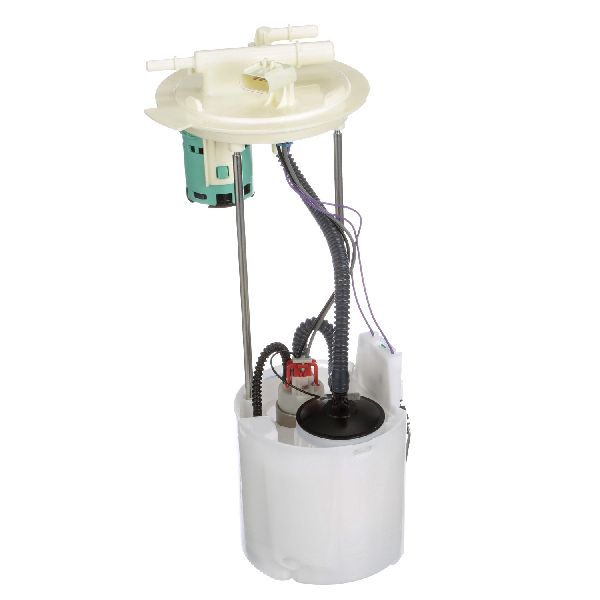
- Fuel Pump and Sender Assembly
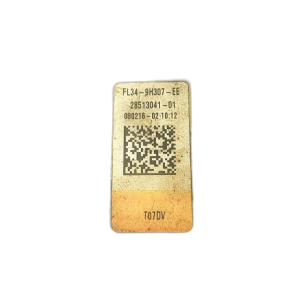
(OEM #FL3Z-9H307-F)— This is the most common failure point. The fuel level sending unit is integrated into this assembly, and it must be replaced as a single unit. Note that part numbers can vary based on tank size and engine, so always verify with a VIN.
Trusted brands: Motorcraft
OEM price range: $941-$1170
Aftermarket price range: $400-$700
Platform-Specific Known Issues
- While not a TSB for P0461 specifically, issues with the Fuel Pump Control Module (FPCM) and its connector are common on F-150s of various generations due to its location above the spare tire, which exposes it to moisture and corrosion. 🎬 Watch: How to swap the fuel pump control module While this typically sets other codes like P0627, a corroded connector could potentially cause the erratic voltage readings seen with P0461.
Mechanic-Grade Diagnostic Values
- Fuel Level Sender Resistance (Standard Fuel Vehicle) — expected: 15 Ohms (± 2) at Empty, 160 Ohms (± 4) at Full.. Failure: Infinite resistance (OL) indicates an open circuit. A reading that doesn't change smoothly when moving the float indicates a worn spot on the resistor.
- Fuel Level Sender Resistance (Flex-Fuel Vehicle - FFV) — expected: 7 Ohms (± 2) at Empty, 138 Ohms (± 4) at Full.. Failure: Readings outside this range, or infinite resistance (OL), confirm a faulty sender for an FFV model.
- Fuel Level Sensor Signal Voltage — expected: Approximately 0.5V at Empty to 4.5V at Full on a 5V reference circuit.. Failure: Voltage that is stuck, erratic, or doesn't correspond to the known fuel level points to a sensor or wiring issue.
- Wiring Test at Fuel Pump Connector (C434) — expected: Measure resistance between the Yellow/White wire (signal) and the Black/Orange wire (ground) on the fuel pump module side of the connector.. Failure: The resistance measured here should match the expected sender resistance values. If the reading is OL (open circuit), the sending unit has failed internally.
Scan Tool Commands That Help
- FORScan: Instrument Panel Cluster (IPC) Self-Test / Gauge Sweep — This is a quick way to rule out a physically stuck or failed gauge in the instrument cluster. When commanded, all gauges should smoothly sweep from their lowest to highest readings and back. If the fuel gauge fails to move during this test, it points to a problem within the cluster itself, which is a rare but possible cause.
Wiring & Ground Locations
- G100 — On the left-hand side of the radiator core support in the engine bay.. This is a primary ground point for the fuel pump and sending unit circuits on many F-150s. Corrosion or a loose connection at this point can cause erratic voltage and resistance readings for the entire fuel system, potentially triggering a P0461 code. It's a critical and often overlooked check before suspecting the in-tank unit.
- Fuel Pump Module Connector (C434) — On top of the fuel pump assembly, accessible after lowering the fuel tank or lifting the truck bed.. This is the main electrical interface for the in-tank fuel pump and sending unit. All voltage and resistance tests for the sending unit are performed at this connector's pins. Corrosion from moisture or physical damage to the pins or wiring at this connector can directly cause the P0461 code.
Real Owner Repair Stories
- YouTube video from a professional technician (2014 Ford F-150 (previous generation, but diagnostic principles are identical)) — Check Engine Light with code P0461.
❌ Tried (didn't work) The technician immediately suspected the sending unit but needed to confirm.
✅ What actually fixed it The vehicle had an aftermarket (Precision brand) fuel pump assembly installed. The technician tested the sending unit's resistance and found it was erratic and incorrect, only reading properly when pressure was applied to the contacts. The final fix was to replace the entire aftermarket fuel pump assembly with a new OEM Motorcraft unit. - Ford F150 Forum user (2021 F-150 (newer generation, but relevant experience)) — Fuel gauge was wildly inaccurate after swapping the standard 26-gallon tank for a larger 36-gallon tank.
❌ Tried (didn't work) Using FORScan to change the tank size in the vehicle's configuration corrected the 'Distance to Empty' calculation but did not fix the gauge reading itself.
✅ What actually fixed it The issue was suspected to be a faulty sending unit on the new 36-gallon fuel pump assembly. The resolution is to ensure the correct, compatible sending unit is used and that it is not defective, as the instrument cluster relies on its specific resistance range.
OEM Part Supersession History
FL3Z-9H307-F→FL3Z-9H307-N— Standard part revision by the manufacturer. This part is typically for models with the extended range fuel tank.
Heads up: Part numbers are highly specific to tank size (e.g., standard vs. extended range) and wheelbase. Always verify the correct part number with the vehicle's VIN. Using a pump for a 26-gallon tank in a 36-gallon tank will result in incorrect gauge readings.FL3Z-9H307-D→FL3Z-9H307-M— Standard part revision. This part is typically for models *without* the extended range fuel tank.
Heads up: As with other fuel pump assemblies, this is specific to the standard size fuel tank. Do not install in a truck with the 36-gallon extended range tank.FL3Z-9H307-B→FL3Z-9H307-L— Standard part revision. This part number is often associated with the 2.7L engine and a specific (122") wheelbase, valid up to mid-2017.
Heads up: This part has a specific application cutoff date of 07/17/2017. Parts may have changed after this date.
Model Year Variations Within This Range
- 2018-2020: The 2018 model year marked a significant refresh for the F-150. This included the introduction of a new base 3.3L V6, a 3.0L Power Stroke diesel option, and the widespread adoption of the 10-speed automatic transmission across most of the lineup. The 5.0L V8 and 2.7L/3.5L EcoBoost engines also received updates. These changes can affect which fuel pump assembly is required, as part numbers are often tied to specific engine and transmission combinations.
Diagnostic Flowchart
Other Known Issues on This Vehicle
Issues unrelated to this code that are worth knowing about as an owner of this generation:
- Harsh/Erratic Shifting on 10R80 10-Speed Transmission 🔴 High — Very common on 2017-2020 models. Can occur at various mileages. Often presents as hard shifts (especially 3-5), clunking, or delayed engagement. (Ref: Multiple TSBs have been issued, including TSB 21-2145 and others, which often involve a PCM reflash to update shift logic. In some cases, a valve body or CDF drum replacement is required.)
- Excessive Oil Consumption on 5.0L V8 🟠 Medium — A known issue primarily affecting 2018-2020 models. Some owners report consuming over a quart of oil in 3,000 miles. (Ref: TSB 19-2365 addresses this by reprogramming the PCM to reduce engine vacuum during certain conditions and installing a revised dipstick.)
- Frozen Door Latches in Cold Weather 🟠 Medium — Common on 2015-2017 models. In freezing temperatures, doors may fail to open or, more dangerously, fail to latch closed, potentially opening while driving. (Ref: Ford issued recall 17S33 (NHTSA 17V652) to install water shields over the door latches to prevent moisture intrusion.)
- Warped Dashboard (Upper Dash) 🟡 Low — Commonly reported across 2015-2020 models, where the plastic dashboard cover can lift and warp around the defrost vents, especially in hot climates.
- Coolant Leaks from Plastic Fittings (EcoBoost Engines) 🟠 Medium — The plastic Y-pipe and other fittings in the cooling system on 2.7L and 3.5L EcoBoost engines can become brittle and crack over time, leading to sudden coolant loss.
Used vs. New Parts: Buying Guide for This Vehicle
When a used part is the smart pick: Due to the extremely high labor cost to access the fuel pump (dropping the tank or lifting the bed), using a salvaged part is NOT recommended. The risk of the used part failing prematurely outweighs the potential cost savings. The only exception might be for sourcing a pigtail connector if the original is corroded or damaged.
Donor-vehicle mileage cap: roughly under 50000 miles for the part to have meaningful remaining life.
What to inspect on the donor part:
- Verify the part number from the donor vehicle matches the required part for your VIN exactly.
- Inspect the electrical connector pins for any signs of corrosion, melting, or damage.
- Ensure the plastic housing of the pump assembly is not cracked or damaged.
- If possible, ask for the donor vehicle's mileage to gauge the remaining life of the pump motor and sender.
OEM-only on this vehicle (don't cheap out):
- Fuel Pump and Sender Assembly
Aftermarket brands forum-validated for this vehicle:
- Delphi
Brands owners have reported issues with on this vehicle:
- Generic or unbranded 'white box' parts have a high failure rate. One technician specifically noted a 'Precision' brand fuel pump failed and caused a P0461 code.
Real Owner Stories
Aggregated from forums and TSBs cited above. Mileages and costs reflect what owners reported in those sources.
Ford F-150
Symptoms: The check engine light is on for P0461 even though the fuel gauge appears to be working perfectly.
What fixed it: The PCM's internal checks flagged the fault without obvious symptoms; the diagnostic process requires checking for a lack of change over a significant distance.
Source hint: Ford-Trucks.com thread titled 'P0461 check engine light'
Ford F-150 Flex Fuel
Symptoms: Erratic fuel gauge behavior and P046x codes.
What fixed it: Repairing the wiring harness, specifically identifying issues within the flex fuel converter harness.
Source hint: F150forum.com thread titled 'Gas Gauge not working? - fixed it!'
Related OBD-II Codes
Frequently Asked Questions
My 2018-2020 F-150 with the 5.0L V8 is using a lot of oil; is there a fix for this?
I have a 2017-2020 F-150 with the 10-speed transmission that shifts harshly. Is this related to P0461?
Can I use a used fuel pump from a salvage yard to fix my P0461 code?
My F-150 doors won't latch in the winter; is there a recall for this?
Could a problem with the Fuel Pump Control Module (FPCM) cause my fuel gauge issues?
Is the P0461 code common on other Ford trucks besides the F-150?
Helpful Videos

Used OEM Parts in Stock
New Aftermarket Parts Available


The information in this article is provided for general reference and educational purposes only. Vehicle specifications, procedures, and part compatibility can vary by production date, trim level, and region. Always consult your vehicle's factory service manual and verify part numbers before purchasing or performing repairs. Safety-critical components such as airbags, seat belts, and braking systems should be installed by a qualified professional.
- Ford F-150:
- 🧭 Diagnostic Flowchart
- 🎬 Helpful Videos
- 🛍️ Shop This Part
- What's Unique About the 2015-2020 Ford F-150
- Symptoms You May Notice
- Most Likely Causes
- Rare But Worth Checking
- Diagnosis Steps
- Parts You'll Likely Need
- Platform-Specific Known Issues
- Mechanic-Grade Diagnostic Values
- Scan Tool Commands That Help
- Wiring & Ground Locations
- Real Owner Repair Stories
- OEM Part Supersession History
- Model Year Variations Within This Range
- Other Known Issues on This Vehicle
- Used vs. New Parts: Buying Guide for This Vehicle
- Real Owner Stories
- Ford F-150
- Ford F-150 Flex Fuel
- Related OBD-II Codes
- Frequently Asked Questions
- 🎟️ Get 5% Off