

P0461 on 2017-2023 Volkswagen Jetta: Fuel Level Sensor Causes and Fixes
On a 2017-2023 VW Jetta, code P0461 almost always points to a faulty fuel level sending unit, which is part of the in-tank fuel pump assembly. This causes an erratic or incorrect fuel gauge, often showing empty after a fill-up. Replacing the entire fuel pump and sender assembly, OEM part number 5Q0919051BH for many A7 models, is the most common and definitive fix.
- P0461 on a VW Jetta means there's a problem with the fuel level sensor's signal.
- The most common symptom is an incorrect or erratic fuel gauge.
- The most likely cause is a failed fuel level sending unit, which is usually part of the in-tank fuel pump assembly.
- You can continue driving, but you risk running out of fuel unexpectedly.
- A DIY replacement is possible for those comfortable with working near the fuel tank, but requires care and proper safety procedures.
What's Unique About the 2017-2023 Volkswagen JETTA
For the 2017-2023 Jetta, which spans the end of the A6 and the majority of the A7 (MQB platform) generation, the P0461 code is a straightforward issue related to the fuel sending unit. 🎬 Watch: Understanding P0461 causes and common sensor circuit fixes. Unlike some vehicles with complex fuel system modules, the Jetta's system is relatively conventional. The fuel level sensor is a known wear item, and its failure is a common occurrence as these vehicles accumulate mileage. The provided NHTSA TSBs confirm the code can appear on these models, though they are generic bulletins that list P0461 among various potential customer complaints and do not indicate a specific recall or systemic defect for this issue. [VIN4APIN20231010, VIN4APIN20210728, VIN4APIN20210706]
Diagnostic Flowchart
Tap your situation to follow the diagnostic path that matches what you're seeing on this vehicle.
Generation note: This range covers two Jetta generations: the A6 (2017-2018) and the A7 (2019-2023). The fundamental cause and repair for P0461 are consistent across both generations, as they both use a similar in-tank fuel pump and sending unit design. The A7 Jetta is built on the VW MQB platform, sharing components and potential issues with vehicles like the VW Golf, Tiguan, and Audi A3.
Symptoms You May Notice
- Inaccurate or wildly fluctuating fuel gauge.
- Fuel gauge stuck on empty or full.
- Check Engine Light is on.
- Low fuel warning light may stay on or flash, even with a full tank.
- Fuel gauge drops to empty after filling the tank, then may slowly rise or stay empty.
- Inaccurate "distance to empty" calculation on the trip computer.
- Replacing the instrument cluster before testing the fuel sending unit. The sending unit is a much more common failure point.
- Replacing the fuel pump without confirming the sensor is the root cause, although they are replaced as a single assembly on this vehicle.
Most Likely Causes
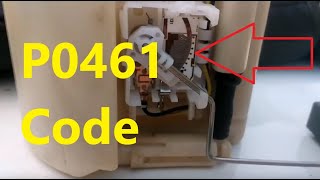
- Faulty Fuel Level Sending Unit 🔴 High Probability → Shop Fuel Tank Sending Unit The sending unit is a mechanical part with a float and a variable resistor that sits inside the fuel tank. Over time, the resistor contacts can wear out, get contaminated by fuel additives or debris, or suffer from water contamination, causing dead spots and incorrect readings. This is a common wear item after 80,000-120,000 miles.
How to confirm: Access the fuel pump assembly under the rear seat. Disconnect the sensor and measure its resistance with a multimeter set to Ohms. While manually moving the float arm, the resistance should change smoothly. For many VWs, the expected range is approximately 10-36 Ohms at full and 73-110 Ohms at empty, though this can vary by specific part. If the reading jumps, drops out (shows an open circuit), or is out of spec, the sender is bad.
Typical fix: Replace the fuel level sending unit. On the Jetta, the sender is integrated into the fuel pump module, so the entire assembly is typically replaced as one unit.
Est. part cost: $150-$450 - Wiring or Connector Issues 🟡 Medium Probability The wiring connector on top of the fuel tank is located under the rear seat but can still be exposed to moisture and dirt, which can lead to corrosion on the pins over time. A poor ground connection for the fuel tank/sender can also cause erratic readings. Rodent damage to wiring harnesses is also a possibility.
How to confirm: Visually inspect the wiring harness and the connector on top of the fuel pump assembly. Check for corrosion on the pins, frayed wires, or loose connections. Perform a continuity test on the signal and ground wires between the sensor and the instrument cluster or relevant control module.
Typical fix: Clean corroded connector pins with a contact cleaner and apply dielectric grease. Repair any broken or frayed wires. Ensure the chassis ground strap for the fuel system is clean and tight.
Est. part cost: $5-$30 - Stuck or Damaged Float Arm ⚪ Low Probability Though less common, the plastic float arm can become detached, damaged, or get stuck due to debris in the fuel tank or if the tank has been deformed from an impact. The float itself can also potentially become saturated with fuel and sink.
How to confirm: After removing the fuel pump assembly, visually inspect the float and its arm. Ensure it moves freely throughout its entire range of motion without binding or getting stuck.
Typical fix: If the float is simply detached, it may be possible to re-secure it. If the arm is broken or the unit is damaged, the entire fuel pump assembly must be replaced.
Est. part cost: $150-$450
Rare But Worth Checking
- Instrument Cluster Failure: While rare, a fault within the instrument cluster itself can cause the fuel gauge to read incorrectly. This is usually accompanied by other gauge or display problems. Advanced scanners can perform an actuator test on the gauge to see if it sweeps correctly, helping to rule this out. Before suspecting the cluster, the fuel sender and wiring must be ruled out.
- Powertrain Control Module (PCM) Fault: → Shop Engine Control Module (ECM) This is extremely unlikely. A firmware glitch or internal fault in the PCM could cause it to misinterpret a normal sensor voltage. This should only be considered after all other possibilities, including the sensor, wiring, and instrument cluster, have been exhaustively tested.
Diagnosis Steps
- Scan for Codes: Use an OBD-II scanner to confirm P0461 is the primary code. Note any other codes that may be present.
- Check Live Data: Use a capable scanner (like VCDS for VW) to monitor the fuel level sensor resistance (Ohms) in the instrument cluster's measuring blocks. Rocking the vehicle or adding/removing fuel should cause a smooth change in the reading. Jumpy, static, or out-of-range values point to a problem.
- Inspect the Connector: Lift the rear seat cushion to access the fuel pump cover. Remove the cover and inspect the electrical connector on top of the fuel pump assembly for corrosion, moisture, or damage.
- Test the Sensor Resistance: Disconnect the battery. Disconnect the fuel sending unit connector. Use a multimeter set to Ohms to measure the resistance across the sender's pins. Manually move the float arm up and down (if the unit is removed). The resistance reading should change smoothly and consistently. For many VWs, this is roughly 10-36 Ohms (full) to 73-110 Ohms (empty). If it jumps, drops out, or reads open/shorted, the sender is faulty.
- Test the Wiring: If the sensor tests good, check the wiring between the connector and the instrument cluster/ECM. Check for continuity on the signal wire and ensure the ground wire has a good connection to the chassis. A wiring diagram shows the fuel level sensor (G) connects to the instrument cluster.
- Check Instrument Cluster: Use an advanced scanner (like VCDS for VW) to run an output test on the instrument cluster to command a fuel gauge sweep. This can help rule out a faulty gauge motor.
- Final Confirmation: If the sensor, wiring, and cluster test good, the issue may lie with the PCM, but this is rare. At this point, professional diagnosis is recommended.
Parts You'll Likely Need
- Fuel Pump and Sending Unit Assembly
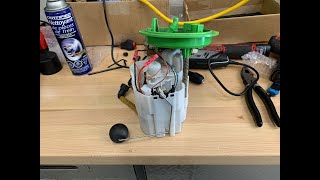
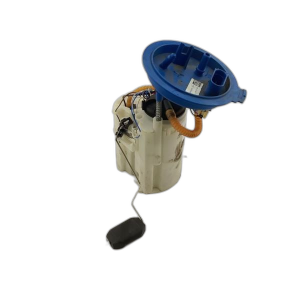
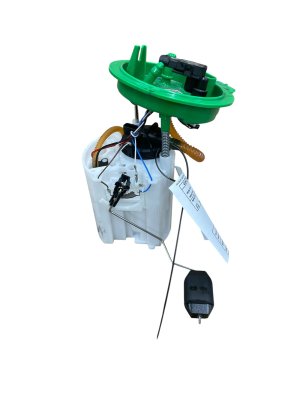
(OEM #5Q0919051BH (for many 2019+ models, verify with VIN))— This is the most common cause of P0461. The fuel level sensor (sending unit) is integrated into the fuel pump assembly and is replaced as a single unit. Part number 5Q0919051BH is a common replacement for MQB platform vehicles like the 2019+ Jetta.
Trusted brands: Bosch, VDO/Continental, Delphi, A-Premium
OEM price range: $300-$450
Aftermarket price range: $150-$250
Technical Service Bulletins (TSBs) & Recalls
- VIN4APIN20231010: A generic dealer information bulletin noting that fault P0461 may be stored in ECM memory on 2023 models, listed among other unrelated customer complaints.
- VIN4APIN20210728: A generic dealer information bulletin that mentions fault P0461 may be stored in the ECM on 2021 models, listed with other potential codes and issues.
- VIN4APIN20210706: A generic dealer information bulletin that lists P0461 as a potential fault code in the ECM for 2021 models, alongside other non-related issues.
Platform-Specific Known Issues
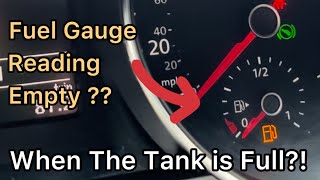
- Gauge Drops to Empty After Fill-Up: A very common complaint for this code on VW Jettas and other MQB platform cars is that the fuel gauge will work correctly until the tank is filled up. Immediately after filling, the gauge drops to empty, the low fuel light comes on, and the P0461 code is triggered. This points directly to a worn spot on the upper range of the sender's resistor strip.
Mechanic-Grade Diagnostic Values
- Fuel Level Sensor Resistance — expected: Approximately 10-36 Ohms when full, and 73-110 Ohms when empty. The reading should change smoothly when moving the float arm.. Failure: Readings are erratic, jump suddenly, or show an open/infinite resistance.
- Fuel Level Sensor Voltage (Live Data) — expected: Typically operates within a 0.5V (full) to 4.5V (empty) range. The voltage should change smoothly as fuel level changes.. Failure: Voltage is below 0.3V, above 4.7V, or does not change smoothly when rocking the vehicle.
Scan Tool Commands That Help
- VCDS (VAG-COM): Instrument Cluster (17) > Output Tests (03) — To command a full sweep of all instrument panel gauges, including the fuel gauge. If the gauge sweeps correctly during this test, the gauge motor itself is functional, pointing the diagnosis towards the sensor or wiring.
- VCDS (VAG-COM): Instrument Cluster (17) > Measuring Blocks (08) or Adv. Meas. Values — To view the live resistance reading (in Ohms) that the instrument cluster is receiving from the fuel level sensor. This allows you to see the raw data and check for erratic readings without physically accessing the sensor.
- VCDS (VAG-COM): Instrument Cluster (17) > Adaptation (10) > Offset for tank calibration values — This function allows for fine-tuning the fuel gauge reading. It is NOT a fix for a P0461 code caused by a faulty sensor, but can be used to correct minor inaccuracies after a repair. Adjusting this without fixing the root cause is not recommended.
Wiring & Ground Locations
- Ground Connection 42 — Located above the driver's footwell, to the left of the pedal cluster on a Jetta IV, a common location for interior grounds.. This ground point serves the instrument panel wiring harness, which includes the fuel pump and fuel level sensor circuits. A corroded or loose connection here can cause erratic gauge behavior and contribute to a P0461 code.
- Fuel Pump Connector — On top of the fuel pump assembly, accessible by lifting the rear passenger-side seat cushion and removing a black metal cover.. This is the primary connection point for the fuel level sensor. Testing for power, ground, and signal should be done here. Corrosion or damage to the pins is a common cause of failure.
Real Owner Repair Stories
- vwvortex.com forum user (2019 Jetta SEL) — Check engine light on, fuel gauge drops to empty immediately after filling the tank, and the distance-to-empty reading becomes inaccurate.
❌ Tried (didn't work) The user did not report trying other fixes first.
✅ What actually fixed it The dealership diagnosed the issue and replaced the in-tank fuel pump and sending unit assembly. This resolved all symptoms and the P0461 code.
OEM Part Supersession History
5Q0919051BF→5WA919051A— Part revision and update by the manufacturer.5Q0919051AP, 5Q0919051BK→5WA919051C, which was then superseded by 5WA919051P.— Multiple part revisions by the manufacturer for MQB platform vehicles.
Heads up: While these parts may physically fit, using the incorrect revision could lead to inaccurate readings or premature failure. Always verify the correct part number with the vehicle's VIN.
Model Year Variations Within This Range
- 2017-2018 (A6 Generation): The A6 Jetta may use a different fuel pump assembly part number than the A7. For example, part number 1K0919051DB is listed for 2008-2018 Jettas, indicating a different design from the MQB platform's 5Q0/5WA series parts. Verification by VIN is critical.
- 2019-2023 (A7/MQB Generation): These models use the MQB platform fuel pump assembly, commonly starting with part number 5Q0 or 5WA. The part number 5Q0919051BH is frequently cited for these years.
Helpful Videos
Used OEM Parts in Stock
New Aftermarket Parts Available

The information in this article is provided for general reference and educational purposes only. Vehicle specifications, procedures, and part compatibility can vary by production date, trim level, and region. Always consult your vehicle's factory service manual and verify part numbers before purchasing or performing repairs. Safety-critical components such as airbags, seat belts, and braking systems should be installed by a qualified professional.
- Volkswagen JETTA:
- 🧭 Diagnostic Flowchart
- 🎬 Helpful Videos
- 🛍️ Shop This Part
- What's Unique About the 2017-2023 Volkswagen JETTA
- Symptoms You May Notice
- Most Likely Causes
- Rare But Worth Checking
- Diagnosis Steps
- Parts You'll Likely Need
- Technical Service Bulletins (TSBs) & Recalls
- Platform-Specific Known Issues
- Mechanic-Grade Diagnostic Values
- Scan Tool Commands That Help
- Wiring & Ground Locations
- Real Owner Repair Stories
- OEM Part Supersession History
- Model Year Variations Within This Range
- 🎟️ Get 5% Off