

P0462 on 2006-2016 BMW 1 Series: Fuel Level Sensor Circuit Low Causes and Fixes
On a 2006-2016 BMW 1 Series, code P0462 is most often caused by a failed fuel level sending unit in the gas tank. Your BMW has two of them, and replacement of the faulty unit is the most common fix. Expect to pay $100-$250 for the part and 1-2 hours of labor.
- P0462 on your 1 Series points to a problem with the fuel level measurement system, most likely a faulty sending unit.
- Your car has two fuel sensors; use a scan tool to identify which one has failed before buying parts.
- The repair is DIY-friendly for those comfortable working with fuel system components, as access is under the rear seat, avoiding the need to drop the fuel tank.
- Do not continue to top off your fuel tank after the pump automatically stops, as this can damage the sensitive float mechanism.
- You can safely drive with this code, but keep track of your mileage to avoid running out of fuel.
What's Unique About the 2006-2016 BMW 1 Series
The BMW 1 Series, across both the E8x (2006-2013) and F2x (2011-2016) generations, uses a 'saddle' style fuel tank that straddles the driveshaft. Because of this design, it requires two separate fuel level sensors to get an accurate reading—one on the right side (typically integrated with the fuel pump) and a second one on the left side (often integrated with the fuel filter and pressure regulator). The signals from both sensors are processed by the Junction Box Electronics (JBE) or Footwell Module (FRM), which then sends the data over the car's network (K-CAN) to the instrument cluster (KOMBI) to display the final fuel level. A failure of either sensor can trigger a P0462 code, and diagnosis involves checking which of the two sensors is sending the incorrect, low-voltage signal.
Generation note: This guide covers two generations of the BMW 1 Series: the E81/E82/E87/E88 (approx. 2006-2013) and the F20/F21 (approx. 2011-2016). The fundamental design of a saddle tank with two fuel level sensors is consistent across both generations. However, specific part numbers for the sensors will differ. Access to the sensors is under the rear seat for both generations.
Symptoms You May Notice
- Inaccurate or erratic fuel gauge (stuck on empty, full, or fluctuating wildly).
- Low fuel warning light stays on, even with fuel in the tank.
- Check Engine Light is illuminated.
- The 'Range' or 'Miles to Empty' display is inaccurate or shows '---'.
- Replacing the fuel pump when only the integrated level sensor has failed. While they are often in the same assembly, sometimes the sensor can be replaced separately.
- Replacing the wrong side sending unit. It is crucial to use a scan tool or the hidden OBC menu to determine if the left or right sensor is the one sending the faulty signal before ordering parts.
Most Likely Causes
- Failed Fuel Level Sensor (Sending Unit) 🔴 High Probability → Shop Fuel Tank Sending Unit The sensor's resistor track can wear out over time from the float arm's constant movement, or the float itself can become saturated or stuck. BMWs use two sensors, doubling the chance of a failure compared to a single-sensor system. VDO is a common OEM supplier for these parts.
How to confirm: Use a BMW-capable OBD-II scanner to read the live data for both the left and right fuel level sensors. One will likely show an erratic or fixed low reading. Alternatively, access the hidden OBC menu (Menu 06.00 on E8x, Menu 08 on F2x 🎬 Watch: How to access the hidden menu on E-series BMWs) to see the raw fuel level in liters for each tank half. You can also test the sensor's resistance with a multimeter; it should change smoothly as the float arm is moved. A reading of zero or infinite ohms indicates a failed sensor. For many BMWs, the range is approximately 75 ohms at empty and near 0-10 ohms at full.
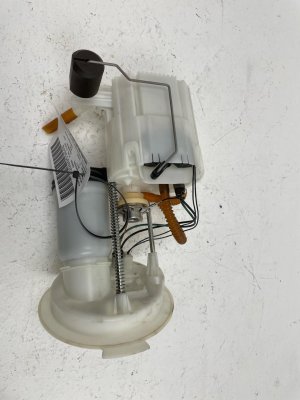
Typical fix: Replace the faulty fuel level sending unit. The right-side sensor is often part of the fuel pump assembly, while the left-side is a standalone unit or integrated with the fuel filter. Access is under the rear seat cushion.
Est. part cost: $100-$250 - Wiring or Connector Issue 🟡 Medium Probability The wiring and connectors for the fuel pump and sending units are located under the rear seat and on top of the fuel tank. They can be susceptible to corrosion from moisture or physical damage during other repairs. A short to ground in the signal wire will cause the exact 'circuit low' condition of P0462.
How to confirm: Visually inspect the wiring harnesses and connectors going to both fuel level sensor access panels under the rear seat. Look for any signs of corrosion (green crust), melted plastic, or chafed wires. Check for continuity and shorts to ground using a multimeter.
Typical fix: Repair the damaged section of wiring or clean/replace the corroded connector. In some cases, a wiring pigtail may need to be spliced in.
Est. part cost: $20-$50
Rare But Worth Checking
- Instrument Cluster (KOMBI) Fault: → Shop Instrument Cluster A fault within the instrument cluster itself can cause it to misinterpret a perfectly good signal from the fuel level sensors. This is rare, but forum posts show it can happen, sometimes manifesting as a gauge that is physically stuck or reads incorrectly despite sensor data being correct. A cluster self-test via the hidden menu can sometimes identify issues.
- Powertrain Control Module (PCM/DME) or Junction Box Electronics (JBE) Fault: While extremely unlikely, the module that receives and processes the signal (like the JBE) could have an internal fault. This should only be considered after all other possibilities have been exhaustively ruled out.
Diagnosis Steps
- Scan for Codes: Confirm P0462 is the primary code. Note if any other codes are present.
- Check Live Data (Scan Tool or Hidden Menu): Use a scan tool to monitor live data for both fuel level sensors (in liters or ohms). Alternatively, access the hidden On-Board Computer (OBC) menu. For E8x models, hold the trip reset button to enter the menu, unlock it using the sum of the last 5 digits of your VIN, and navigate to menu 06.00 to see left/right tank levels. For F20/F21 models, the process is similar, with the fuel level typically found in menu 08. 🎬 See this walkthrough for accessing the F20 hidden test menu The sensor with the reading that doesn't change or is stuck low is the faulty one.
- Inspect Wiring: Remove the rear seat bottom to access the covers for the fuel pump (right side) and auxiliary sending unit (left side). Remove the covers and inspect the wiring and connectors for any visible damage, corrosion, or signs of overheating.
- Test the Sensor Circuit: Disconnect the suspect sensor. With the key on, use a multimeter to check for the correct reference voltage at the connector. Check the ground wire for good continuity to the chassis.
- Test the Sensor Directly: If the wiring seems okay, remove the sensor from the tank. Measure its resistance with a multimeter while manually moving the float arm. 🎬 Watch: How to test and replace the fuel level sensor The resistance should change smoothly. If it jumps, drops to zero, or reads as an open circuit (OL), the sensor is bad.
- Isolate the Faulty Component: Based on the tests, determine if the cause is the sensor itself or a wiring issue, and proceed with the appropriate repair.
Parts You'll Likely Need
- Fuel Level Sensor / Fuel Filter Assembly (Left Side)
(OEM #16117163295, 16147163296)— This is the most common component to fail. The left-side unit often contains the fuel filter and pressure regulator. Part numbers vary by specific model, engine (N52 vs N54/N55), and production date. Always verify with your VIN.
Trusted brands: Genuine BMW, VDO (OEM), Bosch
OEM price range: $150-$250
Aftermarket price range: $80-$180 - Fuel Pump / Fuel Level Sensor Assembly (Right Side)
(OEM #16117159162 (sensor only), or full pump assembly like 16147197075)— The right-side sensor is typically integrated into the main fuel pump assembly. While less common to fail than the left side, it is still a frequent cause. Sometimes the sensor can be bought separately, but often the entire pump module is replaced.
Trusted brands: Genuine BMW, VDO (OEM), Pierburg
OEM price range: $200-$400 (for assembly)
Aftermarket price range: $150-$300 (for assembly)
Platform-Specific Known Issues
- On some E8x models, owners have reported that dealers state the left-side sending unit is non-serviceable and requires a full fuel tank replacement. This is an extremely expensive repair (quoted over $6,000 in one instance), and it's worth seeking a second opinion from an independent specialist who is willing to replace just the sender assembly.
- Topping off the fuel tank after the pump clicks off is known to sometimes cause the float to get stuck or damage the sensitive resistor components, leading to temporary or permanent gauge issues.
Mechanic-Grade Diagnostic Values
- Fuel Level Sensor Resistance (E8x/E9x platform) — expected: Approximately 4.5-75 Ohms. One forum user measured a working sensor at 4.5 Ω (full) and 77.5 Ω (empty). Another source suggests a range of 50 Ω to 1000 Ω, which may apply to specific aftermarket or different BMW models.. Failure: A reading of 0 Ω (short circuit) or infinite/OL (open circuit) indicates a failed sensor. The resistance should sweep smoothly when moving the float arm, with no jumps or dead spots.
- Fuel Level Sensor Signal Voltage — expected: A normal operating range is typically between 0.5V and 4.5V.. Failure: A P0462 code is triggered when the voltage is abnormally low, often below 0.5V or even 0.25V.
- Live Data Resistance (Scan Tool) — expected: When viewing live data on a BMW-specific scanner, the resistance values for left and right sensors should be displayed. A full tank may show a low resistance, while an empty tank shows a higher resistance.. Failure: A value that is fixed, erratic, or reads abnormally high (e.g., 1200+ Ohms) when the tank level does not correspond can indicate a faulty sensor or a wiring issue.
Hidden / Shadow Codes Worth Checking
- A6CF: While primarily for the AUC (air quality) sensor, this code can sometimes appear in a general module scan. It indicates a communication or sensor fault on a line that may be processed by the same module (JBE) as the fuel level sensors. It is not directly related but can be seen during diagnosis. (see via BMW-specific scanners like ISTA, INPA, or high-end aftermarket tools (Foxwell, Autel).)
- B7F70B: Fault code for 'fuel level sensor implausible' stored in the instrument cluster (KOMBI). This code specifically points to a software error within the cluster where the gauge shows an incorrect low level after refueling. A TSB was issued for other models (G-series) with this issue. (see via BMW-specific scanners like ISTA.)
Scan Tool Commands That Help
- ISTA (Rheingold): Call Up ECU Functions > JBE (Junction Box Electronics) > Diagnosis Query / Component Triggering — This is the primary diagnostic path. It allows a technician to read the raw values (liters, resistance in ohms, or voltage) reported by both the left and right fuel level sensors directly from the JBE module. This isolates the fault to a specific sensor or its wiring before any parts are removed.
- ISTA (Rheingold): Service Functions > Body > Instrument Cluster > Reset — In rare cases where a software glitch in the instrument cluster (KOMBI) is suspected, a reset may temporarily resolve display issues. For known software bugs, a full vehicle reprogramming/encoding with a newer ISTA version is the correct fix.
- Hidden OBC Menu: Menu 06.00 (E8x) or Menu 08 (F2x) — This is a diagnostic method that doesn't require a scan tool. It allows the owner to see the raw fuel level in liters for each of the two tank halves (e.g., '06.00: 10.5 12.3' would mean 10.5L in the left half, 12.3L in the right). This is crucial for identifying which side's sensor is faulty.
Wiring & Ground Locations
- JBE (Junction Box Electronics) — Behind the glove box for the E8x generation.. The JBE is the central module that receives the analog signals from both fuel level sensors and converts them for the K-CAN bus to be read by the instrument cluster. A fault in the JBE or its connections is a rare but possible cause.
- Connector X14270 (at JBE) — This is a 47-pin connector at the JBE module.. Pin 7 is the signal from fuel-level sensor 1, and Pin 9 is the signal from fuel-level sensor 2. A technician can test the voltage or resistance directly at these pins to verify the integrity of the wiring from the tank to the JBE.
Real Owner Repair Stories
- YouTube user 'pete with auto repair tips' (2010 Dodge Charger (Note: Not a BMW, but demonstrates a critical, relevant edge case)) — P0462, fuel gauge jumping around.
❌ Tried (didn't work) Replacing both fuel pumps with used units from a junkyard.
✅ What actually fixed it The instrument cluster itself was faulty. Pushing on the cluster housing caused the voltage reading from the fuel level sensor circuit to change, indicating a bad connection or solder joint inside the cluster. Replacing the instrument cluster was the fix. - Bimmerpost user 'bluewater328' (2011 BMW 328xi (E90 platform, highly relevant to E8x)) — Inaccurate fuel gauge, running out of gas unexpectedly, DTE changes, gauge not reading full after fill-up.
❌ Tried (didn't work) Initial diagnosis suggested the sensors were electrically good via multimeter test, but the OBC live data showed an abnormal reading on the right sensor (stuck at 1200+ Ohm).
✅ What actually fixed it The user identified that the right side sensor was sending an implausible signal to the JBE, even though it tested okay with a multimeter when removed. The final fix was replacing the faulty right-side sending unit, which resolved the inaccurate readings. This highlights that a sensor can fail in a way that only becomes apparent through live data monitoring under operating conditions.
Model Year Variations Within This Range
- 2006-2013 (E8x) vs. 2011-2016 (F2x): While the dual-sensor saddle tank concept is the same, the electronic modules, part numbers, and specific resistance values may differ. The E8x generation primarily uses the JBE module for sensor processing, while F-series cars have more integrated body domain controllers. The fuel tank capacity also differs slightly (53L for E82 vs 52L for F20), which affects calibration.
Diagnostic Flowchart
Other Known Issues on This Vehicle
Issues unrelated to this code that are worth knowing about as an owner of this generation:
- High-Pressure Fuel Pump (HPFP) Failure (N54/N55 Engines) 🔴 High → Shop Fuel Pump — Very common on early N54 engines (2007-2010), less common but still a known issue on N55. Failure can occur anywhere from 30,000 to 80,000 miles. Led to a warranty extension. (Ref: BMW extended the warranty on the HPFP for 10 years or 120,000 miles.)
- Electric Water Pump & Thermostat Failure (N54/N55 Engines) 🔴 High — Considered a preventative maintenance item. Prone to failure without warning, typically between 60,000 and 100,000 miles, which can cause rapid overheating.
- Valve Cover & Gasket Oil Leaks (All Engines) 🟠 Medium — Extremely common across all engine variants (N52, N54, N55, N20) due to heat and material degradation. Leaks often start appearing after 60,000-80,000 miles.
- Oil Filter Housing Gasket (OFHG) Leak (All Engines) 🔴 High — Very common failure point. A leak here is critical as it can drip oil onto the serpentine belt, causing it to slip off and potentially get sucked into the engine's main seal, leading to catastrophic engine failure.
- Turbocharger Wastegate Rattle (N54 Engine) 🟠 Medium — A very well-known issue on the twin-turbo N54 engine. A rattling noise is audible on deceleration. While initially just an annoyance, it can lead to boost control problems over time.
- Timing Chain Guide Failure (N20 Engine) 🔴 High — A critical defect affecting N20 engines produced before 2015. The plastic timing chain guides become brittle and break, which can lead to oil starvation and catastrophic engine failure. A whining noise is the primary warning sign. (Ref: BMW issued Service Information Bulletin SIB 11 03 17, extending the warranty for the timing chain and oil pump drive to 7 years/70,000 miles for affected vehicles.)
- Plastic Charge Pipe Failure (N54/N55 Engines) 🟠 Medium — The factory plastic charge pipe is prone to cracking, especially on tuned vehicles, causing a sudden loss of power and a loud pop. It is a common preventative upgrade.
Used vs. New Parts: Buying Guide for This Vehicle
When a used part is the smart pick: A used part is generally NOT recommended for the fuel level sensors (sending units) themselves. The primary failure mode is wear on the resistor track, so a used part has unknown and likely significant wear already. A used part only makes sense for the wiring connectors/pigtails if the original is damaged, or potentially for a replacement instrument cluster if it's identified as the root cause and comes with a warranty and low mileage.
Donor-vehicle mileage cap: roughly under 50000 miles for the part to have meaningful remaining life.
What to inspect on the donor part:
- For a wiring pigtail, ensure there is no green/white corrosion on the pins and the plastic is not brittle or melted.
- For an instrument cluster, verify the mileage of the donor vehicle and ensure there is no visible damage to the screen or housing.
- Ask the dismantler if the donor car was involved in a front or rear collision; a side impact is less likely to have damaged the fuel tank components.
OEM-only on this vehicle (don't cheap out):
- Fuel Level Sensor / Sending Unit
Aftermarket brands forum-validated for this vehicle:
- VDO (often the Original Equipment Manufacturer)
- Bosch
- Pierburg
Brands owners have reported issues with on this vehicle:
- Unnamed, no-brand units from online marketplaces. These often have incorrect resistance ranges, leading to inaccurate gauge readings even when new.
Real Owner Stories
Aggregated from forums and TSBs cited above. Mileages and costs reflect what owners reported in those sources.
2009 BMW 1 Series (E8x)
Symptoms: The fuel gauge was not working correctly, which prompted a visit to the dealer for diagnosis.
What fixed it: The dealer stated the left-side sending unit was non-serviceable and required a full fuel tank replacement. The owner was advised to seek a second opinion from an independent shop willing to replace only the sender.
Cost: $6000-$6500
Source hint: vehicle_specific_issues section of the article
2011 BMW 1 Series
Symptoms: The fuel gauge was stuck on empty even though there was fuel in the tank.
What fixed it: The problem was identified as a faulty fuel level sensor that required replacement.
Source hint: BMWFanatics - Thread 'Fuel Gauge stuck on empty even though there's fuel ??'
Related OBD-II Codes
Frequently Asked Questions
My 1 Series fuel gauge is stuck on empty. How can I check the fuel level sensors myself without a special scan tool?
My BMW dealer quoted over $6,000 to fix my fuel gauge, saying the whole tank needs to be replaced. Is this accurate?
Could topping off my gas tank have caused the P0462 code on my BMW?
My 1 Series has two fuel level sensors. How do I know which one is causing the P0462 code?
What parts are typically needed to fix P0462 on my 1 Series, and what's the estimated cost?
I'm testing my fuel level sensor with a multimeter. What resistance reading should I expect on my 1 Series?
Helpful Videos

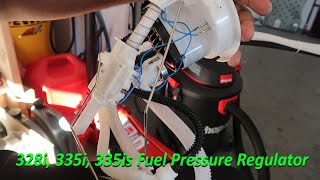
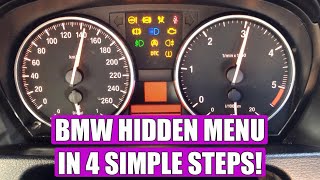
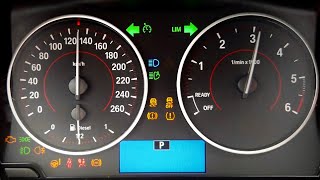

We Have This Part in Stock
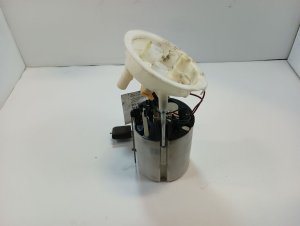

The information in this article is provided for general reference and educational purposes only. Vehicle specifications, procedures, and part compatibility can vary by production date, trim level, and region. Always consult your vehicle's factory service manual and verify part numbers before purchasing or performing repairs. Safety-critical components such as airbags, seat belts, and braking systems should be installed by a qualified professional.
- BMW 1 Series:
- 🧭 Diagnostic Flowchart
- 🎬 Helpful Videos
- 🛍️ Shop This Part
- What's Unique About the 2006-2016 BMW 1 Series
- Symptoms You May Notice
- Most Likely Causes
- Rare But Worth Checking
- Diagnosis Steps
- Parts You'll Likely Need
- Platform-Specific Known Issues
- Mechanic-Grade Diagnostic Values
- Hidden / Shadow Codes Worth Checking
- Scan Tool Commands That Help
- Wiring & Ground Locations
- Real Owner Repair Stories
- Model Year Variations Within This Range
- Other Known Issues on This Vehicle
- Used vs. New Parts: Buying Guide for This Vehicle
- Real Owner Stories
- 2009 BMW 1 Series (E8x)
- 2011 BMW 1 Series
- Related OBD-II Codes
- Frequently Asked Questions
- 🎟️ Get 5% Off