

P0462 on 2009-2014 Ford F-150: Fuel Level Sensor Circuit Low Causes and Fixes
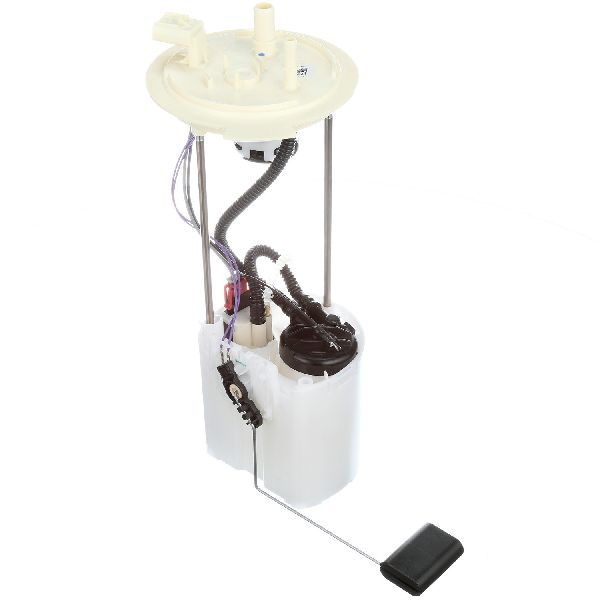
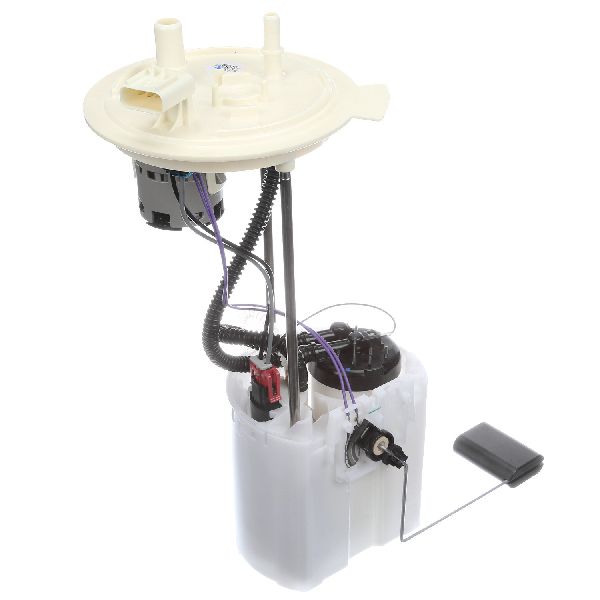
This code indicates a problem with the fuel level sensor, causing an erratic or incorrect fuel gauge. The most common fix is replacing the fuel level sending unit, which is part of the fuel pump module inside the fuel tank. Expect this to be a moderately difficult DIY job requiring the fuel tank to be dropped or the bed to be lifted.
- P0462 on a 2009-2014 F-150 almost always points to a bad fuel level sending unit.
- The sending unit is part of the fuel pump module, requiring the fuel tank to be dropped or the bed to be lifted for replacement.
- Due to the unreliable fuel gauge, use your trip odometer to track fuel consumption and avoid running out of gas.
- Before replacing the expensive fuel pump assembly, always inspect the wiring and the main connector on top of the tank for corrosion or damage, as this can be a simpler fix.
- This is a challenging DIY repair due to the need to safely handle the fuel tank. If you are not comfortable with this, professional service is recommended.
What's Unique About the 2009-2014 Ford F-150
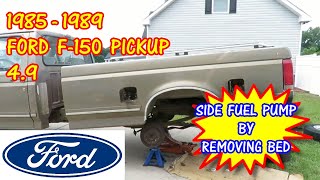
For the 2009-2014 (12th generation) Ford F-150, the fuel level sensor is an integrated component of the entire fuel pump assembly. This design means that while the sensor itself is the point of failure, you often have to replace the entire fuel pump module to fix it. This makes the repair more involved and costly than on vehicles where the sending unit can be replaced separately. The job requires dropping the fuel tank or lifting the truck bed for access, 🎬 See how to replace the pump by removing the bed a common shortcut preferred by many technicians to avoid handling a heavy fuel tank.
Symptoms You May Notice
- Check Engine Light is on
- Fuel gauge reads empty or is stuck in one position (e.g., half-full)
- Fuel gauge fluctuates erratically
- Low fuel warning light is on, even with a full tank
- Fuel gauge does not update after refueling, or updates very slowly
- Distance to Empty (DTE) display is inaccurate or shows dashes
- Replacing the fuel pump when only the sending unit has failed (though they are often sold as one assembly).
- Assuming the instrument cluster is bad before properly testing the sending unit and its wiring.
- Replacing the fuel pump without checking for a corroded connector on top of the tank, which is a much cheaper fix.
Most Likely Causes
- Faulty Fuel Level Sending Unit 🔴 High Probability → Shop Fuel Tank Sending Unit The sending unit's resistor card can wear out over time from the float arm constantly moving across its surface. This wear creates dead spots or a short in the variable resistor, causing the signal voltage to drop to near zero, triggering the P0462 code.
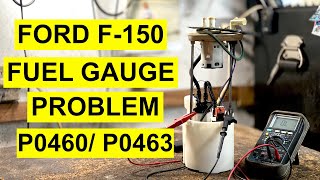
How to confirm: Test the sensor's resistance with a multimeter while moving the float arm. For non-flex-fuel models, the resistance should change smoothly from approximately 15 ohms (± 2) at empty to 160 ohms (± 4) at full. An open circuit (infinite resistance) or a short (near-zero resistance) across the entire sweep indicates a bad sensor.
Typical fix: Replace the entire fuel pump module, as the sending unit is integrated into it.
Est. part cost: $250-$500 - Wiring or Connector Issues 🟡 Medium Probability The wiring harness leading to the fuel tank is exposed to the elements. The main connector on top of the fuel pump module is a common failure point, where moisture intrusion leads to corrosion of the pins, creating a short or poor connection. Physical damage from road debris can also chafe or break wires.
How to confirm: Visually inspect the wiring harness and the connector on top of the fuel tank for any signs of corrosion (green or white powder), chafing, or broken wires. Perform a voltage drop test on the signal and ground circuits. Wiggling the harness while monitoring live data on a scan tool can also help identify intermittent connection issues.
Typical fix: Repair the damaged section of the wire or replace the corroded connector pigtail.
Est. part cost: $20-$60 - Stuck Fuel Level Float ⚪ Low Probability This is less common but can happen if the vehicle has been sitting for a long time, allowing rust or debris in the tank to jam the float arm in the empty position. Tank deformities from impacts can also cause the float to bind.
How to confirm: After removing the fuel pump module, check if the float arm moves freely through its full range of motion without binding.
Typical fix: Free the stuck float. If the arm is bent or damaged, the entire fuel pump module will need to be replaced.
Est. part cost: $0-$500
Rare But Worth Checking
- Faulty Instrument Cluster: → Shop Instrument Cluster In some cases, the problem isn't the sensor but the instrument cluster itself, which processes and displays the fuel level. This can sometimes be indicated by other gauge-related issues or by running the cluster's self-diagnostic test mode.
- Powertrain Control Module (PCM) Fault: This is extremely rare, but a fault in the PCM's internal circuitry could cause it to misread the signal from a perfectly good sensor. All other possibilities should be exhausted before considering the PCM.
Diagnosis Steps
- Verify the P0462 code is present using an OBD-II scanner.
- Check for any Technical Service Bulletins (TSBs) related to this code for your specific vehicle.
- Using a scan tool with live data, observe the fuel level sensor voltage. A reading stuck near zero volts points towards a short to ground.
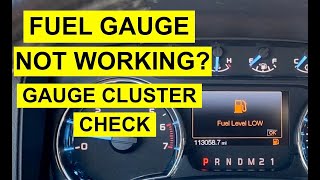
- Perform an instrument cluster self-test. On most F-150s, this is done by holding the trip/reset button (or 'OK' on the steering wheel) while turning the key to the 'ON' position. This will command a gauge sweep to check if the fuel gauge needle itself is physically working.
- Inspect the wiring harness and connector at the top of the fuel tank for any visible damage, corrosion, or loose connections. This is a critical step.
- If wiring appears okay, you will need to access the fuel pump module by lowering the fuel tank or lifting the bed.
- With the module removed, disconnect the sensor and test its resistance with a multimeter. Sweep the float arm from empty to full. For a non-flex-fuel F-150, the resistance should change smoothly from ~15Ω to ~160Ω. For flex-fuel models, the range is typically ~7Ω to ~138Ω. Any sudden drops to zero or jumps to infinite resistance indicate a faulty sensor.
- If the sensor tests bad, replace the fuel pump module assembly. 🎬 Watch: Step-by-step fuel pump replacement walkthrough
- If the sensor tests good, the issue is likely in the wiring between the tank and the PCM. Check for a short to ground on the signal wire.
Parts You'll Likely Need
- Fuel Pump and Sender Assembly
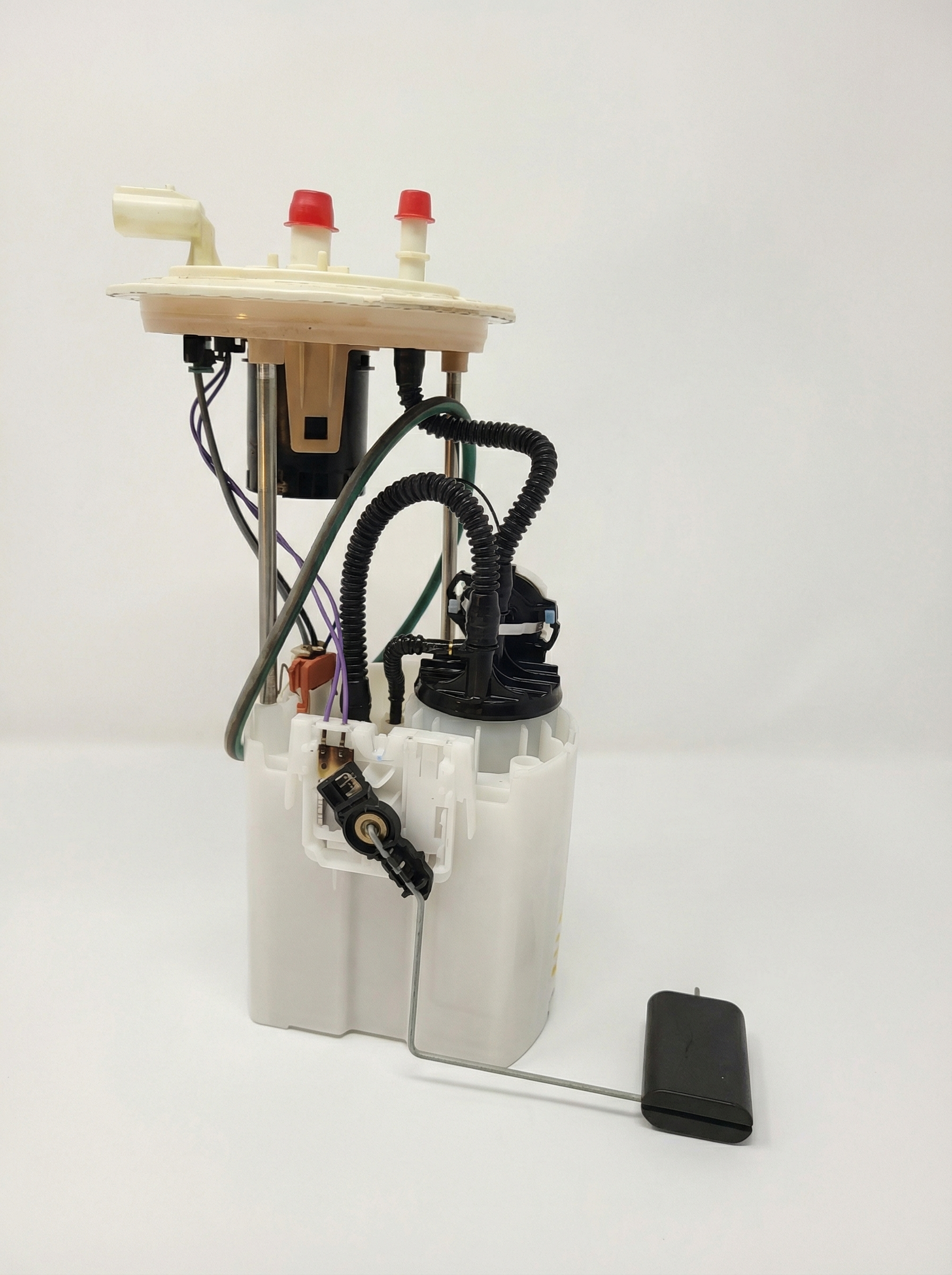
(OEM #9L3Z-9H307-F (example, varies by wheelbase/tank size), Motorcraft PFS-488, PFS-490)— This is the most common cause of failure. The fuel level sensor is integrated into the fuel pump module, so the entire assembly is typically replaced.
Trusted brands: Motorcraft, Bosch, Delphi
OEM price range: $400-$600
Aftermarket price range: $250-$450
Related Codes That Often Appear With This One
- P0463 (Fuel Level Sensor 'A' Circuit High) if the wiring issue is intermittent, causing both shorts and opens.
- P0460 (Fuel Level Sensor 'A' Circuit Malfunction) as a more general code for the same system.
Technical Service Bulletins (TSBs) & Recalls
- TSB 15-0137: While not directly for P0462, this TSB addresses a common electrical issue involving the relocation of the F27 fuel pump fuse in the fuse box to prevent stalling and no-start conditions. An owner experiencing P0462 alongside these symptoms should investigate this TSB.
Mechanic-Grade Diagnostic Values
- Fuel Level Sensor Signal Voltage at PCM — expected: 0.5V (Empty) to 4.5V (Full) on a 5V reference system.. Failure: A consistent reading below 0.5 volts, often near 0V, indicates a short to ground or a failed sensor, triggering P0462.
- Fuel Level Sensor Resistance (Non-Flex Fuel) — expected: ~15 Ohms (Empty) to ~160 Ohms (Full). Failure: Reading of 0 ohms (short) or infinite/OL (open) across the sweep, or erratic jumps in resistance.
- Fuel Level Sensor Resistance (Flex Fuel) — expected: ~7 Ohms (Empty) to ~138 Ohms (Full). Failure: Reading of 0 ohms (short) or infinite/OL (open) across the sweep, or erratic jumps in resistance.
Scan Tool Commands That Help
- Ford IDS / FORScan / High-End Bidirectional Scanners: Instrument Cluster Gauge Sweep / Prove-Out — Use this command at the beginning of diagnosis to confirm the physical fuel gauge needle in the instrument cluster is capable of moving through its full range. This helps quickly rule out a physically stuck or failed gauge motor before inspecting wiring or the in-tank sensor.
Wiring & Ground Locations
- Fuel Pump Module Connector (C433) — On top of the fuel pump assembly, accessible after dropping the tank or lifting the truck bed.. This 4-pin connector is the primary interface for the fuel pump and sending unit. It is highly susceptible to moisture intrusion and corrosion, which can short the signal wire to ground, directly causing P0462. The signal wire is typically Violet/Orange, and the ground is Black/Yellow.
- G401 — Under the vehicle, on the rear crossmember near the spare tire.. This is a primary ground point for rear-body components, including the fuel pump module. A corroded or loose connection at G401 can cause a high-resistance ground path, leading to erratic voltage readings from the fuel level sensor and potentially triggering P0462 or other related codes.
- Driver's Side Kick Panel Ground — Behind the driver's side interior kick panel, where multiple ground wires terminate on a single stud.. While G401 is the direct ground, issues at this interior grounding point can cause a host of electrical problems, including instrument cluster malfunctions. If the gauge acts erratically and other interior electronics are also failing, this ground point is a known weak spot on F-150s of this era and should be inspected for corrosion.
Real Owner Repair Stories
- Ford F150 Forum (2012 Ford F-150 Platinum) — Check Engine Light with P0462, fuel gauge reading incorrectly.
❌ Tried (didn't work) Initial diagnosis pointed towards replacing the entire fuel pump assembly.
✅ What actually fixed it While replacing the fuel pump, the owner's tank slipped and pulled the wires out of the 4-pin connector. Upon close inspection and repair of the connector wiring, the issue was resolved, indicating the original fault was likely a poor connection or broken wire within the connector itself, not the sending unit.
Model Year Variations Within This Range
- 2011-2014: In 2011, Ford introduced a new engine lineup, including the 3.7L V6, 5.0L V8, and 3.5L EcoBoost V6. While the fundamental cause of P0462 (sending unit/wiring) remains the same, different engine and tank configurations may use slightly different fuel pump module part numbers. Always verify the part number with the vehicle's VIN before ordering a replacement.
Diagnostic Flowchart
Other Known Issues on This Vehicle
Issues unrelated to this code that are worth knowing about as an owner of this generation:
- Ford 5.4L 3-Valve V8 Cam Phaser & Timing Chain Issues 🔴 High — Very common, especially on higher mileage (75k+) engines. Caused by a combination of low oil pressure from a weak oil pump and wear on plastic timing chain guides and tensioners.
- 6R80 Transmission Molded Lead Frame Failure 🔴 High — Common enough to warrant a recall and customer satisfaction program. Causes sudden, unexpected downshifts (often to 1st gear), loss of speedometer reading, and the wrench light. (Ref: Recall 16V-248, Customer Satisfaction Program 19N01)
- 3.5L EcoBoost Timing Chain Rattle on Cold Start 🟠 Medium — Prevalent on 2011-2014 models. A stretched primary timing chain causes a loud rattle for a few seconds on cold starts until oil pressure builds. (Ref: TSB 18-2305 (supersedes earlier versions))
- Fuse 27 (Fuel Pump) Relocation 🟠 Medium — Extremely common across all engines. The original location for the 20-amp fuel pump fuse (F27) can overheat, melt the fuse box, and cause intermittent crank/no-start or stalling issues. (Ref: TSB 15-0137)
- 5.4L 3-Valve Spark Plug Breakage 🟠 Medium — A notorious issue where the two-piece spark plugs seize in the cylinder head due to carbon buildup, causing them to break during removal. Affects 2009-2010 models with the 5.4L engine. (Ref: TSB 08-7-6 (for earlier models, but procedure is relevant))
Used vs. New Parts: Buying Guide for This Vehicle
When a used part is the smart pick: A used part is generally NOT recommended for the fuel pump/sender assembly due to it being a wear item with an unknown history. However, a used wiring harness pigtail for the fuel pump connector is a viable option if the original is corroded, as this is not a moving part.
Donor-vehicle mileage cap: roughly under 75000 miles for the part to have meaningful remaining life.
What to inspect on the donor part:
- For a connector pigtail, inspect for any signs of green or white corrosion on the pins.
- Ensure the plastic locking tabs are intact and not brittle.
- Check that the wires are flexible and the insulation is not cracked or chafed.
OEM-only on this vehicle (don't cheap out):
- Fuel Pump and Sender Assembly: While quality aftermarket options exist, the OEM Motorcraft unit is recommended for best fitment and longevity. Cheaper aftermarket units have a higher reported failure rate.
Aftermarket brands forum-validated for this vehicle:
- Delphi
- Bosch
Brands owners have reported issues with on this vehicle:
- Generic, unbranded "white box" parts from online marketplaces often have poor quality control and may fail prematurely.
Real Owner Stories
Aggregated from forums and TSBs cited above. Mileages and costs reflect what owners reported in those sources.
2009-2014 Ford F-150
Symptoms: The fuel gauge was pegged on 'E' (Empty) despite having fuel in the tank.
What fixed it: Replacement of the in-tank fuel pump assembly, as the sensor is part of that unit.
Source hint: Ford Truck Enthusiasts forum thread 'p0462-fuel-gauge-pegged-on-e'
2009-2014 Ford F-150
Symptoms: The fuel pump was failing intermittently, which caused the fuel gauge to drop to empty simultaneously.
What fixed it: Replacement of the fuel pump module.
Source hint: Ford Truck Enthusiasts forum thread 'p0462-fuel-gauge-pegged-on-e'
2009-2014 Ford F-150
Symptoms: Code P0462 present; user suspected an issue with the instrument cluster's printed circuit board.
What fixed it: Investigation into the instrument cluster as a potential failure point for the fuel signal.
Source hint: f150forum.com thread 'code-p0462-356108'
Related OBD-II Codes
Frequently Asked Questions
My 2009-2014 F-150 is stalling and won't start, and now I have a P0462 code. Could these be related?
Can I just replace the fuel level sensor on my F-150, or do I need the whole pump?
What are the specific resistance specs for testing the fuel sender on a non-flex-fuel 2009-2014 F-150?
Is there a way to check if my fuel gauge is broken before I drop the tank for a P0462 code?
I'm seeing P0462 and my Distance to Empty (DTE) display is showing dashes. Is this normal for this failure?
Should I buy a used fuel pump module from a salvage yard to fix this?
Helpful Videos

Used OEM Parts in Stock
New Aftermarket Parts Available


The information in this article is provided for general reference and educational purposes only. Vehicle specifications, procedures, and part compatibility can vary by production date, trim level, and region. Always consult your vehicle's factory service manual and verify part numbers before purchasing or performing repairs. Safety-critical components such as airbags, seat belts, and braking systems should be installed by a qualified professional.
- Ford F-150:
- 🧭 Diagnostic Flowchart
- 🎬 Helpful Videos
- 🛍️ Shop This Part
- What's Unique About the 2009-2014 Ford F-150
- Symptoms You May Notice
- Most Likely Causes
- Rare But Worth Checking
- Diagnosis Steps
- Parts You'll Likely Need
- Related Codes That Often Appear With This One
- Technical Service Bulletins (TSBs) & Recalls
- Mechanic-Grade Diagnostic Values
- Scan Tool Commands That Help
- Wiring & Ground Locations
- Real Owner Repair Stories
- Model Year Variations Within This Range
- Other Known Issues on This Vehicle
- Used vs. New Parts: Buying Guide for This Vehicle
- Real Owner Stories
- 2009-2014 Ford F-150
- 2009-2014 Ford F-150
- 2009-2014 Ford F-150
- Related OBD-II Codes
- Frequently Asked Questions
- 🎟️ Get 5% Off