

P0462 on 2018-2022 Nissan KICKS: Fuel Level Sensor Circuit Low Causes and Fixes
This code almost always points to a faulty fuel level sensor. Nissan issued a Technical Service Bulletin (NTB22-026) for this problem, confirming the sensor is the likely culprit and can be replaced separately from the fuel pump assembly. Expect to pay around $75-$150 for an aftermarket sensor and $200-$300 for an OEM part.
- P0462 on a 2018-2022 Nissan Kicks is most likely caused by a failed fuel level sensor.
- A Nissan TSB (NTB22-026) exists for this exact problem, which is a strong indicator of the root cause.
- You do NOT need to replace the entire expensive fuel pump assembly; the sensor can be purchased and replaced on its own.
- Symptoms are straightforward: an illuminated Check Engine Light and an unreliable fuel gauge.
- Diagnosis involves testing the sensor's resistance with a multimeter to see if it changes smoothly through its range of motion.
What's Unique About the 2018-2022 Nissan KICKS
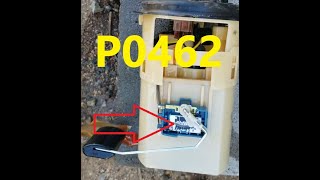
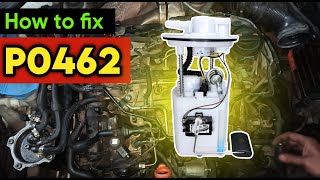
Nissan is aware of fuel gauge issues on the 2018-2022 Kicks. The manufacturer released Technical Service Bulletin NTB22-026, which covers the P0462 code. 🎬 Watch: Understanding the P0462 code and common sensor fixes. The bulletin specifically advises technicians to replace only the fuel level sensor, not the entire fuel pump assembly, which can save significant money on the repair. It even states that warranty claims for replacing the entire assembly will be charged back to the dealer, highlighting how known this specific failure is. This indicates that a failing sensor is a known issue for this vehicle.
Diagnostic Flowchart
Tap your situation to follow the diagnostic path that matches what you're seeing on this vehicle.
Symptoms You May Notice
- Check Engine Light is on
- Fuel gauge is inaccurate, erratic, or stuck on empty.
- Low fuel warning light stays on even with fuel in the tank.
- Fuel gauge needle fluctuates wildly.
- Replacing the entire fuel pump assembly. Nissan's TSB NTB22-026 specifically warns against this, stating that only the fuel level sensor needs to be replaced for this code. Replacing the whole assembly is unnecessarily expensive.
Most Likely Causes
- Faulty Fuel Level Sensor 🔴 High Probability → Shop Fuel Tank Sending Unit Nissan issued TSB NTB22-026 specifically for this issue, indicating a known problem with the sensor on this platform. The sensor's internal variable resistor can wear out or the contacts on the resistor track can fail, causing it to send a constant low voltage signal.
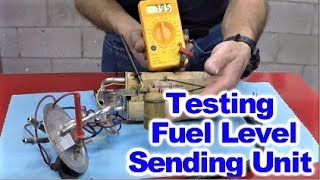
How to confirm: Access the sensor and test its resistance with a multimeter. Typical values range from approximately 30 Ohms (empty) to 300 Ohms (full), though a service manual should be consulted for exact specs. An open circuit, short circuit, or a reading that doesn't change smoothly when moving the float arm indicates a bad sensor.
Typical fix: Replace the fuel level sensor. Per the TSB, the sensor can be replaced independently of the fuel pump module.
Est. part cost: $75-$300 - Wiring or Connector Issues 🟡 Medium Probability
How to confirm: Visually inspect the wiring harness from the fuel tank to the ECM for any signs of damage, corrosion, or loose connections, especially at the connector on top of the fuel pump assembly under the rear seat. A short to ground in the signal wire will cause a P0462 code. Check for continuity on the signal and ground wires; resistance should be less than 0.1 Ω.
Typical fix: Repair or replace the damaged section of the wiring harness or clean the corroded connector pins and apply dielectric grease.
Est. part cost: $10-$100 - Stuck Float Arm ⚪ Low Probability This can happen on any vehicle, but is more common in cars that have been sitting for extended periods, allowing rust or sediment to build up.
How to confirm: After gaining access to the fuel pump assembly, observe if the float arm moves freely throughout its range of motion. If it is stuck in the lowest position, it will consistently send a low/empty signal.
Typical fix: In some cases, the arm can be freed. More commonly, the entire sending unit is replaced as the mechanism may be compromised.
Est. part cost: $0-$300 - Blown Fuse ⚪ Low Probability
How to confirm: Check the vehicle's fuse box for any blown fuses related to the fuel system or instrument cluster.
Typical fix: Replace the blown fuse. If the fuse blows again, it indicates an underlying short circuit that needs to be diagnosed.
Est. part cost: $1-$5
Rare But Worth Checking
- Instrument Cluster Malfunction: → Shop Instrument Cluster While rare, a fault within the instrument cluster itself can cause issues with how the fuel level is displayed and may trigger a code. Some owners of other Nissan models have reported this being the root cause after replacing the sensor did not fix the issue.
- Powertrain Control Module (ECM) Fault: This is extremely rare, but a fault in the ECM's internal circuits can lead to a misinterpretation of the fuel level sensor signal. This should only be considered after all other possibilities have been exhausted.
Diagnosis Steps
- Read the trouble codes with an OBD-II scanner to confirm P0462 is present.
- Check for any related TSBs, specifically NTB22-026 for this vehicle.
- Inspect the fuses related to the fuel pump and instrument panel.
- Using a scan tool with live data, observe the voltage from the fuel level sensor. A reading near or below 0.5 volts typically confirms the 'low input' condition.
- Gain access to the top of the fuel tank, which is usually under the rear seat cushion. This involves pulling up sharply on the front of the seat bottom to release the clips.
- Disconnect the fuel pump module connector and inspect it for corrosion or damage.
- Using a multimeter set to Ohms, test the resistance of the fuel level sensor terminals while manually moving the float arm up and down. The resistance should change smoothly, roughly between 30 Ohms (empty) and 300 Ohms (full). If it's stuck, shows an open circuit (infinite resistance), or is shorted (zero resistance), the sensor is bad.
- If the sensor tests good, check the signal wire for a short to ground between the fuel tank and the ECM.
Parts You'll Likely Need
- Fuel Level Sensor
(OEM #25060-5RL0A)— This is the most common failure part for code P0462 on this vehicle, as confirmed by Nissan's own Technical Service Bulletin NTB22-026. This part is also shared with the Nissan Versa.
Trusted brands: Nissan (OEM), Hitachi, Hella, Spectra Premium
OEM price range: $200-$300
Aftermarket price range: $75-$150
Related Codes That Often Appear With This One
- P0460 — This code for 'Fuel Level Sensor Circuit' is often seen with other fuel level sensor codes as it relates to the same component. It is also listed in TSB NTB22-026.
- P0461 — This code indicates a range/performance issue with the fuel level sensor circuit and is frequently triggered alongside P0462. It is also listed in TSB NTB22-026.
- P0463 — This is the opposite of P0462, indicating a 'Circuit High' input. It's common to see these codes together if the sensor's signal is erratic. It is also listed in TSB NTB22-026.
Technical Service Bulletins (TSBs) & Recalls
- NTB22-026: SERVICE INFORMATION FOR FUEL GAUGE INACCURATE WITH DTCS STORED IN ECM.
Platform-Specific Known Issues
- Nissan issued TSB NTB22-026 on April 5, 2022, for inaccurate fuel gauges accompanied by DTCs P0460, P0461, P0462, or P0463. The bulletin clarifies that the fuel level sensor can be replaced separately from the main fuel pump assembly and warns dealers that replacing the full assembly for this issue may result in a warranty chargeback.
Mechanic-Grade Diagnostic Values
- Fuel Level Sensor Resistance — expected: Approximately 2.5 Ohms (Full) to 49.0 Ohms (Empty).. Failure: A reading of 0 Ohms (short), infinite resistance (open), or a value that does not change smoothly when moving the float arm indicates a faulty sensor.
- Fuel Level Sensor Signal Voltage (at ECM/BCM) — expected: 0.5V (Empty) to 4.5V (Full) with key on, engine off.. Failure: A consistent voltage reading below 0.5V confirms the 'Circuit Low' condition reported by the P0462 code.
- Ground Circuit Resistance — expected: Less than 0.1 Ω.. Failure: A higher resistance value indicates a poor ground connection, which can cause incorrect voltage readings.
Scan Tool Commands That Help
- General (Manual Procedure): ECU Reset / Fuel System Reset — After replacing the fuel level sensor or repairing wiring, a full ECU reset can help ensure the new component values are learned correctly. The simplest method is to disconnect the negative battery terminal for 10-15 minutes. Some Nissan models have specific pedal-press sequences for resets, but none are specifically documented for this code on the Kicks.
Wiring & Ground Locations
- B45 — The main electrical connector on top of the fuel pump/sender assembly, accessible under the rear seat cushion.. This is the primary connector to test the fuel level sensor's resistance and check for power and ground signals without dropping the fuel tank.
OEM Part Supersession History
25060-5RL0A→25060-5RL0A— This part number appears to be stable for the 2018-2024 Kicks with the 1.6L engine.
Heads up: The second generation 2025+ Nissan Kicks with the 2.0L engine uses a different part number (25060-7LG1A). Ensure you are purchasing the correct part for your vehicle's generation and engine.
Model Year Variations Within This Range
- 2018-2024 vs 2025+: The fuel level sensor part number changes for the second-generation Nissan Kicks (2025+) due to a different engine (2.0L HR20DD) and likely a redesigned fuel tank/pump assembly. The correct part for the 2018-2022 Kicks is 25060-5RL0A.
Helpful Videos




The information in this article is provided for general reference and educational purposes only. Vehicle specifications, procedures, and part compatibility can vary by production date, trim level, and region. Always consult your vehicle's factory service manual and verify part numbers before purchasing or performing repairs. Safety-critical components such as airbags, seat belts, and braking systems should be installed by a qualified professional.
- Nissan KICKS:
- 🧭 Diagnostic Flowchart
- 🎬 Helpful Videos
- What's Unique About the 2018-2022 Nissan KICKS
- Symptoms You May Notice
- Most Likely Causes
- Rare But Worth Checking
- Diagnosis Steps
- Parts You'll Likely Need
- Related Codes That Often Appear With This One
- Technical Service Bulletins (TSBs) & Recalls
- Platform-Specific Known Issues
- Mechanic-Grade Diagnostic Values
- Scan Tool Commands That Help
- Wiring & Ground Locations
- OEM Part Supersession History
- Model Year Variations Within This Range
- 🎟️ Get 5% Off