

P0462 on 2005-2015 Volkswagen Golf: Causes and Fixes for Fuel Level Sensor Circuit Low
On a 2005-2015 VW Golf, code P0462 almost always means the fuel level sending unit inside the gas tank has failed. The fuel gauge will read empty and you risk running out of gas. Replacing the sender, which is often part of the fuel pump module, is the typical fix. This is a well-documented issue in online forums. For AWD (4Motion) models, be aware there are two senders; P0462 usually points to the primary one (G), but the secondary one (G169) can also be the cause.
- P0462 on a VW Golf means your fuel gauge is unreliable because of a low voltage signal from the fuel level sensor.
- The most likely cause is a failed fuel level sending unit, which is located inside the fuel tank and often integrated with the fuel pump.
- You can continue to drive, but you must use your trip meter to track fuel consumption to avoid running out of gas.
- Before replacing parts, inspect the connector on top of the fuel tank for corrosion, as this is a common and cheaper fix.
- Be aware of other major platform issues like the timing chain tensioner and DSG mechatronics, which can be more severe problems for an owner of this vehicle.
What's Unique About the 2005-2015 Volkswagen Golf
The 2005-2015 VW Golf spans the Mk5 (PQ35 platform) and Mk6 generations. On these models, the fuel level sender is a well-documented failure point. It is typically integrated into the in-tank fuel pump assembly, making the replacement more involved than just the sensor itself. While the underlying cause is usually the same across both generations, part numbers for the sending unit may differ. Owners frequently report erratic gauge behavior leading up to the complete failure that triggers the P0462 code. On 4Motion (AWD) models, a saddle-style tank is used which contains two separate fuel level senders; a failure in either can potentially trigger this fault. The primary sender is designated 'G' and the secondary (driver's side) is 'G169'.
Generation note: This range covers the Volkswagen Golf Mk5 (2005-2009) and Mk6 (2010-2014/15). The cause and repair process are very similar for both generations, involving the replacement of the in-tank fuel level sender. However, ensure you purchase the correct part number for your specific model year and drivetrain (FWD vs 4Motion), as the fuel pump/sender assemblies can differ. The Mk6 features a revised EA888 engine (from mid-2008 in the Mk5) and a quieter cabin, but the fuel sending unit remains a common failure point across both generations.
Symptoms You May Notice
- Check Engine Light is on
- Fuel gauge reads empty or is stuck in one position.
- Fuel gauge fluctuates erratically.
- Low fuel warning light stays on.
- Incorrect Distance-to-Empty (DTE) calculation on the trip computer.
- Replacing the entire fuel pump when only the sending unit has failed (though they are often sold as one assembly).
- Replacing the instrument cluster before thoroughly testing the sending unit and its wiring.
- Assuming the fuel pump itself is bad. P0462 is specific to the level sensing circuit, not the pump's ability to move fuel.
- On 4Motion (AWD) models, replacing the primary fuel pump/sender assembly when the fault is in the secondary (driver's side) sender (G169).
Most Likely Causes
- Faulty Fuel Level Sending Unit 🔴 High Probability → Shop Fuel Tank Sending Unit The variable resistor contacts on the sender wear out, get coated with fuel deposits, or the float arm mechanism fails. This is a very common wear-and-tear item on the Mk5/Mk6 Golf platform, frequently discussed in owner forums. The small wires on the sender can also break from fatigue.
How to confirm: Access the fuel pump module under the rear seat. Disconnect the sensor and measure its resistance with a multimeter while moving the float arm. The resistance should change smoothly. For many VWs, the range is approximately 50 Ohms (full) to 270-295 Ohms (empty), but this can vary. An open circuit (infinite resistance) or a shorted circuit (near zero ohms) confirms failure.
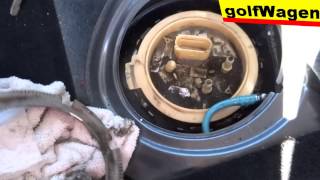
Typical fix: Replace the fuel level sending unit. On most Golf models, this sender is part of the larger in-tank fuel pump assembly and is replaced as a single unit. 🎬 Watch: How to replace the fuel pump and level sensor Some owners have successfully replaced only the sender component, but it is often sold as a complete pump module.
Est. part cost: $80-$350 - Wiring Harness or Connector Issue 🟡 Medium Probability The main connector on top of the fuel tank is located under the rear seat, where it can be exposed to moisture, dirt, or physical damage from items placed on the seat. This can lead to corrosion on the pins, creating a short to ground.
How to confirm: Visually inspect the wiring and connector on top of the fuel tank for corrosion (green crust), damage, or loose pins. With the key on, check for the correct reference voltage (typically 5V or 12V) and a good ground at the connector. Wiggling the harness while observing live data on a scan tool can help identify intermittent connections.
Typical fix: Clean the corroded connector terminals using a contact cleaner and a small brush. If the connector or wiring is severely damaged, it may need to be repaired with a new pigtail connector (e.g., VW part 1K0 919 231).
Est. part cost: $10-$50
Rare But Worth Checking
- Stuck Fuel Float Arm: Less common than electrical failure, but the float arm itself can become physically stuck in the lowest position due to debris in the tank or a deformed tank. This causes the sensor to send a constant 'empty' signal, which the ECU interprets as a circuit low fault.
- Faulty Instrument Cluster: → Shop Instrument Cluster This is uncommon, but the cluster itself can fail, preventing it from correctly interpreting the signal from a good sensor. This is usually suspected only after the sender and wiring have been confirmed to be good. A VCDS Output Test can check the gauge's physical sweep.
- Faulty Powertrain Control Module (PCM): A PCM failure is extremely rare but possible. It should be the absolute last item to consider after all other possibilities have been exhaustively ruled out by a professional.
Diagnosis Steps
- Scan the vehicle for fault codes to confirm P0462 is present and check for any other related codes like P0463 or 00771.
- Use a scan tool with live data (like VCDS) to observe the fuel level sensor voltage and resistance. For VW, check Measuring Blocks in the Instrument Cluster (17). A reading stuck below 0.5V or with resistance near zero or infinity points towards the fault.
- Gain access to the top of the fuel tank by removing the rear seat cushion and the black metal access panel.
- Visually inspect the electrical connector and wiring harness for any signs of corrosion, moisture, or damage. Pay close attention to the pins inside the connector.
- Disconnect the connector. With the key on, use a multimeter to verify you have the correct reference voltage (usually ~5V or 12V) and a good ground at the harness-side connector.
- With the connector still off, measure the resistance across the pins for the fuel level sender on the pump assembly itself.
- Compare the reading to specifications (e.g., ~50-295 ohms). If it reads open (OL/infinite) or shorted (near zero ohms), the sender has failed.
- If the sender tests good, the fault lies in the wiring between the tank and the instrument cluster/ECM. Check for a short to ground on the signal wire by measuring resistance between the signal wire pin and the chassis ground.
Parts You'll Likely Need
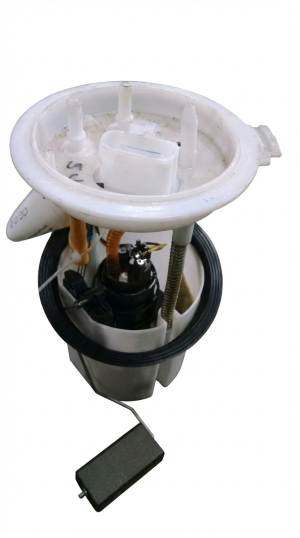
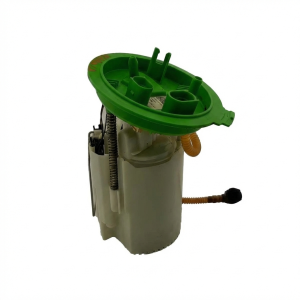
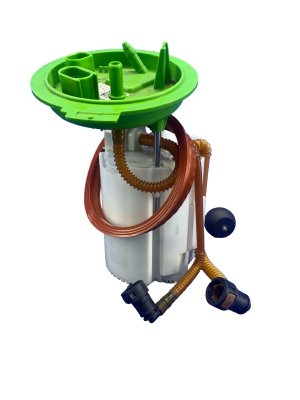
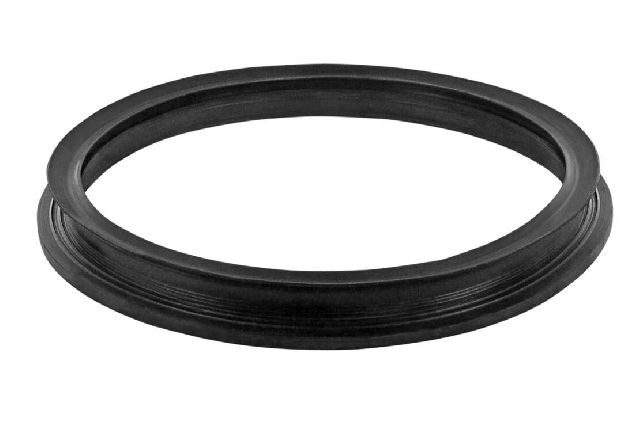
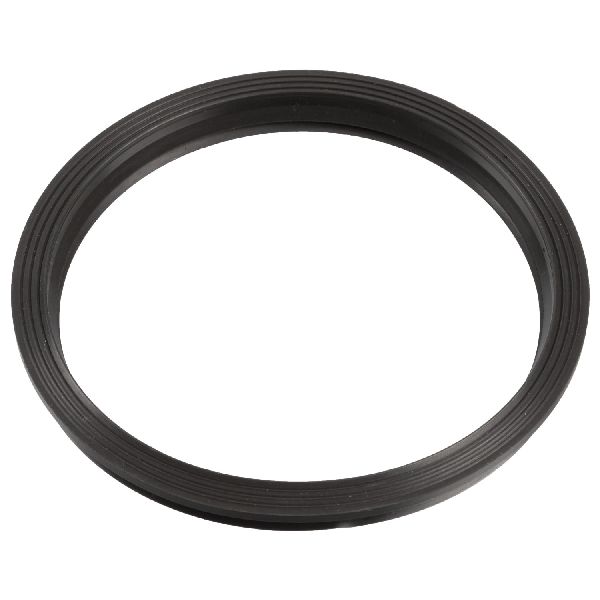
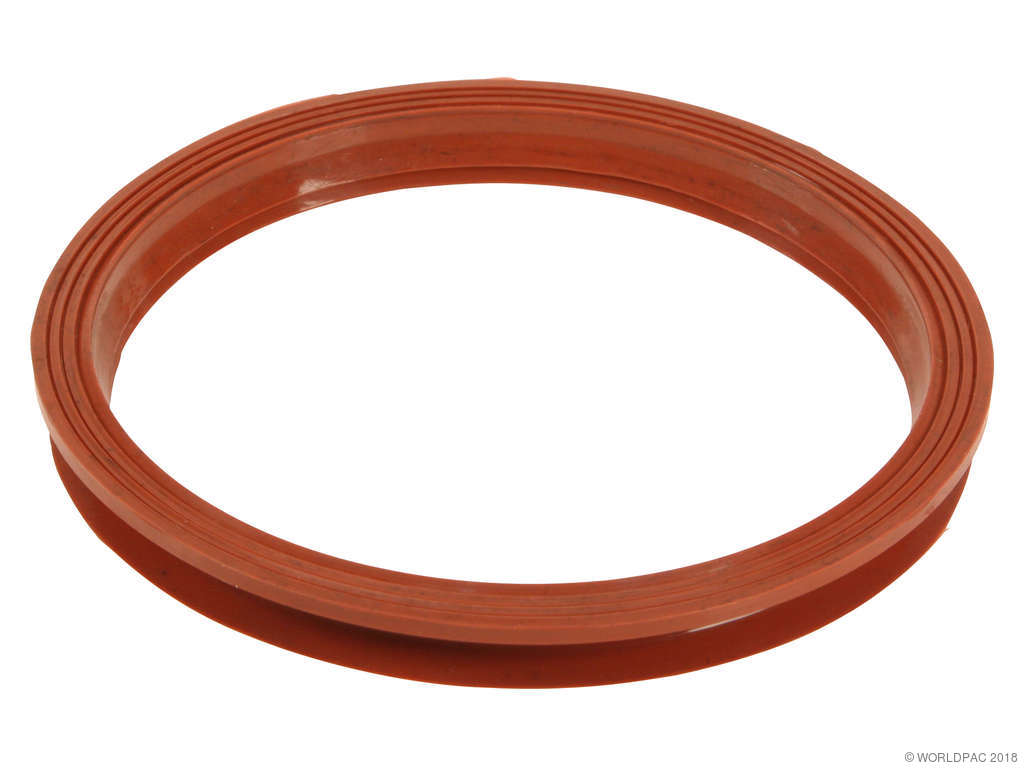
- Fuel Pump and Sending Unit Assembly
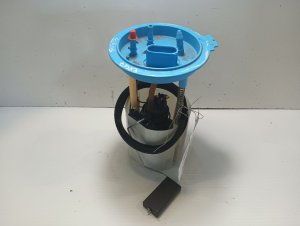
(OEM #1K0919051DE (supersedes 1K0919051BM, 1K0919051CN, 1K0919051BK))— This is the most common component to fail. On many Golfs, the sender is integrated and replacing the entire assembly is the standard repair. This part number is common for AWD models.
Trusted brands: VDO, Bosch, Vemo, Genuine VW
OEM price range: $315-$450
Aftermarket price range: $80-$200
Related Codes That Often Appear With This One
- P0463 — This code means 'Fuel Level Sensor Circuit High'. Seeing it with P0462 suggests an intermittent fault where the sensor's signal is swinging from too low to too high, strongly pointing to a failing sensor or a loose connection.
- 00771 — This is a VW-specific fault code for 'Fuel Level Sensor (G): Open or Short to Plus' or 'Short to Ground'. It is often the manufacturer-specific equivalent of P0462 or P0463 and points directly 🎬 See this step-by-step guide to fixing a P0462 code to a problem with the sender or its wiring.
Platform-Specific Known Issues
- Owner Experience: Intermittent Failure: A user on VWVortex with a 2012 Golf R reported a P0462 code where the gauge would work intermittently. After replacing the fuel pump, the issue returned. The ultimate cause was found to be a faulty fuel level sender on the passenger side of the saddle tank, which had to be replaced separately from the main pump. This highlights the complexity of AWD models with dual senders.
Technical Service Bulletins (TSBs) & Recalls
While the Golf platform is the primary focus, manufacturer service bulletins for other Volkswagen models highlight similar circuit behaviors. For instance, TSB Bulletin #VIN4APIN20240523 notes that P0462 and/or P0463 can be stored in the ECM memory when the fuel gauge does not function correctly. Similarly, TSB Bulletin #VIN4APIN20240410 describes instances where P0462 is stored and the fuel gauge fails to read full after filling the tank, sometimes accompanied by a rattle from below the vehicle.
Mechanic-Grade Diagnostic Values
- Fuel Level Sensor 'A' (G) Resistance (AWD Models) — expected: 56 to 68 Ohms (Full) | 295 to 305 Ohms (Empty). Failure: Readings of near-zero Ohms (short), infinite/OL (open), or values that do not change smoothly when moving the float arm.
- Fuel Level Sensor 'B' (G169) Resistance (AWD Models) — expected: 47 to 65 Ohms (Full) | 275 to 296 Ohms (Empty). Failure: Readings of near-zero Ohms (short), infinite/OL (open), or values that do not change smoothly when moving the float arm.
- Fuel Level Sensor Signal Voltage — expected: 0.5V (Empty) to 4.5V (Full) on a 5V reference system.. Failure: A voltage reading consistently below 0.5V, often near 0V, confirms a circuit low condition and will trigger P0462.
- VCDS Instrument Cluster Adaptation Value (Channel 30) — expected: Default value is 128. Adjustable range is typically 120-136.. Failure: An incorrect value can cause the gauge to read inaccurately even with a good sensor. This may need adjustment after replacing the sender.
Hidden / Shadow Codes Worth Checking
- 00771: VW-specific code for 'Fuel Level Sensor (G): Open or Short to Plus' or 'Short to Ground'. This is the manufacturer's direct equivalent to P0462/P0463 and confirms the fault is with the primary sender circuit. (see via VCDS (VAG-COM), OBDeleven, or other VW-specific diagnostic tools.)
- 01336: Data Bus for Comfort System: Faulty. While not directly a fuel level code, this can appear alongside 00771 if there are broader communication issues on the CAN bus that affect the instrument cluster's ability to receive data from the sender. (see via VCDS (VAG-COM), OBDeleven, or other VW-specific diagnostic tools.)
Scan Tool Commands That Help
- VCDS (VAG-COM): Instrument Cluster (17) -> Output Tests (03) — To verify the physical operation of the fuel gauge needle. The test initiates a full sweep of all gauges, which confirms if the gauge motor itself is functional or stuck. This helps rule out a faulty instrument cluster.
- VCDS (VAG-COM): Instrument Cluster (17) -> Measuring Blocks (08) -> Group 002 — To view live data from the fuel level sender(s). You can see the resistance in Ohms reported by the sensor(s), which is crucial for diagnosing whether the sender is providing a plausible signal or is clearly faulted (e.g., stuck at a specific value).
- VCDS (VAG-COM): Instrument Cluster (17) -> Adaptation (10) -> Channel 30 — To calibrate the fuel gauge reading. If the gauge is inaccurate after replacing the sender, you can adjust the offset here. The default value is 128, and it can be adjusted within a small range (e.g., 120-136) to fine-tune the needle position.
Wiring & Ground Locations
- Fuel Pump Connector (T5b on Mk6) — On top of the fuel pump assembly, located under the black circular access panel beneath the rear passenger-side seat cushion.. This is the main connection point for the fuel level sender. Pins for the sender signal and ground pass through here. Corrosion, moisture, or backed-out pins at this connector are a primary point of failure for the circuit.
- Instrument Cluster Connector (T32 on Mk6) — The main 32-pin blue connector on the rear of the instrument cluster, accessible by removing the cluster from the dashboard.. The signal from the fuel level sender is processed here. For example, on some diagrams, the sender signal arrives at Pin 2 of this connector. A bad connection here can interrupt the signal, mimicking a failed sender.
- Ground Point 671 — On the left front longitudinal member in the engine compartment.. While not the direct ground for the sender itself (which grounds through the harness), a poor main chassis or engine block ground can introduce electrical noise and voltage drops that may affect sensitive sensor readings.
- Fuel Pump Control Module (J538) — On Mk6 models, this module is often located near the fuel pump assembly under the rear seat.. This module controls the fuel pump and relays information. A fault within this module or its ground connection could potentially disrupt the fuel level signal.
Real Owner Repair Stories
- AudiForums.com user 'mtroxel' (Audi A4 B5 (similar VAG architecture)) — After filling the tank, the gauge would swing wildly between full and empty. The 'miles to empty' display would drop to 0 and then jump back up. VAG-COM showed fault 00771 - Fuel Level Sensor (G): Open / Short Circuit to +.
❌ Tried (didn't work) Visual inspection of the external connector on the fuel tank showed no issues.
✅ What actually fixed it The user removed the fuel sender unit from the tank and found that the small, thin stranded wire connecting the float arm's variable resistor to the main body of the sender had broken from fatigue. Soldering a new wire in its place permanently fixed the problem.
OEM Part Supersession History
1K0919051BK, 1K0919051CN→1K0919051DE— Component revisions and consolidation of part numbers for various AWD models.
Heads up: This part number (1K0919051DE) is typically for AWD (4Motion/Quattro) models. Using it on a FWD vehicle may result in incorrect fuel level readings due to the different tank shape and sender design. Always verify the part number against the vehicle's VIN.
Model Year Variations Within This Range
- 2008.5-2015: Starting mid-2008, the Mk5 GTI and subsequent Mk6 models received the updated EA888 TSI engine, which replaced the older EA113 FSI. This engine uses a timing chain instead of a belt and has a different high-pressure fuel pump design. While this doesn't directly change the P0462 fault, it's a major platform distinction within the 2005-2015 range.
- 2005-2015 (AWD vs FWD): All-Wheel Drive (4Motion) models use a 'saddle' style fuel tank that straddles the driveshaft. This requires two fuel level senders: a primary sender (G) on the passenger side (usually part of the pump assembly) and a secondary sender (G169) on the driver's side. FWD models have a simpler single-sender setup. A P0462 code on an AWD car could be caused by either sender, making diagnosis more complex.
Diagnostic Flowchart
Other Known Issues on This Vehicle
Issues unrelated to this code that are worth knowing about as an owner of this generation:
- Timing Chain Tensioner Failure (TSI Engines) 🔴 High — Common on 2008-2013 2.0T TSI engines (CCTA, CBFA). Failure can occur with as little as 30k miles, but becomes more likely with age. A rattling noise on a cold start is a key warning sign. (Ref: VW TSB 15-12-01 was issued for this problem, applying to a wide range of 2008-2013 models.)
- DSG Mechatronic Unit Failure 🔴 High — Affects both 6-speed (DQ250) and 7-speed (DQ200) DSG transmissions. Symptoms like harsh/jerky shifting, flashing 'PRNDS' light, or loss of drive can appear, often between 60,000-100,000 km. (Ref: Recalls were issued in some markets for the 7-speed dry-clutch (DQ200) mechatronics unit.)
- Intake Manifold Flap Motor/Sensor Failure (TSI) 🟠 Medium — An error with the intake manifold runner flap position sensor is common. One owner on a forum reported being on their 4th intake manifold by 112,000 miles. The fix requires replacing the entire intake manifold.
- Water Pump Leakage 🟠 Medium — The plastic housing of the water pump is a known weak spot and can crack, leading to coolant leaks. This is a common failure item on both TSI and TDI engines. (Ref: A service action was valid for some 2011-2014 GTIs.)
- Carbon Buildup on Intake Valves (FSI/TSI) 🟠 Medium — As a direct-injection engine, fuel doesn't wash over the intake valves. This leads to carbon accumulation over time, causing rough idle, misfires, and loss of performance. Typically requires cleaning every 40k-60k miles.
- Cam Follower Wear (2.0T FSI - EA113 engine) 🔴 High — Critical issue on the Mk5 GTI's EA113 engine. The follower for the high-pressure fuel pump wears out. If not replaced preventatively (every ~20k miles), it can destroy the camshaft, leading to a very expensive repair.
- Rust on Sills and Wheel Arches (Mk5) 🟠 Medium — Common on the Mk5 generation. Foam inserts inside the front wings and sills trap moisture, causing rust from the inside out. This typically becomes apparent after the 12-year anti-corrosion warranty expires.
Used vs. New Parts: Buying Guide for This Vehicle
When a used part is the smart pick: A used fuel pump assembly from a reputable auto recycler can be a cost-effective option, as the failure is typically the sender unit, not the pump motor itself. This is a good candidate for a used part if the donor vehicle is low-mileage.
Donor-vehicle mileage cap: roughly under 80000 miles for the part to have meaningful remaining life.
What to inspect on the donor part:
- Verify the part number matches your original exactly, especially for FWD vs. AWD.
- Inspect the electrical connector pins for any signs of corrosion, melting, or damage.
- Check that the plastic housing is not cracked or brittle.
- If possible, ask the recycler about the donor vehicle's history (e.g., was it in a flood?).
Aftermarket brands forum-validated for this vehicle:
- VDO (often the original OEM supplier)
- Bosch
- Hitachi
Brands owners have reported issues with on this vehicle:
- Unbranded, no-name assemblies from online marketplaces are a gamble. They often have lower quality pump motors and sender electronics that can fail prematurely or provide inaccurate readings.
Real Owner Stories
Aggregated from forums and TSBs cited above. Mileages and costs reflect what owners reported in those sources.
2012 Golf R
Symptoms: The fuel gauge would work intermittently and the P0462 code was present.
What fixed it: Replacing the separate fuel level sender on the passenger side of the saddle tank (distinct from the main pump).
Source hint: vehicle_specific_issues: Owner Experience: Intermittent Failure
Volkswagen Golf (Mk6) — ~112000 miles
Symptoms: Fuel gauge jumping all over and P0462 code; the shop had already replaced the fuel pump twice without fixing the issue.
What fixed it: Replacing the separate leveling sensor on the other side of the saddle tank (common on AWD models).
Source hint: VWVortex Forums - "Fuel Gauge Jumping All Over CODE P0462 Easy FIX"
Related OBD-II Codes
Frequently Asked Questions
I have a 2012 Golf R and the fuel gauge is still acting up after replacing the main pump. What else could it be?
Can I replace just the sensor, or do I need to buy the whole $350 fuel pump assembly for my Mk6 Golf?
Is there a specific wiring repair kit for the fuel tank connector if I find corrosion?
Where is the fuel level sensor connector located on the 2005-2015 Golf?
What resistance values should I see when testing the Golf's fuel sender with a multimeter?
Does the P0462 code affect the 'Distance-to-Empty' display on my dashboard?
Helpful Videos
Used OEM Parts in Stock
New Aftermarket Parts Available

The information in this article is provided for general reference and educational purposes only. Vehicle specifications, procedures, and part compatibility can vary by production date, trim level, and region. Always consult your vehicle's factory service manual and verify part numbers before purchasing or performing repairs. Safety-critical components such as airbags, seat belts, and braking systems should be installed by a qualified professional.
- Volkswagen Golf:
- 🧭 Diagnostic Flowchart
- 🎬 Helpful Videos
- 🛍️ Shop This Part
- What's Unique About the 2005-2015 Volkswagen Golf
- Symptoms You May Notice
- Most Likely Causes
- Rare But Worth Checking
- Diagnosis Steps
- Parts You'll Likely Need
- Related Codes That Often Appear With This One
- Platform-Specific Known Issues
- Technical Service Bulletins (TSBs) & Recalls
- Mechanic-Grade Diagnostic Values
- Hidden / Shadow Codes Worth Checking
- Scan Tool Commands That Help
- Wiring & Ground Locations
- Real Owner Repair Stories
- OEM Part Supersession History
- Model Year Variations Within This Range
- Other Known Issues on This Vehicle
- Used vs. New Parts: Buying Guide for This Vehicle
- Real Owner Stories
- 2012 Golf R
- Volkswagen Golf (Mk6) — ~112000 miles
- Related OBD-II Codes
- Frequently Asked Questions
- 🎟️ Get 5% Off