

P0463 on 2007-2014 Chevrolet Tahoe: Fuel Level Sensor Causes and Fixes
On a 2007-2014 Tahoe, code P0463 is most often caused by a failed fuel level sensor in the gas tank or a damaged wiring harness. The PCM expects a resistance from 40-250 Ohms; this code means it sees an open circuit. Expect to pay $40-$150 for a new sensor and consider replacing the entire fuel pump assembly if it's original.
- P0463 on a 2007-2014 Tahoe means your fuel gauge is unreliable due to a high voltage signal from the fuel level sensor.
- Before buying parts, thoroughly inspect the wiring harness along the frame, especially above the front driveshaft, for chafing or breaks.
- The most common part to fail is the fuel level sensor (sending unit) inside the fuel tank.
- Repairing this code requires dropping the fuel tank, which is a labor-intensive job (DIY difficulty 4/5).
- Do not ignore this code, as running out of fuel can leave you stranded and damage the fuel pump.
What's Unique About the 2007-2014 Chevrolet Tahoe
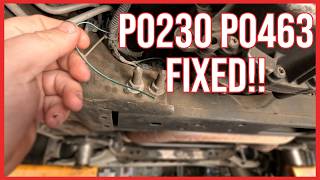
On the GMT900 platform, which includes the 2007-2014 Tahoe, the two most common culprits for a P0463 code are distinct. The first is a simple failure of the fuel level sending unit inside the tank. The second, and a critical point to check, is wiring harness damage. Owners have reported the harness that runs along the frame rail can chafe, particularly above the front driveshaft on 4WD models 🎬 Watch: How to find and fix this common wiring harness break. or on top of the transmission crossmember, leading to a broken purple signal wire and an open circuit. On this platform, the fuel level signal is sent to the Body Control Module (BCM), not the PCM, which then communicates the level to the instrument cluster over the GMLAN data bus.
Symptoms You May Notice
- Check Engine Light is illuminated (though not always)
- Fuel gauge reads empty, full, or fluctuates erratically.
- Low fuel warning light stays on or flashes.
- The 'Fuel Range' display on the driver information center may show '---' or 'LOW'.
- Replacing the entire fuel pump assembly when only the much cheaper fuel level sensor was needed.
- Replacing the fuel level sensor when the actual problem was a broken wire in the harness.
Most Likely Causes
- Failed Fuel Level Sensor (Sending Unit) 🔴 High Probability → Shop Fuel Tank Sending Unit The resistive strip on the sensor wears out over time from the float's contact arm, creating an open spot in the circuit. This is a common failure item on many GM vehicles of this era. An owner report for a similar GM vehicle, NHTSA ODI #10407281, describes the fuel gauge "acting crazy" and reading empty regardless of the actual fuel level due to this high input code.
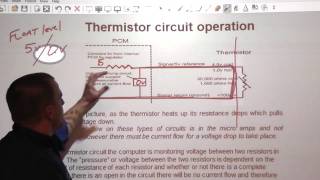
How to confirm: After confirming the wiring is intact, access the fuel pump module. Disconnect the sensor and test its resistance with a multimeter. While manually sweeping the float arm from empty to full, the resistance should change smoothly from approximately 250 Ohms 🎬 See a pro demonstrate how to test the sending unit resistance. (empty) to 40 Ohms (full). If you find an open circuit (infinite resistance) at any point, the sensor is bad.
Typical fix: Replace the fuel level sensor. The sensor is attached to the fuel pump module but can often be replaced separately. This requires dropping the fuel tank to access the module.
Est. part cost: $40-$90 - Damaged Wiring Harness 🟡 Medium Probability The wiring harness running along the frame has been known to rub against the frame, transmission crossmember, or front driveshaft, eventually wearing through the insulation and causing the purple signal wire to break. In some cases, replacing the pump module does not resolve the code if the wiring is the root cause, as noted in NHTSA ODI #11615682.
How to confirm: Visually inspect the entire wiring harness from the fuel tank to the front of the vehicle. Pay extremely close attention to the section that runs above the front driveshaft and along the frame rails for any signs of chafing, rubbing, or broken wires. Check for continuity on the signal wire (typically purple) between the BCM and the fuel tank connector.
Typical fix: Repair the broken or shorted wire(s) in the harness. Use butt connectors with heat shrink or solder to fix the break. Ensure the repaired section is properly insulated with new conduit and rerouted or secured to prevent future damage.
Est. part cost: $5-$20 - Corroded or Damaged Connector ⚪ Low Probability The main electrical connector on top of the fuel pump module is exposed to the elements and can suffer from corrosion or damage, leading to a poor connection.
How to confirm: Disconnect the main harness at the fuel pump module and inspect the pins and terminals for green or white corrosion, bent pins, or melted plastic.
Typical fix: Clean the connector terminals. If the damage is severe, the connector pigtail may need to be replaced.
Est. part cost: $15-$40
Rare But Worth Checking
- Faulty Instrument Panel Cluster (IPC): → Shop Instrument Cluster In rare cases, the instrument cluster itself can fail internally, causing incorrect gauge readings. This is usually accompanied by other gauge or display problems.
- Faulty Powertrain or Body Control Module (PCM/BCM): While very uncommon, the module responsible for reading the sensor's signal can fail. This should only be considered after all other possibilities have been exhaustively ruled out.
Diagnosis Steps
- Read the trouble codes with an OBD-II scanner. Note the P0463 code and any others present. NHTSA ODI #11399819 notes that P0463 can sometimes appear alongside other codes like P069E and C0045.
- Visually inspect the wiring harness running from the fuel tank forward. Focus on common chafe points: above the front driveshaft (4WD models), on top of the transmission crossmember, and along the driver's side frame rail. Look for broken conduit and damaged wires, especially the purple signal wire.
- If wiring appears intact, access the fuel tank connector. With the key on, back-probe the harness-side connector. You should find a 5-volt reference on the gray wire and a good ground on the black wire. The purple wire is the signal wire.
- If the 5V reference is present at the tank, the problem is downstream. If not, you have a wiring issue toward the BCM. A P0463 code is set when the BCM sees a high voltage (near 5V) on the purple signal wire, which it interprets as an open circuit.
- To confirm the sensor is the issue, drop the fuel tank to access the fuel pump module.
- Remove the fuel level sensor from the module. Connect a multimeter set to Ohms to the sensor's terminals.
- Slowly move the float arm from empty to full. The resistance reading should change smoothly from ~250 ohms to ~40 ohms without any dropouts or spikes to infinity (open).
- If the resistance is erratic or shows an open circuit, replace the fuel level sensor.
- If the sensor tests good, you have re-confirmed the problem is in the wiring. Perform a continuity and load test on the purple signal wire from the tank connector to the BCM.
- After the repair, clear the codes and drive the vehicle to confirm the fuel gauge reads correctly.
Parts You'll Likely Need
- Fuel Level Sensor Kit
(OEM #19257104)— This is the most common part to fail, causing the P0463 code. The kit usually includes the sensor and a new tank seal.
Trusted brands: ACDelco
OEM price range: $60-$150
Aftermarket price range: $40-$90 - Fuel Pump Module Assembly
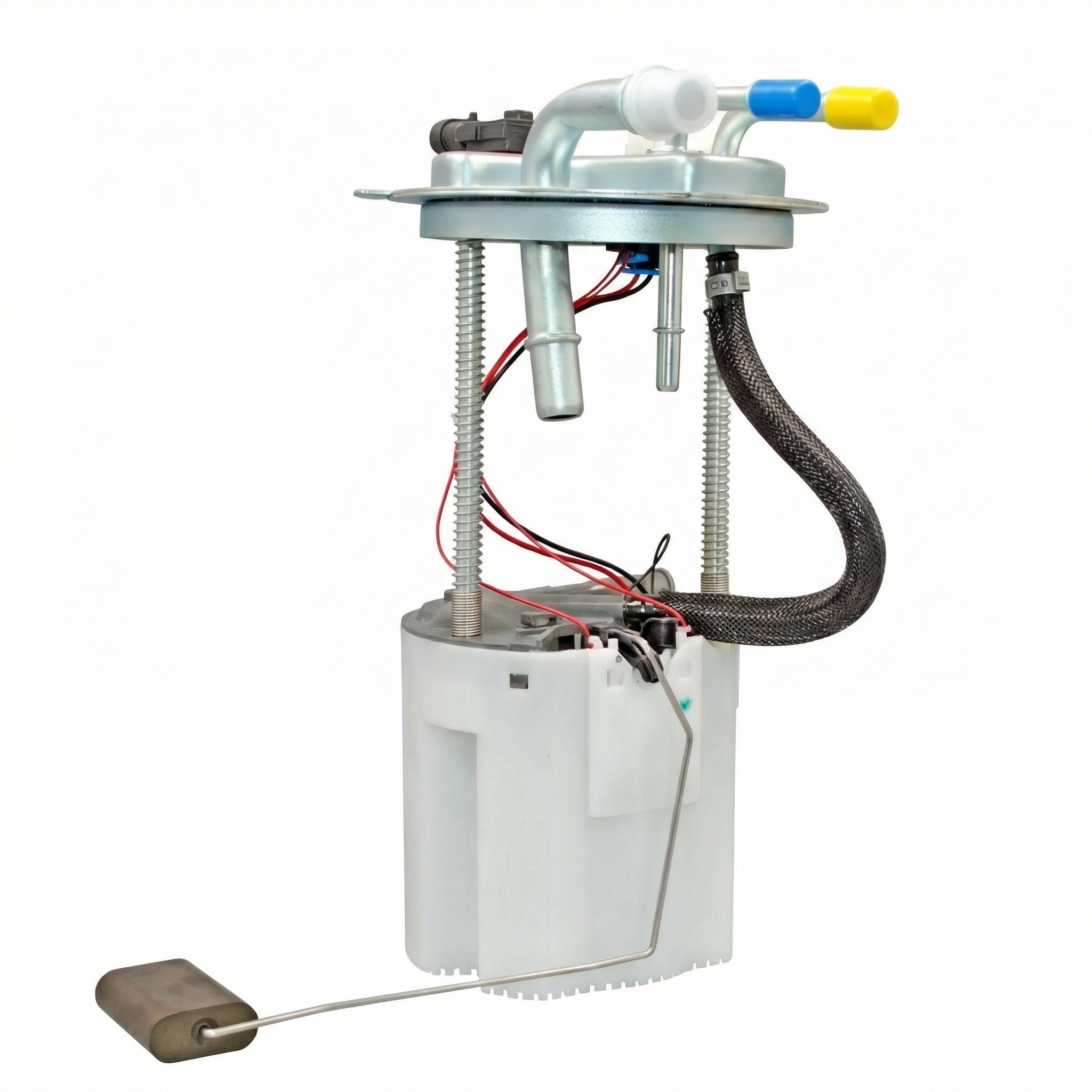
(OEM #ACDelco FG1054, Bosch 69451)— While not always necessary for a P0463, if the vehicle has high mileage, it is often wise to replace the entire fuel pump module (which includes the pump, sensor, and filter) while the tank is down to prevent future failure.
Trusted brands: ACDelco, Delphi, Bosch, Continental
OEM price range: $250-$400
Aftermarket price range: $150-$250
Related Codes That Often Appear With This One
- P0461 — P0461 indicates the sensor signal is out of its expected range or performance is erratic. It often appears alongside P0463 as the sensor begins to fail.
- P0462 — P0462 is for 'Fuel Level Sensor Circuit Low Input'. It's possible to see this code intermittently if the wiring has a short to ground in addition to an open.
- P2068 — This code refers to the 'Fuel Level Sensor 'B' Circuit High', which may be present on vehicles with dual-tank systems or as a companion code indicating a broader fuel system electrical issue.
Technical Service Bulletins (TSBs) & Recalls
- TSB #18-NA-365: While for newer models, this TSB lists P0463 as a related code for fuel system issues, showing it's a persistent GM trouble code.
Platform-Specific Known Issues
- A known issue on this platform is the wiring harness chafing against the frame or front driveshaft, causing an open in the fuel level sensor circuit. This should be thoroughly inspected before replacing any parts.
- The purple signal wire for the fuel level sensor is the specific wire that most often breaks in the harness, leading directly to a P0463 code.
Documented NHTSA Reports
- An owner reported in NHTSA ODI #10759346 that the fuel gauge progressively worsened until it just read empty, coinciding with the activation of code P0463.
- NHTSA ODI #10691136 describes a scenario where the check engine light illuminates with code P0463, though the light may intermittently disappear.
Mechanic-Grade Diagnostic Values
- Fuel Level Sensor Resistance — expected: ~40 Ohms (Full) to ~250 Ohms (Empty). Failure: Infinite resistance (Open/OL) at any point during a sweep, or values significantly outside the range.
- Fuel Level Sensor Signal Voltage at BCM — expected: ~0.5V (Full) to ~4.5V (Empty). Failure: Voltage is stuck high, near 5.0V, regardless of fuel level. This indicates an open circuit and sets P0463.
- Sensor Ground Circuit Resistance to Chassis — expected: Less than 5 Ohms. Failure: Resistance above 5 Ohms indicates a poor ground connection, which can cause incorrect readings.
Scan Tool Commands That Help
- GM Tech2 / GDS2: Instrument Panel Cluster -> Gauge Sweep / Fuel Gauge Control — Use this bidirectional command to test the instrument cluster and GMLAN data bus. If you can command the fuel gauge to move to different positions (E, 1/4, 1/2, F) with the scan tool, it proves the gauge cluster and its communication path are working. This isolates the fault to the BCM, wiring, or the sensor itself.
Wiring & Ground Locations
- Fuel Pump Module Connector — Top of the fuel tank, accessible after dropping the tank.. This is the primary connection point for the fuel level sensor. Pin B (Purple wire) is the signal, Pin A (Gray) is the 5V reference from the BCM, and Pin C (Black) is the low reference/ground.
- G402 — On the driver's side frame rail, typically near the rear shock mount or above the spare tire.. This is a critical chassis ground point for the fuel pump module, including the fuel level sensor's ground reference. A corroded or loose G402 can cause various fuel system electrical issues, including P0463.
- Body Control Module (BCM) — Located under the driver's side of the dashboard, to the left of the steering column.. The purple signal wire from the fuel level sensor terminates at the BCM, not the PCM. A bad connection at the BCM connector pin or an internal BCM fault can cause P0463.
- Harness Chafe Point 1 — On top of the transmission crossmember.. The main vehicle harness rests on this crossmember and vibration can cause it to rub through, breaking the purple signal wire.
- Harness Chafe Point 2 — Above the front driveshaft on 4WD models.. The spinning driveshaft can make contact with the harness, especially if clips are broken, leading to a severed signal wire.
Real Owner Repair Stories
- GMTNation Forum User (2007-2014 GM Truck (platform equivalent)) — P0463 code, fuel gauge stuck on Empty.
❌ Tried (didn't work) Replaced fuel pump assembly (including sensor).
✅ What actually fixed it The shop had broken the main fuel connector on top of the tank during the pump replacement and installed a new one. The P0463 code appeared after this repair. The issue was likely a poorly pinned or faulty replacement connector pigtail, creating a bad connection right at the source. - Chevrolet Forum User (2007 Suburban 5.3L) — P0461 and P0463 codes, gauge on E, 'LOW FUEL' message.
❌ Tried (didn't work) Replaced the fuel level sensor.
✅ What actually fixed it The user reported the P0463 code remained even after replacing the sensor. The thread resolution points towards a wiring issue between the new sensor and the BCM that was overlooked, as replacing the most common part did not fix the issue, a classic case of misdiagnosis.
OEM Part Supersession History
19179870→19257104— Standard part revision and update.
Heads up: ACDelco also lists this part under the service number SK1356. Ensure any replacement cross-references to these numbers for compatibility.
Model Year Variations Within This Range
- 2007-2014: FlexFuel (E85 compatible, RPO code LC9) vs. non-FlexFuel (RPO code LY5) engines use different fuel pump assemblies. While the P0463 code and the separate fuel level sensor are often the same, the complete pump module part numbers are different. If replacing the entire assembly, ensure you purchase the correct one for your vehicle's fuel system. FlexFuel vehicles have injectors with a different spray angle and flow rate.
- 2009+: Later models in this generation determine ethanol content using existing O2 sensor data rather than a dedicated flex fuel sensor in the fuel line, simplifying the fuel system slightly but not affecting the P0463 diagnosis.
Diagnostic Flowchart
Other Known Issues on This Vehicle
Issues unrelated to this code that are worth knowing about as an owner of this generation:
- Cracked Dashboard 🟠 Medium — Extremely common, especially on 2007-2011 models. Cracks typically appear on the driver's side near the instrument cluster and over the passenger airbag. (Ref: No recall was issued, but this was a widely known manufacturing defect. A class-action lawsuit was filed but did not result in a mandatory recall.)
- Active Fuel Management (AFM) Lifter Failure 🔴 High — Common on the 5.3L and 6.2L V8 engines, typically occurring between 75,000 and 150,000 miles. A failed AFM lifter can cause a misfire (P0300), a ticking noise, and may lead to camshaft damage if not addressed. (Ref: Multiple TSBs exist, including #18-NA-365 and others which detail diagnostic and repair procedures for lifter issues.)
- Excessive Oil Consumption 🟠 Medium — Often related to the AFM system, many owners report consuming 1-2 quarts of oil between changes. This is caused by oil being sprayed onto cylinder walls when AFM is active, which can overwhelm the piston rings. (Ref: GM issued TSBs for this issue, with some early fixes involving a new valve cover and later, piston ring replacement for severe cases.)
- Interior Door Handle Breakage 🟡 Low — The plastic chrome-plated interior door handles are prone to breaking, leaving sharp edges. This is a very common, though minor, annoyance.
- Service StabiliTrak / Traction Control Warning 🟡 Low — This warning often appears due to a failing steering wheel position sensor, a common issue that can cause the stability control system to be disabled. (Ref: TSB #PIT4322G addresses unwanted stability activation or service messages.)
Used vs. New Parts: Buying Guide for This Vehicle
When a used part is the smart pick: A used part is a smart choice for a replacement connector pigtail if the original is corroded or broken. It is generally a poor choice for the fuel level sensor or the entire fuel pump assembly due to unknown wear and remaining lifespan.
Donor-vehicle mileage cap: roughly under 100000 miles for the part to have meaningful remaining life.
What to inspect on the donor part:
- For a connector pigtail, ensure there is no corrosion (green or white powder) on the pins.
- Check that the plastic is not brittle or cracked.
- Ensure the locking tabs are intact and functional.
- Verify there is at least 6-8 inches of clean, undamaged wire attached.
OEM-only on this vehicle (don't cheap out):
- While not strictly 'OEM-only', using a complete fuel pump assembly from a reputable OEM supplier like ACDelco or Delphi is highly recommended over generic, unbranded units to ensure longevity of the pump motor.
Aftermarket brands forum-validated for this vehicle:
- ACDelco (OEM)
- Delphi
- Bosch
- Continental
Brands owners have reported issues with on this vehicle:
- Unbranded or 'white box' parts from online marketplaces are frequently cited on forums as having a high premature failure rate for both the sensor and the pump motor.
Real Owner Stories
Aggregated from forums and TSBs cited above. Mileages and costs reflect what owners reported in those sources.
2007 Chevrolet Suburban
Symptoms: The owner experienced a P0463 code and confirmed the fuel gauge was not operating correctly.
What fixed it: Repairing a frayed wiring harness that was rubbing against the frame above the front driveshaft.
Source hint: chevroletforum.com thread regarding a 2007 Suburban with P0463
2011 Chevrolet Tahoe
Symptoms: The fuel gauge 'no worky' and specifically showed 7/8 full when the tank was actually half full or less.
What fixed it: Replacing the failing fuel sending unit.
Source hint: tahoeyukonforum.com thread 'Code P0463 - Fuel gauge no worky'
2007-2013 GMT-900 Truck
Symptoms: P0463 code present due to an open circuit in the fuel level sensor wiring.
What fixed it: Repairing a broken wire in the harness located above the transmission, which is a common chafe point.
Source hint: gm-trucks.com user report (inferred from video https://www.youtube.com/watch?v=s-L-iB1QO_k)
Related OBD-II Codes
Frequently Asked Questions
Does TSB #18-NA-365 apply to my 2007-2014 Chevrolet Tahoe regarding the P0463 code?
My 2011 Tahoe fuel gauge shows 7/8 full when I know it's only half full. Is this a P0463 symptom?
Is there a specific wire I should check on my Tahoe's chassis for this code?
Can I replace just the fuel level sensor on my Tahoe, or do I need a whole new pump?
Why does my Driver Information Center show '---' or 'LOW' for the fuel range?
Are there other common issues on the 2007-2014 Tahoe I should look out for while fixing this?
Helpful Videos

Used OEM Parts in Stock
New Aftermarket Parts Available



The information in this article is provided for general reference and educational purposes only. Vehicle specifications, procedures, and part compatibility can vary by production date, trim level, and region. Always consult your vehicle's factory service manual and verify part numbers before purchasing or performing repairs. Safety-critical components such as airbags, seat belts, and braking systems should be installed by a qualified professional.
- Chevrolet Tahoe:
- 🧭 Diagnostic Flowchart
- 🎬 Helpful Videos
- 🛍️ Shop This Part
- What's Unique About the 2007-2014 Chevrolet Tahoe
- Symptoms You May Notice
- Most Likely Causes
- Rare But Worth Checking
- Diagnosis Steps
- Parts You'll Likely Need
- Related Codes That Often Appear With This One
- Technical Service Bulletins (TSBs) & Recalls
- Platform-Specific Known Issues
- Documented NHTSA Reports
- Mechanic-Grade Diagnostic Values
- Scan Tool Commands That Help
- Wiring & Ground Locations
- Real Owner Repair Stories
- OEM Part Supersession History
- Model Year Variations Within This Range
- Other Known Issues on This Vehicle
- Used vs. New Parts: Buying Guide for This Vehicle
- Real Owner Stories
- 2007 Chevrolet Suburban
- 2011 Chevrolet Tahoe
- 2007-2013 GMT-900 Truck
- Related OBD-II Codes
- Frequently Asked Questions
- 🎟️ Get 5% Off