

P0463 on 2006-2011 Hyundai Azera: Fuel Level Sensor Circuit High Input Causes and Fixes
This code means your fuel gauge is unreliable. On the 2006-2011 Azera, the most common cause is a failed fuel level sending unit inside the gas tank. You can drive, but must track mileage to avoid running out of gas. Expect to pay $90-$165 for an OEM sensor.
- P0463 means the fuel level sensor circuit has an electrical fault (high voltage), making your fuel gauge unreliable.
- You can continue to drive, but you must track your mileage with the trip odometer to avoid running out of gas.
- The most likely cause is a failed fuel level sending unit inside the fuel tank.
- Diagnosis involves testing the sensor's resistance with a multimeter; an infinite (OL) reading confirms failure.
- When replacing the sensor, it is critical to also replace the fuel tank gasket to prevent leaks.
What's Unique About the 2006-2011 Hyundai Azera
The 2006-2011 Hyundai Azera (TG generation) uses a saddle-style fuel tank which requires two fuel level sending units to provide an accurate reading across the entire tank. Code P0463 refers to the 'A' sensor, which is the main unit integrated with the fuel pump on the passenger side. A 'high input' code is a very common failure mode for this type of sensor, as the delicate internal resistor contacts wear down and break over time, creating the open circuit that the PCM detects as high voltage. It is highly recommended by technicians to replace both sending units at the same time, as they tend to fail around the same mileage.
Symptoms You May Notice
- Check Engine Light is on
- Fuel gauge reads empty or full, regardless of the actual fuel level
- Fuel gauge fluctuates erratically
- Low fuel warning light may be on constantly
- In some cases, the gauge may drop to empty intermittently, especially when the car is stopped, and then return to a normal reading upon acceleration.
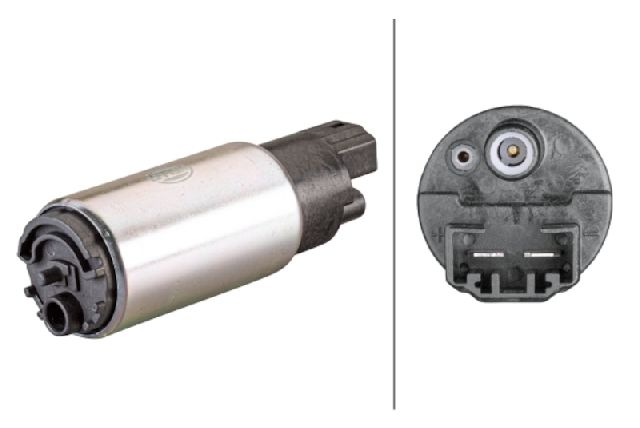
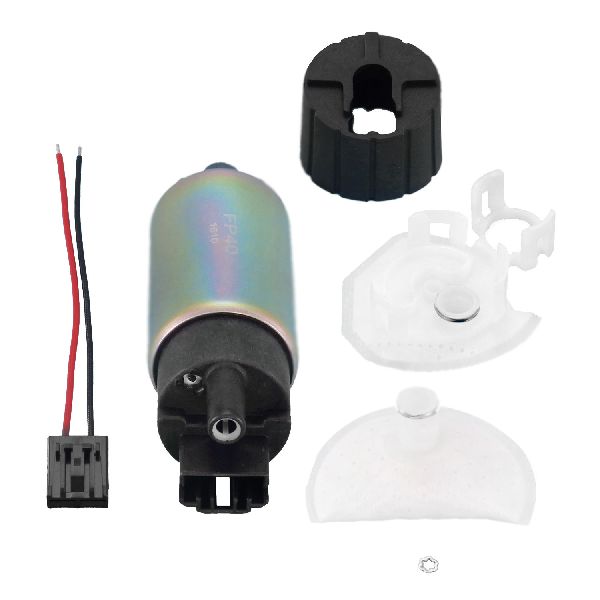
- Replacing the entire fuel pump assembly when only the sending unit has failed. Often, the sending unit can be purchased and replaced separately from the pump itself.
- Replacing only one of the two sending units. Since the Azera has a saddle tank with two sensors that wear at similar rates, it's common for the second unit to fail shortly after the first is replaced, leading to a repeat repair.
Most Likely Causes
- Faulty Fuel Level Sending Unit 🔴 High Probability → Shop Fuel Tank Sending Unit The variable resistor contacts on the sending unit are a known wear item. Over time, the wiper arm that moves across the resistor card can wear down the contacts or break, causing an open circuit which results in a 'high input' signal. This is the most common failure on this platform.
How to confirm: Access the sending unit and test its resistance with a multimeter. According to service data for similar Hyundai models, the main sender (with pump) should read approximately 4 ohms at full and 105 ohms at empty. The sub-sender should read about 4 ohms at full and 95 ohms at empty. An infinite (OL) reading at any point while moving the float arm indicates an open circuit and a failed sensor.
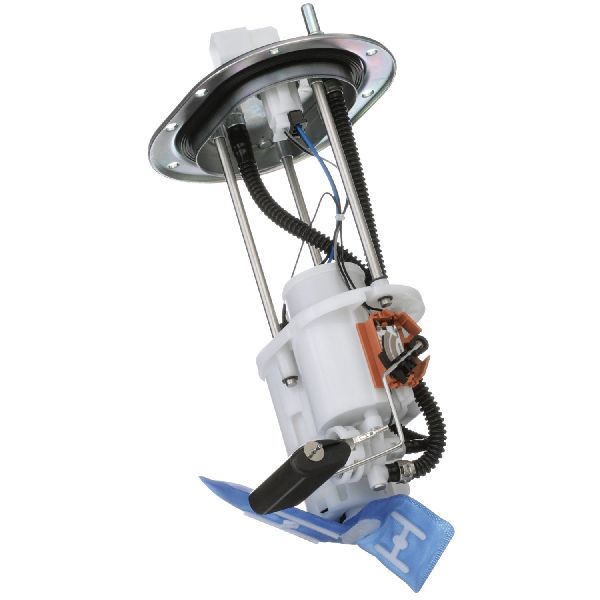
Typical fix: Replace the faulty fuel level sending unit. The sending unit is part of the fuel pump module (main unit) or a separate module (sub-unit) located inside the fuel tank, accessible by removing the rear seat cushion and access panels. It is strongly recommended to replace both the main and sub-sending units simultaneously.
Est. part cost: $90-$165 - Damaged Wiring or Connectors 🟡 Medium Probability The wiring harness running to the fuel tank can be susceptible to corrosion or physical damage, particularly at the connector on top of the fuel pump assembly. Moisture can enter the connector, causing corrosion on the pins and leading to high resistance or an open circuit.
How to confirm: Visually inspect the wiring harness and connectors between the fuel tank and the PCM for any signs of corrosion, breaks, or loose connections. Test for continuity and proper voltage at the sensor connector. A visual inspection of the connector pins on top of the fuel pump access cover is a key first step.
Typical fix: Repair or replace the damaged section of wiring or the faulty connector. Cleaning corroded pins may provide a temporary fix, but replacing the connector pigtail is often a more permanent solution.
Est. part cost: $10-$50
Rare But Worth Checking
- Faulty Instrument Cluster: → Shop Instrument Cluster While rare, a failure within the instrument cluster itself can cause incorrect fuel gauge readings and may sometimes be associated with this code. This should only be considered after the sending unit and wiring have been thoroughly checked and confirmed to be in good working order.
- Faulty Powertrain Control Module (PCM): This is extremely rare. The PCM is the last component to suspect. A PCM failure would typically be accompanied by multiple other unrelated codes and drivability issues.
Diagnosis Steps
- Use an OBD-II scanner to confirm P0463 is present. Note any other codes, especially P0462, P2067, or P2068, as this points strongly to the sending units.
- Check the fuel gauge. Does it read full, empty, or does it move erratically? Note its behavior.
- Gain access to the top of the fuel tank by removing the rear seat cushion. There are two access panels, one on the passenger side (main pump/sender 'A') and one on the driver's side (sub-sender 'B').
- Disconnect the electrical connector for the fuel level sensor 'A' (passenger side). Inspect the connector for corrosion or damage.
- With the key on, measure the voltage on the signal wire at the connector. It should typically be a 5-volt reference.
- Using a multimeter set to Ohms, test the resistance of the fuel level sensor itself. Connect the leads to the sensor's pins. For the Azera/Sonata platform, expect a sweep from roughly 4Ω (Full) to 105Ω (Empty).
- Manually move the float arm from its lowest to highest position. The resistance reading should change smoothly and consistently. If the reading is infinite (OL), jumps erratically, or has dead spots, the sending unit is faulty and must be replaced.
- If the sending unit tests good, perform a detailed inspection of the wiring harness from the tank to the PCM for any visible damage, corrosion, or loose connections.
- If wiring and the sender are good, the issue may lie with the instrument cluster or PCM, which requires advanced professional diagnosis.
Parts You'll Likely Need
- Fuel Level Sending Unit (Main, 'A')
(OEM #94460-3L000)— This is the most common point of failure for code P0463. It is located on the passenger side and is part of the main fuel pump assembly. The internal resistor wears out, causing an open circuit.
Trusted brands: Genuine Hyundai, Delphi, Spectra Premium
OEM price range: $90-$130
Aftermarket price range: $50-$90 - Fuel Level Sending Unit (Sub, 'B')
(OEM #94460-3L100)— This is the secondary sensor on the driver's side. While not the direct cause of P0463 ('Circuit A'), it is highly recommended to replace it at the same time as the main unit, as they wear at a similar rate and can cause related codes like P2067/P2068.
Trusted brands: Genuine Hyundai
OEM price range: $115-$160
Aftermarket price range: $60-$100 - Fuel Pump Gasket / Seal
(OEM #31112-3K600)— This seal should always be replaced whenever the fuel pump module or sending unit is removed from the tank to prevent dangerous fuel leaks and vapor leaks that can trigger EVAP codes. Two are required if replacing both sending units.
Trusted brands: Genuine Hyundai
OEM price range: $15-$25
Aftermarket price range: $10-$20
Related Codes That Often Appear With This One
- P0462 — Fuel Level Sensor 'A' Circuit Low Input. Seeing both high and low input codes can indicate an intermittent connection or a failing sensor that is fluctuating wildly between an open and a short.
- P2067 / P2068 — These codes relate to the 'B' (secondary) fuel level sensor, located on the driver's side of the fuel tank. Since the Azera has a saddle tank, it's common for both sensors to be reported if there's a system-wide issue or if both are failing around the same time.
Platform-Specific Known Issues
- Dual Sending Unit Failure: Because the Azera has a saddle tank with two sending units, owners frequently report getting codes for both sensors (e.g., P0463 and P2068) simultaneously or in close succession. A common repair story involves replacing one sensor, only to have the check engine light return for the other sensor a short time later. Technicians on repair databases like Identifix strongly advise replacing them as a pair.
Mechanic-Grade Diagnostic Values
- Main Fuel Level Sensor 'A' Resistance — expected: Approximately 4Ω at Full, 105Ω at Empty. Failure: An infinite (OL) reading, or readings that jump erratically as the float arm is moved. A reading that doesn't change also indicates a failure.
- Sub Fuel Level Sensor 'B' Resistance — expected: Approximately 4Ω at Full, 95Ω at Empty. Failure: An infinite (OL) reading, or readings that jump erratically as the float arm is moved.
- Fuel Pump Relay Control Voltage — expected: Approximately 0V-1.0V at Pin 86 of the fuel pump relay when the key is turned to ON or START.. Failure: No ground signal from the ECU at pin 86 during key ON or START indicates a potential ECU or wiring issue preventing the relay from energizing.
Scan Tool Commands That Help
- Hyundai GDS (Global Diagnostic System): Resetting Adaptive Values — After replacing fuel system components, including the sending units, it can be beneficial to reset the ECU's adaptive memory. While not always strictly required for this specific code, it ensures the system relearns parameters from a clean slate. This function is found under 'Vehicle Software Management'.
- Hyundai GDS (Global Diagnostic System): Actuation Test — The GDS can be used to command the instrument cluster gauges to perform a sweep test. This can help determine if the fuel gauge itself is physically capable of moving correctly, helping to isolate the fault between the sending unit/wiring and the cluster.
Wiring & Ground Locations
- GLG01 — Located in the left rear of the engine compartment.. This is a primary ground point for multiple engine and fuel system components on the 2010 Azera and similar years. A corroded or loose connection at GLG01 could potentially cause erratic voltage and ground signals for the fuel pump and sending unit circuits, contributing to a P0463 code.
- Fuel Pump & Sender Connector — On top of the fuel tank, accessible by removing the rear seat cushion and the two access panels (passenger side for 'A', driver's side for 'B').. This is the most common location for wiring issues. The connector pins can corrode from moisture, and the harness itself can be damaged during other repairs, leading to an open circuit (High Input).
Real Owner Repair Stories
- Hyundai-Forums.com user (2006 Hyundai Azera, 110k miles) — Check engine light on, gas gauge working erratically. The CEL would go out when the tank was full.
❌ Tried (didn't work) Initially, the owner just kept the tank full to keep the light off.
✅ What actually fixed it The user's mechanic diagnosed a bad fuel sensor. The forum discussion confirmed that this is a classic symptom of a failing sending unit on the Azera, and the resolution is to replace the faulty sender. - NHTSA ODI #11315420 — An owner of a similar Hyundai model reported the check engine light came on steady with code P0463 Fuel Level Sensor A Circuit High Input, noting that while the part itself is relatively inexpensive, it is located within the fuel tank.
- NHTSA ODI #10958317 — A driver reported that the fuel sensor circuit issue is extremely dangerous because the gauge can suddenly read empty while driving, causing confusion about actual fuel levels.
Model Year Variations Within This Range
- 2010 (Early Production): Wiring diagrams for the 2010 model year sometimes specify 'Early Production'. For the fuel system, the ground point designator 'GLG01' is explicitly mentioned for early 2010 models, whereas diagrams for a 2008 model may use a different designator like 'G115'. While the physical location is likely similar (left rear of engine compt), technicians should verify the correct diagram for the specific production date if troubleshooting a complex wiring issue.
Diagnostic Flowchart
Other Known Issues on This Vehicle
Issues unrelated to this code that are worth knowing about as an owner of this generation:
- ABS Module Electrical Short 🔴 High — Common enough to trigger a major safety recall (NHTSA #18V026000). Affects 2006-2011 models. (Ref: Recall 172. Water can enter the ABS module, causing an electrical short that can lead to an engine compartment fire, even when the vehicle is turned off.)
- Rear Crossmember Corrosion 🔴 High — Widespread in regions that use road salt, leading to a safety recall (NHTSA #13V354000). (Ref: Recall 113. Severe corrosion of the rear crossmember can lead to detachment of a rear control arm, causing a sudden loss of vehicle control.)
- Malfunctioning Stop Lamp Switch 🟠 Medium — Very common across many Hyundai models of this era, subject to a large recall campaign. (Ref: Recall Campaign (e.g., 13V113000). A faulty switch can cause brake lights to not illuminate, the inability to shift out of Park, and cruise control to not disengage with the brake pedal.)
- Unintended Power Seat Movement 🟠 Medium — Affects 2007-2008 models, prompting a safety recall (NHTSA #16V630000). (Ref: Recall 150. The driver's power seat switch can fail, causing the seat to move unexpectedly while driving, increasing crash risk.)
- High Oil Consumption / Timing Chain Tensioner Issues 🟠 Medium — Reported by owners, particularly on the 3.3L/3.8L Lambda engines as they accumulate high mileage. Can lead to engine noise or, in severe cases, timing failure. (Ref: While later Lambda II GDI engines faced lawsuits, the earlier MPI versions in the Azera are known for oil consumption and timing system wear.)
Used vs. New Parts: Buying Guide for This Vehicle
When a used part is the smart pick: For this specific repair, using a used part from a junkyard is NOT recommended. The fuel level sending unit is a wear item with delicate electronic contacts that degrade over time. A used unit has unknown remaining life and is very likely to fail soon after installation, forcing you to do the job twice.
What to inspect on the donor part:
- Not applicable, as used parts are not advised for this component.
OEM-only on this vehicle (don't cheap out):
- Fuel Level Sending Unit (Main and Sub)
Aftermarket brands forum-validated for this vehicle:
- Delphi
- Spectra Premium
Brands owners have reported issues with on this vehicle:
- Unbranded, 'white-box' parts from online marketplaces are a significant gamble. They often have incorrect resistance ranges or use lower-quality materials that fail quickly.
Real Owner Stories
Aggregated from forums and TSBs cited above. Mileages and costs reflect what owners reported in those sources.
2006 Hyundai Azera
Symptoms: The owner experienced codes P0462, P0463, P2067, and P2068 all at once. The fuel gauge would intermittently drop to empty and then suddenly correct itself.
What fixed it: The issue was identified as a classic sending unit failure, common for this platform where the resistor contacts wear down.
Source hint: Hyundai-Forums.com: 'Those annoying Fuel Lever Sensors'
2009 Hyundai Santa Fe 3.3L Lambda V6
Symptoms: The P0463 code would trigger specifically when the fuel tank was full, even after the sensors had been replaced.
What fixed it: The discussion suggested the possibility of faulty-out-of-the-box OEM parts or a potential software update.
Source hint: Reddit r/MechanicAdvice: 'p0463 when tank is full after replacing sensor'
Documented NHTSA Reports
Symptoms: NHTSA ODI #10960401 describes a situation where filling up with gas causes the fuel gauge to go to zero and the engine service light to come on with codes P2067, P0463, and P0464. Another report, NHTSA ODI #10845942, notes that the fuel gauge would fall and give false readings with codes P0464, P0463, and P2069 present. In NHTSA ODI #11218601, a dealer diagnostic for a check engine light confirmed P0463 and recommended replacing the fuel sensor.
Related OBD-II Codes
Frequently Asked Questions
I replaced one fuel sensor on my Azera but the P0463 code came back. Why?
Where are the fuel level sensors located on the 2006-2011 Azera?
What are the specific resistance values I should look for when testing my Azera's sending units?
Is there a recall for the fuel gauge issue on this vehicle?
Can I just clean the electrical connectors to fix P0463?
Helpful Videos


We Have This Part in Stock

The information in this article is provided for general reference and educational purposes only. Vehicle specifications, procedures, and part compatibility can vary by production date, trim level, and region. Always consult your vehicle's factory service manual and verify part numbers before purchasing or performing repairs. Safety-critical components such as airbags, seat belts, and braking systems should be installed by a qualified professional.
- Hyundai Azera:
- 🧭 Diagnostic Flowchart
- 🎬 Helpful Videos
- 🛍️ Shop This Part
- What's Unique About the 2006-2011 Hyundai Azera
- Symptoms You May Notice
- Most Likely Causes
- Rare But Worth Checking
- Diagnosis Steps
- Parts You'll Likely Need
- Related Codes That Often Appear With This One
- Platform-Specific Known Issues
- Mechanic-Grade Diagnostic Values
- Scan Tool Commands That Help
- Wiring & Ground Locations
- Real Owner Repair Stories
- Model Year Variations Within This Range
- Other Known Issues on This Vehicle
- Used vs. New Parts: Buying Guide for This Vehicle
- Real Owner Stories
- 2006 Hyundai Azera
- 2009 Hyundai Santa Fe 3.3L Lambda V6
- Documented NHTSA Reports
- Related OBD-II Codes
- Frequently Asked Questions
- 🎟️ Get 5% Off