

P0463 on 2018-2022 Nissan KICKS: Causes and Fixes for Fuel Level Sensor Circuit High
On a 2018-2022 Nissan Kicks, code P0463 almost always means the fuel level sensor inside the gas tank has failed. A Nissan Technical Service Bulletin (NTB22-026) confirms this common issue across many Nissan models. The correct and most cost-effective fix is to replace only the sensor (Part No. 25060-5RL0A), not the entire fuel pump assembly, with the OEM part costing around $200-$290.
- P0463 on your Kicks almost certainly means you need a new fuel level sensor, not a whole fuel pump.
- Reference Nissan TSB NTB22-026 when talking to a repair shop to ensure they only quote for replacing the sensor (Part #25060-5RL0A), which can save you over a thousand dollars.
- This repair is not recommended for beginners due to the fire risk associated with working on the fuel tank.
- While you can drive with this code, your fuel gauge is not trustworthy. Use your trip meter to track mileage between fill-ups to avoid running out of gas.
What's Unique About the 2018-2022 Nissan KICKS
The Nissan Kicks, along with other Nissan models from the era built on the same platform, is known for this specific issue. Nissan acknowledged the problem by releasing Technical Service Bulletin NTB22-026. This bulletin is critically important because it explicitly instructs technicians to replace only the faulty fuel level sensor, rather than the entire, much more expensive, fuel pump assembly. The TSB warns that warranty claims for replacing the whole assembly for this issue will be rejected, underscoring that the sensor is the intended standalone repair. This knowledge is key for owners to avoid a common and costly misdiagnosis.
Diagnostic Flowchart
Tap your situation to follow the diagnostic path that matches what you're seeing on this vehicle.
Symptoms You May Notice
- Check Engine Light is on.
- Fuel gauge is inaccurate, often stuck on full or empty.
- Fuel gauge fluctuates erratically or doesn't move from its position when the car is turned off.
- Low fuel warning light may stay on or flash, even with a full tank.
- Distance to Empty (DTE) calculation is incorrect or shows dashes.
- Replacing the entire fuel pump assembly. Nissan TSB NTB22-026 explicitly warns against this, as only the fuel level sensor typically needs replacement. This misdiagnosis can lead to repair quotes exceeding $1,700, when the correct repair should be closer to $400-$600.
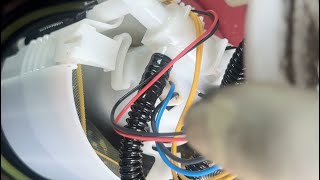
- Assuming the instrument cluster is bad because the gauge is faulty. The P0463 code is generated by the PCM based on the raw sensor data, pointing the fault toward the sensor 🎬 See this breakdown of common P0463 causes and fixes. or its circuit, not the display.
Most Likely Causes
- Faulty Fuel Level Sensor (Sending Unit) 🔴 High Probability → Shop Fuel Tank Sending Unit This is a widely known issue acknowledged by Nissan via TSB NTB22-026. The internal variable resistor on the sensor fails, causing it to send a signal that is out of the expected range.
How to confirm: Access the sensor's electrical connector under the rear seat. Disconnect it and test the sensor's resistance with a multimeter set to Ohms. While manually moving the float arm, the resistance should change smoothly. A reading that is out of spec, doesn't change, or shows an open loop confirms a bad sensor.
Typical fix: Replace the fuel level sensor. Per TSB NTB22-026, the sensor (Nissan Part #25060-5RL0A) can be replaced separately from the fuel pump assembly.
Est. part cost: $200-$290 - Damaged Wiring or Connector 🟡 Medium Probability The wiring harness connector at the fuel pump assembly can become corroded or damaged during other service. A 'circuit high' code specifically points towards a potential open in the signal or ground wire.
How to confirm: Visually inspect the wiring harness and the connector on top of the fuel tank for any signs of corrosion, damage, or loose pins. Perform a continuity test on the signal and ground wires between the PCM and the fuel level sensor connector to find any breaks in the circuit.
Typical fix: Repair the broken wire or clean/replace the corroded connector. In some cases, the connector pigtail itself may need to be replaced.
Est. part cost: $10-$75 - Stuck Fuel Level Sensor Float ⚪ Low Probability → Shop Fuel Tank Sending Unit Poor fuel quality or contaminants in the tank can cause the float arm to bind, preventing it from moving with the fuel level.
How to confirm: This is usually found upon physical inspection after removing the fuel pump assembly from the tank. The float arm will not move freely through its range of motion.
Typical fix: Free the stuck float arm. If the arm is bent or the float itself is damaged (e.g., has absorbed fuel and no longer floats), the entire sensor assembly must be replaced.
Est. part cost: $0-$290
Rare But Worth Checking
- Faulty Powertrain Control Module (PCM) or Instrument Cluster: → Shop Instrument Cluster This is extremely rare and should only be considered a possibility after the sensor, wiring, and connectors have all been definitively ruled out as the cause. A failure here is unlikely to only affect the fuel level reading.
Diagnosis Steps
- Verify the P0463 code is present using an OBD-II scanner.
- Check for other related fuel system codes (P0460, P0461, P0462).
- Observe the fuel gauge behavior. Note if it is stuck on full, empty, or fluctuates.
- Use a scan tool with live data to monitor the fuel level sensor voltage 🎬 Watch: A mechanic's guide to diagnosing the P0463 error code. or resistance reading from the PCM. A very high, fixed reading is a strong indicator of the fault.
- Prepare for physical inspection: Park on a level surface, ensure the fuel tank is as empty as possible, and disconnect the negative battery terminal.
- Access the fuel pump service cover by removing the rear seat bottom cushion. It is typically a black metal plate held on by several screws.
- Disconnect the electrical connector and inspect for any visible damage, corrosion, or loose connections.
- Using a multimeter set to Ohms, probe the correct pins on the sensor side of the connector to measure its resistance. Compare this reading to the manufacturer's specifications (if available).
- If the sensor is accessible, remove it from the tank. Manually move the float arm from empty to full. The resistance reading on the multimeter should change smoothly and consistently. Any spikes, dropouts, or open-loop readings indicate a faulty sensor.
- If the sensor tests good, perform continuity and voltage checks on the vehicle-side wiring harness back to the PCM to rule out an open circuit or short to power.
- If the sensor is faulty, replace it. If the wiring is faulty, repair it.
Parts You'll Likely Need
- Fuel Level Sensor
(OEM #25060-5RL0A)— This is the component that fails most often, causing the P0463 code, as confirmed by Nissan's own service bulletin NTB22-026.
Trusted brands: Genuine Nissan
OEM price range: $206-$292
Aftermarket price range: $115-$170 - Fuel Pump Gasket / O-Ring — The large O-ring that seals the fuel pump assembly to the tank should always be replaced whenever the assembly is removed to prevent fuel leaks and evaporative emissions (EVAP) system codes.
Trusted brands: APA/URO Parts, Spectra Premium
OEM price range: $15-$30
Aftermarket price range: $10-$20
Related Codes That Often Appear With This One
- P0460 — This code indicates a general fault in the fuel level sensor circuit and is listed in the same TSB (NTB22-026) as P0463, often having the same root cause.
- P0461 — This code relates to the range/performance of the fuel level sensor circuit and is often triggered by the same internal sensor failure. It is also listed in TSB NTB22-026.
- P0462 — This is the opposite of P0463, indicating a 'Circuit Low' input. It can appear alongside P0463 if the sensor is failing erratically, shorting out, or getting stuck. It is also listed in TSB NTB22-026.
Technical Service Bulletins (TSBs) & Recalls
- NTB22-026 (April 5, 2022): Titled 'SERVICE INFORMATION FOR FUEL GAUGE INACCURATE WITH DTCS STORED IN ECM'. States that for DTCs P0460, P0461, P0462, and P0463, the fuel level sensor can and should be replaced separately from the entire fuel pump assembly.
Platform-Specific Known Issues
- Nissan issued Technical Service Bulletin NTB22-026 for a wide range of its vehicles, including the Kicks, for fuel gauge inaccuracy accompanied by DTCs P0460, P0461, P0462, or P0463. The bulletin explicitly clarifies that the fuel level sensor is available as a separate part (25060-5RL0A) and should be replaced independently. It warns that warranty claims for replacing the entire fuel pump assembly for this issue will be rejected, confirming this is a known failure with a specific, targeted fix.
Mechanic-Grade Diagnostic Values
- Fuel Level Sensor Resistance — expected: Approximately 51 Ohms at Full and 300 Ohms at Empty. (Note: These values are from a contemporary 2019 Nissan Altima and serve as a strong reference for modern Nissan platforms.). Failure: A reading of 'OL' (Open Loop) on a multimeter, or a value that does not change when the float arm is moved, indicates a failed sensor.
Scan Tool Commands That Help
- Nissan CONSULT III Plus: Active Test — The 'Active Test' menu allows a technician to command specific components to turn on or off to verify their operation. While not explicitly for the fuel level sensor, it is the correct function within the OEM scan tool to test related fuel system components like fuel injection, confirming the tool's diagnostic capabilities for the system as a whole.
Wiring & Ground Locations
- Connector B12, Pin 4 — This connector is part of the wiring harness leading to the fuel tank assembly.. A 2018 Nissan Kicks wiring diagram identifies Pin 4 of connector B12 as a ground (Wire color 'B' for Black) for the fuel tank sensor assembly. A P0463 'Circuit High' code can be caused by a poor or missing ground, making this pin a critical point to check for continuity to the chassis ground during diagnosis.
Real Owner Repair Stories
- Composite of common repair narratives and TSB NTB22-026 (2019 Nissan Kicks) — Check Engine Light on with code P0463. The fuel gauge was stuck on Full, regardless of the actual fuel level.
❌ Tried (didn't work) Clearing the code (it returned immediately)., Considering replacement of the entire fuel pump assembly, but was advised against it due to cost and the known TSB.
✅ What actually fixed it The owner or their mechanic followed the guidance of Nissan TSB NTB22-026. They removed the fuel pump assembly via the access panel under the rear seat, detached the old fuel level sensor (Part No. 25060-5RL0A) from the assembly, and installed a new one. After reassembly, the fuel gauge began reading correctly and the P0463 code did not return.
Model Year Variations Within This Range
- 2025+: The 2025 Nissan Kicks, which features a larger 2.0L engine, uses a different fuel level sensor, Part Number 25060-7LG1A. The sensor for the 2018-2024 1.6L models (25060-5RL0A) is not compatible with the newer model year.
Helpful Videos

Used OEM Parts in Stock
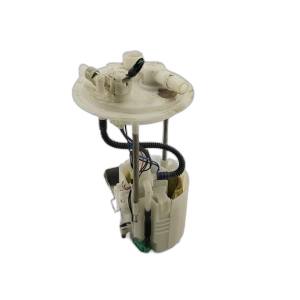
New Aftermarket Parts Available


The information in this article is provided for general reference and educational purposes only. Vehicle specifications, procedures, and part compatibility can vary by production date, trim level, and region. Always consult your vehicle's factory service manual and verify part numbers before purchasing or performing repairs. Safety-critical components such as airbags, seat belts, and braking systems should be installed by a qualified professional.
- Nissan KICKS:
- 🧭 Diagnostic Flowchart
- 🎬 Helpful Videos
- 🛍️ Shop This Part
- What's Unique About the 2018-2022 Nissan KICKS
- Symptoms You May Notice
- Most Likely Causes
- Rare But Worth Checking
- Diagnosis Steps
- Parts You'll Likely Need
- Related Codes That Often Appear With This One
- Technical Service Bulletins (TSBs) & Recalls
- Platform-Specific Known Issues
- Mechanic-Grade Diagnostic Values
- Scan Tool Commands That Help
- Wiring & Ground Locations
- Real Owner Repair Stories
- Model Year Variations Within This Range
- 🎟️ Get 5% Off