

P0463 on 2016-2022 Nissan Sentra: Fuel Level Sensor Circuit High Input Causes and Fixes
On a 2016-2022 Nissan Sentra, code P0463 is almost always caused by a failed fuel level sensor. A Nissan Technical Service Bulletin (NTB22-026) confirms this and advises replacing only the sensor, not the entire fuel pump. The correct OEM part is the 'Fuel Level Sensor Kit' (part no. 25060-3SG0B). This avoids a costly full assembly replacement. Expect to pay around $40-$80 for an aftermarket sensor.
- P0463 on your Sentra means the fuel level sensor has most likely failed due to an internal open circuit.
- The primary symptom will be an inaccurate fuel gauge, often stuck on full, and an illuminated Check Engine Light.
- You can continue to drive, but track your mileage manually to avoid running out of fuel.
- A Nissan TSB (NTB22-026) confirms you only need to replace the sensor (Kit P/N 25060-3SG0B), not the whole expensive fuel pump assembly.
- This is also a common problem on the 2016-2019 Nissan Versa and 2016-2021 Versa Note.
What's Unique About the 2016-2022 Nissan SENTRA
For the 2016-2022 Sentra, this is a well-documented issue. Nissan issued a Technical Service Bulletin (NTB22-026) specifically addressing P0463 and related codes on the Sentra, Versa, and Versa Note. The key takeaway from this bulletin is that technicians should replace only the faulty fuel level sensor, not the entire fuel pump assembly it's attached to. This official guidance helps owners avoid a much more expensive repair that is often unnecessarily recommended by shops.
Diagnostic Flowchart
Tap your situation to follow the diagnostic path that matches what you're seeing on this vehicle.
Generation note: This range covers two Sentra generations: the B17 (2016-2019) and the B18 (2020-2022). The provided TSB NTB22-026 applies to the entire 2016-2022 range, indicating the fuel level sensor is a known issue across both generations. The B17 generation is based on Nissan's V platform, while the B18 generation moved to the CMF-C platform. Part numbers for the sensor may differ between generations; 25060-3YU0A is listed for the B17 and 25060-6LB0A for the B18.
Symptoms You May Notice
- Check Engine Light is on
- Fuel gauge is inaccurate, often stuck on 'Full'
- Fuel gauge fluctuates erratically
- Low fuel warning light may stay on or flash incorrectly
- Distance to Empty (DTE) on the trip computer displays '---' or an obviously incorrect value
- Replacing the entire fuel pump assembly. The TSB NTB22-026 specifically warns against this, as only the sensor is typically needed. This saves the owner significant cost on parts and labor, as a full assembly can cost hundreds of dollars more than the sensor kit.
- Replacing the instrument cluster. While the gauge is in the cluster, the fault signal originates from the fuel tank circuit, making the cluster an unlikely cause for this specific code.
Most Likely Causes
- Faulty Fuel Level Sensor (Sending Unit) 🔴 High Probability → Shop Fuel Tank Sending Unit This is a known issue acknowledged by Nissan through TSB NTB22-026. The sensor's internal resistor can fail, creating an open circuit which leads to a 'high input' signal (infinite resistance).
How to confirm: Access the fuel pump module and test the sensor's resistance with a multimeter. Sweep the float arm from empty to full. The resistance should change smoothly. For many Nissan models, the approximate range is 78-82 Ohms at Empty and 4-6 Ohms at Full. A reading of OL (Over Limit or infinite resistance) at any point confirms a failed, open sensor, which is the direct cause of P0463.
Typical fix: Replace the fuel level sensor. Per TSB NTB22-026, the sensor can be replaced as a separate component from the main fuel pump assembly using kit number 25060-3SG0B. The fuel pump O-ring (part no. 17342-3NN0A) should also be replaced to ensure a proper seal.
Est. part cost: $40-$120 - Damaged Wiring or Connector 🟡 Medium Probability The wiring harness connector above the fuel tank can be exposed to moisture and debris, potentially leading to corrosion. The locking tab on the connector can also become brittle and break during service.
How to confirm: Visually inspect the wiring harness and connector on top of the fuel pump assembly for any signs of damage, corrosion, pushed-out pins, or loose connections. Use a multimeter to check for continuity and ensure there isn't an open or short in the signal circuit between the PCM and the sensor connector.
Typical fix: Repair the damaged section of the wire or clean/replace the corroded connector.
Est. part cost: $5-$50
Rare But Worth Checking
- Stuck Fuel Level Float Arm: The float arm can become mechanically stuck in the 'full' position due to debris in the tank or damage, though this is less common than electrical failure of the resistor strip.
- Faulty Powertrain Control Module (PCM): This is extremely rare. The PCM should only be considered a potential cause after the sensor and all wiring have been thoroughly tested and confirmed to be in good working order.
Diagnosis Steps
- Read the trouble codes with an OBD-II scanner to confirm P0463 is present and check for any other related codes.
- Observe the fuel gauge. Note if it is stuck on full, empty, or behaving erratically.
- Use a scan tool with live data capability to monitor the voltage from the Fuel Level Sensor. A reading stuck at the maximum (typically near 5 volts) confirms the 'high input' condition.
- Inspect the wiring harness and connector at the top of the fuel tank. Look for any visible damage, corrosion, or loose pins.
- If wiring appears okay, gain access to the fuel pump assembly inside the fuel tank. This is typically under the rear seat cushion. 🎬 Watch: Complete tutorial on removing and installing the fuel pump
- Disconnect the fuel level sensor and test its resistance with a multimeter. Sweep the float arm from empty to full. The resistance should change smoothly from approximately 78-82 Ohms (empty) to 4-6 Ohms (full). An open circuit (infinite resistance / OL) reading confirms a bad sensor. 🎬 Watch: Understanding the causes and fixes for the P0463 code
- If the sensor tests good, perform a continuity test on the signal wire and ground wire between the sensor connector and the PCM to rule out a wiring issue.
- If both the sensor and wiring are confirmed to be good, the issue may lie with the PCM, but this is highly unlikely.
Parts You'll Likely Need
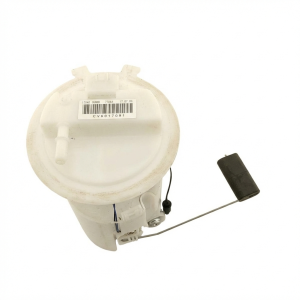
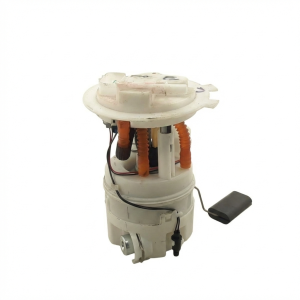
- Fuel Level Sensor Kit
(OEM #25060-3SG0B)— This is the most common failure point and the specific part kit recommended for replacement by Nissan's own service bulletin NTB22-026.
Trusted brands: Hitachi, Delphi, Bosch, Spectra Premium
OEM price range: $90-$150
Aftermarket price range: $40-$80 - Fuel Pump O-Ring / Gasket
(OEM #17342-3NN0A)— This gasket seals the fuel pump assembly to the gas tank. It is highly recommended to replace it anytime the fuel pump is removed to prevent fuel leaks and vapor smells. It is often sold separately from the sensor kit.
Trusted brands: Nissan (OEM)
OEM price range: $15-$25
Aftermarket price range: $10-$20
Related Codes That Often Appear With This One
- P0460 — This code indicates an erratic signal from the fuel level sensor, often triggered by the same failing component. It is listed in TSB NTB22-026.
- P0461 — This code indicates the sensor's performance is out of range, which is closely related to a high input failure. It is listed in TSB NTB22-026.
- P0462 — This is the opposite code, 'Fuel Level Sensor Circuit Low Input,' but can sometimes appear if the sensor is failing intermittently in different ways. It is also listed in TSB NTB22-026.
Technical Service Bulletins (TSBs) & Recalls
- NTB22-026: 'SERVICE INFORMATION FOR FUEL GAUGE INACCURATE WITH DTCS STORED IN ECM' - Confirms that for P0463, the fuel level sensor can be replaced independently of the entire fuel pump assembly. It applies to Sentra, Versa, and Versa Note models.
Platform-Specific Known Issues
- Nissan Technical Service Bulletin NTB22-026 was issued for 2016-2022 Sentra, 2016-2019 Versa Sedan, and 2016-2021 Versa Note models for inaccurate fuel gauge readings with DTCs P0460, P0461, P0462, or P0463 stored. It explicitly states that the fuel level sensor can be replaced separately from the fuel pump assembly.
- Owner experiences widely corroborate the TSB. For example, a user on a Nissan forum detailed being quoted over $700 by a dealership to replace the entire fuel pump assembly for a P0463 code. They instead purchased an aftermarket sensor for under $60 and performed the repair themselves, which successfully resolved the issue.
Mechanic-Grade Diagnostic Values
- Fuel Level Sensor Resistance — expected: A smooth, linear change when moving the float arm. Many Nissans use a range of approximately 4-6 Ohms at Full to 78-82 Ohms at Empty. Another common standard is ~33 Ohms at Full to ~240 Ohms at Empty.. Failure: A reading of OL (Over Limit/infinite resistance) indicates an open circuit, which directly causes P0463. Readings that jump erratically also indicate failure.
- Fuel Level Sensor Signal Voltage (at PCM/BCM) — expected: A variable voltage signal that changes with the fuel level, typically operating within a 0-5 volt reference system.. Failure: A sustained voltage reading that is higher than the specified maximum (e.g., above 5 volts) will trigger the P0463 code.
Scan Tool Commands That Help
- Nissan CONSULT: Work Support for Instrument Cluster — The Nissan dealer tool, CONSULT, has a function to command the instrument cluster gauges to sweep through their full range of motion. This can be used to verify if the fuel gauge needle itself is mechanically sound and not stuck, helping to isolate the fault to the sending unit or wiring.
Wiring & Ground Locations
- Fuel Pump Assembly Connector — Under the rear seat bottom cushion, beneath a metal or plastic access cover, on top of the fuel tank.. This is the primary connection point for the fuel level sensor. All voltage and ground signals for the sensor pass through this connector. Corrosion, moisture, or pushed-out pins here are a common cause of an open or high-resistance circuit, triggering P0463.
- Chassis Grounds (e.g., M57, M61) — For the B17 Sentra (2016-2019), common chassis ground points are located on the left and right sides of the dash structure. A wiring diagram for the specific model year should be consulted to trace the exact ground path for the fuel level sensor circuit, which often grounds through the Body Control Module (BCM) or directly to the chassis.. While the sensor itself has a ground wire in its harness, that circuit ultimately connects to a main chassis ground. A poor or corroded main ground can introduce high resistance into the entire circuit, potentially causing a P0463 code.
Real Owner Repair Stories
- YouTube video by 'Hamza Auto Technician' (Nissan (model not specified, but demonstrates a common Nissan issue)) — Fuel gauge was on empty with the low fuel light on, despite the tank being more than half full. A scan tool confirmed the fault was with the fuel level circuit.
❌ Tried (didn't work) The initial diagnosis confirmed the issue was not the instrument cluster itself, but the sending unit in the tank.
✅ What actually fixed it The fuel level sending unit's plastic frame was broken on one side, causing the float arm to sit at an incorrect angle and provide a false empty reading. The technician repaired the broken plastic frame, which restored the float's correct orientation and fixed the gauge reading without replacing any parts.
OEM Part Supersession History
25060-3SG0A→25060-3SG0B— Part revision or supplier change. Functionality remains the same.25060-3YU0A (For B17 Sentra 2016-2019)→N/A— This is the specific part for the B17 generation.
Heads up: This part is for the B17 generation and should not be used on the B18 (2020+).25060-6LB0A (For B18 Sentra 2020-2022)→N/A— This is the specific part for the B18 generation.
Heads up: This part is for the B18 generation and will not work on the B17 (pre-2020).
Model Year Variations Within This Range
- 2016-2019 (B17 Generation): The fuel level sensor part number is typically 25060-3YU0A. The vehicle is based on the Nissan V platform.
- 2020-2022 (B18 Generation): The fuel level sensor part number is typically 25060-6LB0A. The vehicle is based on the newer CMF-C platform, and while the TSB applies to both, the physical part is different.
Helpful Videos


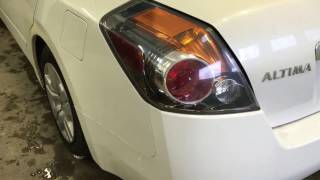

We Have This Part in Stock

The information in this article is provided for general reference and educational purposes only. Vehicle specifications, procedures, and part compatibility can vary by production date, trim level, and region. Always consult your vehicle's factory service manual and verify part numbers before purchasing or performing repairs. Safety-critical components such as airbags, seat belts, and braking systems should be installed by a qualified professional.
- Nissan SENTRA:
- 🧭 Diagnostic Flowchart
- 🎬 Helpful Videos
- 🛍️ Shop This Part
- What's Unique About the 2016-2022 Nissan SENTRA
- Symptoms You May Notice
- Most Likely Causes
- Rare But Worth Checking
- Diagnosis Steps
- Parts You'll Likely Need
- Related Codes That Often Appear With This One
- Technical Service Bulletins (TSBs) & Recalls
- Platform-Specific Known Issues
- Mechanic-Grade Diagnostic Values
- Scan Tool Commands That Help
- Wiring & Ground Locations
- Real Owner Repair Stories
- OEM Part Supersession History
- Model Year Variations Within This Range
- 🎟️ Get 5% Off