

P0496 on 2016-2021 Honda Civic: EVAP High Purge Flow Causes and Fixes
On a 2016-2021 Honda Civic, code P0496 is almost always caused by a faulty EVAP canister purge valve that is stuck open. This allows un-commanded fuel vapor to enter the engine, causing a rich condition, rough idle, and difficulty starting after refueling. It is a relatively simple and inexpensive part to replace, typically costing between $40 and $60 for an OEM part.
- P0496 on a 2016-2021 Civic almost always means the EVAP canister purge valve is stuck open.
- Symptoms include a check engine light, rough idle, and possibly difficulty starting after refueling.
- This is a DIY-friendly repair. The purge valve is located in the engine bay and is easy to access and replace.
- The correct OEM part number is 36162-R1A-A01, and it is an affordable part.
- Do not rush to replace the gas cap or the expensive charcoal canister, as they are very unlikely to be the cause of this specific code.
What's Unique About the 2016-2021 Honda Civic
The 10th generation Honda Civic (2016-2021), like many modern Hondas, is highly susceptible to this code due to the specific design and wear characteristics of its canister purge valve. While the P0496 code is generic, on this particular platform, the diagnostic path almost invariably leads to this single, common failure point. Owner forums and mechanic discussions for the 10th gen Civic frequently point to the purge valve as the immediate and primary suspect, often before any other component is even considered.
Symptoms You May Notice
- Check Engine Light is on
- Difficulty starting the engine, especially after filling the gas tank. The engine may crank for an extended period or require pressing the accelerator to start.
- Rough or unstable idle, sometimes stumbling or stalling just after starting.
- Slight decrease in fuel economy.
- A faint fuel odor may be noticeable.
- Replacing the gas cap. While a loose or faulty gas cap can cause other EVAP codes (like P0455 or P0457 for leaks), it is not a typical cause for P0496, which specifically points to flow when none is commanded.
- Replacing the charcoal canister. The canister itself rarely fails in a way that causes P0496. It is an expensive part and should only be replaced if it's confirmed to be physically damaged or saturated with liquid fuel from overfilling the tank.
Most Likely Causes
- Faulty EVAP Canister Purge Valve (Solenoid) 🔴 High Probability → Shop Vapor Canister The purge valve is a known common failure item on many modern Honda vehicles, including the 10th gen Civic. It can get stuck open internally, allowing unregulated fuel vapor to enter the intake manifold, which is the direct trigger for a P0496 code.
How to confirm: With the engine running, disconnect the vapor line from the purge valve. There should be no vacuum present. If you can feel suction with your finger or if a piece of paper is held by vacuum to the port, the valve is stuck open and has failed. This is the most common confirmation method shared in DIY forums and videos.
Typical fix: Replace the EVAP canister purge valve. It is typically located in the engine bay on the intake manifold and is a simple replacement involving disconnecting two hoses and an electrical connector. The job requires minimal tools, often just a pair of pliers for the hose clamps.
Est. part cost: $40-$60
Rare But Worth Checking
- Leaking or cracked EVAP hoses: While less common than a failed purge valve, a crack or disconnection in one of the vapor lines, particularly between the purge valve and the intake manifold, can create a vacuum leak that might confuse the system. A visual inspection of all accessible EVAP hoses is recommended.
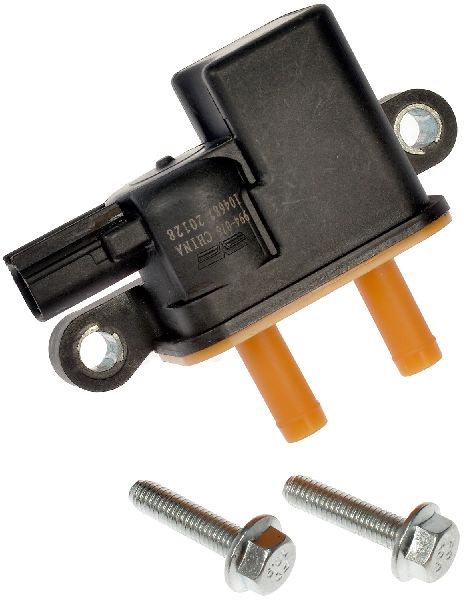
- Faulty Fuel Tank Pressure (FTP) Sensor: → Shop Fuel Tank The FTP sensor reports pressure and vacuum data to the ECU. If it provides incorrect readings, the ECU might mistakenly trigger a P0496 code. This is rare, and the purge valve should always be checked first.
- Short in Purge Valve Wiring/Connector: → Shop Vapor Canister A damaged wire or corroded connector could theoretically cause the purge valve to remain open, but this is far less common than the valve failing mechanically.
Diagnosis Steps
- Confirm the presence of code P0496 using an OBD-II scanner.
- Visually inspect the gas cap to ensure it is tight and the seal is not damaged, though this is an unlikely cause.
- Locate the EVAP canister purge valve in the engine bay. On both the 1.5T and 2.0L engines, it is mounted to the intake manifold with two hoses and one electrical connector.
- Start the engine and let it idle.
- Disconnect the hose that runs from the purge valve towards the charcoal canister (the source line). Place your finger over the port on the valve where the hose was connected.
- If you feel a vacuum or suction, the purge valve is stuck open and needs to be replaced. This is the most common failure and confirms the diagnosis.
- If no vacuum is felt, the issue may be more complex, such as an intermittent electrical problem or a faulty FTP sensor, but this is rare. A professional diagnosis with a smoke machine or advanced scan tool might be needed.
- Inspect all visible EVAP hoses for cracks, brittleness, or loose connections.
- If the purge valve is confirmed to be the issue, replace it, clear the code with the scanner, and drive the vehicle to see if the code returns.
Parts You'll Likely Need
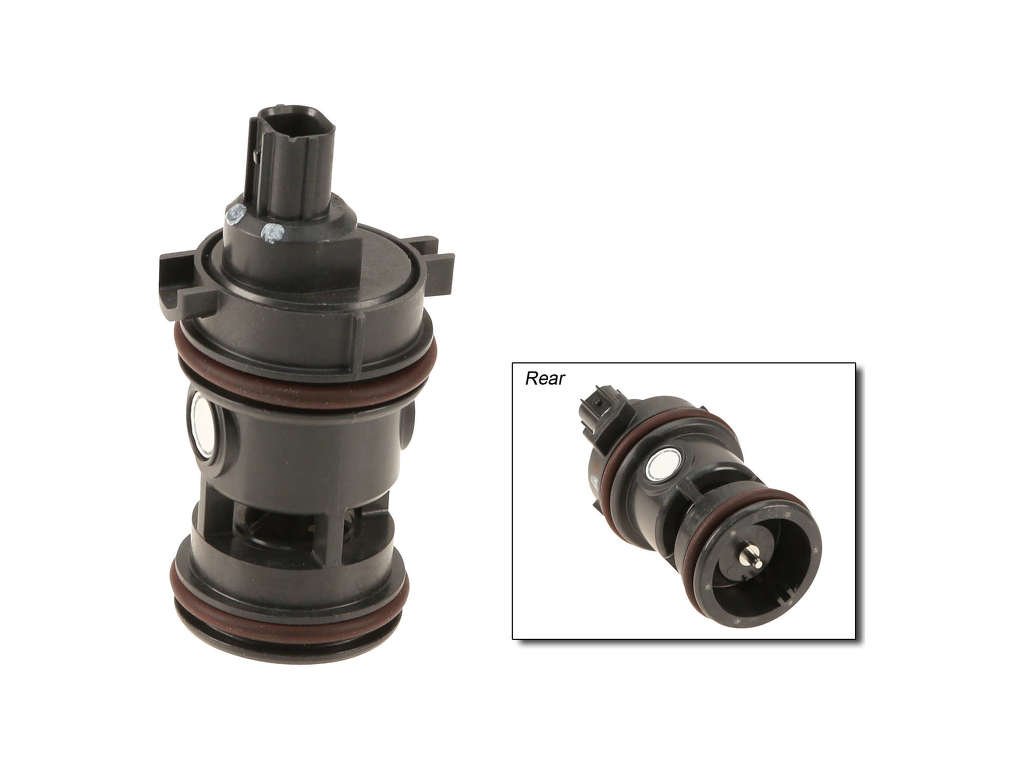
- Vapor Canister Purge Valve / Solenoid
(OEM #36162-R1A-A01)— This is the most frequent cause of code P0496 on this vehicle. It fails by sticking in the open position, causing unregulated vapor flow. This part number appears to be shared across multiple Honda models with the same issue.
Trusted brands: Honda (Genuine OEM), Dorman, Standard Motor Products (SMP)
OEM price range: $40-$60
Aftermarket price range: $25-$50
Related Codes That Often Appear With This One
- P145C — This is another Honda-specific EVAP system code that can sometimes appear alongside P0496, often pointing towards a problem in the same system, reinforcing the diagnosis of a purge valve or related component issue.
- P0441 — This code for 'Incorrect Purge Flow' is also frequently caused by a malfunctioning canister purge valve, making it a common companion to P0496.
Platform-Specific Known Issues
- On the CivicX.com forums, a user with a 2017 Civic Si experiencing fuel trim issues was advised to check the purge valve as a potential cause of un-metered air/vapor entering the system, highlighting it as a known issue in the enthusiast community.
- A Reddit thread discussing a 2013 Civic with P0496, P0497, and P145C codes specifically mentioned the classic symptom of the car having a hard time starting after getting gas, a real-world example of the primary symptom.
Mechanic-Grade Diagnostic Values
- EVAP Canister Purge Valve Solenoid Coil Resistance — expected: Approximately 20-40 Ω. Failure: A reading of infinite resistance (open circuit) or very low resistance (short circuit) indicates a failed solenoid coil.
- Voltage at Purge Valve Connector (Key On, Engine Off) — expected: Approximately 12V (Battery Voltage) on the power wire.. Failure: No voltage suggests a problem with the power supply fuse or wiring. The other wire is a ground controlled by the ECU and will not show ground until the valve is commanded on.
- Live Data - Fuel Tank Pressure (FTP) at Idle — expected: Stable pressure near atmospheric (approx. 0 inches of water) when the purge valve is commanded closed.. Failure: A steady or developing vacuum (negative pressure reading) when the purge valve is not commanded open indicates the valve is stuck open and leaking vacuum from the intake manifold.
Scan Tool Commands That Help
- Honda Diagnostic System (HDS) or equivalent professional scanner: EVAP TEST > FUNCTION TEST — This command forces the vehicle's ECU to run the onboard EVAP system self-test. It can be used to verify the repair and ensure all components are functioning correctly after replacing the purge valve. A 'pass' result from this test confirms the system is sealed and functioning as designed.
- Advanced bidirectional scan tool (e.g., Autel, Snap-on): Purge Valve Duty Cycle Control / Actuation Test — This allows a technician to manually command the purge valve to open and close while monitoring system pressure. You can command the valve closed and apply smoke or vacuum to the port to definitively test for leaks in a non-running state. It can also be used to cycle the valve to see if it is sticking intermittently.
Wiring & Ground Locations
- EVAP Canister Purge Valve Connector — On the EVAP canister purge valve itself, mounted to the intake manifold in the engine bay.. This 2-pin connector provides power and control to the valve. One pin receives 12V power (often a Black/Yellow wire on Hondas), and the other is a ground-side wire controlled by the ECU. A poor connection or damaged wire here can cause P0443 (circuit malfunction) but could theoretically mimic P0496 if the valve defaults to an open state.
- Main Engine/Transmission Ground — Typically a heavy gauge wire from the battery negative terminal to the chassis, and from the chassis to the transmission case.. While not a direct cause, a poor main ground can lead to a host of unpredictable electrical issues and incorrect sensor readings. Ensuring the main grounds are clean and tight is a fundamental step in any electrical diagnosis.
Real Owner Repair Stories
- Chevrolet Forum user on a TrailBlazer (illustrates a universal P0496 issue) (Chevrolet Trailblazer, year not specified) — Check Engine Light with code P0496.
❌ Tried (didn't work) Replacing the EVAP Purge Solenoid Valve worked initially, but the code returned after two months with the new valve showing a small leak.
✅ What actually fixed it The user replaced the purge valve a second time but added an in-line fuel filter on the hose leading to the valve. The theory was that debris from the charcoal canister was getting sucked up and causing the new valves to fail and leak.
OEM Part Supersession History
36162-R1A-A01→No supersession found. This part number remains current.— N/A
Heads up: This part is widely used across many Honda models from 2012-2022, including the Civic, HR-V, and others, indicating broad compatibility within the Honda lineup.
Diagnostic Flowchart
Other Known Issues on This Vehicle
Issues unrelated to this code that are worth knowing about as an owner of this generation:
- A/C Condenser Failure 🔴 High — Very common across all 2016-2021 models. The condenser develops micro-leaks, causing loss of refrigerant and A/C function. (Ref: Honda Service Bulletin 19-091 extended the warranty on the A/C condenser to 10 years with unlimited mileage due to a manufacturing defect.)
- Engine Oil Dilution (1.5T Engine) 🟠 Medium — Common on 1.5L Turbo (L15B7) engines, especially in cold climates with frequent short trips. Unburned fuel contaminates the engine oil. (Ref: Honda issued product updates and a warranty extension (to 6 years/unlimited miles on certain components) to address the issue via software changes for the ECU and TCU.)
- Sticky Steering at Highway Speeds 🟠 Medium — Some owners of 2022+ Civics have reported this, but earlier 10th gen models have also had steering-related complaints. It manifests as a notchiness or sticking feeling in the electronic power steering. (Ref: Honda has issued TSBs for newer models (e.g., A23-089 for 2022-2023 Civics), but awareness of steering feel issues exists for the 10th gen as well.)
- Head Gasket Failure (1.5T Engine) 🔴 High — A growing number of premature head gasket failures have been reported on the 1.5T engine, typically between 40,000 and 70,000 miles, causing coolant loss and cold start misfires.
- Defective Fuel Pump Motor 🔴 High → Shop Fuel Pump — A defective fuel pump impeller could cause the pump to seize, leading to a stall while driving. (Ref: Safety Recall / Service Bulletin 24-008 was issued for a range of 2016-2021 Civics to replace the faulty fuel pump motor.)
Used vs. New Parts: Buying Guide for This Vehicle
When a used part is the smart pick: For the EVAP canister purge valve, which is the primary cause of P0496, a used part is NOT recommended. The part is a known high-failure item, and its low cost when purchased new makes a used part a poor value proposition.
What to inspect on the donor part:
- Not applicable as used part purchase is not advised.
OEM-only on this vehicle (don't cheap out):
- While not strictly OEM-only, it is highly recommended to use either a Genuine Honda purge valve or a top-tier aftermarket equivalent like Standard Motor Products. Cheaper aftermarket parts have a higher reported failure rate.
Aftermarket brands forum-validated for this vehicle:
- Standard Motor Products (SMP)
- Bosch (often the OEM manufacturer for many brands)
Brands owners have reported issues with on this vehicle:
- Unbranded, low-cost parts from online marketplaces should be avoided. Some forum users have reported issues with Dorman valves for other applications, though experiences can vary.
Real Owner Stories
Aggregated from forums and TSBs cited above. Mileages and costs reflect what owners reported in those sources.
2013 Honda Civic
Symptoms: The car was having a hard time starting specifically after getting gas.
What fixed it: Replacement of the EVAP canister purge valve.
Source hint: Reddit thread discussing a 2013 Civic with P0496, P0497, and P145C codes
2017 Honda Civic Si
Symptoms: Experiencing fuel trim issues caused by un-metered air/vapor entering the system.
What fixed it: Checking and replacing the purge valve as it is a known issue in the enthusiast community.
Source hint: CivicX.com (10th Gen Civic Forum)
Related OBD-II Codes
Frequently Asked Questions
Is there a specific part number I should look for when replacing the purge valve on my 1.5T Civic?
My 2017 Civic Si has fuel trim issues along with P0496; are these related?
Does the fuel pump recall (Service Bulletin 24-008) fix the P0496 'hard start after gas' issue?
Can I use a used purge valve from a salvage yard to save money?
Is the P0496 code related to the 10-year extended warranty for the A/C condenser?
I have a 1.5T engine; could oil dilution be causing my P0496 code?
Helpful Videos

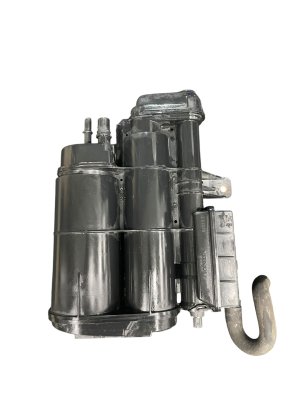
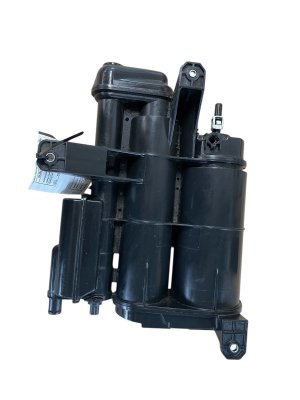
Used OEM Parts in Stock
New Aftermarket Parts Available


The information in this article is provided for general reference and educational purposes only. Vehicle specifications, procedures, and part compatibility can vary by production date, trim level, and region. Always consult your vehicle's factory service manual and verify part numbers before purchasing or performing repairs. Safety-critical components such as airbags, seat belts, and braking systems should be installed by a qualified professional.
- Honda Civic:
- 🧭 Diagnostic Flowchart
- 🎬 Helpful Videos
- 🛍️ Shop This Part
- What's Unique About the 2016-2021 Honda Civic
- Symptoms You May Notice
- Most Likely Causes
- Rare But Worth Checking
- Diagnosis Steps
- Parts You'll Likely Need
- Related Codes That Often Appear With This One
- Platform-Specific Known Issues
- Mechanic-Grade Diagnostic Values
- Scan Tool Commands That Help
- Wiring & Ground Locations
- Real Owner Repair Stories
- OEM Part Supersession History
- Other Known Issues on This Vehicle
- Used vs. New Parts: Buying Guide for This Vehicle
- Real Owner Stories
- 2013 Honda Civic
- 2017 Honda Civic Si
- Related OBD-II Codes
- Frequently Asked Questions
- 🎟️ Get 5% Off