

P0500 on 1996-2007 Dodge Grand Caravan: Vehicle Speed Sensor Failure Causes and Fixes
On a 1996-2007 Dodge Grand Caravan, P0500 almost always means the transmission's 'Output' Speed Sensor has failed. This causes an erratic speedometer, harsh shifting, and can lock the transmission in second gear ('limp mode'). Replacing the sensor is a simple DIY fix, with the part costing between $15 and $40.
- P0500 on your Grand Caravan is almost certainly caused by a failed 'Output' Speed Sensor on the transmission.
- Do not confuse the Output Speed Sensor with the nearby Input Speed Sensor; only replacing the output sensor (the one on the right) will fix the issue.
- Symptoms include a faulty speedometer, harsh shifting, and the transmission getting stuck in gear (limp mode).
- This is a very common, inexpensive, and easy DIY repair that can be done in under an hour with basic tools, typically requiring only a 10mm wrench or socket.
What's Unique About the 1996-2007 Dodge Grand Caravan
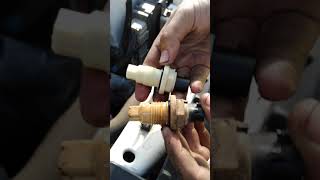
What's unique about these Grand Caravans is the common confusion between two nearly identical sensors on the transmission: the Input Speed Sensor and the Output Speed Sensor. The P0500 code is triggered by the Output Speed Sensor, which is the one that fails most often and controls the speedometer. Many owners mistakenly replace the input sensor, which does not fix the problem. The output sensor is located on the right (passenger side) of the sensor pair on the front of the transmission. Both sensors are inexpensive and easy to access, so some owners choose to replace both at the same time as preventative maintenance.
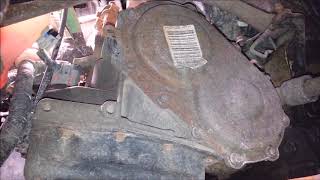
🎬 Watch: How to locate and replace both speed sensorsGeneration note: This guide covers the 3rd generation (1996-2000) and 4th generation (2001-2007) Dodge Grand Caravan. Both generations primarily used the 41TE (A604) automatic transmission, making the causes, symptoms, and repair process for code P0500 virtually identical between them.
Symptoms You May Notice
- Erratic, jumping, or completely dead speedometer. 🎬 See how to fix a stuck speedometer needle
- Harsh, delayed, or incorrect automatic transmission shifts.
- Transmission stuck in second gear, also known as 'limp mode'.
- Cruise control will not engage or work.
- Check Engine Light is on.
- ABS or Brake warning light may illuminate.
- Replacing the Input Speed Sensor instead of the Output Speed Sensor. The input sensor (Mopar P/N 4800878) will not fix a P0500 code or speedometer issues.
- Assuming the entire transmission has failed. The symptoms of a bad speed sensor (harsh shifting, limp mode) can mimic a major transmission failure, but it's usually just this inexpensive sensor.
Most Likely Causes
- Failed Output Vehicle Speed Sensor (VSS) 🔴 High Probability → Shop Drive Shaft Sensor This is a very common failure point on the 41TE transmission used in these vans due to age, heat cycles, and internal component wear.
How to confirm: Use a scan tool to monitor 'Output Shaft Speed' while driving. If the reading is zero, erratic, or doesn't match the actual vehicle speed, the sensor has failed. Given the low cost of the part ($15-$40), many owners simply replace it as the first step, as it is the cause in the vast majority of cases.
Typical fix: Replace the Output Speed Sensor on the transmission. It is crucial to replace the 'output' sensor, not the 'input' sensor. The output sensor is the one on the right when viewing the pair from the driver's side fender. The sensor is held by a single 10mm bolt. 🎬 Watch: Step-by-step 41TE output speed sensor replacement
Est. part cost: $15-$40 - Damaged Wiring or Connector ⚪ Low Probability The wiring harness leading to the transmission can be exposed to road debris, heat, and oil, which can cause damage over time. Wires can become frayed, melted on the exhaust, or corroded.
How to confirm: Visually inspect the wiring and connector for the output speed sensor. Look for frayed or broken wires, corrosion in the connector pins, or damage from heat. A user on DodgeForum.com reported finding a melted plastic clump on the manifold that turned out to be the sensor wiring.
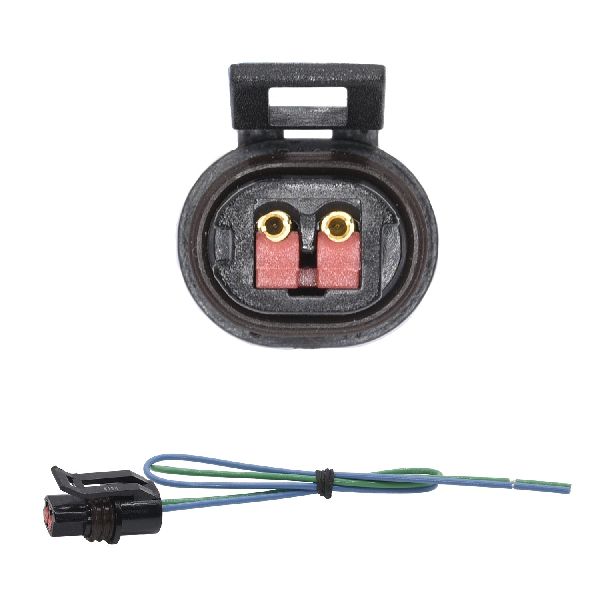
Typical fix: Repair the damaged section of wire or clean/replace the connector pigtail.
Est. part cost: $5-$25
Rare But Worth Checking
- Failed Powertrain Control Module (PCM): This is extremely rare. The sensor or wiring is the cause in over 99% of cases. Only consider the PCM after definitively ruling out the sensor and its entire circuit.
Diagnosis Steps
- Scan for codes. Confirm P0500 is present. Note any other codes like P0700, P0720, or P0731.
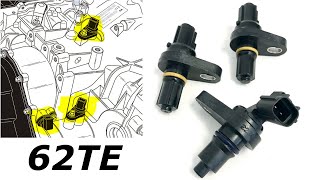
- Locate the Input and Output speed sensors on the front of the transmission, on the driver's side. The output sensor is the one on the right (towards the passenger side) of the pair.
- Inspect the wiring and connector for the Output Speed Sensor. Check for obvious signs of damage, corrosion, or loose connections. Pay close attention to areas near the exhaust manifold where wires can melt.
- If you have a capable scan tool, monitor the live data for 'Output Shaft Speed'. Drive the vehicle slowly and see if the reading is erratic or stays at 0 MPH. If so, the sensor is bad.
- Given the high failure rate and low cost, the most practical step is to replace the Output Speed Sensor.
- To replace, disconnect the electrical connector. You may need a flathead screwdriver to release the clip. Then remove the single 10mm bolt holding the sensor in place.
- Grasp the sensor firmly and twist it back and forth to break the o-ring seal. Some transmission fluid may leak out.
- Install the new sensor, ensuring it is fully seated with a firm press and twist to seal the o-ring. Reinstall the 10mm bolt.
- Reconnect the connector, and clear the trouble codes with a scan tool.
- Perform a test drive to confirm the speedometer works correctly and the transmission shifts smoothly.
Parts You'll Likely Need
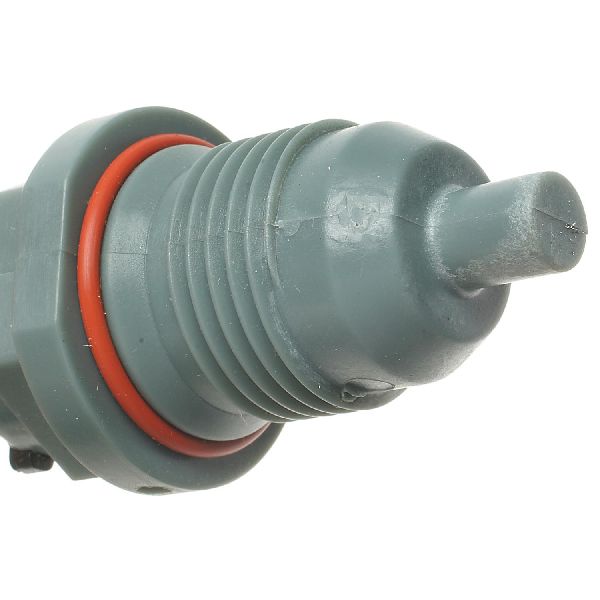
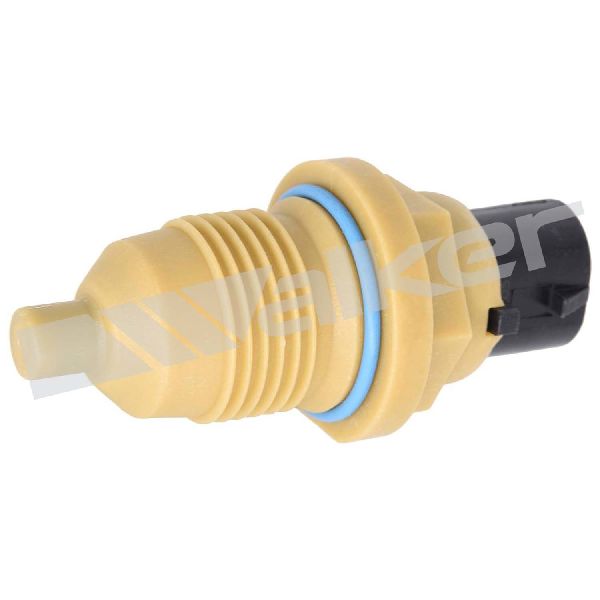
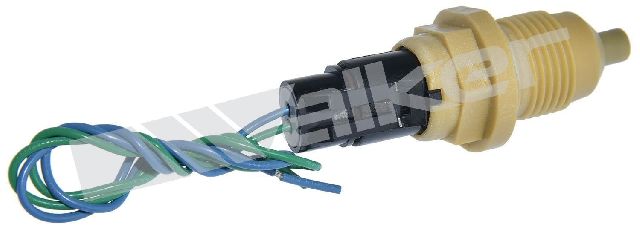
- Output Vehicle Speed Sensor
(OEM #4800879AB)— This is the component that fails and directly causes the P0500 code and its associated symptoms on this vehicle. This part number is widely cross-referenced for this application.
Trusted brands: Mopar, Standard Motor Products (SC108), Delphi, Dorman (917-602), NTK/NGK
OEM price range: $40-$60
Aftermarket price range: $15-$35
Related Codes That Often Appear With This One
- P0700 — This is a generic code indicating the Transmission Control Module (TCM), which is part of the PCM in this vehicle, has requested the Check Engine Light be turned on. It almost always appears alongside more specific transmission codes like P0500 or P0720.
- P0720 — This code specifically means 'Output Speed Sensor Circuit Malfunction'. It is a more direct pointer to the same problem as P0500 and confirms the output sensor or its circuit is the root cause.
- P0731 — This code for 'Gear 1 Ratio Incorrect' can appear with P0500 because the TCM cannot verify the gear ratio without a valid output speed signal, causing it to flag a ratio error and enter limp mode.
Platform-Specific Known Issues
- Owner Experience: P0500, P0700, P0731 together: A 1999 Plymouth Voyager owner on DodgeForum.com reported getting codes P0500, P0700, and P0731 simultaneously after the speedometer quit. The advice given, which resolved the issue, was that the combination of codes pointed directly to a failed output speed sensor causing the transmission to enter limp mode. Replacing just the output sensor cleared all three codes.
- Owner Experience: Melted Wiring Harness: On DodgeForum.com, a user with a '99 model experienced P0500 along with ABS and Brake lights after a recent transmission rebuild. The cause was found to be a wiring harness that had been improperly routed and melted on the exhaust manifold. This highlights the importance of checking the full wiring path for damage, especially after other service has been performed.
Mechanic-Grade Diagnostic Values
- Shared Sensor Ground Wire Voltage (KOEO) — expected: 0.0 Volts. Failure: If significant voltage (e.g., >1.0V) is measured on the ground wire at a sensor connector, the shared ground circuit is open. One 2003 Caravan showed 6.5V on the ground wire due to this fault.
- Live Data: Output Speed Sensor (OSS) vs. Input Speed Sensor (TSS) — expected: In Park: OSS=0, TSS≈Engine RPM. At Stop in Drive: OSS=0, TSS=0. In 3rd Gear (TCC locked): OSS≈TSS≈Engine RPM.. Failure: If TSS reads > 0 RPM at a stop in Drive, it indicates an internal clutch slip or a bad ground creating a false signal. If OSS does not read 0 at a stop or fails to match vehicle speed while moving, the sensor or circuit is faulty.
- Output Speed Sensor Signal Voltage — expected: An intermittently generated voltage pulse as the wheel is turned. On similar vehicle systems, this is a square wave pulse that alternates between approximately 0V and 5V.. Failure: No voltage pulse when rotating the drive wheels indicates a failed sensor or an open in the signal or power wire.
Hidden / Shadow Codes Worth Checking
- Two-Digit TCM Faults: On pre-PCM integration models (pre-2003), the separate Transmission Control Module (TCM) can store two-digit fault codes that are not visible with a standard OBD-II scanner and require a dealer-level tool (like the DRB III) to access. (see via A professional-grade scan tool with Chrysler-specific software (e.g., DRB III emulator, Snap-on, Autel MaxiSys) capable of communicating directly with the TCM.)
Wiring & Ground Locations
- Shared Sensor Ground — This ground circuit is a Dark Blue/Dark Green wire that terminates at Pin 43 of the PCM connector on 2003+ models. It provides the ground for the VSS, TPS, MAP, crankshaft, and camshaft sensors.. An open in this shared ground can cause multiple sensor codes, a no-start condition, and will cause the P0500. Technicians report finding voltage on this ground wire when the fault is present.
- TCM Power and Ground Pins (Pre-2003) — On models with a separate TCM, power is supplied to pins 11 and 56 of the TCM connector, and grounds are at pins 53 and 57.. Loss of power or ground at these specific pins will disable the TCM, causing limp mode and codes like P0700 and P0500. This is a primary check before condemning the TCM module.
- Splice S111 — This is a factory wire splice in the harness that bundles multiple ground wires together. Its exact location can vary but is a known weak point in Chrysler wiring of this era.. Corrosion or a break at this splice can cause an open ground circuit for the TCM and other components, leading to intermittent and difficult-to-diagnose electrical issues, including P0500.
- G102 / G103 — Main chassis ground points located in the engine bay, near the left headlight area.. While not the direct sensor ground, a poor connection at these main grounds can introduce electrical noise and voltage drops that affect the entire engine management system, potentially contributing to sensor signal issues.
Real Owner Repair Stories
- BobIsTheOilGuy.com forum discussion (2003 Dodge Grand Caravan) — Check Engine Light on, all gear selector positions on the dash are boxed in green (limp mode), codes P0888 (TCM Power Relay Sense Circuit), P1698 (No CCD Message From TCM), and P0700 (TCM Fault).
❌ Tried (didn't work) Replacing the TCM multiple times., Having the relay box (IPM) pulled, cleaned, and tested.
✅ What actually fixed it The definitive fix was not posted by the owner, but expert advice centered on a wiring or ground fault, not the TCM itself. The recommended diagnostic steps were: 1) Add a redundant ground wire from the transmission case to the chassis. 2) Check for power at TCM pins 11 & 56 and ground at pins 53 & 57. 3) Check for a broken wire at ground splice S111, a common failure point. These steps point to a wiring/ground issue as the true root cause.
OEM Part Supersession History
4800879→4800879AB— Likely a minor revision for improved durability or material change. The 'AB' suffix indicates a revision level.
Heads up: The parts are considered interchangeable for the 1996-2007 application.
Model Year Variations Within This Range
- 2003-2007: Starting around 2003, the separate Transmission Control Module (TCM) was eliminated and its functions were integrated into the main Powertrain Control Module (PCM). This changes diagnosis, as power/ground checks for transmission functions must be done at the PCM connectors, not a separate module.
Diagnostic Flowchart
Other Known Issues on This Vehicle
Issues unrelated to this code that are worth knowing about as an owner of this generation:
- Rusted Front Strut Towers 🔴 High — Very common, especially in salt-belt regions. Water collects between the layers of the strut tower sheet metal, causing severe rust from the inside out. (Ref: Chrysler TSB #23-044-02 was issued, providing a repair kit (Part #5080009AA) that caps the rusted tower. In severe cases, the entire tower needs to be cut out and replaced.)
- Transmission Solenoid Pack Failure 🟠 Medium → Shop Transmission Assembly — A common failure on the 41TE/A604 and later 62TE transmissions, often occurring after 100,000 miles. Symptoms are very similar to a bad speed sensor, including harsh shifting and being stuck in limp mode.
- Shifting Harshness and Shuddering 🟠 Medium — Commonly reported issue on 4th generation (2001-2007) models, sometimes related to worn transmission seals or requiring a software update, separate from solenoid or sensor failure.
- Power Sliding Door Malfunctions 🟡 Low — Frequent problem where the wiring harness for the power sliding doors breaks from repeated opening and closing, causing the doors to fail.
Used vs. New Parts: Buying Guide for This Vehicle
When a used part is the smart pick: For the vehicle speed sensor itself, a used part is not recommended. The new aftermarket part is very inexpensive (often under $25) and is a high-failure item due to age and heat cycles. A used sensor has unknown remaining life and offers negligible cost savings.
What to inspect on the donor part:
- Not applicable for the sensor. If sourcing a connector pigtail, inspect for brittle plastic, corrosion on pins, and flexible, undamaged wiring.
OEM-only on this vehicle (don't cheap out):
- Powertrain Control Module (PCM) - If the PCM is the confirmed failure (which is extremely rare), a generic junkyard unit will not work due to the integrated vehicle immobilizer (SKIM) and specific programming. A replacement must be a properly programmed unit from a specialist supplier or a new unit from the dealer.
Aftermarket brands forum-validated for this vehicle:
- Standard Motor Products (SMP)
- NTK/NGK
- Delphi
- Dorman
Brands owners have reported issues with on this vehicle:
- No-name, unbranded sensors from online marketplaces often have poor quality control and may fail prematurely or be dead-on-arrival.
Real Owner Stories
Aggregated from forums and TSBs cited above. Mileages and costs reflect what owners reported in those sources.
2000 Dodge Grand Caravan 3.8L — 147000 miles
Symptoms: Speedometer would fluctuate but work, and the transmission shifted rough. Eventually, the speedometer stopped registering entirely and the transmission would not shift gears.
What fixed it: Replacing the speed sensors (initially fixed with swaps, though multiple codes P0700, P0731, and P0500 eventually persisted).
Source hint: DodgeForum.com owner report for 2000 Dodge Grand Caravan 3.8L
1999 Plymouth Voyager
Symptoms: The speedometer quit working and the vehicle entered limp mode. Codes P0500, P0700, and P0731 were all present simultaneously.
What fixed it: Replacing just the output speed sensor cleared all three codes and resolved the limp mode.
Source hint: DodgeForum.com: Thread 'Error codes PO500, PO731, PO700'
1999 Dodge Grand Caravan
Symptoms: P0500 code accompanied by ABS and Brake lights appearing shortly after a transmission rebuild.
What fixed it: Repairing a wiring harness that had been improperly routed and melted on the exhaust manifold.
Source hint: DodgeForum.com: Thread 'P0500 - Vehicle Speed Sensor'
Related OBD-II Codes
Frequently Asked Questions
Which sensor should I replace on my 41TE transmission to fix the P0500 code?
My speedometer is dead and the van is stuck in second gear. Is this related to P0500?
Can a bad speed sensor cause my ABS and Brake warning lights to come on?
I replaced the sensor but the P0500 code persists. What else should I check on my Caravan?
Is there a TSB for the rusted strut towers I noticed while diagnosing my speed sensor?
How much should the replacement part cost for this repair?
Helpful Videos
We Have This Part in Stock


The information in this article is provided for general reference and educational purposes only. Vehicle specifications, procedures, and part compatibility can vary by production date, trim level, and region. Always consult your vehicle's factory service manual and verify part numbers before purchasing or performing repairs. Safety-critical components such as airbags, seat belts, and braking systems should be installed by a qualified professional.
- Dodge Grand Caravan:
- 🧭 Diagnostic Flowchart
- 🎬 Helpful Videos
- 🛍️ Shop This Part
- What's Unique About the 1996-2007 Dodge Grand Caravan
- Symptoms You May Notice
- Most Likely Causes
- Rare But Worth Checking
- Diagnosis Steps
- Parts You'll Likely Need
- Related Codes That Often Appear With This One
- Platform-Specific Known Issues
- Mechanic-Grade Diagnostic Values
- Hidden / Shadow Codes Worth Checking
- Wiring & Ground Locations
- Real Owner Repair Stories
- OEM Part Supersession History
- Model Year Variations Within This Range
- Other Known Issues on This Vehicle
- Used vs. New Parts: Buying Guide for This Vehicle
- Real Owner Stories
- 2000 Dodge Grand Caravan 3.8L — 147000 miles
- 1999 Plymouth Voyager
- 1999 Dodge Grand Caravan
- Related OBD-II Codes
- Frequently Asked Questions
- 🎟️ Get 5% Off