

P0500 on 2014-2020 Nissan Rogue: Vehicle Speed Sensor Causes and Fixes
P0500 on a 2014-2020 Rogue most often points to a faulty ABS wheel speed sensor or a failed vehicle speed sensor on the transmission. A proper diagnosis is crucial, but expect to replace a sensor, which costs between $40 and $330 depending on the specific sensor and brand. In some cases, the fault can be in the wiring, ABS module, or even the instrument cluster which acts as a data gateway.
- P0500 on a 2014-2020 Rogue means the ECM has lost its primary vehicle speed reading.
- The most common causes are a bad ABS wheel speed sensor or a bad transmission-mounted speed sensor.
- Do not replace parts without diagnosis. A scan tool that can read live data from the ABS and Transmission modules is essential to find the true cause.
- Driving with this code is not recommended as it can cause poor transmission performance and disable safety systems like ABS and traction control.
- Check for other codes, especially ABS codes (starting with 'C') or transmission codes (like P1715), as they can quickly pinpoint the problem area.
What's Unique About the 2014-2020 Nissan Rogue
Unlike older vehicles with a single speed sensor, the 2014-2020 Rogue's ECM relies on multiple speed inputs. It receives a primary vehicle speed signal via the CAN bus network from the ABS control module, which reads the four wheel speed sensors. Critically, on this platform, the signal is often routed through the instrument cluster, which processes the data and forwards it to the ECM. The ECM also receives speed data from sensors on the CVT transmission for comparison and transmission control. A P0500 code is triggered when the primary signal the ECM expects is lost or conflicts with other data. A NICOclub forum member with a 2015 Rogue confirmed this complexity, stating their mechanic suspected a communication failure between the ABS module and the computer. This means the fault could be an ABS sensor, a transmission sensor, the wiring, the ABS module, or the instrument cluster itself.
Symptoms You May Notice
- Check Engine Light is on
- ABS and/or Traction Control warning light is on
- Erratic or non-functional speedometer
- Harsh or improper shifting of the CVT transmission
- Cruise control will not engage
- Vehicle may enter a 'limp mode' with reduced power
- 'Chassis Control System Error' message on the instrument panel 🎬 Watch: How to fix the Chassis Control System Error
- Replacing the wrong speed sensor. Technicians might replace a transmission speed sensor when the fault is actually a wheel speed sensor, or vice-versa. Proper diagnosis with a capable scan tool is essential to identify the correct failed component.
- Replacing a speed sensor when the actual fault is a broken wire or corroded connector further up the harness.
- Replacing a speed sensor when the instrument cluster is at fault. If the speedometer works but a P0500 is present, the cluster's output to the ECM is a likely suspect.
Most Likely Causes
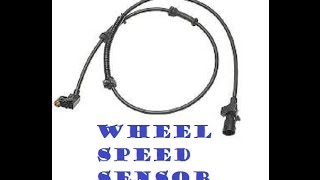
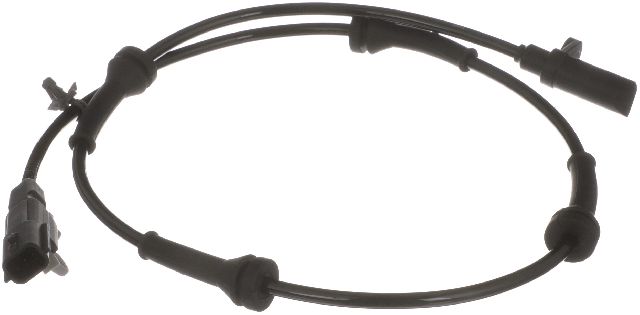
- Faulty ABS Wheel Speed Sensor 🔴 High Probability → Shop ABS Wheel Speed Sensor Wheel speed sensors are exposed to harsh conditions, road debris, and moisture, making them a common failure point. The front sensors are particularly common failures. There are different part numbers depending on where the vehicle was manufactured (USA, Japan, or Korea).
How to confirm: Use an advanced OBD-II scanner to monitor live data from all four wheel speed sensors while driving. The sensor that provides an erratic, inconsistent, or zero reading is the faulty one. Often, a specific ABS code (e.g., C1105 for rear right sensor) will also be stored, pointing to the exact sensor.
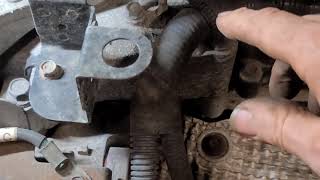
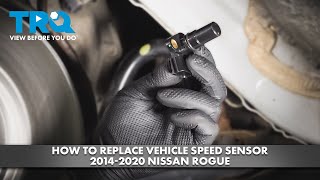
Typical fix: Replace the faulty wheel speed sensor. They are held in by a single 10mm bolt, but can be seized in the knuckle, requiring careful extraction. The wiring harness must be 🎬 See this wheel speed sensor replacement and explanation carefully unclipped and rerouted.
Est. part cost: $40-$150 for an aftermarket sensor, $230-$330 for an OEM sensor. - Faulty Transmission Speed Sensor 🟡 Medium Probability → Shop Transmission Assembly The 2014-2020 Rogue has input and output speed sensors on the CVT transmission which can fail from heat and age. If the signal from the primary transmission sensor is lost, it can trigger a P0500, often alongside a P1715 (Input Speed Sensor) code. 🎬 Watch: Diagnosing P0500 and P1715 codes in limp mode
How to confirm: Use a scan tool to monitor the transmission input/output speed sensor data in the TCM live data. If the signal is missing or erratic while the vehicle is moving, the sensor is likely bad. Visual inspection of the sensor and its connector on the transmission case for damage is also recommended.
Typical fix: Replace the failed speed sensor on the transmission. Access may require removing other components.
Est. part cost: $50-$120 - Damaged Wiring or Connectors 🟡 Medium Probability Wiring to wheel speed sensors is susceptible to damage from road debris, suspension movement, or corrosion. The harness runs along the suspension and can be snagged or chafed. The transmission sensor wiring can also be damaged by heat or chafing. Soy-based wiring insulation used in this era can also attract rodents, leading to chewed wires.
How to confirm: Visually inspect the wiring harness leading to all wheel speed sensors and the transmission speed sensor(s). Look for breaks, chafing, corrosion in the connectors, or signs of rodent damage. A multimeter can be used to check for continuity and proper voltage at the sensor connector.
Typical fix: Repair or replace the damaged section of the wiring harness or clean/replace the corroded connector.
Est. part cost: $10-$100 depending on the extent of the damage and whether a new connector pigtail is needed.
Rare But Worth Checking
- Faulty ABS Control Module/Actuator: → Shop ABS Control Module The ABS module processes the signals from the wheel speed sensors before sending a vehicle speed message to the ECM. If the module fails internally, it can stop sending this signal, causing a P0500 code, often accompanied by ABS communication codes (U-codes) like U1000. Owners have reported 'ABS chassis control system error' messages related to this. A replacement module must be programmed to the vehicle's VIN.
- Faulty Instrument Cluster: → Shop Instrument Cluster On this Nissan platform, the speed signal is routed through the instrument cluster before going to the ECM. A failure in the cluster's internal circuit board can stop the signal from being relayed to the ECM. This can trigger a P0500 even if the speedometer appears to be working correctly. This failure can sometimes be intermittent or sensitive to temperature changes.
- Failing ECM or TCM: While rare, the Engine Control Module (ECM) or Transmission Control Module (TCM) can fail. This should only be considered after all sensors, wiring, and other modules have been thoroughly tested and ruled out.
Diagnosis Steps
- Connect an OBD-II scanner capable of reading ABS, Transmission, and BCM modules. Check for any other codes, especially ABS 'C' codes, transmission 'P1xxx' codes, or communication 'U' codes.
- Access the live data stream for the ABS module. Monitor the speed readings from all four wheel speed sensors while driving the vehicle slowly.
- If one sensor reads 0 mph or has an erratic signal while the others read correctly, that sensor or its wiring is the primary suspect.
- If all wheel speed sensors read correctly, access the live data for the ECM and TCM. Check the 'Vehicle Speed' parameter that the engine and transmission controllers are seeing.
- If the ECM shows 0 mph while the ABS module and speedometer show the correct speed, the problem likely lies in the communication path (CAN bus) or, specifically, a faulty instrument cluster that is not relaying the signal.
- If the vehicle has transmission-mounted speed sensors, check their readings (Input/Output) in the TCM data stream. Compare them to the wheel speed sensor readings.
- Visually inspect the wiring and connectors for the suspect sensor (either the faulty wheel speed sensor or the transmission speed sensor). Check for damage, corrosion, or loose connections.
- If wiring appears intact, test the suspect sensor itself using a multimeter according to the service manual's procedure, checking for correct resistance or voltage signal generation.
- If all sensors and wiring test good, the issue may be with a control module (ABS, TCM, ECM) or the instrument cluster, which requires more advanced diagnostics, potentially with a dealer-level tool like Consult-III.
Parts You'll Likely Need
- ABS Wheel Speed Sensor
(OEM #47910-4BA0A (Front, common), 47910-4CE0A (Front, Korea-built). Note: Part numbers vary by location (Front/Rear) and vehicle manufacturing origin (USA/Japan/Korea). Always verify with VIN.)— This is the most frequent cause of P0500 on modern vehicles. They are exposed to the elements and fail frequently, causing a loss of signal to the ABS module and, subsequently, the ECM.
Trusted brands: Bosch, Hitachi, Delphi, NTK, Genuine Nissan
Related Codes That Often Appear With This One
- C-codes (e.g., C1101-C1108) — These are ABS codes that point to a specific faulty wheel speed sensor circuit, which is a very common root cause for P0500.
- P1715 — This code relates to the transmission input speed sensor. A YouTube case study of a 2015 Rogue showed this code appearing with P0500, strongly suggesting the problem is related to the transmission sensors or their shared power/ground circuits, rather than the ABS system.
- U-codes (e.g., U0121, U1000) — U-codes indicate a loss of communication between modules. A code like U0121 (Lost Communication with ABS Control Module) or a general U1000 CAN Communication code would point towards a wiring, network, or module issue preventing the ECM from receiving the speed signal from the ABS system or instrument cluster.
Technical Service Bulletins (TSBs) & Recalls
- No specific Technical Service Bulletin (TSB) directly addressing the P0500 code on the 2014-2020 Nissan Rogue was found during research. Diagnosis should rely on standard workshop manual procedures. Technicians may reference general CAN communication diagnostic bulletins like NTB13-027c if U-codes are present.
- Manufacturer TSB Bulletin #NTB14019 notes that the MIL may be on with P0500, P1574, P1715, P0720, or P2765, especially if moisture and/or corrosion is present.
Mechanic-Grade Diagnostic Values
- Passive ABS Wheel Speed Sensor Resistance — expected: 800 - 1,700 Ohms (Note: This is a general range for passive sensors; always check the specific service manual for your vehicle). Some sources suggest a wider range of 980 - 2350 Ohms. The key is to compare a suspect sensor to a known-good one on the other side of the vehicle; readings should be very close.. Failure: A reading of 0 Ω (short circuit) or OL/infinity (open circuit). A significant deviation from the sensor on the opposite wheel also indicates a failure.
- Passive ABS Wheel Speed Sensor AC Voltage Output — expected: Greater than 100mV (0.1V) AC when the wheel is spun by hand. Voltage should increase with wheel speed.. Failure: No voltage or very low voltage produced when the wheel is spinning indicates a failed sensor or a problem with the reluctor ring.
- Active ABS Wheel Speed Sensor Power Supply — expected: Approximately 12V with Key On, Engine Off (KOEO) at the sensor connector power wire. Some active sensors use a 5V reference voltage.. Failure: No voltage or significantly low voltage indicates a problem with the wiring or the supplying module (ABS/ECM).
- CAN Bus Network Voltage — expected: With Key On, Engine Off: CAN High wire should be ~2.7V, CAN Low wire should be ~2.3V. When communicating, these will fluctuate rapidly.. Failure: Voltages that are stuck high (e.g., 5V or 12V), stuck low (0V), or shorted together (both reading ~2.5V but not communicating) indicate a network fault that could prevent the speed signal from reaching the ECM.
Scan Tool Commands That Help
- Nissan CONSULT or advanced aftermarket scanner: ABS Wheel Speed Sensor Live Data Monitoring — This is the primary diagnostic step. Use this to view the speed reading from all four wheels simultaneously while driving. A sensor that drops out, reads zero, or shows an erratic signal compared to the others is the faulty component.
- Nissan CONSULT or advanced aftermarket scanner: ABS Active Test / Actuator Test — After replacing the ABS module/actuator, this function is used to cycle the ABS pump and solenoids to properly bleed the brake system of any trapped air.
- Nissan CONSULT: ABS Module Configuration/Programming — This is mandatory when replacing the ABS control module. The new or used module must be configured with the vehicle's VIN and specific options (e.g., FWD/AWD) to function correctly and communicate with other modules.
Wiring & Ground Locations
- Wheel Speed Sensor Harness Connectors — Located in the wheel wells, behind the plastic liners. You must typically remove the wheel and peel back the liner to access the connector where the sensor pigtail meets the main body harness.. These connectors are exposed to moisture and road debris, making them a common point of failure due to corrosion or physical damage. A bad connection here will cause a loss of signal from the sensor.
- Transmission Speed Sensor Connector — On the exterior of the CVT transmission case. The exact location of the input and output sensors varies slightly, but they are accessible from underneath the vehicle.. This connector can become contaminated with oil or damaged from heat, leading to a poor connection and triggering P0500, often with P1715.
- TCM Pin #15 (Yellow/Blue wire) — At the Transmission Control Module (TCM).. Wiring diagrams show the speed sensor socket connects to TCM pin #15 via a yellow/blue wire, sometimes with redundancy from another wire, to ensure reliable speed data for gear control. A fault at this specific pin or wire could be the root cause.
- Chassis Ground Points — Multiple ground points are located throughout the engine bay and chassis. A key one to check is the main ground strap from the battery to the chassis and the ground points for the ABS module.. A weak or corroded ground can cause floating voltages and communication errors between modules (ABS, ECM, Instrument Cluster), leading to a U-code and/or a P0500, even if all sensors are good. This is a common cause of the 'Chassis Control System Error' message.
Real Owner Repair Stories
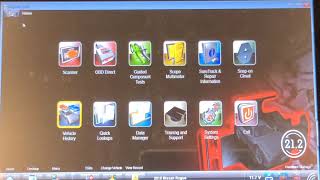
- YouTube video by Phillip Bailey (2015 Nissan Rogue) — Transmission goes into limp mode, 'Chassis Control System Error' message, multiple warning lights.
❌ Tried (didn't work) Initial diagnosis was confusing due to many low-voltage codes from a dead battery.
✅ What actually fixed it The root cause was traced to a corroded fuse in the fuse box that supplied power to the transmission control module. This corrosion caused low voltage to the TCM, leading to codes P0500, P1715, and U-codes. Replacing the corroded fuse resolved the issue. - Reddit user post (2015 Nissan Rogue SV, 218,000 miles) — While driving at 70mph, transmission disengaged. Car would restart but not engage any gear. P0500 was the only code present.
❌ Tried (didn't work) Replaced the Vehicle Speed Sensor 'A' on the transmission.
✅ What actually fixed it The user did not post a final resolution, highlighting a common scenario where the most obvious fix (replacing the named sensor) does not solve the problem, pointing towards a more complex wiring or module issue. - NHTSA ODI #11141395 — An owner of a similar Nissan platform reported the service engine light was on with a P0500 code. They tried replacing the speed sensor, but it did not solve the issue; the vehicle was eventually towed to a dealership that identified a short.
- NHTSA ODI #10033322 — A Nissan owner reported that mechanics could not duplicate a failure despite a P0500 code appearing once, illustrating the intermittent nature of some speed sensor circuit faults.
- NHTSA ODI #10242304 — An owner reported the speedometer occasionally dropping to zero with a P0500 code present, suggesting an issue within the circuit.
- NHTSA ODI #11181320 — One owner reported a P0500 code occurring after being stopped in drive or accelerating up a hill.
"I Checked Everything" — The Actual Cause
- This code is electronic and not related to vacuum leaks, so a smoke test is not applicable. However, a similar pattern exists: 'All sensors and wiring test good, but the code persists.' In these cases for the Rogue, the fault is often upstream in a control module. A common example is a faulty instrument cluster that fails to relay the CAN bus speed signal from the ABS module to the ECM. Another is a corroded fuse or faulty IPDM (Intelligent Power Distribution Module) causing low voltage to a critical module, which then sets the P0500 code as a symptom of the power issue.
OEM Part Supersession History
47910-4BA0A→47910-4CL0A— Part update or revision by Nissan for front wheel speed sensors.
Heads up: While often interchangeable, it's critical to verify the correct part number using the vehicle's VIN, as there are variations based on the manufacturing location (USA, Japan, Korea).
Model Year Variations Within This Range
- 2017-2020: The 2017 model year brought a significant facelift to the Rogue, including updated styling, new wheel designs, and more advanced driver-assistance technologies like Intelligent Cruise Control and Forward Emergency Braking with Pedestrian Detection. A Rogue Hybrid model was also introduced. While the fundamental cause of P0500 (VSS signal loss) remains the same, the increased complexity of these systems means more modules are dependent on the speed signal, potentially leading to more cascading warning lights.
- 2017.5 (mid-year update): Nissan made Forward Emergency Braking, Blind Spot Warning, and Rear Cross-Traffic Alert standard on all models mid-way through the 2017 model year. This software and hardware change could affect diagnostics, as faults in these newly standard systems could potentially interact with the chassis control module.
- 2014-2020: Throughout the generation, Rogues were built in different plants (USA, Japan, Korea). This directly affects part numbers for components like ABS sensors. It is critical to use the VIN to determine the manufacturing origin and select the correct part.
Diagnostic Flowchart
Used vs. New Parts: Buying Guide for This Vehicle
When a used part is the smart pick: For expensive electronic modules like the ABS Control Module or the Instrument Cluster, a used part from a reputable salvage yard can offer significant savings ($75-$300 used vs. $1000+ new). However, this is only a smart choice if you have access to a shop capable of programming the used module to your vehicle's VIN.
Donor-vehicle mileage cap: roughly under 80000 miles for the part to have meaningful remaining life.
What to inspect on the donor part:
- For ABS Modules/Clusters: Match the OEM part number EXACTLY. Ensure there is no physical damage or corrosion on the housing or connectors. Ask the seller for the VIN of the donor car to help with compatibility checks.
- For Sensors/Wiring: Inspect for any signs of cracking, fraying, or corrosion on the pigtail and connector. Avoid parts that are brittle or show signs of excessive heat exposure.
OEM-only on this vehicle (don't cheap out):
- ABS Control Module: While a used OEM module can be used, it absolutely requires reprogramming by a dealer or a specialist with a tool like Nissan CONSULT. Aftermarket modules are not recommended due to high failure and incompatibility rates. Claims of 'pre-programmed' used modules are false, as programming must be done in the vehicle.
Aftermarket brands forum-validated for this vehicle:
- ABS Wheel Speed Sensors: NTK, Bosch, Delphi, and Beck/Arnley are frequently cited in forums as reliable OEM-equivalent brands.
Brands owners have reported issues with on this vehicle:
- Ultra-cheap, no-name sensors from online marketplaces. While tempting, forum users and mechanics report high rates of DOA (dead on arrival) parts or premature failure, leading to doing the job twice.
Real Owner Stories
Aggregated from forums and TSBs cited above. Mileages and costs reflect what owners reported in those sources.
2015 Nissan Rogue SV — 218000 miles
Symptoms: While driving at 70 mph, the transmission disengaged and the vehicle slowed to a stop. Afterwards, the engine would start but the transmission would not engage. The only diagnostic code was P0500.
What fixed it: The owner replaced the speed sensor on the transmission, but this did not resolve the issue. A final fix was not reported in the source.
Source hint: Reddit r/NissanRogue
2015 Nissan Rogue
Symptoms: The vehicle experienced intermittent failure of the ABS, traction control systems, and the speedometer.
What fixed it: The source was a technical discussion explaining the diagnostic complexity and did not report a specific repair that solved the problem.
Source hint: NICOclub Forums: 2015 Rogue: ABS, Traction Control, Brake and Speedometer
2015 Nissan Rogue
Symptoms: The vehicle would repeatedly enter limp mode and stored codes P0500, P1574, and P1715.
What fixed it: The source was a diagnostic video exploring the electrical fault and did not state a final, single repair that fixed the problem.
Source hint: YouTube: 2015 Nissan Rogue CVT Goes Into Limp Mode, Take 2...
Related OBD-II Codes
Frequently Asked Questions
My 2015 Rogue is showing a 'Chassis Control System Error' message along with the P0500 code. Is this normal?
My speedometer works, but I still have a P0500 code. What could be the cause?
My Rogue's CVT transmission is shifting harshly and I have a P0500 code. Are these related?
Are there any TSBs for the P0500 code on my 2014-2020 Rogue?
My mechanic says a front wheel speed sensor is the most likely culprit. Is this accurate for the Rogue?
Why are there different part numbers for the wheel speed sensors on my Rogue?
Helpful Videos

We Have This Part in Stock



The information in this article is provided for general reference and educational purposes only. Vehicle specifications, procedures, and part compatibility can vary by production date, trim level, and region. Always consult your vehicle's factory service manual and verify part numbers before purchasing or performing repairs. Safety-critical components such as airbags, seat belts, and braking systems should be installed by a qualified professional.
- Nissan Rogue:
- 🧭 Diagnostic Flowchart
- 🎬 Helpful Videos
- 🛍️ Shop This Part
- What's Unique About the 2014-2020 Nissan Rogue
- Symptoms You May Notice
- Most Likely Causes
- Rare But Worth Checking
- Diagnosis Steps
- Parts You'll Likely Need
- Related Codes That Often Appear With This One
- Technical Service Bulletins (TSBs) & Recalls
- Mechanic-Grade Diagnostic Values
- Scan Tool Commands That Help
- Wiring & Ground Locations
- Real Owner Repair Stories
- "I Checked Everything" — The Actual Cause
- OEM Part Supersession History
- Model Year Variations Within This Range
- Used vs. New Parts: Buying Guide for This Vehicle
- Real Owner Stories
- 2015 Nissan Rogue SV — 218000 miles
- 2015 Nissan Rogue
- 2015 Nissan Rogue
- Related OBD-II Codes
- Frequently Asked Questions
- 🎟️ Get 5% Off