

P0500 on 1994-1999 Subaru Legacy: Vehicle Speed Sensor Malfunction Causes and Fixes
On a 1994-1999 Subaru Legacy, code P0500 is almost always caused by a failed Vehicle Speed Sensor (VSS) located on the transmission. If the speedometer also fails, the VSS is the likely culprit. If the speedometer works but the code persists, check for loose screws on the back of the instrument cluster, a well-documented quirk of this platform.
- P0500 on a 1994-1999 Legacy is almost always the VSS on the transmission or loose screws on the instrument cluster.
- If the speedometer doesn't work, suspect the VSS.
- If the speedometer works, suspect the instrument cluster screws.
- This code is NOT related to the ABS wheel speed sensors on this generation.
- Be prepared for the plastic VSS to break during removal; have a plan to extract the broken piece.
What's Unique About the 1994-1999 Subaru Legacy
Unlike modern Subarus (post-2005) that use ABS wheel speed sensors for vehicle speed, the 1994-1999 Legacy uses a single, traditional Vehicle Speed Sensor (VSS) mounted on the transmission. A unique and well-documented issue on this platform is that even with a working sensor and speedometer, the P0500 code can be triggered by loose connection screws on the back of the instrument cluster, which interrupts the signal to the ECM. This specific issue is a very common fix and a key diagnostic step if the speedometer appears to be functioning correctly.
Symptoms You May Notice
- Check Engine Light is on
- Speedometer is inoperative or reads erratically
- Cruise control will not engage
- Harsh, erratic, or delayed shifting on automatic transmission models
- ABS or Traction Control light may illuminate in some cases
- Replacing ABS wheel speed sensors. On this generation, the P0500 code is not related to the ABS system, which is a common confusion with newer (2005+) Subarus.
- Replacing the ECM. This is very rarely the cause of the issue.
Most Likely Causes
- Failed Vehicle Speed Sensor (VSS) 🔴 High Probability → Shop Drive Shaft Sensor The sensor is a plastic component that sits in a metal transmission housing. Over time, it becomes brittle from heat cycles and can seize. It is notoriously common for the plastic body to break during removal, leaving the lower portion stuck in the transmission case.
How to confirm: Locate the VSS on the transmission (typically on the passenger's side on 5-speed manual models). Visually inspect the sensor and its connector for damage. You can test the sensor with a multimeter for a proper signal as the wheels are spun, though replacement is often done based on symptoms (dead speedometer).
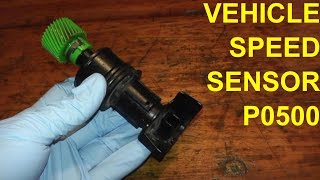
Typical fix: Replace the Vehicle Speed Sensor. 🎬 See this step-by-step VSS replacement walkthrough During removal, use a 17mm wrench. If it slips, use vice grips. If the sensor breaks, the remaining plastic piece can be carefully chipped away with a small hammer and screwdriver or drilled out. The hole does not drop directly into the transmission gears, so falling debris is less of a concern, but it's best to vacuum out any pieces. Apply a small amount of transmission fluid to the new sensor's O-ring before installation to ease future removal.
Est. part cost: $90-$170 - Loose Screws on Instrument Cluster 🟡 Medium Probability → Shop Instrument Cluster Vibrations over many years can cause the small Philips head screws on the back of the instrument cluster's circuit board to loosen. These screws provide critical ground and signal paths. If the connection for the VSS signal output to the ECM is compromised, it will set a P0500 code even if the speedometer works correctly.
How to confirm: This is the most likely cause if the speedometer works perfectly but the P0500 code keeps returning, 🎬 Watch: Diagnosing P0500 symptoms and sensor testing sometimes immediately after starting the engine. The only way to confirm is to remove the instrument cluster and check that all screws on the rear circuit board are snug.
Typical fix: Remove the instrument cluster from the dashboard. Gently tighten all the small Philips head screws on the rear circuit board. Do not overtighten. Many owners have reported this simple, free fix resolves the code after they had already replaced the VSS.
Est. part cost: $0 - Damaged Wiring or Connector ⚪ Low Probability The wiring harness to the VSS is exposed to engine heat and road debris, which can cause it to become brittle, chafed, or corroded over many years. The plastic connector itself can also become brittle and break when disconnected.
How to confirm: Visually inspect the entire length of the wiring from the VSS connector up into the main harness. Check for continuity between the VSS connector and the corresponding pins at the instrument cluster connector using a multimeter. Wiggle the harness while testing to check for intermittent breaks.
Typical fix: Repair or replace the damaged section of the wiring harness. Clean any corrosion from the connector pins. If the connector is broken, a replacement pigtail may be available.
Est. part cost: $5-$50
Rare But Worth Checking
- Faulty Instrument Cluster: → Shop Instrument Cluster Beyond loose screws, the internal circuitry of the cluster that processes and relays the speed signal (specifically the reed switch or speedometer head) can fail. If tightening the screws doesn't work and the sensor/wiring are good, the cluster itself may be the issue. This often requires sourcing a used cluster from a junkyard.
- Failed VSS Drive Gear: Inside the transmission, a plastic gear drives the VSS. While uncommon, this gear can strip or break, meaning the sensor won't spin even though the car is moving. This usually requires partial disassembly of the transmission to access and replace.
Diagnosis Steps
- Read the code with an OBD-II scanner to confirm P0500 is present.
- Observe symptoms. Does the speedometer work? If it's dead or erratic, the VSS or its wiring is the primary suspect. Proceed to step 4.
- If the speedometer WORKS but the P0500 code is present, the most likely cause is a poor connection at the instrument cluster. Proceed to step 6.
- Visually inspect the Vehicle Speed Sensor (VSS) and its connector on the transmission for obvious damage or corrosion. The sensor is typically on the passenger side of the transmission housing.
- If the sensor and wiring appear intact but the speedometer is inoperative, the VSS has likely failed internally. Replace the VSS. Be prepared for it to break upon removal.
- If the speedometer works, remove the instrument cluster from the dashboard. Using a Philips screwdriver, carefully check and tighten all the small screws on the back of the cluster's circuit board. Reinstall the cluster.
- Clear the code with the scanner and perform a test drive to see if the code returns. For the cluster screw issue, the fix is often immediate.
- If the code persists after checking the VSS and cluster screws, perform a continuity test on the wiring harness between the VSS, the instrument cluster, and the ECM to find any breaks or shorts.
- If all wiring and connections are good, the fault may lie with the instrument cluster's internal circuitry or, in very rare cases, the ECM.
Parts You'll Likely Need
- Vehicle Speed Sensor (Manual Transmission)
(OEM #85082AC012)— This is the most common failure point. It is specific to manual transmission models for this year range. This part number supersedes 85082AC010 and 85082AC011.
Trusted brands: Subaru (Genuine), NTK, Standard Motor Products, Beck/Arnley
OEM price range: $100-$150
Aftermarket price range: $80-$120 - Vehicle Speed Sensor (Automatic Transmission)
(OEM #W0133-1822061)— The sensor for the automatic transmission is a different part from the manual version. Always verify fitment with your vehicle's VIN.
Trusted brands: Subaru (Genuine), Duralast
OEM price range: $150-$180
Aftermarket price range: $100-$140
Platform-Specific Known Issues
- Owner Experience: Cluster Screw Fix: A 1996 Legacy owner on Reddit reported a persistent P0500 code despite having a perfectly functional speedometer and even replacing the VSS as a precaution. The code would reappear almost immediately after being cleared. The solution was to remove the instrument cluster and tighten the screws on the back, which resolved the issue completely, allowing them to return the new VSS they had purchased.
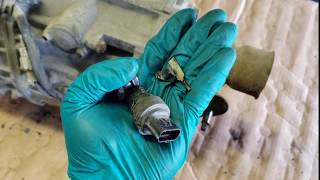
- Owner Experience: Broken VSS Removal: A YouTube video demonstrates the common scenario where the plastic VSS breaks off in the manual transmission case. The creator shows that by carefully chipping away at the plastic with a hammer and screwdriver, the broken piece can be removed without splitting the transmission case. They also confirm that the hole does not lead directly into the main gearset, alleviating fears of plastic shards 🎬 Watch: How to extract a broken VSS from the transmission causing major damage.
Scan Tool Commands That Help
- Subaru Select Monitor (SSM): Current Data Display > Vehicle Speed — This is the definitive test when the speedometer works but the P0500 code is present. By viewing the live 'Vehicle Speed' data parameter that the ECU sees, a technician can confirm if the signal from the instrument cluster is being received. If the speedometer shows a speed but the scan tool shows 0 MPH, the fault is confirmed to be between the cluster and the ECU, pointing directly to the common loose screw or internal cluster fault.
Wiring & Ground Locations
- Engine Bay Grounds — General locations for this generation include the strut towers, near the transmission 'dogbone' mount, on the radiator support, and main grounds (GB-1, GB-2) on the frame rails.. While not a primary cause for P0500, poor or corroded engine grounds can create a host of electrical issues and unpredictable sensor behavior. Ensuring the main chassis and engine grounds are clean and tight is a good preliminary step when chasing any electrical gremlin on an older vehicle.
Real Owner Repair Stories
- Reddit user 'Feet_of_Frodo' (1996 Subaru Legacy, 2.2L, 5-speed Manual) — P0500 code that would set immediately, even at idle after clearing. Speedometer worked perfectly.
❌ Tried (didn't work) Replacing the Vehicle Speed Sensor (VSS)
✅ What actually fixed it Removed the instrument cluster and tightened the four screws holding the speedometer head to the circuit board. This resolved the code, and the owner was able to return the new VSS they had purchased. - LegacyGT.com user 'psu_lgt' (1996 Subaru Impreza (similar platform/era)) — Speedometer stopped working.
❌ Tried (didn't work) Visual inspection of multiple sensors on transmission.
✅ What actually fixed it A mechanic familiar with Subarus diagnosed and fixed the issue by replacing the wire harness *inside* the instrument cluster, indicating a break in the internal circuitry beyond just loose screws. - NHTSA ODI #11724365 (Subaru Outback - cross-manufacturer reference) — An owner reported that their vehicle entered a limp mode and they managed to get the car off the road. After shutting the vehicle off and waiting five minutes, it restarted and functioned again, though an associated P0500 code was present.
"I Checked Everything" — The Actual Cause
- The classic 'everything tests good but the code remains' scenario for P0500 on this platform is when the speedometer is fully functional. A technician may test the VSS (it's working, otherwise the speedo would be dead) and test the wiring from the VSS to the cluster (it's also working). The hidden cause, which standard tests miss, is the signal path *out* of the cluster to the ECM. This path relies on the physical connection made by small screws on the back of the cluster circuit board. When these screws loosen, the speedometer continues to get its signal, but the separate, conditioned signal for the ECM is lost, triggering the P0500 code.
OEM Part Supersession History
85082AC010, 85082AC011→85082AC012— Standard part revision and consolidation by the manufacturer.
Heads up: Part number 85082AC012 is for manual transmission models. It is explicitly listed as NOT fitting 1995-1998 automatic transmission Subaru Legacy, Forester, or Impreza models. Ordering this part for an automatic transmission vehicle will result in a no-fit situation.
Model Year Variations Within This Range
- 1994-~1996: Early models in this generation may use a fully mechanical cable that runs from the transmission to the back of the instrument cluster. The cluster itself then converts this mechanical rotation into an electrical signal for the ECU. A failure in this system could be the cable itself, in addition to the cluster electronics.
- ~1997-1998: These mid-generation models use a 2-wire electrical VSS on the transmission. This sensor generates a pulse that is sent to the instrument cluster. The cluster interprets the pulse to drive the speedometer needle and also converts it into a different signal that the ECU can process. This is the system where the 'loose cluster screw' problem is most prevalent.
- ~1999: The 1999 model year began transitioning to a 3-wire VSS. In this design, the sensor itself contains the circuitry to convert the mechanical rotation into a processed electrical signal. This signal is then sent directly to both the instrument cluster and the ECU. While a cluster fault is still possible, a sensor failure on a '99 model could potentially affect the ECU and cluster independently.
Diagnostic Flowchart
Other Known Issues on This Vehicle
Issues unrelated to this code that are worth knowing about as an owner of this generation:
- Head Gasket Failure (EJ22/EJ25) 🔴 High — Very common, especially on the 2.5L (EJ25D) engine. Can occur anywhere from 80,000 to 150,000 miles. The 2.2L (EJ22) is more reliable but not immune.
- Automatic Transmission Torque Bind 🟠 Medium → Shop Transmission Assembly — Common on high-mileage AWD models. Caused by wear in the center differential's transfer clutch pack. Symptoms include shuddering/hopping during tight turns.
- Piston Slap When Cold 🟡 Low — A characteristic knocking noise from the engine when cold that usually subsides as the engine warms up. Very common on EJ-series engines of this era, generally considered benign.
- Rust in Rear Quarter Panels and Strut Towers 🟠 Medium — Common in regions that use road salt. Rust forms in the wheel arches, rocker panels, and can progress to the rear strut towers, compromising structural integrity.
- Oil Leaks from Cam/Crank Seals and Oil Separator Plate 🟡 Low — Seals and gaskets become hard and brittle with age, leading to oil seepage. The plastic oil separator plate on the back of the engine is a frequent leak point.
Used vs. New Parts: Buying Guide for This Vehicle
When a used part is the smart pick: Sourcing a used instrument cluster from a junkyard is a very common and sensible repair strategy for this vehicle. Since many P0500 issues (when the VSS is good) stem from the cluster itself (loose screws, bad reed switch, cracked traces), a replacement cluster is often the entire fix.
Donor-vehicle mileage cap: roughly under 200000 miles for the part to have meaningful remaining life.
What to inspect on the donor part:
- Verify the donor vehicle has the same transmission type (Manual vs. Automatic) as the cluster electronics are different.
- Inspect the rear circuit board for any signs of corrosion, water damage, or previous repair attempts.
- Check the clear plastic front cover for deep scratches or fogging.
- If possible, get the cluster from a vehicle with similar or lower mileage, though the odometer module can sometimes be swapped from your original cluster (this can be delicate work).
Aftermarket brands forum-validated for this vehicle:
- For the VSS itself, forum-validated aftermarket brands include NTK, Standard Motor Products (SMP), and Beck/Arnley, which are generally considered reliable alternatives to Genuine Subaru.
Brands owners have reported issues with on this vehicle:
- Unnamed, 'white-box' VSS sensors from online marketplaces can be a gamble. Given the labor involved and the high likelihood of the sensor breaking on removal, using a part of unknown quality is often not worth the small initial savings.
Real Owner Stories
Aggregated from forums and TSBs cited above. Mileages and costs reflect what owners reported in those sources.
1996 Subaru Legacy
Symptoms: The speedometer was working perfectly, but the P0500 code kept returning immediately after being cleared.
What fixed it: Removed the instrument cluster and tightened the small screws on the back of the circuit board.
Cost: $0-$0
Source hint: Reddit - r/MechanicAdvice: "1996 Subaru Legacy OBDII P0500 vehicle Speed Sensor Malfunction."
1994-1999 Subaru Legacy (Manual Transmission)
Symptoms: The plastic VSS broke off inside the transmission case during an attempted removal.
What fixed it: Carefully chipped away the remaining plastic with a hammer and screwdriver and vacuumed out the pieces.
Source hint: YouTube video demonstrates the common scenario where the plastic VSS breaks off in the manual transmission case.
Subaru Outback (Cross-Model Reference)
Symptoms: The vehicle entered a limp mode while driving. After shutting off the engine and waiting five minutes, the car restarted and worked again, but a P0500 code was present.
Source hint: NHTSA ODI #11724365
Frequently Asked Questions
My speedometer works fine, but I still have a P0500 code on my 1996 Legacy. How is that possible?
I'm trying to remove the VSS from my manual transmission Legacy and it's stuck. What should I do?
Where exactly is the Vehicle Speed Sensor located on a 1994-1999 Subaru Legacy?
What part number should I look for if I need to replace the VSS on my Legacy or its platform mates?
Will a failing VSS affect how my automatic transmission Legacy drives?
Is there a specific maintenance tip for installing a new speed sensor to prevent it from seizing again?
Helpful Videos
We Have This Part in Stock

The information in this article is provided for general reference and educational purposes only. Vehicle specifications, procedures, and part compatibility can vary by production date, trim level, and region. Always consult your vehicle's factory service manual and verify part numbers before purchasing or performing repairs. Safety-critical components such as airbags, seat belts, and braking systems should be installed by a qualified professional.
- Subaru Legacy:
- 🧭 Diagnostic Flowchart
- 🎬 Helpful Videos
- 🛍️ Shop This Part
- What's Unique About the 1994-1999 Subaru Legacy
- Symptoms You May Notice
- Most Likely Causes
- Rare But Worth Checking
- Diagnosis Steps
- Parts You'll Likely Need
- Platform-Specific Known Issues
- Scan Tool Commands That Help
- Wiring & Ground Locations
- Real Owner Repair Stories
- "I Checked Everything" — The Actual Cause
- OEM Part Supersession History
- Model Year Variations Within This Range
- Other Known Issues on This Vehicle
- Used vs. New Parts: Buying Guide for This Vehicle
- Real Owner Stories
- 1996 Subaru Legacy
- 1994-1999 Subaru Legacy (Manual Transmission)
- Subaru Outback (Cross-Model Reference)
- Frequently Asked Questions
- 🎟️ Get 5% Off