

P0501 on 2007-2018 Chevrolet Silverado 1500: VSS Range/Performance Causes and Fixes
P0501 on a Silverado most often points to a faulty ABS wheel speed sensor or its wiring, causing an erratic speedometer and harsh shifting. A new sensor costs between $25 and $80 and is a common DIY fix.
- P0501 on a Silverado is primarily an issue with the vehicle's speed-sensing systems, not necessarily a major mechanical failure.
- The most likely cause is a single faulty ABS wheel speed sensor or its wiring.
- Symptoms are very noticeable: your speedometer will act up and your transmission will likely shift harshly.
- Diagnosis is straightforward with a scan tool that can read live data from the individual wheel speed sensors.
- Do not rush to replace the transmission; fix the sensor issue first, as it will very likely solve the shifting problems.
What's Unique About the 2007-2018 Chevrolet Silverado 1500
On these Silverado models, the main vehicle speed reading for the speedometer and other systems is calculated by the Electronic Brake Control Module (EBCM) using inputs from the four ABS wheel speed sensors. This data is then sent to the Powertrain Control Module (PCM). The transmission also has its own output speed sensor (VSS) that it uses for shift scheduling. The P0501 code is set when the PCM sees a significant disagreement between the wheel speed data from the EBCM and the output speed from the transmission's VSS. This architecture means the problem could be a faulty ABS sensor at one of the wheels, a bad VSS on the transmission, the wiring to any of these components, or even a module communication issue.
Generation note: This guide covers two Silverado 1500 generations: the GMT900 (2007-2013) and the K2XX (2014-2018). The fundamental cause—a conflict between wheel speed and transmission speed data—is the same for both. However, the part numbers for sensors and the specific locations of wiring harnesses will differ. The K2XX generation, particularly with the 6-speed (6L80) and 8-speed transmissions, is noted for shifting complaints that can be triggered by faulty sensor data. Owners often report a particularly harsh 1-2 or 3-2 shift.
Symptoms You May Notice
- Harsh or erratic automatic transmission shifting, especially a hard 1-2 shift.
- Speedometer needle behaving erratically, jumping, or dropping to zero while driving.
- Illumination of the Check Engine Light.
- ABS and/or Traction Control warning lights may be on.
- Cruise control will not engage or disengages unexpectedly.
- A feeling of low engine power, often due to the transmission being in the wrong gear.
- Replacing the instrument cluster. An erratic speedometer is almost always a symptom of a bad speed signal, not a bad gauge cluster.
- Assuming the transmission needs a rebuild. Harsh shifting is a primary symptom of P0501; fixing the root sensor/wiring issue will often resolve the shifting problem without major transmission work. Many owners have chased transmission issues when the root cause was a simple sensor.
- Replacing the wrong sensor. Without using a scan tool to view live data from all four wheels, it's easy to guess and replace the wrong ABS sensor, wasting time and money.
Most Likely Causes
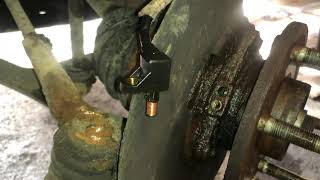
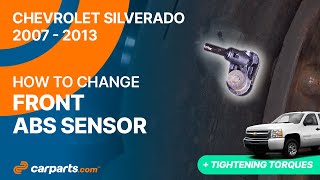
- Faulty ABS Wheel Speed Sensor 🔴 High Probability → Shop ABS Wheel Speed Sensor The wheel speed sensors are exposed to harsh conditions (water, dirt, road debris, ice) at the wheel hubs, making them a very common failure point. The wiring pigtails are also vulnerable. The rear sensors are frequently cited as culprits. 🎬 See this walkthrough for replacing a rear ABS sensor.
How to confirm: Use a scan tool capable of reading live data from the EBCM. Monitor the speed reading from all four wheels while driving. The sensor that shows an erratic, lagging, or zero reading is the faulty one. Often, a specific ABS code like C0035 (Left Front) will accompany P0501, pointing directly to the bad sensor. 🎬 Watch: How to diagnose a missing wheel speed sensor signal.
Typical fix: Replace the faulty wheel speed sensor. They are typically held in by a single bolt to the wheel hub or backing plate. Ensure the mounting surface is clean before installing the new sensor.
Est. part cost: $25-$80 - Damaged Wheel Speed Sensor Wiring or Connector 🟡 Medium Probability → Shop ABS Wheel Speed Sensor The wiring harness running to each wheel hub is susceptible to damage from road debris, ice buildup, or chafing against suspension components or fender liners. This is a known issue on GM trucks.
How to confirm: Visually inspect the wiring harness from the sensor back to the main loom. Look for any breaks, chafing, melted sections, or corrosion in the connector pins. Perform a continuity test on the wires with a multimeter if no visual damage is found.
Typical fix: Repair the damaged section of wire or replace the pigtail connector. Ensure the harness is properly secured away from moving parts or hot exhaust components.
Est. part cost: $15-$40 - Faulty Transmission Output Speed Sensor (VSS) ⚪ Low Probability → Shop Transmission Assembly While less common than ABS sensor failure for this specific code, the transmission's own speed sensor can fail. This is more likely if speedometer readings are normal but shifting is erratic and P0501 is present without any ABS codes.
How to confirm: Use a scan tool to monitor the transmission output speed data (TOSS). If it is erratic or absent while the wheel speed sensors read correctly, the VSS is likely the problem.
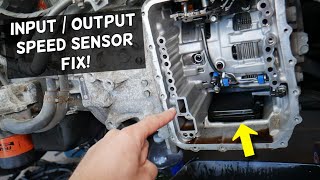
Typical fix: Replace the vehicle speed sensor. On 2WD models, it's on the transmission tail housing. On 4WD models, it's typically located on the transfer case output housing. 🎬 Watch: Locate the input and output speed sensors on your transmission.
Est. part cost: $30-$70 - Metal Debris on Magnetic Sensor Tip ⚪ Low Probability
How to confirm: When removing either a wheel speed sensor or the transmission VSS, inspect the magnetic tip. A significant accumulation of fine metallic 'fuzz' can disrupt the magnetic field and cause an erratic signal.
Typical fix: Wipe the sensor tip clean. If the debris is excessive, it may indicate a more serious mechanical issue, such as a failing wheel bearing (for WSS) or internal transmission problem (for VSS).
Est. part cost: $0
Rare But Worth Checking
- Failing Wheel Hub Bearing Assembly: → Shop Hub Assembly A worn or loose wheel bearing can create excessive movement (runout), causing the air gap between the sensor and the tone ring to vary. This leads to an erratic signal, which can trigger P0501 before the bearing becomes noisy. GM TSBs sometimes mention checking for loose wheel bearings as a diagnostic step for wheel speed sensor codes.
- Faulty Electronic Brake Control Module (EBCM) or Powertrain Control Module (PCM): → Shop Engine Control Module (ECM) This is rare, but if all sensors and wiring have been tested and confirmed to be good, the fault may lie within one of the control modules that processes the speed data. Module failure should be considered a last resort after exhausting all other possibilities.
- Incorrect Tire Size: If tires of a different overall diameter than the factory size have been installed without recalibrating the PCM, it can cause a discrepancy between the wheel speed and the transmission output speed, potentially triggering a P0501 code.
Diagnosis Steps
- Scan for Codes: Use an OBD-II scanner to confirm P0501 and check for any accompanying ABS codes (C-codes) or transmission codes (P07xx). The presence of a C-code for a specific wheel (e.g., C0035) will narrow down your search significantly.
- Live Data Analysis: Use a scanner that can read live data from the EBCM and TCM. While driving slowly (in a safe location), monitor the vehicle speed as reported by the PCM and compare it to the individual speed readings from all four ABS wheel speed sensors and the transmission output speed sensor.
- Identify the Faulty Sensor: Watch for a sensor that reads 0 MPH, lags behind the others, or jumps erratically. This is your prime suspect. For example, if three sensors read 10 MPH and one reads 2 MPH or jumps between 0 and 10, you've found the problem area.
- Visual Inspection: Raise the vehicle and secure it on jack stands. Inspect the suspect sensor and its wiring harness. Look for obvious signs of damage, corrosion, loose connections, or wires rubbing on the frame or suspension. Check that the sensor is securely mounted.
- Test the Circuit: If no visual damage is found, disconnect the sensor and use a multimeter to check for proper voltage and ground at the connector. Test the resistance of the sensor itself (see 'Specific Diagnostic Values') and compare it to the manufacturer's specifications or another sensor on the vehicle. Check for continuity on the signal and ground wires back to the EBCM.
- Inspect the Sensor and Tone Ring: Remove the suspect sensor. Check its magnetic tip for an accumulation of metallic debris. Inspect the tone ring (reluctor) inside the hub for damage or heavy rust/debris, although this can be difficult to see without disassembly.
- Replace the Faulty Part: Replace the component that failed testing. After replacement, clear the codes and perform a test drive, monitoring the live data to ensure all speed sensors report correctly and the problem is resolved.
Parts You'll Likely Need
- ABS Wheel Speed Sensor
(OEM #23299335 (Rear, K2XX), 15229012 (Front, GMT900))— This is the most common failure part for this code due to its exposed location at the wheel hub.
Related Codes That Often Appear With This One
- C0035 - C0051 — These are ABS-specific codes for wheel speed sensor circuits (e.g., C0035 for Left Front, C0040 for Right Front). If you have one of these alongside P0501, it strongly points to a specific wheel speed sensor or its circuit as the root cause.
- P0500 — P0500 indicates a complete loss of the VSS signal, while P0501 indicates the signal is present but irrational or out of range. They can sometimes appear together if the signal is intermittent.
- P0720 — This code points specifically to a fault in the transmission Output Speed Sensor (OSS) circuit. If seen with P0501, it increases the likelihood that the problem is with the transmission sensor rather than an ABS wheel speed sensor.
Technical Service Bulletins (TSBs) & Recalls
- TSB 25-NA-019: Addresses various wheel speed sensor DTCs, including C0500/C0501. It advises technicians to check for debris on the sensor, incorrect air gap, loose wheel bearings, and damaged wiring before replacing the sensor itself.
- TSB PIT5950: While for a later model year, this bulletin highlights the critical importance of installing the correct part number for the left vs. right front wheel speed sensors, as they can be easily mixed up, leading to repeat DTCs.
- Preliminary TSB MC-10165881-9999: Notes that manufacturing debris on the wheel speed sensor reluctor wheel can cause ABS codes and recommends cleaning the reluctor wheel.
Platform-Specific Known Issues
- Harsh Shifting on K2XX Models (2014-2018): Owners on forums like GM-Trucks.com frequently complain about harsh shifting, particularly a severe clunk when downshifting from 2-1, which can be a direct symptom of P0501. In many cases, the dealer may initially claim this is 'normal operation' if no codes are stored. However, an underlying erratic speed sensor signal is often the true cause.
- Wiring Harness Chafe Points: The wiring for the front wheel speed sensors is known to be vulnerable. Check for rubbing against the fender liner, suspension components, or the frame, especially on the driver's side. Securing the harness with new clips or zip ties after a repair is a crucial preventative step.
- Incorrect Part Installation: GM issued TSB PIT5950 for the 2019+ trucks, but the principle applies to earlier models: the left and right front wheel speed sensors can look identical but are not interchangeable. Installing the wrong part on the wrong side will cause immediate DTCs. Always verify the part number is correct for the specific location before installation.
Mechanic-Grade Diagnostic Values
- ABS Wheel Speed Sensor Resistance (Passive Sensor) — expected: Typically between 800 and 2700 Ohms. A practical test is to compare the resistance of the suspect sensor to a known-good sensor on another wheel; they should be very close.. Failure: A reading of infinite resistance (Open Loop) or zero resistance (short circuit). A reading that significantly differs from other sensors on the vehicle also indicates a fault.
- ABS Wheel Speed Sensor AC Voltage Output (Passive Sensor) — expected: Minimum of 100-250 millivolts (0.10-0.25V) AC when the wheel is spun by hand at about one-half revolution per second.. Failure: Voltage reading is zero or significantly lower than the minimum threshold while the wheel is spinning, indicating the sensor is not generating a signal.
Hidden / Shadow Codes Worth Checking
- C0035-xx, C0040-xx, etc.: While the main code is a generic C-code for a wheel speed sensor, GM vehicles use 2-digit symptom byte codes (the '-xx') to provide more detail. Examples include '-0F' (Signal Erratic), '-18' (Low Signal Amplitude), '-5A' (Not Plausible), or '-3A' (Incorrect Component Installed / Incompatible Sensor). (see via These codes are not visible on basic OBD-II scanners. A professional-grade scan tool like a GM Tech2, GM MDI with GDS2 software, or a high-end bidirectional scanner is required.)
Scan Tool Commands That Help
- GDS2 / High-End Bidirectional Scanner: Instrument Cluster Test — To command the speedometer needle to sweep through its range. If the needle moves correctly during the test, it confirms the instrument cluster itself is working, pointing the diagnosis back toward the sensor, wiring, or modules.
- GDS2 / High-End Bidirectional Scanner: VSS Calibration / Transmission Adaptive Learning Reset — After replacing a sensor or repairing wiring, this function should be performed to clear old learned values and allow the TCM and PCM to adapt to the new, correct signal.
Wiring & Ground Locations
- EBCM (ABS Module) — Typically mounted to the driver's side frame rail, below the cab. It is the black plastic electronic module bolted to the aluminum hydraulic block.. This module collects all wheel speed sensor data, calculates the vehicle speed, and sends it to the PCM. It is the central hub for the data that triggers P0501.
- G110 (K2XX, 2014-2018) — On the left front lower side of the engine block.. This is a primary engine and module ground. A poor connection here can cause erratic behavior from the ECM/PCM and other control modules, leading to false sensor codes.
- G121 (K2XX, 2014-2018) — Under the vehicle at the driver's door area, on a body mount frame post.. A frame ground that is critical for the EBCM. Corrosion at this exposed location is common and can directly cause ABS and speed signal issues.
- G103 (GMT900, 2007-2013) — Located on the front corner of the passenger side cylinder head, just below the valve cover. Some diagrams also show a G103 on the cowl above the brake booster. A key engine ground is part of the main negative battery cable harness attached to the left front of the engine block.. Poor engine-to-chassis grounds are a notorious source of difficult-to-diagnose electronic issues on GM trucks, including phantom sensor codes.
Real Owner Repair Stories
- Reddit user 'Intellivindi' (2018 Chevrolet Silverado, 52k miles) — ABS, TCS, Stabilitrak lights on. Cruise control inoperative. ABS code C0040-04 (right front wheel speed sensor erratic).
❌ Tried (didn't work) Replacing the right front wheel speed sensor with an aftermarket part from O'Reilly Auto Parts.
✅ What actually fixed it The aftermarket sensor caused a new code, C0040-3A, for an 'incompatible sensor'. Replacing the aftermarket sensor with a genuine ACDelco OEM sensor resolved the incompatibility code. This highlights that even if an aftermarket part fits, it may not be electronically compatible with the GM EBCM. The user still had the original code, indicating a further problem in the wiring or hub, but the aftermarket incompatibility was a critical diagnostic trap.
"I Checked Everything" — The Actual Cause
- While not a smoke test issue, a common dead-end is when all sensors and wiring test 'good' with a multimeter. In these cases, the root cause is often a poor ground connection at the frame rail (especially G121 on K2XX models) or engine block. Corrosion creates intermittent resistance that may not be obvious during a static test but causes signal dropouts while driving.
OEM Part Supersession History
22775301, 23492815→23299335— Part consolidation and potential design revision for the rear ABS wheel speed sensor.24265536→24278523— Part revision for the transmission input/output speed sensor.
Model Year Variations Within This Range
- 2007-2013 (GMT900) vs 2014-2018 (K2XX): The specific locations and designators for critical ground points (G103, G107 vs G110, G121) are different between the two generations. Also, the ABS module (EBCM) design may differ, with earlier models potentially using an older Kelsey Hayes 325 module with two electrical connectors, while later models use a single-connector module.
Diagnostic Flowchart
Other Known Issues on This Vehicle
Issues unrelated to this code that are worth knowing about as an owner of this generation:
- Active Fuel Management (AFM) Lifter Failure 🔴 High — Very common, especially on 2007-2013 5.3L engines and 2014+ 5.3L/6.2L engines. Can occur anytime after 60,000 miles. (Ref: Multiple TSBs exist, and a class-action lawsuit was filed regarding this issue.)
- 6L80/8L90 Transmission Torque Converter Shudder 🟠 Medium → Shop Transmission Assembly — Common on 2014-2018 models, often appearing between 35-55 mph. Feels like driving over rumble strips. (Ref: Several TSBs were issued by GM to address fluid type and torque converter replacement.)
- Cracked Dashboard (GMT900) 🟡 Low — Extremely common on 2007-2013 models, especially in warmer climates. A crack typically develops on the driver's side near the instrument panel or airbag cover.
- Excessive Oil Consumption 🟠 Medium — Common on 5.3L V8 engines, often linked to the AFM system's piston rings or PCV system design. (Ref: TSB 07-06-01-007F was issued for this problem on early GMT900 models.)
- A/C Condenser Failure (K2XX) 🟠 Medium — Frequent failure on 2014-2016 models, leading to a loss of air conditioning. The condenser is prone to leaks.
Used vs. New Parts: Buying Guide for This Vehicle
When a used part is the smart pick: For an expensive Electronic Brake Control Module (EBCM), a used part from a reputable salvage yard can be a significant cost saving, but be aware it will likely require professional programming to your truck's VIN.
Donor-vehicle mileage cap: roughly under 100000 miles for the part to have meaningful remaining life.
What to inspect on the donor part:
- For a used EBCM, inspect the electrical connector for any signs of corrosion, bent pins, or water intrusion.
- Ensure the donor vehicle was not in a flood.
- For wiring harnesses, look for intact insulation, no brittleness, and no signs of previous repairs or splices.
OEM-only on this vehicle (don't cheap out):
- Electronic Brake Control Module (EBCM): Strongly recommend OEM (ACDelco) or a professional remanufacturing service due to the need for specific software and programming.
- ABS Wheel Speed Sensors: While some aftermarket brands work, many forum users report incompatibility issues and 'ghost' codes. Using OEM ACDelco or a known OEM supplier like Delphi is the safest bet to avoid diagnostic headaches.
Aftermarket brands forum-validated for this vehicle:
- Delphi: Often the original equipment manufacturer for GM, providing OEM quality.
- NTK: A well-regarded brand for sensors, often recommended on forums.
- Standard Motor Products (SMP): Generally considered a reliable aftermarket choice for sensors and electronics.
Brands owners have reported issues with on this vehicle:
- Dorman: Has a widely documented mixed-to-negative reputation for electronic sensors and modules among GM truck owners, with reports of premature failure or incompatibility.
- No-Name/Store Brands: The cheapest options available online or from parts stores carry a high risk of being electronically incompatible, causing new trouble codes and wasted time.
Real Owner Stories
Aggregated from forums and TSBs cited above. Mileages and costs reflect what owners reported in those sources.
2014 Chevrolet Silverado 1500 High Country
Symptoms: Owner described a 'horrible 2-1 downshift'.
What fixed it: The owner reported that replacing the torque converter and valve bodies did not fix the issue, illustrating how P0501 symptoms can be misdiagnosed as a major internal transmission failure.
Source hint: GM-Trucks.com - 'Harsh Downshifts - is there a fix?'
2014 Chevrolet Silverado 1500
Symptoms: A hard 1-2 shift that feels like the 'tranny is gonna fall out.'
What fixed it: The source describes the classic symptom in detail but does not specify the final repair that resolved it.
Source hint: GM-Trucks.com - 'Inconsistent transmission'
2014 Chevrolet Silverado 1500
Symptoms: Experiencing a hard shift and clunk from the transmission.
What fixed it: The owner was told by the dealer that this was 'normal operation' because no codes were found at the time, a common frustration for owners dealing with intermittent sensor problems.
Source hint: GM Forum - '2014 silverado tranny hard shift/clunk'
Related OBD-II Codes
Frequently Asked Questions
My 2015 Silverado has a really harsh 1-2 shift and clunks when downshifting, but the Check Engine Light isn't on. Could this still be a P0501-related issue?
What's the most common cause of a P0501 code on these trucks?
I'm replacing a front wheel speed sensor myself. Is there anything specific I should know for my Silverado?
Besides the Check Engine Light, what other warning lights might turn on with P0501?
Why won't my cruise control work with the P0501 code active?
I pulled the wheel speed sensor and found a bunch of metal 'fuzz' on the tip. What does that mean?
Helpful Videos


We Have This Part in Stock

The information in this article is provided for general reference and educational purposes only. Vehicle specifications, procedures, and part compatibility can vary by production date, trim level, and region. Always consult your vehicle's factory service manual and verify part numbers before purchasing or performing repairs. Safety-critical components such as airbags, seat belts, and braking systems should be installed by a qualified professional.
- Chevrolet Silverado 1500:
- 🧭 Diagnostic Flowchart
- 🎬 Helpful Videos
- 🛍️ Shop This Part
- What's Unique About the 2007-2018 Chevrolet Silverado 1500
- Symptoms You May Notice
- Most Likely Causes
- Rare But Worth Checking
- Diagnosis Steps
- Parts You'll Likely Need
- Related Codes That Often Appear With This One
- Technical Service Bulletins (TSBs) & Recalls
- Platform-Specific Known Issues
- Mechanic-Grade Diagnostic Values
- Hidden / Shadow Codes Worth Checking
- Scan Tool Commands That Help
- Wiring & Ground Locations
- Real Owner Repair Stories
- "I Checked Everything" — The Actual Cause
- OEM Part Supersession History
- Model Year Variations Within This Range
- Other Known Issues on This Vehicle
- Used vs. New Parts: Buying Guide for This Vehicle
- Real Owner Stories
- 2014 Chevrolet Silverado 1500 High Country
- 2014 Chevrolet Silverado 1500
- 2014 Chevrolet Silverado 1500
- Related OBD-II Codes
- Frequently Asked Questions
- 🎟️ Get 5% Off