

P0501 on 2000-2006 Hyundai Elantra: Vehicle Speed Sensor Causes and Fixes
On a 2000-2006 Elantra, P0501 almost always points to a failed Vehicle Speed Sensor (VSS) located on the transmission. This typically causes an inoperative speedometer and harsh shifting. Replacing the sensor is a common DIY fix, with the part costing between $25 and $75.
- P0501 on a 2000-2006 Elantra almost always means the transmission-mounted Vehicle Speed Sensor (VSS) has failed.
- Do not confuse the VSS with the ABS wheel speed sensors; they are different parts.
- Symptoms include a dead speedometer, erratic shifting, and a disabled cruise control.
- Always inspect the wiring and connector for damage before replacing the sensor, as this can be a cheaper fix.
- Replacing the VSS is a manageable DIY job for most home mechanics, but the sensor can sometimes be difficult to remove from the transmission housing.
What's Unique About the 2000-2006 Hyundai Elantra
For this generation of Elantra (known as the XD), the P0501 code specifically refers to the Vehicle Speed Sensor (VSS) mounted on the transaxle, not the ABS wheel speed sensors. This is a frequent point of confusion. The VSS on these models is a known failure point, and often the wiring and connector leading to it can also become brittle or damaged over time, leading to the same code.
Symptoms You May Notice
- Inoperative or erratic speedometer and odometer
- Harsh or improper automatic transmission shifting
- Check Engine Light is on
- Cruise control does not work
- ABS light may be illuminated
- Replacing an ABS wheel speed sensor. On this specific Elantra, P0501 points to the transmission-mounted VSS, not the wheel speed sensors used for the Anti-lock Brake System.
Most Likely Causes
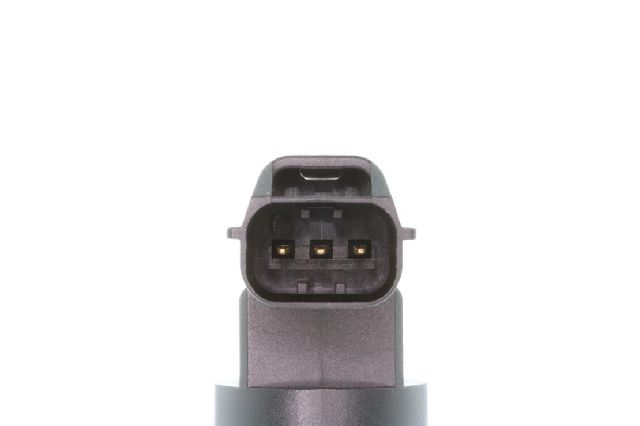
- Failed Vehicle Speed Sensor (VSS) 🔴 High Probability → Shop Drive Shaft Sensor The transmission-mounted VSS is a common failure item on this generation of Elantra.
How to confirm: The sensor is located on top of the transmission case. After removing the air filter housing for access, inspect the sensor and its connector. Test the sensor's output signal with a multimeter or oscilloscope while spinning the wheels (with the front of the car safely raised). A lack of signal or an erratic signal points to a failed sensor.
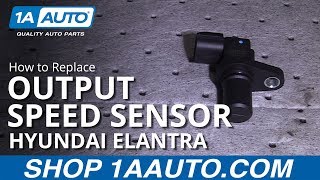
Typical fix: Replace the Vehicle Speed Sensor. The sensor is held in by a single 10mm bolt but can be difficult to remove from the transmission case if it is seized. Gentle, persistent twisting with pliers may be required to break it free. Avoid excessive force 🎬 Watch: Step-by-step guide to replacing the speed sensor to prevent breaking it off in the case.
Est. part cost: $25-$75 - Damaged VSS Wiring or Connector 🟡 Medium Probability The wiring harness leading to the VSS can become brittle from age and heat, or damaged by rubbing against other components.
How to confirm: Visually inspect the entire length of the wiring from the VSS back to the main harness. Look for frayed wires, cracked insulation, or corrosion inside the electrical connector. Perform a continuity test on the wires if no visible damage is found.
Typical fix: Repair the damaged section of wire or replace the connector pigtail. Pigtail replacement requires cutting the old connector off and splicing the new one in, matching wire colors.
Est. part cost: $10-$30 - Damaged VSS Drive Gear ⚪ Low Probability The plastic gear at the end of the VSS that engages with the transmission can wear down or break over time.
How to confirm: When you remove the VSS from the transmission, inspect the plastic gear on its tip. Look for stripped, chipped, or missing teeth.
Typical fix: Replace the VSS, as the gear is typically an integrated part of the sensor.
Est. part cost: $25-$75
Rare But Worth Checking
- Faulty Powertrain Control Module (PCM): → Shop Engine Control Module (ECM) This is very uncommon. Before suspecting the PCM, all other possibilities, including the sensor, wiring, and instrument cluster, must be thoroughly tested and ruled out.
- Faulty Instrument Cluster: In rare cases, the instrument cluster itself can fail to process the signal from a good VSS, which can trigger a P0501 code. This is more likely if the speedometer is the only symptom and the VSS signal is confirmed to be good.
Diagnosis Steps
- Scan for trouble codes and note any other codes present besides P0501.
- Gain access to the VSS by removing the engine cover and air filter housing assembly.
- Visually inspect the VSS electrical connector and wiring harness for any signs of damage, corrosion, or oil contamination.
- If wiring appears intact, disconnect the sensor and test for power and ground at the connector with the ignition on.
- Remove the VSS (held by a single 10mm bolt) and inspect the plastic drive gear for damage.
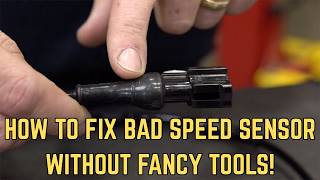
- If the gear and wiring are good, test the sensor itself. Reconnect it, raise the drive wheels, and use a multimeter to check for a changing voltage or frequency signal as you spin the wheels. 🎬 See how to test if your speed sensor has failed
- If the sensor and wiring test good, the problem may lie with the instrument cluster or PCM, though this is rare.
Parts You'll Likely Need
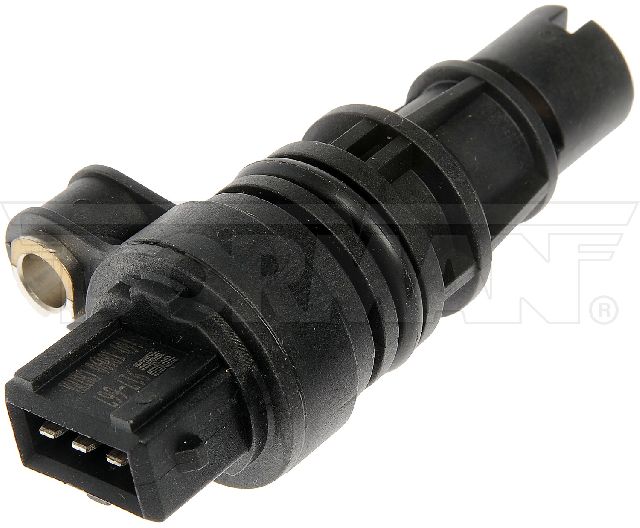
- Vehicle Speed Sensor (VSS)
(OEM #96420-2D501, 96420-2D500)— This is the most common component to fail, causing the P0501 code on this vehicle.
Trusted brands: Hyundai (Genuine OEM), NTK, Beck/Arnley, Standard Motor Products (SMP)
OEM price range: $178-$195
Aftermarket price range: $25-$75
Related Codes That Often Appear With This One
- P0500 — P0500 indicates a general malfunction of the VSS circuit, while P0501 indicates a range/performance problem. They are often caused by the same failing sensor or wiring issue.
- P1529 — This is a Hyundai-specific code indicating that the Transmission Control Module (TCM) has requested the Check Engine Light to be turned on. It frequently appears alongside VSS codes like P0500 and P0501.
Platform-Specific Known Issues
- Owner Experience: Many owners on forums like Hyundai-Forums.com report that the VSS can be extremely difficult to remove from the transmission case after unbolting it. It often gets stuck, and care must be taken not to break the plastic sensor body during removal. A common technique is to use pliers to grip and twist the sensor back and forth to loosen it before pulling it out.
Mechanic-Grade Diagnostic Values
- Vehicle Speed Sensor (VSS) AC Voltage Output — expected: With the multimeter set to AC Volts and connected to the sensor's signal and ground wires, the voltage should increase steadily and smoothly from 0V as the drive wheels are spun faster. No specific voltage-to-speed correlation is officially documented.. Failure: A reading that stays at 0V AC, or a voltage that is erratic and does not change linearly with wheel speed, indicates a failed sensor or a problem with the drive gear.
Scan Tool Commands That Help
- Hyundai GDS (or advanced aftermarket scanner): Reset Auto T/A Adaptive Values — After replacing the VSS or performing other transmission repairs that caused harsh shifting. This procedure, referenced in TSB 10-AT-011, clears the transmission's learned shift patterns and forces it to relearn, which can improve shift quality.
Wiring & Ground Locations
- Powertrain Control Module (PCM) — Located inside the cabin, above the driver's side kick panel.. This is the destination for the VSS signal wire. A continuity test should be performed from the VSS connector to the corresponding pin at the PCM connector to rule out a wiring break in the harness.
Real Owner Repair Stories
- South Main Auto Repair (YouTube) via Go-Parts article (Kia Rio (platform-mate), non-ABS model) — P0501 code, inoperative speedometer.
❌ Tried (didn't work) Customer had already attempted some repairs before bringing it to the shop.
✅ What actually fixed it A blown 10-amp 'horn' fuse in the under-hood fuse box. This fuse was on the same power supply circuit as the Vehicle Speed Sensor but was not clearly labeled as such, making it an easily missed cause. - Hyundai-Forums.com user report via Go-Parts article (2004 Hyundai Accent, 182,000 miles, Automatic) — P0501, speedometer and odometer not working.
❌ Tried (didn't work) Replacing the Vehicle Speed Sensor (VSS).
✅ What actually fixed it The VSS drive gear inside the transmission had several chipped teeth. The new sensor was not being spun correctly by the damaged gear. Replacing the internal gear resolved the issue.
OEM Part Supersession History
96420-37000→96420-2D501— Part revision and consolidation by manufacturer.
Heads up: The new part number 96420-2D501 is fully backward compatible.96420-2D500→96420-2D501— Part revision and consolidation by manufacturer.
Heads up: The new part number 96420-2D501 is the correct service replacement.
Model Year Variations Within This Range
- 2000-2006: Some parts catalogs specify that OEM part number 96420-2D501 is for models with a manual transmission. While it may also fit automatic models, it is critical to verify the correct part number via VIN for automatic transmission vehicles, as a different sensor may be used.
Diagnostic Flowchart
Other Known Issues on This Vehicle
Issues unrelated to this code that are worth knowing about as an owner of this generation:
- Rear Subframe and Control Arm Corrosion 🔴 High — Very common in regions that use road salt ('Salt Belt'). Can occur at any mileage and may lead to structural failure. (Ref: Hyundai Recall 113 (NHTSA Action Number: 13V354000) was issued for this problem.)
- Crankshaft Position Sensor Failure 🟠 Medium — A common failure item that typically occurs with age, often after 80,000 miles. Symptoms include engine stalling, difficulty starting, or a no-start condition.
- Peeling Paint / Clear Coat Failure 🟡 Low — Extremely common across this generation, particularly on darker colored vehicles. The clear coat begins to peel and flake off, usually starting on the roof and hood.
- Power Window Regulator Failure 🟡 Low — Frequent reports of power window regulators failing, causing the window to get stuck, fall into the door, or become inoperative.
Used vs. New Parts: Buying Guide for This Vehicle
When a used part is the smart pick: For the Vehicle Speed Sensor (VSS), a used OEM part from a reputable salvage yard is a very reasonable option. It is a simple electronic component, and an OEM used part is often more reliable than a new, low-quality aftermarket part.
Donor-vehicle mileage cap: roughly under 100000 miles for the part to have meaningful remaining life.
What to inspect on the donor part:
- Check for cracks or damage to the plastic housing and connector.
- Ensure the electrical pins inside the connector are straight and free of corrosion.
- If the drive gear is part of the sensor, inspect it for any chipped or worn teeth.
- Ask for the donor vehicle's mileage if possible.
OEM-only on this vehicle (don't cheap out):
- For this P0501 repair, no parts are strictly OEM-only. However, OEM is recommended for best fit and longevity.
Aftermarket brands forum-validated for this vehicle:
- NTK
- Beck/Arnley
- Standard Motor Products (SMP)
- Duralast
- Dorman
Real Owner Stories
Aggregated from forums and TSBs cited above. Mileages and costs reflect what owners reported in those sources.
2005 Hyundai Elantra GT Manual Transmission
Symptoms: Owner reported wiring damage likely due to rodents and was seeking how to trace a break in the wire running from the sensor.
What fixed it: The context identifies the fix for damaged wiring as repairing the section or replacing the connector pigtail by matching wire colors.
Source hint: Hyundai Forums owner_reports
2002 Hyundai Elantra
Symptoms: Vehicle triggered codes P0500, P0501, and P1529 simultaneously.
What fixed it: Replacing the transmission Vehicle Speed Sensor (VSS).
Source hint: Hyundai-Forums.com: https://www.hyundai-forums.com/threads/2002-elantra-codes-p0500-p0501-p1529.118919/
2006 Hyundai Elantra
Symptoms: Check engine light on with code P0501.
What fixed it: Replacement of the Vehicle Speed Sensor.
Source hint: Reddit (r/MechanicAdvice): https://www.reddit.com/r/MechanicAdvice/comments/8ws65i/2006_hyundai_elantra_p0501_code/
2004-2009 Kia Spectra (Platform Mate)
Symptoms: No speedometer operation and harsh shifting.
What fixed it: Replacing the Vehicle Speed Sensor (VSS).
Source hint: Platform mates section citing Kia Spectra/Cerato owner reports
Related OBD-II Codes
Frequently Asked Questions
Is there a recall for the P0501 code or the speed sensor on my 2000-2006 Elantra?
I'm trying to remove the VSS from my Elantra's transmission but it won't budge. What should I do?
Where is the Vehicle Speed Sensor located on the 2000-2006 Elantra?
Can I use a used speed sensor from a salvage yard to fix P0501?
Why is my automatic transmission shifting harshly along with the Check Engine Light?
Which aftermarket brands are recommended for replacing the Elantra VSS?
Helpful Videos
We Have This Part in Stock


The information in this article is provided for general reference and educational purposes only. Vehicle specifications, procedures, and part compatibility can vary by production date, trim level, and region. Always consult your vehicle's factory service manual and verify part numbers before purchasing or performing repairs. Safety-critical components such as airbags, seat belts, and braking systems should be installed by a qualified professional.
- Hyundai Elantra:
- 🧭 Diagnostic Flowchart
- 🎬 Helpful Videos
- 🛍️ Shop This Part
- What's Unique About the 2000-2006 Hyundai Elantra
- Symptoms You May Notice
- Most Likely Causes
- Rare But Worth Checking
- Diagnosis Steps
- Parts You'll Likely Need
- Related Codes That Often Appear With This One
- Platform-Specific Known Issues
- Mechanic-Grade Diagnostic Values
- Scan Tool Commands That Help
- Wiring & Ground Locations
- Real Owner Repair Stories
- OEM Part Supersession History
- Model Year Variations Within This Range
- Other Known Issues on This Vehicle
- Used vs. New Parts: Buying Guide for This Vehicle
- Real Owner Stories
- 2005 Hyundai Elantra GT Manual Transmission
- 2002 Hyundai Elantra
- 2006 Hyundai Elantra
- 2004-2009 Kia Spectra (Platform Mate)
- Related OBD-II Codes
- Frequently Asked Questions
- 🎟️ Get 5% Off