

P0504 on 2008-2011 Ford Focus 1.6L TDCi: Brake Switch Correlation Causes and Fixes
On a 2008-2011 Ford Focus with the 1.6L TDCi engine, the P0504 code is overwhelmingly caused by a faulty or failing brake light switch located on the brake pedal arm. This inexpensive part (around $15-$40) is a common wear item and a simple DIY replacement can typically fix related issues like inoperative cruise control, malfunctioning brake lights, and ABS/ESC warning lights. In some cases, the code may persist after replacement, indicating a wiring issue or the need for a PCM reset.
- P0504 means the two circuits in your brake pedal switch are sending conflicting signals.
- The most common symptoms on your Focus will be a non-functional cruise control and brake lights that either don't work or are stuck on.
- The most likely fix is replacing the brake light switch on the pedal arm, which is an easy and inexpensive DIY job.
- Do not drive the vehicle until this is fixed. Malfunctioning brake lights are a major safety hazard.
- Before buying parts, check the brake light fuse (F21 in the under-hood fuse box) to rule out a simple blown fuse.
What's Unique About the 2008-2011 Ford Focus
For the Mk2.5 Ford Focus (2008-2011), this code is a straightforward electrical fault, almost always pointing directly to the brake pedal switch itself. Unlike some other vehicles where this code can be triggered by complex module failures or requires calibration, on this Focus, the cause is typically the simple, electromechanical switch wearing out from millions of cycles. Owners report that replacing this single, inexpensive part usually resolves the issue without the need for more complex diagnostics. The issue is also common on platform mates like the Volvo V50 and Mazda 3 that use the same basic electrical architecture.
Symptoms You May Notice
- Cruise control will not engage or disengages unexpectedly.
- Brake lights do not work when the pedal is pressed.
- Brake lights stay on even when the pedal is released.
- Check Engine Light is illuminated on the dashboard.
- "Engine Malfunction" message may appear on the instrument cluster display.
- ABS or ESC/Traction Control warning lights may illuminate.
- For automatic transmissions, you may have difficulty shifting out of Park.
- In rare cases, the engine may stall when braking or enter a reduced-power "limp mode".
- With headlights on, brake lights may be stuck on, but with headlights off, they may function normally (or vice-versa), indicating a short.
- Replacing brake light bulbs when the lights don't work. While a burnt-out bulb is common, it will not cause a P0504 code. The code specifically points to a circuit correlation issue at the switch, not the bulbs themselves.
Most Likely Causes
- Faulty Brake Light Switch 🔴 High Probability → Shop Brake Light Switch The brake light switch is a high-use electromechanical part with internal plastic and copper contacts that wear out, bend, or break over time, leading to inconsistent signals. It is the most common point of failure by a wide margin. Manufacturer Bulletin #TSB 22-2011 notes that this code can be triggered by an incorrectly installed stoplamp switch. Additionally, NHTSA ODI #11589504 suggests that even if the switch is new, a failing plastic stop bumper can cause persistent correlation issues.
How to confirm: Check live data with an OBD-II scanner to observe the 'A' and 'B' switch signals. If they don't change together when the pedal is pressed and released, the switch is bad. A simpler check is to see if the brake lights are malfunctioning in conjunction with the P0504 code. A forum user reported replacing the switch but the code returned instantly, indicating a deeper issue, but this is less common.
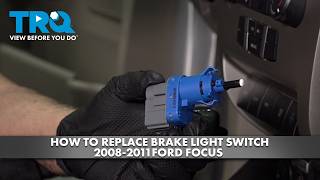
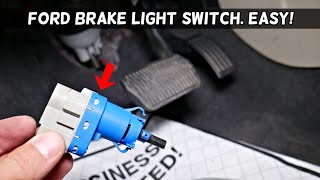
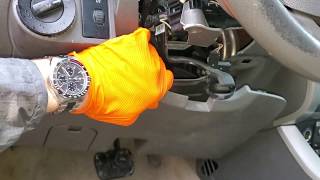
Typical fix: Replace the brake light switch. It is located on the brake pedal assembly under the dashboard and is removed by twisting it clockwise about 45 degrees and pulling it out of its bracket. 🎬 Watch: Step-by-step guide to replacing the 2008-2011 Focus brake switch.
Est. part cost: $15-$40 - Blown Brake Light Fuse 🟡 Medium Probability An electrical short in the circuit, either in the switch itself or associated wiring (including trailer wiring), can cause the fuse to blow as a protective measure.
How to confirm: Locate the fuse box (Battery Junction Box) and check the fuse for the brake pedal switch. On the Mk2/2.5 Focus, this is often fuse F21 (5-amp) in the under-hood box, but always verify with your owner's manual. See if the fuse is blown.
Typical fix: Replace the blown fuse. If the new fuse blows immediately, it indicates a persistent short circuit in the wiring that needs to be traced and repaired.
Est. part cost: $1-$5 - Wiring or Connector Issue ⚪ Low Probability The wiring harness near the pedal can be subject to stress, abrasion, or kicking from the driver's foot over time. The connector can also become loose, corroded, or have a pin back out. Manufacturer Bulletin #TSB 22-2044 indicates that moisture or water intrusion into the Battery Junction Box (BJB) can cause P0504 and prevent the vehicle from shifting out of park.
How to confirm: Visually inspect the wiring harness and connector going to the brake light switch for any signs of damage, chafing, or corrosion. Wiggle the connector while an assistant watches the brake lights to see if it causes a change. Use a multimeter to check for continuity and proper voltage at the connector pins.
Typical fix: Repair the damaged section of wire or clean/replace the electrical connector. Apply dielectric grease to the connector to prevent future corrosion.
Est. part cost: $5-$25
Rare But Worth Checking
- Incorrectly Installed or Faulty Trailer Wiring: A forum user with a 2010 Focus TDCi reported this code, along with an 'Engine Malfunction' message and limp mode, appeared immediately after hooking up a trailer for the first time. The extra current draw or a short in the trailer harness can interfere with the brake light circuits and trigger a P0504 code.
- Failing Powertrain Control Module (PCM) or Body Control Module (BCM): → Shop Body Control Module While extremely rare, it is possible for the internal logic of the PCM or BCM to fail, causing it to misinterpret signals from a perfectly good brake switch. This should only be considered after all other possibilities (switch, fuse, wiring) have been definitively ruled out by a professional. Manufacturer Bulletin #TSB 22-2011 notes that an illuminated wrench indicator and P0504 may be due to the software in the PCM.
- Persistent Code After Switch Replacement: In a documented case on fordownersclub.com, a user replaced the brake switch, but the P0504 code returned instantly upon restarting the car, before the pedal was even touched. This suggests that in some instances, the fault may be latched in the PCM and require a hard reset (disconnecting the battery for 30+ minutes) or there is a wiring fault between the switch and the PCM.
Diagnosis Steps
- Connect an OBD-II scanner and confirm the P0504 code is present. 🎬 Watch: How to diagnose and fix the P0504 correlation code. Check for any other codes in the Engine (PCM), ABS, or Body (BCM) modules.
- Have an assistant check the brake lights. Note if they are off, always on, or work intermittently. Also check for the "Engine Malfunction" warning on the dash.
- Locate the under-hood fuse box. Inspect the fuse for the brake pedal switch (often a 5-amp fuse, check your manual). Replace if blown. As noted in Bulletin #SSM 51432, ensure there is no water or corrosion present in the battery junction box (BJB).
- Access the brake light switch located on the brake pedal bracket under the driver's side dashboard. It's often a blue or black switch.
- Visually inspect the switch's electrical connector and nearby wires for any obvious damage, looseness, or corrosion.
- If you have a scan tool with live data, monitor the 'Brake Switch A' and 'Brake Switch B' PIDs. Press and release the brake pedal; both should switch from 'Off' to 'On' (or vice-versa) simultaneously. A discrepancy confirms a faulty switch or wiring.
- If live data is unavailable, test the switch with a multimeter. Disconnect the switch and test for continuity across the different pin pairs as you actuate the switch plunger. The two circuits should operate in a predictable, corresponding manner.
- If the switch is confirmed to be the fault, replace it. It usually twists about 45-90 degrees to unlock from its bracket.
- If the code returns immediately after replacement, perform a hard reset by disconnecting the vehicle's battery for at least 30 minutes to clear any latched faults in the PCM.
- After repair, clear all fault codes and perform a test drive, ensuring the brake lights and cruise control function correctly and no warning messages return.
Parts You'll Likely Need
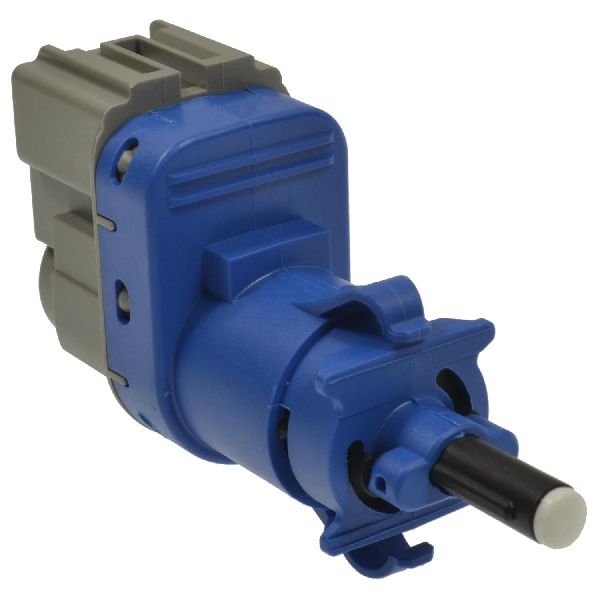
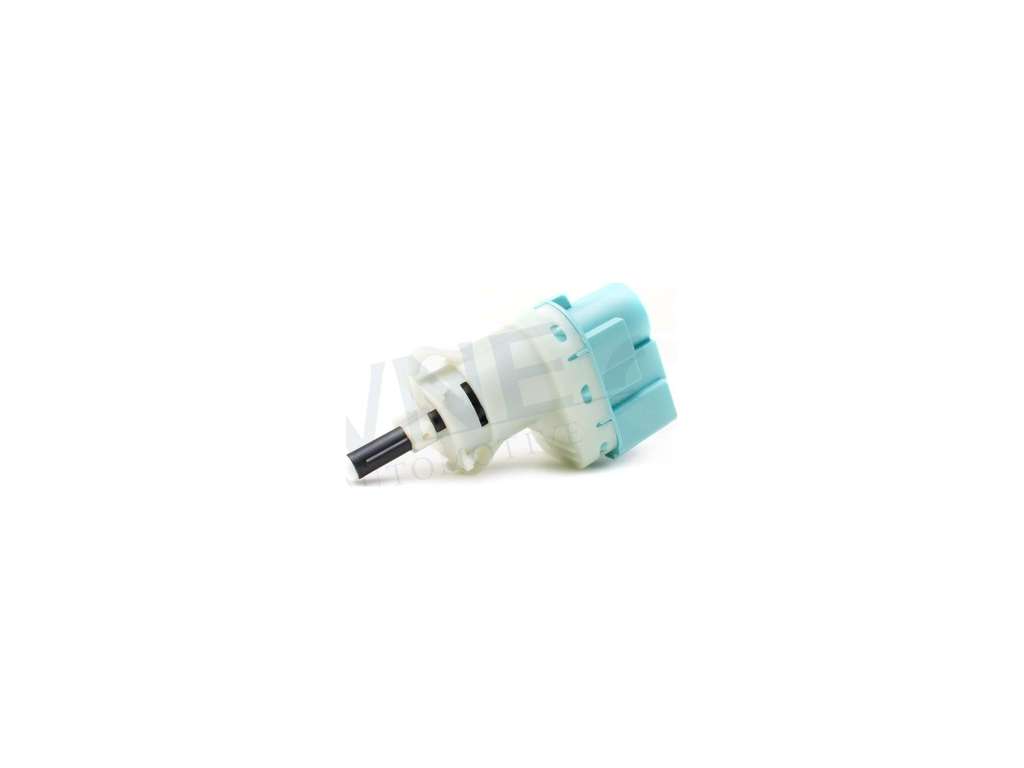
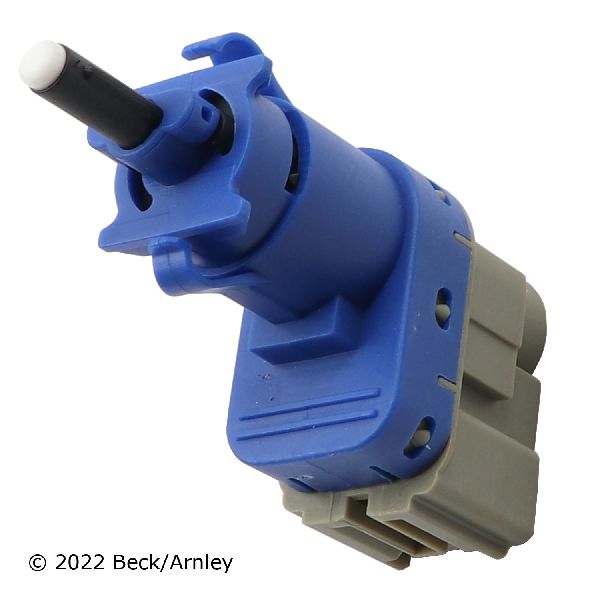
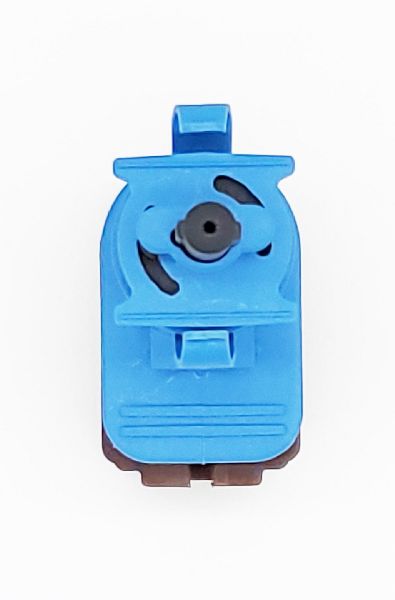
- Brake Light Switch / Stop Lamp Switch
(OEM #BP4K-66-490A (Verify with dealer))— This is the most common failure point for code P0504 on this vehicle. It is a high-wear item that directly causes the signal correlation fault. Note: Ford has used several part numbers over the years, including successors like GL3Z-13480-A. Always confirm the correct part for your specific VIN with a dealer.
Trusted brands: Motorcraft, Bosch, Delphi, Standard Motor Products, Carquest
OEM price range: $25-$50
Aftermarket price range: $15-$35
Related Codes That Often Appear With This One
- C1440 — This is an ABS module code for 'Pressure Transducer Main/Primary Signal Faulted'. It can appear with P0504 because the ABS module also needs a reliable signal from the brake pedal to function correctly.
- U0401 — This code means 'Invalid Data Received From ECM/PCM'. Other modules on the car, like the ABS or instrument cluster, may set this code if the P0504 fault in the PCM is causing unreliable brake status data to be sent over the car's CAN bus network.
- C0040 — As noted in Bulletin #SSM 51432, this code often appears alongside P0504 when the vehicle will not shift out of park.
Platform-Specific Known Issues
- On this platform, if replacing the brake light switch does not resolve an immediately-returning P0504 code, the next logical step before extensive wiring diagnosis is to perform a PCM hard reset by disconnecting the battery for 30 minutes.
Mechanic-Grade Diagnostic Values
- Voltage at brake switch connector pins (to ground) — expected: One circuit should read 9-14V while the other reads 0-3V. When the pedal is pressed, these values should swap.. Failure: If either pin does not show the correct voltage or does not change state when the pedal is pressed, there is a fault in the switch or wiring.
- Resistance across switch terminals (switch disconnected) — expected: With the plunger not pushed (simulating pedal pressed), one pair of pins should show continuity (<1 Ω) and the other pair should show high resistance (>10 kΩ). With the plunger pushed in (pedal released), the results should be reversed.. Failure: If any test shows incorrect resistance (e.g., open circuit when it should be closed, or vice-versa), the switch is internally faulty.
Scan Tool Commands That Help
- Ford IDS (Integrated Diagnostic System): DataLogger for PCM PIDs BOO1 and BOO2 — This is the primary professional diagnostic step to confirm the fault. By monitoring the live data for the two brake switch circuits (BOO1 and BOO2), a technician can see if they are changing state in correlation with each other and the physical pedal movement. A mismatch confirms the P0504 fault condition.
Wiring & Ground Locations
- Fuse F21 (Under-hood) — Located in the under-hood fuse box (Battery Junction Box), often next to a small group of relays.. This 5-amp fuse provides power to the brake pedal switch. If it blows due to a short, the switch will lose power and cannot send a signal, which can contribute to or cause the P0504 code.
- Brake Switch Connector — Attached to the brake light switch, which is mounted on the brake pedal support bracket under the driver's side dashboard.. The 4-wire connector carries power to the switch and the two separate output signals to the PCM and BCM. Corrosion, backed-out pins, or harness damage at this connector are common failure points that can cause the correlation error.
Real Owner Repair Stories
- fordownersclub.com user 'Smokeyd4nn' (2010 Ford Focus 1.6L TDCi) — P0504 code present, but brake lights were still working correctly. Code would not clear with an OBD scanner, returning instantly on restart before the pedal was even touched.
❌ Tried (didn't work) Replacing the brake light switch.
✅ What actually fixed it The original poster did not report the final fix, but another user ('Tdci-Peter') provided critical diagnostic insight: the ECU compares the signal from the brake light switch with a signal from a second brake pedal switch that goes to the instrument cluster via the CAN bus. An instant code return suggests a wiring fault or a deeper module communication issue, not just a faulty switch.
When the Usual Fixes Don't Work
- While the vast majority of P0504 cases on this vehicle are a simple, faulty switch, there are documented instances where the fix is more complex. In one forum case, a user replaced the switch, but the code returned instantly upon restart without the brake pedal being touched. This indicates that either a wiring short exists between the switch and the PCM/BCM, or a module has latched the fault internally and requires a hard reset (battery disconnect) or has failed. This contradicts the idea that it's *always* just the switch.
OEM Part Supersession History
BN7N-66-490→BP4K-66-490A— Likely a revision for improved durability or material change. Both part numbers are heavily associated with Mazda but are used by Ford on shared platforms.
Heads up: These parts are generally interchangeable, with BP4K-66-490A being the more common and current replacement part. Sellers often list them together. Always verify with VIN, but issues are unlikely if purchasing for the correct Focus generation.
Diagnostic Flowchart
Other Known Issues on This Vehicle
Issues unrelated to this code that are worth knowing about as an owner of this generation:
- Turbocharger Failure due to Oil Starvation 🔴 High — Very common, typically between 60,000-100,000 miles. The root cause is not the turbo itself, but leaking injector seals causing carbon/sludge buildup in the oil, which clogs the turbo's oil feed pipe filter (banjo bolt gauze).
- Leaking Fuel Injector Seals 🟠 Medium — Common issue on the 1.6L TDCi/HDi engine. Symptoms include a 'chuffing' or 'ticking' noise, exhaust/diesel smell in the cabin, and black carbon buildup ('black death') around the injectors. This is the primary cause of the oil contamination that leads to turbo failure.
- Diesel Particulate Filter (DPF) Clogging 🔴 High — Frequent, especially on cars used for short trips. Onset can be from 75,000 miles onward. Leads to 'Engine Malfunction' warnings, limp mode, and poor performance. Failed regeneration cycles can dilute engine oil with fuel, causing a dangerous rise in oil level and potential for catastrophic engine damage.
- Instrument Cluster (HMI) Failure 🟠 Medium — Reported by some owners, mileage at onset varies widely (50k to 200k+ miles). Can cause intermittent non-starting or complete vehicle immobilization due to failure of the PATS immobilizer system integrated into the cluster.
- Water Leaks into Boot/Cabin 🟡 Low — A common annoyance. Water enters through failing seals around the rear light clusters, the third brake light, or the boot vents located behind the rear bumper.
Used vs. New Parts: Buying Guide for This Vehicle
When a used part is the smart pick: Never. The brake light switch is a low-cost, high-wear electromechanical part. The labor to access and replace it, while minimal, is not worth risking on a used part with unknown history that is likely near the end of its own service life.
What to inspect on the donor part:
- Not applicable. Do not purchase this part used.
OEM-only on this vehicle (don't cheap out):
- While not strictly 'OEM-only', it is highly recommended to use either a genuine Ford/Motorcraft part or a premium aftermarket brand. Cheap, unbranded switches are known to have poor internal contacts, loose tolerances, and a high rate of premature failure, potentially causing the P0504 code to return quickly.
Aftermarket brands forum-validated for this vehicle:
- Bosch
- Delphi
- Standard Motor Products (SMP)
Brands owners have reported issues with on this vehicle:
- Unbranded, low-cost switches from online marketplaces without a clear brand identity or warranty.
Documented NHTSA Reports
NHTSA ODI #11589504
Symptoms: An owner reported that the P0504 code persisted even after the brake lamp switch was replaced and the wiring was inspected.
What fixed it: The owner was positive that the plastic stop bumper was the root cause of the issue, particularly in regions with high temperatures and humidity.
Real Owner Stories
Aggregated from forums and TSBs cited above. Mileages and costs reflect what owners reported in those sources.
2010 Ford Focus 1.6L TDCi
Symptoms: The P0504 code would not clear and came back instantly, even after replacing the brake light switch.
What fixed it: The owner's report highlighted that the fault can be more complex than just the switch. The recommended procedure in this specific scenario is to perform a PCM hard reset by disconnecting the battery for 30 minutes before investigating wiring issues.
Source hint: fordownersclub.com: Thread 'P0504 code wont clear'
Frequently Asked Questions
My P0504 code came back immediately after I replaced the brake light switch on my Focus. What should I do?
Where is the brake light switch located on a 2008-2011 Ford Focus?
What fuse is associated with the P0504 code on this model?
My cruise control stopped working and the check engine light is on. Could this be P0504?
I have an automatic Focus and I'm having trouble shifting out of Park. Is this related to the P0504 code?
Besides the check engine light, what other warning lights can P0504 trigger?
Are other cars that use the 1.6L TDCi engine also prone to this issue?
Helpful Videos

We Have This Part in Stock


The information in this article is provided for general reference and educational purposes only. Vehicle specifications, procedures, and part compatibility can vary by production date, trim level, and region. Always consult your vehicle's factory service manual and verify part numbers before purchasing or performing repairs. Safety-critical components such as airbags, seat belts, and braking systems should be installed by a qualified professional.
- Ford Focus:
- 🧭 Diagnostic Flowchart
- 🎬 Helpful Videos
- 🛍️ Shop This Part
- What's Unique About the 2008-2011 Ford Focus
- Symptoms You May Notice
- Most Likely Causes
- Rare But Worth Checking
- Diagnosis Steps
- Parts You'll Likely Need
- Related Codes That Often Appear With This One
- Platform-Specific Known Issues
- Mechanic-Grade Diagnostic Values
- Scan Tool Commands That Help
- Wiring & Ground Locations
- Real Owner Repair Stories
- When the Usual Fixes Don't Work
- OEM Part Supersession History
- Other Known Issues on This Vehicle
- Used vs. New Parts: Buying Guide for This Vehicle
- Documented NHTSA Reports
- NHTSA ODI #11589504
- Real Owner Stories
- 2010 Ford Focus 1.6L TDCi
- Frequently Asked Questions
- 🎟️ Get 5% Off