

P0505 on 2014-2019 Land Rover Range Rover: Idle Control Faults and Fixes
On a 2014-2019 Range Rover, code P0505 almost always points to an unmetered air leak (vacuum leak) in the intake system. Before replacing any expensive parts, perform a smoke test to find cracked hoses or bad gaskets, which are the most common and affordable fixes. Common failure points include the PCV diaphragm on the valve cover and various plastic intake pipes.
- Assume P0505 on a 2014-2019 Range Rover is caused by a vacuum leak until proven otherwise.
- A smoke test is the most effective and critical diagnostic step to accurately locate the source of the unmetered air.
- Do not replace the expensive throttle body assembly without first ruling out simple vacuum leaks from aged hoses or gaskets.
- This code is often accompanied by lean codes (P2187, P2189), which further strengthens the case for a vacuum leak.
What's Unique About the 2014-2019 Land Rover RANGE ROVER

For the 2014-2019 (L405) Range Rover, equipped with either the 3.0L V6 or 5.0L V8 supercharged engines, the P0505 code is strongly associated with air intake leaks. This is a known issue supported by Land Rover's own Technical Service Bulletins. The actual cause is frequently unmetered air entering the engine from aged plastic hoses, faulty PCV components (specifically the diaphragm), or intake gaskets that have become brittle from heat and time. While the code's definition points to the idle control system, the root cause on this platform is almost always an air leak that the PCM cannot compensate for.
Diagnostic Flowchart

Tap your situation to follow the diagnostic path that matches what you're seeing on this vehicle.
Symptoms You May Notice
- Check Engine Light is on
- Engine idle speed is erratic, fluctuating up and down
- Idle speed is consistently too high or too low
- Engine stalls when coming to a stop or at idle
- Rough or shaky feeling when the vehicle is stopped and in gear
- Difficult engine starting
- Audible hissing or whistling sound from the engine bay, indicating a vacuum leak
- Replacing the throttle body assembly without first performing a smoke test. A vacuum leak is a much more common and cheaper fix than replacing the entire throttle body.
- Replacing the mass airflow (MAF) sensor. While a dirty MAF can cause performance issues, it's less likely to be the primary cause of a P0505 code compared to a vacuum leak.
- Assuming a faulty IAC valve and searching for a part that doesn't exist separately on this vehicle. The function is built into the throttle body.
Most Likely Causes

- Vacuum Leak in Air Intake or PCV System 🔴 High Probability As confirmed by Land Rover TSB SSM74374, a split diaphragm in the PCV (Positive Crankcase Ventilation) valve, which is integrated into the right-hand camshaft cover, is a primary cause. The plastic and rubber components in the engine bay become brittle with age and repeated heat cycles, leading to cracks in hoses (like the brake booster line or intake pipes) and failed gaskets.
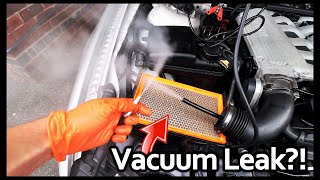
How to confirm: The most effective method is to use a smoke machine. This involves feeding pressurized smoke into the intake system and watching for where it escapes. 🎬 See how to find vacuum leaks using a smoke machine Pay special attention to the PCV valve on the passenger side valve cover, the intake manifold gaskets, and the plastic pipe that runs behind the supercharger. A hissing sound is also a strong indicator.
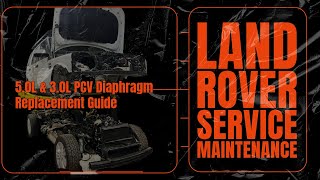
Typical fix: For a failed PCV diaphragm, a lower-level repair kit (Part No. LR133579) is available, 🎬 Watch: Step-by-step guide to replacing the PCV diaphragm avoiding the need to replace the entire camshaft cover. Otherwise, replace the specific cracked hose or failed gasket that is identified during the smoke test.
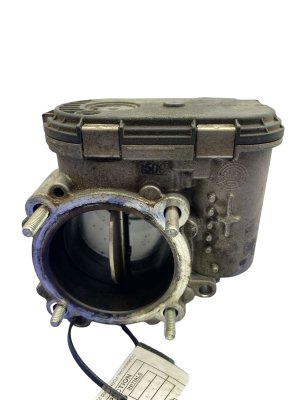
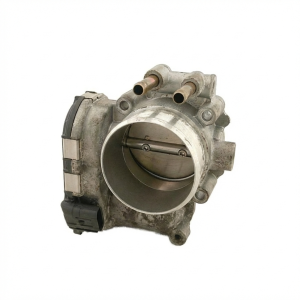
Est. part cost: $20-$250 - Dirty or Sticking Throttle Body 🟡 Medium Probability → Shop Fuel Injection Throttle Body Carbon and oil vapor from the PCV system can build up inside the throttle body over time. This buildup can restrict the movement of the throttle plate, preventing the fine adjustments needed to maintain a stable idle.
How to confirm: Remove the intake ducting connected to the throttle body and visually inspect the throttle plate and bore for black carbon deposits. Manually move the plate (with the ignition off) to feel for any sticking or binding.
Typical fix: Clean the throttle body thoroughly with a dedicated throttle body cleaner and a soft cloth or brush. Do not spray directly on electrical 🎬 Watch: How to properly clean your throttle body connectors. An idle relearn procedure (hard reset by disconnecting the battery or using a scan tool) may be necessary after cleaning.
Est. part cost: $10-$20 - Faulty Idle Air Control (IAC) Valve ⚪ Low Probability → Shop Idle Air Control Valve This is a misnomer for this platform. The 2014-2019 Range Rover does not have a separate, replaceable IAC valve. Idle control is integrated into the electronic throttle body assembly. Failure is rare and would mean the internal motor or position sensor within the throttle body has failed.
How to confirm: A professional scan tool can command the throttle body to different positions to verify its operation. This step should only be performed after all potential vacuum leaks have been definitively ruled out via a smoke test.
Typical fix: If the throttle body is confirmed to be faulty and cleaning does not resolve the issue, the entire throttle body assembly must be replaced.
Est. part cost: $150-$600
Rare But Worth Checking
- Leaking Brake Booster: A ruptured diaphragm inside the brake booster creates a significant vacuum leak that the PCM cannot compensate for. This may be accompanied by a hissing sound when the brake pedal is pressed and a hard pedal feel. To test, you can clamp the vacuum hose leading to the booster and see if the idle stabilizes.
- Faulty Powertrain Control Module (PCM): → Shop Engine Control Module (ECM) This is extremely rare. Before condemning the PCM, all other possibilities, including vacuum leaks, sensor faults, and wiring issues, must be exhaustively ruled out. An internal PCM fault can sometimes cause incorrect commands to be sent to the idle control system.
Diagnosis Steps
- Read the codes: Use an OBD-II scanner to confirm P0505 and check for any other related codes like P2187, P2189, or P0507, which strongly suggest a vacuum leak.
- Visual Inspection: Carefully inspect all intake hoses, vacuum lines, and the PCV system for obvious cracks, disconnections, or signs of degradation. Pay close attention to the PCV valve area on the passenger-side valve cover and the brake booster hose.
- Perform a Smoke Test: This is the most crucial step. Connect a smoke machine to the intake system to pressurize it with smoke. Any leaks from gaskets, hoses, or seals will be immediately visible. Focus on the PCV valve diaphragm, intake manifold gaskets, supercharger snout gasket, and plastic intake pipes.
- Inspect and Clean the Throttle Body: If no vacuum leaks are found, remove the intake boot and inspect the throttle body for carbon buildup. Clean it thoroughly with an appropriate cleaner and a soft rag, moving the plate by hand to clean the edges.
- Test the Brake Booster: With the engine running, listen for a hissing sound as you press the brake pedal. You can also pump the brakes with the engine off until the pedal is firm, then start the engine while holding the pedal; it should drop slightly if the booster is good.
- Perform an Idle Relearn Procedure: After cleaning or replacing components, or disconnecting the battery, a 'hard reset' may be necessary. Disconnect the battery terminals and touch them together for 30 seconds to discharge the capacitors in the modules. This forces the PCM to relearn idle parameters. Alternatively, a scan tool like a GAP IIDTool or the dealer's SDD/Pathfinder can perform a 'Throttle Adaptation Reset'.
Parts You'll Likely Need

- PCV Valve Diaphragm Repair Kit
(OEM #LR133579)— A ruptured diaphragm in the PCV valve assembly is a very common cause of vacuum leaks triggering P0505, as noted in TSB SSM74374. This kit allows for replacement of just the diaphragm.
Trusted brands: Land Rover Genuine
OEM price range: $40-$70
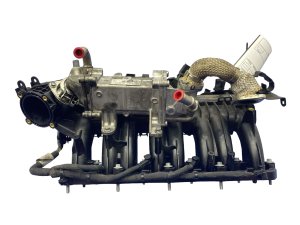
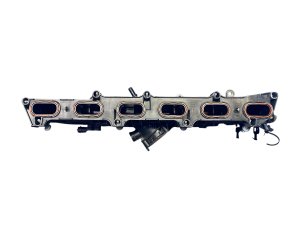
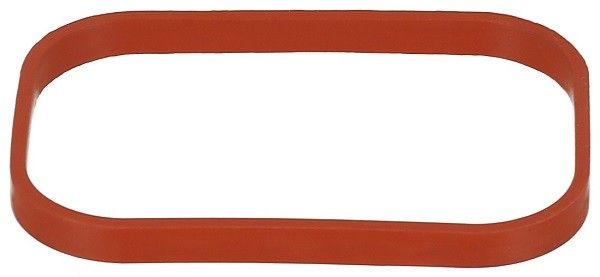
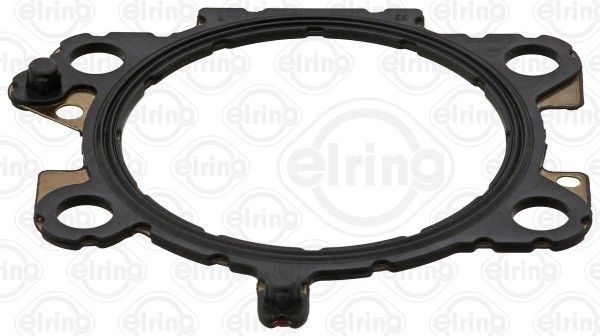
Aftermarket price range: $25-$50 - Intake Manifold Gasket — A common source of vacuum leaks that trigger P0505 on these engines, especially as they age.
Trusted brands: Mahle, Victor Reinz, Land Rover Genuine
OEM price range: $80-$150
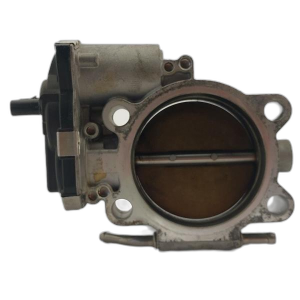
Aftermarket price range: $40-$80 - Throttle Body Assembly — Replaced only if cleaning and diagnosing vacuum leaks does not solve the problem, indicating a failure of the internal electronic idle control.
Trusted brands: Bosch, Land Rover Genuine
OEM price range: $400-$700
Aftermarket price range: $250-$500
Related Codes That Often Appear With This One
- P2187 — System Too Lean at Idle (Bank 1). This code indicates too much unmetered air, which directly supports the diagnosis of a vacuum leak. TSB SSM74374 explicitly links this code with P0505.
- P2189 — System Too Lean at Idle (Bank 2). Similar to P2187, this points to a vacuum leak affecting the second bank of cylinders, also mentioned in TSB SSM74374.
- P0507 — Idle Air Control System RPM Higher Than Expected. This code often appears with P0505 when a vacuum leak causes the idle speed to surge uncontrollably. It is also listed in TSB SSM74374.
Technical Service Bulletins (TSBs) & Recalls
- SSM74374: Confirms that DTCs P2187, P2189, P0505, or P0507 can be stored due to an air leak from the right-hand camshaft cover assembly (PCV diaphragm). It provides a part number (LR133579) for a diaphragm repair kit.
- LTB00916NAS5: While not directly for P0505, it addresses engine noises and other codes related to VCT actuators, highlighting the complexity of the engine systems where one fault can have cascading symptoms.
- LTB01101NAS4: Discusses rough running and misfires on related engines, pointing to potential internal engine damage, which is a worst-case scenario if idle issues are ignored.
Platform-Specific Known Issues
- TSB SSM74374 explicitly lists P0505 as a potential diagnostic trouble code resulting from an air intake system leak, specifically a split diaphragm in the PCV valve.
- The plastic intake manifold itself can crack on some models, causing a difficult-to-diagnose vacuum leak.
- A plastic inlet manifold suppressor pipe located behind the supercharger is known to crack, causing a vacuum leak that is hard to see without significant disassembly.
- The brake vacuum pump, mounted to the engine, can leak oil externally and also fail internally, causing a loss of vacuum to the brake booster which can manifest as an idle control issue.
Mechanic-Grade Diagnostic Values
- Short-Term and Long-Term Fuel Trims at Idle — expected: As close to 0% as possible, typically within +/- 5%.. Failure: Consistently high positive fuel trims (e.g., > +10% to +25%) on one or both banks strongly indicate the PCM is adding fuel to compensate for unmetered air from a vacuum leak.
- Throttle Position Sensor (TPS) Voltage — expected: A smooth, linear voltage increase from idle (typically 0.5-1.0V) to wide-open throttle (typically 4.5-5.0V) with no dropouts or spikes.. Failure: Jerky or erratic voltage readings when the throttle is slowly opened and closed can indicate a worn TPS, which is integrated into the throttle body assembly.
Scan Tool Commands That Help
- JLR SDD / Pathfinder: Service Functions > Powertrain > Air Path Setup Routine — This function performs an 'Air Path Calibration' which resets the throttle valve, EGR valve, and wastegate adaptations. It should be used after cleaning or replacing the throttle body to force the ECM to relearn the correct closed and open positions.
- GAP IIDTool (Advanced Diagnostic Tool): Service/Test > Throttle Adaptation Reset — Similar to the dealer tool, this command resets the learned throttle adaptations. This is critical after cleaning a dirty throttle body, as the ECU's old compensation values will cause an incorrect idle with the clean throttle plate.
Wiring & Ground Locations
- C1E116A / C1E818A — These are designations for the main Powertrain Control Module (PCM) connector and the Throttle Body connector, respectively.. A wiring diagram for the L405 shows the throttle position signals (TPA+ and TPA-) run between these connectors. For example, a Green-Violet wire runs from pin C1E116A-72 at the PCM to pin C1E818A-3 at the throttle body. Damage to this harness could interrupt the signal and cause idle control faults.
- Engine Ground Straps — A primary engine earth cable runs from the alternator/PAS bracket to the chassis near the left engine mount. Another key ground is from the battery to a bolt on the gearbox/transfer box joint.. A poor engine ground can cause a host of electrical issues, including erratic sensor readings and incorrect actuator commands from the PCM, potentially leading to idle control problems. Ensuring these grounds are clean and tight is a fundamental electrical diagnostic step.
Real Owner Repair Stories
- Land Rover Forums user (2004 Discovery 2 (Note: Older model, but illustrates a non-obvious cause)) — P0505, P0171, and P0174 codes. Needed to pass smog.
❌ Tried (didn't work) Swapped IACV, Smoke tested and fixed most leaks, Replaced PCV baffle, Replaced injector seals based on a shop's advice
✅ What actually fixed it The screw for the throttle body butterfly stop had been misadjusted. A specialist shop identified and corrected the adjustment, resolving the codes. - YouTube video on a 2016 Range Rover Evoque (2016 Range Rover Evoque) — P0505, engine revs high on startup then stalls. Unplugging the MAF sensor allowed the car to run.
❌ Tried (didn't work) Replacing the entire airbox assembly from a junkyard.
✅ What actually fixed it A large turbo hose had come completely off its connection, creating a massive post-MAF air leak. Reconnecting the hose fixed the idle and stalling issue.
"I Checked Everything" — The Actual Cause
- A leaking brake vacuum pump can cause a significant vacuum leak that affects idle, but it may not show up on a standard intake smoke test. The symptom would be a hard brake pedal or a hissing noise when the brakes are applied.
- An internal failure of the oil cooler housing, located in the 'V' of the engine, can sometimes create an internal vacuum leak that is difficult to trace with a smoke test. This is often accompanied by other symptoms like oil and coolant mixing.
OEM Part Supersession History
Unknown→LR133579— This is the current part number for the PCV valve service kit (diaphragm and cap) for the 3.0L V6 and 5.0L V8 engines.
Heads up: One source indicates LR133579 itself was superseded by part number 102123488, which is listed as unavailable, suggesting a complex part history. It is critical to verify the correct part with a VIN at the time of purchase.
Model Year Variations Within This Range
- Circa 2013-2015: A recall (NHTSA 15V-042) was issued for some 2013-2014 Range Rover (L405) models for a brake vacuum hose that could chafe on an engine pulley. A hole in this hose would create a massive vacuum leak, leading to a hard brake pedal and potentially triggering idle control faults like P0505.
Helpful Videos
![RANGE ROVER [ P0505-27] Case Study Idle Air Control System Malfunction](https://img.youtube.com/vi/SzPcLa2ZT0w/mqdefault.jpg)

Used OEM Parts in Stock

New Aftermarket Parts Available





The information in this article is provided for general reference and educational purposes only. Vehicle specifications, procedures, and part compatibility can vary by production date, trim level, and region. Always consult your vehicle's factory service manual and verify part numbers before purchasing or performing repairs. Safety-critical components such as airbags, seat belts, and braking systems should be installed by a qualified professional.
- Land Rover RANGE ROVER:
- 🧭 Diagnostic Flowchart
- 🎬 Helpful Videos
- 🛍️ Shop This Part
- What's Unique About the 2014-2019 Land Rover RANGE ROVER
- Symptoms You May Notice
- Most Likely Causes
- Rare But Worth Checking
- Diagnosis Steps
- Parts You'll Likely Need
- Related Codes That Often Appear With This One
- Technical Service Bulletins (TSBs) & Recalls
- Platform-Specific Known Issues
- Mechanic-Grade Diagnostic Values
- Scan Tool Commands That Help
- Wiring & Ground Locations
- Real Owner Repair Stories
- "I Checked Everything" — The Actual Cause
- OEM Part Supersession History
- Model Year Variations Within This Range
- 🎟️ Get 5% Off