

P0505 on 2003-2009 Toyota 4Runner 4.7L V8: Idle Control System Causes and Fixes
On a 4th Gen 4Runner with the 4.7L V8, P0505 is almost always caused by a dirty and sticking Idle Air Control (IAC) valve located on the underside of the throttle body. A thorough cleaning of the IAC valve and the throttle body it's attached to usually fixes the issue. If cleaning fails, the IAC valve's internal motor has likely failed and it needs to be replaced, preferably with an OEM or Aisin part.
- P0505 on the 4.7L V8 4Runner almost always points to a dirty Idle Air Control (IAC) valve.
- The most effective and cost-efficient first step is to remove and thoroughly clean both the IAC valve and the throttle body.
- Always replace the IAC valve and throttle body gaskets after removal to prevent new vacuum leaks.
- If you must replace the IAC valve, spend the extra money on a genuine Toyota, Aisin, or Denso part to avoid recurring issues.
What's Unique About the 2003-2009 Toyota 4Runner
The 4th Generation 4Runner with the 2UZ-FE V8 engine uses a traditional mechanical throttle cable connected to the gas pedal and a separate, dedicated Idle Air Control (IAC) valve mounted on the throttle body. This design is highly susceptible to carbon and oil residue buildup from the PCV system in the IAC valve's small passages and on its rotating shutter, which causes the valve to stick and trigger the P0505 code. This is a key difference from the V6 model (1GR-FE) of the same era, which uses a fully electronic 'drive-by-wire' throttle body that integrates idle control and is less prone to this specific failure, though it can suffer from similar idle issues due to carbon buildup directly on the throttle plate.
Symptoms You May Notice
- Erratic or fluctuating idle speed
- Idle speed is too high (surging to 1500-2000 RPM)
- Idle speed is too low (may feel like it's about to stall)
- Engine stalling when coming to a stop or at idle
- Check Engine Light is on
- Rough idling, marked by vibrations and inconsistent engine behavior.
- Replacing the Throttle Position Sensor (TPS). The TPS rarely causes this specific code on this vehicle; the issue is almost always with the air control (IAC valve), not the sensor that reads the throttle's position.
- Cleaning the throttle body while it is still installed on the engine. This can wash carbon debris directly into the IAC valve, making the problem worse or causing it in the first place.
Most Likely Causes
- Dirty or Sticking Idle Air Control (IAC) Valve 🔴 High Probability → Shop Idle Air Control Valve The IAC valve uses a small rotating shutter to control airflow. Over time, carbon and oil residue from the PCV system build up on this valve, causing it to bind or stick in one position, preventing proper air regulation.
How to confirm: Remove the throttle body and the IAC valve attached to its underside. Inspect the valve for heavy carbon buildup and see if the shutter moves freely. Often, it will be visibly dirty and difficult to move. According to the service manual, resistance between the center terminal (+B) and the outer terminals (RSO, RSC) should be 17.0-24.5 Ω when cold.
Typical fix: Thoroughly clean the IAC valve and its passages with throttle body cleaner and a small brush (like a toothbrush or Q-tips) until the shutter mechanism moves freely. If cleaning does not restore function, the valve's internal motor has likely failed and the valve must be replaced.
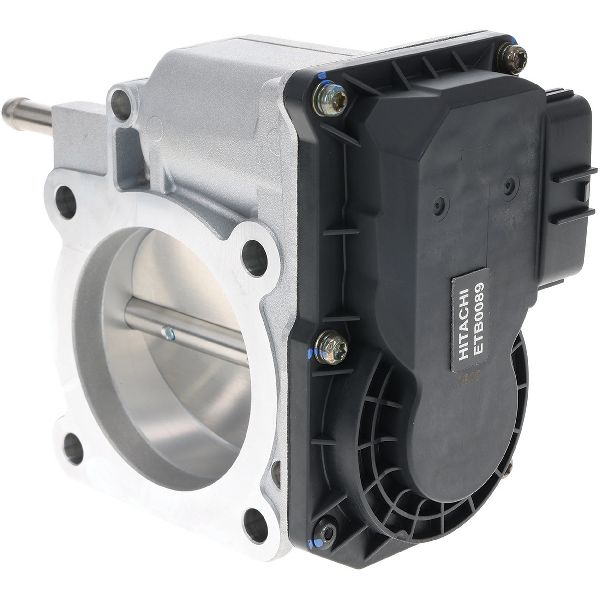
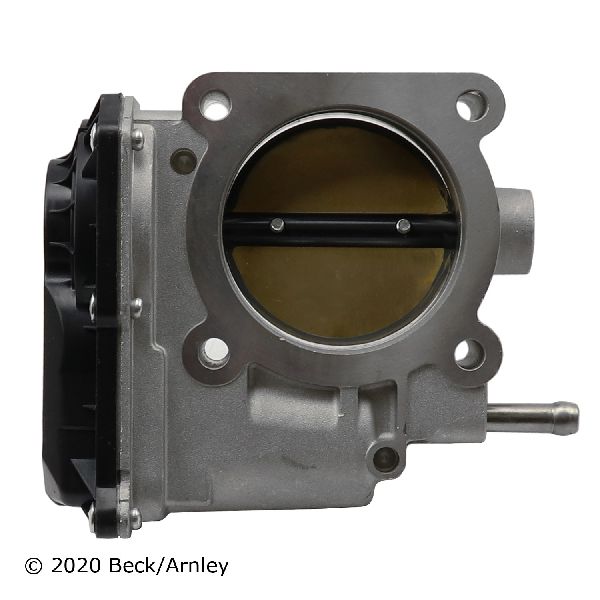
Est. part cost: $0 (for cleaning) or $150-$300 (for replacement valve) - Dirty Throttle Body 🟡 Medium Probability → Shop Fuel Injection Throttle Body Similar to the IAC valve, the throttle body bore and the edges of the throttle plate accumulate carbon and oil residue. This can restrict the small amount of air needed to pass at idle or cause the throttle plate to not close properly, confusing the idle control system.
How to confirm: Visually inspect the inside of the throttle body for a thick ring of black carbon buildup, especially around the area where the throttle plate closes.
Typical fix: Remove the throttle body from the intake manifold and clean it thoroughly with throttle body cleaner and a soft cloth or brush. It's critical to do this with the throttle body removed from the vehicle to prevent debris from being washed into the IAC valve passages, which can make the problem worse.
Est. part cost: $5-$15 (for cleaner and gaskets) - Vacuum Leak ⚪ Low Probability With age, rubber vacuum hoses (like the PCV hose or brake booster line) can become brittle and crack, and intake gaskets can fail, allowing unmetered air to enter the engine and disrupt the idle.
How to confirm: With the engine running, listen for a hissing sound around the intake manifold and vacuum lines. A more effective method is to use a smoke machine to feed smoke into the intake system and watch for where it escapes. Alternatively, you can spray short bursts of brake cleaner near suspected leak areas; the engine idle will change if a leak is present.
Typical fix: Replace the cracked hose or failed gasket. Always replace the throttle body and IAC valve gaskets when performing cleaning or replacement to ensure a proper seal.
Est. part cost: $10-$50
Rare But Worth Checking
- Faulty Engine Control Module (ECM): → Shop Engine Control Module (ECM) This is extremely rare. Before condemning the ECM, all other possibilities, including wiring issues between the IAC valve and ECM, should be exhaustively checked. One forum user on YotaTech reported this as the final solution for a persistent P0505 on a 1997 4Runner after replacing all other components.
Diagnosis Steps
- Read freeze frame data with an OBD-II scanner to understand the engine conditions when the code was set.
- Check for other DTCs. If codes other than P0505, P0506, or P0507 are present, diagnose them first.
- Visually inspect all vacuum hoses connected to the intake manifold for cracks or loose connections, especially the PCV hose.
- Remove the air intake tube from the throttle body.
- Remove the throttle body from the intake manifold. This typically involves removing four 12mm bolts and disconnecting throttle cables, electrical connectors, and two small coolant lines. Be prepared for some coolant to spill from these lines.
- Unbolt the IAC valve from the bottom of the throttle body (usually held by 4 small screws).
- Thoroughly clean the throttle body bore and the IAC valve, paying close attention to the rotating barrel inside the IAC. Use throttle body cleaner and a soft brush. Ensure the valve moves freely after cleaning.
- Reinstall the IAC valve and throttle body using new gaskets to prevent vacuum leaks.
- Disconnect the negative battery terminal for at least 15 minutes to clear the ECM's memory. Reconnect the battery and start the engine.
- Allow the ECM to relearn the idle speed. This may take a few minutes of idling and a short drive cycle. The idle may be high or rough initially as it relearns.
Parts You'll Likely Need
- Idle Air Control (IAC) Valve
(OEM #22270-50050)— This is the most common failure point. If cleaning does not resolve the issue, the valve's internal motor has likely failed and requires replacement.
Trusted brands: Toyota (Genuine), Aisin, Denso, Standard Motor Products
OEM price range: $250-$400
Aftermarket price range: $80-$150 - IAC Valve Gasket
(OEM #22215-50080)— This gasket provides the seal between the IAC valve and the throttle body. It must be replaced whenever the IAC valve is removed to prevent vacuum leaks. Some sources cite 22215-62180, but 22215-50080 is more commonly referenced for the V8.
Trusted brands: Toyota (Genuine), Fel-Pro
OEM price range: $5-$15
Aftermarket price range: $2-$5 - Throttle Body Gasket
(OEM #22271-50040)— This gasket seals the throttle body to the intake manifold. It should always be replaced when the throttle body is removed to prevent vacuum leaks.
Trusted brands: Toyota (Genuine), Fel-Pro
OEM price range: $10-$20
Aftermarket price range: $5-$10
Related Codes That Often Appear With This One
- P0506 — This code for 'Idle Air Control System RPM Lower Than Expected' can appear if the IAC valve is stuck closed or the passages are too clogged, causing the idle to be too low or stall.
- P0507 — This code for 'Idle Air Control System RPM Higher Than Expected' can appear if the IAC valve is stuck open or if there is a significant vacuum leak, causing the idle to be too high.
- P0171 or P0174 — These codes for 'System Too Lean' can be triggered by a vacuum leak, which is also a potential, though less common, cause for P0505. The unmetered air that causes the idle issue also creates a lean fuel condition.
Platform-Specific Known Issues
- Owners on forums like T4R.org and YotaTech frequently report that using cheap, non-OEM aftermarket IAC valves often leads to a quick return of the P0505 code or other idle problems. It is highly recommended to use a genuine Toyota, Aisin, or Denso part for this repair to ensure longevity.
- A user on the 4Runner Forums documented a lengthy battle with P0505, which included replacing the IAC valve twice and fixing vacuum leaks, with the code only disappearing temporarily after replacing the PCV valve before returning the next day, highlighting how frustrating diagnosis can be.
Mechanic-Grade Diagnostic Values
- IAC Valve Coil Resistance (Cold) — expected: 17.0 - 24.5 Ω between the center terminal (+B) and outer terminals (RSC, RSO).. Failure: A reading outside this range indicates a fault in the valve's internal motor coils.
- IAC Valve Coil Resistance (Hot) — expected: 21.5 - 28.5 Ω between the center terminal (+B) and outer terminals (RSC, RSO).. Failure: A reading outside this range when the engine is at operating temperature points to a failing valve.
- IAC Valve Power Supply Voltage — expected: Approximately 12V (battery voltage) at the center pin (+B) of the IAC valve connector with the ignition key in the 'ON' position.. Failure: No voltage or low voltage suggests a problem with the EFI relay or the wiring from the power source.
- IAC Valve Bench Test — expected: Connecting 12V from a battery to terminal +B and ground to terminal RSC should cause the valve to close. Connecting ground to terminal RSO should cause the valve to open.. Failure: If the valve does not move as expected, its internal motor is seized or has failed.
Scan Tool Commands That Help
- Toyota Techstream: Active Test: Control the Idle Up — This function allows a technician to directly command the IAC valve to change the idle speed. If the engine RPM changes when commanded, it confirms the ECM driver, wiring, and IAC motor are all functional, pointing the diagnosis towards other potential issues like a vacuum leak or a mechanical bind in the valve that is overcome by the direct command.
Wiring & Ground Locations
- IAC Valve Connector — Plugged into the Idle Air Control valve on the bottom of the throttle body.. This 6-pin connector (Toyota P/N 90980-11144) is the direct link between the ECM and the IAC valve. Corrosion or damage to the pins or wires here will directly cause a P0505 by interrupting power or control signals.
- Ground Point ED (Left Cylinder Head) — On the rear of the left (driver's side) cylinder head.. This is a primary engine harness ground point. A loose or corroded ground here can cause erratic voltage for multiple sensors and actuators, including the IAC valve, leading to intermittent or persistent P0505 codes.
- Ground Point EC (Right Cylinder Head) — On the rear of the right (passenger's side) cylinder head.. This is another critical engine harness ground. Similar to the driver's side ground, poor contact here can create floating voltages and unpredictable behavior from the idle control system.
Real Owner Repair Stories
- TacomaWorld user 'Boldt245' (Toyota Tacoma (similar IAC system)) — High idle and P0505 code.
❌ Tried (didn't work) Replacing the IAC valve, Replacing O2 sensors, Replacing throttle body gasket, Verifying no vacuum leaks, Verifying electrical systems were okay
✅ What actually fixed it Replacing the entire throttle body. A mechanic determined the shaft that the throttle butterfly valve rides on was worn, preventing the plate from closing properly. This allowed excess air in, causing the high idle and forcing the IAC system outside its operational range, triggering the P0505 code.
"I Checked Everything" — The Actual Cause
- In some cases, a persistent high idle and P0505 code with no apparent vacuum leaks can be caused by air trapped in the coolant lines that run through the IAC valve and throttle body. This can cause the bimetallic spring mechanism within the IAC to react incorrectly, leading to improper idle speed. Burping the coolant system thoroughly after any service involving these lines is a critical step that is often missed.
Model Year Variations Within This Range
- 2005-2009: The 2UZ-FE engine was updated with VVT-i (Variable Valve Timing with intelligence) starting in the 2005 model year. While this significantly changed the cylinder heads and engine management, the throttle body and IAC valve design remained fundamentally the same and are subject to the same P0505 failure mode. Part numbers for the IAC and gaskets are consistent across the 2003-2009 range.
Diagnostic Flowchart
Other Known Issues on This Vehicle
Issues unrelated to this code that are worth knowing about as an owner of this generation:
- Cracked Exhaust Manifolds 🔴 High — Very common, especially on vehicles over 100k miles. Presents as a ticking noise from the engine bay, particularly when cold, which may disappear as the engine warms up and the metal expands.
- Secondary Air Injection System (SAIS) Failure 🔴 High — Common on 2005+ models with the VVT-i engine. The air pump ingests moisture from a deteriorating foam filter, causing debris to be sent through the system, seizing the air switching valves. This triggers a Check Engine Light and often puts the vehicle in 'limp mode' with severely reduced power. (Ref: T-SB-0230-12 describes the issue and repair procedure for a list of DTCs related to SAIS failure.)
- Timing Belt Replacement (Interference Engine) 🔴 High — This is a required maintenance item, not a failure. The 2UZ-FE is an interference engine, meaning if the timing belt breaks, catastrophic engine damage will occur. The replacement interval is every 90,000 miles or 72 months, whichever comes first.
- Seized Front Brake Calipers 🟠 Medium — Common in regions that use road salt. The caliper pistons can seize, causing the vehicle to pull to one side during braking, premature pad/rotor wear, and a pulsating brake pedal.
- Frame Rust 🔴 High — A significant issue, especially for vehicles in the 'salt belt'. While part of a larger Toyota campaign that included Tundras and Sequoias, the 4Runner is also affected. Severe rust can compromise the structural integrity of the vehicle. (Ref: While not a formal recall in the US, Toyota has had frame replacement programs and settlements for related models.)
Used vs. New Parts: Buying Guide for This Vehicle
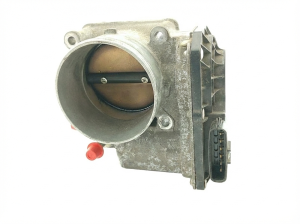
When a used part is the smart pick: A used OEM throttle body assembly from a lower-mileage donor vehicle can be a smart choice, especially if the root cause is a worn throttle body shaft and not just a bad IAC valve. Often, buying a complete used throttle body (which includes the IAC valve and TPS) from a reputable salvage yard is cheaper than a new OEM IAC valve alone.
Donor-vehicle mileage cap: roughly under 150000 miles for the part to have meaningful remaining life.
What to inspect on the donor part:
- Ask for the mileage of the donor vehicle if possible.
- Inspect the throttle bore for excessive scoring or a deep carbon ring, which might indicate high wear.
- Manually actuate the throttle plate (using the cable wheel) to feel for any binding, notchiness, or excessive side-to-side play in the shaft.
- Ensure the coolant passages and electrical connectors are not damaged.
OEM-only on this vehicle (don't cheap out):
- Idle Air Control (IAC) Valve
Aftermarket brands forum-validated for this vehicle:
- Aisin (the OEM manufacturer for Toyota)
- Denso
Brands owners have reported issues with on this vehicle:
- Generic, unbranded, or 'white-box' IAC valves sold on auction sites and large online marketplaces. Forum consensus is that these parts have a very high failure rate, often within weeks or months, causing the P0505 code to return.
Documented NHTSA Reports
NHTSA records for similar Toyota platforms highlight that P0505 frequently appears alongside other fuel and emission system codes. For instance, NHTSA ODI #11703613 describes a vehicle with a P0505 code occurring simultaneously with P0441 (incorrect purge flow) and lean/rich bank codes. Similarly, NHTSA ODI #11667285 notes a case where P0505 was stored along with P0171 (system too lean) and P117B (fuel performance), suggesting that idle control issues are often part of a broader air/fuel mixture problem. Another report, NHTSA ODI #11331260, mentions an owner hearing fuel pump noises while experiencing a P0505 and multiple evaporative emission codes. Furthermore, NHTSA ODI #10108854 reports a check engine light registering P0505 specifically as a possible idle control system fault after the vehicle was restarted.
Real Owner Stories
Aggregated from forums and TSBs cited above. Mileages and costs reflect what owners reported in those sources.
2003-2009 Toyota 4Runner 4.7L V8
Symptoms: A lengthy battle with P0505 including fixing vacuum leaks and the code disappearing only temporarily after a PCV valve replacement before returning the next day.
What fixed it: The user documented a multi-month struggle involving multiple IAC replacements and vacuum leak fixes; the context notes that diagnosis can be frustratingly complex in these cases.
Source hint: 4Runner-Forum.com - Thread '((Po505 code)) I have tried everything I know. Please some help.'
2000-2006 Toyota Tundra 4.7L V8
Symptoms: Engine revs up and then almost stalls.
What fixed it: Cleaning the throttle body and the Idle Air Control (IAC) valve.
Source hint: Tundras.com - A thread titled 'Revs up then almost stalls'
Related OBD-II Codes
Frequently Asked Questions
Can I use an aftermarket IAC valve to fix the P0505 code on my 4.7L V8 4Runner?
Is there a TSB for the Secondary Air Injection System failure on my 2005+ 4Runner?
Should I clean the throttle body while it is still attached to the intake manifold?
What is the correct electrical resistance for the IAC valve on the 2UZ-FE engine?
Why is my 4Runner ticking when cold? Is it related to the P0505 code?
How do I reset the ECM so it can relearn the idle speed after cleaning the IAC?
Helpful Videos
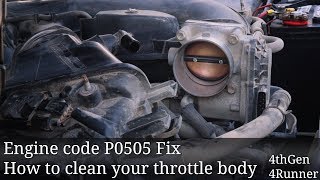


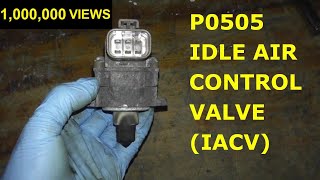
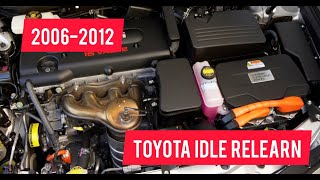
Used OEM Parts in Stock
New Aftermarket Parts Available




The information in this article is provided for general reference and educational purposes only. Vehicle specifications, procedures, and part compatibility can vary by production date, trim level, and region. Always consult your vehicle's factory service manual and verify part numbers before purchasing or performing repairs. Safety-critical components such as airbags, seat belts, and braking systems should be installed by a qualified professional.
- Toyota 4Runner:
- 🧭 Diagnostic Flowchart
- 🎬 Helpful Videos
- 🛍️ Shop This Part
- What's Unique About the 2003-2009 Toyota 4Runner
- Symptoms You May Notice
- Most Likely Causes
- Rare But Worth Checking
- Diagnosis Steps
- Parts You'll Likely Need
- Related Codes That Often Appear With This One
- Platform-Specific Known Issues
- Mechanic-Grade Diagnostic Values
- Scan Tool Commands That Help
- Wiring & Ground Locations
- Real Owner Repair Stories
- "I Checked Everything" — The Actual Cause
- Model Year Variations Within This Range
- Other Known Issues on This Vehicle
- Used vs. New Parts: Buying Guide for This Vehicle
- Documented NHTSA Reports
- Real Owner Stories
- 2003-2009 Toyota 4Runner 4.7L V8
- 2000-2006 Toyota Tundra 4.7L V8
- Related OBD-II Codes
- Frequently Asked Questions
- 🎟️ Get 5% Off