

P0506 on 2009-2014 Acura TL: Causes and Fixes for Low Idle Speed
On a 2009-2014 Acura TL, code P0506 is most often caused by carbon buildup in the electronic throttle body. A thorough cleaning of the throttle body and performing an idle relearn procedure usually fixes the issue for under $20 in materials. Other less common causes include a clogged air filter, a faulty PCV valve, or even a low A/C charge.
- P0506 on a 2009-2014 TL means the idle is too low, usually due to a dirty throttle body.
- The most likely fix is to clean the electronic throttle body with a dedicated cleaner.
- After cleaning the throttle body or disconnecting the battery, you MUST perform an idle relearn procedure.
- Do not replace any parts until you have tried cleaning the throttle body and performing the relearn procedure.
- The vehicle does not have a separate Idle Air Control (IAC) valve; idle is controlled by the main throttle body.
- Before diving into the throttle body, check for simple issues like a severely clogged engine air filter.
What's Unique About the 2009-2014 Acura TL
The 4th generation Acura TL uses a drive-by-wire throttle system, meaning there is no separate Idle Air Control (IAC) valve. Idle speed is managed directly by the electronic throttle body. This design makes the system very sensitive to carbon buildup around the throttle plate, which is the most common reason for a P0506 code on this specific vehicle. Unlike older cars, simply cleaning the throttle body is not enough; a specific idle relearn procedure must be performed afterward to reset the ECM's learned throttle position values.
Symptoms You May Notice
- Check Engine Light is on
- Engine idles lower than normal (e.g., below 600 RPM)
- Rough or vibrating idle
- Engine stalls when coming to a stop, especially with the A/C on
- Hesitation when accelerating from a stop
- Engine dies immediately after starting in some cases
- Replacing the throttle body before performing a thorough cleaning and idle relearn procedure.
- Searching for a separate Idle Air Control (IAC) valve, which this vehicle does not have.
Most Likely Causes
- Dirty Electronic Throttle Body 🔴 High Probability → Shop Fuel Injection Throttle Body The drive-by-wire system is sensitive to even small amounts of carbon buildup, which restricts the tiny air gap needed for idle control.
How to confirm: Visually inspect the throttle body bore and the edges of the throttle plate for a black, sticky carbon layer.
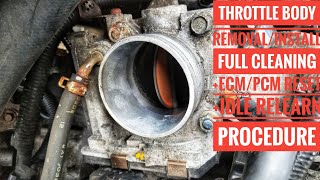
Typical fix: Remove the air intake hose, carefully clean the throttle plate 🎬 Watch: Step-by-step throttle body cleaning and idle relearn tutorial and bore with throttle body cleaner and a soft cloth, and then perform an idle relearn procedure.
Est. part cost: $10-$20 - Needs Idle Relearn Procedure 🟡 Medium Probability The ECM learns and adapts to a dirty throttle body over time. After cleaning, or even after a battery disconnect, the learned values are incorrect for the now-clean throttle body, causing a low idle until it is reset.
How to confirm: This is confirmed if the P0506 code appears immediately after cleaning the throttle body or replacing the battery.
Typical fix: Perform the manufacturer-specific idle relearn procedure. This involves a sequence of turning the key, starting the engine, warming it up, holding the RPM at 3,000 until the radiator fan cycles, and then idling for 5-10 minutes.
Est. part cost: $0 - Vacuum Leak ⚪ Low Probability While vacuum leaks more commonly cause a high idle (P0507), a malfunctioning PCV valve or a leak in a specific hose can sometimes disrupt idle stability and lead to a low, stumbling idle.
How to confirm: Listen for hissing sounds around the engine bay at idle. A smoke test is the most effective way to find a leak by feeding smoke into the intake and watching where it escapes.
Typical fix: Replace the cracked vacuum hose or faulty gasket/valve.
Est. part cost: $5-$50 - Restricted Air Intake / Filter ⚪ Low Probability A severely clogged engine air filter can starve the engine of air, preventing it from maintaining the target idle speed.
How to confirm: Visually inspect the engine air filter. If it is black, full of debris, or has leaves/blockages, it needs replacement.
Typical fix: Replace the engine air filter.
Est. part cost: $15-$40
Rare But Worth Checking
- Failing Electronic Throttle Body: → Shop Fuel Injection Throttle Body If a thorough cleaning and idle relearn do not resolve the code, the internal motor or position sensor of the throttle body itself may be failing. This is uncommon but is the next logical step if cleaning doesn't work.
- Faulty or Clogged PCV Valve: → Shop PCV Valve A stuck or clogged Positive Crankcase Ventilation (PCV) valve can disrupt crankcase pressure and interfere with the air-fuel mixture, leading to a rough or low idle. Symptoms of a bad PCV valve include rough idle, stalling, and oil leaks.
- Low A/C System Charge: In one documented case on Acurazine, a low A/C freon level caused the compressor clutch to cycle rapidly, putting an excessive load on the engine at idle and dragging the RPMs down enough to trigger P0506.
- Weak Battery or Charging System Issue: The electronic throttle control system relies on stable voltage. A weak battery or failing alternator can cause voltage drops that may impair the throttle body's ability to precisely control the idle speed.
Diagnosis Steps
- Confirm the P0506 code is present using an OBD-II scanner.
- Inspect the engine air filter for dirt and debris. Replace if necessary.
- Visually inspect the air intake hose between the air filter box and the throttle body for cracks or loose connections.
- Remove the intake hose from the throttle body. Inspect the throttle plate and bore for carbon buildup.
- If dirty, clean the throttle body thoroughly using a dedicated throttle body cleaner and a soft cloth. Manually open the plate to clean the edges and bore. Do not spray directly into the electronics.
- Reconnect the intake hose and ensure all connections are secure.
- Perform the Acura-specific idle relearn procedure. This is critical.
- Start the engine with all accessories (A/C, radio, lights) off.
- Hold the engine speed at 3,000 RPM (in Park or Neutral) until the engine reaches normal operating temperature and the radiator fan cycles on and off at least once.
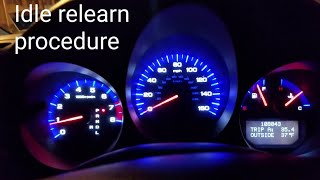
- Let the engine idle for at least 5-10 minutes 🎬 See how to perform an idle relearn without a scan tool with no load.
- Clear the code and drive the vehicle to see if the code returns. If it does, suspect a vacuum leak (perform a smoke test), a faulty PCV valve, or a failing throttle body assembly.
Parts You'll Likely Need
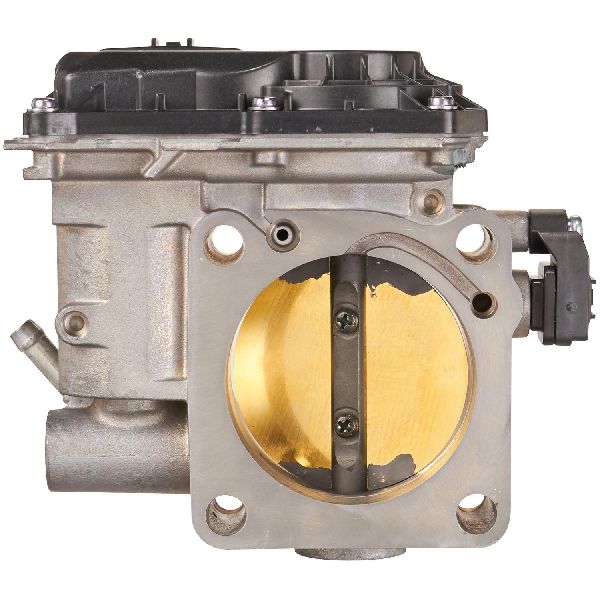
- Electronic Throttle Body Assembly
(OEM #3.7L (SH-AWD): 16400-RKG-A01; 3.5L (FWD): 16400-RN0-A01 (Verify with VIN))— This is only needed if a thorough cleaning and idle relearn procedure fail to fix the problem, indicating a failure of the internal motor or sensor.
Trusted brands: Acura (OEM), Bosch, Hitachi
OEM price range: $350-$450
Aftermarket price range: $150-$250 - Throttle Body Cleaner — This is the primary material needed to perform the most common fix, which is cleaning carbon buildup from the throttle plate and bore.
Trusted brands: CRC, WD-40, Permatex
OEM price range: $10-$20
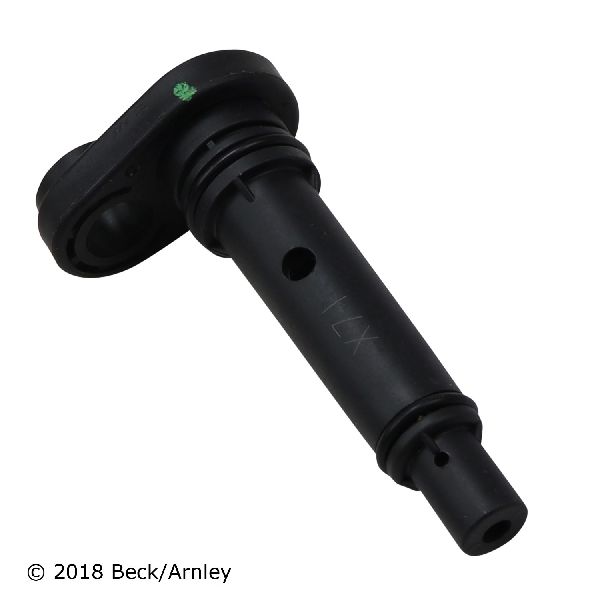
Aftermarket price range: $8-$15 - PCV Valve
(OEM #17130-RCA-A02 (Verify with VIN))— A potential, though less common, cause of idle issues. It's an inexpensive part to replace as preventative maintenance or if a vacuum leak is suspected at the valve.
Trusted brands: Acura (OEM), Standard Motor Products
OEM price range: $20-$35
Aftermarket price range: $10-$20
Technical Service Bulletins (TSBs) & Recalls
- No specific Technical Service Bulletins (TSBs) for the 2009-2014 Acura TL directly addressing code P0506 were found in public databases. A TSB for a previous generation (2004 TL) mentioned a PCM update for idle issues, but this does not apply to the 4th generation platform.
Platform-Specific Known Issues
- A/C System Load Causing Stall: A documented case on an Acurazine forum for a 2010 TL SH-AWD showed that a low A/C refrigerant charge caused the compressor to cycle excessively, putting a heavy load on the engine at idle. This dragged the RPMs down and triggered the P0506 code. Recharging the A/C system fixed the idle problem.
Mechanic-Grade Diagnostic Values
- Throttle Position Sensor (TPS) Voltage at Closed Throttle — expected: ~0.5V - 1.4V. Failure: Voltage is 0V or significantly outside the expected range.
- Throttle Position Sensor (TPS) Voltage at Wide-Open Throttle (WOT) — expected: ~4.5V. Failure: Voltage does not increase smoothly or fails to reach the expected WOT voltage.
- Absolute Throttle Position Percentage at Idle (Live Data) — expected: ~8-10%. Failure: A reading of 0% or a value that does not correspond to a stable idle. A 0% reading is incorrect as the throttle plate must be slightly open for idle.
- Charging System Voltage (Engine Running) — expected: ~12.0V - 14.5V. Failure: Voltage is below 12V or fluctuates erratically, which can cause issues with the electronic throttle control system.
Scan Tool Commands That Help
- Honda Diagnostic System (HDS): ETCS (Electronic Throttle Control System) Test — This is a dealer-level function to test the entire throttle control system, including the throttle body motor, APP sensor, and wiring. It should be used after basic cleaning and relearn procedures fail to resolve the P0506 code, to pinpoint a component failure within the system.
- Professional OBD-II Scan Tool: Throttle Body Relearn / Reset Learned Values — This provides a more reliable method of performing the idle relearn procedure than the manual pedal-dance method. It directly commands the ECM to clear its stored throttle position values, ensuring a clean start after a throttle body cleaning or replacement.
Real Owner Repair Stories
- Acurazine.com user 'kevinh1919' (2010 Acura TL SH-AWD) — P0506 code triggered at a red light, rough idle, car stalled once when revved.
❌ Tried (didn't work) Clearing the code with an OBD2 reader, Performing an ECU+Transmission reset procedure
✅ What actually fixed it The A/C system was low on refrigerant (freon). The A/C compressor was kicking in frequently, causing a large dip in RPM which triggered the P0506 code. Recharging the A/C system resolved the idle issue.
"I Checked Everything" — The Actual Cause
- A documented case for a 2010 TL SH-AWD showed that even with no vacuum leaks (a smoke test would be clean), the P0506 code was set. The root cause was a low A/C charge causing the compressor to cycle rapidly and put excessive mechanical load on the engine at idle, dragging the RPMs down. The fix was to service and recharge the A/C system.
When the Usual Fixes Don't Work
- While cleaning the throttle body is the most common fix, there are confirmed cases where it has no effect. In one instance with a 2010 TL, the P0506 code was repeatedly triggered by excessive engine load from the A/C compressor due to a low refrigerant charge. This serves as a reminder that external mechanical loads on the engine can fool the PCM into setting an idle control code, even when there are no vacuum leaks or throttle body issues.
Model Year Variations Within This Range
- 2009-2011 vs 2012-2014: The 2012 model year introduced a mid-cycle refresh. The most significant mechanical change was the replacement of the 5-speed automatic transmission with a 6-speed automatic. While the P0506 causes are fundamentally the same, the PCM's software and load compensation strategy for the new transmission may differ slightly. The exterior styling, particularly the front grille, was also revised.
Diagnostic Flowchart
Used vs. New Parts: Buying Guide for This Vehicle
When a used part is the smart pick: A used OEM electronic throttle body from a reputable salvage yard (e.g., from a rear-ended, low-mileage vehicle) can be a cost-saving measure. However, it is critical to thoroughly clean it before installation and perform the idle relearn procedure.
Donor-vehicle mileage cap: roughly under 80000 miles for the part to have meaningful remaining life.
What to inspect on the donor part:
- Verify the part number matches your original (16400-RKG-A01 for 3.7L, 16400-RN0-A01 for 3.5L).
- Inspect the electrical connector for any bent or corroded pins.
- Check for any signs of physical damage to the housing or sensor areas.
- Ask for the donor vehicle's VIN and mileage to verify its history if possible.
OEM-only on this vehicle (don't cheap out):
- Electronic Throttle Body Assembly: While some aftermarket brands are reputable (Bosch, Hitachi), the precise calibration and electronics make OEM the safest choice to avoid idle instability, compatibility issues, or premature failure.
- PCV Valve: This part is inexpensive enough that saving a few dollars on an aftermarket version is not worth the risk of poor performance. Always use an OEM PCV valve (17130-RCA-A02).
Aftermarket brands forum-validated for this vehicle:
- Bosch (Often an OEM supplier)
- Hitachi (Often an OEM supplier)
Brands owners have reported issues with on this vehicle:
- Unbranded or 'white box' parts from online marketplaces, which often have high failure rates and inconsistent quality control for electronic components.
Real Owner Stories
Aggregated from forums and TSBs cited above. Mileages and costs reflect what owners reported in those sources.
2010 Acura TL SH-AWD
Symptoms: The engine idle was lower than normal and rough when stopped or parked. The car stalled on one occasion after revving the engine.
What fixed it: The A/C system was found to be low on freon, causing the condenser to engage repeatedly and drag down the engine RPM. Recharging the A/C system resolved the P0506 code.
Source hint: Acurazine - 4G TL Problems & Fixes - Cel p0506
Acura TSX (platform with similar issue)
Symptoms: Check Engine Light on with code P0506, indicating idle speed was too low.
What fixed it: The owner replaced a severely clogged and dirty K&N air filter that was blocked with leaves, which resolved the issue.
Source hint: Acurazine.com - Thread 'P0506 Code help'
2009-2014 Acura TL
Symptoms: Low or rough idle with P0506 code present, which persisted even after a simple ECU reset.
What fixed it: Multiple owners report that a thorough cleaning of the electronic throttle body to remove carbon buildup is the definitive fix.
Source hint: Acurazine.com - Thread 'Cel p0506'
Related OBD-II Codes
Frequently Asked Questions
Why is cleaning the throttle body the most common fix for a P0506 code on my Acura TL?
My P0506 code appeared right after I cleaned the throttle body or disconnected the battery. Did I do something wrong?
What is the correct idle relearn procedure for my 2009-2014 TL?
Could my A/C system be causing the P0506 code and stalling?
Are there any official Acura TSBs for the P0506 code on the 2009-2014 TL?
I thought vacuum leaks cause a high idle. Could one still cause my P0506 low idle code?
Helpful Videos

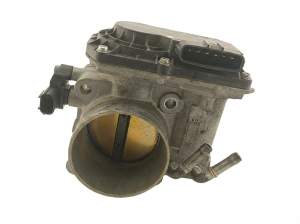
Used OEM Parts in Stock
New Aftermarket Parts Available


The information in this article is provided for general reference and educational purposes only. Vehicle specifications, procedures, and part compatibility can vary by production date, trim level, and region. Always consult your vehicle's factory service manual and verify part numbers before purchasing or performing repairs. Safety-critical components such as airbags, seat belts, and braking systems should be installed by a qualified professional.
- Acura TL:
- 🧭 Diagnostic Flowchart
- 🎬 Helpful Videos
- 🛍️ Shop This Part
- What's Unique About the 2009-2014 Acura TL
- Symptoms You May Notice
- Most Likely Causes
- Rare But Worth Checking
- Diagnosis Steps
- Parts You'll Likely Need
- Technical Service Bulletins (TSBs) & Recalls
- Platform-Specific Known Issues
- Mechanic-Grade Diagnostic Values
- Scan Tool Commands That Help
- Real Owner Repair Stories
- "I Checked Everything" — The Actual Cause
- When the Usual Fixes Don't Work
- Model Year Variations Within This Range
- Used vs. New Parts: Buying Guide for This Vehicle
- Real Owner Stories
- 2010 Acura TL SH-AWD
- Acura TSX (platform with similar issue)
- 2009-2014 Acura TL
- Related OBD-II Codes
- Frequently Asked Questions
- 🎟️ Get 5% Off