

P0507 on 2010-2017 Jaguar XJ: High Idle Causes and Fixes
On a 2010-2017 Jaguar XJ, code P0507 is almost always caused by an unmetered air leak (vacuum leak). The most common culprit is a failed diaphragm in the PCV assembly on the camshaft cover. A repair kit is available, making this a relatively inexpensive fix if you can diagnose it correctly. This issue is widespread across all Jaguar and Land Rover models using the 3.0L V6 and 5.0L V8 engines.
- P0507 on a 2010-2017 Jaguar XJ means the idle is too high, most likely due to a vacuum leak.
- Before buying any parts, check for a hissing sound from the round PCV cap on the passenger-side valve cover; this is a very common failure and the #1 cause.
- Jaguar issued a TSB (SSM74375) for this exact problem and sells a repair kit (C2D60163) that is much cheaper than replacing the whole valve cover.
- This problem is not unique to the XJ; it affects all JLR products with the 3.0L V6 and 5.0L V8 engines, including F-Types and Range Rovers.
- If the PCV valve is not the cause, a smoke test is the next best step to find the source of the air leak.
- This code is often accompanied by lean codes P2187 and P2189, which strongly points to an unmetered air leak.
What's Unique About the 2010-2017 Jaguar XJ
The 3.0L V6 (AJ126) and 5.0L V8 (AJ133) engines used in the X351-generation Jaguar XJ are known for issues with plastic and rubber components in the engine bay becoming brittle over time. A very common and documented failure is the diaphragm inside the Positive Crankcase Ventilation (PCV) valve assembly, which is integrated into the camshaft cover. When this diaphragm splits, it creates a significant vacuum leak, directly causing the high idle condition of P0507. Jaguar acknowledges this in TSB SSM74375, which provides a specific repair kit to avoid replacing the entire expensive camshaft cover.
🎬 Watch: Detailed DIY guide for replacing the PCV diaphragmDiagnostic Flowchart
Tap your situation to follow the diagnostic path that matches what you're seeing on this vehicle.
Symptoms You May Notice
- Check Engine Light is on
- Engine idle speed is noticeably higher than normal (e.g., over 1000 RPM in Park)
- Rough or surging idle
- A loud hissing, whistling, or sucking sound from the engine bay, particularly around the passenger-side camshaft cover
- Vehicle may feel like it's 'creeping' forward at stops, requiring more brake pressure
- In some cases, 'Engine Failsafe Mode' may appear on the dash.
- Replacing the throttle body when the actual problem is a simple vacuum leak from the PCV valve or a cracked hose.
- Replacing the Mass Airflow (MAF) sensor. A MAF sensor issue would typically set other codes (like P0101) and is not the primary cause for P0507. Cleaning it is fine, but replacement is unlikely to fix this specific code.
- Assuming a smoke test will find all leaks. The common PCV diaphragm leak is internal and often won't show up on a smoke test, leading mechanics to look for other non-existent leaks.
Most Likely Causes
- Failed PCV Valve Diaphragm 🔴 High Probability → Shop PCV Valve A known issue documented in Jaguar Technical Service Bulletin SSM74375. The rubber diaphragm inside the PCV assembly, located on the right-hand (passenger side in LHD cars) camshaft cover, is prone to splitting due to heat and age. This is the number one cause of P0507 on this platform.
How to confirm: With the engine running, a loud hissing or sucking noise will be heard from the circular cap on the valve cover. You can also try to place your finger over the small vent hole on the cap; a very strong vacuum that tries to suck your finger in confirms the diaphragm is torn. A smoke test may not reveal this leak as it is internal to the crankcase system.
Typical fix: Replace the PCV diaphragm and cap. Jaguar offers a specific repair kit (Part No. C2D60163) so you don't have to replace the entire camshaft cover. The 5.0L V8 has two of these PCV assemblies, one on each bank, though the right-hand one is the most common to fail and trigger P0507. The kit contains one diaphragm, so order two if replacing both.
Est. part cost: $25-$60 per kit - Other Vacuum Leaks 🟡 Medium Probability The plastic and rubber hoses in the intake system can become brittle and crack with age and heat cycles. A notable weak point is the O-ring for the brake booster vacuum line where it enters the intake elbow.
How to confirm: Perform a smoke test. This involves feeding pressurized smoke into the intake system to visually identify leaks from cracked hoses, intake manifold gaskets, or a faulty throttle body gasket. Pay close attention to the rear of the engine and under the intake manifold. 🎬 See this video on how to find vacuum leaks fast
Typical fix: Replace the cracked or leaking hose or gasket. Some hoses are simple to replace, while others located under the supercharger or intake manifold require significant labor.
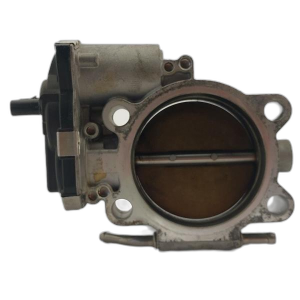
Est. part cost: $20-$200 - Dirty or Faulty Electronic Throttle Body ⚪ Low Probability → Shop Fuel Injection Throttle Body Carbon buildup can create a ridge around the throttle plate, preventing it from closing completely at idle. This allows excess air to enter, causing a high idle. While less common than vacuum leaks for this code, it's a possible cause.
How to confirm: Remove the intake ducting and visually inspect the throttle plate and bore for black carbon deposits. Check if the plate moves smoothly by hand (with the ignition off).
Typical fix: Clean the throttle body thoroughly with a dedicated throttle body cleaner and a soft, lint-free cloth. Do not spray cleaner directly into the electronics. If cleaning doesn't resolve the issue, the throttle body assembly may need replacement, but this is rare.
Est. part cost: $15 (cleaner) - $500+ (replacement)
Rare But Worth Checking
- Leaking Intake Manifold Gaskets: → Shop Engine Intake Manifold While a type of vacuum leak, a failure of the main intake manifold gaskets is less common than PCV or hose failures but can certainly cause a P0507 code. A smoke test is the best way to confirm this.
- Faulty Powertrain Control Module (PCM): This is extremely rare. All other possibilities, especially vacuum leaks, should be exhaustively ruled out before considering a PCM failure.
Diagnosis Steps
- Verify the code P0507 is present using an OBD-II scanner. Note any other codes, especially P2187 and P2189.
- With the engine running, listen for an obvious hissing or whistling sound from the engine bay, paying close attention to the circular PCV valve cap on the passenger-side camshaft cover.
- Carefully place your finger over the small vent hole on the PCV cap. If you feel a strong suction, the diaphragm has failed. This is the most likely cause.
- If no obvious noise is found or the PCV test is inconclusive, perform a smoke test on the intake system to check for leaks from hoses, gaskets, or the intake manifold itself.
- If no vacuum leaks are found, remove the intake boot and inspect the electronic throttle body for heavy carbon buildup around the throttle plate.
- Clean the throttle body thoroughly if it is dirty.
- As a final, and very unlikely step, diagnostics would move towards testing the PCM and its circuits, which is best left to a professional.
Parts You'll Likely Need
- PCV Valve Diaphragm Repair Kit
(OEM #C2D60163 (Jaguar) / LR041443 (Land Rover))— This is the most common failure point causing P0507 on these specific Jaguar engines, as documented in TSB SSM74375. It is a simple and cheap fix compared to replacing the entire valve cover.
Trusted brands: Jaguar (OEM), URO Parts, Vaico
OEM price range: $40-$80
Aftermarket price range: $25-$50 - Intake Manifold Gaskets
(OEM #AJ813585 (Upper), AJ812181 (Lower))— If a smoke test reveals a leak at the intake manifold, these gaskets will need to be replaced. This is much less common than the PCV failure.
Trusted brands: Victor Reinz, Mahle, Jaguar (OEM)
OEM price range: $100-$150
Aftermarket price range: $50-$90 - Electronic Throttle Body
(OEM #C2D50450)— Rarely needed. Only replace if it is physically damaged or fails to operate correctly after a thorough cleaning.
Trusted brands: Bosch, Jaguar (OEM)
OEM price range: $500+
Aftermarket price range: $300-$450
Related Codes That Often Appear With This One
- P2187 — System Too Lean at Idle (Bank 1). This code is often triggered with P0507 because the unmetered air from a vacuum leak creates a lean condition that the PCM detects on the first bank.
- P2189 — System Too Lean at Idle (Bank 2). Similar to P2187, this indicates a lean condition on the opposite engine bank, pointing to a significant vacuum leak affecting the entire system.
- P0505 — Idle Air Control System Malfunction. This is a related idle control code that can be stored alongside P0507, as noted in Jaguar's TSB SSM74375.
Technical Service Bulletins (TSBs) & Recalls
- SSM74375: 'Issue: Air leak from the right hand camshaft cover assembly due to a split diaphragm within the pressure control valve. Any of the following DTCs (indicating an air intake system leak) could be stored in the Powertrain Control Module (PCM) – P2187, P2189, P0505, P0507.' It then states that a repair kit, C2D60163, is available as an alternative to replacing the whole cover.
Platform-Specific Known Issues
- Technical Service Bulletin SSM74375 explicitly identifies P0507 as a potential DTC resulting from a split diaphragm in the pressure control valve (PCV) on the right-hand camshaft cover for both the 3.0L V6 and 5.0L V8 petrol engines.
- The 5.0L V8 engine has two PCV diaphragms, one on each valve cover. While the TSB points to the right-hand side, both are susceptible to failure. The repair kit C2D60163 is for one side.
Mechanic-Grade Diagnostic Values
- Throttle Position Sensor (TPS) Voltage (General Reference) — expected: Approximately 0.3V - 0.5V at idle (throttle closed), rising smoothly to 4.0V - 5.0V at wide-open throttle (WOT).. Failure: Voltage that is out of range, does not change with throttle movement, or shows dropouts/spikes as the throttle is slowly opened.
- P0507 Set Condition (General Reference) — expected: Engine idle RPM should be within the target range specified by the manufacturer (typically 600-800 RPM in Park/Neutral).. Failure: Actual engine RPM exceeds the target idle RPM by 200 RPM or more for a sustained period (e.g., 30 seconds).
Scan Tool Commands That Help
- Manual Procedure (No Scan Tool): Throttle Body / ECU Idle Relearn Procedure — After cleaning the throttle body or replacing related components, this procedure forces the ECU to relearn the base idle position. Disconnect the negative battery terminal for several minutes. Reconnect it, turn the ignition to the 'ON' position (do not start) for 60 seconds, then turn 'OFF' for 60 seconds. Finally, start the engine without touching the accelerator and let it idle for 5-10 minutes to allow the ECU to adapt.
- Jaguar SDD (Symptom Driven Diagnostics): Live Data Monitoring & Actuator Activation — During advanced diagnosis, a technician can use the dealer tool to monitor live data PIDs (Parameter IDs) like desired idle RPM vs. actual RPM, and short/long term fuel trims. The tool can also be used to command actuators, such as telling the throttle body to open to a specific angle, to verify its electronic components are responding correctly.
Wiring & Ground Locations
- Throttle Body Electrical Connectors — On the electronic throttle body, located between the air intake tube and the intake manifold/supercharger inlet.. The plastic connectors, particularly on earlier models in this range, can become extremely brittle from engine heat cycles and may crumble or crack upon removal for service, leading to poor connections. Inspect them carefully. The 6-pin connector plug is available under part number AJ811690-6PINPLUG-X.
Real Owner Repair Stories
- Common story synthesized from multiple Jaguar & Land Rover forums (2011 Jaguar XJ 5.0L Supercharged) — Check Engine Light on with codes P0507, P2187, and P2189. Idle was high, around 1100 RPM, and there was a distinct, loud whistling noise from the passenger side of the engine bay.
❌ Tried (didn't work) Cleaned the Mass Airflow (MAF) sensors., Performed a smoke test which showed no leaks., Cleaned the electronic throttle body, which had minor carbon buildup but did not change the symptoms.
✅ What actually fixed it The problem was a torn PCV diaphragm on the passenger side (right hand) valve cover. The whistling noise and strong vacuum felt at the vent hole on the PCV cap were the key indicators. Replacing the diaphragm using the C2D60163 repair kit immediately solved the high idle and whistling noise. All codes were cleared and did not return.
"I Checked Everything" — The Actual Cause
- The most common scenario for this code where a smoke test comes back clean is a failed PCV diaphragm. Because the diaphragm is part of the internal crankcase ventilation system, a tear creates a vacuum leak by pulling unmetered air from the crankcase into the intake manifold. A standard smoke test pressurizes the intake tract from the outside and will not typically reveal this type of internal leak, leading technicians to mistakenly rule out a vacuum leak as the cause.
OEM Part Supersession History
C2D60163→Unknown / Verification Needed— Part revision or manufacturer change.
Heads up: The official Jaguar Classic parts website indicates that C2D60163 has been superseded, but does not provide the new part number. However, the original part number is still widely available from OEM and aftermarket suppliers. It is advisable to confirm the latest part number with a Jaguar dealership at the time of purchase.
Model Year Variations Within This Range
- Approx. 2013+: The engine management system on many Jaguar models, including the XJ, transitioned from Denso to Bosch around the 2013 model year. While the physical causes of P0507 (like the PCV valve) remain the same, the specific live data parameters and diagnostic software logic within the ECU may differ between Denso- and Bosch-equipped vehicles.
Helpful Videos
Used OEM Parts in Stock
New Aftermarket Parts Available



The information in this article is provided for general reference and educational purposes only. Vehicle specifications, procedures, and part compatibility can vary by production date, trim level, and region. Always consult your vehicle's factory service manual and verify part numbers before purchasing or performing repairs. Safety-critical components such as airbags, seat belts, and braking systems should be installed by a qualified professional.
- Jaguar XJ:
- 🧭 Diagnostic Flowchart
- 🎬 Helpful Videos
- 🛍️ Shop This Part
- What's Unique About the 2010-2017 Jaguar XJ
- Symptoms You May Notice
- Most Likely Causes
- Rare But Worth Checking
- Diagnosis Steps
- Parts You'll Likely Need
- Related Codes That Often Appear With This One
- Technical Service Bulletins (TSBs) & Recalls
- Platform-Specific Known Issues
- Mechanic-Grade Diagnostic Values
- Scan Tool Commands That Help
- Wiring & Ground Locations
- Real Owner Repair Stories
- "I Checked Everything" — The Actual Cause
- OEM Part Supersession History
- Model Year Variations Within This Range
- 🎟️ Get 5% Off